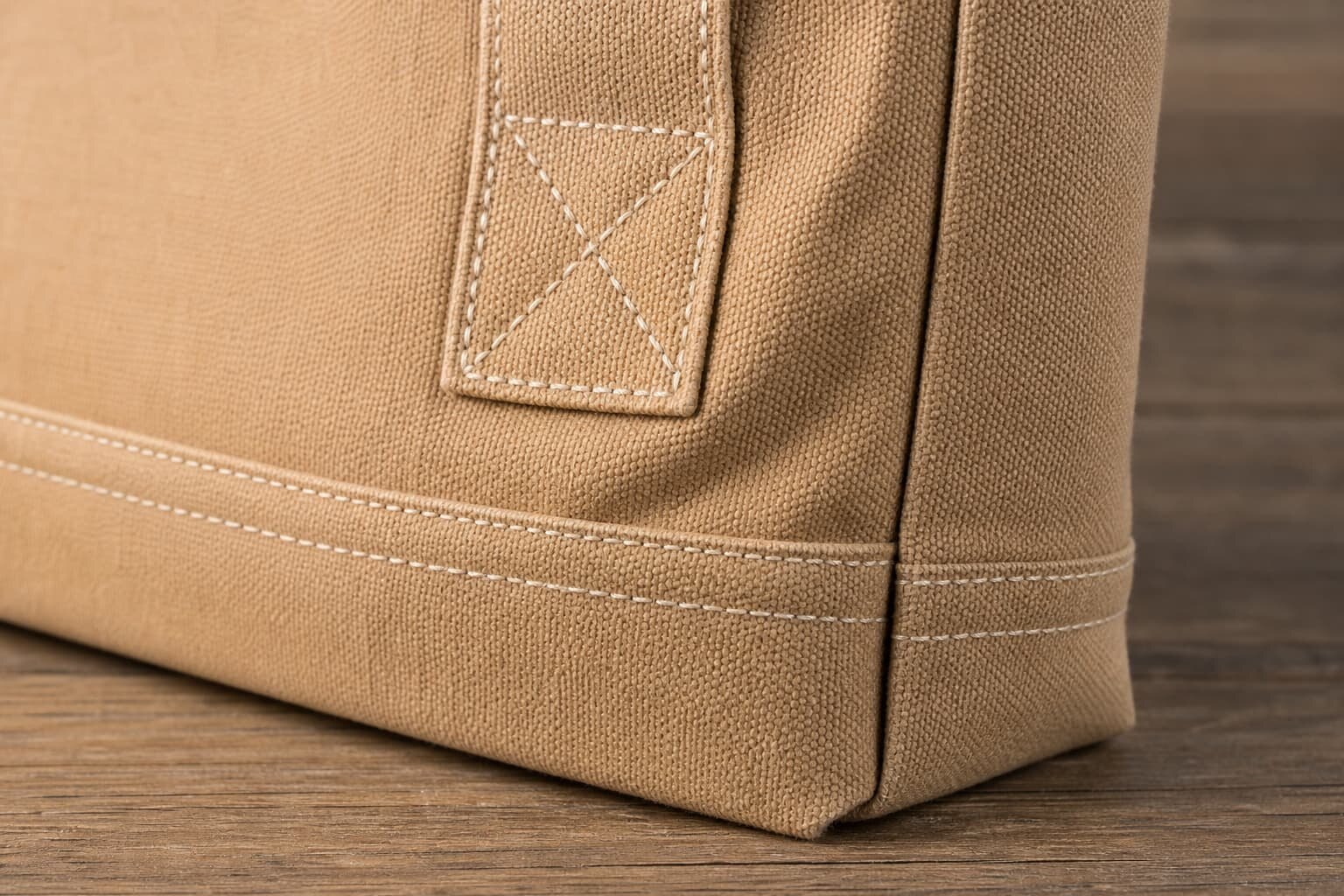
Start With the Compliance Risk, Not the Color Choice
Most tote bag problems do not start in sewing. They start when the buyer treats a canvas tote as a simple promotional item and skips the compliance details that determine what the factory is actually allowed to ship. A canvas tote bag importer compliance guide should begin with the target market, end use, and whether the bag will carry retail goods, food, cosmetics, or event giveaways. Those details affect what tests, declarations, and labeling you need to ask for before you compare quotes.
The same bag can be easy or risky depending on the market. A natural cotton tote for a trade show may only need basic material confirmation and clean packing. A branded retail tote for a chain store can trigger stricter expectations around restricted substances, colorfastness, packing marks, and document traceability. If you do not define the compliance frame first, factories will quote different assumptions and you will compare apples to oranges.
- Define the sales channel first: retail, promotion, food service, or corporate gifting.
- State the destination market so the factory knows which documents matter.
- Separate product compliance from shipping compliance and packaging rules.
- Ask whether the factory has made this same construction before, not just a similar bag.
Lock the Product Spec Before You Ask for a Price
A clean RFQ starts with the bag spec, not with a photo and a target price. For canvas totes, the most common buyer mistake is leaving fabric weight vague. Ask for a specific range such as 12 oz to 14 oz canvas, or about 340 to 470 GSM, and state whether that number refers to finished fabric or base fabric before washing and finishing. That one detail changes structure, print behavior, and cost more than many buyers expect.
You also need dimensional clarity. State body width, height, gusset depth, handle width, handle drop, and whether the bag has a flat bottom or boxed bottom. If the tote must hold bottles, books, or catalog packs, say so. Factories can then decide whether to add bar-tacks, double stitching, or a heavier handle tape. Without those details, a quote may look cheaper but fail in use or fail during inspection.
- Write size in finished dimensions, not marketing size.
- Define fabric color, weave, and whether the canvas is pre-shrunk or not.
- State if the bag needs lining, inner pocket, zipper closure, or gusset panel reinforcement.
- Add a tolerance note for measurement variance so disputes do not start at inspection.
Choose Fabric Weight for Use, Not Just for Perceived Quality
Canvas tote buyers often assume heavier is always better. That is not true. A 10 oz canvas may be enough for event giveaways, while a 12 oz to 14 oz bag usually gives a better retail feel and holds shape more reliably. Push much higher only when the bag truly needs structure, a premium hand feel, or repeated heavy loading. Heavier fabric also changes sewing speed, stitch breakage risk, print penetration, and freight weight, so the quote should reflect more than fabric cost alone.
When comparing suppliers, ask whether the quoted GSM is based on woven greige fabric, finished fabric after washing, or a nominal oz weight used by the mill. Those terms are often mixed carelessly. For cotton canvas, you should also ask about shrinkage after washing, yarn count if available, and whether the weave is tight enough to prevent excessive print bleed. If a supplier cannot explain the difference between fabric weight and finished bag weight, they are probably not controlling the process tightly enough.
- Use lighter canvas for giveaways, medium canvas for retail, and heavier canvas for premium reuse.
- Check whether the fabric is bleached, natural, dyed, or garment-washed.
- Confirm shrinkage expectations if the bag will be washed or reused often.
- Ask for a physical swatch or reference sample with the same fabric weight.
Match Print Method to Order Size and Artwork Reality
Decoration drives both compliance risk and price volatility. Screen print is usually the best choice for simple logos, solid blocks, and repeat orders because it gives strong coverage and lower unit cost at scale. Heat transfer can help when the order is small, the artwork has multiple colors, or the buyer needs a quick sample run. Embroidery or woven labels make sense when the design needs a premium look, but they also change lead time, placement control, and the risk of puckering on lighter canvas.
For any print method, ask the factory to confirm the artwork size, print position, number of colors, and ink type in writing. If a logo has thin lines or small type, screen print may blur details unless the factory uses the right mesh and registration control. Buyers should also ask for cure and rub testing where relevant, because a good-looking print that flakes in transit or transfers onto the packing polybag becomes a quality issue fast.
- Use screen print for simpler graphics and larger volumes.
- Use heat transfer for small runs or multicolor artwork with fine detail.
- Use embroidery only when the fabric weight and logo size support it.
- Ask for a wash, rub, or tape test if the bag will face repeated handling.
Treat Compliance as a Document Set, Not a Single Certificate
Importers often ask for 'compliance' as if one certificate solves everything. It does not. The right document set depends on your market, but the factory should be able to connect the finished bag to the exact fabric, ink, trim, and packing used in production. If the bag includes a print, label, zipper, rivet, or coated trim, each component may affect your restricted substance review and traceability file.
At minimum, ask which test reports or declarations apply to the exact order and whether they were issued against the same material specification. If the bag is intended for a regulated market, do not accept a generic report on a different article or a report that only covers raw fabric while ignoring the decorated finished bag. The buyer does not need to name every regulation in the RFQ, but the buyer must require a clear paper trail and verify that the documents match the order.
- Ask for reports or declarations tied to the exact fabric and decoration.
- Check whether the factory name, product name, and test sample match the PO.
- Confirm if labels or packaging carry any required warnings or care instructions.
- Keep a file with approved sample photos, test documents, and final PO revision.
Use the Pre-Production Sample as the Acceptance Gate
A sample is not just for visual approval. It is your easiest chance to catch hidden production issues before the line is full of fabric. Review the pre-production sample against a short acceptance list: size, fabric weight, handle length, stitch count, print registration, label placement, and packing method. If the sample is missing a feature, do not assume the bulk order will fix it later. Most factories build to the sample unless the buyer documents a change.
When evaluating a sample, look for the failure modes that show up in bulk. For canvas totes, that usually means uneven seams, off-center print, crooked handles, thin ink on textured canvas, and weak fold memory when retail packing matters. It also means checking odor, surface stains, and fiber contamination. If the sample passes visually but fails the workmanlike details, the bulk order will only magnify the same problem across a larger shipment.
- Measure the sample and record the actual finished dimensions.
- Inspect both front and back of the print for coverage and edge sharpness.
- Check handle placement symmetry and bar-tack consistency.
- Approve the sample only after confirming the packing method and label set.
Build Packing and Carton Rules Into the Quote
Packing is where many importers lose money quietly. A tote bag can be technically correct and still arrive awkwardly folded, dirty, or oversized in carton count because the packing method was never specified. Decide whether each bag should be bulk packed in one polybag per piece, folded with tissue, or prepared for shelf display with barcode labels. If the bag uses a retail hangtag or care card, include that in the quote so the factory does not treat it as extra work later.
Carton data matters too. Ask for pieces per carton, carton dimensions, gross weight, and whether master cartons are suitable for container loading or palletization. If the bags are going to distributors, ask for carton marks and barcode placement on the external case. If the bags are going direct to retail, confirm any individual polybag warning text or suffocation warning requirements that apply in your market. Good packing details protect both compliance and landed cost.
- Specify inner pack, outer carton, and any retail hangtag requirements.
- Ask for carton dimensions early so freight planning is realistic.
- Confirm whether bags must be folded in a fixed way to protect print.
- Write carton label content into the PO, not just the email thread.
Read the Quote Like a Cost Engineer
A useful quote should let you see where the money goes. For canvas tote bags, the main cost buckets are fabric, print or decoration, sewing labor, accessories such as labels or zipper parts, packing, and any testing or documentation handling. If the supplier gives one flat number without separating these elements, it becomes hard to compare alternate specs or push back on avoidable cost. A buyer should be able to see exactly what changes when fabric weight rises, when the print area expands, or when the MOQ changes.
MOQ logic is often more important than the quoted unit price. A supplier may quote one price at 3,000 pieces and another at 10,000 pieces because print setup, fabric cutting efficiency, and sewing line balancing improve with scale. Ask whether MOQ is per size, per color, per design, or per print method. Then ask what cost changes if you combine a few colors under the same base spec. That is how procurement teams identify the real breakpoints instead of accepting a price that only looks low on the first line.
- Request line items for fabric, print, sewing, trim, packing, and testing.
- Ask what changes the price the most: weight, size, decoration, or carton pack.
- Compare landed cost, not only ex-factory price.
- Ask for alternate quotes at two or three volume tiers.
Use a Simple Comparison Table to Separate Real Options
When you compare factories, a plain price list is not enough. The same tote can be quoted with different fabric weights, different print methods, and different packing standards, which makes the lowest number misleading. A cleaner approach is to compare the spec decisions that actually drive risk. That means one row for fabric, one for decoration, one for seam reinforcement, one for packing, and one for document control.
If two quotes are close, the better supplier is usually the one that explains the tradeoff clearly. For example, a factory that recommends 12 oz canvas with reinforced handle bar-tacks and a defined sample process may be a better source than one that promises a lower unit price but cannot describe stitch count or carton spec. The goal is not to buy the most expensive bag. The goal is to buy a bag that ships cleanly, meets the market, and does not create hidden chargebacks.
- Keep one comparison matrix for spec, one for cost, and one for risk.
- Use the same sample and the same acceptance rules across suppliers.
- Reject quotes that omit packing or documentation assumptions.
- Ask the factory to re-quote only after the spec is frozen.
Close the Order With Clear Inspection and Shipment Triggers
The final step is not production release. It is knowing when the order can move from sample approval to bulk approval to shipment release. Put the trigger points in writing: artwork approved, sample signed, production materials confirmed, inline inspection passed if used, final inspection passed, and carton count matched. This protects the buyer from quiet substitutions such as a lighter fabric, a different label finish, or a changed fold method.
For canvas totes, the most common shipment failures are simple: wrong print placement, dirty fabric, loose threads, missing labels, and cartons packed differently from the approved sample. A strong order file includes the PO, approved sample photos, spec sheet, quote revision, packing instructions, and inspection notes. If the factory changes any material or process, ask for a written deviation note before shipment. That one habit prevents most post-arrival disputes.
- Use a signoff trail for artwork, sample, packing, and carton marks.
- Hold shipment until the finished goods match the approved reference.
- Record any deviation in writing before the container leaves.
- Keep the spec sheet and approved sample photos attached to the PO file.
Specification comparison for buyers
| Spec decision | Recommended option | When it fits | Buyer risk to check |
|---|---|---|---|
| Fabric weight | 12 oz to 14 oz canvas, or about 340 to 470 GSM | Retail-ready totes, promotional bags with better body, repeat orders that need better print hold | Confirm whether GSM is finished fabric or greige weight, because mills and factories may quote different bases |
| Print method | Screen print for bold logos, heat transfer for small runs, woven label or embroidery for premium trim | Choose by logo coverage, color count, and order volume | Check ink opacity, hand feel, crack resistance, and whether the factory pre-cures correctly |
| Seam construction | Reinforced side seams, bar-tacks at handle joins, and double stitching on stress points | Shopping totes, heavy inserts, and retail programs that see daily carry | Ask for stitch count, thread type, and load test method instead of accepting 'strong stitching' as a claim |
| Packing format | Bulk polybag with carton pack count, or individual retail polybag if barcode ready | Wholesale distribution or shelf-ready retail | Confirm polybag thickness, warning text, carton marks, and whether inserts or hangtags are included in the quote |
| Compliance evidence | Order-specific test report pack and material declaration from the factory | Branded imports, regulated markets, or retailer onboarding | Verify that reports match the exact fabric, print ink, trim, and factory name on the production order |
Buyer checklist before sampling
- State the target canvas weight in GSM or oz, plus whether the number is finished fabric weight or raw fabric weight.
- Confirm the exact bag size, handle length, gusset depth, and tolerances before asking for a quote.
- List decoration details: print size, print location, number of colors, ink type, and whether a woven label or embroidery is required.
- Specify load expectations, such as grocery use, trade show handout, or retail reuse, because seam strength changes with end use.
- Ask which compliance documents are available for the exact production materials, not just a generic factory certificate.
- Request a pre-production sample with full decoration, trims, and packing method before mass production starts.
- Confirm carton pack count, inner polybag rules, barcode placement, and master carton labeling in writing.
- Check whether the quoted MOQ is per color, per design, per size, or per print method.
- Ask for a line-item quote that separates fabric, print, sewing, accessories, packing, and testing if any.
- Set a final approval point for artwork, sample, and packaging so the factory cannot substitute materials without written signoff.
Factory quote questions to send
- What is the exact canvas specification you are quoting, including finished GSM or oz, weave style, and whether the fabric is bleached, natural, or dyed?
- Which print method is included in the quote, how many colors are covered, and what setup or screen fees apply?
- Is the MOQ based on one size, one color, one artwork, or a combined order across variants?
- What handle construction and seam reinforcement are included, and can you share a stitch spec or internal quality standard?
- Which compliance documents can you provide for the fabric, print ink, and finished bag, and are they tied to this exact order?
- What sample types are available before bulk production, and how many days do you need for a pre-production sample?
- How is the bag packed, how many pieces per carton, and what are the carton dimensions and gross weight?
- What is the lead time after sample approval, and what events would extend it, such as fabric dyeing or print screen changes?
- What defects do you classify as major versus minor during inspection, especially for stitching, print alignment, and dirty marks?
- Can you quote the same bag with alternate fabric weights or packing options so we can compare landed cost cleanly?
Quality-control points to confirm
- Measure bag dimensions against the approved spec, including body width, height, gusset, and handle length.
- Check fabric weight consistency and surface cleanliness across random bags from different cartons.
- Inspect seam integrity at the handle joins, gusset corners, and side seams for skipped stitches or loose thread tails.
- Verify print position, color density, curing quality, and rub resistance against the approved sample.
- Confirm that labels, hangtags, and care marks match the approved artwork and are fixed in the correct position.
- Review carton pack count, barcodes, carton marks, and master case strength before shipment release.
- Open random retail packs to confirm folding method, insert placement, and polybag condition.
- Test odor, staining, and visible contamination, especially on natural cotton and dark prints.
- Pull a few bags for load and seam pull checks if the buyer expects heavy daily use.
- Match the shipment documents to the PO, sample approval, and packing list before release.