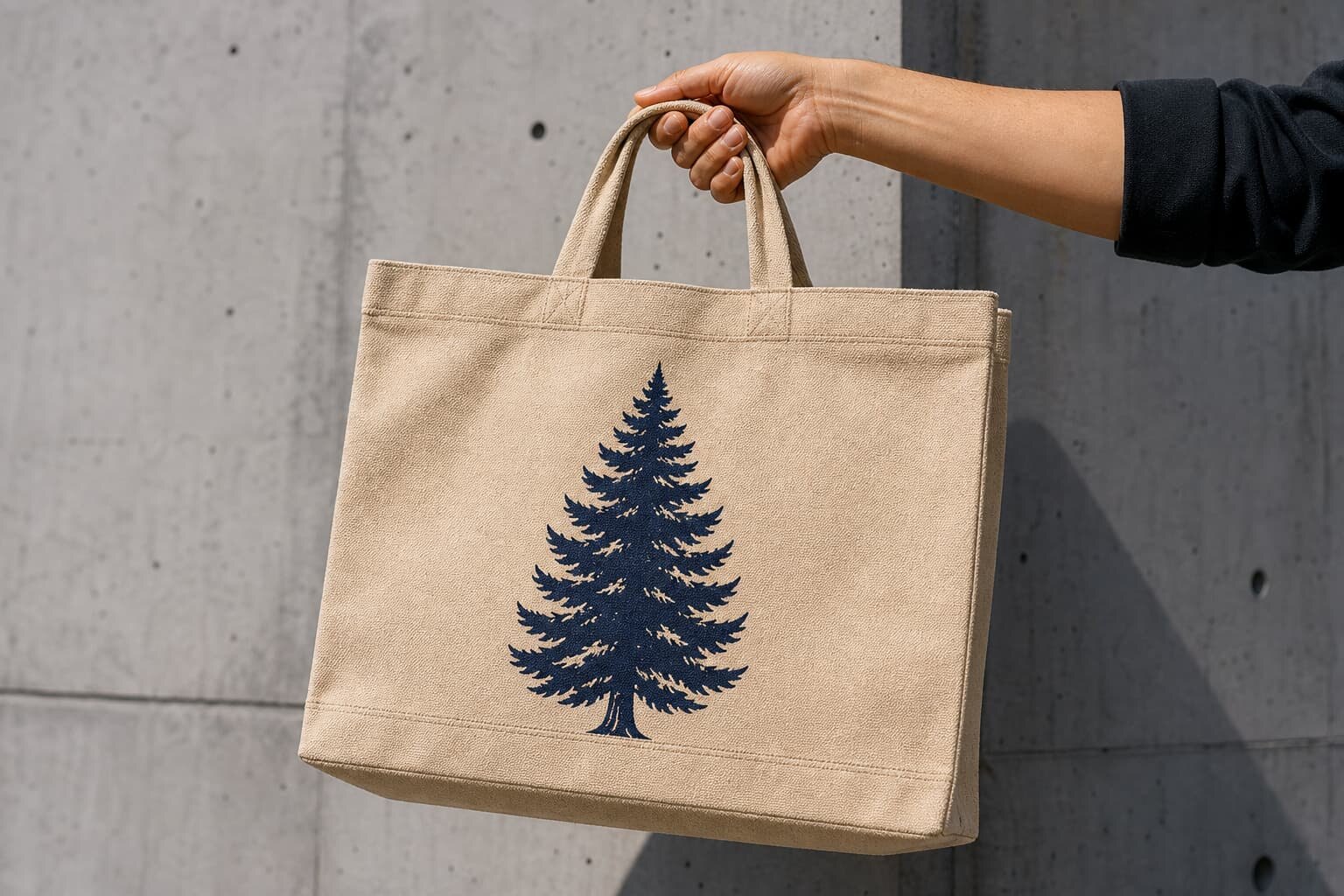
Why Handle Stress Records Matter in Canvas Tote Purchasing
A canvas tote bag can look acceptable on a table and still fail the first week a customer uses it. Handle failure is usually more damaging than a small print shade issue because the user cannot continue using the bag. For importers, distributors, and retail buyers, the practical issue is not whether the bag feels strong by hand. The issue is whether the supplier can show a repeatable canvas tote bag handle stress record that matches the approved specification.
A useful stress record is not a marketing photo of a bag hanging from a hook. It should connect the bag construction to a defined load, test time, sample version, and result. When this document is missing, buyers often compare quotes only by fabric weight, size, and logo price. That is risky because two suppliers can quote the same 12 oz canvas tote while using different handle tape, thread, stitch density, reinforcement size, and sewing operators.
- Use the stress record to confirm the bag can carry the intended product weight, not just pass a visual inspection.
- Ask for the record before bulk approval, especially when the tote will be sold as merchandise rather than given away once.
- Compare quote differences by handle construction, because this is often where factories reduce cost quietly.
- Treat the handle area as a functional component, not a decorative sewing detail.
Start With the Real Carrying Load, Not Only Bag Dimensions
Many RFQs say 38 x 42 cm, 10 oz cotton canvas, long handles, one-color print. That is enough for a rough price but not enough for a reliable handle specification. A tote used for a trade show brochure pack has different stress than a tote used for groceries, books, wine bottles, or staff onboarding kits. If the buyer does not state the intended load, each factory makes its own assumption, and the cheapest quote may be designed for the lowest assumption.
The working load should be realistic and written in simple terms. For example, a retail bookstore tote may need to carry 5-7 kg in normal use. A grocery tote may need more safety margin because users swing the bag, lift it from a car, and load uneven items. The stress record should test above the working load because real use includes movement, not only steady hanging.
- State the expected working load per bag, such as 5 kg, 8 kg, or 10 kg.
- State whether the load is soft goods, books, bottles, groceries, event kits, or mixed retail products.
- Ask the supplier what safety factor they recommend for the selected fabric and handle style.
- Avoid vague wording such as heavy duty unless it is supported by a defined test method.
Fabric GSM and Handle Strength Must Be Matched
Fabric weight is one of the first numbers buyers request, but GSM alone does not guarantee handle strength. An 8 oz canvas, around 270 GSM, can be suitable for light promotional totes if the load expectation is low. A 10 oz to 12 oz canvas, around 340-410 GSM, is more suitable for regular retail use. Heavier canvas can improve body strength, but only if the handle attachment and thread are upgraded at the same time.
A common mistake is upgrading the body fabric while keeping a narrow or weak handle construction. The buyer pays more for fabric but still has failure risk at the stitch area. Another mistake is choosing a very thick fabric without checking needle size and stitch quality. If the sewing is not adjusted, heavy fabric can show skipped stitches, large needle holes, and uneven box stitching.
- Light promo tote: 6 oz to 8 oz cotton canvas, usually for low load and short-term use.
- Standard retail tote: 10 oz to 12 oz cotton canvas, common for paid merchandise and repeat use.
- Heavy canvas tote: 14 oz or above, useful only when sewing equipment and handle reinforcement are suitable.
- Ask the factory to quote GSM or oz clearly because market descriptions are not always consistent.
Handle Material, Width, and Length Change the Test Result
Handle stress is affected by more than the sewing at the base. The material of the handle itself matters. Self-fabric canvas handles give a consistent look and are common for natural cotton tote bags. Cotton webbing handles can provide a smoother edge, stable width, and better production consistency. Some low-cost handles look acceptable but stretch, twist, or cut into the user's hand when loaded.
Width and length also affect performance. A 25 mm handle may be acceptable for light bags, but 30-38 mm is often better for medium loads and retail comfort. Long shoulder handles place a different angle on the stitch box than short hand-carry handles. If the tote is designed for shoulder carry, the handle attachment should be tested under the angle used in real life, not only straight vertical hanging.
- Specify handle width in millimeters, not only long handle or short handle.
- Specify finished handle drop, measured from bag top edge to the highest point of the handle.
- Confirm whether handles are folded self-fabric, flat webbing, or another tape construction.
- Check edge comfort, especially for bags expected to carry books, groceries, or bottles.
What a Proper Handle Stress Record Should Include
A practical handle stress record should be simple enough for a buyer to review, but detailed enough to prevent misunderstanding. It should identify the exact sample tested: size, fabric weight, handle material, handle width, handle length, stitch method, print method, and sample date. If the supplier tests a stronger sample than the one quoted for bulk, the record has limited value.
The test method should be visible and repeatable. Static hanging is useful for checking basic strength, but it does not fully represent lifting, swinging, or repeated use. For higher-value retail orders, ask for a short lift-cycle or pull test in addition to static load. The record should show the load amount, duration, result, and any visible damage after the test.
- Sample ID or photo matching the approved sample.
- Test load in kg and test duration in minutes or cycle count.
- Description of how the bag was loaded or suspended.
- Close-up photos of the handle base before and after testing.
- Result statement such as pass with no broken stitches or fail due to fabric tear.
Stitch Construction: Where Many Low Quotes Hide Risk
The handle base is a high-stress area, and small sewing differences change the outcome. A clean-looking rectangle of stitches is not automatically strong. Buyers should confirm whether the supplier uses a box stitch, box-X stitch, dense bar tack, double row, or another method. The stitch box should be large enough to distribute force into the body fabric without sitting too close to the top edge.
Thread type, stitch density, and back tacking also matter. Too few stitches reduce strength. Too many stitches in a tight area can perforate cotton canvas and create a tear line. A factory with tote bag experience will balance stitch density with fabric thickness and needle size. For RFQs, the buyer does not need to engineer every sewing parameter, but should require the factory to state the proposed construction and prove it with a stress record.
- Box-X stitch is usually stronger for medium and heavy canvas totes than a simple straight row.
- Bar tacks can be effective when placed correctly and used with suitable thread.
- Back stitching should lock the thread ends without creating messy bulk.
- Stitching should not cross thick print film, hard labels, or multiple uneven seam layers.
Print Method Can Affect Handle Performance
Logo placement is often approved separately from sewing, but the two can interact. Screen printing is common for cotton canvas tote bags and works well for many one-color or multi-color designs. Heat transfer can give sharp graphics but may add a film layer that changes fabric flexibility. Embroidery, woven labels, or sewn patches add needle holes and thickness. If these decorations sit near the handle base, they can affect sewing and stress distribution.
For high front logos, the buyer should check the distance between the print and the handle attachment. If the stitch box lands over printed ink or transfer film, the area may pucker, crack, or weaken. For dark canvas with heavy ink coverage, curing and hand feel should also be checked before stress testing. The best practice is to test the sample after printing, not before decoration.
- Screen print: cost-effective for common tote logos, but ink coverage and curing must be checked.
- Heat transfer: useful for detailed artwork, but avoid placing film under stress stitching.
- Embroidery: premium look, but adds needle penetration and can distort lighter canvas.
- Woven side label: low impact if placed away from the handle base and main load seams.
MOQ, Quote Data, and Cost Drivers Behind Stronger Handles
A stronger handle specification can change the quote, but the increase is usually tied to understandable cost drivers. Wider webbing, heavier fabric, extra stitch operations, inner reinforcement patches, and slower sewing all affect price. If buyers only ask for the lowest FOB price, factories may remove these details to stay competitive. A proper quote should show the construction assumptions behind the price.
MOQ logic also matters. If the handle uses standard cotton webbing available in factory stock, MOQ may stay close to the normal tote bag minimum. If the buyer requests custom dyed webbing, special width, custom yarn color, or heavy canvas that is not in regular stock, the MOQ may increase because the mill or dyeing supplier sets its own minimum. Buyers should ask this early instead of discovering it after artwork approval.
- Ask whether the quoted fabric is greige, natural, bleached, dyed, or custom dyed.
- Ask whether handle tape is stock material or requires separate production.
- Ask whether reinforcement patches are included in the quoted price.
- Ask whether stress testing, pre-production samples, and extra QC photos are included or charged separately.
- Compare quotes using the same handle width, stitch type, fabric GSM, and print method.
Sampling Workflow Before Bulk Production
The first sample should confirm size, fabric hand feel, handle drop, print scale, and general sewing. However, the pre-production sample should confirm the final production method. If the buyer approves a showroom sample made from available fabric and then bulk is made from a different GSM or handle tape, the earlier stress record may not represent the shipment. For this reason, stress testing is most useful at pre-production sample stage.
A good sampling workflow avoids repeated changes. First approve the technical structure: size, gusset, fabric, handle, stitching, and pocket layout if any. Then approve artwork and print method. Then request the stress record on a sample made with final materials. If the test fails, revise the handle attachment before cutting bulk fabric.
- Development sample: confirms concept, size, rough fabric, and handle length.
- Artwork sample or strike-off: confirms logo size, color, placement, and print hand feel.
- Pre-production sample: confirms final materials, stitching, decoration, and packing method.
- Stress record: should be linked to the pre-production sample or first bulk output.
Inline Inspection, Packing, and Lead Time Planning
Handle inspection should not wait until all cartons are sealed. Inline QC can catch uneven handle length, skipped stitches, incorrect stitch box size, weak back tacking, and fabric puckering while repair is still possible. For larger orders, ask the supplier to check the first finished pieces from the production line and send photos of the handle attachment. This is more useful than only receiving final packed carton photos.
Packing can also damage presentation and make incoming inspection difficult. Handles should be aligned and folded naturally, not twisted into tight bundles. Flat packing is common for canvas totes, but heavy carton compression can create hard creases, especially on dyed canvas or printed panels. Lead time should include sample making, print approval, material preparation, sewing, inline inspection, final inspection, and export packing. A rush schedule often reduces the time available for stress testing and correction.
- Typical sample timing should include making, decoration, stress check, and buyer review.
- Bulk lead time depends on fabric availability, print complexity, order quantity, and packing style.
- Polybag packing may be required for retail cleanliness but adds labor and plastic policy considerations.
- Master carton weight should be controlled so cartons are not crushed during handling.
- Ask for carton marks, carton dimensions, and units per carton before confirming logistics.
Specification comparison for buyers
| Spec decision | Recommended option | When it fits | Buyer risk to check |
|---|---|---|---|
| Fabric body weight | 10 oz to 12 oz cotton canvas, around 340-410 GSM | Retail promo bags, bookstore totes, grocery-style reusable bags | If the handle is stronger than the body fabric, tearing may start around the stitch box under load |
| Handle material | Self-fabric canvas handle or cotton webbing 30-38 mm wide | Orders needing better hand feel and stable load performance | Very narrow handles can pass a static test but feel painful and distort under real use |
| Handle attachment | Box stitch with X reinforcement or dense bar tack plus back stitch | Medium to heavy daily-use totes and paid retail merchandise | Decorative-only stitching may look clean but fail during drop or swing loading |
| Test load basis | Static hang test at 2-3 times claimed working load, plus short lift-cycle test | Buyers selling bags for shopping, events, gifting, or staff kits | A single photo of a bag hanging with weights is not a complete stress record |
| Print method near handle zone | Keep screen print or heat transfer clear of stitch stress area | Logo designs placed high on the bag face | Ink or film trapped under handle stitches can crack, pucker, or reduce seam stability |
| Packing method | Flat pack with handles aligned, not twisted or sharply folded | Export cartons, retail polybag packing, and distributor inventory | Compressed handles can crease permanently and make inspection harder at arrival |
Buyer checklist before sampling
- Define the intended carrying load in the RFQ, not only the bag size and fabric weight.
- Ask the supplier to state the handle width, handle length, handle fabric, and attachment stitch type.
- Request a handle stress record for the approved sample and at least one inline production lot.
- Confirm whether the stress test is static hanging, lift-cycle, drop, or a combination.
- Check that the test load is higher than the claimed working load, with a clear safety margin.
- Require photos or video showing the same bag, same handle position, measured weight, and test duration.
- Review the stitch density, thread size, back tacking, and stitch box placement before approving bulk.
- Check whether print, pocket, lining, or inner coating interferes with the handle attachment area.
- Set an acceptance rule for loose stitches, broken thread, fabric tearing, and handle elongation.
- Make packing instructions specific enough to prevent twisted handles, hard creases, and carton compression.
Factory quote questions to send
- What working load do you recommend for this canvas tote bag size, fabric GSM, and handle construction?
- What handle stress test can you perform in-house, and what details will appear in the stress record?
- Will the handle use self-fabric canvas, cotton webbing, or another tape, and what is the exact width and GSM or thickness?
- What stitch construction will be used at the handle base: box stitch, box-X, bar tack, double row, or another method?
- How many stitches per inch will be used around the handle attachment, and what thread type will be used?
- Can you provide a pre-production sample tested with the same fabric, print method, handle, and stitch construction as bulk?
- Will the logo position or print method affect the handle attachment area, especially for high front prints?
- How will you inspect handle strength during production, and what sampling level will you use before packing?
- What MOQ changes if we upgrade from 8 oz to 12 oz canvas or from self-fabric handles to webbing handles?
- How many days are required for sample making, stress testing, bulk production, inspection, and export packing?
Quality-control points to confirm
- The stress record should identify the sample version, fabric weight, handle material, stitch construction, test load, test duration, and test result.
- The handle attachment area should show no broken thread, fabric split, skipped stitch, excessive needle hole enlargement, or handle pullout after testing.
- Both handles should be tested or inspected because unequal handle length and uneven sewing are common causes of twist and load imbalance.
- The factory should check the first finished pieces from bulk production, not only the development sample.
- Inline QC should inspect handle sewing before the bag is fully packed, because hidden inner reinforcement problems are difficult to repair later.
- Carton drop or transport simulation is useful when bags are packed tightly, because compression can deform handles and stress printed panels.
- The approved sample, stress record, and final inspection checklist should use the same acceptance criteria to avoid argument at shipment stage.
- If the bag has gussets, lining, zipper top, or inner pocket seams, QC should confirm these features do not pull against the handle attachment.