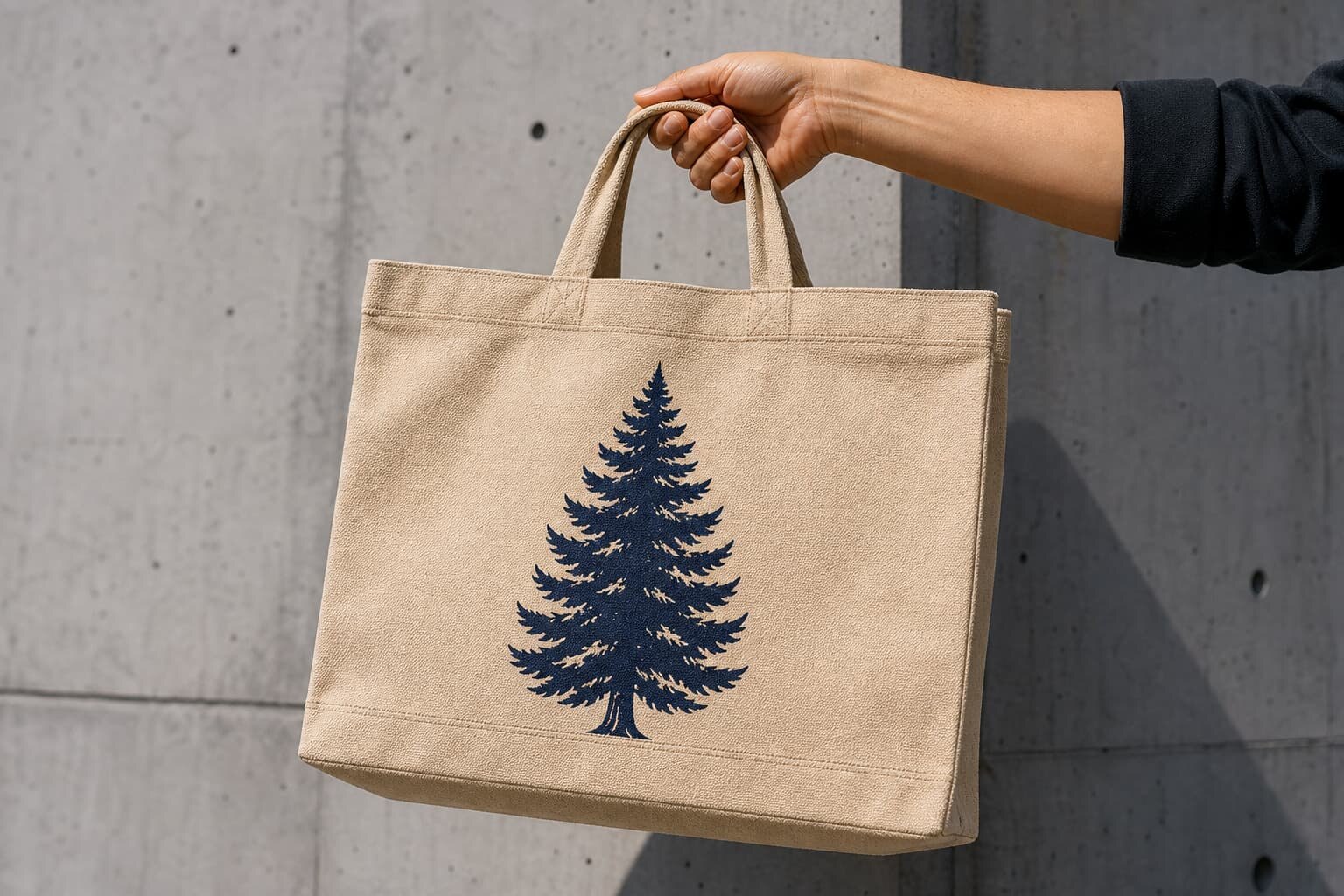
Why Handle Stitch Density Matters More Than Most Buyers Think
Most canvas tote bag handle failures do not start with the body fabric. They start where the handle meets the top edge, where load, movement, and sewing quality all concentrate into a small area. If you only approve the bag size and print, you can still end up with handles that stretch, twist, or tear away after a few carries. For buyer RFQs, stitch density matters because it changes how the handle distributes force across the seam and how well the bag survives repeated use. That is why a quote that says only double stitching is not enough. You need the factory to tell you the stitch density, reinforcement shape, bartack count, thread type, and seam allowance in one clear package.
The correct stitch density depends on the role of the bag, not just the look. A conference tote that carries brochures once a day is not the same as a retail tote that sees frequent grocery use. On canvas, too few stitches can let the seam slip, while too many can punch a line of perforations that weakens the fold and makes the handle area look hard and wrinkled. The right spec also changes when the bag has a lining, a pocket, a gusset, or a heavy print near the top edge. Buyers should treat stitch density as a performance spec, not a style choice.
- Ask for stitches per inch, bartack size, and reinforcement shape, not only double stitching.
- Separate the handle seam spec from the body seam spec in the RFQ.
- Define the expected carry weight before you ask the factory to quote.
Start With Fabric GSM and the Real Load the Bag Will Carry
Fabric weight sets the first boundary for handle stitching. In the canvas tote market, a common starting point is around 200-240 GSM for promotional bags, 280-340 GSM for retail totes, and 380-480 GSM for heavier use or premium styles. As the fabric gets heavier, you can usually support a more robust seam, but the handle area also needs stronger thread, better control of tension, and enough seam allowance to avoid edge breakage. If the canvas is too light, a dense stitch line can do more harm than good because it perforates the fabric faster than the load would naturally stretch it.
The buyer should describe the actual contents, not just the bag dimensions. A 38 x 42 cm tote may hold notebooks and samples in one program, but groceries or bottled drinks in another. Those are different load patterns, and the handle spec should reflect that difference. If the handle is made from self-fabric, cotton webbing, or a webbing-and-patch build, the stitch behavior changes again. When you send an RFQ, tell the factory whether the bag is for front-of-store merchandising, daily shopping, trade show kits, or long-term retail use, then ask them to propose a seam spec around that load case.
- Use GSM as the first filter, but do not stop there.
- Tell the supplier what the buyer or end user will actually carry.
- Ask whether the handle material changes the thread or needle recommendation.
How to Choose a Stitch Density Range for Each Tote Type
For canvas tote handles, there is no universal stitch count that fits every bag. A light promotional tote usually works best with a moderate stitch density, often around 7-8 SPI, because the goal is to secure the handle without over-punching thin fabric. A midweight retail tote often sits closer to 6-7 SPI, where the seam has enough bite to hold repeated use but still looks clean on the outside. Heavy-use totes can move toward 5-6 SPI if the seam is paired with a longer bartack or a wider reinforcement zone. In all cases, the buyer should watch the full construction, not just the stitch number, because thread size, seam allowance, and bartack width all change the result.
The handle attachment should be spec'd separately from decorative topstitching. A seam that looks neat on the front panel may still fail if the load path is not reinforced where the handle turns downward into the bag body. For that reason, ask the supplier to define the exact stitch density for the attachment seam, the bartack, and any visible topstitch line. If the bag uses a soft folded self-fabric handle, the supplier may need a slightly different setting than if it uses cotton webbing. Do not accept a vague answer like regular sewing or standard reinforcement. Compare the spec by load category and by handle build.
- Use 7-8 SPI as a starting point for light promotional canvas totes.
- Use 6-7 SPI for most retail tote programs with regular daily carry.
- Use 5-6 SPI plus stronger reinforcement for heavy-use or grocery-style bags.
Pick the Right Handle Construction Before You Lock the Stitch Spec
Handle construction changes the stitch decision more than many buyers expect. A self-fabric handle made from the same canvas as the body behaves differently from cotton webbing or a folded double-layer strap. Self-fabric handles can look cleaner and match the bag, but they often need careful fold control so the seam does not twist. Webbing handles spread load better and may need fewer visible lines, yet the patch area can become bulky if the reinforcement is oversized or the stitching pattern is inconsistent. If your brand wants a premium retail appearance, the handle choice should be made together with the stitch density, not after the fact.
You also need to know how the handle is sewn into the bag. Some factories attach handles before closing the side seams, while others sew them after the body is formed. That choice affects bulk, corner strength, and the alignment of the visible stitches. If the factory uses an X-box or a square with bartacks, ask for the exact dimensions of that pattern and where it lands relative to the handle edge. Buyers should compare constructions by end use, sewing complexity, and visual consistency, because the lowest quote may be missing a reinforcement step that your market expects.
- Self-fabric handles are clean, but they need better fold control.
- Webbing handles spread load well, but patch size and edge finish matter.
- Ask how the handle is attached in the sewing order so bulk does not distort the seam.
How Print Method and Decoration Affect Handle Stitching
The print method can change the handle seam even if the bag body looks unchanged. Screen print with a heavy ink deposit, embroidery with backing, woven labels, and heat transfer all create different thickness and stiffness near the upper panel. If the artwork runs too close to the handle base, the needle may pass through a harder surface, which can cause skipped stitches, needle marks, or uneven seam tension. That is why a good RFQ should include a no-print zone around the top edge and handle entry point. The supplier needs that space to keep sewing clean and to avoid damaging the graphic during production.
Decoration sequencing matters too. On some programs, the factory prints before sewing; on others, it finishes the bag and then prints. Each method has risk. Print before sewing can make handle attachment easier to place, but print after sewing can reduce alignment problems if the logo must sit relative to the finished bag shape. If you are using embroidery or a thick patch, ask the supplier to make a sample on the actual decorated fabric, not a blank proxy. A buyer who approves only a blank sample can miss tension changes that appear once the decoration is added.
- Set a no-print zone near the top edge and handle base.
- Approve a sample on the actual decorated fabric, not just blank canvas.
- Confirm whether printing happens before sewing or after sewing.
What to Put in the RFQ So the Factory Quotes the Same Thing
A useful RFQ turns vague sewing language into measurable data. At minimum, include fabric GSM, bag dimensions, handle width and drop, handle material, seam allowance, reinforcement style, stitch density in SPI, bartack count, thread type, decoration method, and packing format. If you want like-for-like quotes, add the acceptable tolerance for handle placement and the no-print zone. Without those details, one supplier may quote a light seam with minimal reinforcement while another quotes a more durable build, and the unit prices will not be comparable. The cheapest quote is often only cheaper because the hidden sewing work is missing.
MOQ logic should also be explicit. Changing handle stitch density, handle width, thread color, or reinforcement pattern can require a new machine setup or new sewing guide, and some factories will treat that as a different order. Ask whether the MOQ is per color, per size, per print design, or per construction. If the bag has multiple colorways or different handle options, ask for separate pricing lines so you can see what the sewing change really costs. That is the fastest way to avoid a surprise charge after sample approval.
- Include stitch density, bartack count, seam allowance, and thread type in the RFQ.
- Ask whether the MOQ changes when the handle construction changes.
- Request separate pricing for sample, bulk, printing, labels, and packing.
Sample Checks That Catch Handle Problems Before Bulk Sewing
The sample stage is where handle issues should be caught, not in the first shipment. Inspect both visual balance and functional strength. Check whether the handles sit at the same height, whether the stitches are straight, whether the bartacks are centered, and whether the top edge puckers after sewing. Then load the bag with the real contents your team expects to ship or sell, not a random weight from the factory floor. Carry it by hand and on the shoulder if that is how the end user will use it. If the handle twists, creeps outward, or leaves an obvious stress mark after repeated lifts, the sample is not ready for bulk approval.
For repeat programs, ask for a pre-production sample and keep a sealed approved sample with notes. Record the stitch density, thread shade, handle drop, fabric GSM, and decoration placement on that reference piece. That gives procurement, QC, and the supplier one shared standard when questions come up later. If the artwork is sensitive, make sure the decoration does not shift the handle geometry or reduce the sewing margin. The approved sample should represent the real production process, not a hand-made one-off that the line cannot repeat.
- Test the bag with real contents and repeated lifts, not only a visual check.
- Compare handle height, seam straightness, and bartack placement side by side.
- Keep a sealed approved sample with the stitch and print notes attached.
Packing and Lead Time Issues That Are Tied to Sewing Complexity
Packing matters because a dense stitch line and a reinforced handle can press creases into a folded tote if the packing method is too aggressive. Buyers should ask how the factory packs the bags: flat stack, individual polybag, insert card, carton bulk, or compressed pack. The more structure and decoration the bag has, the more care the packing needs. If your retail partner expects clean shelf appearance, a rough bulk pack can leave permanent fold lines across the top edge and make the handle sit awkwardly when the bag is opened. That is not a cosmetic detail; it affects sell-through and returns.
Lead time also changes with stitch complexity. A simple blank tote with standard handle attachment will usually move faster than a printed tote with reinforced handles, multiple labels, and a special thread color. Ask the factory to split lead time into sample making, material sourcing, print setup, bulk sewing, inspection, and packing. If they give you one number without the breakdown, you do not know where the delay will happen. This matters in procurement because the sewing spec may be ready, but the canvas stock, thread, or print screen can still hold up the order.
- Choose a packing method that protects the top edge and handle shape.
- Ask for a lead time breakdown by sample, materials, printing, sewing, and packing.
- Confirm whether carton labeling, inserts, or polybags are included in the quoted timeline.
Common Buying Mistakes That Lead to Handle Claims
The biggest mistake is buying by appearance only. A tote can look neat on the table and still fail under real use if the seam allowance is too small, the thread is weak, or the bartack is shorter than needed. Another common error is approving a sample without testing the same bag weight your distributor or retailer will actually carry. If the sample only holds folders, it may not survive bottles, tins, or dense promotional kits. The third mistake is changing print position after sewing has begun, which can pull the handle seam into a compromised area and create registration or tension problems that are expensive to fix.
To avoid claims, freeze the technical sheet before bulk production starts. Put the critical dimensions on the drawing: body size, handle drop, top fold depth, stitch density, bartack length, reinforcement size, print clearance, and packing spec. If the bag includes a pocket, zipper, gusset, or lining, note that as well because those features shift tension into the handle area. Procurement teams do not need more styling options at this stage. They need fewer interpretations and a clearer production path.
- Do not approve a tote on appearance alone; test it with real contents.
- Freeze the tech pack before bulk so print and sewing do not fight each other.
- Record the exact dimensions that affect handle load and seam placement.
A Practical Sourcing Workflow for Better Like-for-Like Quotes
The cleanest sourcing workflow is simple: define the use case, select the fabric GSM, choose the handle construction, specify the stitch density, then request a sample and quote. That order helps the factory respond with numbers that can actually be compared. When you send the same brief to three suppliers, the low quote is only useful if you know it matches the same handle reinforcement and stitch count. If one factory quietly quotes a lighter seam or smaller bartack, the price gap is misleading. Procurement teams save time when they insist on a shared technical baseline before any commercial comparison starts.
For repeat orders, write the stitch spec into the purchase order and retain the approved sample with the order file. That reduces interpretation later when a reorder lands on a different production line or during a peak season. It also makes incoming inspection more consistent across seasons, colorways, and print methods. Strong sourcing is not only about landing a low FOB. It is about keeping the same handle feel, the same load resistance, and the same brand standard every time the tote is reordered.
- Define use case first, then compare factories on the same construction.
- Write the stitch spec and reinforcement detail into the PO.
- Keep one approved sample on file for reorders and incoming inspection.
Specification comparison for buyers
| Spec decision | Recommended option | When it fits | Buyer risk to check |
|---|---|---|---|
| 8 oz / 200-240 GSM promo tote | 7-8 SPI, single-needle topstitch with short bartacks | Giveaways, exhibitions, and low daily load | Needle perforation can weaken thin canvas if stitch density is pushed too high |
| 10-12 oz / 280-340 GSM retail tote | 6-7 SPI, double-needle or reinforced single-needle with bartacks | Retail shopping, bookstore merch, and repeat carry | Check symmetry; twin seams must stay parallel after sewing and light ironing |
| 12-16 oz / 400-480 GSM heavy-use tote | 5-6 SPI with wider bartacks and longer seam allowance | Groceries, work carry, and higher load use | Too-dense stitching can pucker heavy canvas and make handles feel stiff |
| Cotton webbing handle with patch | 6-7 SPI around patch perimeter plus dense bartack | When you want clean edge control and durable load spread | Patch size and edge sealing must prevent fray at the handle entry point |
| Printed front panel close to handle | Keep a no-print zone and sample stitch on decorated fabric | When artwork reaches the upper body area | Ink thickness or embroidery backing can distort stitch tension and registration |
Buyer checklist before sampling
- Confirm fabric GSM, weave, and whether the canvas is prewashed or raw finish.
- Specify handle material, width, drop length, folding method, and attachment style.
- State stitch density in SPI plus bartack count, bartack length, and seam allowance.
- Mark a no-print zone around the top edge and handle base before sampling starts.
- Request a pre-production sample made with the same fabric, thread, and decoration method.
- Set a load test target and define what seam creep, puckering, or twist is unacceptable.
- Lock packing method, carton quantity, label position, and polybag or bulk pack rules.
- Ask whether different handle constructions, colors, or print methods change MOQ and lead time.
Factory quote questions to send
- What stitch density in SPI will you use on the handle attachment and top edge?
- How many bartacks per handle end will you sew, and what bartack length do you recommend?
- Is the handle self-fabric or webbing, and what exact width and thickness are quoted?
- What fabric GSM, seam allowance, and reinforcement patch size are included in the price?
- Which print method will be used, and what no-print zone do you need near the handle seam?
- Can you make the sample with the same thread, needle setting, and reinforcement pattern as bulk?
- What is the MOQ per color, per print method, or per handle construction if the spec changes?
- What are the sample lead time, bulk lead time, and packing format for the carton quote?
Quality-control points to confirm
- Measure handle drop on both sides and confirm the tote hangs level.
- Count SPI and bartacks against the approved sample, not only the tech pack.
- Inspect the top edge and handle base for puckering, skipped stitches, and loose thread tails.
- Check that the handle does not twist, creep outward, or cut into the fabric after load testing.
- Verify print clearance so ink, embroidery, or woven labels do not interfere with the seam line.
- Confirm thread color, tension, and stitch appearance are consistent across the full lot.
- Inspect packing for crushing, dirt, moisture, and carton count accuracy before shipment.
- Compare bulk goods to the sealed sample and record any deviation before release.