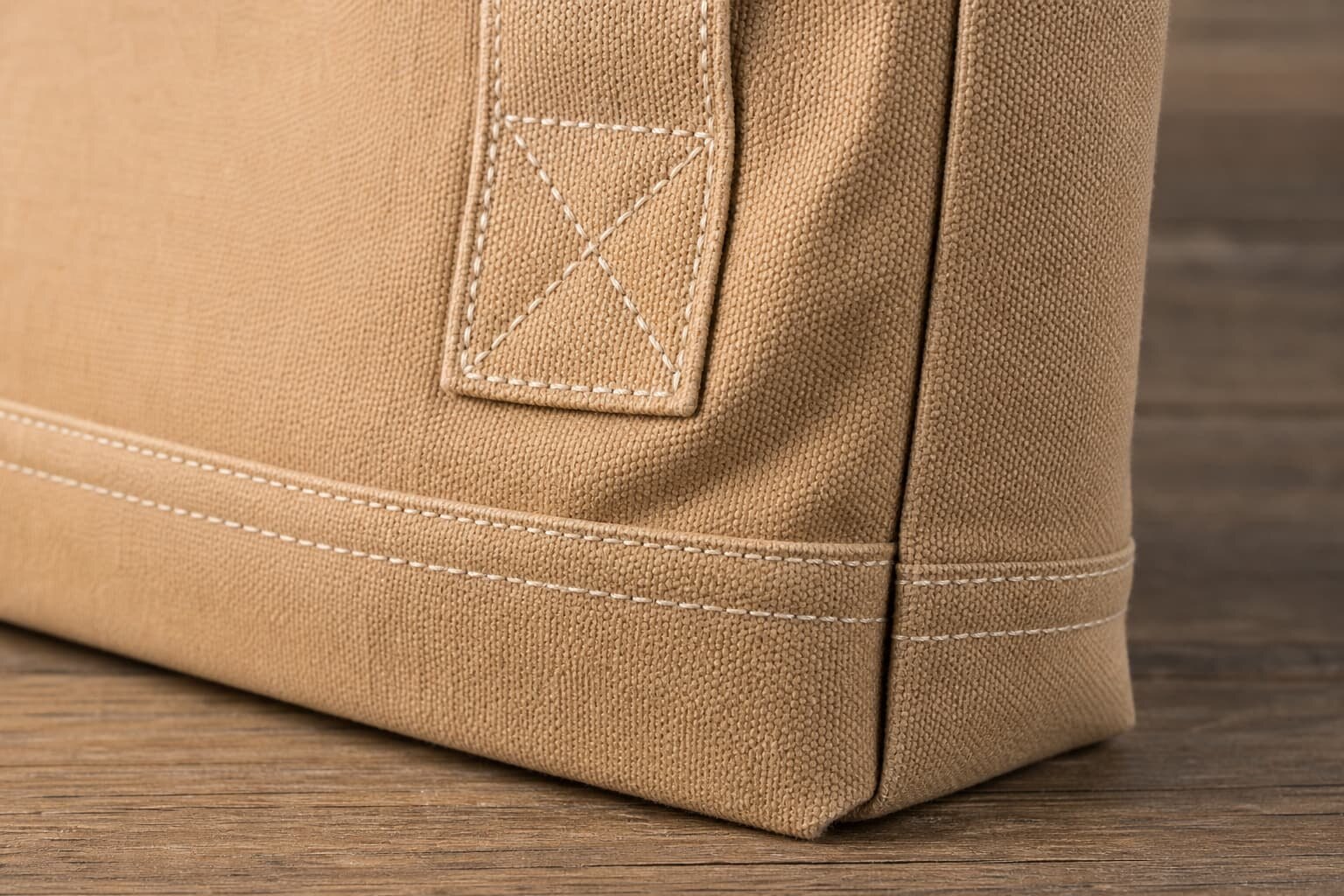
Why the Handle Seam Release Record Matters
For a canvas tote bag, the handle seam is not a minor sewing detail. It is the part most likely to fail when the buyer’s customer fills the bag with books, groceries, bottles, catalogues, or retail purchases. A bag can pass a quick front-panel appearance check and still fail because the handle stitching was made with weak thread, poor stitch density, a shallow seam allowance, or inconsistent operator technique.
A handle seam release record is a practical production document that links the approved sample to bulk output. It should show what construction was approved, what was checked during production, and whether the factory released the lot with the same handle seam standard. For importers and distributors, this record is useful because it turns a vague instruction such as strong handles into checkable evidence before shipment.
- Use the record when the bag has long handles, heavy canvas, retail use, or a load-bearing claim.
- Treat the handle seam as a functional safety area, not only a cosmetic sewing point.
- Ask for photos and measurements, not only a signed statement from the factory.
- Keep the record with the approved sample, final inspection report, and shipping documents.
Define the Bag Before You Define the Seam
The correct handle seam depends on the full bag specification. A 6 oz lightweight cotton event tote does not need the same construction as a 14 oz canvas grocery tote with a bottom gusset. Before asking for a seam release record, the RFQ should state finished bag size, gusset depth, fabric weight, handle size, print method, packing method, and expected carrying use. Without these details, suppliers may quote different constructions while using the same product name.
Canvas weight should be written in both ounces and GSM where possible. As a working reference, 8 oz is often used for low-cost promotional totes, 10 oz for better event and retail bags, 12 oz for stronger retail and lifestyle totes, and 14-16 oz for heavy reusable shopping or premium bags. The exact GSM varies by fabric construction and finishing, so buyers should ask whether the quoted weight is greige fabric weight or finished fabric weight.
- For 8 oz canvas, simple reinforced stitching may be acceptable for light use but should not be sold as heavy duty.
- For 10-12 oz canvas, box stitch with a cross stitch is a common balanced option.
- For 14-16 oz canvas, confirm machine capability, needle size, thread strength, and bulk at the top hem.
- For dyed canvas, check colorfastness and shrinkage because fabric finishing can change seam behavior.
What to Include in the Release Record
A useful release record should be short enough for the factory to complete but specific enough for the buyer to audit. It should not be a generic quality form with only pass or fail boxes. For canvas tote bag handles, the record should identify the approved sample reference, production order number, fabric lot, thread specification, handle material, stitch type, stitch density, seam allowance, and inspection result.
Photos are important. Ask the factory to photograph both handle attachment points from the outside and inside, including close-ups with a ruler or seam gauge. If the handle is inserted into the top hem, the inside top edge should be shown clearly. If the handle is surface stitched onto the bag body, the full box stitch or bar tack area should be visible. These photos help procurement teams compare production against the sealed pre-production sample without relying only on written notes.
- Record sample number, order number, item code, fabric lot, and print artwork version.
- Record handle width, handle length, stitching pattern, thread color, and thread type.
- Record stitch density, seam allowance, top hem depth, and reinforcement position.
- Record inline check result, final inspection result, defect count, corrective action, and release signature.
Handle Construction Options and Buying Risks
The lowest quote often comes from the simplest handle construction. That may be acceptable for a short-life giveaway tote, but it may not fit a retail reusable bag. Procurement teams should compare not only unit price but also how the handle is attached. A straight stitch at the top edge is faster to sew than a full box stitch with cross reinforcement, but it provides less resistance when the handle is pulled at an angle.
A box stitch with a cross stitch spreads stress across a larger fabric area and is easier to inspect visually. Bar tacks can add strength, but they must be placed correctly and not cut through the canvas with too many dense needle holes. Full wrap-around handles can be strong and premium, but they increase material consumption, sewing time, packing thickness, and MOQ pressure because handle tape or self-fabric cutting must be planned more carefully.
- Straight stitch is low cost but risky for bags expected to carry heavy contents.
- Box stitch with cross reinforcement is a good general standard for retail canvas totes.
- Bar tack reinforcement is useful when machine setup is controlled and fabric is not damaged.
- Full wrap-around handles improve load distribution but raise fabric and labor cost.
- Self-fabric handles match the body fabric but may stretch or wrinkle more than woven webbing.
Sample Approval Checks Before Bulk Cutting
The handle seam release process should start before bulk cutting, not at final inspection. A proto sample can confirm size and general construction, but a pre-production sample should confirm the actual fabric weight, actual handle material, actual thread, actual print method, and actual sewing reinforcement. Buyers should not approve a sample made from substitute fabric if handle strength is important.
For sample review, check the bag by handling it as a user would. Lift it with weight inside, pull both handles evenly, then pull each handle separately at a slight angle. Look at whether the fabric around the stitch holes distorts, whether the handle twists, and whether the seam starts opening. This is not a formal laboratory test, but it often catches weak construction before the order enters full production.
- Measure finished handle length from top edge to handle apex, not only total tape length.
- Check both handles because operators sometimes sew one side cleaner than the other.
- Confirm thread color under daylight and indoor light, especially for natural and dyed canvas.
- Review print placement after handle attachment because sewing can shift fabric tension.
- Keep one sealed sample at the factory and one with the buyer or inspection agent.
Print Method Can Affect Handle Seam Quality
Canvas tote bags are often printed before sewing, but the print can still affect the handle seam. Thick screen printing, rubberized ink, or heat-transfer film near the top panel can change how the fabric feeds under the sewing machine. If the handle stitch crosses a printed area, the needle may skip, thread may break, or the seam may pucker. The RFQ should show print size and placement relative to the handle reinforcement area.
For simple one or two color logos, water-based or pigment screen printing is common on natural or dyed canvas. Heat transfer can work for detailed artwork, but buyers should check hand feel, wash behavior, and edge durability. Embroidery near the handle area adds thickness and can distort the panel if placed too close to the top seam. A good supplier will review artwork and warn if the logo position conflicts with sewing operations.
- Keep heavy ink coverage away from the handle stitch path where possible.
- Request a print strike-off on the actual canvas weight and color, not only on spare fabric.
- Confirm curing temperature so the canvas does not shrink unevenly before sewing.
- Check whether print registration changes after the top hem is folded and stitched.
- Ask whether printed panels are stacked long enough to avoid ink transfer before sewing.
MOQ and Cost Logic Behind Stronger Handles
Handle seam upgrades look small on paper, but they change factory cost. A wider handle consumes more webbing or fabric. A box stitch takes more machine time than a single line. Bar tack reinforcement may require a different machine or operator. Heavier canvas may need stronger needles, slower sewing speed, and more careful folding at the top hem. These details are why two quotes for the same canvas tote bag can differ even before printing is considered.
MOQ also depends on material availability. Natural canvas in common weights may support a lower MOQ than custom dyed canvas or custom woven handle tape. If the order requires a special handle color, matching thread, multiple logo versions, or separate retail packing, the supplier may need to set MOQ by material roll, dye lot, print setup, or carton configuration. Buyers should ask what drives the MOQ rather than treating it as an arbitrary factory rule.
- Material cost changes with canvas GSM, fabric width, shrinkage allowance, and cutting efficiency.
- Labor cost changes with handle reinforcement pattern, stitch density, trimming, and inspection time.
- Printing cost changes with artwork size, color count, screen setup, ink type, and curing method.
- Packing cost changes with folding method, individual polybag, hangtag, carton strength, and carton volume.
- Inspection cost changes when buyers require additional seam photos, pull checks, or third-party inspection.
Acceptance Criteria for Seam Release
The release record should state what is acceptable and what is not. If the buyer does not define this, the factory may judge only by general appearance. For handle seams, cosmetic tolerance is not enough. The acceptance standard should cover skipped stitches, broken thread, loose ends, stitch run-off, needle damage, uneven handle length, twisted handles, fabric tearing, and seam placement.
A practical standard is to classify handle seam defects as major when they affect strength, function, or visible retail quality. A single broken thread at a load point can become a return issue even if the rest of the bag looks clean. Minor loose threads may be repairable, but loose threads at stitch lock points should be handled carefully because trimming too close can cause seam release during use.
- Reject missing box stitch, missing bar tack, or reinforcement sewn outside the approved position.
- Reject skipped stitches or broken thread within the handle load-bearing area.
- Reject obvious handle length mismatch that changes bag appearance when carried.
- Reject fabric tearing, needle burn, or excessive puckering around the seam.
- Require repair review if operators re-stitch through the same holes and weaken the canvas.
Packing and Shipment Release Checks
Packing can hide or create handle seam problems. If canvas totes are folded tightly and pressed into weak cartons, handles can crease, twist, or compress against hard seam points. When cartons are overfilled, inspectors may only see the top pieces clearly, and handle defects inside the carton can be missed. The packing method should therefore be part of the handle seam release record.
For export packing, ask for pieces per carton, carton size, gross weight, inner polybag policy, moisture control, and whether the bags are flat packed or folded. Natural canvas can absorb humidity, and heavy cartons can deform lower layers during storage. If the buyer needs retail-ready presentation, handle alignment inside the carton matters because twisted handles can make the product look poorly made even when the seam is technically strong.
- Flat packing is better for shape but can increase carton volume and freight cost.
- Folded packing saves space but may create handle creases if not controlled.
- Individual polybags protect against dirt but may conflict with sustainability requirements.
- Carton gross weight should be realistic for warehouse handling and carton strength.
- Final carton photos should show how handles sit inside the packed carton.
How to Compare Supplier Quotes Fairly
When comparing quotes, do not stop at unit price. Ask each supplier to quote against the same bag size, GSM, handle width, handle attachment method, stitch density, print method, packing method, and inspection requirement. If one factory quotes 10 oz canvas with simple handle stitching and another quotes 12 oz canvas with box stitch reinforcement, the price gap is not a true savings comparison.
Lead time should also be broken down. A realistic quote should separate sample time, material preparation, printing, sewing, inspection, packing, and shipment readiness. For repeat orders using available natural canvas and simple one-color print, lead time may be shorter than for custom dyed canvas, multi-color screen print, or full retail packing. Buyers should ask for a production schedule that includes handle seam approval before the factory completes all units.
- Compare GSM and finished fabric width, not only the word canvas.
- Compare handle material consumption, handle width, and reinforcement pattern.
- Compare print setup, artwork size, color count, and curing method.
- Compare inspection scope, including whether handle seam photos are included.
- Compare packing details because carton volume can change landed cost.
- Compare payment and release terms only after technical specs are aligned.
Specification comparison for buyers
| Spec decision | Recommended option | When it fits | Buyer risk to check |
|---|---|---|---|
| Handle attachment | Box stitch with cross bar tack on 10-16 oz canvas | Retail tote bags, event merchandise, reusable shopping bags, and heavier daily-use bags | Loose corner stitches, uneven box size, missing reverse stitch, or stitching too close to fabric edge |
| Fabric weight | 10 oz for standard promo, 12 oz for retail, 14-16 oz for heavy reusable use | Choose by expected load, brand positioning, and target folded thickness | Quotes may compare different ounce systems; confirm GSM and finished fabric shrinkage after washing or finishing |
| Thread type | Polyester 20/3 or 20/2 depending on fabric weight and machine setting | Best for handle seam strength, color consistency, and export packing conditions | Cotton thread may look natural but can lose strength or vary in shade after steaming and humidity |
| Seam release inspection | Inline pull check plus final AQL visual and manual stress check | Useful when the bag will carry bottles, books, groceries, catalogues, or retail products | A factory may pass appearance inspection while handle reinforcement is too weak for real loading |
| Printing near handle zone | Water-based or pigment screen print kept clear of stitch pressure area | Works for simple CTM, brand, grocery, or campaign logos on canvas panels | Thick ink under folded handle reinforcement can cause needle skipping, broken thread, or puckering |
| Packing method | Flat packed with handle laid straight and protected from sharp carton compression | Best for maintaining handle shape and reducing crease complaints on retail deliveries | Over-compressed cartons can deform handle seams and hide stitching defects until unpacking |
Buyer checklist before sampling
- State the finished bag size, gusset, handle length, handle width, fabric GSM or ounce weight, and whether the canvas is natural, dyed, bleached, or washed.
- Define the handle seam structure: box stitch, cross stitch, bar tack, folded top hem insertion, or full wrap-around handle.
- Ask the factory to record handle seam release approval by sample number, fabric lot, thread color, stitch density, machine setting, inspector, and approval date.
- Confirm the expected load use in practical terms, such as books, groceries, wine bottles, retail apparel, or event materials.
- Require pre-production sample photos showing both handle attachment areas, inside top hem, reverse side stitching, and measurement ruler placement.
- Set acceptance criteria for skipped stitches, broken thread, stitch run-off, puckering, handle twist, uneven handle length, and loose thread trimming.
- Confirm print method, ink type, curing process, and distance between print artwork and the handle seam pressure zone.
- Ask for packing details including pieces per carton, carton weight, flat or folded packing, polybag policy, moisture control, and carton drop risk.
- Compare quotes only after fabric weight, handle construction, thread type, print coverage, inspection scope, and packing method are aligned.
- Do not release bulk shipment until the handle seam release record matches the approved sample and final inspection findings.
Factory quote questions to send
- What canvas fabric weight are you quoting in GSM and ounces, and is that greige weight or finished weight after dyeing, washing, or calendaring?
- What handle webbing or self-fabric handle width and thickness are included in the quote?
- Which handle attachment method is included: simple straight stitch, box stitch, cross stitch, bar tack, or reinforced top hem insertion?
- What stitch density per inch or per 3 cm will be used for the handle seam, and what thread specification is included?
- Can you provide a handle seam release record with sample photos, inline inspection notes, and final inspection confirmation?
- What is the MOQ for this construction, and does MOQ change if we request dyed canvas, custom handle color, or multiple print colors?
- Which print method is quoted, and how will ink curing or heat pressing affect the handle seam area?
- How many pieces per export carton are quoted, and what is the estimated carton weight and carton size?
- What sample stages are included before bulk production: proto sample, print strike-off, pre-production sample, or sealed approval sample?
- What lead time is quoted for sampling, material preparation, printing, sewing, inspection, packing, and shipment readiness?
Quality-control points to confirm
- Handle seam position must match the approved sample on both left and right attachment points.
- Stitching must be locked at seam starts and ends without loose thread tails that can unravel during use.
- Box stitch or bar tack must sit fully on reinforced fabric, not partly outside the folded top hem or handle tape.
- Handle length must stay within the agreed tolerance so paired handles do not look uneven when the bag hangs.
- No skipped stitches, broken needles marks, thread loops, or stitch run-off should be accepted on handle load points.
- Fabric around the handle seam should not show tearing, excessive puckering, needle burn, or distorted print.
- Final cartons should not compress handles so tightly that creases hide seam defects or create permanent handle deformation.
- The release record should identify the sample reference, production lot, inspector, date, and corrective action if defects were found.