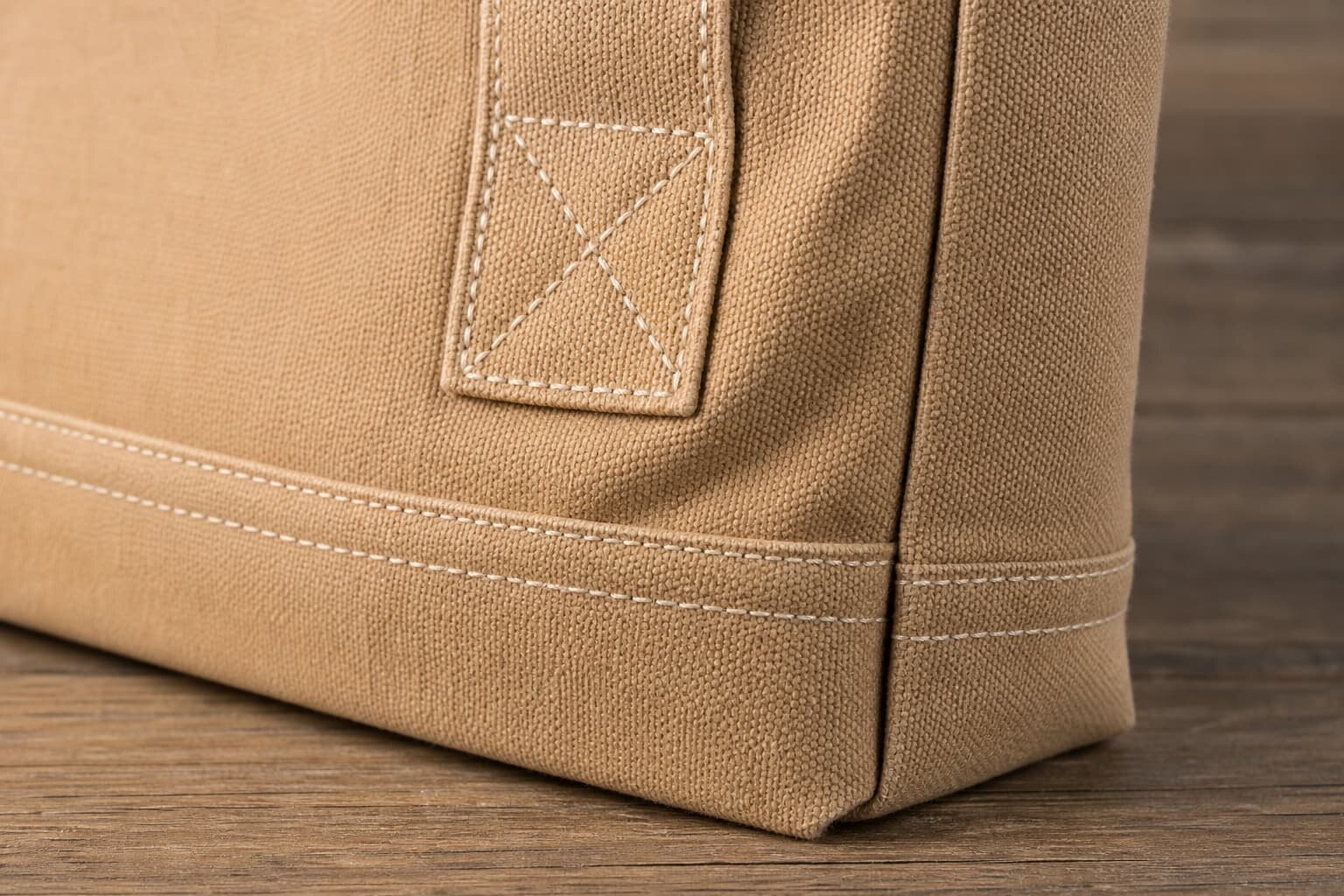
Why a handle length correction log matters
A canvas tote bag handle length correction log is not paperwork for paperwork's sake. It is the simplest way to stop a small sewing error from turning into a retail complaint, a packing problem, or a reorder dispute. Handle length affects how a tote sits on the shoulder, how it hangs on a hook, and how it looks on shelf. If the handles are even a little short, the bag feels stiff and awkward. If they are too long, the tote swings, folds badly, and can make the opening look sloppy.
For procurement teams, the log is also a quote comparison tool. One supplier may quote based on cut length, another on finished length after stitching, and a third may include pressing or bartack shrinkage in the number without saying so. If the buyer does not force those differences into a correction log, the cheapest quote can become the most expensive order once samples, revisions, and rework are counted. That is why this file matters on first orders, repeat orders, and any tote program with more than one fabric weight or print method.
- Use the log whenever the handle has to match a previous approved sample.
- Treat a handle mismatch as a spec issue, not only a sewing issue.
- Compare suppliers by how clearly they explain measurement, revision control, and correction ownership.
Lock the measurement basis before the first quote
The biggest source of handle disputes is a vague measurement rule. In tote sourcing, finished handle length, cut length, and drop length are not the same number. Finished length is what the buyer sees and uses; cut length is what the factory cuts before folding and sewing; drop length is the carrying comfort once the bag is hanging. Your RFQ should name which one matters, where to measure it, and whether it is checked before or after final pressing. Without that, a supplier can be technically correct and commercially wrong at the same time.
The safest approach is to send a drawing or sample photo with seam references, not just a text note. Include bag body size, fabric weight or GSM, handle width, handle material, and print location if the art comes near the top edge. For 8 oz to 10 oz promo totes, a small handle shift may be acceptable if the bag is light. For 12 oz to 16 oz retail canvas, buyers usually need tighter control because the tote carries more weight and the handle shape is more visible. The measurement rule should be the same for sample, preproduction, and bulk inspection.
- State whether the buyer wants finished length, cut length, or drop length as the control dimension.
- Define the two reference points in writing and on the sample sketch.
- Match the measurement rule to the fabric weight and end use of the tote.
What the correction log should record
A useful correction log is short, factual, and easy for both merchandisers and line supervisors to read. It should show the sample number, date, intended handle length, actual measured length, variance, cause, action taken, and final approval status. If the log also shows left and right handle values separately, you can catch asymmetry before a bulk lot goes out. That matters because many tote complaints are not about the total length alone. They are about one side sitting higher, one handle twisting, or the two handles feeling different in the hand.
The log should also show whether the change was made at the cutting stage, during folding and sewing, after pressing, or after bartacking. Those details matter because the root cause is not always the same. A self-fabric handle can shorten after topstitching. A webbing handle can lose effective length if the fold is too deep. A reinforced box or bartack can pull the handle in by a few millimeters if the sewing template is not fixed. When the log records the stage of change, the next quote is easier to compare and the next sample is faster to approve.
- Record sample code, revision number, actual measurement, and the person who approved the change.
- Note the production stage where the correction happened.
- Track left and right handle measurements separately when the design uses two sewn handles.
Match handle construction to the tote program
Handle construction changes how a tote behaves, how it looks, and how easy it is to keep on spec. Webbing handles are usually the most stable choice when the buyer wants faster production and consistent width. Self-fabric folded handles look more premium because they match the bag body, but they can stretch, curl, or vary if the stitch path is not controlled. For canvas bags with 12 oz or heavier fabric, the handle often needs a stronger fold and more reinforcement, especially when the bag is meant for daily carry or heavier inserts.
Print method matters too. Screen print is usually fine on the body, but if the art sits close to the handle seam, a handle length change can shift the visual balance of the layout. Heat transfer can be more sensitive to placement after pressing, while embroidery can stiffen the area and make the handle feel shorter even when the measurement is correct. If you are buying a retail tote, the right construction is not the one with the lowest unit quote. It is the one that keeps the approved handle length after sewing, pressing, packing, and use.
- Webbing is usually better for basic consistency.
- Self-fabric is usually better when the brand wants a cleaner retail look.
- Heavy canvas needs reinforcement that does not distort the handle length after sewing.
How to read a quote when handle length drives cost
A quote that does not separate handle variables is hard to trust. Ask the factory to show whether the handle cost is coming from fabric usage, webbing purchase, bartack labor, topstitch time, or extra sample rounds. If the supplier only gives one total number, you cannot tell whether a handle correction is a simple adjustment or a process change. This is especially important on canvas tote bags because the handle is a visible part of the product, but also one of the easiest parts to misquote when multiple sizes are involved.
MOQ logic usually follows the material and the setup. A longer self-fabric handle can use more canvas and change the cutting marker. A webbing handle can be limited by webbing roll minimums or color availability. A reinforced handle can add machine time, more QC checks, and sometimes a separate sewing fixture. If you request three handle lengths in one order, the factory may need three cut plans or three inspection references. That does not always change the MOQ by a huge amount, but it can change the price break and the lead time. Buyers should ask for that split before they compare vendors.
- Ask for a quote split by material, sewing labor, print, packing, and rework.
- Confirm whether a handle change alters the cutting marker or webbing purchase plan.
- Check if the factory treats each handle length as a separate production reference.
Sample checks that catch handle drift early
Handle length problems are cheapest to catch at sample stage, before a full cutting run starts. The buyer should ask for a proto sample, a preproduction sample, and a first-batch check if the order is large or the handle design is new. Measure at least a few units from each stage, not just the one nicest sample on the table. A good control sample also includes the bag filled to a realistic weight so you can see whether the handle collapses, twists, or spreads under load. For a tote made from 10 oz canvas, the carrying feel can change a lot once the body is filled; for 14 oz or 16 oz canvas, the stitching detail becomes more important because the material is less forgiving.
Sample review should include the print method if artwork sits near the top edge. Screen print, embroidery, woven label, and heat transfer each affect the surrounding panel in a different way. If the handle length is changed after art approval, the artwork position must be rechecked against the top seam and the handle start point. The best sample approval process is not just measure, approve, repeat. It is measure, record, correct, remeasure, and then lock the revision in the correction log before the factory cuts bulk fabric.
- Measure several units from every sample stage, not only one showpiece.
- Test the tote with a realistic fill weight to see real carrying behavior.
- Recheck artwork placement if the handle length is revised after print approval.
Packing decisions can hide or create a handle problem
Many buyers overlook packing because the handle is already approved by the time cartons are discussed. That is a mistake. A tote that passes open-bag measurement can still look wrong once it is folded, polybagged, and packed into master cartons. Repeated compression can set the fold line, twist the handle, or make one side appear shorter when the customer opens the bag. If the program is retail-facing, the unpacked look matters almost as much as the measured length. If the tote is a promotional item, compressed packing can still trigger complaints if the handle springs back unevenly.
The correction log should therefore note the final packing method. Include the folded orientation, polybag size, insert card if any, and carton count. If the factory changes from loose bulk to compressed pack, the handle may need a different fold point or a different top reinforcement to keep it looking even. This is especially true for canvas totes with woven side labels or sewn brand marks, because the label position can make a minor handle issue more obvious on shelf. Good packing is not only about shipping efficiency. It is part of the appearance spec.
- Lock fold direction and bag orientation before production starts.
- Check handle appearance after unpacking, not only before carton closing.
- Record packing format in the same file as the handle correction log.
Set acceptance criteria that a factory can actually follow
A buyer cannot manage handle length by saying it should look better. The supplier needs a measurable acceptance rule. As a starting point, many buyers set tighter tolerances for retail canvas and looser ones for promotional totes, but the exact number should match the use case and the bag size. The important part is to define the target, the allowed variance, and the rejection rule before the first bulk run. If the handles are outside tolerance, specify whether the batch can be reworked, downgraded, or must be remade. This prevents arguments later when the warehouse receives cartons that look close but do not match the approved sample.
Acceptance criteria should also include symmetry and comfort. A tote can be on length spec and still feel wrong if the left and right handles sit at different angles or if one bartack pulls more tightly than the other. For canvas tote bags, especially heavier 12 oz to 16 oz styles, a small change in how the handle is stitched can alter the way the bag stands. Buyers should ask the factory to inspect after final pressing, because pressing can reveal problems that were hidden at the sewing bench. The correction log then becomes the proof that a fix was made and approved, not just discussed.
- Set a target length, an allowed variance, and a clear reject rule.
- Add symmetry and comfort checks, not only a total length check.
- Inspect after final pressing because that is when the real appearance becomes visible.
What to ask before you release the PO
Before you release a purchase order, ask the factory to explain how it will control the handle length from cutting to packing. If the answer is vague, the quote is not ready. You need to know whether the factory measures the handle before or after pressing, how it handles revision control, and whether one change to the handle requires a new marker or a new sample round. You also need to know whether the lead time in the quote assumes clean approval or includes one correction cycle. Many programs budget a short sample window and a several-week bulk window once materials are approved, but the handle correction log is what keeps those timelines from slipping.
This is also the point to ask for quote data that can be compared line by line. A useful quote should show fabric weight or GSM, body size, handle type, print method, reinforcement, packing format, MOQ, and expected revision cost if the handle spec changes. If the supplier cannot give those details, the buyer may only be comparing headline numbers, not real landed value. In tote sourcing, the cheapest handle is the one that stays within spec the first time. The correction log is the tool that makes that outcome repeatable.
- Ask whether the quote includes one correction cycle or only the initial sample.
- Confirm if handle revisions require new cutting, new sewing setup, or new packing instructions.
- Request a line-by-line quote that can be compared across vendors without guesswork.
Specification comparison for buyers
| Spec decision | Recommended option | When it fits | Buyer risk to check |
|---|---|---|---|
| Finished handle length vs cut length | Quote and approve finished handle length first, then keep cut length in the factory worksheet | Any RFQ where the buyer needs repeatability across sizes, colors, or reorder programs | Factories may quote the wrong base if the measurement point is not defined from the start |
| Webbing handle | Use woven webbing when you want stable width and faster sewing | Promo totes, basic retail programs, and repeat orders with low design variation | Check edge sealing, stitch density, and whether the webbing supplier minimum affects MOQ |
| Self-fabric folded handle | Use bag-body fabric for a cleaner retail look and color match | Premium canvas programs, branded retail, and gift or lifestyle assortments | Check stretch, seam allowance, and pressing because these can change finished length |
| Extended shoulder drop | Specify a longer drop only if the bag needs shoulder carry comfort | Trade show bags, shopping totes, and commuter-style canvas bags | Small length changes can alter comfort, bag balance, and carton fold pattern |
| Reinforced boxed handle | Use boxed or bartacked reinforcement for heavier fills | 12 oz to 16 oz canvas, grocery-style tote use, and bulkier retail packs | Check that bartack placement does not shorten the visible handle or create left-right mismatch |
Buyer checklist before sampling
- State finished handle length, handle drop, and the exact measurement point in the RFQ.
- Attach a marked sample photo or sketch with a ruler and seam reference points.
- Confirm fabric weight or GSM, handle material, reinforcement method, and print method before asking for a quote.
- Ask the factory to record every sample revision in a correction log with date, actual measurement, and root cause.
- Request left-right handle symmetry data and final pressed measurement, not just cut length.
- Lock packing method, carton count, and fold direction before bulk approval.
Factory quote questions to send
- What is your measured finished handle length tolerance after sewing and final pressing?
- Where exactly do you measure the handle length, and from which seam or edge reference?
- Can you quote the handle separately for webbing, self-fabric, folded, and reinforced versions?
- What MOQ or material minimum changes if we adjust the handle length or handle type?
- Does a handle length change require a new cutting marker, webbing purchase, or sewing template?
- What sample stages do you plan before bulk, and will each revision be recorded in a correction log?
- How do you verify left-right handle symmetry before packing?
Quality-control points to confirm
- Measure finished handle length after final press, not only after cutting.
- Check the left-right handle difference on every sampled unit, especially on sewn self-fabric handles.
- Verify handle drop against the approved sample when the bag is filled to normal use weight.
- Inspect bartacks, seam allowance, and reinforcement patches so they do not shorten the visible handle.
- Confirm that print placement still matches the approved layout if the handle length changes.
- Check that folded or polybag-packed handles recover to the same shape after unpacking.
- Record each correction with sample code, date, actual measurement, cause, and approval status.
- Reject any bulk lot where the handle length issue changes carrying comfort or creates obvious shelf mismatch.