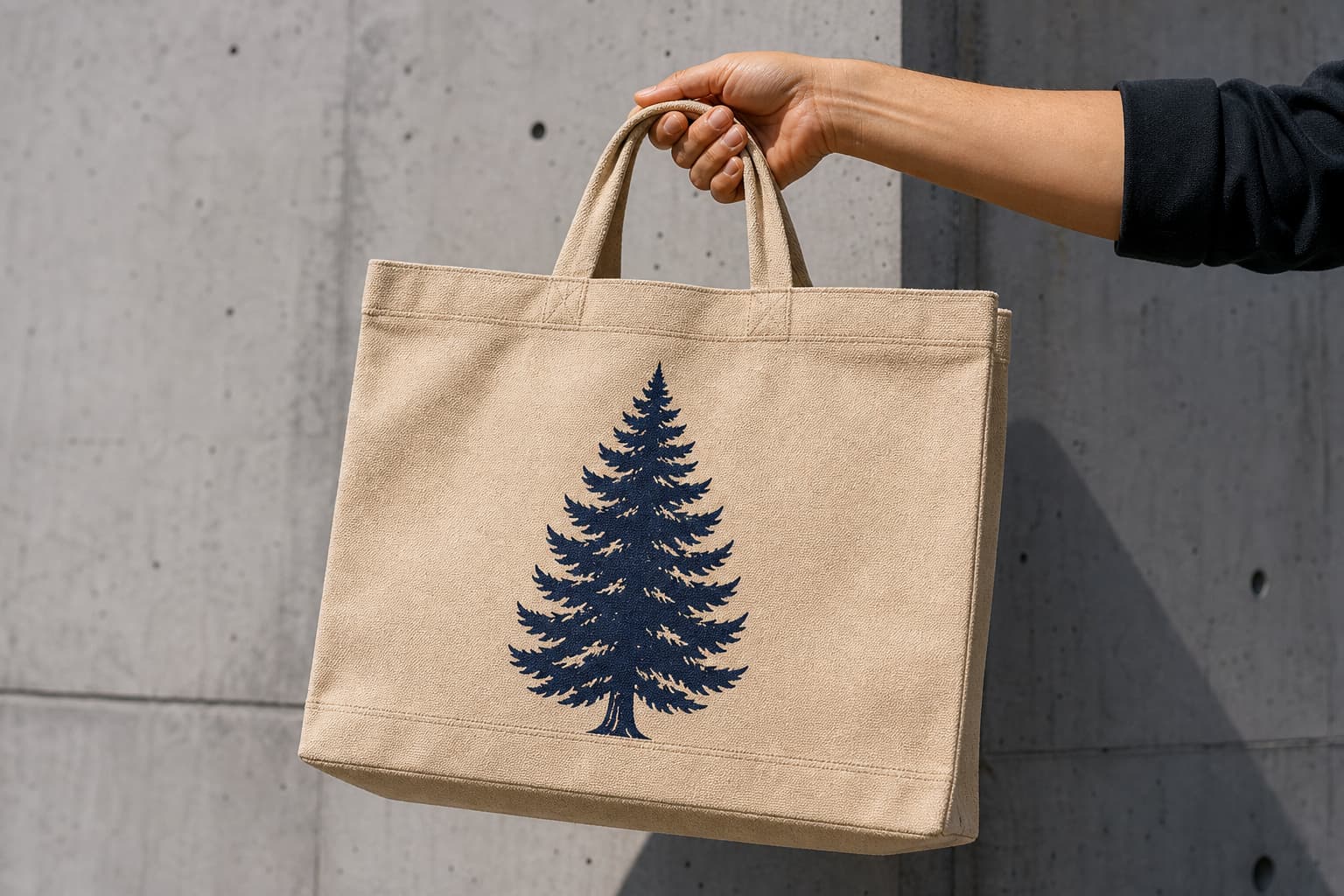
Why GSM drives the whole quote
For canvas tote bags, GSM is not just a fabric note. It affects body structure, print result, sewing speed, freight weight, and how the bag feels in the hand. When buyers compare quotes without a clear GSM basis, they often compare different products that only look similar on paper.
A 280 gsm tote and a 400 gsm tote can share the same size and logo, but they do not behave the same in production or in retail use. If your RFQ only says "canvas tote" or "heavy canvas," the factory will fill in the gap with its own standard, and that is where quote drift starts.
- Use GSM to control handfeel and structure.
- Treat GSM as part of the product spec, not a background detail.
- Ask the factory to state whether the quoted weight is pre-finished or finished.
How to choose the right GSM by use case
Most wholesale tote programs land in a practical band between 280 gsm and 400 gsm. Below that, the bag can feel too soft for retail. Above that, the bag becomes heavier, more expensive to sew, and less forgiving on freight and packing density.
The right answer depends on the bag's job. A giveaway bag, a bookstore tote, and a premium gift tote should not be built to the same weight target.
- 280 gsm: light promotional use, low carry load, foldable distribution.
- 340 gsm: the most common balanced option for retail and events.
- 400 gsm: better structure for premium branding and everyday carry.
- 450 gsm+: only when the program needs a more rigid, heavy-duty bag.
What GSM means for print quality
Canvas weight changes how the logo sits on the surface. Lighter canvas can absorb ink and wrinkle under large prints. Heavier canvas gives better visual stability, but the wrong print method can still crack, ghost, or feel too stiff.
For simple logos and solid spot colors, screen print is usually the most predictable option. For small runs or more detailed art, heat transfer may be acceptable, but the buyer should test the finish, wash resistance, and hand feel before approving mass production.
- Screen print works best for flat, repeated brand logos.
- Large solid prints need a stable fabric surface and a clear cure spec.
- Ask for a strike-off if the logo has fine lines, gradients, or small text.
- Check whether the print area changes the way the bag folds or packs.
Quote the construction, not just the fabric
Two bags with the same GSM can still cost very differently if the construction is not the same. Handle width, handle length, reinforcement, lining, gusset, and pocket layout all change labor time and material use.
A factory quote becomes useful only when the buyer can see what is included. If a supplier says "same as sample" without a written spec, you will not be able to compare vendors cleanly.
- State body size, gusset depth, and handle drop.
- Specify handle material and whether the handles are self-fabric or webbing.
- Confirm if bottom reinforcement, lining, or inner pocket is included.
- Ask for stitching details at handle joins and side seams.
MOQ logic and why it changes with GSM
MOQ is not only a factory policy number. It is often tied to fabric roll usage, print setup, color matching, and sewing efficiency. Heavier canvas can reduce cutting efficiency and may increase sewing time, so a higher GSM can push MOQ higher even when the bag design stays the same.
If you need multiple colors, multiple print placements, or different packing formats, ask the supplier to break MOQ down by variant. That is the only way to see the real production cost of your assortment.
- Separate MOQ by size, color, and artwork variation.
- Ask whether the MOQ assumes stock fabric or custom-dyed fabric.
- Check if one logo change triggers a new print setup charge.
- Confirm whether sample costs are deducted from bulk or billed separately.
Sample checks before bulk approval
A sample should prove more than appearance. It should confirm that the bag size, stitch line, handle strength, print placement, and packing plan all work together. If the sample is only visually approved, many problems show up later in mass production.
Buyers should keep one sealed golden sample and one working reference sample. That gives the factory a clear target if production questions come up later.
- Measure the finished bag after sewing, not only the cutting pattern.
- Check handle drop on the shoulder and in hand.
- Inspect seam strength at the top edge and handle attach point.
- Confirm print alignment against the approved artwork file.
Packing and lead time are part of the spec
Packing can change cost, carton count, and shipment efficiency. A heavy canvas tote may crease differently from a lighter bag, so the factory needs clear packing instructions. If you need inner polybags, barcode stickers, hangtags, or compressed carton packing, write that into the RFQ.
Lead time also depends on what is already available. A quote for stock fabric can move faster than a program that needs custom dyeing, special printing, or multiple rounds of sample approval.
- State whether each bag needs a polybag or bulk packing.
- Give the carton quantity target and outer carton mark format.
- Ask whether the lead time starts after sample approval or after deposit.
- Request a timeline split for fabric, printing, sewing, and packing.
How to write a clean RFQ for canvas tote bags
A good RFQ makes it easy for suppliers to quote the same product. That means exact dimensions, GSM, print method, artwork size, construction, packing, and target market. If any of those are missing, the quote will still come back, but it will not be easy to compare.
For procurement teams, the goal is not just a low number. The goal is a quote that can be produced without surprises, rework, or claim risk.
- Include finished size, GSM, color, and fabric finish.
- Attach artwork with print size and Pantone references if needed.
- List packaging, labeling, and carton requirements.
- Ask the factory to quote alternates if a spec needs a cost-saving option.
Specification comparison for buyers
| Spec decision | Recommended option | When it fits | Buyer risk to check |
|---|---|---|---|
| Fabric weight | 280 gsm | Low-cost promo bags, light giveaway use, foldable retail inserts | Body may feel soft and show print-through if the artwork is large or heavy |
| Fabric weight | 340 gsm | Most wholesale retail and event programs | Confirm handle reinforcement and stitch density so the bag does not stretch under load |
| Fabric weight | 400 gsm | Premium retail, bookstore, gift, and stronger everyday carry | Check sewing efficiency, freight weight, and whether the quote assumes the same construction as lighter bags |
| Fabric weight | 450 gsm+ | Heavy-duty programs, structured gift bags, and high perceived value | Risk of over-specifying if the buyer only needs a promotional tote; cost and lead time usually rise |
| Print method | Screen print | Simple logos, spot colors, large flat graphics | Ask how many colors are included and whether the ink cure is suited to thick canvas |
| Print method | Heat transfer | Small runs, variable artwork, or detailed art on selected programs | Check wash resistance, hand feel, and whether the buyer accepts a less textile-like finish |
Buyer checklist before sampling
- Confirm whether the GSM is based on greige fabric, dyed fabric, or finished bag weight.
- Lock the bag size, handle length, and handle drop before asking for prices.
- State the print method, print size, number of colors, and print placement on the RFQ.
- Ask for a sewn sample or pre-production sample before mass approval.
- Specify packing: polybag, carton quantity, label needs, and master carton mark format.
- Request the factory's MOQ by size, color, and print variation, not only one headline MOQ.
- Ask for the lead-time breakdown: fabric, printing, sewing, QC, and packing.
- Request photo evidence of seam reinforcement, handle bar-tack, and finished print quality.
Factory quote questions to send
- What GSM are you quoting, and is that before or after finishing?
- What exact canvas construction are you using: plain weave, twill, bleached, dyed, or washed finish?
- What is the MOQ by color, print design, and size?
- What print method do you recommend for this artwork, and why?
- What are the handle width, handle length, and reinforcement stitch details?
- What sample types can you provide before production approval?
- What packing spec is included in the quote, and what costs extra?
- What is the lead time after sample approval and deposit, and what can delay it?
Quality-control points to confirm
- Measure finished bag size, handle length, and seam allowance against the approved spec.
- Check fabric GSM consistency across random panels, not only one sample panel.
- Inspect handle attachment, bar-tack count, and stitch density at stress points.
- Verify print registration, edge sharpness, and cure quality for rub resistance.
- Check for show-through, distortion, or shrinking after steaming or washing if relevant.
- Confirm carton count, polybag count, and master carton markings before shipment.
- Look for oil stains, broken stitches, loose threads, and fabric slubs that affect retail appearance.
- Approve one golden sample and keep it sealed for factory reference.