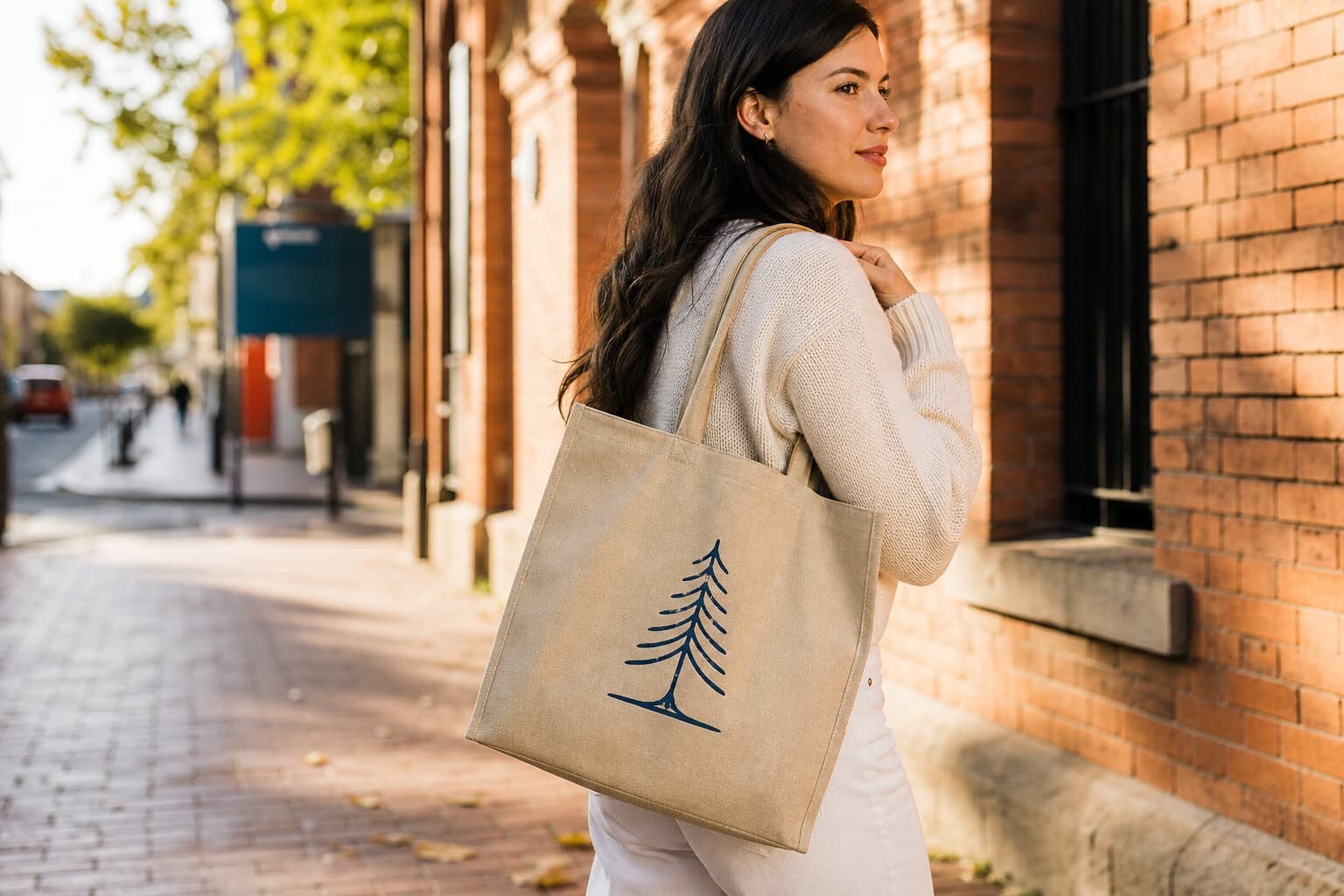
Why GSM causes quote confusion on canvas tote bags
Canvas tote bag buyers often receive quotes that look comparable but are built on different fabric assumptions. One supplier may quote 8 oz canvas, another may quote 10 oz canvas, and a third may write 280 GSM cotton canvas without explaining whether the figure is measured before dyeing, after washing, or on the finished fabric. The unit price difference may look like a supplier margin issue, but it is often a fabric specification issue.
For procurement teams, GSM is not a decoration detail. It affects unit cost, print result, sewing performance, carton weight, freight cost, and how the final tote feels in a customer’s hand. A good RFQ should make the supplier quote the same fabric basis, not simply ask for a canvas tote bag with logo. If GSM is unclear at quotation stage, it usually becomes a dispute at sample approval or pre-shipment inspection.
- GSM means grams per square meter of fabric, while oz canvas is usually ounces per square yard.
- Common canvas tote programs use about 200-270 GSM for light bags, 340-410 GSM for retail bags, and 410-540 GSM for heavier merchandise bags.
- A higher GSM does not automatically mean better quality if the weave is loose, the yarn is weak, or the sewing construction is poor.
- The approved sample must record GSM together with bag size, handle construction, print method, and packing method.
Use finished GSM, not only fabric names
The phrase 10 oz canvas is useful in conversation, but it is not enough for a purchase order. Fabric mills, bag factories, and trading companies may use oz names loosely. Some refer to greige fabric before finishing. Some refer to a local stock item that has been called 10 oz for years, even when actual finished weight is lower or higher. Import buyers need a measurable finished GSM target and tolerance.
A practical RFQ can state, for example, natural cotton canvas, finished weight 340 GSM plus or minus 5 percent, unwashed, no coating, for a 38 x 42 cm tote bag with 2.5 x 60 cm self-fabric handles. This gives the factory a technical base. It also gives your inspection company a measurable point instead of a subjective argument about whether the tote feels thick enough.
- Write the desired GSM range in the RFQ and purchase order.
- Ask the supplier to state actual tested GSM on the sample approval sheet.
- Avoid accepting only words such as heavy canvas, premium canvas, or thick cotton.
- If the bag is washed or garment-dyed, define whether GSM is checked before or after that process.
How to test canvas GSM without a laboratory
A professional lab can test fabric weight accurately, but buyers and factories can also run a practical check using a GSM cutter and digital scale. The common method is to cut a known area of fabric, weigh it, and convert the result to grams per square meter. For a 100 square centimeter circular cutter, multiply the gram weight by 100 to get GSM. If the cut piece weighs 3.4 grams, the fabric is about 340 GSM.
For tote bags, the best time to test is before cutting bulk fabric and again from retained fabric during production. Testing from a finished bag is possible but less ideal because seams, folds, printing, and coating may interfere. If you must test from a finished bag, cut from a flat panel area away from print, hem, and side seam. Always document where the sample was taken.
- Use a calibrated digital scale that reads at least 0.01 grams.
- Take at least three cuts from different parts of the fabric roll or retained swatch.
- Avoid printed areas, seams, coated patches, and wrinkled sections.
- Record average GSM, lowest reading, highest reading, date, and roll reference if available.
- Keep the tested swatch photos in the order file so later disputes are based on evidence.
Set a realistic GSM tolerance in the RFQ
Canvas is a woven textile, not a machined metal part. A small tolerance is normal. For many cotton canvas tote bags, a finished GSM tolerance of plus or minus 5 percent is workable, depending on the mill and finishing route. If the buyer demands an unrealistically tight tolerance on a low-MOQ order, the supplier may either refuse, increase price, or accept the order and create trouble later.
The tolerance should be linked to the purpose of the bag. A light event tote may tolerate a wider fabric variation as long as print and sewing are acceptable. A retail tote sold as a premium item needs tighter control because handfeel and perceived value matter. Do not use the same acceptance standard for a supermarket giveaway bag and a paid lifestyle brand tote.
- For stock natural canvas, ask what actual GSM range is available before fixing artwork and price.
- For custom dyed canvas, confirm whether dyeing and finishing will change weight and shrinkage.
- For washed canvas, approve the final washed handfeel and dimensions, not only the initial fabric weight.
- For coated canvas, separate base fabric GSM from coating weight if performance matters.
Match GSM to tote construction and carrying load
A canvas tote bag is not only a flat piece of fabric. The same 340 GSM canvas can perform differently depending on bag size, handle length, seam construction, bottom gusset, and reinforcement. A 38 x 42 cm flat tote for documents has different stress points from a 45 x 35 x 15 cm grocery tote carrying bottles and boxed goods. GSM helps, but construction decides whether the bag survives use.
For heavier bags, check top hem thickness and handle attachment carefully. When a thick handle is folded into a thick top hem, the sewing machine must penetrate several layers. If the factory uses the wrong needle, thread tension, or machine setting, you may see skipped stitches, broken needles, loose thread, or ugly puckering. A higher GSM can create a better bag only when the factory can sew it cleanly.
- For light documents and giveaways, 6 oz to 8 oz canvas is usually enough if expectations are clear.
- For retail shopping and repeat use, 10 oz to 12 oz canvas gives better perceived value.
- For heavy grocery or book use, consider reinforced handles, bottom gusset, and bartack stitching before increasing GSM further.
- Specify handle width and length because narrow handles can fail or feel uncomfortable even on heavy canvas.
- Ask for a simple load test using the intended carry weight, not a vague statement that the bag is strong.
Print method changes the right fabric choice
Printing is where many GSM decisions become expensive. A rough, open-weave canvas may be acceptable for a simple one-color screen print, but it can make fine text, gradients, and small logos look broken. A tighter weave and smoother surface improve print detail. The buyer should send artwork before the supplier confirms the final fabric recommendation, especially when the logo has thin lines or large solid coverage.
Screen printing remains common for cotton canvas tote bags because it is efficient for repeat orders and solid colors. Heat transfer and DTF can support more detailed artwork, but they must be tested for adhesion and handfeel on the selected canvas. Embroidery works better on medium to heavy canvas, but it can distort thin panels. Digital direct printing needs a compatible fabric surface and sometimes pretreatment.
- For simple one-color logos, 8 oz to 12 oz natural canvas usually prints well by screen printing.
- For large solid ink areas, check whether the ink makes the panel stiff or causes cracking after bending.
- For fine artwork, request a print strike-off on the actual GSM and fabric surface.
- For embroidery, confirm backing material, stitch density, and whether the panel puckers.
- For heat transfer or DTF, test edge adhesion, wash resistance, and feel on the selected canvas.
MOQ logic behind canvas GSM and color
MOQ is often misunderstood because buyers think it is only a sewing line quantity. For canvas tote bags, MOQ is usually driven by fabric availability, dyeing minimums, print setup, label setup, and packing labor. Natural canvas in standard weights may be available in lower quantities. Custom dyed canvas, unusual GSM, special weave, or washed finish can require a higher fabric minimum even if the sewing factory can make fewer bags.
When comparing supplier quotes, ask whether the MOQ is per order, per size, per fabric GSM, per fabric color, or per artwork. A quote for 1,000 pieces natural 10 oz canvas may not apply to 500 pieces each in three custom colors. If the buyer does not clarify this, the supplier may quote optimistically first and then revise price after artwork, color, or packing details are finalized.
- Stock natural canvas generally supports lower MOQ than custom dyed canvas.
- Different GSM in the same order may create separate fabric purchase minimums.
- Multiple print artworks can increase setup cost even when fabric is the same.
- Custom woven labels, hangtags, and barcode stickers may have their own MOQ.
- A heavier GSM may increase carton weight and reduce pieces per carton, affecting logistics cost.
Sample approval must lock the fabric source
A sample can look correct but still fail as a production control document if the fabric source is not locked. Some suppliers make samples from leftover stock fabric and then purchase a different bulk roll later. The color, GSM, slub level, and surface hairiness may change. This is why the sample approval file should include a fabric swatch, actual GSM reading, print method, handle construction, and supplier confirmation that bulk fabric will match the approved quality.
For important retail orders, request a pre-production sample made after bulk fabric is purchased. This sample is more valuable than an early salesman sample because it verifies the real material, printing, sewing, labeling, and packing method. If time is tight, at least require a bulk fabric cutting and print strike-off before full production starts.
- Seal and sign one approved sample for factory reference and keep one buyer sample.
- Attach a labeled fabric swatch showing GSM, color, weave, and finish.
- Record bag dimensions flat, handle drop, handle width, seam allowance, and print position.
- Approve the actual print color and opacity on the chosen canvas, not only a digital proof.
- Ask the factory to report any fabric roll change before cutting bulk production.
Packing and freight effects of heavier canvas
Moving from 8 oz to 12 oz canvas may improve handfeel, but it also changes packing. The same carton size may hold fewer bags, gross weight may increase, and carton corners may bulge if the bags are folded poorly. For ecommerce or retail distribution, folded size and barcode visibility can matter as much as fabric weight. Packing should be quoted together with GSM, not decided after production.
Moisture control also deserves attention. Cotton canvas can absorb humidity during storage and sea freight. Natural canvas may show mildew risk if packed damp or stored in a humid warehouse. Ask the factory how bags are dried after printing or washing, how long they rest before packing, and whether cartons use liners or desiccants when needed. Do not pack freshly printed or washed heavy canvas too quickly.
- Confirm pieces per inner polybag and pieces per export carton.
- Set a carton gross weight limit that warehouse teams can handle safely.
- Ask for folded dimensions if the tote will enter retail shelves or ecommerce fulfillment.
- Keep printed panels separated if ink transfer is a risk.
- Use stronger cartons when heavy canvas increases total carton weight.
How to compare quotes using GSM data
A low quote is only useful if the specification is equal. When comparing suppliers, build a quote sheet that separates fabric, sewing, printing, labels, packing, sample cost, tooling or screen charge, and freight assumptions. If one supplier includes 340 GSM canvas and another quietly quotes 280 GSM, the cheaper quote is not a saving; it is a different product.
Ask suppliers to write the fabric basis directly in the quotation. The quote should not only say canvas tote bag with logo. It should state finished canvas GSM, color, bag size, handle material, print method, number of print colors or print area, MOQ, sample lead time, bulk lead time, packing method, carton quantity, and validity period. This protects both buyer and factory because changes become visible.
- Normalize all quotes to the same finished GSM and bag size before selecting a supplier.
- Check whether print setup, sample shipping, labels, and packing are included or excluded.
- Ask the factory to list any price difference for 8 oz, 10 oz, and 12 oz versions.
- Compare carton quantity and gross weight because freight cost can offset unit price savings.
- Treat missing GSM data as a quotation risk, not a minor detail.
Specification comparison for buyers
| Spec decision | Recommended option | When it fits | Buyer risk to check |
|---|---|---|---|
| Daily giveaway tote | 6 oz to 8 oz canvas, about 200-270 GSM | Events, light retail packaging, low unit cost programs | Fabric may feel thin after washing or when printed with heavy ink coverage |
| Retail shopping tote | 10 oz to 12 oz canvas, about 340-410 GSM | Brand stores, bookstores, cosmetic sets, repeat use | Supplier may quote lower GSM while calling it 10 oz canvas |
| Premium merchandise tote | 12 oz to 16 oz canvas, about 410-540 GSM | Paid merchandise, gift-with-purchase sets, heavy logo embroidery | Higher sewing difficulty, thicker seams, longer drying time after washing |
| Full-color printed tote | 10 oz tight-weave canvas with smooth surface | DTF, heat transfer, digital print, detailed artwork | Open weave causes fuzzy edges and poor small text clarity |
| Heavy-duty utility tote | 16 oz canvas or reinforced 12 oz canvas | Books, tools, groceries, farmers market use | Need handle pull test and bottom seam inspection, not GSM alone |
| Washed natural look tote | Pre-shrunk or washed 10 oz to 12 oz canvas | Lifestyle brands wanting softer handfeel | Finished GSM may differ from greige fabric GSM after washing and drying |
Buyer checklist before sampling
- State finished fabric GSM tolerance, not only the marketing oz name.
- Ask whether GSM is measured before or after dyeing, washing, coating, or printing.
- Request a cut swatch from the actual bulk fabric roll used for the pre-production sample.
- Compare fabric weight, weave tightness, shrinkage, and handfeel together; do not approve GSM alone.
- Check that print method is suitable for the selected canvas weight and surface texture.
- Define handle width, handle GSM, reinforcement method, and pull test requirement separately.
- Ask for carton weight limits if moving from 8 oz to 12 oz or heavier canvas.
- Keep one sealed approved sample and one fabric swatch card for final inspection reference.
- Confirm MOQ by fabric color and GSM because custom dyeing and stock fabric have different minimums.
- Require the supplier to list fabric GSM, bag dimensions, print method, packing, and lead time on the quote.
Factory quote questions to send
- Is the quoted canvas GSM measured on finished fabric, greige fabric, or after washing?
- What GSM tolerance will you accept in production, and how will it be tested?
- Is this fabric stock canvas or custom woven/custom dyed fabric?
- Can you provide a 10 cm x 10 cm or 100 cm2 GSM test result from the bulk roll?
- What is the yarn count or at least the weave description for this canvas?
- Will the approved sample be made from the same fabric roll quality as bulk production?
- Which print method do you recommend for this GSM and artwork coverage?
- Will the print price change if we use 12 oz instead of 8 oz canvas?
- What handle material, handle GSM, and reinforcement stitch are included in the quote?
- What is the MOQ by fabric weight, color, size, and print method?
Quality-control points to confirm
- Measure finished bag dimensions after pressing and allow realistic fabric shrinkage tolerance.
- Cut and weigh a fabric sample from a hidden seam allowance or retained bulk swatch to confirm GSM.
- Check fabric shade, slub level, weave density, and surface hairiness against the approved sample.
- Inspect print adhesion, edge sharpness, opacity, and curing on the actual canvas surface.
- Perform handle pull testing based on intended load, especially for 12 oz and heavier retail totes.
- Check seam allowance, bartack position, top hem thickness, and skipped stitches at bulky corners.
- Confirm packed carton quantity, carton strength, polybag method, moisture protection, and carton weight.
- Verify labels, hangtags, barcode position, and carton marks before final packing.
- Review needle holes, oil marks, fabric stains, loose threads, and print contamination under good light.
- Keep inspection photos of GSM test, print test, handle pull test, and packing layout with the shipment file.