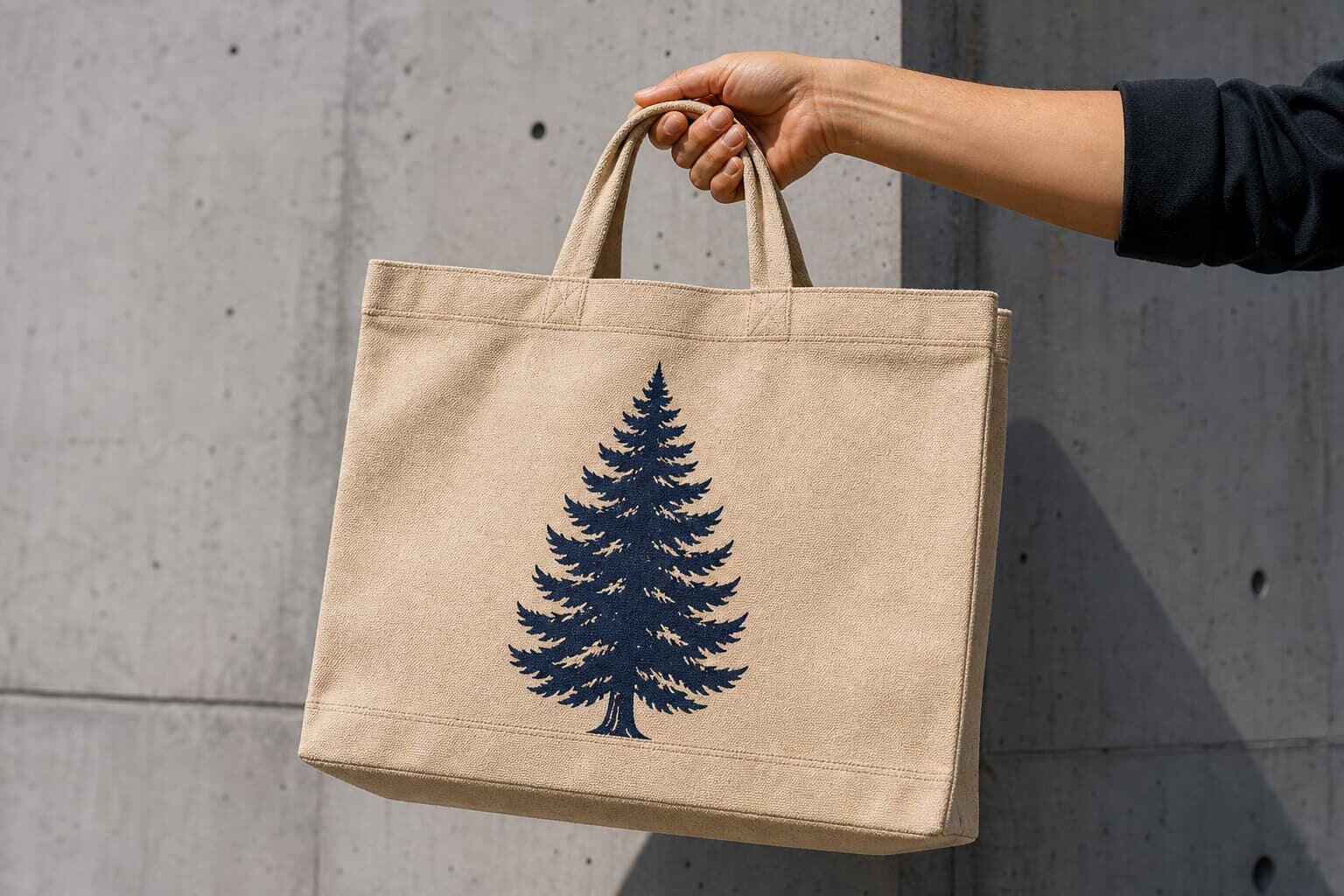
1. Start with the buying job, not a generic tote description
A canvas tote bag for wholesale buyers production spec guide should begin with the business purpose. The same rectangular tote can be a low-cost event giveaway, a bookstore merchandise item, a reusable grocery bag, a welcome-kit carrier, or a premium retail accessory. Each use changes the correct fabric weight, handle strength, print method, packing format, and inspection standard.
Give the factory enough commercial context to quote the right product without guessing. For an event giveaway, a lighter body and bulk packing may be acceptable because the bag carries brochures for a short period. For a retail tote sold at margin, the buyer usually needs cleaner fabric, straighter print placement, tighter sewing, hangtags, and more consistent folding. For a grocery-style tote, handle attachment and base capacity may matter more than a decorative patch.
Replace vague language such as “high quality canvas tote” with buildable language: “14 oz natural cotton canvas tote for retail resale, finished size 380 x 420 x 100 mm, shoulder handle drop 280 mm, one-color screen print, reinforced handles, bulk packed 50 units per carton.” That short sentence gives the supplier a technical starting point and gives procurement a fair basis for quote comparison.
- Identify the channel: trade show, retail store, wholesale distribution, corporate gifting, kit assembly, marketplace inventory, or e-commerce fulfillment.
- Define the expected load: paper inserts, apparel, books, groceries, bottles, boxed product, or mixed merchandise.
- State the priority: lowest unit cost, repeatable replenishment, premium hand feel, retail-ready presentation, or stronger carry performance.
- Tell the factory whether the bag must be suitable for shoulder carry, hand carry, shelf display, warehouse kit packing, or direct consumer shipment.
2. Specify canvas fabric with weight, finish, and sourcing route
Fabric weight is important, but it is not the whole fabric specification. A 10-12 oz canvas can work for light promotional use, while 14 oz is often a practical middle point for retail merchandise and branded programs. A 16 oz or heavier canvas gives more structure and perceived value, but it increases fabric cost, sewing effort, carton weight, and sometimes freight. If a quote is noticeably lower, first check whether the supplier changed the fabric weight, weave density, or finish.
Buyers should also define how the fabric is sourced. Stock natural canvas may support faster sampling and lower minimums. Dyed-to-order canvas can match brand color more closely but usually requires lab dip approval, dye lot control, and additional lead time. Washed canvas may offer a softer hand feel, but washing can change shrinkage, panel size, shade, and print behavior. Organic, recycled, or certified materials should be specified by required claim and documentation, not simply by preference.
A strong fabric line includes weight, tolerance, weave, color, finish, and approval reference. Natural canvas may include cotton flecks and small variations that are normal for the material; optical white, pigment-dyed, or washed finishes have different expectations. Approve a swatch or lab dip before bulk cutting, and keep that approved reference available for factory QC and receiving inspection.
- Use 10-12 oz for lighter promotional bags where cost and distribution volume matter most.
- Use 14 oz when the tote must feel credible for retail, gifting, or repeat brand exposure without becoming too heavy.
- Use 16 oz+ when structure, heavier carry loads, premium positioning, or longer product life justify the added cost.
- Ask whether fabric is stock, mill-ordered, dyed to order, washed to order, certified, or buyer-supplied.
- Record approved fabric swatch, lab dip, or bulk lot reference before cutting begins.
3. Control dimensions, gusset shape, and handle comfort
Many RFQs list width and height but leave the bag shape undefined. A flat tote, bottom-gusset tote, side-gusset tote, and full boxed tote can all be called a canvas tote bag, yet they use different panels, sewing operations, fabric consumption, and carton space. The gusset also affects how the bag stands, how much it holds, and how the print area looks when filled.
Use finished measurements in millimeters and agree tolerances before purchase order release. Cutting, sewing, turning, washing, pressing, and folding can all move dimensions. A buyer may request 380 x 420 mm, but without an acceptable range, receiving inspection becomes subjective. The tolerance should match the construction and finish: a washed heavy canvas bag will not behave like an unwashed light flat tote.
Handle ergonomics deserve the same level of control. A hand-carry tote can use a shorter drop, while a shoulder tote needs enough clearance for a coat or jacket. Handle width affects comfort and perceived quality. The attachment method is also visible: handles inserted into the top hem can look clean, while surface-applied handles with box stitching or bar-tacks make reinforcement easier to inspect.
- Specify finished body width, height, gusset depth, top hem depth, handle width, total handle length, and finished handle drop.
- State whether the gusset is absent, bottom only, side only, or full boxed construction.
- Confirm whether logo placement is measured from the top edge, bottom edge, side seam, or center line.
- Ask whether washing, pressing, or folding may affect final measured size.
- Require the pre-production sample to be measured, not only photographed.
4. Write sewing construction so it can be inspected on the line
Sewing quality determines whether a tote feels like a reliable wholesale item or only looks acceptable in a product image. A simple single-needle seam may be enough for a low-load giveaway. Repeat-use retail bags usually justify stronger seams, reinforced top corners, and bar-tacks at handle stress points. If the bag will carry books, bottles, or dense merchandise, the handle attachment area is the first place to engineer carefully.
The spec should describe what the sewing team must build and what QC must verify. Include seam allowance, stitch density, thread color, top hem depth, handle attachment style, and reinforcement points. Stitch density can be stated as stitches per inch or centimeter. Too few stitches can reduce seam security; too many can perforate heavy canvas and slow production. The approved pre-production sample should freeze the practical sewing standard.
Separate serious defects from cosmetic trimming issues. Broken handle stitching, missed seam catch, open seams, sharp hardware, heavy stains, and incorrect construction are major or critical problems. Small untrimmed threads may still be unacceptable for retail resale, but they are usually rework issues rather than automatic shipment rejection. Clear defect categories help the factory inspect before final packing.
- Call out bar-tacks, box stitching, cross-stitching, double-needle seams, binding, overlock, or enclosed seams where required.
- Define whether inside seams may be raw, overlocked, bound, or concealed.
- Set expectations for stitch straightness, skipped stitches, backstitching, thread trimming, and seam puckering.
- Treat handle attachment, top corners, bottom gusset seams, and closure areas as high-risk inspection points.
- Keep one approved sample as the reference for stitch density, reinforcement placement, and seam appearance.
5. Select decoration by artwork risk, not habit
Decoration is often the most visible risk in a tote order. Screen print is usually efficient for solid logos, bold graphics, and simple one- or two-color artwork at wholesale volume. It still needs exact instructions for print size, placement, ink color, curing, and acceptable edge quality. Fine lines, small text, large ink coverage, and printing over uneven canvas texture should be tested on the actual fabric.
Embroidery, woven patches, and sewn labels can create a more premium result, but they add workflow steps. Embroidery may require backing and digitizing, and dense embroidery can distort lighter canvas. Woven patches depend on a separate component supplier and need placement control during sewing. Heat transfer can reproduce detailed graphics, but buyers should test adhesion, hand feel, edge lift, and abrasion resistance because canvas is not a smooth garment fabric.
Ask the supplier whether decoration will happen before or after sewing. Printing flat panels before sewing can improve placement control, but the print must survive handling and sewing. Printing finished bags may suit some designs, yet seams, gussets, and handles can interfere with the print bed. A strike-off or first-run sample should be approved before the full print lot continues.
- Provide vector artwork when possible and include Pantone, CMYK, or approved brand color references.
- Specify print width and height, placement reference point, and acceptable placement tolerance.
- Confirm whether the quote includes screen setup, digitizing, patch tooling, strike-off, and color matching.
- Require a strike-off for new artwork, new ink color, new fabric color, or new supplier.
- Check rub resistance, curing, edge sharpness, opacity, cracking, and registration before bulk approval.
6. Compare supplier quotes by assumptions and cost drivers
A low unit price is useful only when the buyer knows what it includes. In canvas tote sourcing, two quotes can look similar while assuming different fabric weights, shorter handles, fewer bar-tacks, simpler seams, cheaper labels, no setup charges, or bulk packing instead of retail packing. The buyer may think they found a better price when they actually received a lower specification.
Request a quote that separates product construction from one-time costs and logistics assumptions. At minimum, identify body fabric, handle material, lining if any, decoration, setup fees, labels, hardware, packaging, carton configuration, sample cost, MOQ, lead time, payment terms, and Incoterms. If suppliers do not provide a full cost breakdown, ask them to state inclusions and exclusions clearly enough for comparison.
For replenishment programs, ask how price changes when quantity, fabric color, artwork count, label version, packing method, or shipment split changes. A supplier may be competitive at one large run but less efficient for small repeat orders. The best commercial comparison includes landed-cost drivers as well as unit price: carton volume, carton weight, packing labor, local transport, testing, and inspection requirements can all affect the final cost to the buyer.
- Ask every supplier to quote against the same spec sheet revision and artwork version.
- Separate setup charges from unit price so repeat-order economics are visible.
- Confirm whether labels, hangtags, barcodes, polybags, desiccants, carton marks, and export cartons are included.
- Compare MOQ and lead time together; a lower MOQ with high setup cost may not be the better choice.
- Do not compare EXW, FOB, and delivered quotes as if they are the same commercial offer.
7. Evaluate suppliers beyond the sample photo
A good sample matters, but it does not prove a supplier can manage a wholesale production order. Buyers should evaluate how the supplier sources fabric, controls decoration, organizes sewing, inspects finished goods, and packs cartons. A factory with strong sewing but outsourced printing may still be a good partner, but the buyer should know who controls print quality and timing. The same applies to dyeing, washing, embroidery, patches, and labels.
Ask practical capability questions. Does the supplier make bags in-house or subcontract part of production? Can they handle your fabric weight on their machines? Have they produced similar gusseted or zippered totes? Can they separate multiple SKUs cleanly? What internal QC checks happen before final packing? Can they provide first-article photos, in-line inspection photos, and packed carton photos? These questions are more useful than a broad request for “best quality.”
Supplier evaluation should also include communication discipline. The right partner confirms specifications in writing, flags unclear artwork, asks about packing before quoting, and explains lead-time risks early. Be cautious when a supplier accepts every requirement instantly without discussing fabric availability, print limits, MOQ, or tolerance. Strong suppliers reduce procurement risk by identifying production constraints before they become shipment problems.
- Confirm which steps are in-house: cutting, sewing, screen printing, digital printing, embroidery, washing, inspection, and packing.
- Ask whether the supplier has handled your target fabric weight, gusset type, decoration method, and packing format before.
- Request a production timeline tied to approvals, material sourcing, decoration, sewing, QC, and packing.
- Check whether the supplier can support repeat orders with controlled fabric color and artwork references.
- Evaluate response quality: clear assumptions, written confirmations, realistic lead times, and early risk warnings.
8. Manage MOQ, lead time, and production workflow
MOQ is not just a sales rule. It usually reflects fabric purchasing minimums, dye lot size, cutting efficiency, print setup, sewing-line allocation, and packing complexity. A natural canvas tote with one-color screen print may have a different MOQ from the same style in three dyed fabric colors with separate embroidery patches. Multiple small artwork versions can make decoration the bottleneck even when sewing capacity is available.
A realistic workflow includes material sourcing, fabric inspection, cutting, decoration, sewing, thread trimming, pressing or shaping if needed, final inspection, packing, and shipment preparation. Components such as zippers, snaps, patches, labels, hangtags, and barcodes may come from different suppliers. If one component is approved late, it can delay the whole order even when canvas is ready.
Separate sample lead time from bulk lead time. The factory may need time to source fabric, make a pattern, print a strike-off, and sew a first sample. If the buyer revises dimensions, handles, fabric, or artwork, the calendar may reset. Bulk cutting should wait until the pre-production sample, fabric reference, decoration, and packing plan are approved in writing.
- Ask MOQ by fabric color, print design, decoration method, size, label version, and shipment split.
- Confirm whether fabric is available now or must be woven, dyed, washed, certified, or imported.
- Request a simple critical-path schedule from sample approval to packed cartons.
- Identify bottlenecks early: dyeing, embroidery patches, zippers, printed labels, buyer approvals, or carton labels.
- For multi-SKU orders, require SKU-separated production and packing instructions to reduce mixed-carton errors.
9. Use samples to freeze the production standard
A tote sample should not be approved only because it looks close in a photo. It should be approved because it matches the measurable spec and can be repeated in bulk. The sample stage is where the buyer confirms hand feel, dimensions, handle comfort, sewing construction, print result, closure function, label placement, and packing presentation.
A disciplined sample process may include a fabric swatch or lab dip, print strike-off, construction sample, and pre-production sample made with bulk-intended materials. The final approved sample becomes the golden sample. Both buyer and factory should keep a reference if possible, marked with order number, date, spec revision, fabric reference, and approved artwork file.
Record deviations clearly. If the sample handle drop is short but accepted for the sample only, state whether bulk must be corrected. If print color is slightly darker than the Pantone reference but approved, document that approval. If natural cotton flecks are acceptable, note that they are inherent to the material. These notes prevent disputes when receiving teams or inspectors were not part of the original approval.
- Measure the sample against the spec sheet before approving appearance.
- Photograph and record critical details: fabric, seams, handle attachment, print, label, closure, pocket, and packing.
- Do not approve bulk production from a digital mockup when the fabric, decoration, or construction is new.
- Mark the golden sample with order number, version, date, and written approval reference.
- Require new approval if the factory changes fabric lot, decoration method, handle material, label, or major construction detail.
10. Build QC, packing, and shipment release into the purchase order
Quality control should be agreed before production starts. For canvas tote bags, the main QC points are fabric consistency, finished dimensions, handle strength, seam integrity, decoration accuracy, cleanliness, labeling, and packing correctness. Buyers do not need an overly complex inspection manual, but they do need measurable rules the factory can use during production and the receiving team can use at delivery.
Define tolerances for finished width, height, gusset, handle drop, logo placement, and shade. Then define defect categories. Critical defects may include safety hazards, mold, severe contamination, sharp broken hardware, or construction that makes the bag unusable. Major defects may include open seams, broken handle stitching, wrong logo, major stains, incorrect size outside tolerance, severe print smudges, or wrong packing. Minor defects may include small trim threads or slight cosmetic irregularities, depending on the channel.
Packing is part of QC because it affects landed cost and receiving accuracy. Bulk nested packing is economical for wholesale distribution and events. Individual polybags or paper bands may be useful for retail presentation or fulfillment, but they add labor, material, carton volume, and sustainability considerations. Before shipment release, ask for packed carton photos, carton label photos, and confirmation of quantity by SKU, especially for multi-style or multi-artwork orders.
- Set tolerances for body size, gusset, handle drop, logo placement, print color, and carton quantity.
- Define critical, major, and minor defects in practical tote bag terms.
- Inspect first printed panels and first sewn units before full production continues.
- Specify fold method, units per inner pack, units per master carton, carton dimensions, gross weight, carton marks, and barcode placement.
- Confirm moisture control, SKU separation, carton label accuracy, and packed carton condition before shipment release.
Specification comparison for buyers
| Spec decision | Recommended option | When it fits | Buyer risk to check |
|---|---|---|---|
| Body fabric weight | 10-12 oz for light promotional use, 14 oz for retail and branded merchandise, 16 oz+ for premium or heavier daily-use programs | Trade shows, bookstore merchandise, grocery-style shopping bags, gift-with-purchase kits, subscription packaging, and retail replenishment programs | Confirm GSM or oz, fabric width, weave density, shrinkage tolerance, color lot control, and whether the fabric is greige, dyed, washed, pre-shrunk, organic, recycled, or conventional. Do not compare quotes that only say “canvas.” |
| Canvas finish and hand feel | Natural cotton canvas for a classic look, dyed canvas for brand color, washed canvas for softer hand feel, duck canvas for structure | Natural retail totes, fashion merchandise, corporate gifting, museum shops, lifestyle brands, and premium branded programs | Dyed and washed finishes can affect shade consistency, shrinkage, print sharpness, lead time, and inspection tolerance. Require swatch, lab dip, or bulk fabric approval before cutting. |
| Body construction | Flat tote for low-cost documents, bottom-gusset tote for more capacity, full boxed tote for stronger shelf shape | Catalog inserts, conference bags, grocery programs, retail shopping bags, and kits holding bottles, books, or folded apparel | A gusset changes fabric consumption, cutting efficiency, sewing time, folded size, carton volume, and usable print area. Specify bottom, side, or full boxed construction. |
| Handle construction | Self-fabric handles for matching appearance, cotton webbing for consistency, reinforced handles with bar-tacks for higher load use | Shoulder bags, bookstore totes, retail shopping totes, employee kits, school programs, and heavier merchandise packs | Check handle width, finished drop, total handle length, attachment method, stitch pattern, bar-tack count, and whether handles are inserted into the top hem or surface stitched. |
| Seam and reinforcement standard | Single-needle seams for light duty, double-needle or reinforced seams for repeat use, bar-tacks at stress points | Orders where resale quality, lower claim risk, or long-term brand exposure matters more than the lowest unit price | Ask for stitches per inch or centimeter, seam allowance, thread type, top hem depth, backstitching, and defect thresholds for skipped stitches, puckering, loose threads, and open seams. |
| Decoration method | Screen print for solid logos, embroidery or woven patch for premium branding, heat transfer for detailed artwork, woven or printed label for subtle branding | Simple one-color logos, multi-color retail graphics, small premium badges, co-branded campaigns, and artwork with fine detail | Confirm artwork size, placement tolerance, color count, Pantone reference, ink type, curing method, strike-off approval, rub resistance, and whether decoration happens before or after sewing. |
| Closures and internal features | Open top for cost control, magnetic snap for light security, zipper for travel or premium use, inside pocket for added utility | Retail merchandise, welcome kits, travel/event bags, influencer kits, laptop-adjacent carry, and higher perceived-value programs | Closures and pockets alter sewing sequence, inspection points, component sourcing, and lead time. Specify hardware finish, zipper length, puller type, pocket size, and placement. |
| Labeling and channel compliance | Woven side label, printed care label, hangtag, barcode sticker, carton label, or retail ticket based on destination requirements | Wholesale distribution, retail-ready shipments, marketplace inventory, corporate programs, and replenishment orders | Confirm fiber content wording, country-of-origin handling, barcode format, label placement, hangtag attachment method, and whether labels are buyer-supplied or factory-sourced. |
| Packing format | Bulk nested cartons for lowest freight cost, inner packs by SKU for warehouse receiving, individual polybags only when presentation or protection requires it | Wholesale replenishment, retail DC delivery, event distribution, e-commerce kits, and store-ready merchandise | Define units per inner pack, units per master carton, fold method, carton size, gross/net weight, moisture protection, carton marks, and barcode position. Packing changes landed cost and receiving accuracy. |
Buyer checklist before sampling
- Define the commercial use: giveaway, retail merchandise, shopping bag, kit bag, subscription packaging, employee welcome item, or premium brand item.
- Confirm finished body width, height, gusset depth, top hem depth, handle width, total handle length, and finished handle drop in millimeters with tolerances.
- State canvas weight in GSM or oz, plus weave, fabric color, finish, shrinkage target, and whether the fabric must be natural, dyed, washed, organic, recycled, or certified.
- Specify seam allowance, stitch type, stitches per inch or centimeter, thread color, topstitching visibility, bar-tack locations, and reinforcement method at handle stress points.
- Define decoration method, artwork size, color count, Pantone references, file format, placement from edges, print tolerance, strike-off requirement, and rub or wash testing expectation.
- List optional features clearly: gusset type, lining, zipper, snap, inner pocket, baseboard, piping, binding, inside label, side label, hangtag, barcode sticker, or retail ticket.
- Ask the factory to quote sample cost, sample lead time, revision limits, pre-production sample timing, and whether sealed golden samples will be kept by both sides.
- Request a line-by-line price basis identifying fabric, sewing labor, decoration, setup charges, hardware, labels, packing, cartons, inland freight, and any testing or certification cost.
- Clarify MOQ by fabric color, print design, size, decoration method, label version, and shipment split so the price does not assume a larger run than you intend to buy.
- Confirm supplier capability: in-house sewing, in-house or outsourced printing, fabric sourcing route, inspection process, peak-season capacity, and experience with your required packing format.
Factory quote questions to send
- What exact canvas weight, weave, fabric width, yarn character, and finishing process are included in this quote?
- Is the price based on finished measurements or cut-panel measurements, and what dimensional tolerance are you using?
- What shrinkage, color variation, and fabric weight tolerance should we expect from the bulk fabric lot?
- Is the fabric in stock, mill-ordered, dyed to order, washed to order, or buyer-supplied?
- Are handles self-fabric or webbing, and are bar-tacks, box stitching, or cross-stitch reinforcement included in the price?
- What stitch type, stitches per inch or centimeter, seam allowance, and top hem construction are assumed?
- Which decoration method are you pricing, and what is included in setup, screens, embroidery digitizing, strike-off, or color matching?
- Will the logo be printed before sewing or after sewing, and how does that affect placement tolerance and rejection risk?
- Which production steps are in-house, and which are outsourced, including fabric dyeing, printing, embroidery, patch making, washing, and packing?
- How many sample rounds are included, what is the lead time for each, and what changes will trigger a new sample charge?
Quality-control points to confirm
- Verify fabric weight against the approved spec using a documented GSM or oz check, not only hand feel.
- Check canvas color, weave consistency, slubs, stains, odor, oil marks, dampness, and fabric lot variation against the approved swatch or lab dip.
- Measure finished body width, height, gusset, top hem depth, handle width, total handle length, and handle drop against the tolerance stated in the purchase order.
- Confirm shrinkage risk if the bag is washed, dyed, garment-finished, or expected to be laundered by the end user.
- Inspect cutting alignment so panels, gussets, and handles are not twisted, skewed, off-grain, or visibly mismatched between left and right sides.
- Verify print placement, registration, Pantone match, ink density, edge cleanliness, curing, adhesion, cracking risk, and rub resistance on first production output.
- Check embroidery, patch, or label placement for straightness, thread trimming, backing cleanliness, needle damage, and consistency across units.
- Inspect handle attachment points for bar-tacks, box stitching, cross-stitching, seam catch, skipped stitches, broken stitches, and reinforcement symmetry.
- Review seams for correct allowance, stitch density, thread color, puckering, loose threads, exposed raw edges, weak corner finishing, and seam opening under light pull.
- Confirm closure function, zipper track alignment, snap placement, puller quality, pocket size, and hardware finish if the bag has added features.