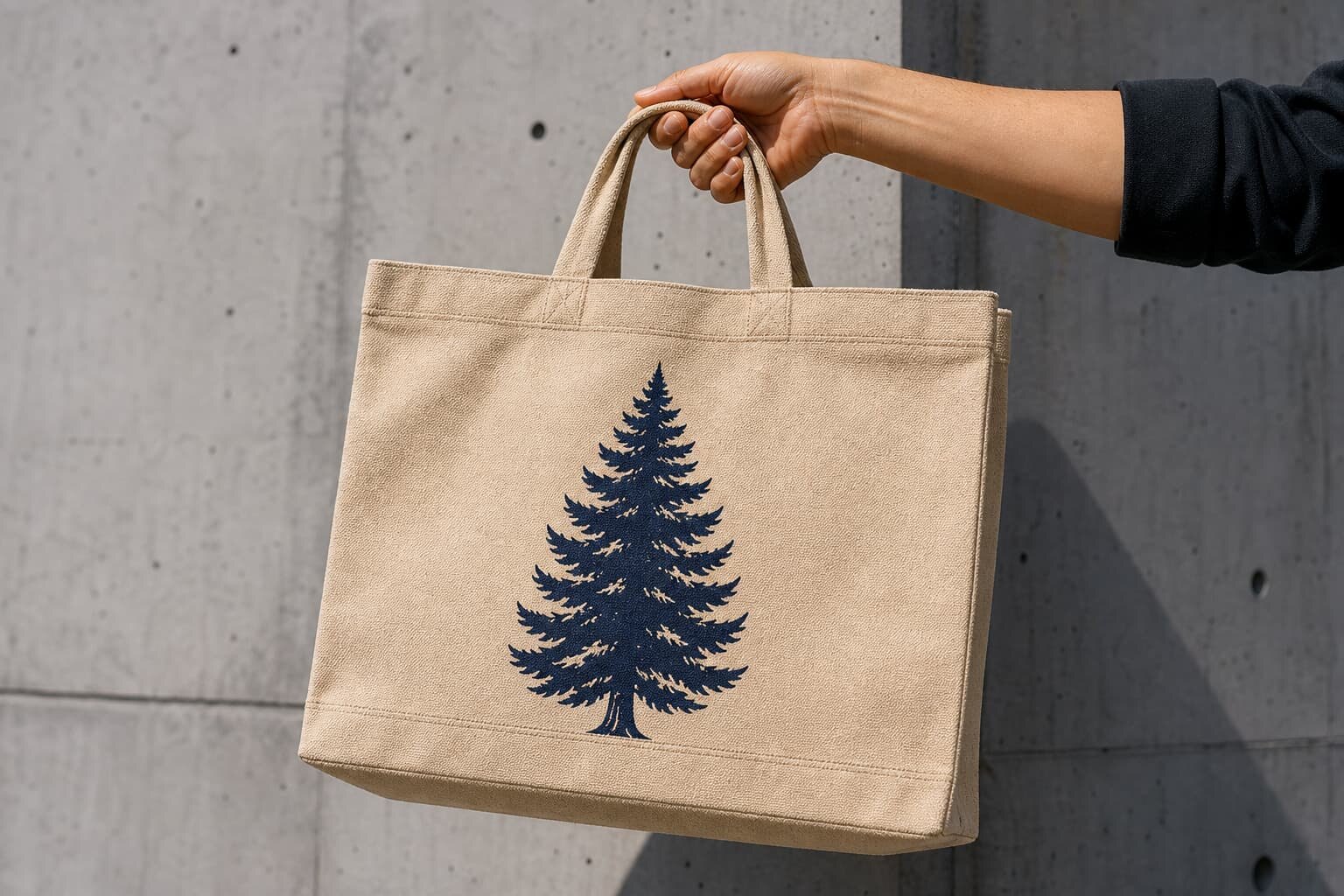
Why Folding Line Creases Become a Buying Problem
A canvas tote bag can pass stitching inspection and still disappoint the buyer when it comes out of the carton with a hard folding line across the front panel. The issue is not only cosmetic. A crease crossing the main logo, retail barcode area, or printed campaign message can make the product look old before it reaches the shelf. For distributors and brand owners, the problem often appears after sea freight, when bags have been compressed in cartons for several weeks.
The buyer worksheet for this issue should define three things before bulk production: where the fold may sit, how severe the crease may be after unpacking, and whether the crease recovers under normal handling. Without those points, the factory may consider the crease a normal packing mark while the buyer sees it as a rejectable defect. The goal is not to demand impossible wrinkle-free canvas. The goal is to prevent sharp, permanent, or print-damaging fold lines that could have been avoided by better fabric selection and packing design.
- Temporary soft fold: acceptable for many bulk promotional orders if it relaxes after hanging.
- Sharp pressure crease: risky when caused by tight bundling, narrow folds, or heavy carton stacking.
- White stress line: serious on dyed canvas because the fold can expose lighter fibers.
- Print cracking at fold: usually a production defect, not just a packing issue.
- Dirty fold edge: often caused by unclean packing tables, reused cartons, or abrasion during compression.
Define the Crease Standard Before You Ask for Price
Many RFQs ask for bag size, fabric weight, handle length, print color, and quantity, but do not mention the acceptable folding result. The supplier then quotes based on the most economical packing method. For a 38 x 42 cm tote bag, that might mean folding the bag in half or quarters to reduce carton volume. If the logo is centered on the front, the fold may run directly through the most visible artwork area.
A practical worksheet should use acceptance language that the factory and third-party inspector can follow. Avoid vague words such as nice, flat, premium, or no crease at all. Canvas is a woven cotton fabric and will show some fold memory. Better wording is to define severity, location, recovery time, and print condition. This gives the supplier a real production target and helps the buyer compare quotes fairly.
- Location rule: no main fold line through logo, QR code, barcode, or central retail artwork unless approved.
- Recovery rule: visible fold should relax after 24 hours hanging at normal room conditions.
- Print rule: no cracking, flaking, color transfer, or ink whitening along the fold.
- Fabric rule: no permanent white stress line on dyed or dark canvas after unpacking.
- Inspection rule: judge from normal viewing distance, such as 60-80 cm, unless the product is premium retail.
Fabric Weight, GSM, and Hand Feel Affect Fold Memory
The same folding method behaves differently on 6 oz, 8 oz, 10 oz, 12 oz, and 16 oz canvas. Lightweight canvas, often around 180-240 GSM, folds easily and may recover faster, but it can look thin and less durable. Medium canvas, around 280-340 GSM, is common for reusable retail totes and brand merchandise. Heavy canvas, around 380-450 GSM and above, gives stronger structure but can keep a more visible crease when packed under pressure.
Hand feel matters as much as weight. A stiff natural canvas can form a sharp fold edge, especially if it is folded immediately after sewing and pressed tightly in cartons. A softer washed or pre-shrunk canvas may show a softer crease, but it may cost more, shrink differently, and absorb ink differently during printing. Buyers should ask the factory to quote the fabric construction and finishing, not only the marketing description of cotton canvas.
- 6-8 oz canvas: lower cost and easier folding, but less structure and weaker retail feel.
- 10-12 oz canvas: good balance for branded totes, with manageable crease risk if packing is controlled.
- 14-16 oz canvas: premium hand feel, but stronger fold memory and higher carton weight.
- Dyed canvas: more risk of visible stress lines if folded sharply.
- Washed canvas: softer presentation, but sample approval must cover shrinkage, shade, and print result.
Print Method Can Turn a Fold Into a Defect
A fold line becomes more serious when it crosses printed artwork. Screen printing is widely used for canvas tote bags because it is cost-effective and reliable for solid logos. However, a thick ink deposit can crack if folded before the ink is fully cured or if the bag is compressed for a long period. Water-based ink usually gives a softer hand feel, while plastisol or rubberized ink may sit more on the fabric surface and need stricter curing and fold testing.
Digital print, heat transfer, puff print, metallic print, and large coverage artwork all need extra attention. A large solid print panel can behave like a coating on the fabric. If the factory folds through it, the line may become permanent or create gloss change. For export orders, the buyer should treat print and packing as one combined decision. Do not approve a beautiful flat sample and then allow the bulk order to be folded through the print face without testing.
- Ask for a folded print test using the same ink, curing time, and fabric as bulk production.
- For large front logos, request side folding or offset folding that avoids the highest-visibility area.
- For heat transfer, check edge lifting and surface cracking along the fold.
- For dark ink on natural canvas, inspect for ink transfer to the opposite panel inside the polybag.
- For QR codes or barcodes, do not allow folds that distort scan areas.
Packing Method Is Usually the Main Control Point
Factories often fold canvas tote bags to reduce carton volume and freight cost. This is understandable, especially for large promotional orders. But the cheapest packing method may create the highest complaint risk. A single hard center fold can create a visible line on the main panel. Quarter folding reduces carton size further, but creates multiple fold intersections. Rolling can avoid some straight lines, but may deform handles or make carton packing less efficient.
The buyer should choose packing based on the sales channel. A giveaway bag distributed at an event may tolerate more fold marks than a retail tote sold individually. A distributor selling blank stock may prefer compact packing for storage, while a brand owner shipping to boutiques may need cleaner presentation. The worksheet should record not just the final packed size, but also the fold direction, bundle count, carton dimensions, and whether any tissue or kraft paper protects the print face.
- Flat pack: best presentation, higher carton volume, often higher freight cost.
- Half fold: common compromise, but fold position must be controlled.
- Quarter fold: lowest volume, higher crease risk, not ideal for premium retail totes.
- Rolled pack: can reduce sharp lines, but may create curl and handle deformation.
- Individual polybag: improves handling, but can trap pressure marks if packed too tightly.
MOQ and Cost Logic Behind Better Crease Control
Buyers sometimes ask for premium packing but expect the same unit price as compact bulk packing. The factory cost does not work that way. Flat packing may require larger cartons, more warehouse space, slower packing labor, and higher freight volume. Tissue paper, kraft sheets, individual polybags, or custom carton sizes also add cost. These may be small costs per bag, but they affect the supplier's quote and production planning.
MOQ can also change. If the buyer needs a special fabric finish, washed canvas, custom carton, or non-standard packing line, the supplier may need a higher order quantity to justify setup. For a small order, the practical option may be to accept a controlled half fold with clear tolerance instead of demanding flat retail presentation. A good RFQ should ask suppliers to price two or three packing options so the buyer can decide with real numbers.
- Base quote: standard fold and bulk pack for lowest unit and freight cost.
- Retail quote: controlled fold, print protection sheet, and lower bundle pressure.
- Premium quote: flat pack or near-flat pack with larger cartons and stricter inspection.
- MOQ trigger: washed fabric, custom carton size, special inner packing, or added recovery testing.
- Quote comparison: include carton CBM, gross weight, packing labor, and inspection method.
Sample Approval Should Include a Packing Trial
A pre-production sample that arrives unfolded in a courier envelope does not prove that bulk packing will be acceptable. The sample may look perfect because it was handled one piece at a time. Bulk goods are different. They are stacked, bundled, compressed into cartons, loaded into containers, and stored in warehouses. The buyer should ask for a packing trial sample or at least a packed carton photo sequence before giving final approval.
A practical test is simple. The factory folds the bag according to the proposed method, places it in the intended inner packing, and keeps it under weight for 48 hours. Then the bag is unpacked and photographed immediately, after 2 hours, and after 24 hours. This does not perfectly copy ocean freight, but it reveals whether the fold line is soft and recoverable or sharp and damaging. For printed bags, the same test should include rubbing, bending, and checking for ink transfer.
- Approve one open flat sample for size, stitching, fabric, and print.
- Approve one folded sample for packing crease, logo position, and recovery.
- Request photos of the fold line under normal light, not only edited close-ups.
- Check handles after packing because tight folds can bend cotton webbing or self-fabric handles.
- Keep the approved folded sample as a reference for final inspection.
Lead Time Planning for Fabric, Print, Packing, and Inspection
Crease prevention can affect lead time when the buyer adds fabric finishing, print testing, or packing trials. A typical canvas tote workflow includes fabric sourcing or weaving, dyeing or washing if required, cutting, printing, sewing, trimming, inspection, packing, and carton marking. If the fold tolerance is important, the packing trial should happen before the full order is packed, not after all cartons are sealed.
When comparing supplier quotes, do not look only at the production days. Ask when the factory can provide fabric swatches, print strike-off, pre-production sample, and first packed carton approval. A supplier that builds these checkpoints into the schedule may look slower but can reduce the risk of rework. Rushing the last packing stage is one of the common reasons that approved bags end up with unexpected fold lines.
- Fabric swatch approval: confirm GSM, color, shrinkage, and hand feel.
- Print strike-off: confirm ink color, coverage, curing, and fold behavior.
- Pre-production sample: confirm sewing, handle placement, and finished dimensions.
- Packing trial: confirm fold direction, bundle count, carton size, and recovery.
- Final inspection: check random cartons, not only loose samples from the sewing line.
How to Compare Supplier Quotes Without Missing Crease Risk
Two suppliers may quote the same canvas tote bag with a large price difference because they are not quoting the same packing and fabric assumptions. One may use 10 oz canvas with compact quarter folding and high carton count. Another may use 12 oz softer canvas with lower bundle pressure, kraft paper between print faces, and larger cartons. The second quote may be more expensive, but it may be closer to the buyer's retail requirement.
The worksheet should convert the crease concern into comparable quote data. Ask each factory to list fabric GSM, fabric finish, print method, fold style, pieces per bundle, pieces per carton, carton size, gross weight, and CBM. Also ask whether the carton is suitable for long sea shipment stacking. Once those numbers are visible, procurement can decide whether the lower FOB price is still cheaper after considering complaints, repacking, steaming labor, or retail markdowns.
- Compare FOB unit price together with carton CBM and expected freight impact.
- Check if the supplier used the same fabric GSM and finish in the quote.
- Ask whether print protection paper is included or excluded.
- Confirm if individual polybags are recyclable, vented, warning printed, or plain.
- Require packing photos as part of the quotation record for high-visibility orders.
Worksheet Fields to Add to Your RFQ or Tech Pack
The most useful buyer worksheet is short enough for the supplier to complete, but detailed enough to prevent assumptions. It should sit inside the RFQ, tech pack, or purchase order attachment. If the order is a repeat program, the worksheet becomes part of the approved standard and helps new merchandisers, inspectors, and warehouse teams apply the same rules.
For canvas tote bags, the worksheet should not only say avoid creases. It should tell the factory which face is most important, which areas cannot be folded, how the bag will be sold, how it will be inspected, and what recovery method is allowed. This is especially important for brand owners selling through retail, importers supplying multiple distributors, and procurement teams managing several suppliers in parallel.
- Product use: giveaway, retail sale, gift packaging, supermarket reusable tote, or distributor stock.
- Fabric spec: oz, GSM, weave, dyed or natural, washed or unwashed, shrinkage tolerance.
- Artwork zone: front logo size, print method, no-fold area, label or barcode position.
- Packing method: fold direction, inner pack, bundle count, carton size, pieces per carton.
- Crease tolerance: immediate appearance, 24-hour recovery, print condition, rejection examples.
- Inspection plan: sampling level, carton selection, photo record, and who approves borderline cases.
Specification comparison for buyers
| Spec decision | Recommended option | When it fits | Buyer risk to check |
|---|---|---|---|
| Fabric weight | 10 oz to 12 oz cotton canvas, around 280-340 GSM | Retail gift bags, brand merchandise, reusable shopping totes with medium structure | Heavier canvas holds sharper fold memory if packed under pressure for long transit |
| Fabric finishing | Pre-shrunk or sanforized canvas with soft hand feel approval | Orders where bags must arrive flatter and easier to steam or recover | Too much softener may reduce body and change print ink absorption |
| Print method | Water-based or discharge screen print with full curing test | Large logos, simple color artwork, natural canvas bags | Thick plastisol or under-cured ink can crack or mark along the fold line |
| Folding style | Single center fold avoided for front logo area; fold from side panels when possible | Logo bags shipped in individual polybags or retail master cartons | Factory may default to the fastest fold unless the packing diagram is approved |
| Packing unit | Flat pack 25-50 pcs per inner bundle with kraft sheet on printed face | Retail and distributor stock where presentation matters | Over-tight bundling creates compression creases that do not relax after unpacking |
| Carton loading | Moderate carton height with no mixed heavy goods on top | Sea freight and warehouse storage longer than 30 days | Tall cartons and high stacking pressure cause permanent crease lines at bag edges |
| Acceptance check | Crease must relax after 24 hours hanging or light steam test, with no print cracking | Orders needing practical commercial inspection, not cosmetic perfection | Unclear tolerance leads to argument between normal packing fold and quality defect |
Buyer checklist before sampling
- State whether visible folding line creases are allowed, conditionally accepted, or rejected after unpacking and 24-hour recovery.
- Specify fabric weight in oz and GSM, not only cotton canvas, because fold memory changes strongly between 8 oz, 10 oz, 12 oz, and 16 oz canvas.
- Ask the factory to submit a folding and packing photo with the pre-production sample, not only a finished bag photo.
- Mark protected artwork zones where the bag cannot be folded directly across the main logo, QR code, barcode, or retail message.
- Require print cure testing on the fold area, especially for thick screen ink, puff print, rubber print, metallic ink, or full-panel artwork.
- Confirm whether bags are packed flat, half-folded, quarter-folded, rolled, or compressed, and match this to your carton volume target.
- Approve the carton size, bundle count, inner polybag or paper band method, and kraft tissue position before bulk packing starts.
- Include a hanging recovery check or light steam recovery check in final inspection if the product will be displayed unpacked at retail.
- Ask for first carton packing photos before the factory packs the full order, so fold direction and carton pressure can still be corrected.
- Record the approved crease tolerance in the PO, tech pack, or inspection protocol instead of relying on verbal agreement.
Factory quote questions to send
- What fabric weight in oz and GSM are you quoting, and is it greige, dyed, washed, or pre-shrunk canvas?
- Will the quoted canvas be calendered, softened, enzyme washed, or left with a stiff natural hand feel?
- Where will the main body fold line fall after packing, and can you provide a simple folding diagram with dimensions?
- Can you avoid folding directly across the printed logo or woven label area? If not, what alternative carton size changes are needed?
- Which print method are you quoting, and has the ink been tested for cracking or transfer after folding under carton pressure?
- How many pieces will be bundled together, and will the bundle be tied, paper-banded, polybagged, or loose in the master carton?
- What is the master carton size, gross weight, and expected compression pressure when cartons are stacked for sea shipment?
- Can you send photos of one packed sample after 48 hours under weight, then unpacked and checked for crease recovery?
- Does the MOQ change if we require flat packing instead of compact folding, because carton volume and labor will increase?
- What lead time is needed for fabric preparation, printing, sewing, packing trial, and final inspection after sample approval?
Quality-control points to confirm
- Check 5-10 pieces from the first packed carton before mass packing continues, focusing on fold location, print face protection, and bundle pressure.
- Inspect crease visibility immediately after unpacking and again after 24 hours at room temperature if retail presentation is important.
- Rub the printed fold area with a dry white cloth and bend it gently to detect ink cracking, transfer, or poor curing.
- Measure carton compression risk by checking carton height, gross weight, bundle count, and whether bags are forced into the carton.
- Compare bulk fabric hand feel against the approved sample because a stiffer batch can create stronger folding memory.
- Photograph accepted and rejected crease examples during pre-production approval so the final inspector has a visual reference.
- Separate normal temporary packing folds from defects such as sharp white stress lines, broken print, deep crushed fabric, or dirty fold edges.
- Confirm that any steam recovery instruction is realistic for your warehouse or store team before making it part of the acceptance standard.