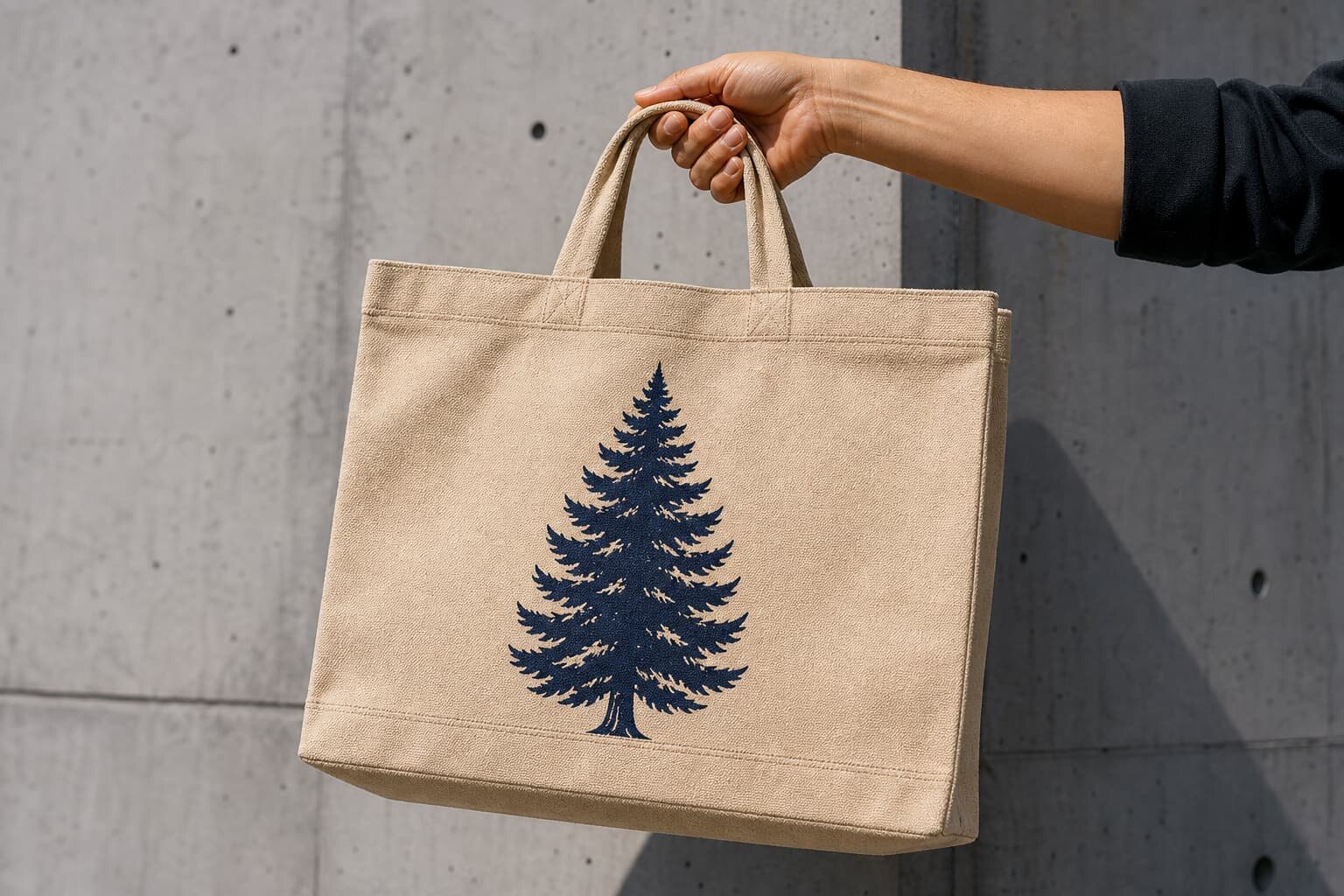
1. Start with the buying job, not only the tote size
A canvas tote bag looks simple on a line sheet, but a factory quote changes quickly once the buying job is clear. A free event giveaway, a retail bookstore tote, a supermarket reusable bag, and a premium gift-with-purchase item should not use the same specification. They may share the same width and height, yet require different fabric weight, handle reinforcement, print durability, packing, and inspection controls.
Before asking for price, define the commercial role of the bag. Is the goal the lowest cost per distributed unit, a reusable item with strong brand presence, retail resale margin, or reliable packaging for another product? This decision helps the factory recommend the right construction and prevents quote comparisons that only look aligned. If an RFQ says only canvas tote bag, 38 x 42 cm, logo print, one supplier may quote 8 oz cotton, another 12 oz canvas, and a third may reduce handle width to win the unit price.
This is where a canvas tote bag for wholesale buyers factory order guide becomes useful: it turns a loose product idea into a controlled purchasing document. The better the front-end brief, the fewer changes during sampling and the fewer surprises when the shipment is packed.
- For a low-budget giveaway, consider 6 oz to 8 oz cotton canvas with a one-color screen print and simple bulk packing.
- For a retail or bookstore tote, 10 oz to 12 oz canvas usually gives a stronger handfeel and better perceived value.
- For groceries, bottles, or heavier contents, prioritize handle attachment, seam strength, and bottom gusset over decoration details.
- For fashion or museum retail, control fabric finish, shade, print handfeel, labels, and folding presentation before chasing the lowest FOB price.
2. Specify fabric weight, finish, and tolerance
Fabric is the largest cost driver in most canvas tote orders, so vague wording creates real buying risk. Canvas is often discussed in ounces, while mills and factories may also control by GSM. The two terms are connected, but they are not always used consistently in commercial quotes. A buyer asking for 12 oz canvas should still ask the supplier to confirm the actual GSM range, fabric composition, weave, and tolerance used for bulk production.
As a practical range, 6 oz to 8 oz cotton canvas works for many basic promotional bags. For retail and repeated use, 10 oz to 12 oz is often a more balanced choice because it feels substantial without making the bag too heavy. Heavier 14 oz to 16 oz canvas can feel premium, but it increases material cost, sewing effort, carton gross weight, and freight exposure. If the item must hit a landed cost target, fabric weight should be checked together with carton CBM, not only FOB price.
The finish matters as much as the number. Natural unbleached canvas is usually cost-efficient and popular for simple branding, but cotton seed flecks, small slubs, and shade variation are normal. Bleached canvas looks cleaner but changes the material feel and processing cost. Dyed canvas supports brand color control, yet it normally requires lab dips, dye lot control, and colorfastness checks. Washed canvas can look softer and more casual, but shrinkage and shade consistency need tighter approval.
- State fabric as both oz and GSM when possible, such as 10 oz canvas, approximately 270-300 GSM, or 12 oz canvas, approximately 320-340 GSM.
- Ask for fabric weight tolerance, commonly expressed as a percentage range, so bulk fabric is not quietly downgraded.
- Confirm whether the quoted material is natural, bleached, dyed, washed, recycled cotton, organic cotton, or a blend.
- For dyed canvas, approve lab dips under consistent lighting and confirm whether the shade tolerance is judged visually, by Pantone reference, or by an agreed color difference method.
- For natural canvas, decide whether seed flecks and slubs are acceptable character marks or defects for your sales channel.
3. Choose construction and handles before price negotiation
Construction determines how the tote performs in real use. A flat tote is efficient for documents, catalogs, apparel, and simple giveaways. A bottom gusset creates more volume and helps the bag stand or hold boxed items. A full side-and-bottom gusset improves capacity but requires more cutting and sewing. Zippers, inner pockets, lining, contrast panels, and binding can add value, but each detail changes cost, sampling time, and inspection points.
Handle design deserves early attention because it is one of the most common failure points. Self-fabric handles match the bag body and suit clean retail designs. Cotton webbing can be strong and efficient, but it may involve separate color availability and MOQ. Longer handles improve shoulder carry, while shorter handles may be better for heavy contents or premium packaging. Buyers should approve handle drop, not only total handle length, because comfort depends on the space between the top edge of the bag and the top of the handle loop.
Reinforcement should match the expected load. A simple stitch may be enough for a light promotional tote, but grocery, wine, or merchandise programs should consider box stitch, cross-stitch, or bartack reinforcement. The sample should be loaded with realistic contents, then checked for handle stretch, seam stress, and distortion around the attachment points.
- State finished size as width x height x gusset, not cutting size or flat fabric dimension.
- Specify handle width, total handle length, and handle drop in centimeters.
- Confirm whether seams are overlocked, bound, folded, or raw inside because this affects both appearance and durability.
- Ask whether the bottom corners are reinforced or shaped, especially for gusseted bags carrying boxed goods.
- For heavier use, define a practical load test instead of relying on a general promise of strong handles.
4. Match print method to artwork and canvas texture
Screen printing is often the first method to evaluate for wholesale canvas tote bags. It is practical for solid logos, simple text, and one to four spot colors. It can be durable and cost-effective at volume, but canvas is textured, so very small type, thin lines, and tight registration can lose sharpness. A design that looks clean on paper may need adjustment before it works on coarse fabric.
Heat transfer, digital print, pigment print, embroidery, and panel printing all have roles, but none should be selected blindly. Heat transfer can support gradients and detailed artwork, though it changes handfeel and may need extra durability testing. Digital print can help with complex color artwork or smaller runs, but color saturation depends on fabric and equipment. Embroidery can look premium, but dense stitching may pucker lighter canvas. Panel printing before sewing allows larger placement freedom, while printing after sewing may be limited by seams, pockets, or gussets.
Quote comparisons must lock the print data. A one-color logo on one side is not comparable with a large two-side print, underbase ink on dark fabric, or artwork requiring multiple strike-off revisions. Buyers should also define whether the print must pass rub testing, whether water-based ink is preferred, and whether the print handfeel is part of the approval standard.
- Provide AI, EPS, or vector PDF artwork whenever possible; bitmap logos often need cleanup before production.
- State print size, print position from top and side seams, number of sides, and number of colors.
- Give Pantone references but approve the final shade on fabric, not only on a paper printout.
- Request a print strike-off when color, line detail, underbase coverage, or logo registration matters.
- Ask whether the quote includes screen setup, film, sampling, extra colors, second-side printing, and artwork adjustment.
5. Understand MOQ logic before asking for a trial order
MOQ is rarely just a supplier preference. It is tied to fabric purchasing, dyeing, printing setup, accessory production, cutting efficiency, and packing labor. A factory may accept a small order for natural canvas in a standard size because the material is easy to source and production can be grouped with other work. The same factory may require a much higher MOQ for custom dyed canvas, custom webbing, woven labels, all-over print, or unusual dimensions.
For a first order, the smartest question is not only what is your lowest MOQ. Ask which specification choices increase MOQ and where the order can be simplified without damaging the commercial goal. If the buyer is testing a new market, standard natural canvas with one-color screen print and plain export packing may be a sensible pilot. Once sell-through is proven, the reorder can add dyed fabric, custom trims, or retail packing.
Very low MOQ offers should be reviewed carefully. They may be legitimate for stock fabric and simple printing, but they can also hide specification substitutions. A supplier may quote a lighter fabric, narrower handle, simpler seam, or bulk packing to meet the requested quantity. The purchase order should repeat the approved specifications so the low MOQ does not become a different product.
- Low MOQ is easier with stock natural canvas, standard sizes, existing webbing, and simple one-color printing.
- Dyed fabric can trigger mill MOQ, lab dip approval, dye lot minimums, and additional lead time.
- Woven labels, printed care labels, hangtags, barcode stickers, and custom cartons may each have separate supplier minimums.
- All-over printing or panel printing before sewing normally increases setup work and waste allowance.
- For test orders, ask the factory for a pilot specification that protects the core brand requirements while avoiding unnecessary custom inputs.
6. Use samples as production controls, not souvenirs
Sampling should create a physical control standard for bulk production. A photo can help with discussion, but it cannot fully confirm fabric weight, handfeel, handle strength, print coverage, seam finishing, shade, folding, or packing. For wholesale procurement, the approved sample should be tied directly to the purchase order and inspection checklist.
Different sample types answer different questions. An existing sample shows the factory's workmanship and available materials. A blank prototype confirms size, gusset, handle drop, seam method, and overall structure. A lab dip confirms dyed fabric direction before bulk dyeing. A print strike-off checks ink color, edge sharpness, opacity, and rub behavior. The pre-production sample should combine the final fabric, final size, final sewing, final print, final labels, and final packing. This is the sample the factory and buyer should treat as the bulk standard.
Sample approval should be precise. Instead of saying approved, note any required changes: handle drop plus 2 cm, logo moved 1 cm lower, print color adjusted to approved strike-off, carton label revised, or inner pack changed from 20 pieces to 10 pieces. These notes protect both sides because they reduce interpretation after bulk cutting begins.
- Measure finished dimensions after sewing and finishing, then compare against the intended tolerance.
- Load the sample with realistic contents and inspect handle attachment, bottom shape, and seam stress.
- Rub the print with a dry white cloth and a slightly damp white cloth to screen for obvious color transfer.
- Compare sample fabric from multiple suppliers by GSM, stiffness, shade, and surface texture rather than price alone.
- Seal and sign one approved pre-production sample and keep it available for inline and final inspection.
7. Compare factory quotes with the same data fields
A useful factory quote should show more than a unit price. It should define fabric, finished size, construction, print method, print size, number of colors, trims, packing, carton data, sample cost, setup cost, trade term, lead time, payment terms, and quote validity. If one supplier includes individual polybags and barcode labels while another quotes bulk packing, the price difference does not prove one factory is more efficient. It may simply mean the quotes include different work.
Separate fixed costs from unit costs. Screen setup, sample making, label setup, and artwork preparation may be one-time charges. Fabric, sewing, printing, finishing, packing, and carton materials are unit-based. Freight should also be considered early. A heavier canvas or larger gusset may look acceptable at FOB level but become expensive once gross weight and CBM are included in landed cost.
Trade terms can change the comparison. EXW may exclude local transport, export handling, and port costs. FOB usually moves responsibility at the export port. CIF and DDP include different transport responsibilities and risk points. Procurement teams should compare quotes using the same Incoterm and destination assumptions, especially when deciding between suppliers in different production regions.
- Ask for fabric composition, weight, finish, and tolerance rather than accepting cotton canvas as a complete material description.
- Require finished size, gusset depth, handle specification, seam method, and reinforcement details in the quote.
- Confirm print method, print size, number of colors, number of positions, and included setup charges.
- Request units per carton, carton dimensions, gross weight, net weight, total cartons, and estimated total CBM.
- Check whether labels, hangtags, barcode stickers, care labels, inner packing, master cartons, and pallets are included.
- Clarify whether lead time starts after deposit, artwork approval, sample approval, material arrival, or receipt of packaging files.
8. Control packing, carton data, and delivery readiness
Packing is not a minor final step. It affects warehouse handling, retailer compliance, freight cost, moisture risk, and the condition of the product when cartons are opened. Canvas tote bags can be bulk packed, grouped in inner polybags, tied with paper bands, individually polybagged, folded with hangtags, or packed by SKU for distributor allocation. The right method depends on the sales channel and destination requirements.
A distributor may prefer efficient carton packing with clear SKU separation and carton marks. A retail chain may require item barcodes, hangtags, price labels, carton labels, routing data, and specific carton quantity. An e-commerce kit may need individual packing to protect the printed surface and keep fulfillment simple. If these rules arrive after production, the factory may need to reopen cartons, relabel goods, or repack finished bags, which adds cost and can delay shipment.
Moisture control deserves attention because cotton canvas can absorb humidity during storage and sea transit. Buyers reducing plastic should still define how the factory protects bags from dirt, damp cartons, and handling marks. Paper bands or bulk inner bags can reduce plastic use, but they may allow more creasing or surface contact. Individual polybags protect better, but they add material cost and may conflict with brand packaging policies. The decision should be made before the quote is finalized.
Carton data should be part of quote review, not something requested only when booking shipment. Units per carton, carton dimensions, gross weight, net weight, total carton count, and estimated CBM help the buyer calculate freight, warehouse space, and delivery scheduling. For heavy canvas orders, carton strength and weight limits should also be checked so cartons remain manageable and do not fail during handling.
- Define units per inner pack and units per master carton before packing materials are purchased.
- Provide barcode files, SKU list, carton mark layout, destination label rules, and retailer routing requirements early.
- Confirm folding direction and whether the main logo area can avoid a hard crease.
- Decide whether individual polybags, recyclable bags, paper bands, or bulk inner bags are required.
- Ask whether desiccants, moisture barrier liners, or extra carton protection are recommended for long sea shipments or humid seasons.
- Request carton drop or compression expectations when the bags are heavy or cartons will be stacked for long periods.
- Verify carton count and gross weight before shipment booking so freight documents match physical goods.
9. Build lead time around the real bottleneck
Lead time depends on more than sewing capacity. The schedule may be controlled by fabric availability, dyeing, washing, print strike-off approval, label production, packing material readiness, inspection timing, or vessel booking. Natural canvas in a common weight is usually faster than custom dyed or washed canvas. A one-color screen print is usually faster than artwork that needs several strike-off rounds. Retail packing can become the bottleneck if barcodes and carton labels are approved late.
A practical timeline should be broken into stages: sample making, sample shipping, buyer approval, material preparation, cutting, printing, sewing, finishing, packing, inspection, and shipment booking. This helps both buyer and factory see which dates depend on the buyer and which depend on production. Many delays come from late artwork, unclear label files, slow sample comments, or last-minute packing changes rather than sewing itself.
For larger orders, buyers should consider inline inspection after early production pieces are completed. This catches print position, seam method, label placement, or measurement problems before the full order is packed. Final inspection should happen after packing but before shipment release. Shipment booking should not be treated as the same as cargo readiness; the goods must be packed, inspected, and correctly documented.
- Ask the factory to show lead time by process stage, not only as one total number.
- Do not allow bulk cutting until size, construction, fabric, and sample comments are approved.
- Confirm whether printing happens before sewing or after sewing because this affects both schedule and print placement limits.
- Approve labels, hangtags, barcodes, and carton marks before the factory reaches packing stage.
- Reserve inspection dates in advance for orders with fixed delivery windows.
- Build buffer for lab dips, strike-off revisions, public holidays, port congestion, or buyer-side approval delays.
10. Set QC standards, AQL, and defect definitions before production
Quality control should not rely on a broad phrase such as good quality canvas tote. The purchase order should define measurable acceptance criteria: finished size tolerance, handle drop tolerance, print placement tolerance, color approval standard, stitch quality, packing quantity, carton marks, and safety requirements. Clear standards help the factory train workers and help inspectors make consistent decisions.
For many wholesale soft goods orders, buyers use a random final inspection plan based on ANSI/ASQ Z1.4 or ISO 2859-1 sampling logic. A common starting point is General Inspection Level II with AQL limits agreed by the buyer, such as 0 for critical defects, 2.5 for major defects, and 4.0 for minor defects. Some buyers use tighter or looser limits depending on channel risk, order value, and retailer requirements. The important point is to agree before production starts, not after defects are found.
Defect classification should be specific. Critical defects are safety or identity problems, such as broken needle fragments, mold, wrong logo, wrong SKU, or mixed packing that can cause serious compliance issues. Major defects affect saleability or use, such as broken seams, weak handles, obvious stains, badly misaligned print, wrong size outside tolerance, missing labels, or severe shade difference. Minor defects are small issues that do not affect normal use, such as a short loose thread, slight crease, small natural slub, or minor shade variation within the approved standard.
Inspection should combine measurement, visual review, print testing, load checks, label verification, and carton audits. Keep one approved pre-production sample and one sealed bulk reference sample. For reorders, compare new production against the retained sample and update the standard if the buyer intentionally changes fabric, print method, or packing.
- Critical defects: needle fragments, serious mold, wrong logo, wrong material, wrong SKU, or mixed cartons that could create safety or compliance failure.
- Major defects: broken seams, weak handle attachment, obvious stains, incorrect size outside tolerance, missing labels, unacceptable shade difference, or print badly off position.
- Minor defects: small loose thread, slight natural canvas slub, minor crease, or small color variation already allowed by the approved sample.
- Suggested inspection scope includes measurement, visual defects, handle load check, seam check, print dry rub check, label check, quantity count, and carton mark verification.
- For higher-risk orders, add inline inspection after first output and final random inspection after packing but before shipment release.
Specification comparison for buyers
| Spec decision | Recommended option | Buyer-side tradeoff | MOQ, lead-time, and cost impact |
|---|---|---|---|
| Fabric weight | 10 oz to 12 oz cotton canvas, roughly 270-340 GSM depending on weave | Good balance for retail gift bags, bookstore totes, event merchandise, and reusable shopping bags that need structure without excessive freight weight | Higher GSM raises fabric cost, sewing difficulty, carton weight, and landed cost. Custom or uncommon weights may increase MOQ and add fabric sourcing time. |
| Fabric finish | Natural unbleached canvas for cost control; dyed or washed canvas for brand-specific retail programs | Natural canvas has visible cotton seed flecks and shade variation. Dyed or washed canvas gives a more controlled retail look but needs stronger color approval | Natural stock fabric usually supports lower MOQ and shorter lead time. Dyed fabric can require lab dips, dye lot minimums, and extra colorfastness checks. |
| Bag construction | Flat tote for simple documents or apparel; bottom gusset or full gusset for grocery, wine, and merchandise packs | Gussets improve usable volume and shelf appearance but add sewing time and affect carton dimensions | Flat totes usually have lower unit cost and pack tighter. Gusseted bags may increase CBM and freight cost even when FOB unit price looks similar. |
| Handle design | 55-65 cm shoulder handle or 35-40 cm hand-carry handle with reinforced stitching | Shoulder handles improve daily use; short handles suit heavier packaging bags and premium hand-carry presentation | Wider or longer handles consume more fabric or webbing. Custom dyed webbing may have separate MOQ and longer lead time. |
| Print method | Screen print for solid logos; transfer or digital print for gradients, photos, and many colors | Screen print is strong for simple artwork but can lose sharpness on coarse canvas. Transfers handle fine detail but change handfeel | More colors, larger print areas, two-sided printing, underbase ink, and strike-off revisions add setup cost and time. |
| Brand trims | Sewn side label, care label, hangtag, barcode sticker, or woven label only when needed by the channel | Useful for retail and distributor control, but unnecessary trims can slow a basic promotional order | Accessory suppliers often have their own MOQ. Late barcode or hangtag files can delay packing even when bags are finished. |
| Packing | Flat pack in export carton, inner packed by SKU, or individual retail packing based on channel rules | Bulk packing lowers cost; retail packing improves store handling and barcode control | Individual polybags, paper bands, hangtags, carton labels, pallets, and moisture protection add material cost, labor, CBM, and approval steps. |
Buyer checklist before sampling
- Define the buying purpose first: retail resale, gift-with-purchase, conference tote, product packaging, supermarket reusable bag, staff kit, or distributor stock item.
- Specify finished size as width x height x gusset, and state the allowed tolerance in centimeters after sewing and finishing.
- Confirm fabric in both oz and GSM where possible, including whether the material is natural, bleached, dyed, washed, recycled cotton, organic cotton, or blended.
- State fabric color expectations, including cotton seed flecks for natural canvas, lab dip approval for dyed canvas, and acceptable shade tolerance for bulk.
- Define handle material, handle width, handle length, handle drop, reinforcement method, and expected load use.
- Provide artwork in vector format with Pantone references, print size, print position, number of print sides, and any minimum line-width concerns.
- Choose the likely print method instead of asking every supplier to decide independently; request the factory's recommendation only after artwork and fabric are shared.
- Request the right sample sequence: existing reference, blank prototype, print strike-off, lab dip if needed, and final pre-production sample.
- Ask for carton dimensions, gross weight, net weight, units per carton, total cartons, and estimated CBM in the quotation.
- Clarify whether the quote includes labels, hangtags, barcode stickers, individual packing, inner packing, export cartons, pallet requirements, and carton marks.
Factory quote questions to send
- What exact fabric weight are you quoting in GSM and oz, and what tolerance will you control during bulk production?
- Is the quoted canvas greige, natural unbleached, bleached, dyed, washed, organic, recycled cotton, or a blended material?
- Is this fabric in stock, or does it require weaving, dyeing, washing, or a mill MOQ?
- What is the minimum order quantity for this size and fabric, and does the MOQ change if we use dyed fabric, custom webbing, woven labels, or individual retail packing?
- Which print method do you recommend for our artwork, and why is it better than screen print, transfer print, or digital print for this order?
- How many colors are included in the quoted print cost, and what is the extra charge logic if we add another color, an underbase, a larger print area, or a second print side?
- What sample types can you provide: existing sample, blank prototype, print strike-off, lab dip, size set, and pre-production sample?
- What is your normal production lead time after sample approval and deposit, and which process step is usually the bottleneck for this specification?
- What packing method is included in the quote, and can you provide carton size, carton weight, total carton count, and total CBM for the order quantity?
- Are labels, hangtags, barcode stickers, care labels, inner packs, carton marks, and pallets included or quoted separately?
Quality-control points to confirm
- Measure finished bag width, height, gusset, handle length, handle width, and handle drop against the approved sample and purchase order tolerance.
- Check fabric GSM, weave density, fabric shade, cotton seed flecks, stains, slubs, broken yarns, oil marks, and obvious panel color difference.
- Inspect cutting direction and panel alignment, especially for dyed, striped, washed, or printed fabric where skewing becomes visible.
- Pull-test handles using the agreed load standard and inspect reinforcement stitches for skipped stitches, loose thread, broken needle marks, and weak attachment points.
- Check print position, ink coverage, color match, registration, edge sharpness, ink smell, cracking, and dry and wet rub resistance where relevant.
- Verify inside seams, bottom corners, gusset symmetry, seam allowance, overlocking, binding, and trimming consistency.
- Confirm labels, side tags, care tags, hangtags, barcode stickers, and carton marks match the approved artwork, SKU data, and buyer packing file.
- Review packing quantity per inner pack and carton, folding method, polybag or paper band choice, moisture protection, desiccant use, and carton strength.
- Use a defined inspection plan, commonly General Inspection Level II with AQL limits agreed by the buyer, unless the order risk requires tighter sampling.
- Classify critical defects separately from major and minor defects so unsafe items, wrong branding, and mixed SKUs are not treated like cosmetic flaws.