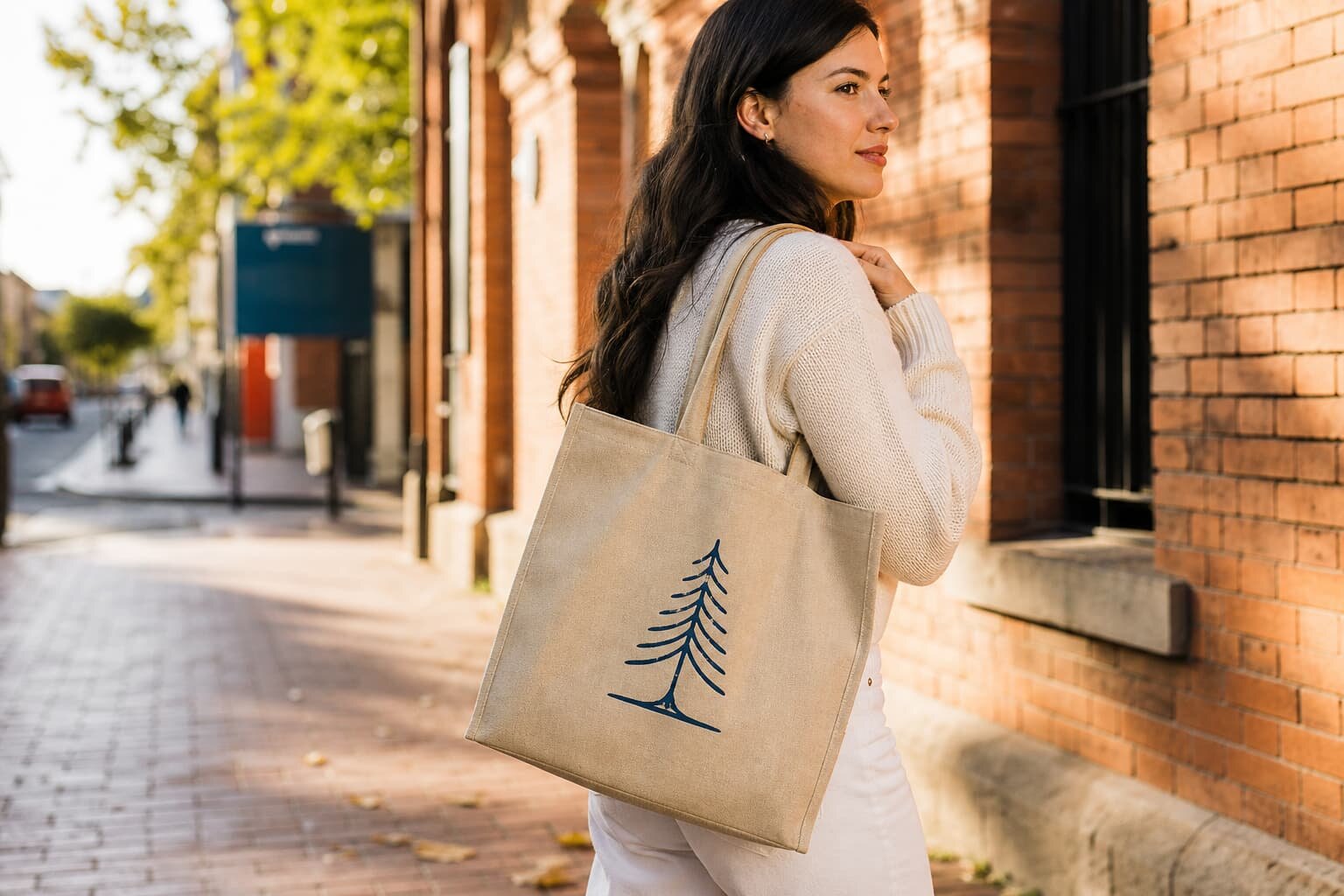
Why Line Release Matters for Canvas Tote Bag Orders
A canvas tote bag factory line release is the point where the buyer, merchandiser, production supervisor, printing team, and QC team agree that bulk production can start or continue. It is not the same as sample approval. A sample can be correct while the first bulk output is wrong because the fabric roll changed, the print screen was remade, the handle cutting length shifted, or the sewing line interpreted the gusset differently.
For procurement teams, line release is the last practical checkpoint before cost is locked into thousands of pieces. Once fabric is cut and panels are printed, corrections become expensive. The purpose of this checklist is to help buyers define what the factory must show before bulk cutting, printing, sewing, and packing are allowed to run at full speed.
- Use line release when the bag has custom print, custom color, gusset, special handle, retail packing, or strict delivery date.
- Do not rely only on the salesperson's sample photo; request measurements, close-ups, and production data.
- Treat line release as a commercial control point, not an extra formality.
- Ask the supplier to stop and confirm if any bulk material differs from the approved pre-production sample.
Define the Bag as Finished Goods, Not a Sketch
Many canvas tote bag problems start because the RFQ describes the idea but not the finished product. A buyer may write 38 x 42 cm natural canvas tote with logo, while the factory needs finished width, finished height, bottom gusset, side gusset, handle drop, seam allowance, fabric weight, print position, and packing method. If these details are missing, each supplier fills the gaps differently, which makes quote comparison unreliable.
For line release, ask the factory to place the first bulk bag on a table and measure it flat. The measurement should follow your approved drawing, not the factory's internal cutting sheet. A 2 cm error in handle drop or gusset depth may not look serious in a photo, but it can change how the bag sits on the shoulder, how it packs in the carton, and whether it holds the intended retail item.
- State finished size with tolerance, for example width 38 cm plus or minus 0.5 cm and height 42 cm plus or minus 0.5 cm.
- Confirm whether gusset is a bottom fold, boxed bottom, or sewn side and bottom gusset.
- Measure handle drop from the top edge of the bag to the highest point of the handle when laid flat.
- Request a marked measurement photo during first-line inspection.
Fabric GSM, Oz Weight, and Weave Must Be Locked
Canvas tote bag buyers often compare quotes by fabric oz, but oz alone is not enough. A 10 oz canvas is commonly around 280 GSM, while a 12 oz canvas is often around 340 GSM, but the actual hand feel also depends on yarn, density, finishing, and washing. Two suppliers can quote the same oz and deliver bags with different stiffness, opacity, and strength.
Before line release, the factory should confirm that bulk fabric matches the approved swatch. Natural canvas may show cotton seed specks, which can be acceptable if approved, but large stains, weaving holes, and dirty rolls are not acceptable. Dyed canvas needs more control because shade variation between lots can be visible when bags are packed together for retail.
- For lightweight event bags, 6 oz to 8 oz canvas may be acceptable, but it is less structured.
- For most reusable retail tote bags, 10 oz to 12 oz gives better perceived value.
- For premium or heavy carry use, 14 oz and above may be considered, but sewing cost, weight, and carton freight increase.
- Ask for GSM test method or at least cut-and-weigh confirmation if the program is high volume.
- Set acceptable color shade range for dyed canvas before bulk fabric is cut.
Print Approval Should Use the Actual Bulk Fabric
Logo print is the most visible part of a canvas tote bag, and it is also a common source of claims. Screen printing is usually the most practical method for solid logos and spot colors. It gives a clean result on cotton canvas when the mesh, ink deposit, and curing are controlled. However, fine lines, small text, large solid blocks, and white ink on dark canvas all need special attention.
The print strike-off used for approval should be made on the actual or equivalent canvas, not on paper. Canvas texture absorbs ink differently, and natural cotton color can change the appearance of brand colors. During line release, the buyer should confirm print position from the top edge and side edge, print size, Pantone target if required, registration, curing, and whether the print cracks when the fabric is folded.
- Use screen print for most 1-color to 3-color brand tote bag orders.
- Use heat transfer carefully if the artwork has gradients, but check hand feel and washing behavior.
- Use embroidery only when the fabric weight and logo size can support it without puckering.
- Avoid approving print color only from a phone photo because lighting can hide shade errors.
- Require curing checks for ink adhesion before bags move to final packing.
Handle and Seam Construction Decide Real Carry Performance
A canvas tote bag usually fails first at the handle joint, side seam, or bottom corner. Buyers should not only ask for strong handles. They should specify handle material, width, length, drop, reinforcement pattern, stitch density, and thread color. Self-fabric handles give a cleaner matching look, while cotton webbing can offer stable strength and simpler production control.
During line release, inspect all four handle attachment points. A neat front photo can hide weak reverse stitching, skipped stitches, or a reinforcement box that is too small. If the bag is intended for books, bottles, groceries, or catalogues, ask for a practical load check based on expected use. The test does not need to be exaggerated, but it should reflect the product claim and buyer expectation.
- Common handle width is 2.5 cm to 3 cm, but wider handles can improve comfort.
- Common handle drop is around 25 cm to 30 cm for shoulder carry, depending on market preference.
- Box-stitch or cross-stitch reinforcement is safer than a single straight stitch for heavier use.
- Thread should match the approved sample unless contrast stitching is part of the design.
- Check that handles are not twisted before stitching and that both sides are symmetrical.
MOQ Logic: Why Cheap Low Minimums Can Be Misleading
MOQ for canvas tote bags is not only a number of pieces. It is affected by fabric color, fabric stock, dyeing lot size, printing setup, cutting efficiency, label minimum, packing material, and sewing line schedule. A supplier may offer a very low MOQ for natural canvas with one-color print because fabric is available. The same supplier may need a higher MOQ for dyed canvas, custom webbing, or multiple artwork versions.
When comparing quotes, ask the factory to explain what MOQ includes. A lower MOQ can be useful for trial orders, but it may come with higher unit cost, limited fabric choice, longer waiting time, or less stable shade control if the order is combined with another fabric batch. For distributors and retail buyers, the better question is not only what is your MOQ, but what changes if I order 500, 1000, 3000, or 5000 pieces.
- Ask whether natural canvas fabric is in stock or needs weaving and finishing.
- Confirm whether different print designs can share the same MOQ if the bag body is identical.
- Check if label, hangtag, barcode, or individual polybag creates a separate minimum.
- Request price breaks by quantity using the same specification, not downgraded fabric.
- Ask which cost is fixed setup cost and which cost reduces with volume.
Quote Data Buyers Need Before Comparing Suppliers
A useful canvas tote bag quote should show more than unit price. It should identify fabric, construction, print, packing, sample charge if any, production lead time, payment terms, inspection point, and quote validity. Without this data, the lowest price may simply be a different product. Procurement teams should convert supplier offers into the same cost basis before shortlisting.
Ask suppliers to separate cost drivers when possible. You do not need every factory overhead detail, but you do need to know what changes the price. For example, moving from 8 oz to 12 oz canvas changes fabric cost and carton weight. Moving from one-color print to four-color print changes screen setup, production speed, and defect risk. Adding individual polybags changes labor, material, carton packing, and sustainability review.
- Fabric: weight, composition, color, finishing, and whether it is stock or custom.
- Bag body: size, gusset, seam type, handle type, reinforcement, and label.
- Decoration: print method, number of colors, print size, placement, and setup charge.
- Packing: units per carton, polybag, hangtag, barcode, carton mark, and pallet requirement.
- Lead time: sample days, bulk material days, production days, inspection time, and shipping handover.
Sample Checks Before Releasing the Factory Line
The pre-production sample should be treated as a working contract between buyer and factory. It should be signed, dated, and matched with the final artwork, fabric swatch, packing file, and quote version. If the buyer approves one sample but later changes handle length, print size, or carton quantity, the line release checklist must be updated. Otherwise, production teams may follow the wrong reference.
For first-line inspection, ask the factory to make a small batch from bulk fabric, bulk print setup, and actual sewing operators. This first output is more useful than another showroom sample. The goal is to catch problems while only a small quantity is affected. Photos should include front, back, inside seam, bottom gusset, handle stitching, print close-up, measurement tape, label, and carton packing if available.
- Check fabric shade against approved swatch under consistent lighting.
- Measure at least three first-line pieces, not only the best-looking one.
- Rub the print lightly after curing to check obvious ink adhesion problems.
- Inspect inside seams for loose threads, raw edge exposure, and skipped stitches.
- Confirm the approved sample is physically available to the line supervisor and QC inspector.
Packing and Carton Release Prevents Late Shipment Claims
Packing looks simple until it causes a receiving problem. Canvas tote bags can be packed flat, folded, individually polybagged, bundled, or retail tagged. Each choice affects carton size, creasing, labor, barcode scanning, warehouse receiving, and sustainability compliance. If packing is not approved before bulk completion, the factory may choose the fastest method rather than the method your retailer or distributor requires.
Before final packing begins, review a packed carton sample. Check units per carton, folding direction, carton mark, gross weight, carton dimensions, barcode readability, humidity control, and whether the print is protected from abrasion. Heavy compression can leave fold lines across large prints. Loose packing can waste freight and allow bags to move inside the carton.
- Confirm whether each bag needs individual polybag or whether master polybag is enough.
- Keep carton weight practical for warehouse handling and destination rules.
- Place barcode labels where the receiving team can scan without opening every fold.
- Use clear carton marks with PO number, item number, color, quantity, and carton sequence.
- Ask for packed carton photos before shipment inspection if you cannot visit the factory.
Lead Time Control from Deposit to Shipment
Canvas tote bag lead time depends on how many custom steps are involved. Natural stock fabric with one-color print can move faster than dyed canvas with custom labels and retail packing. Buyers should avoid accepting a single production days answer without understanding the sequence. The real schedule starts from artwork approval, deposit, fabric confirmation, and sample approval, not from the first inquiry date.
For time-sensitive promotions or retail launches, build line release into the schedule. If the factory needs two days to correct print position or handle stitching, that time is much cheaper before bulk production than after final inspection. A good supplier should be able to provide a staged timeline and identify which approval delay will push the shipment date.
- Pre-production sample time starts after complete artwork and specification are confirmed.
- Bulk fabric time depends on stock availability, dyeing, washing, and drying capacity.
- Printing should be scheduled after fabric inspection and before sewing if panels are printed flat.
- Final inspection should happen after at least 80 percent packing or according to buyer standard.
- Shipment handover date should be separated from factory completion date.
Specification comparison for buyers
| Spec decision | Recommended option | When it fits | Buyer risk to check |
|---|---|---|---|
| Fabric weight | 10 oz to 12 oz cotton canvas, about 280-340 GSM depending on weave | Retail giveaways, bookstore bags, event merchandise, and reusable shopping bags that need structure without becoming too heavy | Supplier may quote lower GSM or looser weave to reduce cost; require GSM tolerance, fabric swatch, and finished bag weight |
| Bag construction | Bottom gusset with reinforced handle cross-stitch or box-stitch | When the bag must stand better, carry catalogues, apparel, groceries, or trade show kits | Gusset size may shrink after sewing; confirm finished dimensions, seam allowance, and load expectation |
| Handle material | Self-fabric canvas handle or 2.5-3.0 cm cotton webbing | Self-fabric for matching premium look; webbing for stable strength and simpler production | Handle length can vary by cutting batch; check drop length tolerance and stitching density |
| Print method | Screen print for solid spot colors; heat transfer or DTG only when artwork requires it | Screen print is best for most logo tote bags, especially 1-3 color brand graphics | Ink cracking, off-position print, color mismatch, and poor curing; require print strike-off before line release |
| Color choice | Natural, black, or dyed canvas with lab dip approval for custom colors | Natural canvas works for fast projects; dyed bags fit retail programs and brand palettes | Dyed canvas can have shade variation and crocking; request colorfastness and batch shade control |
| Packing style | Flat packed 50-100 pcs per export carton with carton mark approval | Most distributor, retail, and ecommerce replenishment shipments | Over-compression can crease prints and deform gussets; confirm carton size, inner polybag need, and barcode placement |
| MOQ logic | MOQ based on fabric color, print setup, and sewing line efficiency, not only bag count | Useful when comparing several suppliers quoting different minimums | Low MOQ may hide higher unit cost, substituted fabric, or delayed production waiting for shared dyeing lots |
Buyer checklist before sampling
- Confirm final bag size as finished measurement, not cutting size, including width, height, bottom gusset, side gusset if any, and handle drop.
- Approve fabric by actual swatch with weight, weave, shrinkage expectation, color, hand feel, and whether the cotton canvas is natural, bleached, dyed, or recycled blend.
- State fabric weight in oz and GSM, with allowed tolerance, because 10 oz canvas from two mills can feel different if one has a looser weave.
- Lock handle construction: self-fabric or webbing, width, length, drop, reinforcement stitch type, thread color, and stitch density.
- Approve print strike-off on the actual fabric color, not only on paper or a digital image, especially for white ink, fine lines, and large solid areas.
- Check first-line samples for print position, panel alignment, handle placement, seam strength, loose threads, stains, and finished dimensions before bulk sewing continues.
- Require the factory to keep one signed approval sample at the sewing line, one in QC, and one for buyer reference if the order is complex.
- Specify packing method, carton quantity, carton mark, barcode or hangtag position, silica gel need, and whether individual polybags are allowed under your market rules.
- Confirm lead time by stages: fabric booking, dyeing or bleaching, printing, cutting, sewing, inspection, packing, and vessel or courier handover.
- Ask the supplier to list all quote assumptions so cheaper offers can be compared against the same fabric, print, packing, and inspection standard.
Factory quote questions to send
- What exact fabric are you quoting: cotton canvas weight in oz and GSM, weave type, yarn count if available, color process, and tolerance?
- Is the quoted size the finished bag size after sewing, and what is your normal tolerance for width, height, gusset, and handle drop?
- Which print method is included in the price, and are screen setup, ink matching, strike-off, curing, and wastage included or charged separately?
- What is the MOQ for this canvas color and print design, and does the MOQ change if we split colors, split artwork, or add woven labels?
- How many days are needed for pre-production sample, print strike-off, bulk fabric, sewing, final inspection, and export packing after deposit and artwork approval?
- What reinforcement stitch will be used at the handle joint, and can you share close-up photos from current production using the same construction?
- What packing is included in the quote: individual polybag, master polybag, carton quantity, carton size, carton mark, barcode label, and palletization if required?
- What inspection standard do you use for stains, print defects, broken stitches, size tolerance, and carton short quantity?
- Can you identify which cost items will change if we move from natural canvas to dyed canvas, from 1-color to 3-color print, or from flat bag to gusseted bag?
- Will you provide first-line production photos and hold production if the first output is not aligned with the approved sample?
Quality-control points to confirm
- Fabric GSM and hand feel match the approved swatch within stated tolerance.
- Finished bag size and handle drop are measured after sewing and pressing, not estimated from cutting panels.
- Print color, curing, position, registration, and edge sharpness match the approved strike-off.
- Handle reinforcement is consistent on all four attachment points with no skipped stitches or broken thread.
- Side seams, bottom seam, and gusset corners are secure, straight, and free from holes or puckering.
- The bag is clean, dry, odor-free, and free from oil marks, needle marks, visible stains, and heavy creases.
- Labels, hangtags, barcodes, and carton marks match the buyer packing file.
- Carton quantity, carton weight, carton dimensions, and export marks match the shipping instruction.
- Random load checks are performed according to the buyer's intended use, especially for books, bottles, or grocery programs.
- Approved sample, first-line sample, and packed bulk goods remain traceable by order number, color, and production date.