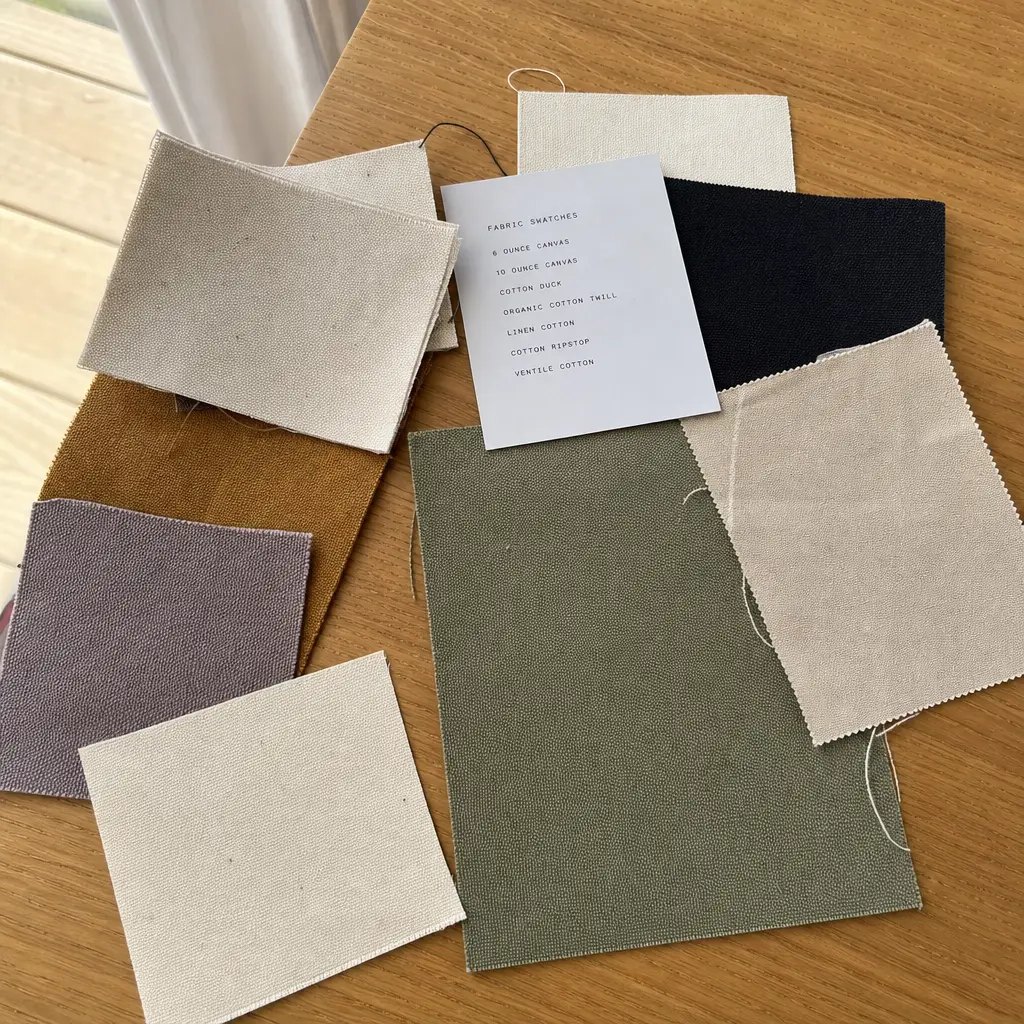
Why Gift Box Buyers Need a Factory Audit for Canvas Tote Bags
When you source canvas tote bags for gift boxes, the bag is not just packaging—it is part of the gift experience. A flimsy bag, crooked print, or weak handle ruins the unboxing and reflects poorly on your brand. A factory audit helps you verify that the supplier can deliver consistent quality at scale, not just a pretty sample.
Gift box buyers often order in the range of 2,000 to 10,000 pieces per SKU, with multiple color variants. At that volume, even a 2% defect rate means 40 to 200 bad bags per order. An audit catches the root causes—poor fabric sourcing, loose print registration, or weak handle attachment—before they become your problem.
Beyond quality, an audit reveals the factory's production capacity, lead time reliability, and willingness to accommodate custom requests. For example, a factory that cannot show a calibrated GSM scale or a wash test report is unlikely to meet your specs consistently. The audit also helps you negotiate better terms by understanding the factory's cost structure and MOQ logic.
Social compliance is increasingly important for gift box buyers. An audit should verify worker safety (fire exits, first aid kits), needle control (all needles accounted for to prevent metal contamination), subcontracting policies (no unauthorized third-party sewing), and chemical compliance (REACH or OEKO-TEX certification for dyes and inks). Request a copy of the factory's last BSCI or SMETA audit report, dated within 12 months.
- Audit verifies fabric GSM consistency across production rolls, not just the sample swatch
- Checks print method equipment: screen print requires proper mesh tension and drying tunnel
- Confirms handle attachment process: bartack machines must be calibrated for stitch count
- Reviews packing area: flat packing requires a dedicated folding table, not floor stacking
- Assesses sample management: a dedicated sample room with a log system indicates process maturity
- Verifies social compliance: worker safety, needle control, subcontracting, and chemical compliance
Fabric GSM: The First Thing to Verify During Audit
Canvas tote bags for gift boxes typically use 240 to 280 GSM fabric. Below 200 GSM, the bag feels cheap and may not hold shape when placed inside a gift box. Above 320 GSM, the bag becomes stiff and hard to fold neatly into the box. During an audit, ask to see the GSM scale and request a measurement from three different rolls of the same fabric lot.
Many factories buy greige fabric from mills and then dye or finish it in-house. The finishing process can change GSM by up to 10%. If your spec says 260 GSM, the factory may receive 240 GSM greige and stretch it to 260 GSM during finishing. That stretched fabric will shrink back after washing, causing print distortion. Verify the finished GSM, not the greige spec.
To perform a GSM check, ask the factory to cut a 10x10 cm swatch from the production roll. Weigh it on a calibrated scale (digital, accurate to 0.01g). Multiply the weight in grams by 100 to get GSM. Repeat for three swatches from different parts of the roll. The average should be within your tolerance. If the factory cannot perform this test on site, consider it a red flag for quality control.
Request a GSM test report from the factory's last order of similar fabric. Compare the reported GSM with your measurement. Also ask for the fabric mill certificate to verify the source. A factory that sources from reputable mills (e.g., in China: Zhejiang, Jiangsu; in India: Gujarat) is more likely to have consistent GSM.
- Request a 10x10 cm swatch cut from production roll, weigh on calibrated scale, calculate GSM
- Accept ±5% tolerance for standard canvas; demand ±3% for premium gift box programs
- If factory cannot show GSM scale during audit, consider it a red flag for quality control
- Ask for the greige GSM and finished GSM to understand shrinkage and finishing effects
- Request fabric mill certificate and GSM test report from last order
Print Method Selection: Screen Print vs. Heat Transfer vs. Digital
For canvas tote bags in gift boxes, screen print with water-based ink is the most common and cost-effective method for solid logos and 1-2 color designs. It bonds with the fabric fibers and withstands multiple washes. Heat transfer (vinyl or silicone) can look crisp but often peels after 3-5 washes, which is unacceptable if the bag is meant to be reused. Digital print (DTG) works for full-color artwork but costs more per unit at low MOQ and may fade faster on dark canvas.
During an audit, inspect the screen print area. Look for a drying tunnel or conveyor dryer—air-dried prints often crack. Check mesh count: 110-160 mesh for standard logos, 200+ mesh for fine text. Ask to see a wash test report for the ink-fabric combination. If the factory uses heat transfer, verify the temperature and pressure settings on the heat press machine. For digital print, check the printer maintenance log and ink expiration dates.
The choice of print method also affects MOQ and lead time. Screen print requires screen making (3-5 days) and a minimum quantity to justify setup cost. Heat transfer has lower setup cost but higher per-unit cost for large runs. Digital print has no setup cost but slower speed. Match the method to your design complexity, order volume, and budget.
Request a wash test report for the specific ink-fabric combination you plan to use. The test should include 3 home laundry cycles at 40°C with standard detergent. Inspect the print for cracking, peeling, or color fading. A factory that cannot provide a wash test report should be considered high risk.
- Screen print: best for 1-2 color logos on natural or light canvas; MOQ 500-1000 per color
- Heat transfer: acceptable for small runs (under 500) but test adhesion with 3 wash cycles
- Digital print: suitable for photographic images but cost per unit 2-3x screen print at 1000 pcs
- During audit, ask to see the print setup sheet for a recent order to understand registration tolerance
- Request a wash test report for the specific ink-fabric combination you plan to use
Handle Attachment: The Most Common Failure Point
Gift box tote bags often carry heavier items like wine bottles, books, or cosmetic sets. The handle attachment is the weakest link. A single row of stitching without bartack will tear under 3-4 kg load. The industry standard is a double-layer handle with a bartack (reinforced stitch) at each attachment point. During an audit, check the bartack machine settings: minimum 8 stitches per bartack, thread tension balanced.
Some factories offer rivet-reinforced handles, which look premium but add cost and introduce metal detection risk if the bag is used for food-related gifts. For most gift box applications, a well-stitched bartack is sufficient. Ask to see a pull test report: the handle must withstand 15 kg without seam separation. If the factory cannot perform a pull test on site, that is a warning sign.
Handle dimensions also matter. Standard handle width is 2.5-3 cm for gift bags; wider handles (4 cm) are better for heavy items. Handle length should be 30-35 cm for hand carry or 50-60 cm for shoulder carry, depending on the gift box design. During audit, randomly select 5 finished bags and perform a manual pull test with a 5 kg weight. Lift each bag 10 times and check for seam separation or thread breakage.
Request a pull test report from the factory's last order. The report should specify the load (15 kg), test method (e.g., ASTM D5034), and acceptance criteria (no seam separation). A factory that cannot provide this report should be considered high risk for handle failure.
- Bartack stitch count: minimum 8 stitches per bartack, visible on both sides of handle
- Handle width: 2.5-3 cm for standard gift bags; wider handles (4 cm) for heavy items
- Handle length: 30-35 cm for hand carry; 50-60 cm for shoulder carry (if gift box allows)
- During audit, randomly select 5 finished bags and perform a manual pull test with 5 kg weight
- Ask for a pull test report with 15 kg load and acceptance criteria
Bottom Gusset: Stability for Boxed Items
A flat gusset of 6-8 cm gives the bag a stable base, which is essential when the bag is placed inside a gift box. Without a gusset, the bag tips over and looks messy. Too deep a gusset (over 10 cm) wastes fabric and increases cost without adding value. During an audit, measure the gusset depth on three different bags from the same production run. Deviation should be under 2 mm.
Gusset construction also affects how the bag folds flat for packing. A well-made gusset folds inward neatly, allowing the bag to lie flat in a polybag. Poor gusset stitching creates bulges that make packing inconsistent and increase carton volume. Ask the factory to show you a folded bag from a recent order to assess the gusset fold quality.
For tall items like wine bottles, a gusset depth of 8-10 cm is recommended. For flat items like books or cosmetics, 6 cm is sufficient. The gusset stitching should be double-needle lockstitch for durability; single-needle may unravel over time. During audit, check the gusset stitching on 3 bags and measure the depth at the center and both edges.
Request a gusset measurement report from the factory's last order. The report should include depth measurements at three points on the same bag and the deviation. A factory that cannot provide this report may have inconsistent gusset quality.
- Gusset depth: 6-8 cm for standard gift boxes; 8-10 cm for taller items like wine bottles
- Gusset stitching: double-needle lockstitch for durability; single-needle may unravel
- Folding test: bag should fold flat with gusset tucking inward naturally, no forced creases
- Measure gusset depth at three points on the same bag; deviation under 2 mm is acceptable
MOQ Logic: What Gift Box Buyers Should Expect
For screen-printed canvas tote bags, the typical MOQ is 500-1000 pieces per color per design. This covers the cost of screen making, setup, and fabric cutting. If you need 300 pieces in red and 300 in blue, you may be charged for two separate setups. Some factories offer a shared MOQ across designs if the fabric and print method are identical. During an audit, ask how they calculate MOQ and whether they offer a reduced rate for repeat orders.
Gift box buyers often need multiple color variants for different seasons or promotions. If your total order is 3000 pieces across 3 colors, the factory may accept 1000 per color as the MOQ. But if you want 5 colors at 600 each, expect a higher unit price or a setup surcharge. Understand the MOQ logic before you design your SKU matrix—it directly affects your landed cost.
During an audit, ask to see the screen storage area. A factory that stores screens for repeat orders can offer lower MOQ for subsequent runs. Also ask about the cost of screen making (typically $20-$50 per screen) and whether it is included in the unit price or charged separately. This transparency helps you negotiate better terms.
Request a written MOQ policy from the factory. The policy should specify MOQ per color per design, shared MOQ options, and repeat order MOQ. A factory that cannot provide a written policy may change MOQ terms without notice.
- Standard MOQ: 500-1000 pcs per color per design for screen print
- Shared MOQ: possible if same fabric and print method; confirm in writing
- Repeat order MOQ: often lower (300-500 pcs) if screens are stored
- During audit, ask to see the screen storage area to verify they keep your screens for future orders
- Request a breakdown of setup costs: screen making, color matching, and cutting pattern
Sample Approval: From Proto to Pre-Production
A typical sample cycle for canvas tote bags includes a proto sample (first cut, no print), a print strike-off (color on fabric), and a pre-production sample (full bag with print and packing). Gift box buyers should insist on a pre-production sample made from the actual production fabric and print method. This sample must be approved before bulk production starts. Lead time for the first proto is usually 7-10 working days; pre-production sample takes another 5-7 days after print approval.
During an audit, check how the factory manages sample requests. Do they have a dedicated sample room with a cutting table and sewing machine? Do they keep a sample log with dates and approval status? A factory that treats samples as an afterthought will likely treat your order the same way. Ask to see the sample approval form for a recent order to understand their process.
Sample retention is also important. The factory should keep one approved sample for bulk production reference. This sample is used to compare against production units during final inspection. If the factory cannot produce the approved sample during the audit, it indicates poor sample management. Also ask about the cost of samples: some factories offer free samples for first-time buyers, while others charge a nominal fee that is refunded with the first order.
Request a sample approval form from the factory's last order. The form should include dimensions, GSM, print registration, handle attachment, and packing details. A factory that cannot provide this form may have an informal sample approval process.
- Proto sample: verify fabric GSM, handle length, gusset depth, and overall dimensions
- Print strike-off: approve color against Pantone reference under D65 light
- Pre-production sample: full bag with production print, handle attachment, and packing
- Sample retention: factory should keep one approved sample for bulk production reference
- Ask about sample cost and whether it is refundable with the first order
Packing Standards for Gift Box Inserts
Canvas tote bags for gift boxes must arrive flat and wrinkle-free. The standard packing method is flat pack in a polybag, 50 pieces per carton. Each bag should be folded neatly with the gusset tucked inward, then placed in a polybag with a small desiccant pack if shipping to humid regions. Carton size should be uniform to allow stable pallet stacking. During an audit, inspect the packing area: are bags folded on a clean table? Are polybags sealed properly?
Some buyers request individual polybags for each bag, which adds cost but protects against dust and scratches. Others prefer bulk packing (10 bags per polybag) to reduce plastic waste. Discuss the packing spec with your factory and include it in the audit checklist. Also confirm carton marking: each carton must have a label with PO number, color, quantity, and net weight. Missing labels cause delays at customs and in your warehouse.
Polybag thickness should be at least 40 micron to avoid tearing during transit. Thinner bags (30 micron) are cheaper but prone to tearing, especially if the carton is stacked. Ask the factory to show you the polybag specification sheet. For carton stacking, request a stacking test: 5 cartons high for 24 hours, then inspect the bottom carton for deformation. This test ensures the cartons can withstand shipping pressure.
Request a polybag specification sheet from the factory. The sheet should include thickness (micron), material (e.g., LDPE), and dimensions. Also request a carton stacking test report from the last order. A factory that cannot provide these documents may have inconsistent packing quality.
- Flat pack: bag folded once lengthwise, gusset tucked, placed in polybag
- Polybag thickness: minimum 40 micron to avoid tearing during transit
- Carton size: 50 pcs per carton, dimensions approx 40x30x20 cm (varies by bag size)
- Pallet load: 5 cartons high, strapped and stretch-wrapped for stability
- Request a carton stacking test: 5 cartons high for 24 hours, inspect bottom carton for deformation
Lead Time and Schedule Risk Management
For a typical order of 5000 canvas tote bags with 2-color screen print, the lead time is 4-6 weeks from sample approval. This includes fabric procurement (1-2 weeks), cutting and sewing (2 weeks), printing (1 week), and packing (1 week). Gift box buyers often have fixed launch dates for seasonal promotions, so schedule risk is critical. During an audit, ask to see the factory's production planning board or ERP system. Do they have a clear view of current orders and capacity?
Common delays include fabric shortage (especially for custom colors), print setup issues, and last-minute design changes. Build a buffer of 2 weeks into your timeline. Also ask the factory about their policy for rush orders: can they expedite for a 15-20% surcharge? Some factories reserve capacity for repeat clients, which is a sign of a reliable partner. During audit, check if they have a dedicated production planner or if the owner handles scheduling ad hoc.
Ask for a detailed production timeline for a recent order of similar size. This should include dates for fabric arrival, cutting start, sewing start, printing, packing, and final inspection. Compare the planned timeline with the actual timeline to assess the factory's schedule adherence. A factory that consistently meets its deadlines is more reliable than one that frequently delays.
Request a production timeline report from the factory's last order of similar size. The report should include planned and actual dates for each production stage. A factory that cannot provide this report may have poor schedule management.
- Standard lead time: 4-6 weeks for 5000 pcs with screen print
- Fabric procurement: 1-2 weeks; custom colors add 1 week
- Print setup: 3-5 days for screen making and color matching
- Buffer: add 2 weeks to quoted lead time for shipping and customs clearance
- Ask for a detailed production timeline from a recent order to assess schedule adherence
Landed Cost Comparison: What to Include in Your Quote Analysis
The unit price from the factory is only part of the total cost. For gift box buyers, landed cost includes FOB price, ocean freight, insurance, customs duties, and inland transportation to your warehouse or fulfillment center. A factory audit helps you verify that the quoted FOB price is realistic based on fabric cost, labor, and overhead. If a quote seems too low, ask for a cost breakdown: fabric cost per meter, cutting and sewing labor, print cost, and packing materials.
During an audit, review the factory's cost sheet for a similar order. Compare fabric cost with current market rates (240 GSM canvas: $2.50-$3.50 per meter depending on quality and origin). Labor cost varies by region: China coastal factories charge $0.50-$0.80 per bag for sewing; inland factories may be 20% lower but with longer lead time. Print cost for 2-color screen print: $0.15-$0.30 per bag at 1000 pcs MOQ. Use these benchmarks to evaluate quotes.
Also consider the cost of quality. A factory with in-house QC may charge a slightly higher unit price but save you money on third-party inspection and returns. Factor in the cost of a pre-production sample ($50-$150) and any testing fees. A transparent factory will provide a landed cost estimate that includes all these components. During audit, ask for a sample landed cost calculation for a 5000-piece order to your port.
Request a landed cost estimate from the factory for a 5000-piece order to your port. The estimate should include FOB price, freight, insurance, duties, and inland transport. A factory that cannot provide this estimate may not have a clear understanding of total costs.
- FOB price: includes fabric, labor, print, packing, and factory profit margin
- Ocean freight: $500-$1500 per 20-ft container depending on route and season
- Customs duties: 8-12% for canvas bags (check HS code 4202.22.80 for your country)
- Inland transport: $200-$500 from port to warehouse depending on distance
- Ask for a sample landed cost calculation for a 5000-piece order to your port
Specification comparison for buyers
| Spec decision | Recommended option | When it fits | Buyer risk to check | Audit evidence to request |
|---|---|---|---|---|
| Fabric weight (GSM) | 240-280 GSM for gift box inserts | Gift boxes with moderate weight items (books, cosmetics, wine) | Below 200 GSM may sag; above 320 GSM may be too stiff for folding into box | Calibrated GSM scale, 10x10 cm swatch from production roll |
| Print method | Screen print (water-based ink) | Solid logos or simple 1-2 color designs on natural canvas | Heat transfer may peel after 3-5 washes; digital print cost per unit high at low MOQ | Drying tunnel or conveyor dryer, mesh count record, wash test report |
| Handle attachment | Stitched double-layer with bartack | Gift bags expected to carry 3-5 kg | Single-stitch handles tear under weight; rivets add cost and metal detection risk | Bartack machine calibration, pull test report (15 kg load) |
| Bottom gusset | Flat gusset 6-8 cm | Boxed items need stable base | No gusset = bag tips over; too deep gusset wastes fabric and increases cost | Ruler measurement at three points on same bag |
| MOQ per color | 500-1000 pcs per color for screen print | Brands with 2-3 SKU color variants | Lower MOQ often means higher unit cost or shared print setup fee | Screen storage area, setup cost breakdown |
| Sample lead time | 7-10 working days for first proto | Pre-season buying timeline 8-12 weeks | Rush samples under 5 days often skip wash test or color approval | Sample room, sample log with dates and approval status |
| Packing method | Flat pack in polybag, 50 pcs per carton | Gift box insert requires flat, wrinkle-free bags | Loose packing causes creases; overpacking increases freight cost | Packing area, polybag specification sheet, carton stacking test |
| In-house QC check | GSM scale, color spectrophotometer, seam strength tester | Any factory claiming ISO without showing test equipment | No in-house QC = rely on third-party inspection at buyer cost | QC equipment list, calibration certificates, test reports |
| Payment terms | 30% deposit, 70% before shipment | First-time supplier relationship | 100% upfront = high risk; net 60 after shipment = supplier may inflate unit price | Payment history with other buyers (redacted) |
Buyer checklist before sampling
- Confirm fabric GSM using a calibrated scale on a 10x10 cm swatch from production roll, not from sample. Accept ±5% tolerance for standard canvas; demand ±3% for premium gift box programs.
- Request a wash test report for print adhesion after 3 home laundry cycles at 40°C. Verify no cracking or peeling. Ask for the specific ink-fabric combination.
- Verify handle bartack stitch count (minimum 8 stitches per bartack) on pre-production sample. Check both sides of each handle.
- Measure gusset depth with a ruler at three points on the same bag; deviation should be under 2 mm. Confirm double-needle lockstitch.
- Check polybag thickness (minimum 40 micron) using a micrometer. Request the polybag specification sheet from the supplier.
- Request carton stacking test: 5 cartons high for 24 hours, then inspect bottom carton for deformation. Ask for a test report.
- Ask for a copy of the factory's last third-party audit report (BSCI, SMETA, or equivalent) dated within 12 months. Verify scope includes worker safety, needle control, and chemical compliance.
- Confirm that the factory uses separate storage for organic and conventional canvas to avoid cross-contamination. Request a storage area photo or video.
- Request a color tolerance report (Delta E under 2.0) for each print color against approved Pantone reference, measured under D65 light.
- Inspect handle attachment by loading bag with 5 kg weight and lifting 10 times; no seam separation allowed. Perform this test on 5 random bags.
Factory quote questions to send
- What is your standard GSM tolerance for 240 GSM canvas? Do you accept ±5% or do you guarantee ±3%? Can you provide a GSM test report from your last order?
- For screen print, what mesh count do you use for fine text (below 10 pt)? Do you charge extra for halftone screens? Can you show a print setup sheet from a recent order?
- How do you handle color matching for a PMS color that is not in your standard ink set? What is the surcharge? Do you provide a color tolerance report (Delta E) for each color?
- What is your MOQ per color per design? Is there a shared MOQ across multiple designs in the same fabric? Do you offer reduced MOQ for repeat orders if screens are stored?
- Do you offer a pre-production sample with the exact production fabric and print? If yes, what is the cost and lead time? Is the sample refundable with the first order?
- What is your standard carton size and weight for 50 flat-packed canvas tote bags? Can you provide a pallet loading plan? What is the polybag thickness?
- Do you have in-house testing for seam strength and fabric tear? Can you share the test method and acceptance criteria? Are your QC equipment calibrated within 12 months?
- What is your lead time for a 5000-piece order with 2 color screen print? What is your buffer for delays? Can you provide a detailed production timeline from a recent order?
- Can you provide a landed cost estimate including FOB, freight, insurance, and duties for delivery to my port? Include a sample calculation for a 5000-piece order.
- What is your policy for defective units found during final inspection? Do you replace or issue a credit note? What is your AQL level for major and minor defects?
Quality-control points to confirm
- Fabric GSM: measure 3 random samples from production roll; reject if average deviates more than 5% from spec. Use a calibrated digital scale accurate to 0.01g.
- Print registration: align print to bag center within 3 mm; misalignment over 5 mm is a defect. Measure using a ruler or template.
- Handle attachment: bartack must be present on both sides of each handle; missing bartack = structural failure risk. Minimum 8 stitches per bartack.
- Seam strength: side seam must withstand 15 kg pull test without thread breakage. Use a calibrated pull tester. Reject if seam separates.
- Color consistency: Delta E ≤ 2.0 between production run and approved sample; measure under D65 light. Use a spectrophotometer. Reject if Delta E > 2.0.
- Polybag seal: bags must be sealed with no open ends; double-seal preferred for dust protection. Inspect 10 random bags per carton.
- Carton marking: each carton must have a label with PO number, color, quantity, and net weight. Missing labels = reject for rework.
- Final inspection: AQL 2.5 for major defects, 4.0 for minor defects (per ISO 2859-1). Use a random sampling plan. Document all defects.