Audit before the unit price feels settled
A canvas tote bag can look harmless in a supplier photo. For a tea brand, it often has a harder job. The same bag may carry metal tins, glass jars, ceramic accessories, boxed assortments, loose sample pouches, or a seasonal gift bundle. Those products create pressure points, sharp carton edges, and presentation demands that a basic giveaway tote may not handle well.
That is why the factory audit needs to look beyond a neat sample. Procurement should test whether the supplier can repeat the approved fabric, stitching, decoration, and packing standard across the full order. One attractive sample proves that the factory can make one attractive sample. It does not prove that the cutting room will control GSM, that the sewing line will reinforce every handle correctly, or that the packing team will avoid crushing the print area.
Run the audit before final supplier selection, not after the quote has already become politically difficult to change. Two factories may both quote a cream cotton canvas tote with a one-color logo. One price may include 12 oz canvas, box-stitched handles, controlled carton packing, and AQL inspection support. Another may assume lighter cloth, a simpler handle stitch, wider measurement tolerances, and no clear carton count. On a spreadsheet, they look close. In receiving, retail photography, and customer use, they are different products.
A practical canvas tote bag factory audit guide for tea brands should answer direct questions. Is the quoted fabric weight measurable? Are dimensions finished measurements or cut-panel measurements? Can the printer hold the logo position on textured canvas? Does the sewing line understand stress points on loaded bags? Can the factory document cartons, counts, and inspection results before shipment? If those answers stay vague, the buyer is not comparing capability. The buyer is comparing sales language.
- Use the audit to make every supplier quote against the same physical specification, approval process, and packing basis.
- Treat the tote as branded retail packaging with reuse expectations, especially when it supports premium tea gifts.
- Ask for operating records: fabric specs, measurement sheets, print strike-offs, in-line QC notes, and final carton checks.
Start with the tea load, not the logo
Many tote programs begin with artwork because the logo is visible and urgent. For tea brands, the better starting point is the load. A tote for flat sachet samples at a trade show can be built differently from a tote holding two tins, a honey jar, and a rigid gift carton. The contents decide the finished size, gusset depth, handle drop, fabric body, and reinforcement. Artwork matters, but it should sit on a bag that already fits the product.
Give the factory a loading brief before asking for a final quote. Include the dimensions and approximate weight of each item, the intended packing order, whether tissue or an insert card is used, and whether the tote will ship flat or be filled by a co-packer. If the tote supports a retail gift set, note whether the filled bag must stand upright for display or simply carry the contents home after purchase.
A common retail tote range is about 35 x 40 cm to 38 x 42 cm, with a 10 to 12 cm gusset when tins or gift cartons need depth. Treat that as a starting range, not a rule. Tin diameter, carton thickness, and product height change how the bag opens and hangs. A catalog size can technically contain the products while still looking tight, distorted, or poorly balanced when the customer lifts it.
Handle drop deserves the same early attention. A short handle may work for hand carry. Shoulder carry needs more clearance. For many retail totes, a handle drop around 25 to 30 cm is common, but the right figure depends on bag height, product weight, and brand preference. Handle width also affects comfort. Narrow handles reduce material cost, but they can feel harsh when the bag carries heavier tea sets.
Ask the factory to quote the handle material, width, length, and reinforcement method as part of the base specification. Do not let those details appear later as small adjustments. They influence cost, appearance, and customer-use risk.
- Send physical product samples or a measured loading diagram before approving the bag size.
- Measure the bag after sewing, not from cut panels, because seams and turning change finished dimensions.
- Use real contents to check shape, handle comfort, top clearance, and whether the front logo still appears centered when filled.
Make fabric specs measurable
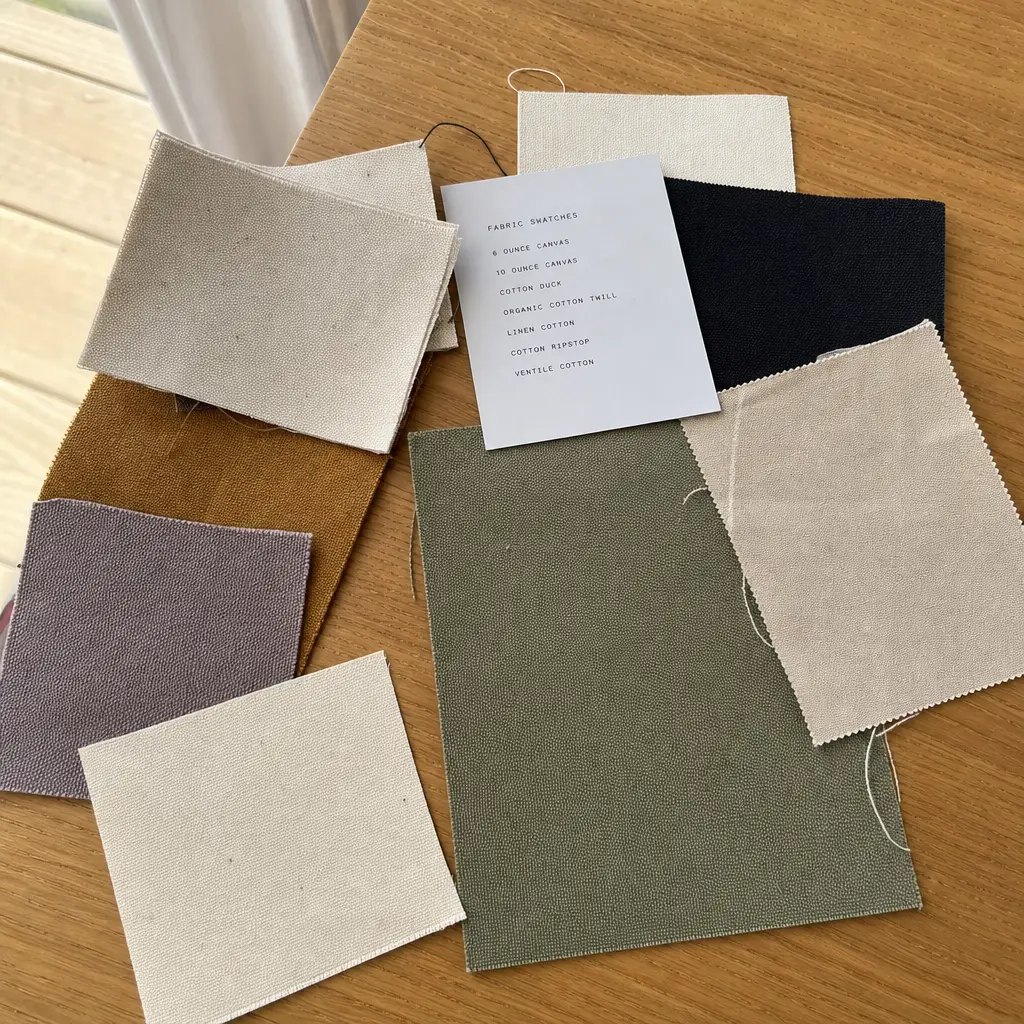
Canvas language gets vague quickly. Natural cotton, heavy canvas, premium canvas, and eco canvas sound useful in a catalog, but they do not give procurement enough control. A B2B RFQ should specify fabric weight in both oz and GSM. For many retail tea totes, 10 oz to 12 oz canvas, roughly 340 to 420 GSM, is a practical starting range. It has more body than lightweight giveaway fabric without immediately pushing the bag into a much heavier cost and freight profile.
Lighter 6 oz to 8 oz fabric can work for low-cost promotions, sachet giveaways, or short-term event use. It may not be the right choice for rigid tea tins, boxed assortments, or a premium gift program where the tote is part of the perceived value. Heavier 14 oz canvas can add structure and a more substantial hand feel, but it also raises material cost, sewing effort, carton weight, and freight impact. There is no universal best weight. There is only a weight that fits the load, price point, and brand expectation.
The audit should check how the factory verifies fabric weight. A written tolerance such as +/-5% of the approved GSM is common, but the buyer should decide whether that is tight enough for the program. Ask when checks happen: when fabric arrives from the mill, before cutting, during production, or only after a complaint. If the factory cannot explain its process, the GSM in the quote may be a promise rather than a control point.
Fabric finish also changes the result. Natural canvas has a warm tone and may show cotton flecks. Bleached canvas gives stronger print contrast, but shade still needs control. Dyed canvas requires attention to lot consistency and colorfastness. Washed or enzyme-treated finishes can soften the hand feel, though they may affect shrinkage, measurement stability, and shade. These are not small cosmetic details when the tote sits next to printed tea packaging in a gift set.
Before bulk cutting, define what natural variation is acceptable. Are small cotton flecks part of the look? Are darker slubs allowed on the front panel? How much shade warmth can change between sample and bulk? Decide early. Otherwise, the final inspection can become a debate about taste after production is complete.
- Write the fabric spec as weight, weave, finish, color reference, and tolerance rather than a broad marketing description.
- Ask whether the sample fabric and bulk fabric will come from the same regular source.
- Define acceptable natural-canvas flecks, shade warmth, and slubs before the factory cuts bulk panels.
Inspect the sewing stress points
Most tote failures do not happen in the middle of a flat fabric panel. They happen at the handle attachments, side seams, bottom seam, gusset corners, and top hem. These areas carry the load and shape the bag after repeated handling. During a factory audit, inspect production samples or recent bulk goods, not only showroom pieces prepared for visitors.
Look for even stitch tension, secure back-tacking, no skipped stitches, clean topstitching, consistent handle placement, and thread ends trimmed close without damaging the seam. Uneven sewing may seem minor on an empty bag, but it becomes more visible when tins or boxes pull the bag into shape. For a tea brand selling a premium gift, messy stitching can weaken the presentation even if the bag does not fail.
Handle reinforcement should be specified in writing. Box stitch and X-stitch patterns are common for self-fabric handles because they spread stress across a larger area. A simple straight stitch may be acceptable for a lightweight giveaway, but it is a weak default for bags carrying glass jars, metal tins, or rigid cartons. Ask the factory what internal pull or load check it uses. The method does not need to be framed as a laboratory claim unless your compliance program requires that level of testing. It should, however, be repeatable: defined weight, defined time, and clear pass or fail criteria.
Stitch density belongs in the RFQ too. Many canvas tote programs use about 7 to 10 stitches per inch, depending on fabric weight, thread, and machine setup. Too few stitches can look coarse and reduce seam strength. Too many can perforate the fabric or slow production. Ask the factory to confirm thread type, thread color, seam allowance, and whether inner seams are overlocked, bound, or left raw. Each choice affects cost and the perceived quality of the finished tote.
- Specify handle reinforcement pattern, stitch density, thread color, and seam finish in the purchase spec.
- Classify open seams, skipped stitches at stress points, broken thread, and unsecured handles as major defects.
- Check whether the factory has a routine in-line inspection before bags reach the packing area.
Test decoration on real canvas
Tea brands often use refined marks: small origin text, fine serif type, botanical illustrations, thin lines, and quiet color palettes. Those details can look polished on cartons and labels. On textured canvas, they can become difficult. A factory audit should test the decoration method against the actual artwork, not against a generic logo that happens to print well.
For simple one- or two-color logos, screen print is usually the practical choice at volume. It can provide good opacity and a clean brand impression when the screen, ink, and fabric surface are controlled. Still, textured yarns can break up fine lines. Pale ink on natural canvas may look softer than expected. A digital mockup will not show those effects accurately.
Heat transfer may suit small runs, gradients, or complex artwork, but buyers should check hand feel, edge behavior, and durability on canvas. Embroidery can signal a more premium product, yet it is not always suitable for small text or very fine illustration. Woven labels can be a strong choice for discreet branding, especially on a side seam or lower front corner, but they add label MOQ, lead time, and sewing labor.
The approval standard should include print size, print position, color reference, line weight, minimum text height, and acceptable variation. For premium retail programs, a print placement tolerance of +/-3 mm to +/-5 mm may be appropriate. Lower-cost programs may accept more variation, but the tolerance should still be written. Measure from fixed bag edges and the centerline. Visual centering alone is too subjective, especially when the bag has a gusset or the fabric relaxes after sewing.
Approve a strike-off on the actual canvas planned for bulk. If the artwork includes small text, ask the factory to flag minimum readable size before final approval. If the brand color is critical, compare ink under consistent light against an agreed reference. The goal is not to make canvas behave like coated paper. The goal is to understand the limits before the order is committed.
- Approve print on the same fabric weight and finish planned for bulk production.
- Measure logo placement from fixed edges and define acceptable skew, not just visual centering.
- Ask the factory what line weights, text sizes, and color matches are risky before approving final artwork.
Ask for quotes that can be compared
A useful factory quote makes assumptions visible. A single bundled unit price may be easy to read, but it can hide important differences. At minimum, procurement should request clear notes or separate lines for fabric, cutting, sewing, decoration, labels, accessories, sample charges, screens or setup fees, inner packing, export cartons, inspection support, and excluded charges.
Fabric consumption is often a major cost driver. Finished bag size, gusset depth, handle length, fabric width, panel layout, and wastage allowance all affect usage. A small adjustment to gusset depth or handle length can change cost more than buyers expect. Sewing cost changes with reinforcement, inside pockets, binding, labels, and the number of operations. Decoration cost changes with color count, print area, artwork difficulty, and setup fees. Packing cost changes with individual polybags, barcode labels, carton strength, carton count, and warehouse label requirements.
Normalize every supplier quote before comparing price. Use the same Incoterm, currency, size, fabric weight, handle construction, print method, label list, sample assumptions, inspection expectation, and packing instruction. If one quote includes a decorated pre-production sample and another excludes sample freight and screen fees, the cheaper number may not remain cheaper once the order is real.
MOQs also need a closer look. A low minimum order quantity may rely on stock fabric, mixed trim lots, limited color options, or sample-room production. That can be fine for a launch test if everyone understands the trade-off. It becomes a problem when the buyer expects the same tote to repeat exactly at a larger volume. Ask whether the trial order and repeat order will use the same fabric source, sewing standard, decoration method, and carton plan.
Price breaks should be tied to practical volumes. Ask for the next quantity tiers that your brand could actually order, not only an ideal high-volume number. That gives procurement a cleaner view of how the program scales.
- Normalize every quote to the same Incoterm, currency, size, fabric weight, print method, label list, and packing instruction.
- Ask for price breaks at realistic volumes, not only the minimum order quantity.
- Identify excluded costs before supplier selection: screens, digitizing, samples, freight, inspection, palletizing, and special labels.
Use samples as production gates
Sampling should not be a photo approval exercise. For tea brands, the sample process works better as a sequence of production gates. The first gate is often a blank structure sample. It confirms finished size, gusset behavior, handle drop, fabric body, seam finish, and how the actual tea products sit inside the bag. This step prevents a familiar problem: a buyer approves a nice logo on a tote that never properly fit the product set.
The second gate is the decorated pre-production sample. This sample should be checked against a written approval sheet, not just passed around as a visual reference. The sheet should list finished dimensions, fabric weight, fabric finish, thread color, handle spec, reinforcement pattern, label placement, artwork size, print position, packing method, and the tolerances that will govern bulk production.
The buyer should sign off the physical sample, measurement sheet, and print strike-off together. If only one reference is treated as the master, disputes become easier later. Bulk may follow the physical sample while procurement expects the measurement sheet. Or the print supplier may follow a strike-off while the bag factory follows an older artwork file. A controlled approval pack reduces that risk.
Revision control matters most on first orders. If the sample uses one canvas lot and bulk will use another, the factory should inform the buyer before cutting. If a print supplier changes ink, screen mesh, transfer film, or embroidery setup, the buyer should know before production. If the sewing line changes handle reinforcement to improve speed, that change needs re-approval. Not every change is bad. Silent changes are the problem.
Keep one approved production control sample with the factory and one with the buyer or inspection team. Mark it clearly with order number, date, material reference, and approval status. That simple habit gives inspectors a real object to compare against when written descriptions are not enough.
- Approve a blank sample for fit and structure before paying attention to decoration.
- Approve a decorated pre-production sample against a written spec sheet, not only against a photo.
- Require re-approval for changes in fabric lot, GSM, decoration method, label, handle construction, or carton packing.
Set QC rules before cutting starts
Quality control is strongest when defect standards are agreed before production. For canvas tote bags, the buyer should define measurable tolerances for fabric weight, finished size, handle drop, print placement, logo skew, and carton count. The buyer should also define visual defects such as oil stains, water marks, mildew odor, dye spots, unapproved slubs, print smudges, ink setoff, skipped stitches, open seams, severe puckering, and hard creasing through the logo area.
Without written standards, final inspection turns into negotiation after the goods already exist. That is expensive and frustrating for both sides. The factory may believe the bags are commercially acceptable. The brand may see the same bags as unsuitable for retail presentation. Clear tolerances reduce argument and give the factory a target it can manage during production.
Many importers use AQL sampling for final inspection, often AQL 2.5 for major defects and 4.0 for minor defects, adjusted to internal policy and order risk. The exact AQL level is the buyer's decision. What matters is the classification. A handle attachment that fails an agreed load check should be major. Wrong carton count should be major. A small loose thread may be minor if the seam is secure. An off-center logo may be major if it exceeds the agreed tolerance and affects retail presentation.
Inspection should happen in layers. Material approval checks fabric before cutting. In-line inspection catches sewing and printing issues while correction is still possible. Final inspection verifies finished bags and packed cartons before release. Packed-carton checks matter because warehouse receiving problems can cost time even when the tote itself is acceptable. Carton marks, PO references, barcode placement, gross weight, net weight, and carton count should match the packing list.
Ask what records the factory can provide. Useful records include fabric receiving checks, GSM measurements, in-line defect notes, corrective actions, final inspection results, packed-carton counts, and release signatures. A supplier that can show these records is easier to manage than one that relies only on verbal assurance.
- Write measurable tolerances into the PO or quality manual before the factory begins bulk cutting.
- Classify defects by buyer impact: use failure, brand presentation, warehouse accuracy, and regulatory or labeling risk.
- Ask for inspection records with dates, quantities checked, defects found, corrective actions, and release signature.
Treat packing as part of the product
Packing is not just an administrative detail. It affects freight cube, carton handling, print condition, warehouse receiving, and customer presentation. Flat packing in master cartons is common for canvas tote bags, but the pack count still needs engineering. Too many bags in one carton can compress the print area, create hard creases, and make cartons difficult to handle. Too few bags waste cube and raise freight cost.
For many warehouse operations, keeping cartons below roughly 15 to 18 kg is practical where possible, but each buyer should follow its own handling policy. Ask the factory for carton count, carton dimensions, gross weight, net weight, carton material, and stacking assumptions before order confirmation. Do not wait until the shipment is ready. Carton data affects landed cost, storage planning, and inbound receiving.
Polybags should be specified with intent. Individual polybags can help keep totes clean during long storage or retail handling. They also add material, labor, and waste. If used, define thickness, warning text if required, vent holes if needed, sticker placement, and whether the polybag is sealed or open. If individual polybags are not required, state that clearly so the factory does not add them by habit or remove them to save cost.
Folding direction matters when a printed logo is involved. A fold line through the center of a screen print can leave a permanent crease or create ink setoff, especially when cartons are compressed. Ask for a packed sample or packing photo before mass packing starts. If the tote will be used in a gift set, confirm whether the bag must arrive flat, lightly folded, or ready for filling by a co-packer.
Shipping marks and labels deserve the same discipline as product specs. Confirm PO reference, SKU, carton number, quantity, barcode position, destination label fields, and pallet label requirements if used. Receiving teams notice these details immediately. A low tote price loses value if cartons require relabeling, recounting, or exception handling.
- Approve carton count, carton size, carton weight range, folding method, and marks before mass packing starts.
- Check whether packing creates permanent creases through the logo area or transfers ink between bags.
- Include packing and freight cube in the supplier scorecard, not only product unit cost.
Choose for repeatable landed value
The final supplier decision should combine price, execution evidence, lead-time discipline, and landed-cost impact. A low unit price is not enough if the quote omits setup charges, uses vague fabric, allows loose print placement, or assumes a carton plan that raises freight. A slightly higher supplier can be better value when it provides measurable fabric control, stronger handle construction, cleaner inspection records, and fewer receiving surprises.
Lead time should be broken into milestones: artwork confirmation, blank sample, decorated sample, sample revision, material booking, bulk cutting, sewing, decoration, final inspection, packing, and shipment booking. First orders usually carry more approval risk than repeat orders because fabric, artwork, labels, and packing are still being stabilized. A seasonal tea launch should not be planned around only the quoted bulk production days. The real calendar begins when artwork, samples, materials, and packing instructions are ready.
Documentation from the first order becomes a procurement asset. Keep the approved sample, measurement sheet, artwork file, print strike-off, fabric reference, carton specification, inspection report, and any claim history. On repeat orders, these records reduce ambiguity. They also make it easier to compare a current supplier with a new factory without restarting from vague memories or old photos.
A strong factory for a tea brand is not simply the one that says yes fastest. It is the one that can reproduce the agreed tote with controlled materials, stable workmanship, transparent quoting, and packing that fits the buyer's distribution model. That is the practical purpose of a canvas tote bag factory audit guide for tea brands: it turns a simple-looking promotional item into a controlled B2B purchase.
- Score suppliers on specification control, quote transparency, QC records, packing discipline, and lead-time honesty.
- Compare landed cost using the same Incoterm, carton data, inspection plan, and accessory assumptions.
- Keep a technical order file so repeat programs do not restart from vague sample memories.
Specification comparison for buyers
| Audit area | Concrete target or question | Typical acceptable range | Procurement risk if unclear |
|---|---|---|---|
| Fabric weight | Specify canvas in both oz and GSM, and ask how the factory verifies it before cutting. | 10 oz to 12 oz canvas is common for retail tea totes, about 340 to 420 GSM; agree tolerance such as +/-5%. | A light substitute fabric can sag around tins, wrinkle under print, and make a premium tea set feel lower value. |
| Fabric construction | Ask for yarn count or weave description, fabric finish, and whether the cloth is regular stock or bought per order. | Plain-weave cotton canvas, natural or bleached, with fabric lot controlled from sample to bulk. | Spot buying can create shade drift, late delivery, and inconsistent hand feel between repeat orders. |
| Finished size | Audit width, height, gusset depth, handle width, and handle drop against the actual tea product set. | Finished size tolerance often needs +/-5 mm to +/-10 mm depending on dimension; handle drop often +/-10 mm. | A catalog size may not fit tins, gift cartons, jars, or inserts once the bag is sewn and packed. |
| Handle strength | Confirm self-fabric or webbing handle spec, stitch pattern, stitch density, and internal load check. | Box stitch or X-stitch reinforcement; 7 to 10 stitches per inch is a practical range to define with the factory. | Weak handle attachment creates the highest customer-use failure risk, especially with glass jars or metal tins. |
| Print method | Match artwork to screen print, heat transfer, embroidery, or woven label, and approve a strike-off on the actual canvas. | Screen print is efficient for 1 to 2 colors; define position tolerance such as +/-3 mm to +/-5 mm. | Fine serif text, small icons, and pale ink on natural canvas may lose sharpness or opacity. |
| Logo placement | Set artwork size, distance from top edge, centerline, and acceptable skew. | For front logos, use a written artwork sheet with measurement points from bag edges and handle seam. | Visual-only approval allows off-center prints that are obvious in retail photos and gift displays. |
| Sampling gate | Require blank structure sample, decorated pre-production sample, and signed approval sheet before bulk. | Sample lead time should be quoted separately from bulk lead time; revision days should be stated. | A good-looking photo sample can hide size drift, weak handle sewing, or wrong carton assumptions. |
| Packing plan | Confirm pack count, carton size, gross weight, net weight, carton marks, barcode labels, and polybag rule. | Flat packing is common; carton weight should be manageable for warehouse handling, often kept under about 15 to 18 kg where possible. | Overcompression creases prints; underfilled cartons increase freight cube and landed cost. |
| Inspection standard | Use AQL-based final inspection plus measurement, print, seam, handle, odor, stain, and carton-count checks. | Many buyers use AQL 2.5 for major defects and 4.0 for minor defects, adjusted to internal risk tolerance. | A visual-only check misses load failure, shade variation, incorrect counts, and production drift. |
Buyer checklist before sampling
- Send the supplier a measured product-loading brief showing the tea tins, pouches, jars, boxes, tissue, insert cards, or gift cartons that must fit inside the tote.
- Specify finished width, height, gusset depth, handle width, handle drop, seam allowance expectation, and whether measurements are taken after sewing and before packing.
- Define canvas as oz and GSM, fabric color, finish, weave, shade reference, and acceptable GSM tolerance, such as +/-5% against the approved bulk standard.
- State the decoration method, artwork size, print position, number of colors, ink type if relevant, one-side or two-side decoration, and any woven label, hangtag, care label, or barcode requirement.
- Require a blank structure sample first, then a decorated pre-production sample with a signed approval sheet covering measurements, fabric, print, sewing, labels, and packing.
- Ask the factory to confirm stitch type, stitch density, thread color, handle reinforcement pattern, loose-thread trimming rule, and how open seams or skipped stitches are classified.
- Set QC tolerances for finished size, handle drop, print placement, logo skew, GSM, stains, shade variation, odor, carton count, and carton weight before bulk cutting starts.
- Request carton pack count, carton dimensions, gross weight, net weight, export marks, PO references, pallet label fields if used, and whether individual polybags are required or prohibited.
- Compare quotes on the same Incoterm, same currency, same packing basis, same sample-stage assumptions, same accessory list, and same inspection support expectation.
- Confirm who signs off material release, in-line inspection, final inspection, and packed-carton release, and what records the factory can provide with shipment documents.
Factory quote questions to send
- What exact canvas weight are you quoting in oz and GSM, what tolerance do you control to, and how will GSM be checked before cutting?
- What yarn count, weave, color, and finish are assumed, and is this fabric from a regular source or a spot purchase for this order only?
- Are you quoting finished dimensions or cut-panel dimensions, and what production tolerance do you allow for width, height, gusset, handle width, and handle drop?
- What handle construction is included in the price: self-fabric, cotton webbing, or another material, and what reinforcement stitch pattern will be used?
- What stitch density, thread type, thread color, seam finish, and loose-thread trimming standard are included in the quoted sewing cost?
- Is the decoration price for screen print, heat transfer, embroidery, or woven label, and what artwork limits apply to minimum line weight, small text, ink opacity, and color matching?
- Are print screens, strike-offs, embroidery digitizing, label mold fees, sample freight, and sample revisions included or charged separately?
- What is your MOQ by bag size, fabric color, fabric weight, print color count, and label type, and what price breaks apply at the next quantities?
- What sample stages are included, how many working days are needed for each stage, and which sample becomes the production control sample?
- What carton pack count, carton dimensions, gross weight, net weight, carton material, and export marks are assumed in the quote?
Quality-control points to confirm
- Fabric weight: verify the approved canvas weight before cutting, with a written tolerance such as +/-5% of approved GSM unless the buyer sets a stricter internal requirement.
- Fabric appearance: inspect visible panels for oil stains, water marks, mildew odor, yarn slubs outside the approved natural-canvas range, dye spots, and obvious shade mismatch between panels.
- Finished measurements: measure width, height, gusset depth, handle width, and handle drop after sewing; practical tolerances should be written, commonly around +/-5 mm to +/-10 mm depending on the dimension.
- Handle security: check handle attachment pattern, stitch density, skipped stitches, back-tacking, and reinforcement position; use a simple agreed pull or load check for bags carrying heavier tea sets.
- Seam quality: inspect side seams, bottom seams, gusset corners, and top hem for open seams, loose tension, broken thread, needle holes, puckering, and untrimmed thread ends.
- Print placement: measure logo position from fixed bag edges and centerline; set a tolerance such as +/-3 mm to +/-5 mm for premium retail programs where alignment is visible.
- Print appearance: check ink opacity, registration, edge sharpness, bleeding, pinholes, smudges, print setoff, hand feel, and cracking risk after folding or light handling.
- Color control: compare bulk fabric and print against approved sample under consistent light; define whether natural cotton flecks and shade warmth are acceptable before production.
- Packing integrity: verify carton count, carton marks, barcode placement, gross weight, net weight, polybag rule, folding direction, and whether compression creates permanent creases on the print zone.
- Final release: keep signed records for material approval, pre-production sample approval, in-line inspection, final inspection, and packed-carton count before shipment authorization.