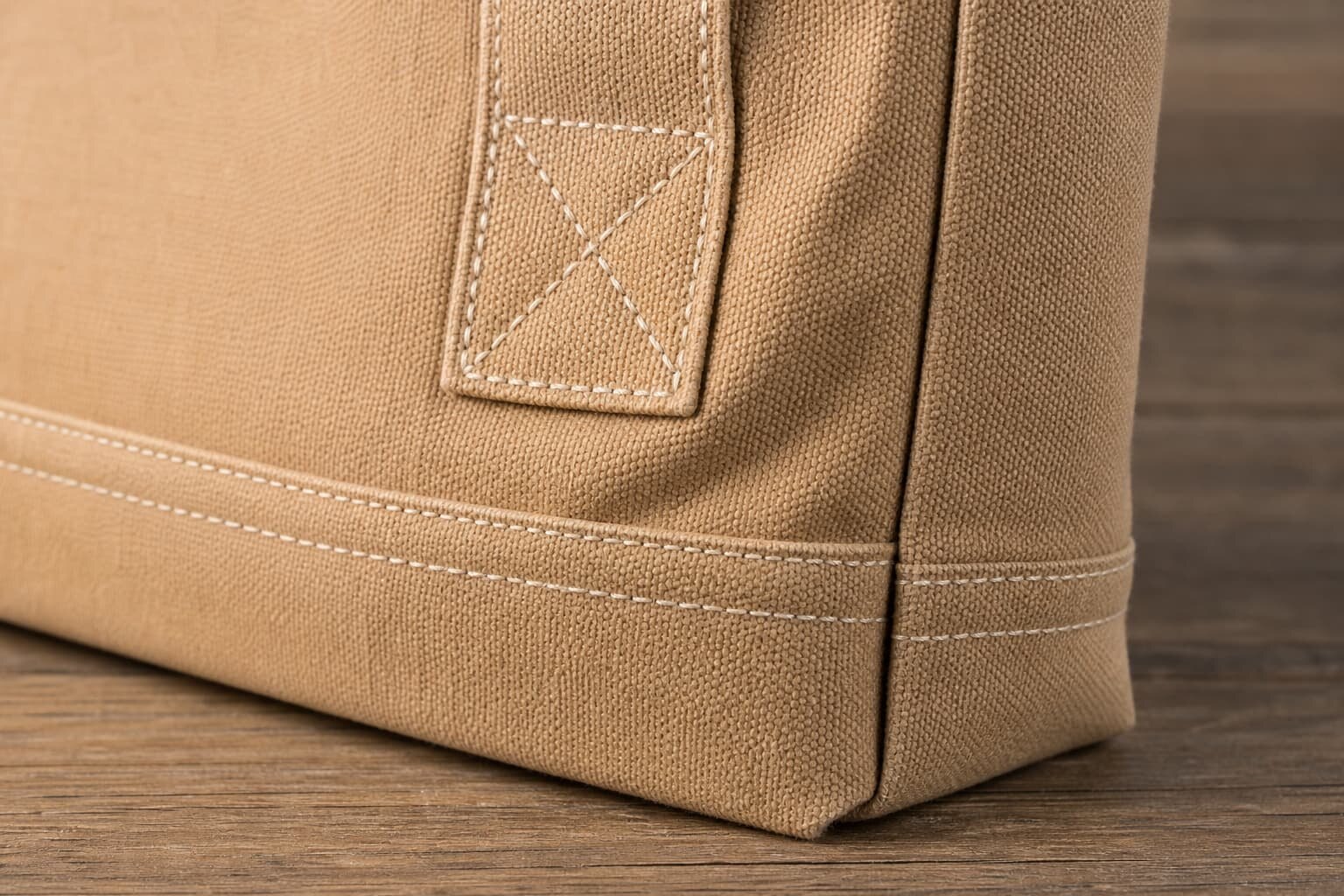
Why shade claims on canvas are not just a color issue
For canvas tote bags, a shade claim is not only about whether the fabric looks close to a sample. It affects how the bag sells on shelf, how the logo reads after printing, and whether a reorder matches the first shipment. A buyer who approves a vague description like natural, off-white, or same as previous sample is leaving too much room for interpretation. On canvas, the base fiber, weave density, finish, and storage conditions all change how the roll reads in the hand and under light.
The commercial risk is simple: one shipment may look acceptable in isolation, but a second shipment can look obviously different beside the first. That is where claims turn into chargebacks, rework, or slow-moving inventory. If the supplier says the fabric roll shade is within normal tolerance, the buyer still needs evidence that can be checked later. The goal is to turn a visual claim into an auditable file.
- Shade matters most when you plan repeat orders, retail display, or a replenishment program.
- A small change in base fabric tone can change how the print, label, and trim are perceived.
- The best time to control shade is before cutting, not after finished cartons are stacked.
Start with a physical reference, not a vague fabric name
The first step is to define the target shade as a physical reference. A buyer should ask for a sealed master swatch or an approved top sample made from the same fabric construction that will go into production. If the order uses 12 oz canvas, do not approve a 10 oz sample and assume the shade will carry over. The same applies to weave type, bleaching level, and finish. A fabric that looks right in a photo may look different when the weave opens up or when starch is removed in finishing.
The reference file should say what the shade is, what it is not, and under what light it was approved. For natural canvas, that means noting visible slub, fiber fleck, and allowable warmth or grey cast. For dyed or bleached canvas, it means identifying whether the buyer is judging only the body fabric or also the cut edges, seams, and gusset panels. If the supplier cannot keep the reference sample tied to one job number, the next quote will likely drift.
- Write the shade target as a physical sample ID plus a short visual description.
- Record fabric weight, weave, finish, and side of cloth if face and back differ.
- Approve the sample under the same light source the factory uses for bulk checks.
What evidence a factory should give you for a roll shade claim
A useful claim file should show more than a single swatch. Ask for swatches from the beginning, middle, and end of the actual roll, because shade can shift inside one roll when tension, humidity, or finishing varies. If the order uses multiple rolls, request one swatch set per roll with the roll number written on each card. Add a photo of the swatches next to the retain sample and a ruler or scale card so you can see both tone and fabric scale. A factory that only sends a phone photo with no traceable roll ID is giving you marketing, not evidence.
For more controlled orders, ask for a simple roll map or cut ticket showing where each bag panel came from. If the fabric was bleached, dyed, or washed after weaving, request the process lot used for that batch. This is especially important for brands that reorder by season. A buyer who has a swatch file tied to roll and lot numbers can compare a later shipment without guessing whether the problem came from fabric, print, or packing.
- Ask for beginning, middle, and end swatches from each production roll.
- Keep the roll number, process lot, and job number together in one approval file.
- Request photos under controlled light rather than mixed warehouse lighting.
Compare natural, bleached, and dyed canvas the right way
Shade claims behave differently depending on the fabric base. Natural unbleached canvas often carries warm fiber variation, small slubs, and a slightly uneven tone that buyers must decide whether to accept. Bleached or optically brightened canvas can look cleaner and more uniform, but it may read cooler and can be more sensitive to storage, heat, and age. Dyed canvas can give stronger color control, but it adds another process step and another chance for lot variation, especially if the order is spread across multiple dye batches.
Heavier fabrics usually look more stable to the eye, but weight alone is not a guarantee. A 12 oz canvas and a 14 oz canvas may both be acceptable for retail totes, yet their tone can differ because of weave density, finish, or fiber source. If the buyer wants one colorway across a long program, the safer path is to define the base fabric and the acceptable visual range together. Do not let the supplier substitute a thicker or thinner cloth just because the handfeel seems similar.
- Natural canvas suits buyers who can accept visible fiber variation.
- Bleached canvas suits buyers who need a cleaner backdrop for logos and seasonal color runs.
- Dyed canvas suits buyers who want a stronger brand tone, but it needs tighter lot control.
How print method changes the way a shade claim is seen
For canvas tote bags, print method can hide or exaggerate a fabric shade claim. Screen print is often the most stable choice when you need a strong logo and repeatable ink laydown, but the result depends on the base cloth and whether an underbase is used. A white underbase on darker canvas can make the logo look correct while still changing the way the fabric beneath the print reads in the unprinted areas. Heat transfer and digital transfer can create a flatter visual effect, yet they may sit on top of the texture and make the base shade look different from the approved swatch. Embroidery and woven labels introduce smaller local changes, but the surrounding fabric still needs to match the approved body shade.
The buyer should always approve the print on the actual production fabric, not on a separate test cloth. If the logo color is critical, ask the factory to show print opacity, cure method, and any flash or heat setting used after printing. For natural canvas, a strong dark print can make the cloth look cleaner than it is; for bleached canvas, a thin print can make the base shade appear more open and bright. The supplier should show the bag body before print, after print, and after packing, because the visual result can shift at each step.
- Approve the print on the exact fabric that will be used in bulk.
- Check whether an underbase, primer, or extra ink layer changes the tone of the cloth.
- Ask for a print sample after cure, not only immediately after press.
MOQ, sampling, and lead time logic for shade-controlled orders
MOQ is where many shade problems start. If a buyer asks for a low quantity, the factory may be forced to use whatever stock roll is available, which increases the chance of mixed shade within the order. If the buyer needs tight shade control, the MOQ should reflect the reality of fabric sourcing, dye lot planning, and print setup. A quote that ignores those constraints may look attractive but can fail once the order moves from sample room to production floor. For a private label program, it is better to ask how many meters or yards are reserved for one shade, one print run, and one shipment window than to chase the smallest unit price.
Sampling lead time should be broken into steps. A lab dip or preliminary swatch can often be checked before the bulk fabric is cut. A pre-production sample should then use the same canvas roll, the same print method, and the same sewing spec. Bulk lead time commonly depends on fabric availability, print setup, and packing, so the buyer should ask for a schedule that separates fabric approval, sample approval, production start, and carton close. That way the buyer can see where a delay comes from and whether it is a fabric problem or a capacity problem.
- Low MOQ can mean higher risk if the factory must pull from mixed stock rolls.
- Ask whether the supplier will reserve one roll or one lot for the full order.
- Separate sample approval timing from bulk production timing in the quote.
Build acceptance criteria that can settle a dispute later
Acceptance criteria should be written before bulk sewing starts. The simplest version is: approved physical swatch, approved roll ID, approved print on actual fabric, and no mixed shade cartons unless the buyer agrees in writing. If your team needs stricter control, add a visual tolerance note under a defined light source and require the factory to hold back a retain sample from the exact production lot. The key is to decide what is acceptable while the approval sample is still on the table, not after the shipment has landed.
Packing must support the acceptance rule. If the order uses more than one roll, the cartons should be marked by lot or shade group so a receiving team can separate them immediately. If the order is being shipped in waves, the first cartons and the final cartons should not silently drift into different shade groups. A clean carton mark, a clear packing list, and a retain sample in the file can save days of back-and-forth when a buyer needs to prove whether a claim is valid.
- Use one approval swatch, one job number, and one retained sample file.
- Require carton marks that show shade code, roll number, and production date.
- Do not allow mixed shade cartons unless the buyer signs off in advance.
What the quote should show so shade risk is priced honestly
A quote for a canvas tote bag should not stop at fabric weight and sewing cost. For shade-sensitive orders, the buyer needs to see the fabric source, the shade target, the print method, the sampling steps, the packing method, and the lead-time assumptions. If the quote only says same as sample or color as requested, the supplier has not yet shown how they will hold the shade. Ask the factory to separate the price drivers: fabric, dye or bleach process, print setup, sewing labor, inner packing, carton packing, and any added inspection or hold time. This does not mean the buyer must accept every surcharge, but it does mean the buyer can compare offers on the same basis.
The most useful quote is one that makes changes visible. If a different GSM, a different finish, or a second print color changes the shade outcome, that effect should be described in the quote notes. The buyer can then decide whether the extra cost is worth the reduced risk. A transparent quote also helps procurement teams compare suppliers who may be using different fabric mills or different production schedules. When shade is important, the cheapest quote is often the one that hides the most assumptions.
- Ask for line items covering fabric, print, sewing, packing, and inspection.
- Request the assumption behind MOQ, lot reservation, and sample re-approval.
- Compare quotes only after the same shade file and sample rule is applied to each supplier.
Common mistakes buyers make and how to prevent them
The most common mistake is approving a sample without controlling the light source or the fabric lot. The second is assuming the first carton will match all later cartons when the order has been split across more than one roll. Another frequent problem is approving print on a white test cloth and then expecting the same color harmony on a warmer natural canvas base. These mistakes are avoidable, but only if the buyer treats shade as a controlled part of the sourcing process, not as a visual afterthought.
The best prevention is a short signoff sequence. First, approve the shade swatch tied to a real fabric spec. Second, approve the print on that fabric. Third, lock the roll or lot for bulk. Fourth, keep a retain sample with the production paperwork. If the factory wants to change roll, finish, or print method, stop and re-check the sample. That one extra step is cheaper than opening a dispute after cartons have already shipped.
- Do not approve shade from a photo only.
- Do not let the factory switch rolls without written re-approval.
- Do not mix fabric approval, print approval, and packing approval into one vague signoff.
Specification comparison for buyers
| Spec decision | Recommended option | When it fits | Buyer risk to check |
|---|---|---|---|
| Shade reference file | Physical master swatch plus signed roll ID | Repeat orders, private label programs, and any launch with strict brand color control | Email photos alone cannot prove the actual roll shade or the light source used |
| Fabric basis | One reserved lot or one shade family per colorway | Orders where cartons must look consistent on shelf and in replenishment | Mixed lots can pass a sample but fail when cartons are opened side by side |
| Fabric weight | 12 to 14 oz canvas, about 407 to 475 gsm, for standard retail totes | When you want structure, decent print hold, and lower visual transparency | Changing GSM after approval can change shade perception and print opacity |
| Print method | Screen print on actual bulk fabric with verified underbase if needed | Logo colors that must stay consistent across reorders | A print that covers too much can hide shade drift until the next reorder |
| Packing method | Carton labels by lot and shade code with retain sample in each shipment file | Multi-roll production, phased shipping, or factory splitting orders across days | Cartons mixed by roll make later disputes hard to prove or resolve |
Buyer checklist before sampling
- Approve a physical master swatch for the exact fabric, not only a catalog photo or Pantone reference.
- Record the target shade, fabric weight, weave type, finish, and whether the canvas is natural, bleached, or dyed.
- Ask for beginning, middle, and end-of-roll swatches before bulk sewing starts.
- Confirm the print method on the actual fabric and approve any underbase, ink opacity, or cure test.
- Lock the lot or roll number for the first production run and define what counts as a replacement roll.
- Check shrinkage, handfeel, and color appearance after any washing, starch removal, or heat setting.
- Require carton labels that identify shade code, roll number, and production date.
- Keep a sealed retain sample, a signed approval sheet, and production photos under the same job number.
Factory quote questions to send
- What is the exact fabric spec, including weight in oz or gsm, weave count, finish, and whether it is raw, bleached, or dyed canvas?
- Can you provide shade evidence from the actual production roll, including start, middle, and end swatches with roll numbers?
- Which light source do you use for shade approval, and can you photo the sample under that same condition?
- Will the bulk order use one reserved fabric lot, or can you split production across multiple rolls and dye lots?
- What print method will you use on the approved fabric, and will the logo need an underbase for opacity?
- What is the MOQ per shade, per fabric lot, and per print color, and does a new shade require a new setup?
- What sampling steps are included before bulk, such as lab dip, fabric swatch, pre-production sample, and first cut?
- How will cartons be packed and labeled to keep shade groups separated during shipping and receiving?
Quality-control points to confirm
- Check the fabric under both D65-type daylight and a warmer indoor light so the same roll is not judged only once.
- Compare every approval against the sealed master swatch, not against memory or a phone image.
- Pull shade checks from the start, middle, and end of each roll because variation often appears within the same roll.
- Verify that the print color, print coverage, and cure do not make the base canvas look lighter, darker, or greyer than approved.
- Measure or at least record shrinkage after any heat or wash process, since a smaller panel can read as a different shade.
- Inspect carton marks, roll numbers, and packing lists so mixed shade lots do not get merged after sewing.
- Keep one retain sample from the approved pre-production sample and one from the first bulk carton.
- Trigger a hold or re-approval if the replacement roll, finish, or print method changes from the approved sample.