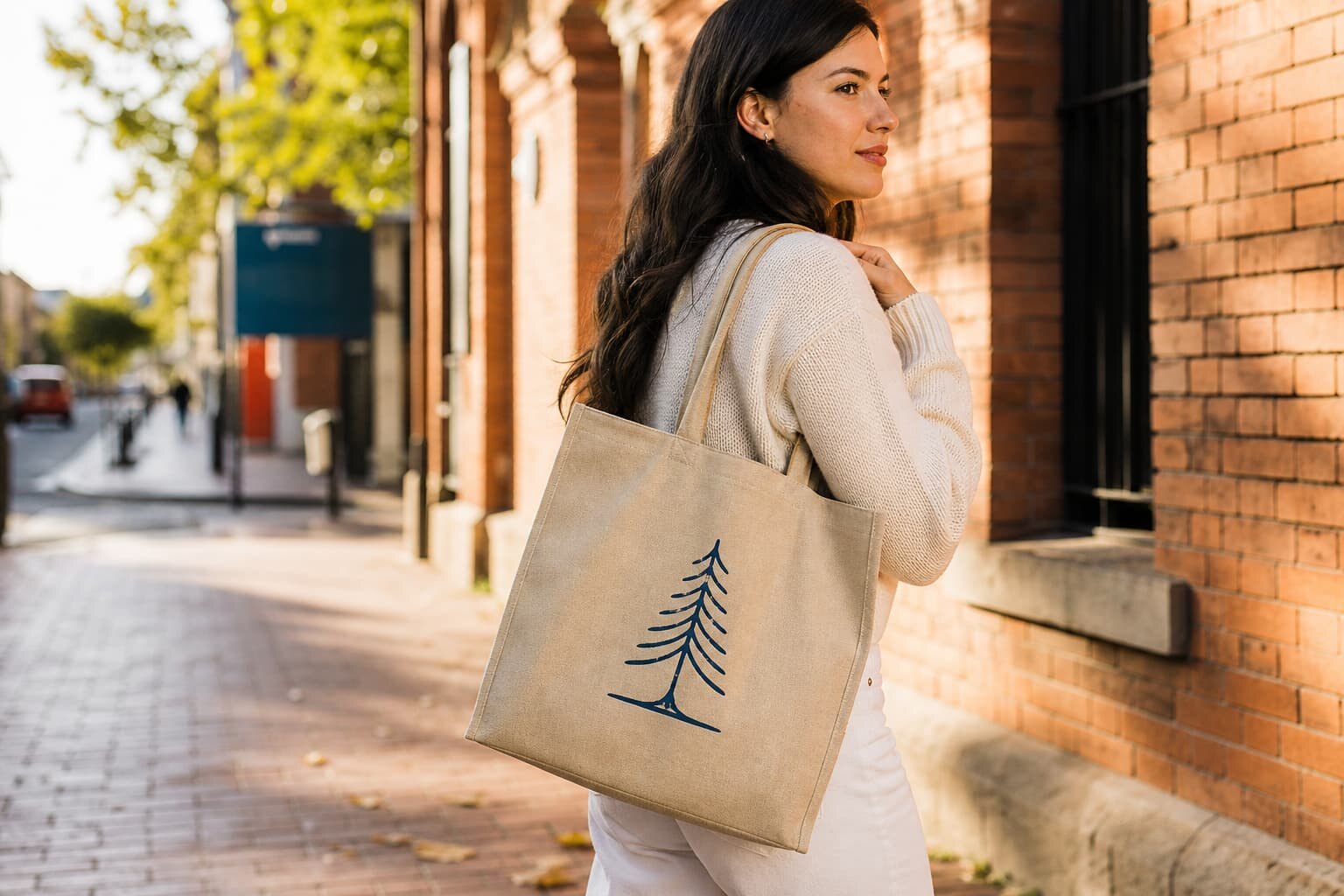
Why Fabric Lot Traceability Matters for Canvas Tote Bags
A canvas tote bag looks simple, but most quality disputes start before sewing. The fabric lot decides shade, handfeel, weight, shrinkage, print absorption, and the way the bag hangs on a retail peg. If the factory cannot trace which roll became which carton, the buyer cannot isolate a problem, compare an approved sample to bulk, or make a fair decision on replacement.
For procurement teams, fabric lot traceability is a commercial control, not just a factory filing habit. It protects repeat orders, private label color consistency, distributor stock rotation, and customer claims. The goal is not to demand unnecessary documents. The goal is to know exactly which fabric was used, how it was approved, where it was packed, and what tolerance was accepted before shipment.
- Use traceability when the tote bag has a visible retail color, repeated seasonal reorder, large logo, or strict brand standard.
- Treat natural canvas as a lot-controlled material too; seed flecks, base tone, and slub level can vary by cotton batch and finishing.
- Ask for lot records before cutting, not after a defect appears in the buyer warehouse.
- Make lot separation practical at carton level so affected goods can be located without opening every carton.
The Buying Problem: Mixed Lots Hide Real Defects
The most common problem is not that a supplier deliberately changes fabric. It is that the order quantity does not match one clean fabric supply. A factory may use three remaining rolls for sampling, one stock lot for the first cutting, and a newly dyed lot for the balance. Each piece may be within a loose tolerance, but the final shipment can look inconsistent when displayed together.
Mixed lots also make supplier comparison unfair. One quote may use 12 oz canvas from current stock, another may use freshly finished 340 GSM canvas, and a third may convert ounces from greige weight instead of finished weight. Without a traceability requirement in the RFQ, the lowest quote can carry hidden risk in shade, weight, and reordering.
- Panel mismatch can occur when front and back panels are cut from different rolls or lots.
- Handle shade can differ from body shade if webbing is sourced separately without lot approval.
- Print shade can shift because the same ink sits differently on a tighter or more absorbent canvas.
- Inbound inspection becomes slow when cartons do not show which fabric lot they contain.
Define the Fabric Before You Ask for Traceability
A supplier cannot trace a vague material spec. The RFQ should state the fabric clearly enough that two factories are quoting the same product. For canvas tote bags, the minimum fabric information should include composition, weave, target finished GSM, color, finish, and whether the bag is expected to be washable. If the buyer uses ounces, also ask the supplier to state the finished GSM because conversion is not always applied consistently.
Common canvas tote fabrics range from about 220 GSM for light promotional bags to 450 GSM or higher for heavier retail totes. A 280 GSM natural cotton canvas may be suitable for a budget giveaway, while 340 to 380 GSM is more common for a stronger branded shopping tote. Heavy 450 GSM canvas can improve structure but increases fabric cost, sewing needle stress, carton weight, and freight cube.
- Light canvas: around 220-260 GSM, useful for low-cost promotions, but easier to wrinkle and less structured.
- Medium canvas: around 280-340 GSM, common for daily tote bags with screen print logos.
- Heavy canvas: around 380-450 GSM, better for premium retail feel but needs stronger seams and slower sewing.
- Finish options: natural, bleached, dyed, washed, enzyme washed, coated, or brushed; each affects shade and print behavior.
- Tolerance example: finished GSM +/-5%, finished width +/-2 cm, shade within approved bulk swatch range.
Build Lot Control Into the RFQ, Not Only the QC Report
Many buyers ask for an inspection after production, but by then the fabric has already been cut, printed, sewn, and packed. Traceability should start in the RFQ. The supplier needs to know whether the buyer accepts stock fabric, requires one fresh lot, allows two lots with separation, or needs a retained swatch from every lot. This affects price, MOQ, and lead time.
A practical RFQ line can be short but specific: supplier must record fabric lot number, dye lot number if applicable, cutting batch, print batch, and carton range. The buyer should also state who can approve lot changes. If the factory must add a second fabric lot due to shortage, approval should happen before cutting, with swatches and photos, not after the container is loaded.
- Add a traceability clause to the purchase order, not only to email discussion.
- Require written approval before changing fabric source, GSM, finish, dye lot, or width.
- Ask for one photo of fabric roll labels before cutting, especially for custom dyed orders.
- Keep the approved swatch attached to the final tech pack or PO file for future reorder comparison.
- For large orders, ask the factory to report which carton numbers contain which fabric lot.
How MOQ and Lead Time Affect Lot Traceability
MOQ for canvas tote bags is not only a sewing question. The real minimum may come from fabric weaving, dyeing, printing setup, webbing dyeing, or packing material. A factory may accept a small bag MOQ if it can use stock canvas. If the buyer requires one controlled fresh-dyed lot, the MOQ may rise because the dye house has a minimum vat quantity and the fabric mill has roll-length requirements.
Lead time also changes with lot control. Stock natural canvas can move quickly if the rolls are available and reserved. Custom dyed canvas may need greige fabric preparation, dyeing, drying, finishing, shade approval, shrinkage testing, and rework time if the shade fails. If the buyer wants a print strike-off on the actual bulk fabric before mass printing, that step must be included in the production calendar.
- Stock natural canvas may reduce MOQ but needs roll label and GSM confirmation.
- Fresh dyed canvas improves lot consistency but requires lab dip approval and dye house time.
- Custom GSM or custom weave may require a mill MOQ higher than the sewing MOQ.
- Separate handle webbing color may require its own dye lot control and approval.
- Rush orders often create the highest risk of mixed stock rolls unless traceability is agreed early.
Print Method Risks Connected to Fabric Lot
Logo printing is where fabric lot differences become very visible. Screen printing on natural canvas can look more muted on an absorbent lot and sharper on a tighter weave. Heat transfer may show edge lift or different handfeel if the fabric finish contains wax, softener, or uneven surface texture. Discharge or pigment printing on dyed canvas depends strongly on dye chemistry and fabric preparation.
For brand buyers, the safest practice is to approve the print strike-off on the actual bulk fabric lot. A beautiful strike-off on sampling fabric does not guarantee mass production if bulk fabric is heavier, more yellow, more slubby, or differently finished. This is especially important for white ink on dark canvas, fine text, large solid logos, and color-matched brand marks.
- Screen print: check opacity, registration, ink penetration, edge sharpness, and curing on bulk fabric.
- Heat transfer: check adhesion, wash resistance if required, temperature marks, and surface compatibility.
- Embroidery: check puckering and needle cutting on heavier canvas; backing may need adjustment by GSM.
- Woven label or side label: check label shade and placement consistency if the body fabric lot changes.
- Digital print: check color profile and pretreatment effect, especially on natural or off-white canvas.
Sample Checks That Should Happen Before Cutting
A pre-production sample made from leftover fabric is useful for construction approval, but it is not enough for lot traceability. Before bulk cutting, the buyer should approve or at least review a bulk fabric swatch from the actual lot. This swatch should be checked against the reference sample for shade, GSM, handfeel, weave appearance, odor, and shrinkage if washing or steaming is part of the expected use.
For canvas tote bags, sample approval should separate construction from material approval. The bag size, handle length, seam allowance, bottom gusset, and logo placement can be approved on a PP sample. The bulk lot approval should confirm that the fabric supplied for mass production still meets the agreed standard. If these two approvals are mixed together, buyers often discover too late that the production fabric is not the same as the sample fabric.
- Cut a fabric swatch from the beginning and middle of selected rolls where possible.
- Check actual GSM after finishing, not only greige fabric weight.
- Compare shade under consistent lighting and avoid judging only from phone photos.
- Run a small print test on bulk fabric before full logo production.
- Keep one signed or sealed swatch at the factory and one with the buyer or buying office.
Packing and Carton Marks Are Part of Traceability
Traceability fails if it stops at the cutting table. Finished bags must remain separated through printing, sewing, trimming, inspection, and packing. In a busy factory, semi-finished panels can be moved between lines or repacked for space. Bundle cards, WIP racks, and carton labels help prevent lot mixing, especially when multiple SKUs share similar natural canvas.
For importers and distributors, carton-level traceability is the most useful format. The packing list should show PO number, SKU, color, quantity per carton, carton range, and lot code. The lot code does not have to be printed on the consumer-facing bag unless the brand wants it. Internal carton marking is usually enough to support inbound inspection, claim handling, and future reorder comparison.
- Use carton range examples such as cartons 1-80 for Lot A and cartons 81-130 for Lot B.
- Do not mix two fabric lots in one carton unless the buyer has approved it in writing.
- Ask for carton labels to include SKU, color, PO, carton number, quantity, and internal lot code.
- Keep retained samples from each lot packed separately and labeled clearly.
- For retail packing, confirm that hangtags, polybags, belly bands, and master cartons follow the same SKU separation.
Quote Data Buyers Should Compare Line by Line
A canvas tote quote should not only show unit price. For a traceable program, the quote should identify the fabric basis used to calculate cost. If one supplier quotes 12 oz canvas without explaining finished GSM and another quotes 340 GSM finished cotton canvas, procurement may be comparing different materials. Ask suppliers to state fabric type, expected consumption, print method, packing method, and whether one fabric lot is included.
Cost differences often come from material control choices. One fresh dye lot may cost more than using stock fabric, but it can reduce display shade variation and reorder disputes. A lower quote may still be acceptable for a simple event giveaway if the buyer allows normal stock-lot variation. The key is to match the traceability level to the commercial risk of the product.
- Fabric data: composition, weave, finished GSM, color, finish, width, and lot basis.
- Logo data: print method, number of colors, print size, ink type, curing requirement, and strike-off process.
- Construction data: bag size, gusset, handle material, handle length, seam type, and reinforcement stitching.
- Packing data: individual polybag or bulk pack, carton quantity, carton size, gross weight, and carton marks.
- Traceability data: fabric lot count, dye lot count, carton range reporting, and retained sample policy.
- Lead time data: fabric preparation days, sample approval days, mass production days, inspection window, and packing days.
Acceptance Criteria for Lot Variation
Traceability does not mean every meter of canvas will be identical. Cotton canvas is a woven natural material, and small differences in yarn tone, slub, seed flecks, and finishing are normal. The buyer needs acceptance criteria that separate normal variation from a defect. This is especially important for natural canvas and recycled cotton canvas, where base tone may not be as clean as bleached or dyed fabric.
A workable standard should include measurable points and visual approval points. GSM can be measured. Bag dimensions can be measured. Shade is usually judged against an approved swatch under agreed lighting. Print defects can be checked by distance, location, and severity. If the buyer defines these criteria before production, the final inspection becomes a business decision rather than an argument.
- GSM acceptance: target finished GSM with agreed tolerance, commonly +/-5% unless the buyer needs tighter control.
- Shade acceptance: compare against approved bulk swatch, not only original development sample.
- Shrinkage acceptance: test if the bag is washable or if steam pressing may affect final size.
- Print acceptance: no major ink cracking, poor curing, heavy bleeding, wrong logo position, or visible color mismatch against approved strike-off.
- Construction acceptance: consistent seam allowance, handle placement, reinforcement stitching, and no fabric holes or oil marks.
- Lot acceptance: if two approved lots are used, cartons must be separated and reported.
Specification comparison for buyers
| Spec decision | Recommended option | When it fits | Buyer risk to check |
|---|---|---|---|
| Fabric lot separation | One fabric lot per PO line, or clear carton-level separation if two lots are approved | Retail programs, repeat orders, natural canvas, dyed canvas, or logo color-sensitive projects | Mixed lots may create panel shade difference, uneven shrinkage, and difficult claim evidence after distribution |
| Canvas weight control | State target GSM plus tolerance, such as 340 GSM +/-5% after finishing | Buyers comparing quotes from several factories or moving from sample to bulk | A quote based only on ounces may hide different yarn count, weave density, and finishing loss |
| Dyed fabric approval | Approve lab dip and bulk cutting from one dye lot unless written exception is given | Black, navy, red, beige, khaki, and seasonal brand colors | Two dye lots can pass separately but look different when bags are displayed side by side |
| Print lot matching | Print strike-off on actual bulk fabric lot before mass printing | Screen print, heat transfer, discharge print, and large solid logos | Print ink behavior changes with fabric absorbency, coating, washing, and shade depth |
| Traceability label method | Use internal lot code on production bundle card and carton mark, not necessarily on the consumer label | Private label programs where brand does not want visible factory coding | If lot code exists only in office records, warehouse teams cannot isolate affected cartons quickly |
| MOQ planning | Align MOQ with fabric roll quantity and dye house minimum, not only sewing line minimum | Custom GSM, custom dyed canvas, or uncommon width fabric | Small orders may use remaining stock fabric unless lot origin and test records are confirmed |
| Packing control | Pack by lot, size, color, and print version; record carton range for each lot | Distributors shipping to several retailers or regions | Carton mixing makes later inspection, replacement, or customs document review slower and more expensive |
Buyer checklist before sampling
- Define canvas composition, construction, target GSM, finished width, color, and tolerance before asking for a quote.
- Ask whether the quoted fabric is stock greige, stock dyed, fresh dyed, organic, recycled, or custom woven.
- Require fabric lot number, dye lot number, and carton range to be recorded on the production file.
- Approve bulk fabric swatch from the actual lot before cutting, especially for dyed canvas and natural canvas with visible cotton seed flecks.
- Check GSM, color shade, handfeel, weave slub level, shrinkage, and printing behavior on the same lot used for bulk.
- Request print strike-off on bulk fabric, not only on sampling fabric, when logo color or opacity matters.
- Confirm MOQ logic by fabric roll, dye vat, printing setup, sewing efficiency, and packing requirement.
- Require packing list to show PO, SKU, color, fabric lot, carton range, and quantity per carton.
- Hold one approved pre-production sample and one bulk fabric swatch for claim comparison.
- Do not approve mixed-lot production unless the supplier explains separation, marking, and acceptance criteria in writing.
Factory quote questions to send
- What is the exact fabric specification quoted: composition, yarn count if available, weave, finished GSM, finished width, and finishing process?
- Is the fabric stock available now, newly woven, newly dyed, or reserved from a previous lot?
- How many fabric lots and dye lots will be used for this PO quantity?
- What GSM tolerance, shade tolerance, and shrinkage tolerance are included in the quote?
- Can you provide a bulk fabric swatch with fabric lot number before cutting?
- Will the logo strike-off be made on the same fabric lot as mass production?
- How do you mark bundles, semi-finished goods, finished bags, and cartons by lot?
- If two fabric lots are unavoidable, how will you separate them in packing and report carton ranges?
- What documents will be supplied with shipment: packing list with lot code, inspection report, fabric test report, dye lot record, or internal trace sheet?
- What is the lead time impact if we require one fresh fabric lot instead of using available stock rolls?
Quality-control points to confirm
- Verify bulk fabric GSM with a calibrated GSM cutter or agreed weighing method before cutting starts.
- Compare bulk fabric shade against approved swatch under D65 light and store lighting if the bag is for retail display.
- Check fabric roll labels against the production cutting record and bundle cards.
- Inspect print color, opacity, edge sharpness, curing, and adhesion on the actual bulk fabric lot.
- Measure finished bag dimensions after sewing and pressing because different lots can shrink or relax differently.
- Check handle attachment strength, seam appearance, and puckering if fabric thickness changes between lots.
- Confirm cartons are packed by fabric lot and SKU, with no unrecorded mixing at final packing.
- Keep retained samples from each fabric lot until the buyer has completed inbound inspection.