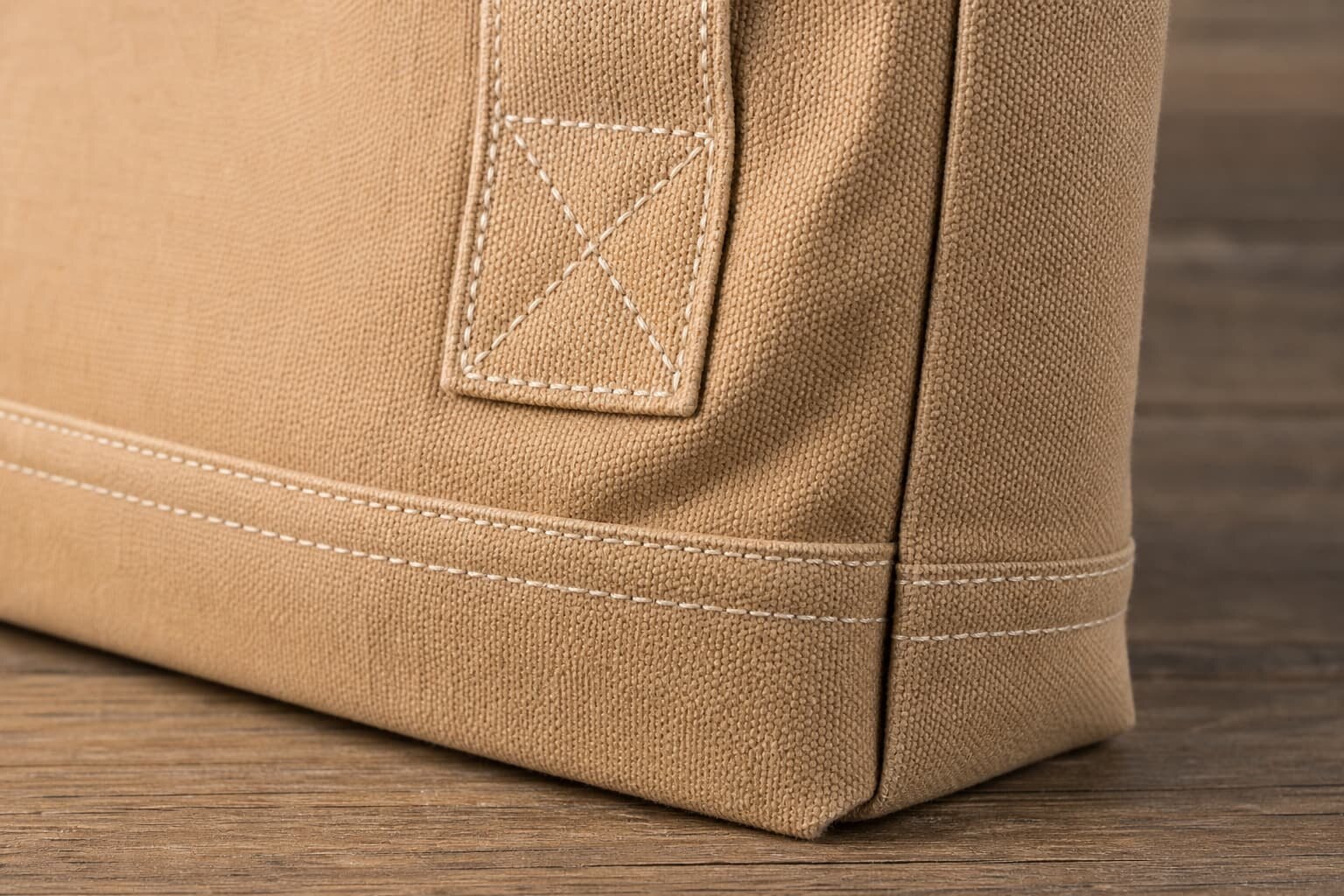
Why a GSM Approval Memo Matters
Canvas tote bag sourcing often goes wrong because buyers approve a nice-looking sample but never lock the fabric weight in a way production can follow. A supplier may quote 10 oz canvas, another may quote 12 oz canvas, and a third may convert both into GSM differently. If the approval memo is vague, procurement compares prices that are not based on the same material. The result is a quote that looks cheaper but arrives as a thinner, softer, or more transparent bag.
A fabric GSM approval memo is not paperwork for its own sake. It is a control document that connects fabric booking, sampling, printing, cutting, sewing, packing, and final inspection. For canvas tote bags, GSM affects handfeel, body, print sharpness, folding thickness, carton volume, sewing speed, and perceived retail value. A clear memo helps the buyer tell the factory exactly what must be held stable and what tolerance is acceptable before bulk fabric is cut.
- Use the memo before purchase order release, not after bulk fabric is already booked.
- Attach the approved swatch, pre-production sample photos, and quotation version to one file.
- Define whether the approved GSM is for raw fabric, dyed fabric, washed fabric, or finished panels.
- Make the memo part of the supplier contract so it can support inspection decisions.
Define GSM in Buyer Language
GSM means grams per square meter, but the practical question is when and how that weight is measured. Cotton canvas can be weighed before dyeing, after dyeing, after finishing, after washing, or after steaming. Each stage can change the number. A fabric with heavy sizing may feel firm in the sample room, then become softer after handling. A dyed canvas may shrink and show a higher finished GSM even when the original yarn construction is similar.
For RFQ control, do not write only "10 oz canvas" or "12 oz canvas" without a GSM range. Ounce terminology is used differently by mills and markets, and some suppliers quote ounces per square yard while buyers think in GSM. A practical approval memo should state the target GSM range, the measurement stage, the tolerance, and the retained reference swatch. This avoids arguments where both sides claim the fabric matches the order because they are using different definitions.
- Good wording: "Natural cotton canvas, finished panel GSM 360-390, measured after dyeing and pre-shrinking."
- Risky wording: "Heavy canvas similar to sample" because it gives no inspection standard.
- Ask the factory to record roll-level GSM readings before cutting starts.
- If the bag is washed, approve both fabric GSM and final washed handfeel.
Match GSM to the Tote Bag Use
A higher GSM is not automatically better. A 6 oz to 8 oz canvas tote may be suitable for a short promotional event where the buyer needs low unit cost, light freight, and a simple logo. A 10 oz to 12 oz canvas is usually more suitable for retail merchandise because it has better body, better opacity, and stronger shelf appeal. A 14 oz to 16 oz tote can feel premium, but it increases fabric cost, needle wear, sewing difficulty, folding bulk, and carton volume.
Procurement teams should decide GSM based on the bag's real load, sales channel, artwork, and packing method. For example, a bookshop tote carrying heavy items needs stronger fabric, wider handles, and reinforced stitching. A cosmetic brand gift bag may need smoother fabric for clean print detail rather than maximum thickness. If a distributor sells mixed logo orders, a medium GSM can help balance print compatibility, MOQ, and shipping cost.
- For low-cost campaigns, check opacity and handle pull strength before accepting light canvas.
- For retail bags, confirm whether the tote can stand and fold neatly after packing.
- For heavy canvas, check whether the sewing factory has suitable machines, needles, and bartack settings.
- For export cartons, calculate how GSM changes carton quantity and freight volume.
Build the Memo Around Acceptance Criteria
A useful canvas tote bag fabric GSM approval memo should read like an acceptance tool, not a general product description. It should say what is approved, how it is measured, what tolerance is allowed, and what happens if production falls outside that range. The memo should include the buyer's SKU, bag size, fabric color, GSM range, finish, print method, handle type, packing method, and reference sample number.
The best time to prepare this memo is after the first sample is reviewed but before the pre-production sample is signed. If the first sample has the correct construction but the fabric feels too weak, the memo can require a revised fabric swatch before the factory makes the pre-production sample. If the sample feels good but no GSM reading is recorded, the buyer has no reliable benchmark for bulk inspection.
- State target GSM range and allowed tolerance, such as plus or minus 5 percent if agreed.
- Record fabric color with a physical swatch, not only a screen photo.
- Mention whether cotton seed specks, slubs, and shade variation are accepted for natural canvas.
- Require factory confirmation before cutting if roll readings are outside tolerance.
Control Print Results Through Fabric Approval
Print quality on canvas is strongly linked to fabric surface. A rougher weave can break fine lines. A soft, absorbent natural canvas can make water-based ink look muted. A heavily sized fabric can affect ink penetration. Thick canvas may need more pressure or a different ink system, while thin canvas may show print-through on the back side. This is why print approval should not be separated from fabric GSM approval.
For a serious RFQ, send artwork with size, color count, placement, and expected print handfeel. Ask the factory to recommend screen print, heat transfer, DTF, embroidery, woven label, or another method based on the actual fabric. The strike-off should be printed on the same fabric quality intended for bulk production. A strike-off on a different stock canvas is only a design reference, not a production approval.
- For large solid logos, check ink coverage, cracking, and fabric show-through.
- For fine text, check whether the canvas weave distorts small letters.
- For heat transfer, bend and rub the print after cooling to check adhesion.
- For dark dyed canvas, confirm underbase requirements and color matching limits.
Understand MOQ Logic Before Comparing Quotes
MOQ is not only a factory preference. It is often driven by fabric availability, dye vat size, printing setup, label production, handle material, and packing requirements. A standard natural canvas may have a lower MOQ because the mill or factory keeps stock. A custom dyed 12 oz canvas may require a higher fabric booking quantity. A small order with many print versions can also raise the effective MOQ because each artwork requires setup and handling.
When comparing quotes, buyers should separate MOQ by component. One supplier may offer a low bag MOQ by using stock fabric, while another quotes a higher MOQ because they are dyeing fabric to a brand color. These are not the same offer. The GSM approval memo helps procurement understand whether the quoted MOQ supports the approved fabric or whether the supplier is quietly changing fabric to meet a lower quantity.
- Ask MOQ for stock natural canvas, stock dyed canvas, and custom dyed canvas separately.
- Confirm whether the quoted MOQ applies per size, per color, per print design, or per shipment.
- Check whether sample fabric and bulk fabric will come from the same material source.
- For repeat programs, ask whether the approved GSM can be reserved or repeated reliably.
Read Supplier Quotes Line by Line
A canvas tote bag quote should show enough detail for procurement to compare like with like. If one quote includes 12 oz canvas, inside overlock seams, long self-fabric handles, two-color screen print, individual polybag, export carton, and inspection support, it should not be compared against a quote that only says "canvas tote with logo." The lower price may be missing fabric weight, print coverage, packing, or reinforcement.
A good quote should identify finished size, fabric GSM or ounce basis, fabric color, handle size, seam construction, print method, print size, number of print positions, label details, packing method, carton quantity, carton measurement estimate, MOQ, sample cost if any, sample lead time, bulk lead time, payment terms, and quote validity. If the supplier refuses to state GSM clearly, the buyer should treat the quote as incomplete.
- Check whether fabric weight is listed as target, minimum, or nominal value.
- Ask if the price includes fabric wastage from cutting, shrinkage, and print rejects.
- Confirm whether carton marks, barcode labels, hangtags, or retail packing are included.
- Request a revised quote whenever fabric GSM, print size, or packing method changes.
Sample Checks Before Bulk Approval
The pre-production sample should prove that the approved fabric can be cut, printed, sewn, and packed into the intended bag. Do not approve only a flat fabric swatch if the tote design includes long handles, side gussets, inner pockets, zipper closure, or heavy print coverage. Construction can expose problems that a swatch cannot show, such as seam puckering, handle twisting, needle holes, or print cracking near fold areas.
When reviewing samples, procurement should record both measurable and visual checks. Measure finished width, height, gusset, handle drop, seam allowance, and print placement. Weigh the finished bag and compare it against the approved fabric expectation. Check whether the fabric feels close to the retained swatch after sewing and pressing. If a sample is approved with comments, those comments must be added into the GSM approval memo and not left only in email.
- Cut a small swatch from sample fabric only if the factory provides a replacement retained swatch.
- Photograph the bag beside a ruler and fabric swatch for approval records.
- Check load performance with realistic contents instead of only pulling the handles by hand.
- Approve packing fold direction because fold pressure can mark heavy canvas and print areas.
Packing and Lead Time Effects
Fabric GSM has a direct effect on packing. A light tote can usually be folded compactly with many pieces per carton. A heavy canvas tote may need fewer pieces per carton to avoid deep creasing, carton bulging, or excessive gross weight. If the bag is sold at retail, flat packing or careful fold packing may be needed to protect its shape. If the bag is for event distribution, compact fold packing may be acceptable, but the buyer should still approve how the print area is folded.
Lead time also changes with fabric choice. Stock natural canvas can move quickly into sampling and production. Custom dyed canvas needs lab dip approval, dyeing, drying, finishing, and shade checking. Heavy canvas may slow sewing output. Multi-color print on textured fabric can add strike-off time. The approval memo should show the sourcing workflow so buyers do not pressure the factory to cut before fabric GSM and shade are confirmed.
- Separate lead time into fabric booking, lab dip, sampling, printing, sewing, inspection, and packing.
- Ask for carton quantity and estimated CBM after the packing method is approved.
- Confirm moisture protection for sea shipment, especially for natural cotton canvas.
- Do not approve mass packing until folded samples are checked for crease and print transfer.
Common Mistakes the Memo Prevents
The most common mistake is approving a sample by appearance while the purchase order only states a broad fabric term. This creates room for substitution. Another common mistake is assuming all 12 oz canvas feels the same. Two fabrics can share a similar weight but have different yarn count, weave density, finishing, stiffness, and shrinkage. A buyer who only controls the number may still receive a bag that does not match retail expectations.
The approval memo also prevents avoidable disputes at inspection. If the memo states the accepted GSM range, measurement stage, shade tolerance, print strike-off, and packing method, the inspector has a practical standard. Without it, inspection becomes subjective. The supplier may argue that shade variation is normal, the buyer may argue it is unacceptable, and shipment can be delayed because the standard was not fixed before production.
- Do not let the supplier change fabric lot after sample approval without written confirmation.
- Do not approve print on substitute fabric and assume bulk print will match.
- Do not ignore carton volume when increasing GSM for a premium feel.
- Do not use online photos as the only shade or handfeel approval record.
Specification comparison for buyers
| Spec decision | Recommended option | When it fits | Buyer risk to check |
|---|---|---|---|
| Light promotional tote | 6 oz to 8 oz canvas, usually around 200-270 GSM before washing | Event giveaways, low-load retail inserts, budget campaigns with simple one-color print | May feel thin after washing or steaming; confirm finished bag weight and opacity, not only fabric supplier GSM |
| Retail merchandise tote | 10 oz to 12 oz canvas, usually around 340-410 GSM | Brand stores, bookshops, museum shops, reusable shopping programs, stronger perceived value | Higher GSM can change folding volume, carton size, freight cost, and print ink absorption |
| Premium structured tote | 14 oz to 16 oz canvas, usually around 475-545 GSM | Heavy-duty retail bags, work totes, gift-with-purchase where stiffness matters | Need stronger needles, slower sewing, reinforced handles, and clear tolerance for creases during packing |
| Natural unbleached fabric | Greige or natural cotton canvas with approved shade band | Eco-positioned products, organic-style branding, minimal print artwork | Cotton seed specks and shade variation are normal unless restricted in approval memo |
| Dyed canvas | Piece-dyed or yarn-dyed canvas with lab dip approval and color fastness requirement | Brand color programs, seasonal collections, coordinated packaging | Dyeing can shrink fabric and shift GSM; approve finished GSM after dyeing, not raw fabric only |
| Screen print on canvas | Water-based or plastisol screen print matched to GSM and surface texture | Solid logos, large flat graphics, repeat orders needing stable color | Heavy canvas texture can break fine lines; approve strike-off on actual bulk fabric |
| Heat transfer or DTF | Transfer tested on same GSM and same washing/pressing condition | Short runs, multi-color graphics, distributor programs with many logo versions | Thick canvas and uneven weave may reduce adhesion; request rub, bend, and peel checks |
| Packing decision | Flat pack for premium shape; fold pack for lower freight and easier storage | Flat pack fits retail presentation; fold pack fits mass distribution and warehouse handling | Fold lines can mark heavy canvas and printed areas; define acceptable crease level before shipment |
Buyer checklist before sampling
- State whether GSM is required on greige fabric, dyed fabric, washed fabric, or finished cut panels.
- Request actual measured GSM range, not a single target number, and define acceptable tolerance.
- Approve a retained fabric swatch with date, order number, shade, finish, and supplier signature.
- Confirm fabric construction details: cotton content, weave, yarn count if available, and whether sizing or coating is used.
- Match the print method to the approved canvas surface and require a strike-off on the real bulk fabric.
- Check finished bag weight, handle strength, seam allowance, and shrinkage after any washing or steaming process.
- Confirm MOQ logic for fabric dyeing, printing, handle type, label, and carton packing separately.
- Lock packing method, fold direction, inner polybag requirement, carton size, and gross weight range before mass packing.
- Compare supplier quotes using the same GSM, finished size, handle length, print coverage, packing, and inspection standard.
- Keep one approved pre-production sample and one fabric swatch for warehouse receiving and dispute control.
Factory quote questions to send
- Is your quoted GSM measured before dyeing, after dyeing, after washing, or on the finished bag panel?
- What GSM tolerance will you accept in production, and how many rolls or panels will be measured?
- Can you provide a fabric swatch from the same bulk lot used for the pre-production sample?
- Does the quoted fabric include natural cotton seed specks, bleaching, dyeing, softening, or water-repellent finishing?
- Which print method do you recommend for this GSM and artwork, and will the strike-off use actual bulk fabric?
- What is the MOQ for this GSM and color if we reorder, and does MOQ change for custom dyed fabric?
- How will fabric GSM affect carton quantity, carton measurement, and estimated shipping volume?
- What lead time is needed for fabric booking, dyeing, sample approval, printing, sewing, inspection, and packing?
- Which test results or in-house checks can you provide for shrinkage, rubbing, print adhesion, and handle pull strength?
- If bulk GSM is outside tolerance, what correction action is available before cutting?
Quality-control points to confirm
- Measure GSM using a proper cutter and scale from multiple fabric roll positions, not only from one supplier tag.
- Compare bulk fabric swatch against approved shade, handfeel, stiffness, and opacity under consistent lighting.
- Check fabric width and shrinkage because GSM alone does not confirm usable yield or finished tote size.
- Inspect print strike-off for line sharpness, ink penetration, cracking, rubbing, and registration on the approved canvas.
- Confirm handle reinforcement, stitch density, seam allowance, bartack location, and load-bearing points on thicker canvas.
- Weigh finished bags randomly to detect fabric substitution, excessive sizing, or inconsistent cutting panels.
- Check fold marks, carton compression, moisture protection, and printed panel transfer before final shipment.
- Record fabric lot number, sample approval date, inspection photos, and carton marks for traceability.