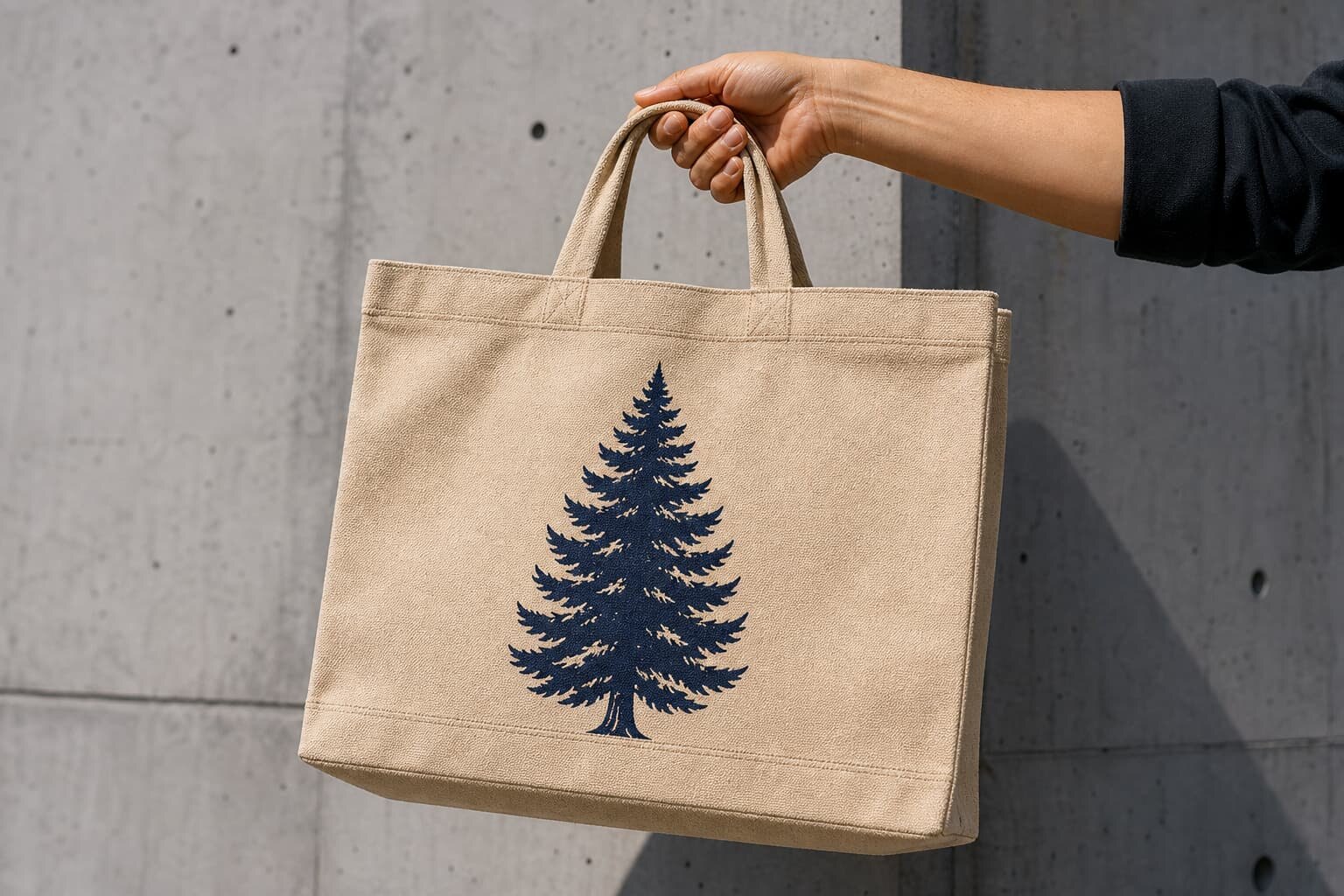
Why carton cube must be planned before the tote quote is final
Carton cube looks like a logistics detail, but for canvas tote bags it can change the real landed cost and the buyer's receiving plan. A tote bag may look simple on the spec sheet: 38 x 42 cm body, 10 oz canvas, long handles, one color logo. Once it is folded, stacked, bagged, sleeved, labeled, and packed into export cartons, the same item can produce very different CBM depending on fabric thickness, handle construction, gusset depth, and unit packing.
Procurement teams often compare FOB unit prices and then discover later that one supplier quoted a loose bulk pack while another assumed individual polybags or retail sleeves. The lower unit price may not stay lower after ocean freight, warehouse handling, and repacking are counted. A useful canvas tote bag carton cube planning guide should help you define the packing condition before you ask for the final quote, not after cartons are already sealed.
- Carton cube affects freight allocation, container loading, warehouse appointments, and chargeable volume for air or courier shipments.
- Poor cube planning causes late booking changes, mismatched packing lists, and emergency carton repacking.
- For canvas totes, GSM and folding method usually change cube more than small changes in bag body size.
- The best RFQ asks for carton dimensions, pieces per carton, gross weight, net weight, and total CBM by SKU.
Start with the bag structure, not the carton size
The carton plan starts with the finished tote structure. A flat 38 x 42 cm bag in 8 oz cotton canvas will compress differently from a 40 x 35 x 12 cm gusseted tote in 12 oz canvas. A wide bottom gusset creates more folded bulk. A cross-stitched handle patch adds thickness at the top edge. A full side seam binding, inner pocket, zipper top, or canvas lining can quickly reduce the number of pieces that fit safely per carton.
Buyers should avoid asking only, "How many pieces fit in one carton?" until the product construction is stable. Factories can estimate, but the estimate may change after sample approval. If carton cube is important for your tender, distribution center routing, or container booking, include carton planning as part of product development. This is especially important for private label canvas tote bags where trims, labels, hangtags, and branded inserts are added after the first sample.
- Basic flat tote: easiest to fold and cube, usually stable for bulk pack programs.
- Gusseted tote: needs folding trial because bottom and side gussets create uneven thickness.
- Long-handle shoulder tote: handle stacking can create a thick ridge if not aligned.
- Zipper top tote: zipper tape and puller may mark fabric or create pressure points.
- Inner pocket or lining: adds weight and folded thickness; do not use flat tote carton data.
Fabric weight and GSM change the carton calculation
Canvas fabric is often quoted in ounces, while some buyers specify GSM. Both matter. A common promotional canvas tote may use 8 oz to 10 oz fabric, roughly around 230 to 280 GSM depending on construction. Retail canvas totes often move into 10 oz to 12 oz, roughly 280 to 340 GSM. Heavy-duty shopping totes may use 14 oz to 16 oz canvas, which can exceed 380 GSM. The heavier material improves hand feel and durability, but it also increases carton weight and reduces compression.
The mistake is assuming a 12 oz tote has the same carton quantity as an 8 oz tote because the finished dimensions are identical. In practice, 100 pieces of 12 oz canvas can form a much higher stack than 100 pieces of 8 oz cotton. Heavy canvas also resists tight folding, especially if the bag is washed, dyed, laminated, or stiffened. If the buyer wants a premium feel and a controlled cube, the factory should test fold direction, stack height, and carton fill before the final quote is approved.
- Ask for both fabric oz and approximate GSM in the quote to avoid unclear material substitutions.
- Treat dyed canvas, washed canvas, coated canvas, and laminated canvas as separate cube tests.
- Confirm whether fabric shrinkage after washing or dyeing changes the final folded size.
- Do not force heavy canvas into a small carton; creasing and carton bulge are common results.
Packing method decides whether the quoted CBM is usable
A carton cube number is only useful when the packing method behind it is clear. Bulk-packed canvas totes folded flat into stacks will usually give the lowest cube. Individual polybags increase handling control and protect from dust, but they add film thickness and trapped air. Kraft belly bands or paper sleeves create a cleaner retail presentation, but they may restrict compression and force a longer carton. Insert cards, hangtags, barcode labels, and size stickers also affect how bags can be stacked.
For importers and distributors, the packing method should be written into the purchase order and approved with photos. If the factory quotes based on bulk packing and your retail team later adds an insert card, the carton dimensions may change after production. That can affect freight booking, carton marks, pallet counts, and warehouse receiving. The buyer should freeze packing before mass cutting if the program has tight cost or launch timing.
- Bulk pack is efficient but gives less retail protection and less unit traceability.
- Individual polybag protects each tote but may conflict with plastic reduction policies.
- Recycled PE bags need thickness and warning text confirmed for destination compliance.
- Kraft bands look cleaner but can bend or slide if the folded tote is too thick.
- Retail inserts must be tested inside the fold so corners do not dent the canvas.
Print method can limit how the tote is folded
Carton planning is connected to decoration. A small one-color screen print near the lower front panel is easy to avoid when folding. A large front panel print, foil logo, puff ink, heat transfer, discharge print, or digital print may not tolerate pressure or rubbing in the same way. If the bag is folded through the printed area before ink is fully cured, buyers may see ghost marks, blocking, gloss change, or edge cracking after the carton is opened.
The factory should confirm the print method, ink type, curing time, and fold line during sampling. For screen print canvas totes, ask for a folded sample that has been packed under pressure for at least a short simulation period. For heat transfer or raised decoration, check whether the transfer edge touches another transfer inside the stack. If retail appearance matters, the carton plan should protect the print, not simply maximize pieces per carton.
- Screen print: confirm ink cure and avoid face-to-face wet stacking.
- Heat transfer: test folding at transfer edges and avoid high-pressure ridges.
- Embroidery: adds localized bulk and may need tissue or adjusted stacking.
- Foil print: more sensitive to rubbing and pressure marks during long transit.
- Large full-front artwork: may require a different fold direction or lower carton quantity.
How to read CBM, carton quantity, and weight in supplier quotes
A professional tote bag quote should not stop at unit price. It should show packing quantity per carton, carton dimensions, gross weight, net weight, and total CBM. The most useful data is by SKU, not averaged across all versions. If a program has natural canvas, black dyed canvas, long handle, short handle, and two print sizes, carton data may not be identical. Averaging hides the SKU that will cause booking or receiving issues.
CBM should be calculated from the outside carton dimensions after packing. For example, if the packed carton measures 60 x 40 x 35 cm, one carton is 0.084 CBM. If there are 80 cartons, total volume is 6.72 CBM before pallet allowance. The buyer should ask whether the factory uses actual outside measurement or estimated inner carton size. A small difference per carton becomes meaningful when the order is several hundred cartons.
- Quote data to request: pieces per carton, carton count, carton size, net weight, gross weight, total CBM, and packing method.
- Document data by SKU: color, print version, handle length, fabric weight, and pack type.
- Check carton weight against warehouse handling rules before approving pieces per carton.
- Ask the forwarder whether palletized volume or loose carton volume will be used for planning.
- Reconfirm final carton data on the packing list before shipment documents are issued.
MOQ logic when carton cube is part of the buying decision
MOQ for canvas tote bags is usually driven by fabric purchasing, dyeing minimums, print setup, sewing line efficiency, and packing labor. Carton cube adds another layer. A very small order may use cartons that are not optimized because the factory packs by convenience rather than container efficiency. A larger order allows the factory to test carton size, stabilize folding, and pack full cartons by SKU. This gives cleaner receiving data and fewer mixed cartons.
If your order has many colors or designs, ask how the MOQ connects to carton packing. A 3,000 piece order split across ten designs may create partial cartons and more complicated barcode handling. A 3,000 piece order in one SKU is much easier to cube and ship. For distributors and retail buyers, it is often better to align order quantities with full carton quantities, especially when each carton must carry a unique SKU label or warehouse barcode.
- Ask for MOQ by fabric color, print design, and packing method, not only by total order quantity.
- Round order quantities to full cartons where possible to reduce short cartons and receiving errors.
- For multi-SKU orders, require carton-level packing list detail before shipment.
- If a buyer demands mixed cartons, define the mix pattern and label format in writing.
- Do not compare MOQ fairly unless each supplier quotes the same pack method and carton rule.
Sample and pilot carton checks before mass packing
Approving a loose pre-production sample does not approve the shipping condition. For a first order or revised packing plan, request a pilot carton check. This can be one full carton packed with the approved tote, the approved fold, the approved inner packaging, and the proposed carton board. The factory can record carton dimensions, gross weight, net weight, photos, and any bulging or compression problems. This step prevents most late disputes about cube.
The buyer does not always need the full pilot carton sent by courier, because courier cost can be high. Often, clear photos and a carton data report are enough before production packing starts. However, if the tote has premium retail packaging, special print, heavy canvas, zipper construction, or a strict warehouse routing guide, receiving one packed carton sample can be worth the cost. It lets your team test barcode scanning, shelf presentation, carton opening, and repack labor.
- Request photos of one folded tote, one stack, one open carton, and one closed marked carton.
- Measure the packed carton after taping because carton bulge changes outside dimensions.
- Check whether the first and last bags in the carton are more creased than the middle bags.
- Confirm cartons can stack without crushing when the estimated gross weight is applied.
- Use the pilot carton data as the approval basis for booking and final inspection.
Lead time and approval timing for carton cube decisions
Carton planning should not wait until final inspection week. A typical custom canvas tote process includes material booking, cutting, printing, sewing, trimming, ironing or pressing, unit packing, carton packing, and inspection. The correct time to confirm carton assumptions is after the pre-production sample is approved but before bulk packing materials are ordered. If retail inserts, labels, or special cartons are involved, those materials may have their own lead time.
Buyers should build approval gates into the timeline. Artwork approval controls print sampling. Pre-production sample approval controls sewing and decoration. Packed carton approval controls logistics data. If the buyer changes from bulk pack to individual polybag after sewing has started, the factory may need new carton sizes, more labor, new labels, and revised CBM. This can delay booking even when the bags themselves are finished.
- RFQ stage: request estimated carton data based on the proposed specification.
- Sample stage: verify fold method, print protection, and unit packing style.
- Pre-production stage: approve pilot carton dimensions and carton marks.
- Bulk packing stage: measure actual cartons and update the packing list if needed.
- Pre-shipment stage: match final CBM with booking, invoice, packing list, and forwarder data.
Common mistakes that make carton cube unreliable
The most common mistake is treating carton cube as a fixed number copied from a previous order. Canvas tote bag programs change frequently: a buyer adds a heavier fabric, switches to longer handles, adds a gusset, changes print placement, or requests individual packaging. Each change can affect carton size, pieces per carton, and weight. Another mistake is comparing suppliers who are not quoting the same packing standard. One supplier may offer a low unit price with 200 pieces per carton, while another quotes 100 pieces per carton to protect the product.
A second risk is allowing the factory to overpack cartons to reduce CBM on paper. Overpacking may look efficient, but it can produce crushed corners, deep fold marks, handle deformation, print transfer, and cartons that fail during stacking. Buyers should set acceptance criteria: maximum carton weight, no excessive bulging, no print marking, readable barcode, and stable carton shape. The goal is not the smallest possible carton; the goal is the smallest reliable carton that protects the goods and matches the receiving process.
- Do not approve CBM without knowing whether it includes retail packing and inserts.
- Do not accept carton dimensions without pieces per carton and gross weight.
- Do not use one SKU's carton data for all colors if fabric finish or print method differs.
- Do not let carton labels be designed after the warehouse routing guide is issued.
- Do not book freight from estimated CBM when packed carton measurements are already available.
Specification comparison for buyers
| Spec decision | Recommended option | When it fits | Buyer risk to check |
|---|---|---|---|
| Fabric weight for cube control | 10-12 oz canvas, about 280-340 GSM, folded flat | Promotional, retail, and event totes where bag body must feel substantial but still compress predictably | Thicker 14-16 oz canvas may increase carton cube and reduce pieces per carton even when bag dimensions stay the same |
| Packing style | Flat fold with aligned handles, packed in master carton without excessive air gaps | Most import programs where freight cost and warehouse efficiency matter more than individual presentation | Loose random folding creates uneven carton bulge, poor pallet stacking, and unreliable CBM |
| Retail-ready unit pack | OPP or recycled PE bag, kraft belly band, or paper sleeve confirmed before carton test | Retail distribution, ecommerce fulfillment, club packs, or customer-facing multipacks | A retail sleeve or insert can change carton length, carton height, and barcode orientation after quote approval |
| Print method impact | Screen print or heat transfer allowed to cure fully before folding | Most cotton canvas tote logo programs with one to four colors | Fresh ink, thick plastisol, or raised transfer can mark adjacent bags if packed too early or folded through the print area |
| Carton quantity | Use a tested quantity such as 50, 100, or 200 pcs per carton depending on GSM and bag size | Buyer needs stable receiving units and predictable pallet loading | Forcing too many pcs per carton can deform handles, crease prints, and exceed warehouse carton weight limits |
| Carton specification | Five-layer export carton with size, gross weight, net weight, barcode, PO, SKU, and country marking | Ocean freight, consolidation warehouse, Amazon-style receiving, distributor DCs | Thin cartons may fail compression after humidity exposure or during mixed-container loading |
| Sample validation | Approve a packed carton sample or pilot carton cube report before mass packing | First order, new fabric GSM, new insert, new bag size, or new carton quantity | Approving only the loose bag sample leaves freight cube, carton strength, and scan label placement unresolved |
Buyer checklist before sampling
- Confirm finished bag size, gusset depth, handle length, and whether the tote must be folded through the body or below the handle line.
- Specify fabric weight by oz and approximate GSM, not only by the word canvas, because cube changes sharply between 8 oz, 10 oz, 12 oz, and 16 oz fabrics.
- Decide the unit pack before quotation: bulk pack, individual polybag, recycled PE bag, kraft band, paper sleeve, insert card, hangtag, or barcode sticker.
- Ask the factory to quote pieces per carton, carton dimensions, gross weight, net weight, and total CBM for the order quantity.
- Set a maximum carton weight if your warehouse or parcel network has a handling limit, commonly 15 kg, 18 kg, 20 kg, or 22 kg depending on destination rules.
- Require a folded bag photo, open carton photo, closed carton photo, and carton mark proof before mass packing.
- Check whether the print position will be creased after folding, especially for large front panel screen prints, puff ink, foil, heat transfer, or digital prints.
- Confirm pallet pattern or container loading assumption if your forwarder needs a reliable cube plan before booking.
- Include carton compression, drop, moisture, and barcode scan checks in the pre-shipment inspection plan.
- Recheck carton cube if any late change is made to fabric GSM, handle style, inner packing, insert card, or carton quantity.
Factory quote questions to send
- For this canvas tote bag size and fabric GSM, how many pieces do you recommend per export carton, and why?
- What are the proposed carton outside dimensions, net weight, gross weight, and total CBM for the full order quantity?
- Is your CBM calculated from carton outside measurements after packing, or from a theoretical carton size before bulk packing?
- Can you provide photos of the folded bag method and a sample packed carton before bulk production starts?
- Will the print face another printed surface, a handle seam, or a hard insert after folding inside the carton?
- What carton board grade or ply structure will you use for export packing, and is it suitable for the estimated gross weight?
- If we add individual polybags, kraft bands, hangtags, barcode labels, or retail inserts, how will the carton size and pieces per carton change?
- What is the maximum carton weight you recommend to avoid deformation of canvas bags and handling issues at destination?
- Can you separate packed carton data by SKU, color, size, or print version instead of averaging the whole order?
- At what production stage will final carton dimensions be confirmed, and who approves changes before shipment booking?
Quality-control points to confirm
- Measure carton outside length, width, and height after the carton is fully packed and taped, not from an empty carton.
- Compare actual pieces per carton against the packing list, purchase order, and carton mark.
- Check net weight and gross weight by SKU because heavier canvas, long handles, and laminated prints can shift carton weight.
- Open sample cartons to confirm fold consistency, handle placement, insert position, and whether printed areas are rubbing.
- Inspect carton shape after 24 hours of stacking to identify bulging, crushed corners, weak tape, or over-compression.
- Scan carton barcodes from multiple sides if labels are required by warehouse or retailer routing instructions.
- Check moisture condition of cotton canvas and cartons, especially for heavy natural canvas shipped during humid seasons.
- Confirm carton marks include PO number, SKU, color, quantity, carton number, gross weight, net weight, dimensions, and country of origin when required.
- Perform a drop or handling simulation on a packed carton when the tote has retail presentation packaging or a high-value print.
- Verify that final CBM on the packing list matches the booking and commercial documents before vessel cutoff.