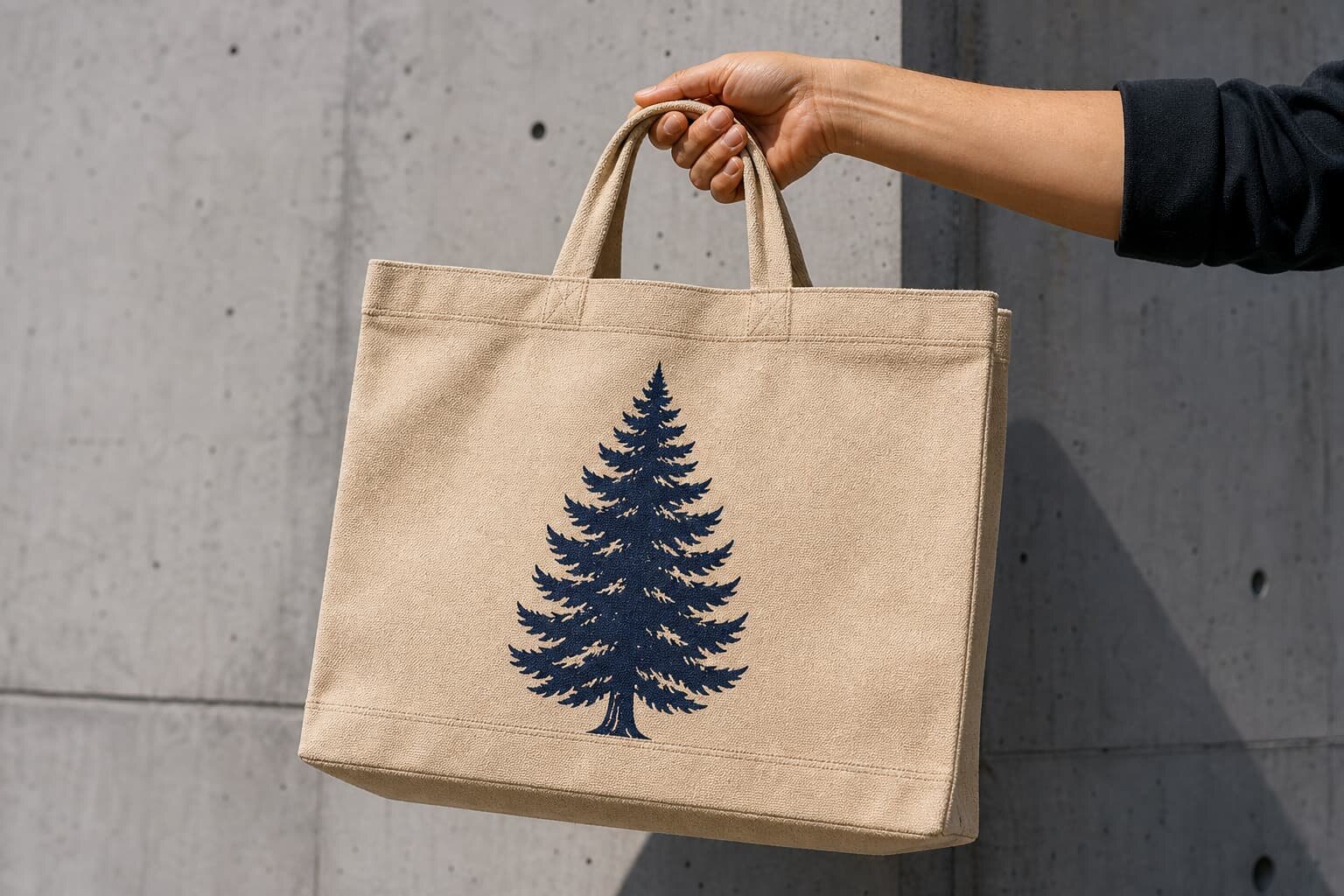
What a Fit Approval Memo Solves
A canvas tote bag buyer fit approval memo is the document that turns a sample from a loose reference into a production control point. It records how the tote should fit the intended use: what it can hold, how it sits on the shoulder, how the mouth opens, how the base stands, and how the print looks after sewing and packing. Without this memo, the factory may produce to a general drawing while the buyer expects the behavior of a particular sample.
For procurement teams, the memo is not decoration. It protects the order when several people are involved: merchandiser, factory sample room, printing department, QC inspector, forwarder, distributor, and retail buyer. If the memo only says approved, it does not tell the factory whether a 2 cm shorter handle is acceptable, whether the natural canvas shade can vary, or whether the logo can move when the bag is folded for packing.
- Use the memo before deposit or before bulk release, not after fabric cutting.
- Attach clear photos of the approved sample, including measurement points.
- State whether the sample is approved as a sales sample, fit sample, pre-production sample, or shipment reference.
- List allowed tolerances so the factory can judge defects before final inspection.
Define Fit by Use, Not Only by Size
Many tote bag disputes start because the buyer approves width and height but does not approve how the bag works when filled. A 38 x 42 cm flat canvas tote can look correct on the table and still be inconvenient if the mouth opening is tight, the handles are too short for shoulder carry, or the bottom collapses under catalog weight. The memo should connect dimensions to actual use, especially for retail merchandise, event kits, bookshop orders, grocery programs, and corporate gifting.
The correct fit approval method is simple: load the sample with the intended contents and observe the bag from the top, side, and handle position. If the buyer will pack a hoodie, notebook, and water bottle, test those items. If the tote is for a wine shop, a flat tote may not fit the use even if the print is attractive. If it is for an apparel brand, a softer 10 oz canvas may feel better than a stiff 14 oz canvas, but it may not stand upright for product display.
- Record target use: documents, apparel, grocery, books, promotional kit, or retail resale.
- Check shoulder clearance while wearing a jacket if the tote will be sold in cold markets.
- Check whether the filled bag tilts forward, sags at the base, or pulls the mouth out of shape.
- Approve the bag with realistic contents rather than empty studio photos.
Body Size, Gusset, and Measurement Tolerances
The approval memo should separate flat body size, gusset size, and finished capacity. A non-gusseted tote measured at 38 x 42 cm will not carry the same contents as a 35 x 40 x 10 cm gusseted tote. A bottom gusset increases usable volume but also changes print placement, folding method, carton volume, and seam stress. If the buyer only writes one size line in the purchase order, the factory may choose the easiest sewing interpretation.
For canvas totes, a practical finished size tolerance is often around plus or minus 1 cm for body width and height, and tighter tolerances may increase rejection risk or cost. Natural cotton fabric can move during cutting, printing, sewing, and pressing. If the tote is dyed or washed, shrinkage control becomes more important. The memo should say whether measurements are taken after sewing only, after pressing, or after washing, because each stage can change the number.
- Measure width across the top and bottom if the bag has a tapered or gusseted body.
- Measure height from the top opening edge to the bottom seam, excluding handles.
- Measure gusset depth at the finished seam, not from a loose fold.
- State acceptable tolerance for print placement separately from bag body tolerance.
Fabric Weight and Hand-Feel Approval
Canvas fabric is often quoted in ounces, but buyers may compare suppliers using GSM. This creates mistakes because ounce, GSM, yarn count, weave density, finishing, and shrinkage do not always translate cleanly. A 10 oz canvas is commonly used for promotional and retail totes, while 12 oz gives a firmer hand and better perceived value. Heavier 14 oz or 16 oz canvas can support premium positioning, but it raises material cost, sewing difficulty, packing volume, and freight weight.
The fit approval memo should identify the fabric by more than color and weight. Include composition, approximate GSM, weave style if relevant, finish, dyeing or bleaching condition, and whether the bag is made from natural, dyed, or washed canvas. For natural canvas, flecks and shade variation may be normal; for dyed canvas, color tolerance and crocking risk matter more. The buyer should keep an approved swatch with the memo, because a photo cannot control hand-feel.
- Typical light promotional canvas: about 6-8 oz, lower cost, less structure.
- Common retail canvas: about 10-12 oz, better balance of cost, printability, and strength.
- Premium heavy canvas: about 14-16 oz, stronger look but higher sewing and freight impact.
- Ask the factory whether GSM is tested before or after finishing.
Handle Fit, Drop, and Reinforcement
Handle fit is one of the most practical approval items because end users feel it immediately. Buyers often specify handle length, but the user experiences handle drop. Handle drop is measured from the top opening of the bag to the highest point of the handle. A 26-30 cm drop generally works for shoulder carry, while 18-22 cm is better for hand carry and lower material cost. If the tote will be used over coats, the upper range is safer.
Reinforcement should match the expected load. A light event tote can use straight stitch with neat inside finishing, but a bookstore tote or grocery tote needs stronger handle attachment. Box-x stitching, bartack reinforcement, double row stitching, or an extra canvas patch may be appropriate depending on fabric weight and design. The memo should include stitch pattern photos and not rely on a phrase like strong handle, because factories interpret that differently.
- Approve handle drop on a finished sample, not by calculating from cut strap length.
- Check whether the handle twists after sewing or after loading.
- Specify handle width if comfort matters; narrow straps cut into the shoulder faster.
- Record stitch density and reinforcement method for repeat orders.
Print Approval Must Match the Fit Sample
Print approval and fit approval should be linked. A canvas tote can pass dimension approval but fail commercial approval if the print sits too low after the bottom gusset opens, or if the artwork creases at the fold line during packing. Screen printing is usually efficient for solid logos and repeat bulk orders. Heat transfer can suit smaller quantities or detailed artwork, while digital printing supports multicolor graphics but needs careful hand-feel and wash or rub checks.
The memo should state print method, artwork size, Pantone or approved color reference, placement from top and side edges, ink coverage, and curing requirement. For natural canvas, ink color may look warmer or duller than on white paper. For heavy canvas, uneven surface texture can affect fine lines. If the logo is large, folding direction matters because carton compression can create a visible crease through the print.
- Measure print position from fixed edges, such as top opening and side seam.
- Approve one printed sample on the actual bulk fabric weight.
- Check rubbing and flexing after the print is cured, not immediately after printing.
- Confirm whether setup charges and screen charges are included in the quote.
MOQ Logic Behind the Factory Quote
MOQ is not only a sales policy. For canvas tote bags, it is linked to fabric sourcing, dye lot, print setup, cutting efficiency, sewing line arrangement, packing material, and export carton use. A factory may accept a lower MOQ for natural canvas with one color screen print because fabric is easy to source and setup is simple. The same factory may require a higher MOQ for dyed canvas, custom width fabric, special handles, multicolor print, or individual retail packaging.
Procurement teams should ask which part of the specification controls MOQ. If the quote says MOQ 1,000 pieces, that may mean 1,000 pieces per bag size, per fabric color, per print design, or per shipment. If a distributor orders three artwork versions at 500 pieces each, the total order is 1,500 pieces but the production cost may behave like three smaller orders. The approval memo should match the final quote breakdown so buyers do not approve one sample and then ask for mixed artwork too late.
- Natural canvas with one color print usually has more flexible MOQ than dyed or washed canvas.
- Custom fabric color may require fabric dyeing MOQ before bag sewing MOQ is even considered.
- Multiple logo versions affect screen setup, QC sorting, and carton marking.
- Retail packing may create a separate MOQ for barcode labels, belly bands, or printed inserts.
Packing Can Change the Approved Fit
Packing is often treated as a shipping detail, but it can affect the final buyer experience. A tote that looks correct when freshly pressed may arrive with handle dents, print creases, or distorted gussets if it is folded too tightly. Flat folded packing saves carton volume and freight cost, but it must be tested against the print position and fabric weight. Heavy canvas resists folding and can create thicker cartons; light canvas compresses better but wrinkles more easily.
The fit approval memo should include folded sample photos, packing count per polybag if used, master carton quantity, carton dimensions, carton gross weight, and shipping mark requirements. If the buyer supplies retail stores, carton count accuracy and barcode placement may be as important as the tote itself. If the buyer wants reduced plastic, the factory should quote paper banding, bulk packing, or recyclable bag options separately, because packing changes labor and material cost.
- Test whether folding crosses the printed logo or important artwork.
- Confirm if each tote is individually polybagged, bulk packed, or wrapped with paper band.
- Set a carton weight limit if warehouse staff will manually handle cartons.
- Ask for carton drop or compression consideration when bags are packed tightly.
Lead Time and Sample Approval Workflow
A realistic lead time starts before bulk sewing. The factory may need time for fabric sourcing, dyeing, shrinkage testing, sample cutting, printing, curing, sewing, buyer review, revisions, and pre-production approval. If the buyer changes handle drop, bag size, fabric weight, or print method after the first sample, the timeline resets partly because cutting pattern, screen position, and material consumption may change.
The approval memo should include decision deadlines. A common sourcing mistake is asking the factory for a fast production schedule while the buyer team takes two weeks to approve a sample. If retail launch timing is fixed, the memo should show the last approval date for bulk fabric booking and the last artwork approval date for printing. For repeat orders, the buyer should reference the previous approved memo and state any requested changes clearly instead of sending a new image and expecting the factory to infer the difference.
- Separate sample lead time from bulk production lead time in the quote.
- Ask whether the factory can start fabric booking before final print approval, and what risk that creates.
- Freeze size, fabric, print, and packing before bulk cutting.
- Keep one sealed pre-production sample for final inspection comparison.
Quote Data Buyers Should Require
A clean factory quote for a canvas tote bag should let a buyer compare suppliers on the same basis. The quote should show fabric specification, finished size, handle detail, print method, number of print colors or artwork versions, packing method, MOQ, sample cost policy, bulk lead time, carton information, and trade terms. If one supplier includes individual polybags, screen charges, and reinforced handles while another does not, the lower unit price is not necessarily cheaper.
The fit approval memo should reference the final quote version or purchase order. This prevents a common problem: the buyer approves a premium sample, then purchasing negotiates a lower price that quietly removes fabric weight, reinforcement, or packing details. If cost reduction is needed, list the change openly, such as moving from 12 oz to 10 oz canvas, reducing print size, changing from box-x to bartack, or packing bulk instead of individually. Then approve a revised sample if the change affects fit, appearance, or use.
- Ask for fabric consumption or at least fabric weight basis when comparing high-volume orders.
- Separate unit price from mold, screen, sample, label, packing, and inland freight charges.
- Confirm whether the quote is per design, per color, or total order quantity.
- Request carton dimensions and gross weight before freight comparison.
Specification comparison for buyers
| Spec decision | Recommended option | When it fits | Buyer risk to check |
|---|---|---|---|
| Main fabric weight | 10 oz to 12 oz cotton canvas, roughly 280-340 GSM depending on weave | Retail giveaways, bookstore totes, event merchandise, and moderate daily carry | Factory may quote by ounce while buyer compares GSM; ask for actual cut panel weight and shrinkage allowance |
| Bag body size | Approx. 38 x 42 cm flat, or 35 x 40 x 10 cm with bottom gusset | A4 documents, light groceries, folded apparel, catalog kits, and standard brand merch use | Flat size and finished size can differ after washing, hemming, and seam take-up |
| Handle drop | 26-30 cm finished drop for shoulder carry; 18-22 cm for hand carry | Shoulder drop is better for retail and grocery use; shorter drop controls cost and bulk | Buyer approves handle length only, but end users judge by drop after stitching and loading |
| Print method | Screen print for solid logos; heat transfer for detailed small runs; digital print for multicolor artwork | Screen print gives stable bulk cost at higher quantity; digital supports artwork complexity | Ink hand-feel, print cracking on folded packing, and color shift on natural canvas must be approved on real fabric |
| Seam construction | Inside overlock plus lockstitch top seam, reinforced handle cross-stitch or box-x where needed | Suitable for normal retail tote orders and repeated light carrying | Samples may look clean but fail load test if stitch density, thread, and reinforcement are not stated |
| Packing format | Flat folded in master carton, optional individual polybag or paper belly band | Best for controlling freight volume and retail warehouse receiving | Aggressive folding can mark prints, distort fit approval, or create carton compression wrinkles |
Buyer checklist before sampling
- Confirm whether the memo approves finished size, cut size, or tolerance after sewing and pressing.
- Measure width, height, gusset, handle length, and handle drop on at least two samples, not only the nicest one.
- Load the sample with the intended product weight and check handle comfort, mouth opening, and base stability.
- Compare fabric hand-feel, color, and GSM against the quote sample and the approved swatch card.
- Approve print size, placement, color, ink coverage, and hand-feel on the same fabric weight planned for bulk.
- Check that seam type, stitch density, reinforcement, and thread color are written into the approval memo.
- Review folded packing because folding can change the apparent fit, crease the print, or affect retail presentation.
- Record tolerances for body size, handle drop, print position, and carton packing before paying the deposit.
- Ask the factory to confirm whether shrinkage, pressing, or washing is included before final measurement.
- Keep one signed approval sample at the factory and one with the buyer or inspection company.
Factory quote questions to send
- Is your quoted fabric based on cotton canvas ounce, GSM, or finished fabric weight after dyeing and finishing?
- What finished dimension tolerance can you hold for width, height, gusset, handle drop, and print position?
- Will bulk use the same fabric lot, yarn count, weave density, and color treatment as the fit approval sample?
- Which print method is included in the quote, and does it include setup charge, screen charge, color matching, and curing?
- What reinforcement is included at the handle joint: bartack, box-x, cross-stitch, extra canvas patch, or only straight stitch?
- How many pre-production samples are included before mass production, and what changes will trigger a resample charge?
- What MOQ applies by fabric color, print color count, bag size, and packing method?
- How will the bags be folded, packed, and cartonized, and what carton dimensions and gross weight should we expect?
- What is the lead time for fabric preparation, sampling, bulk sewing, printing, inspection, and export packing?
- Which measurements and tests will your QC team record before final inspection?
Quality-control points to confirm
- Finished body width and height measured flat after sewing and normal pressing, with agreed tolerance.
- Bottom and side gusset depth measured at the seam-to-seam point, not estimated from the cut panel.
- Handle drop measured from bag mouth to highest point of handle while the bag lies flat.
- Fabric GSM or ounce weight checked against the approved swatch and purchase order specification.
- Print placement checked from fixed edges, not by visual centering alone.
- Print curing, rub resistance, and cracking checked after folding and light hand flexing.
- Handle reinforcement verified against the approved sample, including stitch pattern and thread color.
- Inside seam neatness checked for loose threads, skipped stitches, and exposed raw edges.
- Load test performed according to expected use, with results recorded in the QC file.
- Carton packing checked for count, folding direction, barcode or shipping mark, carton strength, and moisture risk.