Define the tote before you ask for price
Most tote bag quote problems start with a vague request. A supplier can only price what you define, and if the RFQ does not state the bag use case, the factory will fill in the gaps with its cheapest assumption. A canvas tote for grocery use, a branded retail tote, and a trade show giveaway may all look similar in a photo, but the structure, fabric weight, handle build, and packing method can be very different. If you want clean quotes, start with the job the bag must do, not just the artwork that goes on it.
For a canvas tote bag bulk order RFQ checklist, the first decision is simple: what load should the bag carry, how often will it be reused, and what level of presentation is acceptable at retail or in transit? A buyer who wants a bag to hold catalog sets, wine bottles, or heavy shopping needs a very different spec from a bag that only carries flyers. State the target audience, whether the bag is promotional or retail, and whether the tote must stand upright, fold flat, or keep its shape on a shelf.
- State the end use: grocery, retail, gift, event, or premium brand merchandise
- Define the expected load so the factory does not quote a bag that feels too light
- Say whether the bag must look structured or can be soft and low cost
- Note whether the bag will be reused many times or sold as a one-time promo item
Specify fabric weight, weave, and finish
Fabric weight drives both performance and quote structure. Buyers often say 'canvas' without stating whether they want 8 oz, 10 oz, 12 oz, or heavier fabric, and that is where most price confusion begins. As a rough buying range, lighter promo totes often sit around 8-10 oz, mainstream retail totes commonly use 10-12 oz, and heavier carry bags move above that. Ask the supplier to state both oz and GSM for the same construction, because some factories think in one unit and some in the other. If the fabric is dyed, bleached, washed, brushed, or pre-shrunk, ask for that detail as well because finish changes both handfeel and cost.
Do not treat all canvas as equivalent. The weave density, yarn quality, shrinkage behavior, and surface smoothness affect print sharpness and seam stability. A loose weave may save money but can show distortion at the handle base or bottom corners. A tighter weave usually holds shape better and gives a cleaner print surface, but it can also push the price up and change the sewing behavior. If the tote will be sold in retail channels, ask for the fabric to be matched to a retained sample or a mill swatch so the supplier cannot substitute a lower-grade cloth after the PO is issued.
- Ask for fabric weight in oz and GSM on the same line item
- Confirm whether the fabric is raw, pre-shrunk, washed, or bleached
- Request weave density or yarn count if the product is retail-facing
- Check shrinkage and color consistency before approving bulk
Choose the decoration method up front
Print method changes cost, lead time, and failure risk, so it should be part of the RFQ, not an afterthought. Screen printing works well for simple spot-color logos and larger runs because it is efficient and stable when the art is straightforward. Heat transfer or digital transfer can help with fine detail, gradients, or smaller quantities, but the buyer should confirm rub resistance and long-term durability. Embroidery gives a premium look, though it adds thickness, can distort lightweight fabric, and may slow production. Woven patches or side labels are useful when the brand wants a cleaner finish and less ink on the face of the bag.
The most common mistake is sending artwork without print rules. The factory needs print size, placement, number of colors, Pantone targets if color matters, and whether the logo should be centered, top-left, or edge aligned. If the logo sits near the seam or handle, the printer and sewing line need to coordinate so the image is not cut off or pulled off-center during assembly. For a bulk RFQ, ask the supplier to confirm minimum line thickness, acceptable color variance, and whether the artwork will be printed before or after bag stitching.
- Specify artwork file format, logo size, and exact print location
- State the color count and whether a Pantone match is required
- Ask how the print will be cured and what rub test it can pass
- Confirm whether the logo is printed, woven, stitched, embossed, or label-applied
Build MOQ and pricing rules into the RFQ
MOQ logic matters because canvas tote pricing is rarely linear. One supplier may set MOQ by fabric color, another by print color, and another by pack format. If you only ask for a total quantity, you may receive a price that looks good but hides a much higher setup burden on the second order. Ask the factory to break MOQ by size, color, artwork version, and decoration method. This is the cleanest way to find out whether a quote is truly suitable for your channel, or whether the supplier is pricing the job around a single low-cost configuration.
A useful quote should separate unit price from setup charges, sample fees, screen or plate fees, special packing charges, and any carton or label extras. Without this split, comparison becomes guesswork. If a supplier gives a single all-in number, ask them to show the assumptions behind it: bag size, fabric weight, print colors, packing count, and whether overrun or underrun is allowed. That way you can compare quotes on the same basis and avoid a cheap-looking offer that becomes expensive once artwork, packing, or rework is included.
- Ask for tiered pricing by quantity, not one flat number
- Separate setup charges from unit price
- Request MOQ by size, color, and artwork version
- Confirm whether repeat orders have the same MOQ or a lower reorder threshold
Use samples to lock quality before bulk
Samples are where most tote projects are won or lost. A photo sample can show shape, but it cannot confirm fabric handfeel, print opacity, stitch strength, or how the bag folds after sewing. For bulk orders, a good sampling flow usually includes a concept sample or sales sample, then a pre-production sample built from final material and final artwork, and finally a retained golden sample that both sides can reference during production. If the supplier skips the pre-production sample on a decorated tote, the buyer is taking unnecessary risk.
Your sample check should be practical. Measure the bag, inspect the handle stitching, test the print for registration and rub-off, and verify the color against your approved reference. If the tote has a gusset, check whether the corners are clean and whether the bottom sits flat. If it uses a lining, pocket, or closure, open and close it repeatedly to catch weak hardware early. The point is not to make the sample perfect in an abstract sense; the point is to make sure the bulk line can repeat it without hidden surprises.
- Approve a pre-production sample, not just photos
- Keep one golden sample sealed for factory comparison
- Check size, color, logo placement, and reinforcement stitching
- Reject any sample that differs in fabric weight or packing method from the RFQ
Write packing instructions that match the shipment
Packing is where many tote orders quietly lose margin. A canvas tote may look simple, but if it is folded badly, packed too tightly, or shipped in weak cartons, you can end up with heavy creasing, moisture issues, and carton damage by the time the goods reach the warehouse. Your RFQ should state whether the bags are bulk packed, individually polybagged, stuffed with insert paper, tied, banded, or boxed for retail display. If the bags go into a retail shelf program, the pack style can be as important as the bag itself.
Also define carton logic. Ask for inner pack count, master carton count, carton dimensions, gross weight target, and whether palletization is expected. If the product travels by sea, moisture protection may matter more than one buyer realizes, especially for cotton canvas that can absorb odor and humidity. If barcode labels, country-of-origin labels, or carton marks are required, put them in the RFQ so the factory quotes them from the start instead of charging extra later or placing them in the wrong location.
- State whether the bags should be flat packed, folded, banded, or retail boxed
- Specify inner pack count and master carton count
- Request carton dimensions and gross weight in the quote
- Include label, barcode, and country-of-origin requirements in writing
Break lead time into real production milestones
Lead time is often quoted too loosely. A supplier may say the order takes 30 days, but that number can hide a long sampling step, delayed artwork approval, or a fabric purchase that has not started yet. For a bulk canvas tote order, separate the schedule into sample approval, raw material sourcing, printing or decoration, sewing, packing, and booking. That gives you a realistic view of where delay can happen. Many factories can move quickly once the material is in hand, but some need more time to source the right canvas color or decoration consumable first.
Ask whether the stated lead time starts from deposit, art approval, or golden sample approval, and ask whether it is ex-works or FOB. Those details matter for planning a launch. If a supplier only gives one total number, it is hard to know how much is inside their factory and how much is outside their control. A better quote will show the critical path: sample lead time, bulk lead time after sample sign-off, and any extension risk if the order is split across colors or if the print method requires separate setup.
- Ask when the clock starts: deposit, artwork approval, or sample sign-off
- Separate sample lead time from bulk lead time
- Check whether lead time changes with color count or decoration method
- Confirm if the quote is ex-works, FOB, or another incoterm
Compare quotes on the same basis
The cheapest tote quote is often the most misleading. One factory may quote a 10 oz open-top bag with one-color screen print and simple polybag packing, while another quotes 12 oz canvas, reinforced handles, and retail packing. Those are not the same products, so the numbers cannot be compared directly. Before you compare unit prices, normalize the spec: same size, same fabric weight, same print method, same packing, same incoterm, same sample standard. If one supplier has a lower MOQ but much higher setup costs, the total landed cost may still be worse for your program.
A clean comparison sheet should include unit price by quantity tier, setup charges, sample fee, packing cost, carton data, lead time, and quote validity period. If your team sources through procurement, merchandising, and logistics separately, make sure all three teams review the same base spec. That prevents the classic problem where procurement chooses the cheapest factory quote, merchandising finds the print quality unacceptable, and logistics later discovers the cartons are too large for the planned freight cube. Normalized quote data is the only way to buy canvas tote bags with confidence.
- Compare only identical specs, not just identical product photos
- Normalize fabric weight, print method, and packing before reviewing price
- Include setup fees, sample fees, and carton data in the comparison
- Watch for different MOQ assumptions hidden behind one unit price
Avoid the RFQ mistakes that create costly rework
The biggest RFQ mistakes are usually small omissions. Buyers leave out handle length, print placement, sample approval rules, or packaging details and then spend weeks clearing up problems after the quote lands. Another common issue is using vague language like 'good quality' or 'eco-friendly' without giving measurable criteria. Factories need specific targets: material weight, stitch type, print method, tolerance, and pack count. If the requirement is important enough to affect your customer, it is important enough to write into the RFQ.
A second mistake is allowing the supplier to fill in missing details unchallenged. If the tote is going into retail, ask for all visible components to be documented: body fabric, handle construction, label type, and any closure or lining. If the product will be distributed globally, ask about carton marks, country-of-origin labeling, and whether the factory can keep the same spec on reorder. This is the fastest way to prevent a quote that looks acceptable on paper but fails in production or at receiving.
- Do not use vague quality language without measurable specs
- Do not skip handle length, print location, or packing instructions
- Do not compare quotes that use different hidden assumptions
- Do not approve bulk based on one unverified photo or sales sample
Use a clean RFQ packet the factory can quote fast
If you want a good factory quote, give the supplier one clean RFQ packet instead of a scattered email trail. The packet should include a finished tech sheet, artwork, target quantity, packing requirement, target destination, and the exact questions you need answered. That lets the merchandiser or sales engineer inside the factory quote the job in one pass instead of guessing and revising later. Good quotes are built from complete information, not from back-and-forth optimism.
The best buyer RFQs are short enough to read and detailed enough to build. For a canvas tote bag bulk order RFQ checklist, that means you should document the product spec, decoration method, MOQ logic, sample plan, packing data, and lead time assumptions in one file. Once that structure is in place, comparing supplier quotes becomes much faster, and the risk of shipment delay, print error, or carton mismatch drops sharply. That is the real value of a disciplined RFQ: fewer surprises after approval and a cleaner path from sample to bulk.
- Attach one finished spec sheet with dimensions, fabric, and construction notes
- Include artwork files and print placement drawings
- State quantity, packing, destination, and target timeline
- Ask suppliers to quote back on the same format so comparison is direct
Specification comparison for buyers
| Spec decision | Recommended option | When it fits | Buyer risk to check |
|---|---|---|---|
| Fabric weight | 10-12 oz canvas, with both oz and GSM stated | Most retail, promo, and distributor orders that need a visible body and decent shape | Confirm whether the weight is before or after finishing and whether the fabric is pre-shrunk |
| Print method | Screen print for simple spot-color logos | Large runs with one to four colors and repeat artwork | Check color count, registration tolerance, and ink cure so the logo does not crack or bleed |
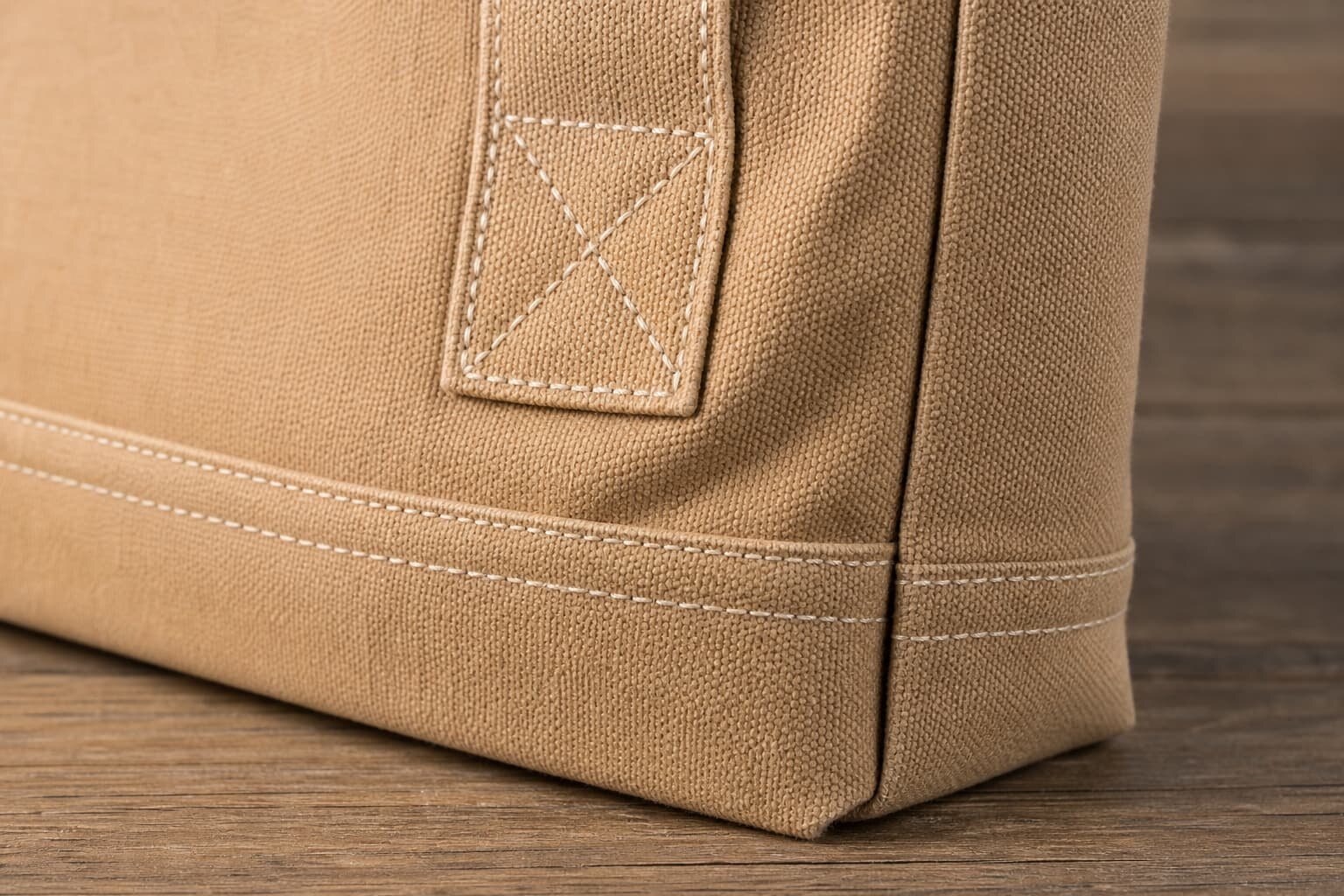
| Handle construction | Self-fabric or webbing handles with reinforced X-stitch or bar-tack | Totes that carry books, groceries, or trade show kits | Ask for handle width, handle drop, stitch density, and pull strength |
| Closure | Open top for promo use, snap or zipper for higher-value retail use | Open top keeps cost down; closure improves product security and perceived value | Do not let a quote compare open-top and closed-top bags as if they are the same product |
| Packing format | Flat-packed with inner polybags and master cartons | Ocean freight, warehouse distribution, and bulk retail supply | Check pack count, carton size, moisture protection, and whether folding marks are acceptable |
| Sample approval | Pre-production sample plus a retained golden sample | Any order with decoration, size tolerance, or retail presentation requirements | Photo approval alone will miss fabric handfeel, stitch quality, and true color match |
Buyer checklist before sampling
- Finished bag size with tolerance for width, height, and gusset
- Fabric weight in both oz and GSM, plus weave density if available
- Canvas color, bleaching level, and whether the fabric is pre-shrunk
- Handle length, handle width, and reinforcement method
- Decoration method, artwork file type, print size, and placement
- Order quantity by color, size, and artwork version
- Sample type required, sample fee, and approval method
- Packing format, inner pack count, carton count, and carton dimensions
- Incoterm, destination port or warehouse, and quote validity period
- Target lead time and whether partial shipment is allowed
Factory quote questions to send
- What exact fabric weight, weave, and finish are you quoting for the tote?
- Is the price based on raw canvas, pre-shrunk canvas, or washed canvas?
- Which decoration method is included, and how many print colors are covered?
- What setup charges, screen charges, plate fees, or embroidery fees apply?
- What is the MOQ by size, color, and artwork version?
- What measurement tolerance do you guarantee for the finished bag and handles?
- What sample steps do you offer, and how long does each sample stage take?
- What packing method, inner pack count, and master carton spec are included?
- What production lead time do you quote after sample approval and deposit?
- What incoterm, carton data, and quote validity period should we use for comparison?
Quality-control points to confirm
- Measure finished width, height, and gusset against the approved spec sheet
- Verify fabric weight and handfeel against the approved sample or reference roll
- Check handle length, handle symmetry, and reinforcement stitching at stress points
- Inspect print position, print size, and registration on every color area
- Rub-test the ink or transfer to check for smearing, cracking, or transfer
- Confirm color consistency across front panel, back panel, and handles
- Inspect seam straightness, seam allowance, and bottom corner build-up
- Check for holes, skipped stitches, loose threads, and needle damage
- Confirm inner pack count, polybag quality, desiccant use if required, and carton markings
- Check carton strength, stacking performance, and moisture protection for ocean freight