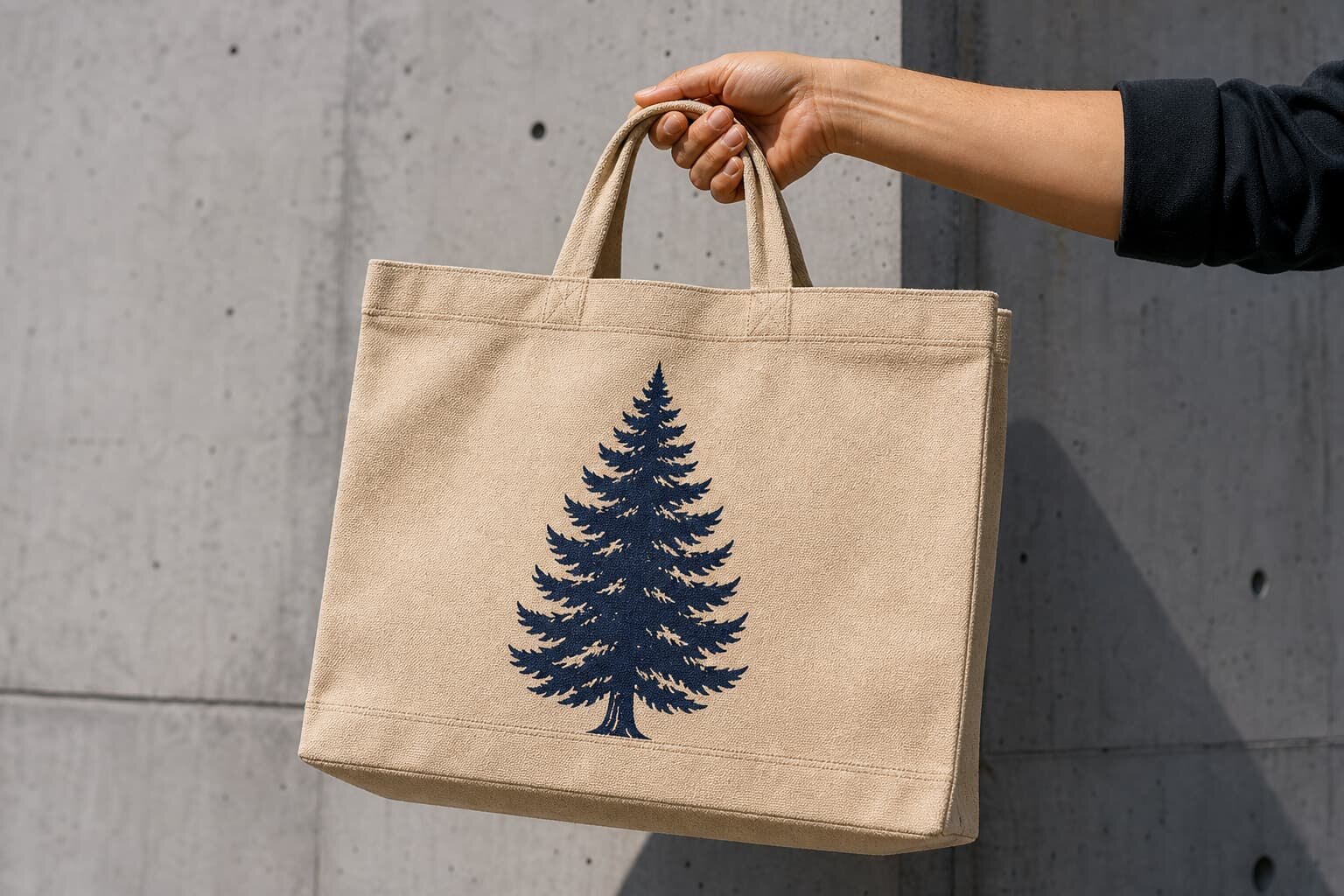
Why Freight Packing Decides the Real Landed Cost
Canvas tote bags look simple on a quote sheet, but they are not always simple in freight. A small change from 10 oz to 12 oz canvas, a wider gusset, or a rigid bottom panel can change carton count, gross weight, and total CBM. If the buyer only compares unit price, the cheaper quote may become more expensive after ocean freight, warehouse handling, and repacking are added.
The buying problem is not just how to pack the bags. The buying problem is how to specify a packable tote bag before production so the factory can quote the same assumptions you will use for shipping. Procurement teams should treat packing data as part of the product specification, not as a detail to confirm after production.
- Ask for pieces per carton and total CBM with the first serious quote, not after the order is finished.
- Compare quotes using fabric weight, bag size, carton size, and packing method together.
- Do not approve a lower unit price until you know whether it uses thinner fabric, looser folding, weaker cartons, or fewer packing accessories.
- Use packed sample photos to catch problems before mass packing begins.
Start With the Bag Specification Before Packing Math
A useful freight packing guide starts with the physical tote bag. Canvas weight is usually discussed in ounces or GSM. Common promotional totes may use around 8-10 oz canvas, while retail and bookstore styles often use 12 oz or heavier. Heavy 14-16 oz canvas gives better hand feel and structure, but it also increases carton weight and may reduce the number of pieces per master carton.
Size matters as much as fabric. A flat 38 x 42 cm tote without gusset packs very differently from a 40 x 35 x 12 cm grocery tote. Long handles, boxed bottoms, inside pockets, lining, zippers, snap buttons, and reinforced stitching all add thickness. Before asking for freight packing advice, give the factory the finished dimensions, material weight, handle length, print method, and any accessories.
- Basic promo tote: lighter canvas, flat body, simple handle, usually high pieces per carton.
- Retail tote: 10-12 oz canvas, better sewing, branded label, often needs neater folding.
- Heavy duty tote: 14-16 oz canvas or reinforced base, fewer pieces per carton and stronger carton required.
- Decorated tote: screen print, heat transfer, embroidery, or woven label may need extra print protection.
Folding Method: The Small Detail That Changes Carton Performance
The cheapest folding method is not always the safest. For most canvas tote bag bulk orders, a flat fold with handles tucked inside the body is the most stable method. It keeps the carton shape square, protects handles from creasing outward, and makes counting easier during inspection. If the handles are left outside the folded stack, they may create uneven pressure and carton bulging.
For retail orders, the folding method also affects shelf presentation. If the buyer needs a clean front panel for a barcode sticker, hangtag, or logo view, say so before the factory starts packing. Do not rely on a warehouse to refold thousands of totes. Repacking is slow, inconsistent, and usually more expensive than specifying the correct fold at the factory.
- Approve one folded sample photo showing front, back, side thickness, and handle position.
- Confirm whether the logo faces inward or outward after folding.
- Avoid tight rubber bands that can leave marks on natural cotton canvas.
- For gusseted totes, confirm whether the side gusset is folded inward or flattened outward.
- For long handles, ask if handles are lightly folded or fully tucked to prevent permanent bends.
Print Method and Packing Protection
Packing risk changes with decoration method. A small one-color screen print on natural canvas is usually easy to pack after proper curing. A large dark ink print, heat transfer logo, puff print, discharge effect, or metallic print needs more attention. If bags are packed too soon, ink can transfer, stick, or leave pressure marks. This is not a freight forwarder problem; it is a production and packing control problem.
Buyers should ask the factory how the print is cured and how long bags rest before packing. For urgent orders, factories may rush printing and sewing into packing. That can be acceptable only if the ink system and curing process are controlled. Where the logo area is large or high value, tissue paper, light interleaving, or alternating print direction may be worth the extra cost.
- Screen print: check ink curing, rub resistance, and whether print faces another print in the carton.
- Heat transfer: check film edge adhesion and avoid high compression while still warm.
- Embroidery: check backing material, thread snags, and added thickness in folded stacks.
- Woven label: confirm label placement will not be hidden or crushed after folding.
- Digital print: confirm colorfastness and surface protection for long transit.
Carton Size, Weight, and CBM: What to Put in the RFQ
A proper canvas tote bag RFQ should request carton data in the same line as the product price. Ask for quantity per carton, carton dimensions, net weight, gross weight, and total CBM. If your team imports by sea, total CBM affects freight cost. If you ship by air, both actual weight and volumetric weight matter. If you deliver to retail distribution centers, carton weight and dimensions may have strict limits.
Factories may quote different pieces per carton to make the unit price look clean or to use standard carton inventory. That is not wrong, but you need to compare it. A carton with too many pieces can become heavy, bowed, or hard to handle. A carton with too few pieces may increase total CBM and freight cost. The best option is usually the most stable carton within your warehouse weight limit.
- Request carton dimensions in centimeters and inches if your internal system uses both.
- Set a target gross weight limit, such as under a manual handling threshold used by your warehouse.
- Ask for total carton count by SKU, not only total carton count for the order.
- Require final packing list data before vessel booking or forwarder handover.
- Confirm whether carton dimensions are outer dimensions, not approximate inner dimensions.
Carton Strength and Sealing for Heavy Canvas
Canvas is dense. A carton of folded 12 oz or 16 oz totes can put heavy pressure on the bottom rows during storage and container loading. For light promotional bags, a standard export carton may be enough. For heavier canvas, sea freight, transshipment routes, or high stacking, a 5-ply corrugated carton is often a safer choice. The extra carton cost is usually small compared with damaged cartons, lost units, or warehouse rework.
Sealing is another area where buyers see avoidable failures. Narrow tape on a heavy carton can split during handling. Cartons that are overfilled may bulge before they even leave the factory. If straps are used, they should support the carton without cutting into the edges. For branded retail cartons, confirm whether straps are allowed by your receiver, because some warehouses prefer tape-only cartons for automated handling.
- Use stronger cartons for 12 oz and heavier canvas when carton gross weight is high.
- Check corner crushing, bottom sealing, tape width, and carton bulging during inspection.
- Avoid overpacking to hit a low carton count if it creates deformation.
- Ask whether cartons will be stacked loose in container or palletized.
- Keep cartons dry and off the floor before loading, especially for natural cotton canvas.
MOQ Logic: Why Packing Choices Affect Production Quantity
MOQ is usually driven by fabric sourcing, dyeing, printing setup, sewing line efficiency, and packing material purchase. Packing can also affect MOQ. Custom carton printing, custom barcode labels, retail paper bands, hangtags, or individual polybags may have their own minimums. If the tote order is small, these secondary MOQs can create hidden costs or leftover materials.
For import buyers, the cleanest approach is to separate product MOQ from packing MOQ in the quote. A factory may accept a lower bag quantity if standard cartons and simple bulk packing are used. But if the buyer requires custom printed cartons, individual barcode polybags, or mixed carton allocation by store, the packing labor and material control become more complex.
- Ask whether the MOQ changes for natural canvas, dyed canvas, and custom printed canvas.
- Confirm MOQ for printed cartons, woven labels, hangtags, and barcode stickers.
- If ordering multiple colors, ask whether cartons can be mixed or must be color-separated.
- For low MOQ test orders, consider plain export cartons with standard carton marks.
- For retail rollout orders, specify final packing rules before negotiating unit price.
Sample Approval Should Include a Packed Carton Trial
Many buyers approve only the product sample: fabric, stitching, logo, label, and dimensions. That is necessary but incomplete for a bulk freight order. A canvas tote bag can pass product sample approval and still fail packing expectations. The packed carton trial shows whether the folding method is practical, the pieces per carton are realistic, and the carton stays square.
For high-volume orders, ask the factory to prepare a small packing simulation after pre-production sample approval. This can be done with available sample pieces or early production pieces. You do not always need a full carton shipped to you, but you should receive clear photos and data. The factory should show the folded unit, carton loading pattern, closed carton, carton marks, and measured gross weight.
- Approve fabric swatch or lab dip before bulk fabric cutting.
- Approve print strike-off or logo proof before mass printing.
- Approve pre-production sample including stitching, handle length, label, and finishing.
- Approve packed carton photos before full packing starts.
- Keep approved product sample and approved packing reference at the sewing and packing area.
Carton Marks, Barcodes, and Warehouse Receiving
Carton marking is not decoration. It is receiving data. Importers and distributors should specify exactly what appears on each carton: buyer name or code, PO number, SKU, item description, color, size, quantity, carton number, gross weight, net weight, destination, and country of origin if required. If cartons are going to a retailer or 3PL, the routing guide may also require barcode labels in a fixed position.
A common mistake is giving carton mark instructions after cartons are already printed or packed. Another mistake is allowing mixed colors or mixed SKUs without clear outside labels. This creates receiving disputes when the warehouse opens cartons to identify product. If mixed cartons are necessary, provide a mixed carton packing matrix and require the carton mark to show the breakdown clearly.
- Use one carton marking template per SKU or destination.
- Confirm barcode size, placement, quiet zone, and scan test before shipment.
- Number cartons by sequence, such as 1 of 120, 2 of 120, and so on.
- Avoid vague item names like canvas bag only; include SKU and color code.
- Match final packing list to actual carton marks before shipment release.
Lead Time Planning From Print Approval to Freight Handover
Packing affects lead time because it sits at the end of production, when delays are most expensive. A typical canvas tote order may move through fabric preparation, cutting, printing, sewing, trimming, inspection, folding, packing, and delivery to port or forwarder warehouse. If print approval is late, every later step compresses. If packing materials are custom, they must be ordered early enough to arrive before bulk goods finish.
Buyers should ask for a lead time schedule with decision points. The key dates are sample approval, fabric ready date, print start, sewing start, packing material ready date, bulk completion, inspection date, and cargo handover. This schedule is more useful than a single statement such as production takes 30 days. It shows where buyer approvals can delay shipment.
- Confirm whether lead time starts after deposit, artwork approval, sample approval, or fabric approval.
- Order custom labels, hangtags, and printed cartons early if they are buyer-specific.
- Leave curing time for large prints before tight packing.
- Book inspection after enough cartons are packed for random selection.
- Do not book final freight only from sewing completion; packing and inspection still need time.
Specification comparison for buyers
| Spec decision | Recommended option | When it fits | Buyer risk to check |
|---|---|---|---|
| Fabric weight for freight efficiency | 10-12 oz canvas for most promotional and retail totes | Good structure without making carton weight and CBM jump too much | If buyer upgrades to 14-16 oz, recalculate pieces per carton and carton burst strength |
| Folding method | Flat fold with handles tucked inside the bag body | Best for clean stacking, barcode visibility, and reducing handle deformation | Loose handles can bend, create carton bulges, or snag during counting |
| Individual packing | No polybag for low-cost promo orders; recyclable OPP or paper band only when required | Reduces packing labor and plastic cost when bags ship to a distributor for repacking | Unprotected prints can rub if ink is not cured or if carton is over-compressed |
| Print protection | Face-to-face print separation only for large ink areas or heat transfer logos | Useful for dark ink, puff print, transfer film, or fresh production with tight ship date | Extra tissue or interleaf increases labor, material cost, and packing time |
| Export carton size | Master carton within practical manual handling limits, often under 18-22 kg gross weight | Works for mixed warehouse receiving and parcel-forwarding distributors | Oversized cartons crush lower stacks and may be rejected by some DCs |
| Carton strength | 5-ply corrugated export carton for heavy canvas or long sea freight routes | Recommended for 12 oz+ canvas, dense packing, or palletized ocean shipments | 3-ply cartons can split at corners when cartons are stacked high |
| Carton marking | SKU, PO, color, size, quantity, gross/net weight, carton number, and destination code | Necessary for import receiving, 3PL sorting, and retail allocation | Missing color or PO data causes warehouse relabeling fees and receiving delays |
| Palletization | Confirm only when buyer's warehouse needs it; otherwise quote loose cartons separately | Best for retail DCs, Amazon-style inbound, or domestic truck transfer after import | Pallets add CBM, may reduce container utilization, and need fumigation-compliant material |
Buyer checklist before sampling
- Confirm final bag dimensions, gusset depth, handle length, fabric GSM or ounce weight, and whether shrinkage after washing affects packing size.
- Tell the factory whether the order ships as loose cartons, palletized cartons, or direct-to-DC cartons with routing guide requirements.
- Specify folding method in writing and approve one packed sample photo before mass packing starts.
- Ask for pieces per carton, carton dimensions, gross weight, net weight, and total CBM before approving the production quote.
- Check whether print method needs interleaving, curing time, or lower carton compression to prevent logo transfer marks.
- Define carton marking format, barcode placement, carton number sequence, and mixed-SKU rules before carton production.
- Set acceptable carton weight limits according to your warehouse manual handling policy and destination market rules.
- Request pre-shipment carton drop or compression checks when bags are heavy canvas, tightly packed, or sea freight transit is long.
- Confirm whether polybags, paper bands, hangtags, care labels, and retail labels are packed inside each bag or attached outside.
- Keep one approved packed master carton as the factory reference during final inspection.
Factory quote questions to send
- What is the proposed folding method, and can you send photos of one packed carton before bulk packing?
- How many pieces per carton are you quoting, and what are the carton length, width, height, gross weight, net weight, and CBM?
- Is the quoted carton 3-ply or 5-ply, and what carton grade do you recommend for this canvas weight and shipment route?
- Does the print method require tissue paper, interleaving, curing time, or reduced stacking pressure before packing?
- Are inner polybags, paper bands, silica gel, hangtags, barcode labels, or retail inserts included in the unit price or quoted separately?
- If we change from 10 oz to 12 oz or 16 oz canvas, how will the pieces per carton, carton weight, and total freight volume change?
- Can the carton marking include our PO, SKU, color, size, quantity, destination code, and carton number, and is artwork approval needed?
- Do you quote FOB with loose cartons only, and what is the separate cost and CBM impact if pallets are required?
- What is your normal lead time for sample approval, bulk fabric preparation, printing, sewing, packing, inspection, and port delivery?
- Will you provide a final packing list showing carton count by SKU before shipment booking?
Quality-control points to confirm
- Measure finished bag size after folding approval, not only flat sewing dimensions, because thick canvas and gussets change carton loading.
- Check fabric GSM or ounce weight against the approved sample; heavier fabric changes both cost and freight volume.
- Verify print curing by rub test before bags are stacked print-to-print in cartons.
- Open random cartons during inspection and confirm actual pieces per carton match the packing list.
- Check carton bursting, corner strength, tape width, and strap use for heavy master cartons.
- Confirm cartons are not overfilled, bowed, wet, dirty, or crushed before loading.
- Verify carton marks against PO data, SKU, color, and quantity, especially when several tote colors share one shipment.
- Check that handles are folded consistently and not permanently creased in a way that affects retail presentation.
- Confirm barcode labels scan through any required carton surface or retail bag packaging.
- Review gross weight per carton against warehouse receiving limits before shipment release.