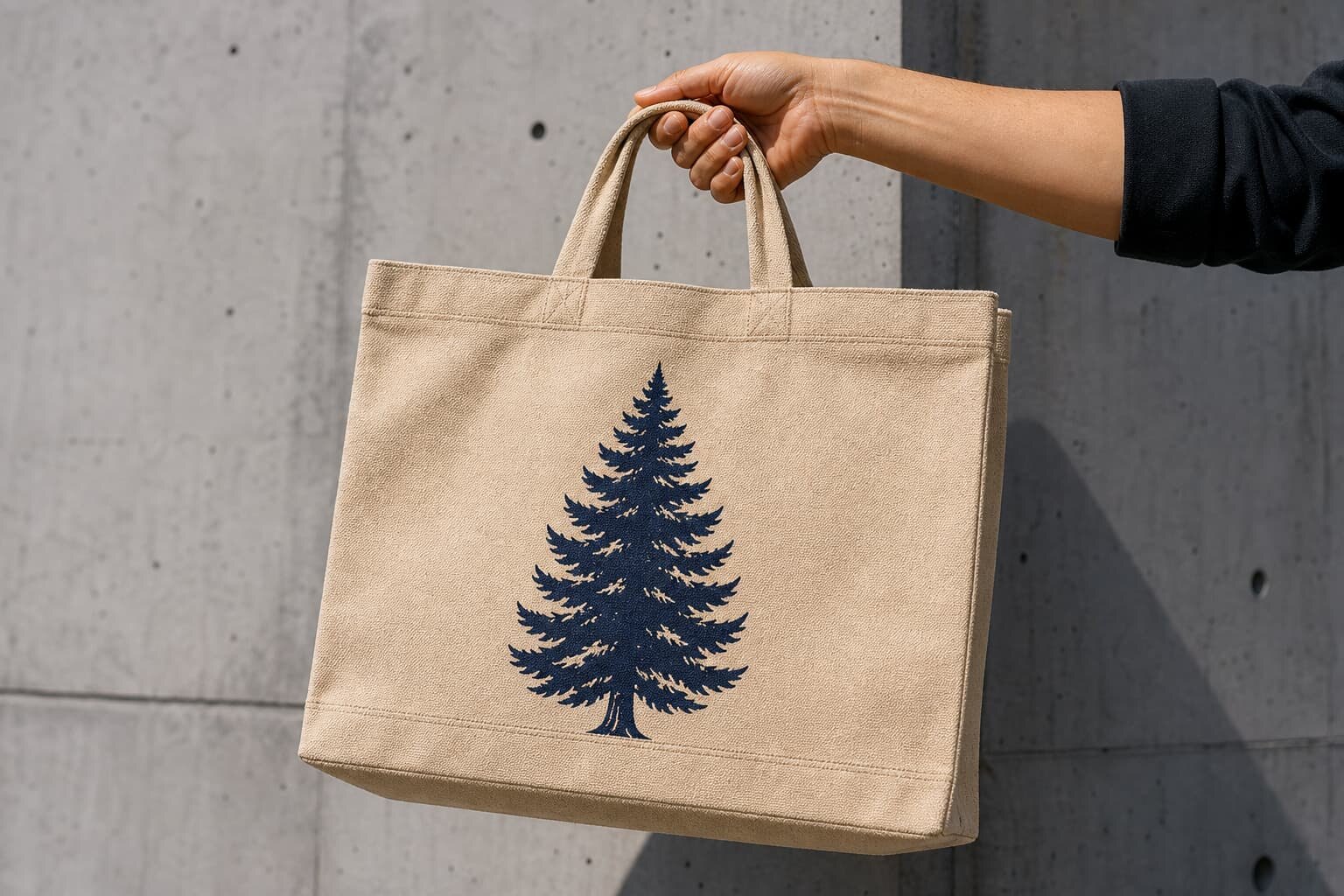
Why Brand Mark Approval Fails on Canvas Totes
A canvas tote bag brand mark approval tracker is not just an artwork log. It is a production control document that connects the logo file, fabric surface, print method, sample approval, packing mark, and final inspection standard. Without it, the buyer may approve a beautiful digital layout while the factory prints on a rougher canvas, shifts the logo by 15 mm, changes the label fold, or packs the bag with the wrong retail barcode.
Canvas is less forgiving than paper or smooth polyester. Natural cotton yarn shade, weave texture, fabric weight, washing, pressing, and sewing sequence can all affect how a brand mark looks. A procurement team should treat brand mark approval as a measurable production step, not as a design preference discussed by email.
- The most common failure is approving artwork without approving the same artwork on the final canvas.
- The second failure is not defining the measurement point for logo placement.
- The third failure is approving the front print but forgetting side labels, hangtags, carton marks, or barcode labels.
- The fourth failure is allowing verbal artwork changes after sample approval without a revised tracker.
What the Tracker Should Control
A useful tracker records every visible brand element on the canvas tote bag and its packaging. For a simple promotional tote, that may only be one front screen print and a carton label. For a retail program, it may include front logo, inner care label, woven side label, hangtag, barcode sticker, individual polybag warning print, belly band, and carton shipping mark.
The tracker should be written so a factory merchandiser, printing supervisor, sewing line leader, packing supervisor, and third-party inspector can all use the same approval record. If the document only makes sense to the buyer's design team, it will not prevent bulk production mistakes on the factory floor.
- Artwork file name and revision number, such as CTM_ToteLogo_V3.ai.
- Brand mark type: screen print, heat transfer, embroidery, woven label, printed label, or hangtag.
- Exact size in millimeters, measured width by height after production.
- Placement point, such as 110 mm down from top opening and centered between side seams.
- Approved color reference, including Pantone number, fabric base color, and sample date.
- Approval status: pending, approved, approved with comment, rejected, or replaced by new version.
Start With the Bag Spec Before Approving Artwork
Brand mark approval cannot be separated from the tote construction. A logo that looks balanced on a 380 x 420 mm flat tote may sit too low on a 350 x 400 x 100 mm gusseted bag. A label that looks clean on a 12 oz canvas side seam may curl or become bulky on lighter 8 oz fabric. Before approving the mark, lock the basic bag specification.
For canvas tote bags, buyers should state fabric weight clearly in both traditional ounce language and GSM where possible. As a practical reference, 8 oz canvas is often around 270 GSM, 10 oz around 340 GSM, 12 oz around 400 GSM, and 16 oz around 540 GSM, but mills vary. The supplier should quote the actual tested GSM or agreed tolerance, not only a marketing description such as heavy canvas.
- Bag size: width, height, gusset, and handle drop, measured after sewing.
- Fabric: cotton canvas, recycled cotton canvas, organic cotton canvas, or blended canvas.
- Weight: quoted in oz and GSM with tolerance, such as plus or minus 5 percent if agreed.
- Color: natural, bleached, dyed, washed, or custom Pantone-dyed fabric.
- Construction: flat tote, bottom gusset, side gusset, boxed bottom, zipper top, inner pocket, or lining.
- Handle: self-fabric, webbing, rope, long shoulder handle, short carry handle, or reinforced cross-stitch.
Choose the Brand Mark Method by Fabric and Use
Screen printing remains the most practical method for many canvas tote bag orders because it handles simple logos, solid colors, and repeat production well. It is usually the first method to quote for one to three color marks on natural or dyed canvas. However, ink coverage, mesh selection, curing temperature, and canvas texture affect the final result, so approval should be based on a strike-off made on the production fabric.
Heat transfer and digital printing can support fine detail or gradients, but buyers should check hand feel, edge bonding, cracking resistance, and performance on folded areas. Embroidery gives a premium texture but can pucker lighter canvas and may be unsuitable for very fine lettering. Woven labels are good for consistent brand identity, but they require label MOQ planning and clear sewing placement.
- Use screen print for strong flat logos and repeat bulk programs.
- Use heat transfer only after checking film feel and wash or rub performance.
- Use embroidery for smaller marks on heavier canvas, not large dense artwork on thin panels.
- Use woven side labels when retail consistency matters and the buyer can accept label MOQ.
- Use printed inner labels when care, origin, or brand information must be included inside the bag.
- Avoid approving any method from a digital mockup alone.
Set Approval Tolerances Before Bulk Production
A tracker should define what is acceptable before production begins. If tolerance is not agreed, every small difference becomes an argument after inspection. Canvas is a sewn textile product, so a zero-deviation standard is not realistic, but loose tolerance is also risky for branded retail products.
For many canvas tote programs, practical tolerances may include logo position within plus or minus 5 mm to 10 mm, print size within plus or minus 2 mm to 3 mm, and label angle controlled so it is visibly straight. These are examples, not universal rules. A premium retail tote with a centered front mark may need tighter control than a low-cost giveaway tote.
- Define the measurement edge: top opening, side seam, bottom fold, or gusset seam.
- State whether placement is measured before or after pressing and packing.
- Confirm if natural fabric shade variation is acceptable across production lots.
- Approve the maximum acceptable ink spread on rough canvas.
- Specify whether minor slubs under print are acceptable or must be avoided in the logo zone.
- Record who can approve exceptions if bulk output is close but not identical to the sample.
Sample Approval: What to Check Before Signing
The approval sample should represent bulk production as closely as possible. If the buyer approves a sample sewn from available 10 oz natural canvas while the PO is for dyed 12 oz canvas, the brand mark approval is weak. The final pre-production sample should use the same fabric weight, same color, same print method, same label, same sewing construction, and same finishing process planned for bulk.
Procurement teams should check the sample physically, not only through photos. If only photos are possible for timing reasons, request neutral light photos, close-ups of the print edge, ruler photos showing placement, inside label photos, carton label drafts, and a short video showing hand feel and folding. A signed sample or sealed reference sample should remain at the factory.
- Measure logo width, height, and position with a ruler.
- Rub the print surface with dry white cloth to check obvious transfer after curing.
- Fold the logo area to see if ink cracks or film lifts.
- Check the print edge over thick yarns and slubs.
- Confirm side label is readable and not swallowed by seam allowance.
- Compare bag size and handle drop against the approved technical specification.
- Photograph the approved sample with date, revision number, and buyer approval note.
MOQ Logic and Cost Impact
MOQ is not only about the number of finished tote bags. A canvas tote with a brand mark can involve several separate MOQs: fabric MOQ, dyeing MOQ, screen setup, woven label MOQ, hangtag MOQ, barcode sticker MOQ, and carton printing MOQ. A factory quote that only says MOQ 500 pcs may hide these details until later, causing price changes or delays.
For importers and distributors, the best RFQ separates standard components from custom components. A stock natural canvas with one-color screen print may support a lower MOQ. A custom dyed 16 oz canvas tote with woven side label, printed lining, custom hangtag, and retail barcode packing will usually need more planning. The tracker helps the buyer see which brand elements are driving MOQ and lead time.
- Ask if the quoted MOQ is based on fabric availability or printing setup.
- Check whether label MOQ exceeds bag MOQ and creates leftover labels.
- Confirm if custom dyed fabric requires lab dip approval before sampling.
- Separate one-time screen charges from per-unit printing cost.
- Ask if changing logo color creates a new screen, new setup, or new MOQ.
- For reorder programs, ask whether screens, label yarns, or approved fabric references are retained.
Quote Data Buyers Should Request
A clean quote helps buyers compare suppliers fairly. If one supplier includes 12 oz canvas, woven side label, individual polybag, and carton barcode labels while another quotes only the plain bag with print, the lower price may not be the better offer. The RFQ should force each factory to show what is included and what is excluded.
The brand mark approval tracker should be linked to quote data. When the tracker says front screen print plus woven side label plus printed hangtag, the quote should show those items. If the quote does not list them, the buyer should assume they are not included or request written confirmation before PO release.
- Fabric cost basis: canvas type, weight, color, and shrinkage or washing process.
- Printing cost: method, number of colors, print size, one side or two sides, screen charge.
- Label cost: woven label size, fold type, color count, MOQ, and sewing location.
- Trim cost: zipper, snap, inner pocket, lining, webbing handle, or reinforcement tape.
- Packing cost: individual polybag, tissue, hangtag, belly band, master carton, carton mark.
- Lead time: sample days, approval waiting time, bulk production days, packing days, inspection window.
- Trade terms: EXW, FOB, or other basis, plus inland freight or document charges if applicable.
Packing and Retail Mark Approval
Many brand mistakes happen after the tote bag is sewn correctly. A perfect front logo can still ship with the wrong barcode, outdated hangtag, incorrect carton mark, or mixed color assortment. Packing approval should be part of the same tracker because retail buyers often reject or charge back goods for packaging errors even when the bag itself is acceptable.
For canvas tote bags, packing also affects appearance. Tight folding across a thick screen print may leave marks. Humid packing can cause odor or mildew risk on cotton fabric. Heavy bags packed in weak cartons can distort handles or crush hangtags. The buyer should approve how the branded face is folded, where the label sits, and how cartons are identified.
- Confirm fold method does not crease directly through a large print unless approved.
- Check if individual polybags are required by the retailer or should be avoided for sustainability reasons.
- Approve hangtag string location so it does not damage the handle seam or front logo.
- Match barcode, SKU, color name, and carton quantity to the buyer's order file.
- Specify carton strength and gross weight limit for heavy 12 oz to 16 oz canvas totes.
- Require carton marks to show PO number, item number, color, quantity, and destination if needed.
Lead Time Workflow From Artwork to Shipment
Brand mark approval affects lead time because each approval gate can stop the factory. A realistic workflow includes artwork checking, fabric sourcing, lab dip if dyed fabric is used, print strike-off, sample sewing, buyer approval, material booking, bulk cutting, printing, curing, sewing, trimming, inspection, and packing. If the buyer adds a new logo after bulk fabric is cut, the schedule can change.
The tracker should show dates, owners, and decision status. This is especially important when procurement, marketing, retail compliance, and the distributor all comment on the same tote. One approved source of truth prevents the factory from following an old PDF while the buyer believes the latest AI file was approved.
- Day 1 to 2: factory checks artwork file, logo size, and print feasibility.
- Day 3 to 7: fabric confirmation, lab dip request if custom color is required, and label artwork check.
- Day 7 to 14: strike-off or pre-production sample depending on material readiness.
- Buyer approval window: should be planned, not left open-ended.
- Bulk stage: cutting, printing, curing, sewing, trimming, and packing should follow the approved tracker.
- Final inspection: compare cartons and random samples against the approved sample and tracker.
Specification comparison for buyers
| Spec decision | Recommended option | When it fits | Buyer risk to check |
|---|---|---|---|
| Front logo on natural canvas | Screen print with approved Pantone reference and strike-off | Most flat one to three color brand marks on 10 oz to 16 oz canvas tote bags | Ink absorption on unbleached canvas can dull color; approve print after curing, not wet ink |
| Small premium brand mark | Woven side label sewn into side seam or handle seam | Retail totes, lifestyle brands, and repeat programs needing consistent brand ID | Label fold width and seam allowance can hide part of the mark if not measured before bulk |
| Large detailed artwork | Heat transfer or digital print sample before bulk decision | Gradient artwork, photographic graphics, or short-run seasonal launches | Hand feel, wash resistance, and cracking risk must be checked against the intended fabric GSM |
| Heavy-duty shopping tote | 12 oz to 16 oz cotton canvas with reinforced handle cross-stitch | Grocery, gift-with-purchase, bookstore, and distributor programs | Logo distortion can occur if panels shrink after washing or pressing; confirm shrinkage tolerance |
| Low-cost promotional tote | 8 oz to 10 oz canvas with single-color screen print | Budget campaigns where unit price and MOQ are more important than premium structure | Thin fabric may show print-through or panel waviness; request a real fabric cutting before approval |
| Brand mark on dyed canvas | Pre-production print strike-off on final dyed fabric | Black, navy, red, or custom dyed canvas tote orders | Ink color changes on dark base fabric; do not approve from white paper artwork only |
Buyer checklist before sampling
- Confirm the exact brand mark type: front print, woven label, hangtag, zipper pull, inner label, or a combination.
- Record final bag size, fabric weight in oz or GSM, canvas color, handle length, gusset size, and seam construction before artwork approval.
- Attach vector artwork files with color codes, logo dimensions, placement measurements, and minimum clear space.
- Require a strike-off or pre-production sample made on the final fabric, not only on paper, polyester, or substitute cotton.
- Set approval tolerances for logo position, color deviation, print hand feel, label alignment, and visible stitching around the mark.
- Check whether factory MOQ changes when using custom dyed fabric, woven labels, special ink, heat transfer, or multiple placement points.
- Approve packing layout with brand-facing requirements, including individual polybag, kraft band, carton label, barcode, and retail hangtag position.
- Keep one sealed approved sample at the factory and one with the buyer, both signed or photo-recorded with date and revision number.
- Link the approved brand mark tracker to the PO, artwork file name, sample approval date, and final shipment inspection standard.
- Do not release bulk production until the tracker shows every logo, label, and packaging brand element as approved or intentionally omitted.
Factory quote questions to send
- Which canvas weight are you quoting in oz and GSM, and is it greige, bleached, dyed, or washed canvas?
- What print method is included in the price for the main brand mark, and how many colors are included?
- Will the sample brand mark be made on the same fabric, color, and surface treatment as bulk production?
- What is your MOQ for the bag body, custom print, woven side label, custom dye color, and printed retail packaging?
- What logo placement tolerance can you hold in bulk production for front panel print and side label sewing?
- Can you provide print strike-off photos under neutral light plus one physical sample before bulk cutting?
- How do you control Pantone color matching on natural or dyed canvas where the base fabric affects ink appearance?
- What are the lead times for artwork confirmation, material sourcing, sample making, buyer approval, bulk production, inspection, and packing?
- What packing method is included in the quote, and are barcode labels, hangtags, belly bands, or individual bags costed separately?
- What quote data will you show separately for fabric, printing, labels, trims, packing, sample cost, mold or screen charge, and inland freight?
Quality-control points to confirm
- Fabric weight must match the approved specification within the agreed tolerance, checked by GSM cutter or supplier lab record.
- Logo size must match approved artwork dimensions after printing, curing, pressing, and bag finishing.
- Brand mark placement must be measured from fixed bag edges, not estimated by eye from the center of a soft panel.
- Print color should be checked against the approved strike-off under consistent light, with realistic tolerance for natural cotton shade variation.
- Screen print should not crack, smear, transfer, or feel under-cured after rubbing, folding, and normal handling.
- Woven labels should be straight, fully caught in the seam, readable, and not hidden by seam allowance or top stitching.
- Handle reinforcement stitching should not run through or visually interfere with the brand mark area unless approved.
- Carton labels, inner packing, hangtags, and barcodes should match the final brand approval tracker and PO details.
- Bulk inspection should compare random cartons against the sealed approved sample, not only against digital artwork.
- Any artwork revision after sample approval should trigger a new tracker version and written buyer approval.