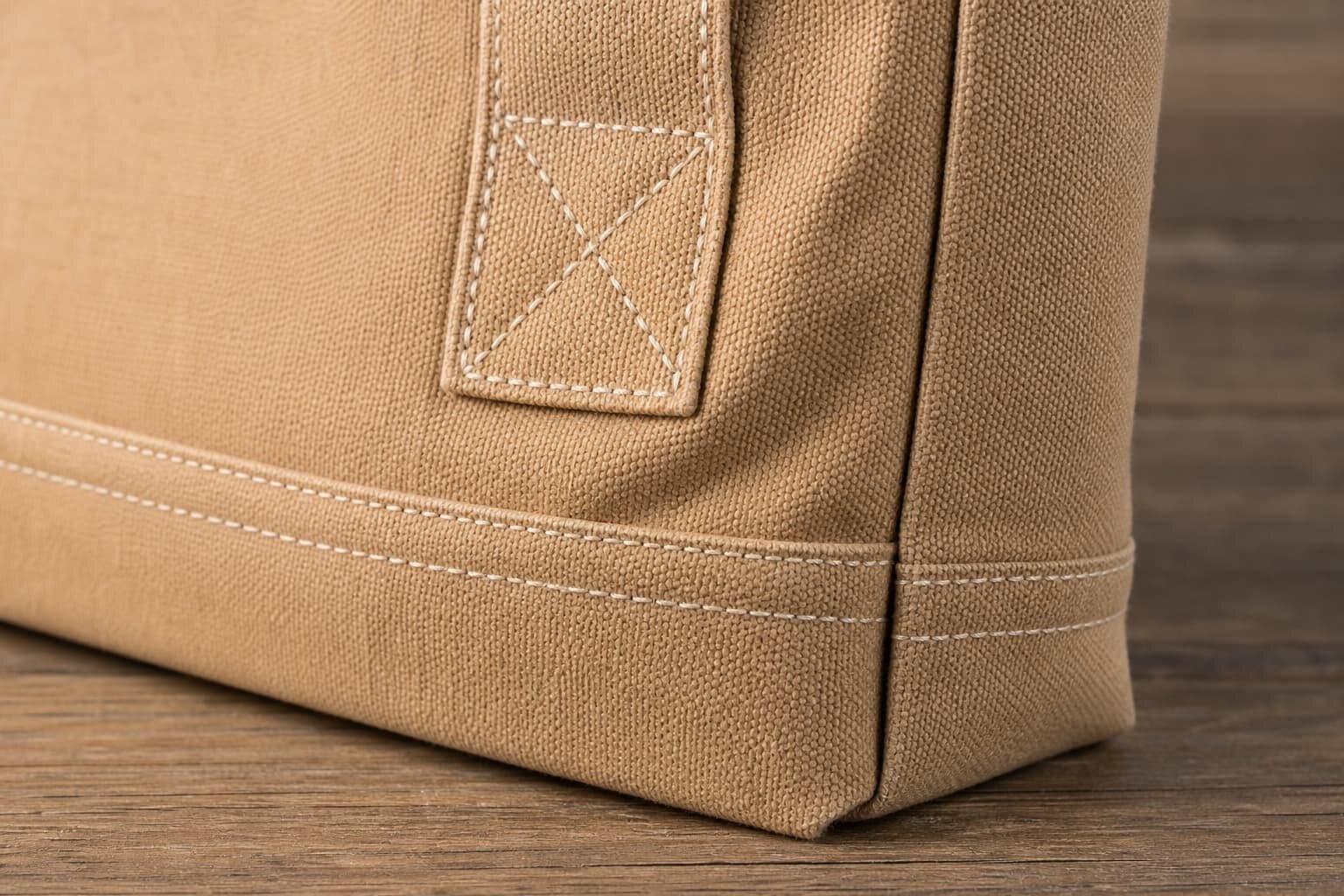
Why the bottom gusset creates the most avoidable tote disputes
The bottom gusset decides whether a canvas tote feels stable, packs well, and looks ready for retail. Buyers often focus on body width and handle length, then discover that a small change in gusset depth alters the whole silhouette. The bag may wobble on shelf, pull at the bottom seam, or pack into cartons very differently from the approved sample. That is why a canvas tote bag bottom gusset inspection sheet matters as a buying tool, not just a factory form.
The risk is not only cosmetic. A gusset that is too shallow can reduce usable volume, while a gusset that is too deep can distort the print field and raise carton and freight costs. When two suppliers quote the same style without the same gusset definition, one may be pricing a cleaner retail bag and the other a softer promotional bag. The inspection sheet removes that guesswork by locking the gusset depth, seam type, fold direction, and acceptance method before production starts.
- Use a gusset sheet whenever the bag must stand upright, hold weight, or ship in retail-ready packs.
- Treat the gusset as a controlled dimension, not a cosmetic detail.
- Tie the gusset spec to packing and print, because those costs move together.
Define the gusset before you ask for a quote
Start the sheet with the bag style drawing and the finished size. For a canvas tote, the buyer should state open width, body height, gusset depth, handle length or drop, and whether the bag should stand upright when empty. Also note whether the bottom is a center fold, boxed corner, or inserted bottom panel. If the factory has to infer the pattern, it will usually fill the gap with its own standard construction, and that can change the price and the look of the bag.
Add measurement rules to the sheet so every sample is judged the same way. Measure after pressing, lay the bag flat without stretching it, and state whether the gusset depth is taken at the center seam or at the finished edge. If you need a matching pair of bags in a set, note whether both pieces must match within a tighter tolerance. Buyers who define the measurement method early avoid disputes over whether a sample is truly oversized, undersized, or simply measured in a different way.
- Write the target dimensions in millimeters and inches if your team buys across markets.
- Show the fold direction with a simple sketch or marked sample photo.
- Call out any nonstandard corner shape, rounded base, or reinforced bottom patch.
Choose fabric weight that holds the gusset shape
Fabric weight drives the gusset's shape more than most buyers expect. An 8 oz canvas, often around 240-260 GSM depending on weave and finish, can work for giveaways and light retail use, but it may slump when the bottom panel is filled. A 10 oz or 12 oz canvas, roughly 280-380 GSM depending on mill construction, usually holds the gusset line better and gives a cleaner shelf profile. If the bag carries books, bottles, or heavier retail goods, that extra stability is often worth the cost.
Do not choose GSM in isolation. A tightly woven 10 oz canvas can behave more like a heavier bag than a loose 12 oz cloth. Ask whether the fabric is pre-shrunk, washed, brushed, or calendared, because finish changes how the gusset folds and how the print behaves. If you want a soft promotional tote that folds easily, avoid over-stiff finishes that create sharp creases at the bottom seam. If you want a premium retail bag, ask for structure first and foldability second.
- 8 oz is usually a promotional choice, not a high-load choice.
- 10 oz is a practical middle ground for many retail tote programs.
- 12 oz or reinforced fabric is safer when the bag must keep its shape and carry heavier contents.
Set measurement rules and acceptance tolerances
The inspection sheet should carry tolerances, not just target dimensions. A practical starting point for a standard canvas tote is plus or minus 5 mm on gusset depth, plus or minus 3 mm on seam placement, and no visible twist when the bag is placed upright on a flat table. For larger bags or thicker fabric, you can widen the tolerance only if the buyer accepts the visual effect. The important part is that the tolerance is written down before the factory cuts a single panel.
State how the factory must measure. The wrong method can make a bad bag look acceptable and a good bag look out of spec. Require the same reference points on all samples and bulk pieces: seam to seam, fold line to fold line, and bottom edge to stitch line. Add a simple pass or fail note for puckering, asymmetric corners, seam roping, and gusset collapse. If the bag must stand on its own, write that requirement separately and define whether a stiff insert or heavier cloth is part of the spec.
- Measure the finished bag after pressing, not before finishing.
- Use one reference drawing for sample approval and mass production.
- Separate cosmetic tolerance from functional tolerance so the factory knows what matters most.
Match print method and decoration to the bottom panel
Decoration can make a good gusset look poor very quickly. Screen print remains the most economical option for one- or two-color logos at useful quantity, but a large graphic that crosses the bottom fold will usually distort. Heat transfer and digital print help when the art is complex or the order is small, yet they can increase cost and may need extra approval for abrasion, cracking, or wash performance. If the buyer wants the lowest landed cost, print method should be decided together with the gusset spec, not after sampling begins.
If the brand wants artwork near the bottom, define a safe zone above the fold line and ask the factory to confirm the print sits on a flat, stable surface. For printing on the gusset itself, request a decorated pre-production sample after final pressing. If the tote uses embroidery or a woven side label, the sheet should still show exact placement so the attachment does not interfere with the gusset seam. Buyers lose time when they approve a nice-looking front panel but forget the artwork will wrap around a fold in production.
- Keep logos away from the fold line unless the distortion is acceptable and written into the approval.
- Use screen print for simple artwork and medium-to-higher quantity runs when unit cost matters.
- Ask for a strike-off or decorated sample whenever the print touches the bottom panel or seam.
Build the RFQ so every factory quotes the same bag
A buyer quote is only useful when every supplier is pricing the same bag. On the RFQ, separate the blank bag, decoration, reinforcement, packing, and carton data. Ask for fabric GSM, fabric width, color method, print method, number of colors, sample charge, production lead time, and bulk MOQ by color and decoration. That makes quote comparison far cleaner and helps procurement spot hidden cost differences before the samples arrive. If one supplier includes a more structured gusset, tighter seam allowance, or better packing, the buyer will see it clearly instead of guessing from a unit price.
MOQ logic should be explicit. A single-color screen print on one canvas color may support a lower MOQ than a two-color print with woven labels and retail packaging. If the supplier says the bag is standard, ask what standard means in its factory: pattern size, fabric stock, print screen count, or packing unit. Typical sample lead time for this type of tote is often 5-10 working days, while bulk lead time may run 20-35 working days after approval depending on material, print setup, and order size. Put those ranges into the quote request so nobody treats them as a promise.
- Ask the factory to split blank bag, print setup, packing, and carton costs.
- Request MOQ break points for each change, especially print colors and labels.
- Require lead time in working days after sample approval, not a loose calendar estimate.
Review samples with a real inspection sheet, not just a photo
Treat the sample as the only reliable proof of the gusset spec. Photos do not show how the bag stands, where the seam buckles, or whether the fold returns cleanly after opening. A good inspection sheet lets the buyer record the pre-production sample and then compare the top-of-production sample if the factory changes fabric lot, print screen, or stitch line. That is especially important when the bag has a visible bottom gusset because small changes in sewing can alter the whole shape.
The sample test should use a realistic load. For a tote intended for brochures, a light flat test may be enough. For retail shopping or heavier merchandise, load it with the actual product weight or a close equivalent. Check that the bottom does not barrel outward, the corners do not fold under, and the gusset still looks symmetrical after the bag has been opened and closed several times. If the buyer needs self-standing behavior, write that into the approval instead of assuming the factory understands it from a picture.
- Keep one approved sample with the buyer and one with the factory as the production reference.
- Record the revision number, fabric lot, print method, and fold method on the sample card.
- Do not approve by image only when the gusset or print sits close to a seam.
Control sewing, reinforcement, and packing before the bag reaches the carton
Bottom gusset problems often start in sewing. Ask the factory to show where it keeps seam allowance control, backtack, and corner reinforcement. Double-needle stitching, binding, or a bottom patch can strengthen the bag, but each option changes the profile and may alter the flat-pack size. The inspection sheet should note any reinforcement so the quote, sample, and production line all follow the same plan. If the buyer wants a clean retail look, reinforcement should be placed carefully so it helps the bag without creating a bulky corner.
Packing deserves equal attention. A bag that leaves the sewing line in perfect shape can be crushed by aggressive folding or overpacked cartons. State whether the bag ships flat, folded with tissue, with a cardboard insert, or in retail polybags. Include the pieces per carton, carton dimensions, gross weight target, and any need to protect the gusset fold from permanent creasing. If the tote will be sold through a retail chain, ask the supplier to match the folding method to the shelf display requirement instead of packing it in the cheapest way possible.
- Confirm reinforcement before packing so the gusset shape is not distorted by later handling.
- Set carton count and compression limits early if the bag must arrive uncreased.
- Ask whether a tissue sheet, insert board, or polybag is included in the quote.
The common mistakes buyers make when the gusset is not controlled
The most common buyer mistake is comparing quotes on price alone. One supplier may include a tighter seam, heavier canvas, and a cleaner fold, while another prices a looser construction that only looks similar in a photo. Another common mistake is approving the print file without checking how the artwork behaves at the bottom seam or after the bag is filled. A print that looks centered on a flat lay can shift once the gusset is opened and the panel pulls into shape.
A second risk is relying on same as last order when the factory has changed material source or packing method. Even a small shift in fabric shrinkage can change gusset symmetry. Reorders should use the same inspection sheet revision unless the buyer deliberately changes the spec and signs off on the new cost and timeline. If a supplier proposes a cheaper change, the buyer should ask which line item moved: GSM, seam construction, reinforcement, print method, or packing density. That question catches most hidden downgrades before they reach the container.
- Do not accept standard tolerance without a written number.
- Do not approve artwork without checking the bag after the gusset is opened.
- Do not compare suppliers unless the same inspection sheet revision is in front of them.
Turn the inspection sheet into a repeatable sourcing workflow
The best way to use the sheet is as a repeatable workflow, not a one-time form. Keep one version for RFQ, one approved sample, and one production release copy. When the factory updates the cutting marker, decoration method, or carton pack, the revision number should change so procurement can see exactly what moved. That makes it easier to compare future quotes and easier to challenge a change before production starts instead of after the goods are already sewn.
That habit also makes cost control more practical. If the buyer wants a lower price, the sheet shows where to negotiate: GSM, print method, reinforcement, or packing density. If the buyer wants better shelf presentation, the sheet shows which change improves shape without breaking the whole quote. For procurement teams, that is the real value of a bottom gusset inspection sheet: it reduces silent assumptions, shortens sample rounds, and keeps reorders closer to the approved product instead of drifting toward whatever the factory thinks is close enough.
- Assign one owner for revision control so the RFQ, sample, and production release stay aligned.
- Keep photos, measurements, and a signed sample card together in one file.
- Use the same sheet on reorders so cost changes are visible instead of hidden.
Specification comparison for buyers
| Spec decision | Recommended option | When it fits | Buyer risk to check |
|---|---|---|---|
| Gusset depth | 8-10 cm for light retail use; 10-12 cm for a more stable tote | Trade show giveaways, bookstore bags, daily carry bags that need a clean stand | Too shallow and the bag slumps; too deep and the fold can distort print and carton count |
| Fabric weight | 10 oz to 12 oz canvas, roughly 280-380 GSM depending on weave | Retail bags, reusable shopping bags, heavier contents, or bags that must hold shape | Low GSM can sag at the base; very stiff cloth can crease at the fold and crack decoration |
| Bottom seam construction | Double-needle or reinforced turned seam with controlled seam allowance | Repeat orders, higher load bags, and programs where shape consistency matters | A cheaper single seam may save cost but can twist, pucker, or open at the corners |
| Print method | Screen print for simple logos; digital or transfer for low MOQ or complex art | Simple brand marks, multi-color art, or smaller test orders | Artwork crossing the bottom fold can skew, crack, or bleed after pressing |
| Reinforcement | Bottom patch, seam tape, or interlining only where the load needs it | Bags for books, bottles, cosmetics, or retail carry with repeated use | Added reinforcement changes price, hand feel, and flat-pack size if not stated early |
| Packing method | Flat fold with tissue or insert board; retail-ready fold if shelf presentation matters | E-commerce, distributor stock, and retail programs with display requirements | Overcompressed cartons can crush the gusset and create a permanent crease |
Buyer checklist before sampling
- Confirm finished bag width, height, and gusset depth on a simple dimension sketch.
- State exactly how the gusset is measured after pressing and where the reference points sit.
- Lock the fabric GSM, weave type, and whether the fabric is pre-shrunk or washed.
- Specify print method, print area, number of colors, and the safe zone from the fold line.
- Define seam type, stitch density, and any bottom or corner reinforcement required.
- Ask the factory to quote blank bag, decoration, reinforcement, and packing as separate lines.
- Request sample lead time and bulk lead time in working days after approval.
- Set MOQ break points for fabric color, print colors, labels, and packaging changes.
- Approve one physical reference sample and keep it matched to the final revision number.
- Test the bag with the real merchandise weight or an equivalent load before release.
Factory quote questions to send
- What pattern size and gusset depth will you use for this style, and can you show the measurement points?
- What fabric GSM, weave, and shrinkage allowance are included in your quote?
- Is the quote split into blank bag, print, reinforcement, and packing costs, or bundled as one price?
- What is the MOQ break point for one color, two colors, woven labels, or special packing?
- Where will the print sit relative to the bottom fold, and what is the safe zone from the seam?
- What seam construction and stitch density do you recommend for this load level?
- What sample lead time do you need for the pre-production sample, and what is the bulk lead time after approval?
- What carton size, piece count, fold method, and gross weight target are included?
- Which inspection points do you check before packing, and what defects trigger rework?
- Can you provide one approved reference sample for production control and one sealed buyer sample?
Quality-control points to confirm
- Measure finished gusset depth after pressing, not on stretched or unfinished fabric.
- Check left-right symmetry at the bottom corners and make sure the bag does not twist when placed upright.
- Verify stitch density, backtack, and seam allowance consistency along the bottom seam.
- Inspect the print position against the fold line and reject art that crosses the gusset without approval.
- Confirm fabric GSM and lot consistency against the approved sample before bulk sewing starts.
- Test the bag with the real intended load or a realistic equivalent load before final sign-off.
- Look for puckering, roping, seam tunneling, or corner collapse after the bag is opened and closed several times.
- Check handle placement and drop so the load hangs evenly and the bag does not pull to one side.
- Confirm the folding method, tissue, insert board, or polybag does not crush the gusset during packing.
- Review carton count, carton dimensions, and compression risk before shipment release.