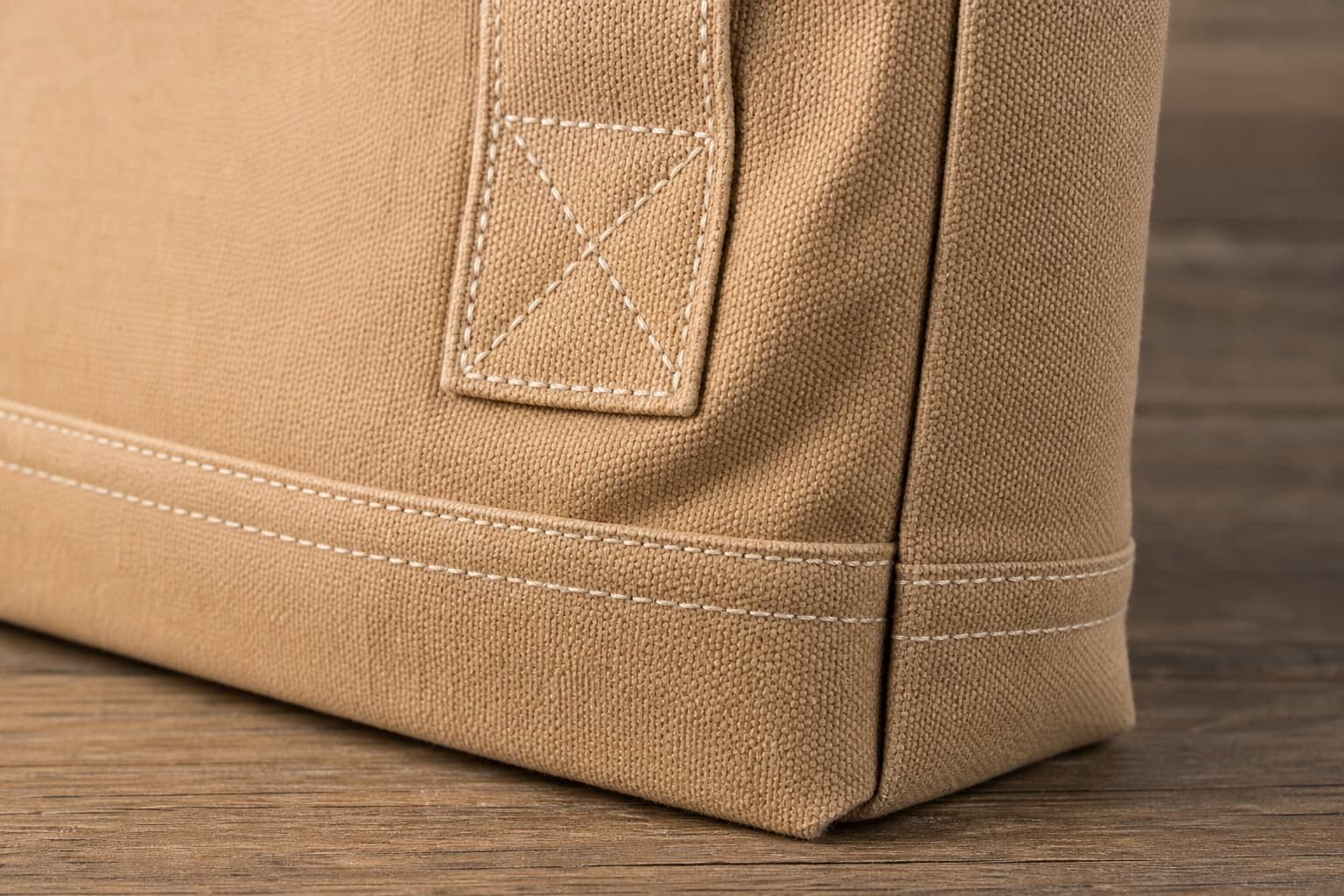
Why the Bottom Gusset Corner Deserves a Separate Inspection
A canvas tote bag bottom gusset corner looks like a small detail until the buyer starts receiving complaints about twisted bags, open corners, unstable bases, or logos that look off-center after sewing. The bottom corner is where fabric weight, cutting accuracy, seam allowance, stitch tension, and packing pressure all meet. If the corner is wrong, the bag may still look acceptable in a front photo, but it will fail when loaded or displayed upright.
For procurement teams, the main problem is that many quotes describe only the finished bag size, such as 38 x 42 cm with 10 cm gusset. That is not enough. The RFQ must define how the bottom gusset is made, how the corner is reinforced, what tolerance is acceptable, and how the factory will inspect it before shipment. This checklist helps buyers turn a vague tote bag specification into measurable production requirements.
- Do not approve a gusseted tote from a flat front photo only.
- Ask for photos of both outside and inside bottom corners.
- Measure the gusset depth on a finished sewn sample, not only on the paper pattern.
- Include corner inspection in the pre-shipment checklist, because defects are easy to miss when bags are stacked flat.
Define the Gusset Construction Before Comparing Prices
The phrase bottom gusset can mean different constructions. Some canvas totes use a boxed corner formed by sewing across folded side-bottom corners. Some use a separate bottom panel. Others use a side gusset that continues into the bottom. These constructions have different labor time, seam bulk, load strength, and appearance. If two suppliers quote different gusset methods, their prices are not directly comparable.
For most promotional and retail canvas totes, a boxed bottom gusset is common because it is efficient and gives the bag more usable volume without adding a separate bottom panel. However, the boxed corner must be cut and sewn consistently. A separate bottom panel can look more structured, but it adds seams, increases sewing time, and may require more careful alignment. Buyers should state the construction method in the RFQ, then ask the factory to confirm it with sample photos.
- Boxed corner: practical for medium-volume retail and promotional totes.
- Separate bottom panel: useful for more structured bags but higher labor and alignment risk.
- Continuous side-bottom gusset: clean shape when cut accurately, but print placement needs careful adjustment.
- No real gusset: cheaper flat tote construction, not suitable if the buyer expects the bag to stand or hold box-shaped goods.
Choose Fabric Weight That Supports the Corner Shape
Bottom corner quality depends heavily on fabric weight. A 6 oz or 8 oz cotton fabric may be suitable for lightweight event giveaways, but it usually does not hold a crisp boxed bottom shape. For a canvas tote bag that needs a reliable bottom gusset, many buyers specify 10 oz to 12 oz canvas, roughly 270 to 340 GSM before washing. Heavier 14 oz canvas can create a premium handfeel, but it also increases seam bulk at the corner and may require stronger needles and slower sewing.
Buyers should ask whether the factory is quoting fabric by ounces per square yard or GSM, and whether the canvas is natural, bleached, dyed, or washed. Washing can change shrinkage, handfeel, and finished dimensions. If the supplier cuts unwashed canvas and then washes after sewing, the gusset depth and corner shape can change. If the buyer needs stable finished sizing, the RFQ should require the factory to declare fabric condition and shrinkage allowance.
- 6-8 oz canvas: lower cost, softer body, weaker corner structure.
- 10-12 oz canvas: balanced option for branded canvas tote bags with usable gussets.
- 14 oz and above: stronger handfeel but more bulk and higher sewing difficulty at corners.
- Washed canvas: softer finish, but buyer must confirm shrinkage and final size tolerance.
Set Measurable Corner Acceptance Criteria
A buyer checklist should not say only check bottom corner quality. It should define what the inspector must measure and what is acceptable. For example, if the approved gusset is 10 cm, the buyer may allow a tolerance such as plus or minus 0.5 cm depending on the product level and factory capability. The key is to measure both the left and right corners because many defects are asymmetrical.
The corner should also be checked under load. Canvas can look fine when empty but pull open after carrying books, bottles, or grocery items. The load test does not need to be complicated, but it must be realistic. If the bag is sold as a retail shopping tote, the buyer should define a test weight and hanging time, then inspect whether the bottom corner seam has stretched, cracked, or exposed raw edges.
- Measure gusset depth at the bottom center and near both corners.
- Check that left and right corners are within the approved tolerance.
- Inspect stitch security before and after load testing.
- Reject corners with open seams, fabric tearing, severe puckering, or visible raw edges outside the seam.
- Record photos of failed corners so the factory can correct sewing settings and handling.
Inspect Stitching, Seam Allowance, and Reinforcement
The bottom gusset corner carries stress from both the side seam and the base. A secure corner usually needs a consistent seam allowance, suitable stitch density, and proper backtacking. For medium canvas, many factories work around 8 to 12 mm seam allowance, but the correct value depends on fabric thickness, seam type, and whether the edge is overlocked or bound. Too narrow a seam allowance can fray; too wide can create a hard lump at the corner.
Buyers should ask the factory to confirm thread type and stitch density in the quotation or technical sheet. A common problem is a nice-looking outside corner with loose thread tails or skipped stitches inside. Another issue is aggressive needle cutting on heavy canvas, where the seam perforates the fabric instead of holding it. The sample approval should include turning the bag inside out and checking the corner construction directly.
- Backtack should secure the start and end of the corner seam.
- Stitch line should not wander into a narrow seam allowance near the corner point.
- Thread tension should be balanced, without loops or tight puckering.
- Inside seam should be clean enough for the intended retail level.
- Needle holes should not cut or weaken the canvas around the stress point.
Control Print Position Around a Gusseted Bottom
Print placement on a gusseted tote is often approved incorrectly. The buyer approves artwork on a flat panel drawing, but after the bottom corners are boxed, the usable front panel height changes visually. A logo that looked centered on the flat pattern may appear too low once the bag stands, especially when the gusset depth is large. This matters for screen printing, heat transfer, embroidery, and woven patches.
For a canvas tote bag with bottom gusset, artwork should be checked on the finished sample while the bag is filled or standing in its natural shape. The factory should mark the print position from the sewn reference, not only from cut fabric. If the tote has a large gusset, the buyer may need to raise the artwork slightly to keep it visually centered on the front face.
- Approve logo position on a finished gusseted sample.
- Check distance from top hem, side seams, and visible bottom fold.
- Confirm whether print is applied before or after sewing.
- For screen print, check whether seam bulk affects flat printing near the lower panel.
- For embroidery or patch labels, confirm backing and placement do not distort the bottom shape.
Sample Approval Steps Before Bulk Cutting
A correct sample process prevents expensive corner defects. The buyer should not jump from a digital quote to bulk production without a physical pre-production sample, especially when the order has custom fabric weight, custom dyeing, special print, or retail packing. The sample must represent the same fabric weight, gusset depth, stitch type, handle attachment, print method, and packing fold expected in bulk.
During sample review, procurement teams should keep one sealed approval sample for final reference and one working sample for measuring and handling. If multiple people are involved, such as a brand manager, merchandiser, and third-party inspector, they should all reference the same approved corner criteria. This avoids disputes where one party judges the bag by appearance and another judges by measurements.
- Check finished size after sewing, not only cutting size.
- Measure gusset depth on both sides and bottom.
- Photograph outside corner, inside corner, standing base, and folded packing view.
- Test loading with the intended product type or weight range.
- Sign off print position only after the gusset shape is confirmed.
- Keep approval samples labeled with date, fabric GSM, color, print method, and version number.
MOQ, Cost, and Lead Time Factors Buyers Should Expect
Bottom gusset corner quality affects price because it changes labor time, fabric consumption, and inspection workload. A deeper gusset uses more fabric and can slow folding and sewing. Heavy canvas increases needle wear and may require more experienced operators. If the buyer adds inside binding, reinforced corners, or stricter tolerance inspection, the factory should include that in the quote instead of absorbing the cost silently and reducing quality elsewhere.
MOQ logic also matters. For natural stock canvas, a factory may support lower quantities because fabric is available. For custom dyed canvas, washed canvas, custom webbing handles, or special thread color, MOQ may increase due to dye lot and material purchasing requirements. Lead time should be counted from final approval of sample, fabric, print artwork, packing method, and carton marks, not from the first inquiry date.
- Lower MOQ is more realistic with stock natural canvas and standard handles.
- Custom dyed canvas usually needs higher fabric MOQ and longer fabric preparation time.
- Heavy canvas may increase sewing time and carton weight.
- Deeper gusset increases fabric consumption and can change carton quantity.
- Stricter inspection reduces risk but should be planned into production schedule.
Packing Rules That Protect the Gusset Corner
A well-sewn bottom corner can still arrive distorted if packing is careless. Canvas totes are often compressed in export cartons to save freight space. If the boxed gusset is folded randomly or crushed under heavy carton pressure, the corner can develop hard creases, twisted side seams, or uneven base shape. This is especially visible for retail buyers who display totes hanging or standing in store.
The buyer should approve the folding method during sample or pre-production stage. The packing instruction should show whether the bottom gusset is folded inward, flattened along the side crease, or kept lightly shaped. Carton size, quantity per carton, polybag requirement, moisture protection, and carton stacking should all be reviewed. If the tote is natural canvas, buyers should also consider dirt protection because corner areas can pick up marks during handling.
- Request packing photos before mass packing begins.
- Avoid over-compressing cartons to meet an unrealistic carton quantity.
- Confirm whether each bag is individually polybagged, bundled, or bulk packed.
- Check that natural canvas corners are protected from dust and carton abrasion.
- Include folded-shape approval if the bag will be sold at retail.
How to Compare Supplier Quotes Without Missing Corner Risk
When comparing canvas tote bag quotes, the cheapest offer often hides missing construction details. One supplier may quote 8 oz fabric with a simple folded corner, while another quotes 12 oz canvas with clean overlocked seams and controlled gusset tolerance. If the buyer only compares unit price, the stronger quote can look expensive even though it better matches the selling requirement.
A reliable comparison should put the corner construction, fabric GSM, print method, sample fee policy, MOQ, lead time, packing, and inspection scope in one table. Buyers should also ask each factory to quote the same assumptions. If a supplier cannot answer how the bottom gusset corner is sewn or inspected, that is a practical warning sign for orders where bag shape and load performance matter.
- Ask every supplier to quote the same finished size and gusset depth.
- Require fabric weight in GSM or ounces, not vague terms like thick canvas.
- Compare print method and print position control on finished bag shape.
- Check whether packing is included in the unit price or listed separately.
- Ask whether pre-shipment inspection photos will include bottom corner details.
Specification comparison for buyers
| Spec decision | Recommended option | When it fits | Buyer risk to check |
|---|---|---|---|
| Bottom construction | Boxed bottom gusset with stitched corner depth tolerance | Retail totes, grocery totes, event bags that need to stand better and carry rectangular items | Corner depth varies between left and right sides, causing twisted base and uneven shelf presentation |
| Fabric weight | 10 oz to 12 oz cotton canvas, roughly 270-340 GSM before washing | Most branded retail and promotional totes requiring shape retention | Light fabric collapses at corners; heavy fabric increases needle holes, seam bulk, and freight weight |
| Corner seam reinforcement | Backtack at start and end of gusset corner seam, minimum 8-12 mm backtack length | Orders carrying books, bottles, groceries, or boxed merchandise | Skipped backtacks or short tails open during load testing and customer use |
| Print placement | Logo centered after gusset folding, not only on flat panel pattern | Screen print, heat transfer, or embroidery on bags with visible base depth | Artwork appears too low, too high, or tilted once the bottom corners are boxed |
| Seam allowance | Consistent 8-12 mm seam allowance depending on fabric thickness and needle size | Medium to heavy canvas tote production | Narrow allowance frays after trimming; wide allowance creates bulky corner lumps |
| Packing method | Flat pack with bottom gusset folded along approved crease line and corner protected from crushing | Export cartons for retail, distributor, or fulfillment warehouse delivery | Corners arrive crushed, distorted, or permanently wrinkled before shelf display |
Buyer checklist before sampling
- Confirm the approved bottom gusset depth in centimeters and state the allowed tolerance per side, not only the finished bag width and height.
- Measure both bottom corners on the same bag and across at least three sample bags to check symmetry before approving the pre-production sample.
- Open the corner seam by hand and check for skipped stitches, loose thread tails, broken needle holes, or fabric fraying near the seam allowance.
- Run a load test using the intended carrying weight or a realistic buyer-defined weight, then inspect whether the corner stitch line has stretched or opened.
- Check that the logo placement was approved on a finished gusseted bag, because flat-panel artwork position can shift after the bottom corners are formed.
- Ask the factory to confirm fabric weight in GSM or ounces, whether the fabric is washed or unwashed, and whether shrinkage has been allowed in the cutting pattern.
- Review packing photos showing how the bottom gusset is folded inside the carton and whether the corner shape is protected from compression.
- Require corner inspection in the pre-shipment report with photos of left corner, right corner, inside seam, outside seam, and standing base view.
- Compare quotes by construction method and inspection standard, not only by unit price, because a cheaper tote may use weaker corner formation.
- Keep one sealed approval sample and one working reference sample so inspectors and packing staff can compare the actual corner shape during production.
Factory quote questions to send
- What exact bottom gusset depth are you quoting, and what tolerance will you control at bulk inspection?
- Is the gusset made by a boxed corner seam, separate bottom panel, or folded side-bottom construction?
- What fabric weight are you quoting in GSM and ounces, and is the canvas natural, dyed, washed, or unwashed?
- What seam allowance, stitch density, thread type, and needle size will be used at the bottom gusset corners?
- Will the corner seams include backtacking, bartacking, overlock, binding, or any other reinforcement?
- Can you provide photos of the inside bottom corners on the pre-production sample, not only the front view?
- How will you adjust logo position for the finished gusseted shape after sewing?
- What MOQ changes if we increase fabric weight, add corner reinforcement, or use a custom dyed canvas?
- What packing method will keep the bottom gusset corners clean and not crushed during export carton loading?
- What production lead time applies after sample approval, fabric approval, print approval, and final carton mark confirmation?
Quality-control points to confirm
- Finished bottom gusset depth must match the approved sample and written tolerance.
- Left and right bottom corners must be symmetrical when the bag is standing and when laid flat.
- Corner seam lines must be straight enough to avoid twisting the base or pulling the side seam off grain.
- No skipped stitches, broken stitches, loose thread nests, or unsecured backtacks at gusset corners.
- No exposed raw fabric edge outside the intended seam allowance or overlock coverage.
- No fabric tearing, needle cutting, heavy puckering, or seam slippage after the defined load test.
- Print or embroidery placement must remain visually centered on the finished gusseted bag.
- Carton packing must preserve the approved bottom fold and avoid hard compression on corner points.