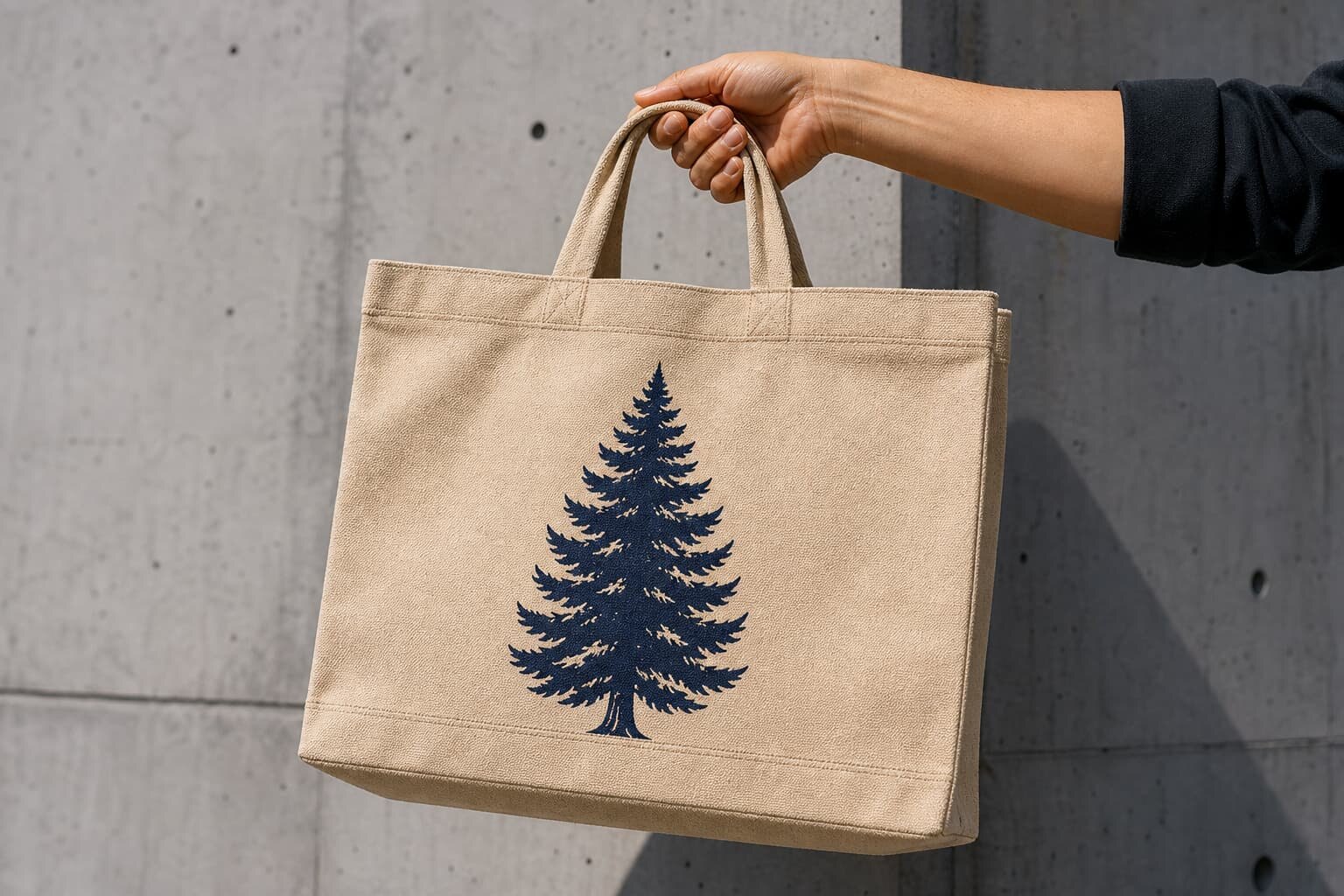
Why bottom gusset corners deserve a separate audit
A canvas tote bag can look correct at the top and still fail at the bottom gusset corner. That corner is where the load transfers, the seam turns, and the bag shape either holds or collapses. If you are comparing suppliers only by a flat front photo, you can miss the exact area that causes returns: twisted corners, puckering, broken stitches, and bags that refuse to stand up after packing.
For procurement teams, the bottom corner is not a cosmetic detail. It affects unit cost, labor time, packing efficiency, and the buyer's acceptance standard. A factory that controls the corner well usually understands the pattern, reinforcement, and folding sequence better than one that only sews to a visual target. If the quote does not mention the corner build, assume you are still missing the most important part of the spec.
- Treat the bottom corner as a load-bearing seam, not just a shape detail.
- Ask for corner photos from the sample stage, not only front and back views.
- Compare how the bag stands, folds, and rebounds after turning and packing.
Lock the geometry before you ask for quotes
The first source of quote confusion is geometry. Buyers often send a body size and forget to define how the bottom gusset is formed, whether the corner is squared or tapered, and whether dimensions are measured before stitching or after finishing. A factory can quote that vague request cheaply, but the bulk bag may come back with a different bottom profile than the sample you imagined.
A better RFQ defines body width, body height, gusset depth, and the internal corner behavior in plain language. If you have a physical reference sample, ask the factory to measure it and mark the seam map. If you only have a drawing, include top view, side view, and bottom view, plus where the seam allowance ends up after turning. That one step removes a lot of later argument.
- State whether dimensions are finished size or cut size.
- Specify if the gusset is meant to create a flat bottom, a boxed bottom, or a soft fold.
- Ask the factory to confirm seam allowance and turning method in writing.
Choose fabric weight and reinforcement for the way the bag will be used
Canvas weight changes the corner outcome more than many buyers expect. A 10-12 oz body can work for light retail or promotional use, but the corner may soften quickly if the bag carries bottles, books, or thick folded goods. A 14 oz body usually gives better structure and more stable corners, while 16 oz and above can support a premium look or heavier load, though it also increases sewing resistance and turnaround bulk. The quote should name the fabric weight, weave density, and whether the cloth is enzyme washed, prewashed, or raw.
Reinforcement choice is the second half of the decision. Double stitching alone may be enough for a light tote, but a heavier or more structured bag often needs an internal patch, a bar tack, binding, or an insert board. Each choice changes labor, machine time, and seam thickness. If you want to compare factories fairly, ask them to quote the same corner structure on every offer, otherwise one supplier may be pricing a simpler build while another is pricing the real spec.
- 10-12 oz: lighter tote, lower structure, lower sewing resistance.
- 14 oz: common balanced option for retail buyers who want shape retention.
- 16 oz and above: stronger structure, but watch seam bulk and corner distortion.
- Internal reinforcement should not create a sharp ridge that prints through the fabric.
Use a quote breakdown that exposes hidden cost
A useful quote is not a single number. It should separate body fabric, cutting, sewing, corner reinforcement, print setup, packaging, and carton work so you can see what drives cost. For a canvas tote bag bottom gusset corner factory audit, this matters because the bottom turn and reinforcement labor can hide inside a broad sewing line item. If you only compare the total price, you will miss why two factories are not really quoting the same product.
Ask for quote data that lets your team compare apples to apples: fabric GSM or oz, thread type, print method, number of colors, reinforcement type, packaging count, carton size, and whether the quote includes one preproduction sample. When MOQ changes, the reason should be visible too. Higher color count, custom dyeing, special folding, or a fixed board insert often push MOQ up. That is normal if the factory explains it clearly, but it is a red flag if the quote cannot show the driver.
- Break the price into fabric, labor, print, reinforcement, packing, and carton line items.
- Ask which line item changes when MOQ changes.
- Confirm whether the sample cost is deductible from bulk or billed separately.
- If the quote is bundled, request a second version with each cost driver separated.
Audit the sample like a production engineer, not a shopper
The preproduction sample should tell you whether the bottom corner is manufacturable at scale. Measure the finished bag, then remeasure after a full fill test and after the bag is folded once to see whether the corner relaxes or warps. Inspect the inside seam and corner turn with the bag inside out if possible. That is where the stitch line, thread tension, and seam allowance show whether the factory knows how to manage bulk at the stress point.
Do not stop at visual approval. Run a simple use-case test based on the bag's actual purpose: books, groceries, apparel, display goods, or trade show kits. Watch whether the corner opens, whether the bottom remains flat, and whether the gusset folds back cleanly after unloading. If you need a buyer-side acceptance rule, write it in measurable terms: no open seam, no skipped stitches at the corner, no visible board edge, and no distortion beyond the agreed tolerance.
- Check front, side, bottom, and inside seam views on every sample.
- Load the bag to the intended use case and inspect corner spread after release.
- Mark the corner dimension on the sample so production can copy it accurately.
- Reject samples that look good only when empty but fail when filled.
Control print placement and label position near the corner
Decoration changes the corner risk more than buyers expect. A screen print placed too close to the bottom fold can crack or ghost when the bag is turned and packed. A woven side label or sewn logo patch can also interfere with the seam if it lands in the wrong position. For a clean build, the factory should show the exact print panel and label placement relative to the gusset, not only relative to the front body panel.
If the artwork must cross a structural area, ask the factory to confirm whether the print method can survive the bend. Large solid areas are usually safer with screen print on canvas, while fine detail or multi-color art may require a different process. Whatever method you choose, make the sample carry the real placement. A paper layout is not enough when the bottom corner is part of the finished design path.
- Keep key artwork away from the fold line unless the process has been tested there.
- Approve label position on a sewn sample, not a digital mockup.
- Check for print cracking after the bag is folded and refolded.
- If the bag has a side label, confirm it does not disrupt the gusset seam.
Pin down MOQ, lead time, and packing before the order is issued
MOQ logic should be tied to the real build. A one-color natural canvas tote with a standard corner and standard packing can often run at a lower threshold than a dyed body, special print, or reinforced bottom with a board insert. If the supplier says the MOQ changes, ask which component is causing the break point: fabric sourcing, print screen setup, labor efficiency, or packing configuration. That answer helps you decide whether to simplify the spec or accept the higher minimum.
Lead time should be split into stages, not given as one vague promise. Ask for sample lead time, sample approval window, raw material booking time, and bulk production time after approval. Typical planning ranges are often about 5-10 days for preproduction sampling and 20-35 days for production after final approval, but your actual schedule should depend on fabric stock, print complexity, and packing method. Packing matters too: if bottom corners are folded too tightly or cartons are overfilled, you can create damage that was never visible at sewing.
- Ask the factory to state lead time by stage, not just one total number.
- Confirm whether the bags are folded flat, side-folded, or gusset-tucked for carton packing.
- Check carton count and carton dimensions so corner compression stays under control.
- Request a packing photo or packing standard before bulk starts.
Set production acceptance criteria before mass sewing starts
The cleanest way to avoid disputes is to turn the sample into a written standard. Your acceptance criteria should define the finished size tolerance, corner symmetry, stitch density, print placement, and packing method. For a canvas tote bag bottom gusset corner factory audit, this is especially important because the corner can look acceptable from one angle and fail from another. A written standard stops the factory from arguing that a visible twist is normal just because the sample did not spell out the limit.
Use your normal inspection system if you already have one, but make sure the corner is called out as a key point. The factory should know what a pass looks like before sewing begins. If the first article shows seam bite, thread loops, or a board that presses into the inside corner, stop and correct it before the line runs. That is cheaper than sorting cartons after the shipment is closed.
- Define size tolerance for width, height, and gusset depth.
- Set a corner symmetry rule that the factory can actually check on the line.
- Require the final sample to match the approved print placement and packing fold.
- Escalate any open seam, broken stitch, or corner deformation before bulk approval.
Common buying mistakes that create corner defects and rework
The most common mistake is approving a pretty sample without auditing the corner path. Buyers also get caught by hidden spec drift: one factory uses heavier canvas, another uses a looser weave, and both claim the same tote size. The result is two different bags with the same name. Another frequent problem is under-specifying the corner reinforcement, which leaves the factory free to use the cheapest construction that passes a quick glance but not a real load test.
A second group of mistakes comes from packaging and artwork. If the artwork is placed too low, if the bag is folded differently than the sample, or if the carton is overpacked, the bottom gusset corner can arrive creased or crushed even when sewing was clean. The best prevention is simple: compare the sample, the written spec, and the packing standard together. If any one of those is missing, the risk moves downstream into your warehouse or your retail customer.
- Do not approve based on a front-only photo.
- Do not compare quotes without matching fabric weight and reinforcement.
- Do not allow a packing fold that damages the bottom shape.
- Do not assume a sample approval automatically covers bulk corner tolerance.
Specification comparison for buyers
| Spec decision | Recommended option | When it fits | Buyer risk to check |
|---|---|---|---|
| Bottom shape | Square gusset with a reinforced bottom seam | Retail totes that must stand upright and carry structured product | Check if the corners lean, twist, or flatten after sewing and turning |
| Corner reinforcement | Internal patch or double seam at the corner turn | Heavier loads, thicker canvas, or bags with frequent set-down use | Watch for seam bulk that creates a hard lump or weak needle holes |
| Fabric weight | 10-12 oz canvas for light retail, 14 oz for more structure, 16 oz for premium heavy-duty use | When shape retention and corner stability matter more than unit weight | Confirm shrinkage, weave openness, and whether the bag distorts after print or wash |
| Print method | Screen print for simple logos, multi-color transfer only when artwork demands it | Large runs with flat graphics and repeatable placement | Check if print sits too close to the fold or crack points at the bottom corner |
| Bottom insert | Optional removable or fixed board insert | When the tote must keep a retail display shape or protect contents | Confirm board thickness, edge treatment, and whether it damages the inner seam |
Buyer checklist before sampling
- Confirm finished bag size, gusset depth, and whether dimensions are taken before or after sewing and turning
- Approve a dimensioned sample with corner photos from front, side, bottom, and inside seam views
- State canvas GSM or oz weight, weave style, and any prewash or shrinkage requirement
- Specify print method, print placement, and the minimum distance between artwork and the bottom fold line
- Define reinforcement at the corner: double stitch, bar tack, patch, binding, or insert board
- Ask the factory to show stitch density, seam allowance, and thread type on the sample sheet
- Request packing details: folding method, polybag use, carton count, and corner crush protection
- Set a production approval rule for first article, in-line check, and final carton audit
Factory quote questions to send
- What finished bottom gusset depth and corner construction are included in your quote, and are they based on pre-sew or finished dimensions?
- Which fabric weight, weave density, and shrinkage range did you price, and can you source the same lot for bulk?
- How is the corner reinforced, and does the quote include extra labor, extra thread, or an internal patch?
- What print method is included, how many colors are assumed, and what artwork size or placement limits affect the price?
- What is the MOQ by fabric color, print color count, and packaging style?
- What sample stages are included before bulk approval, and what is charged separately?
- What are the standard production lead time and the longest risk items that can extend it?
- How are bags packed, folded, counted, and protected so bottom corners do not crease in transit?
- What tolerance do you accept on finished width, gusset depth, and corner symmetry?
- What carton quantity, carton dimensions, and outer mark format are included in the shipment plan?
Quality-control points to confirm
- Check finished width, height, and gusset depth against the agreed spec, not the paper pattern only
- Inspect both bottom corners for symmetry, seam bite, and puckering after turning
- Measure stitch density and confirm it stays consistent through the corner turn
- Verify that no loose threads, skipped stitches, or broken needle marks appear at the stress point
- Confirm the inside seam is clean and does not create a sharp edge against an insert board
- Check print alignment around the bottom zone and make sure ink does not crack at the fold line
- Test load behavior by filling to the agreed use case and watching for corner spread or seam lift
- Inspect the fold and pack method so carton compression does not flatten or crease the gusset
- Review labeling placement so woven labels, side marks, or care labels do not sit on the corner stress path
- Open random cartons to confirm count, folding consistency, and no hidden corner damage from packing