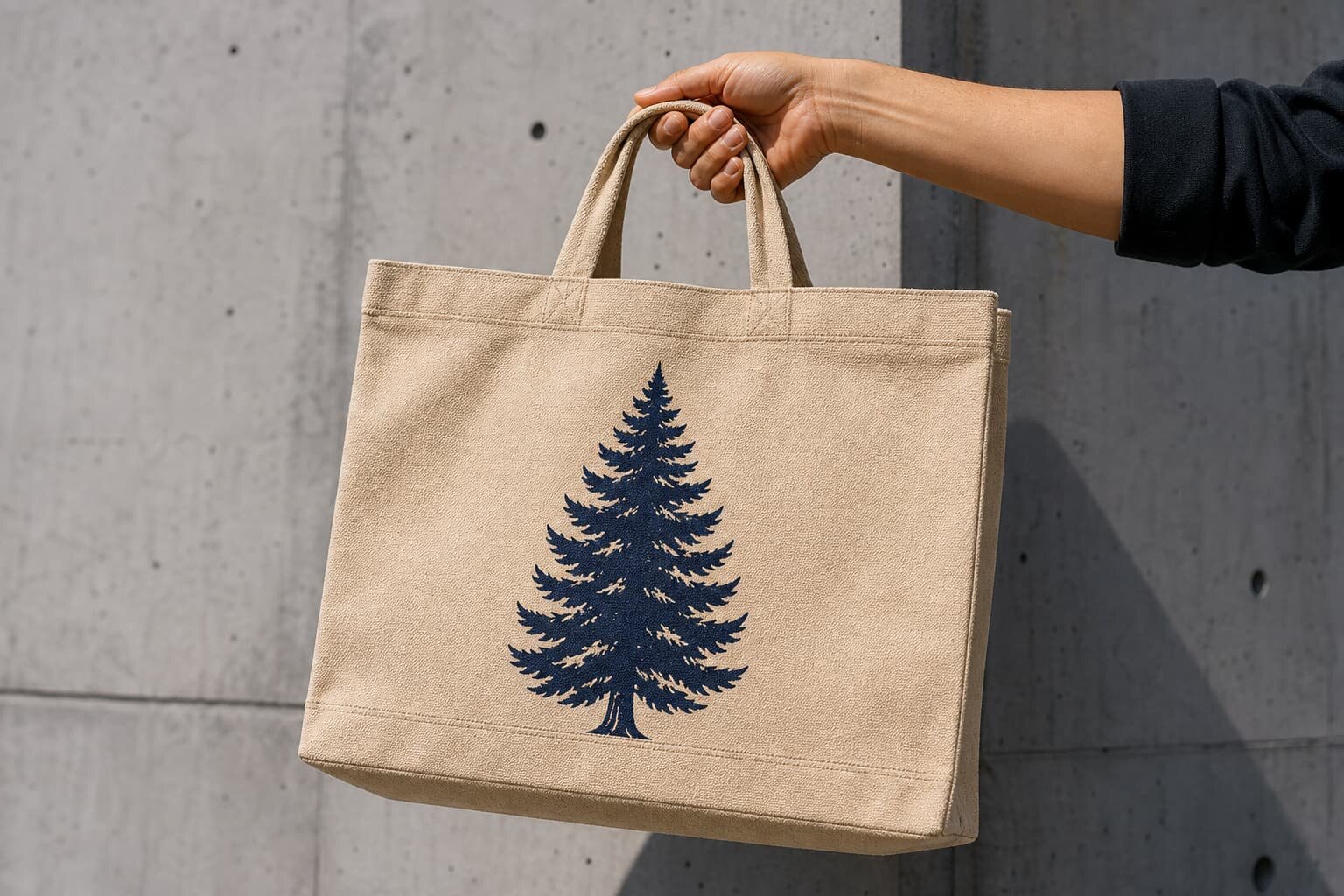
Why Artwork Proofing Deserves Its Own Memo
A canvas tote bag artwork proofing memo is not just a creative approval document. For a bulk buyer, it is a production control file that connects the brand artwork, fabric choice, print method, sample approval, packing method, and shipment schedule. Many tote bag disputes start because the buyer approved a nice-looking PDF but never locked the real production conditions. The factory then prints on a different canvas shade, moves the logo to avoid a seam, changes the fold direction, or treats a Pantone reference as a rough suggestion.
Canvas is less predictable than smooth paper or plastic packaging. The fabric has yarn texture, slubs, natural cotton color variation, shrinkage, and sewing distortion. A logo that looks clean on a screen can lose sharpness when printed over a coarse 12 oz canvas weave. A wide design can look centered on the cut panel but shift after side seams and gusset construction. A proofing memo protects both sides because it states what is approved, how it should be measured, and what is still open before bulk printing.
- Use the memo before quotation if artwork complexity affects cost.
- Update it after sample approval so the supplier knows the final standard.
- Attach it to the purchase order, not only to the email thread.
- Keep a signed or dated version for reorders and claim handling.
Define the Bag Before You Approve the Print
Artwork placement cannot be judged properly until the bag construction is clear. A 380 x 420 mm flat tote, a 380 x 420 x 100 mm gusseted tote, and a 15 x 16 inch promotional tote may all receive the same logo file, but the visual balance changes. Handle drop, top hem depth, side seam allowance, and bottom gusset folding all affect where the printable area begins and ends. Procurement teams should ask the factory to mark the safe print zone on a flat technical drawing before approving artwork.
Fabric weight also matters. A light 6 oz to 8 oz cotton bag may be suitable for giveaways, but it can wrinkle and show print pressure marks more easily. A common custom canvas tote range is 10 oz to 12 oz, about 270 to 340 GSM, for promotional and retail packaging orders. Premium retail totes often use 14 oz to 16 oz canvas, about 380 to 450 GSM. Higher GSM gives better structure but can increase needle marks, carton weight, and freight cost. Your proofing memo should show the chosen GSM because print absorption and hand feel are tied to fabric.
- Record finished bag width, height, gusset, and handle drop.
- State whether measurements are in millimeters or inches.
- List fabric weight in oz and GSM if both markets are involved.
- Confirm natural, bleached, dyed, recycled, or organic cotton canvas before color approval.
- Ask whether the print is applied before or after sewing, because this affects registration and placement tolerance.
File Preparation That Prevents Quotation Gaps
A factory cannot quote accurately from a low-resolution screenshot, copied logo in a presentation, or artwork embedded in a message app. For screen printing, the preferred file is usually vector artwork such as AI, EPS, or editable PDF with fonts outlined. For digital print or transfer work, high-resolution raster artwork may be acceptable, but the factory still needs final print size and color expectations. If the artwork includes fine lines, distressed effects, QR codes, gradients, or small legal text, highlight those details before the supplier quotes.
The proofing memo should separate brand artwork from production artwork. Brand artwork is the ideal logo. Production artwork is the version adjusted for canvas printing, actual size, color separation, ink trapping, or minimum line thickness. If a buyer wants the supplier to make those adjustments, ask whether artwork handling is included in the quote. For multi-version orders, name each artwork clearly. File names like final_logo_new_2 are a common cause of wrong print screens and duplicated samples.
- Send vector files for solid logos and typography.
- Outline fonts so the supplier does not substitute characters.
- Embed or link all images used in the design.
- Name files by bag color, artwork version, size, and date.
- Include a placement PDF showing dimensions from top opening and side seam.
- State whether the supplier may adjust line thickness or must request approval first.
Choose the Print Method Based on Risk, Not Habit
Screen printing is still the most common method for canvas tote bags because it handles solid logos well, gives reasonable durability, and works efficiently at bulk quantities. A one-color or two-color brand logo on natural cotton canvas is usually a good screen print candidate. However, each additional spot color may require another screen, setup, and registration check. For a distributor quoting many artwork versions, this affects MOQ logic and unit cost more than the buyer may expect.
Digital print and heat transfer can work better for gradients, photo artwork, or short runs with many colors, but the buyer must check hand feel, edge durability, and color on textured canvas. Embroidery gives a premium look for simple marks but is not suitable for large filled artwork on thin canvas because puckering can occur. Woven labels or sewn side labels are useful when the main bag must stay clean, but label size, fold, and seam location need approval. The right method is the one that matches the artwork and order plan, not simply the cheapest line in the quote.
- Use screen print for bold logos, solid slogans, and repeat promotional programs.
- Use digital print for complex images only after checking color and fabric texture impact.
- Use heat transfer when detail is critical, but test cracking and edge feel.
- Use embroidery for small premium marks on heavier canvas.
- Use sewn labels when branding must be subtle or when the bag has multiple colorways.
Set Color Approval Rules Before Sampling
Color disputes are common because buyers compare a screen, a paper printout, a Pantone book, and an ink print on natural cotton as if they are the same medium. They are not. Natural canvas has a warm base shade. Dyed canvas may have batch variation. Unbleached cotton can make white ink look less bright and can shift light brand colors. A good artwork proofing memo states the color reference and the acceptable matching method before the sample is made.
For most logo programs, provide Pantone references and ask the factory whether the match is based on Pantone Solid Coated, TCX, TPX, or another standard. If the logo is printed on colored canvas, request a strike-off or printed sample rather than approving from paper only. The memo should also say whether the buyer accepts a commercial match on fabric or requires a tighter brand match. Tight matching may increase sampling time, especially if ink mixing must be adjusted.
- List Pantone references for each color in the artwork.
- State the fabric base color used for approval.
- Ask for daylight or standard light box comparison if color is critical.
- Keep one approved sample at the factory and one with the buyer.
- Avoid approving color from phone photos unless it is only a preliminary check.
Sample Checks That Matter Before Bulk Printing
The pre-production sample is where the buyer should catch issues that a PDF proof cannot show. Check whether the logo sits level when the tote hangs naturally, not only when it lies flat on a table. Measure the print from the top opening, side seams, and bottom seam. If the bag has a gusset, check whether the print appears centered when the bag is opened and when it is folded. For retail bags, the way the tote looks on a peg, shelf, or folded stack can matter as much as the flat-panel view.
Inspect the print itself under practical conditions. Look for ink pinholes caused by fabric texture, uneven coverage over slubs, blurred edges, registration offset between colors, and ink build-up that makes the artwork stiff. If the tote is expected to be reused, do a simple rub test and ask the factory about curing conditions. For QR codes or fine text, scan and read the sample from the expected user distance. Do not assume a code that works on paper will work after printing on textured canvas.
- Measure actual print width and height against the artwork proof.
- Check placement tolerance, for example within plus or minus 5 mm if agreed.
- Confirm that handles, seams, and folds do not cover the artwork.
- Review ink hand feel and opacity on the approved fabric.
- Scan QR codes and read small text before bulk approval.
- Photograph the approved sample with a ruler for future reference.
MOQ Logic for Artwork Versions and Bag Colors
Canvas tote bag MOQ is not only about total quantity. It is affected by fabric procurement, dye lot, cutting efficiency, sewing setup, print setup, and packing style. A quote for 3,000 natural canvas totes with one black logo is different from 3,000 totes split across six bag colors and eight artwork versions. Each split may require separate ink setup, screen cleaning, printing alignment, packing labels, and inspection records. If the buyer does not show the split clearly, supplier quotes become difficult to compare.
A practical proofing memo should include an artwork matrix. List each bag color, fabric GSM, print color, print method, order quantity, and packing requirement. This helps the factory decide whether the order can run under one main MOQ or whether each variation needs a separate minimum. It also prevents a common problem: the buyer approves one sample on natural canvas, then expects the same result on black, navy, and forest green canvas without additional strike-offs.
- Show quantity by artwork version, not only total order quantity.
- Separate fabric color splits from print color splits.
- Ask which versions share the same screen or setup.
- Confirm extra sample needs for dark fabric or special ink.
- Request separate quote lines for setup, sampling, and unit price when the program is complex.
Quote Data Buyers Should Require
A useful supplier quote should make the production basis visible. If two suppliers quote the same canvas tote bag but one uses 8 oz fabric and another uses 12 oz fabric, the lower unit price is not a saving; it is a different product. The quote should state finished size, fabric weight, fabric type, handle size, stitching method, print method, number of colors, artwork size, packing, carton quantity, sample cost if any, and lead time after approval. Without this detail, procurement teams cannot compare quotes fairly.
Lead time should also be tied to approval status. A factory may quote 25 to 35 days after sample approval as an example, but that does not include the buyer taking two weeks to correct artwork or confirm Pantone values. If fabric dyeing, custom labels, barcodes, or individual retail packing are involved, these steps can add time. Ask suppliers to separate artwork proof time, sample making time, bulk production time, packing time, and inspection window. This makes the schedule easier to manage internally.
- Finished bag size and tolerance.
- Canvas weight in GSM or oz.
- Print method, color count, and artwork size.
- MOQ by fabric color and artwork version.
- Sample timing and approval requirements.
- Bulk lead time after signed sample approval.
- Carton size, pieces per carton, and gross weight.
- Incoterm, port, and quote validity date.
Packing Choices Can Damage Approved Artwork
Packing is often discussed after production, but it should be part of artwork proofing. A perfectly printed tote can arrive with a hard fold line across the logo if the folding method was not approved. Heavy canvas holds creases, and dark ink can show pressure marks when bags are tightly compressed. If the tote is for retail sale, the front logo may need to face outward in the polybag or remain visible through a window label. If the tote is for wholesale distribution, bulk flat packing may reduce waste and cost.
The memo should state whether bags are packed flat, folded once, folded twice, or individually polybagged. It should also list carton quantity and any moisture protection requirements. For natural cotton canvas, buyers should be careful with damp cartons, strong odors, and mixed-color packing that can transfer lint or dye. If barcode labels, hangtags, or sewn labels are included, confirm placement before mass packing so the retail team does not reject stock for presentation reasons.
- Approve fold direction before bulk packing.
- Keep fold lines away from large printed logos where possible.
- Confirm individual polybag only when retail handling requires it.
- Use carton marks that match purchase order and SKU data.
- Check carton weight for warehouse handling limits.
- Request packing photos before shipment if the order has multiple versions.
Acceptance Criteria for Bulk Inspection
Bulk inspection should not rely on subjective comments such as logo looks good or print is slightly off. The artwork proofing memo should become the inspection standard. Define print position tolerance, color tolerance, visible defect limits, and how to handle borderline pieces. For example, a small ink pinhole on coarse canvas may be commercially acceptable for a promotional tote, while a retail brand may reject the same defect on a premium 16 oz tote. The acceptance level depends on product positioning and buyer expectations.
Inspection teams should sample across cartons, not only from the top layer. Check early, middle, and late production if possible because ink viscosity, screen condition, and operator adjustments can change during the run. If the order has multiple artwork versions, inspect each version separately. Keep one approved pre-production sample on the inspection table so the team compares against the correct standard, not memory or a phone image.
- Print position measured from agreed reference points.
- Color compared with approved sample and Pantone reference.
- No major smudges, double images, wrong artwork, or wrong orientation.
- Fine details remain readable within approved production limits.
- No severe fabric stains, holes, oil marks, or sewing distortion near the logo.
- Carton contents match SKU, artwork version, and packing list.
Specification comparison for buyers
| Spec decision | Recommended option | When it fits | Buyer risk to check |
|---|---|---|---|
| Fabric for standard promotional tote | 10 oz to 12 oz cotton canvas, about 270 to 340 GSM | Trade shows, retail giveaways, bookstore bags, light daily carrying | Thin fabric can show print strike-through, shrink more after washing, and make large logos look wavy |
| Fabric for premium retail tote | 14 oz to 16 oz canvas, about 380 to 450 GSM | Paid merchandise, corporate stores, boutique packaging, reusable shopping bags | Higher GSM increases carton weight, sewing difficulty, and unit cost; confirm handle reinforcement |
| One-color logo artwork | Screen print with vector file and Pantone reference | Large flat logos, simple slogans, solid brand marks | Small text can fill in on coarse canvas; ask factory for minimum line thickness |
| Multi-color brand artwork | Screen print with separated spot colors or transfer print after approval | Campaign graphics, licensed designs, events with strict brand colors | More colors mean more screens, more setup time, and more registration tolerance |
| Photo or gradient artwork | Digital print or heat transfer on suitable canvas surface | Illustration, gradients, detailed product images, small retail batches | Hand feel, wash resistance, and edge cracking must be checked on a physical sample |
| Logo placement | Measured from top opening, side seam, and bottom seam on flat bag | Any order where front-panel position affects brand presentation | Relying on visual centering alone can shift the print after sewing or pressing |
| Artwork approval stage | Digital proof plus one pre-production printed sample for bulk orders | Import programs, distributor orders, retail launch stock | A PDF proof cannot show ink absorption, fabric shade, handle interference, or actual print texture |
| Packing method | Flat bulk pack or individual polybag only if retail handling requires it | Wholesale cartons, retail DC delivery, ecommerce replenishment | Wrong fold line can crease directly across printed artwork |
Buyer checklist before sampling
- Confirm final bag size after sewing, not only cut panel size, including allowed tolerance.
- Specify fabric weight in oz or GSM and state whether natural, bleached, dyed, or recycled canvas is required.
- Send vector artwork for logos, outlined fonts, embedded images, and a marked artwork placement drawing.
- Provide Pantone TCX, TPX, or Solid Coated references and explain whether exact match or commercial match is acceptable.
- State print method preference or ask the factory to recommend based on artwork, fabric color, order quantity, and wash expectations.
- Ask for maximum printable area and minimum line thickness before approving small text, QR codes, or fine illustrations.
- Approve a physical pre-production sample when color, placement, or retail presentation is commercially important.
- Define inspection criteria for print position, color deviation, ink coverage, smudges, pinholes, ghosting, and fabric contamination.
- Confirm carton packing, fold direction, inner polybag requirement, carton marks, and barcode label position before bulk packing.
- Link artwork approval date to production lead time so delays in proof confirmation do not become supplier-caused late delivery claims.
Factory quote questions to send
- What fabric weight, yarn construction, and shrinkage range are included in your quoted canvas tote bag price?
- Is the quoted size measured before or after sewing, and what is the finished bag tolerance for width, height, gusset, and handle drop?
- Which print method are you quoting for this artwork, and why is it suitable for the number of colors, fabric shade, and quantity?
- How many screens, transfers, or digital print setups are included, and are artwork separation or film charges listed separately?
- What is your minimum order quantity for this fabric weight and print method, and what changes if we split colors or artwork versions?
- Can you provide a digital proof and a physical printed pre-production sample before bulk production?
- What Pantone matching tolerance do you apply on natural or dyed canvas, and will the factory keep a signed color standard?
- What is the production lead time after sample approval, and what is excluded from that timing, such as buyer artwork correction or fabric dyeing?
- How will the bags be folded and packed, and will the fold line touch the printed logo?
- What inspection reports, sample retention, or photo records can be provided before shipment?
Quality-control points to confirm
- Compare bulk fabric weight against the approved sample by weighing a measured fabric area or checking supplier GSM records.
- Measure print placement from fixed sewing references, not only by eye, using the approved artwork proof as the standard.
- Check print color under consistent light and compare against Pantone reference, approved sample, and production tolerance.
- Rub test printed areas by hand and with a clean white cloth to detect weak curing, chalking, or ink transfer.
- Inspect small text, QR codes, and fine lines for blocked details, broken strokes, misregistration, or fabric slub interference.
- Review handle stitching, cross-stitch or box-stitch reinforcement, seam tension, loose threads, and panel distortion near the print.
- Open packed cartons to verify folding direction, polybag use, carton quantity, moisture control, and label accuracy.
- Retain one approved pre-production sample and one bulk shipment sample for future reorder comparison.