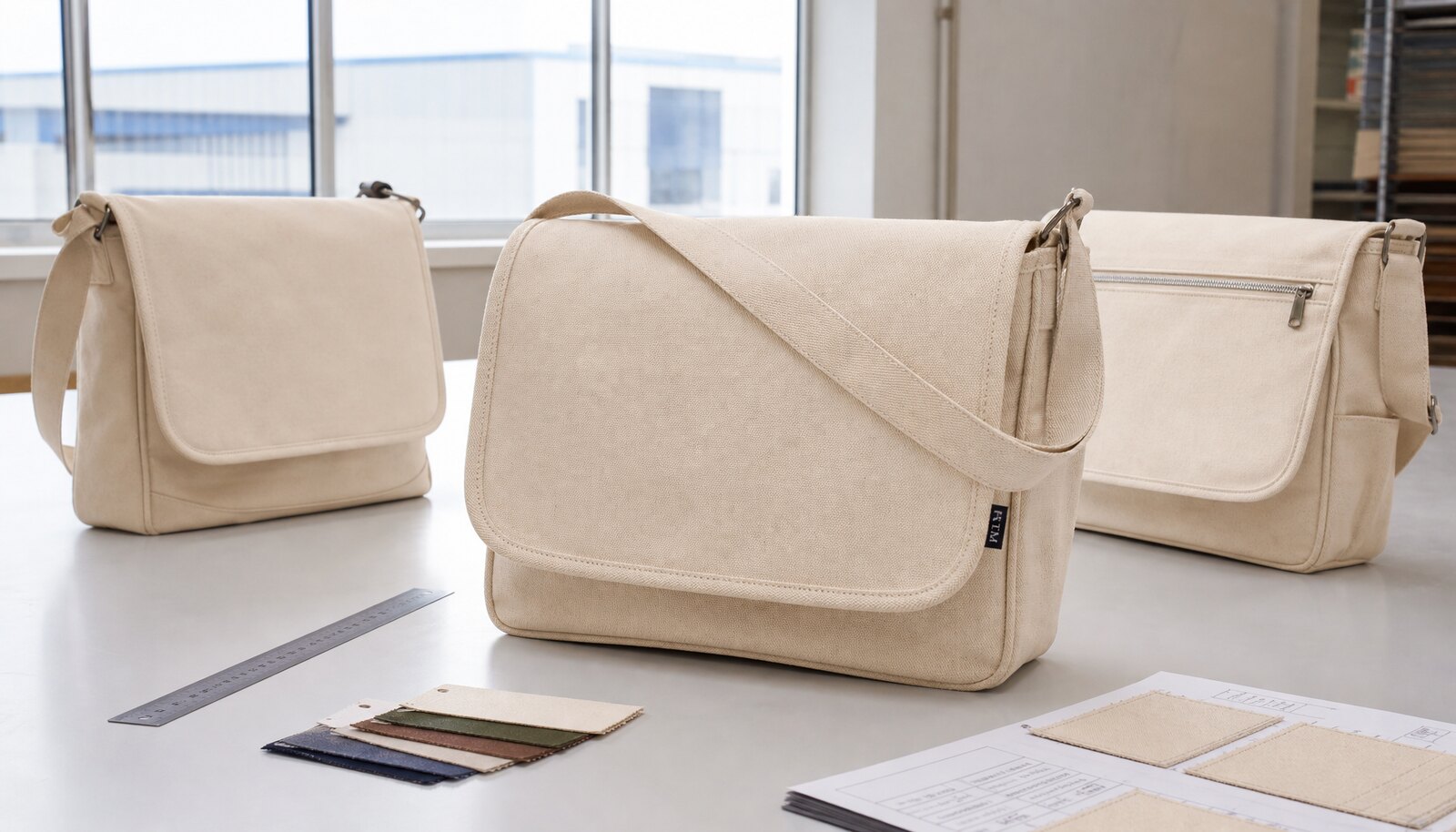
What buyers are really solving
Canvas shoulder bags for events are usually bought to carry printed collateral, notebooks, catalogs, or small gifts while still looking clean enough for brand exposure. The real buying problem is not the bag alone. It is deciding how much structure, print quality, and carrying comfort the event needs without overpaying for a bag that will be used once and discarded. That means the spec has to match the event format. A registration bag for a trade show has different requirements from a retail giveaway bag handed out with samples or a press kit.
This is why buyers in procurement, merchandising, and brand teams should define the use case first. If the bag will be carried from the venue to the office and used again, the strap, fabric weight, and reinforcement matter more than the lowest unit price. If the bag is just meant to hold a catalog and a brochure, the cheapest workable construction may be the right call. A good supplier quote should reflect that difference instead of pushing one generic canvas bag across every event.
- Define what the bag must carry, not just how it should look.
- Match the structure to the event length, reuse expectation, and audience.
- Avoid paying for premium fabric if the bag is only a short-life distribution item.
Choose the fabric weight before you ask for price
For most canvas shoulder bags, the most useful starting points are 8 oz, 10 oz, and 12 oz canvas. An 8 oz bag is usually the lowest-cost option and works when the bag carries light inserts and the brand wants a simple, economical impression. A 10 oz bag is the most balanced choice for many events because it looks more finished, holds shape better, and still packs efficiently. A 12 oz bag is the premium route when the bag must feel substantial and survive repeated use after the event.
Do not stop at the label of the fabric weight. Ask the factory how the canvas is woven, whether it is natural, bleached, or dyed, and whether the bag will be lined. Lining adds cost but can improve appearance, hide internal seams, and reduce ink show-through on light fabric. For shoulder bags, strap width also matters. A 25 mm cotton webbing strap is fine for light loads, while a 38 mm strap is more comfortable for heavier use and reads more premium.
- 8 oz: good for giveaways, light inserts, and aggressive cost targets.
- 10 oz: the default comparison point for most conference and promotional bags.
- 12 oz: suitable when you want better body, stronger hang, and longer reuse.
- Wide webbing straps reduce shoulder fatigue and usually improve perceived quality.
Construction details that change the quote
The quote moves faster when you change the construction than when you change a simple logo size. A flat bag with no lining, a plain top hem, and a single stitched shoulder strap is cheaper than a bag with a gusset, inside binding, reinforced stress points, or a turned-and-topstitched edge. If the bag must stand up on its own, the bottom panel and seam structure need more material and labor. If the bag should fold flat for carton packing, the construction has to stay simpler.
Buyers often miss the cost impact of small structural choices. A deeper gusset increases volume but also changes fabric consumption and sewing time. A sewn-on pocket is useful for event credentials or a schedule card, but it adds an extra operation and another seam to inspect. If the bag will be loaded by staff at an event, a wider opening and a stable base may be worth the extra cost. If it is distributed already packed with flyers, the best design may be the one that stays flat and stacks well.
- Flat, unlined bags usually price better and pack tighter.
- Gussets improve capacity but raise sewing and fabric use.
- Extra pockets, binding, or piping should be requested only if they serve a real function.
Print method should follow artwork complexity
For canvas shoulder bags, screen print is still the cleanest choice when the logo is bold, simple, and limited to one to three colors. It is usually the best method when the artwork needs to stay readable from a distance and the buyer wants repeatability across a large event run. The print area should be specified clearly in millimeters or centimeters, not described vaguely as small or large. A factory can price and position a print accurately only when the artwork placement is fixed on a tech pack or approved mockup.
If the design uses gradients, fine lines, or several colors, heat transfer or digital transfer can be the more practical route for shorter runs. Embroidery can look premium on a small chest-style logo, but it can distort lightweight canvas if the backing is too heavy or the design is too dense. For event bags that will be reused, print durability matters more than visual novelty. The acceptance standard should cover edge sharpness, color match, cure quality, and rub resistance, not just whether the logo looks correct in a photo.
- Screen print for simple, repeatable branding.
- Transfer methods for complex art or short runs.
- Embroidery only when the design size and fabric weight can support it.
- Specify print position and size in your RFQ to reduce dispute.
How to compare supplier routes and quote structures
A clean comparison starts with the sourcing route, not only the unit price. A factory-direct quote should usually be the benchmark because it exposes the real costs of fabric, sewing, printing, packing, and margin. Trading-company quotes can still work well when you need mixed products in one shipment, but you should know whether the bag is being produced by a real sewing line or resold from a third party. Stock-plus-print options are faster, yet they often trade away consistency in fabric shade, strap feel, and packing precision.
When you receive quotes, split them into the same cost buckets so the offer is readable. Ask for the bag body, strap, print setup, labels, inner packing, carton packing, and any special testing separately. If one supplier gives a single all-in number and another itemizes everything, the first quote is harder to trust. For example, a 10 oz unlined bag with one-color screen print may look cheaper in one quote until you notice that the second supplier included labels, carton marks, and a tighter packing count. Quote comparison only works when the scope is aligned.
- Compare identical specs, not loose descriptions.
- Separate print setup from recurring unit cost.
- Use the same packing basis for every supplier quote.
- If possible, compare landed cost, not only ex-factory price.
Sampling should prove the bag can be repeated
For event bags, the sample stage is not just about approval. It is about proving that the factory can repeat the same construction at volume without changing the look. A development sample should confirm the general size, material, and print placement. A pre-production sample should reflect the final fabric, final ink, final strap, and final packing method. The golden sample should then become the reference used by QC and by the buyer when disputes arise on size, color, or workmanship.
Do not approve a sample only because the logo looks right in a photo. Check seam symmetry, strap alignment, bag opening shape, gusset depth, and whether the bag lies flat in the intended carton. If the bag is meant to carry handouts, a sample should also be loaded with a realistic weight to see whether the top seam stretches or the strap pulls out of alignment. A useful approval note is specific enough to stop later arguments. Write down what is acceptable, what is not, and which features are fixed for mass production.
- Development sample: validates concept and rough structure.
- Pre-production sample: locks the final production standard.
- Golden sample: becomes the visual and dimensional reference for bulk QC.
- Load the sample with actual event contents before final approval.
MOQ logic is tied to fabric, print, and packing
Minimum order quantity is rarely one number for the whole order. It is often driven by fabric color, print setup, and packing method. A stock natural canvas bag with one simple print can have a low MOQ because the factory can run it from existing material. A custom dyed color, lined interior, or multiple artwork versions usually pushes the MOQ higher because the factory has to order or reserve special material and spend time on extra setup. Buyers should ask for MOQ by configuration, not just by style name.
The same logic applies to event programs that need multiple versions for different teams or regions. If the logo remains the same but tag lines change, the factory may be able to keep the bag body common and only adjust the print screen or label. That is cheaper than changing the whole bag spec. For retail or distributor orders, it can also be useful to keep the base bag identical and change only the side label or woven patch. The more common parts you keep, the more efficient the order becomes.
- Low MOQ usually comes from stock fabric and simple decoration.
- Custom color, lining, and extra labels usually increase MOQ.
- Separate the base bag MOQ from artwork-version MOQ if you need multiple variants.
Packing and carton planning affect event readiness
Packing is not a back-end detail. It changes freight cost, warehouse handling, and the condition of the bags when they arrive. Flat packing is usually the default for canvas shoulder bags because it keeps cartons dense and reduces transportation waste. But over-compression can create hard fold lines through the logo area, especially on thick ink or embossed labels. If the event team will place inserts inside the bag before distribution, the packing plan should leave enough room for that final handling step without forcing carton damage.
Ask the factory to quote the inner pack and master carton as part of the production specification. You want to know whether each bag goes into a polybag, how many pieces are packed per carton, whether carton markings include size, color, and PO number, and how many cartons are expected per lot. If the bags must be distributed directly from the carton at the event, clean packing becomes part of the product quality. A damaged outer carton or missing count can delay handout plans even if the bags themselves are fine.
- Flat-pack for freight efficiency, but avoid crushing the print face.
- Set carton count and carton dimensions before bulk production starts.
- Use clear master carton marks if the event team will stage bags by location or session.
Lead time risk is mostly fabric and calendar risk
For custom canvas shoulder bags, the production schedule is usually driven by two things: fabric availability and calendar timing. A simple job with standard canvas and one-color print may be quick after sample approval, but once you add dyed fabric, special labels, or late artwork changes, the schedule becomes less stable. If the event date is fixed, work backward from the handover date and leave a buffer for inspection, freight booking, and customs clearance. Buyers who cut the buffer too close usually end up asking for rush production, which is expensive and still risky.
Seasonal pressure matters too. Events cluster around trade show seasons, year-end promotions, and major marketing campaigns. During those periods, the same factory line may be handling several orders with similar materials and print work, which makes sampling and bulk scheduling less flexible. If the order is for a recurring event, it is smarter to place it early and lock the spec than to wait for the last version of artwork. If the order is urgent, the safest route is often to simplify the spec rather than try to rush a complicated build.
- Build in time for sample approval, not just bulk sewing.
- Allow extra time if fabric is dyed, lined, or sourced specially.
- Do not plan the shipment on the event date itself.
- Simpler specs usually recover time better than complex specs.
Specification comparison for buyers
| Spec decision | Recommended option | When it fits | Buyer risk to check |
|---|---|---|---|
| Factory-direct custom run | Best control over size, fabric, strap, and print | Repeat programs, branded event kits, and reorders that need consistent color | Verify the seller is the actual sewing factory, not a broker relaying specs |
| Trading-company bundled source | One vendor handling bags plus other event items | Procurement teams buying across categories and wanting one shipment plan | Confirm who owns QC, who approves samples, and whether the factory name is disclosed |
| Stock blank bag plus local print | Fastest route for urgent events with low volume | Short lead times, simple logo use, and domestic personalization | Print durability, fabric shade, and final bag shape can vary by printer |
| 8 oz canvas body | Lowest cost and lightest hand feel | Giveaway bags carrying brochures, leaflets, or light inserts | Can feel thin, wrinkle easily, and show print strike-through if ink is too heavy |
| 10 oz canvas body | Best balance of cost, structure, and appearance | Most conference, show, and brand-event bags | Confirm actual finished fabric weight and seam quality, not just the supplier claim |
| 12 oz canvas body | More rigid, premium, and reusable | Retail-style event bags or programs where the bag must be kept after the event | Higher freight and sewing cost, and the bag may lose flat-pack efficiency |
| Screen print | Best for bold logos and stable repeat runs | One to three solid colors with larger print areas | Check registration, ink opacity, and curing so the print does not crack or feel tacky |
| Heat transfer or digital transfer | Best for gradients, small text, or complex artwork | Short runs or artwork that cannot be simplified without losing brand detail | Confirm rub resistance and edge lift, especially if the bag will be reused often |
| Woven side label or sewn patch | Adds branding without heavy ink coverage | Minimalist designs or premium event bags that should look clean from a distance | Verify placement, stitch density, and label size so it does not distort the bag body |
Buyer checklist before sampling
- Final bag size in finished dimensions, including gusset depth and strap drop
- Canvas weight target, weave type, and whether the fabric is bleached, natural, or dyed
- Artwork file format, logo colors, print size, and approved placement drawing
- Required strap width, strap length, and reinforcement method at the top seam and body junction
- Target MOQ by color and by artwork version, plus any overrun or underrun tolerance
- Sample sequence required: development sample, pre-production sample, and golden sample
- Packing spec: polybag or bulk pack, carton count, carton mark, and master carton dimensions
- Destination, shipping term, and delivery date with a realistic buffer before the event
- Inspection standard, defect tolerance, and whether random testing is required for the first bulk order
- Reorder plan if the bag will become a recurring event item
Factory quote questions to send
- Are you the sewing factory, or are you quoting from a trading office or sourcing team?
- What is the actual fabric weight in ounces or GSM, and can you state the weave or yarn count used?
- What is included in the unit price: cutting, sewing, print setup, labels, inner packing, and carton packing?
- What is the MOQ by color and by print design, and does a second color or second logo version change the minimum?
- How many sample stages do you provide, and is the sample fee refundable against bulk order?
- What are the exact carton specs, packing quantity, and gross weight per carton?
- What lead time do you quote after sample approval and deposit, and what events could delay it?
- Can you share inspection photos or a pre-shipment QC report from a recent similar bag order?
Quality-control points to confirm
- Measure bag body, gusset, and strap length against the approved sample, with tight control on critical dimensions
- Confirm fabric weight and hand feel match the agreed spec, especially when the supplier offers multiple canvas grades
- Check stitch quality at stress points, including strap top joins, side seams, and bottom corners
- Verify print position, color density, and curing so the logo sits square and does not rub off easily
- Inspect the bag opening and base for symmetry, flatness, and no twisting after sewing
- Reject visible oil stains, broken threads, fabric holes, loose knots, and shade variation beyond the approved tolerance
- Count packed units, carton labels, and inner polybag details to avoid shipment shortfalls
- Use a load or pull test that reflects the event use case, not an unrealistic lab standard the factory cannot reproduce