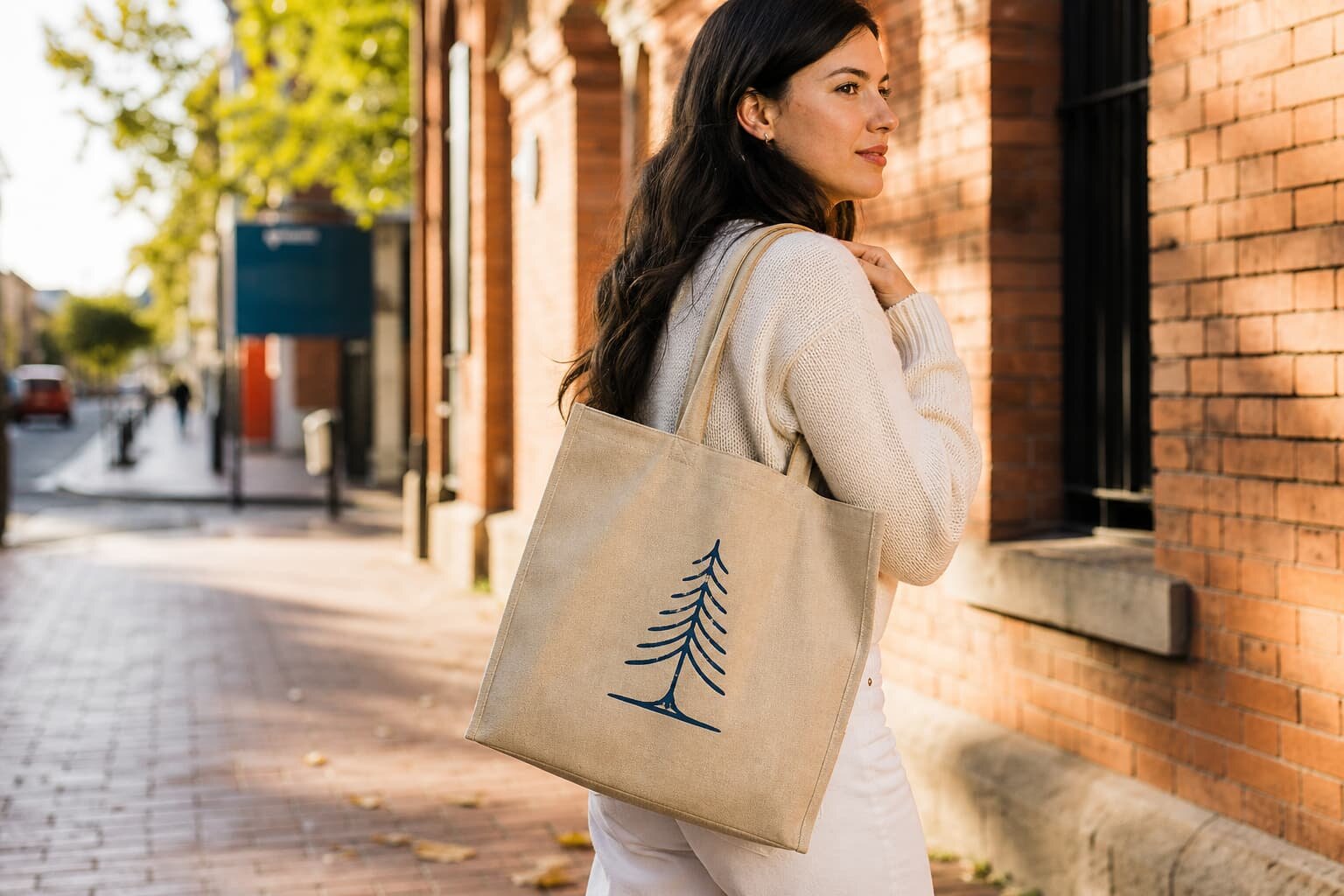
Why shrinkage matters on canvas shopper bags
Canvas shopper bag fabric shrinkage is not only a laundry issue. For import buyers, it affects finished bag size, logo position, panel shape, handle drop, carton fit, and the buyer's claim risk after delivery. A bag that is approved at 38 x 42 cm during sampling can arrive at a different size if the supplier changes from pre-washed canvas to untreated stock canvas, or if the print curing process relaxes the fabric after sewing.
The commercial problem is simple: many quotes show the same bag size and fabric weight, but they are not quoting the same fabric condition. One factory may quote 12 oz pre-shrunk canvas, another may quote 12 oz untreated canvas, and a third may quote fabric that becomes 12 oz only after dyeing and finishing. If the RFQ does not define shrinkage and test timing, the cheapest quote may carry the highest production risk.
- Shrinkage can reduce usable bag dimensions and make a retail pack look inconsistent.
- Uneven warp and weft shrinkage can twist panels or distort boxed gussets.
- Heat curing for screen print or transfer print may change dimensions even without washing.
- A washable care claim should never be approved without a shrinkage and print durability test.
- Finished size tolerance should be agreed before bulk cutting, not negotiated after inspection.
Define the bag condition before you compare quotes
The first RFQ decision is whether the canvas shopper bag is a washable product, a reusable retail bag with spot-clean instructions, or a packaging bag that only needs dimensional stability during normal handling. These are different specifications. A grocery shopper sold as washable needs tighter shrinkage control than a boutique carry bag intended for dry use. If your brand wants to print care instructions inside the bag, those words must match tested performance.
For most canvas shopper bag programs, buyers should specify finished dimensions after all production processes normally used by the factory. That means after fabric finishing, dyeing, printing, curing, sewing, steam trimming, pressing, and final packing preparation. Do not approve only the flat pattern or cut panel measurement. Canvas can relax during sewing and pressing, especially in heavier weights or densely woven fabric.
- Use finished bag size, such as 38 W x 42 H x 10 D cm, not only cut size.
- State whether the measurement is before wash, after wash, or after factory finishing only.
- Separate tolerance for body size, gusset depth, and handle drop.
- Avoid vague wording such as standard shrinkage or normal tolerance.
- Keep the same measurement method for sample approval and final inspection.
Fabric weight, weave, and shrinkage behavior
Canvas shopper bags are commonly quoted in ounces, but many procurement teams also need GSM for internal comparison. A 10 oz canvas is roughly around 340 GSM, 12 oz around 407 GSM, and 14 oz around 475 GSM, depending on yarn, weave, and finishing. These numbers are useful references, not automatic guarantees. Two fabrics with the same GSM can shrink differently if one uses looser yarn tension or has not been sanforized.
Shrinkage usually differs by direction. Warp direction, running along the fabric length, may behave differently from weft direction, running across the fabric width. If a factory only reports one shrinkage number, ask for both. For a shopper bag, width, height, and gusset can be affected differently depending on panel layout. A factory that understands cutting direction can reduce distortion, but only if the buyer asks for the data before approving bulk.
- 8 oz to 10 oz canvas is easier to fold but may show more panel movement.
- 10 oz to 12 oz canvas is a common retail shopper range with good print stability.
- 14 oz and heavier canvas gives structure but may need stronger needle, thread, and seam planning.
- Dyed canvas may shrink differently from natural unbleached canvas.
- Brushed, washed, or enzyme-treated finishes need separate testing because the handfeel process changes fabric behavior.
Pre-shrunk canvas is a specification, not a slogan
Suppliers may use words such as pre-washed, pre-shrunk, sanforized, washed canvas, or finished canvas, but these terms are not always used consistently. A serious quote should explain what was done to the fabric and what shrinkage remains after the process. For example, sanforizing mechanically controls shrinkage before cutting, while garment washing treats the finished bag or panels and can affect shade, handfeel, and seams.
Pre-shrunk fabric often costs more and may require a higher MOQ because the factory must source a specific finished fabric lot or arrange an extra treatment process. That cost can be justified when the bag has a retail size claim, printed artwork close to seams, strict carton packing dimensions, or a washable claim. If the bag is a low-cost event giveaway with spot-clean care only, a buyer may accept a wider tolerance, but this should be a conscious decision.
- Ask what process makes the fabric pre-shrunk and who controls it.
- Request shrinkage percentage remaining after the treatment.
- Confirm whether bulk fabric will match sample fabric from the same mill or lot.
- Check if pre-shrunk fabric changes the MOQ, shade availability, or lead time.
- Do not accept pre-shrunk wording without test data or a retained reference sample.
Print method can change the shrinkage result
Many canvas shopper bags use screen print because it is economical, durable, and suitable for solid brand logos. Water-based pigment print, plastisol print, discharge print on dyed fabric, heat transfer, and digital print are also used depending on artwork. Each print method has a different relationship with heat, pressure, curing time, and fabric surface. A print that looks fine on a swatch can shift or crack if the bag later shrinks more than expected.
Large ink coverage needs special attention. A full front-panel print can stiffen the fabric and make shrinkage uneven between printed and unprinted areas. Heat transfer may require pressure and temperature that affect cotton canvas, especially if the fabric was not stabilized. If the logo sits close to the bottom seam, side seam, or gusset fold, even a small panel movement can make the bag look off-center in retail display.
- For screen print, confirm curing temperature and whether the bag is measured after curing.
- For water-based print, check whether washing or drying is part of the process.
- For heat transfer, test panel size and print adhesion after the same heat setting used in production.
- For dark dyed canvas, test colorfastness and print opacity together with shrinkage.
- For large artwork, approve both logo placement and fabric handfeel after printing.
Sample approval should include shrinkage checks
A normal appearance sample is not enough for shrinkage control. The buyer should ask for a pre-production sample made with the intended bulk fabric, correct print method, actual stitching construction, and planned finishing process. If the supplier cannot provide the exact bulk fabric at sample stage, the sample should be marked as construction reference only, not shrinkage reference.
Measure the sample before and after any required test. If the product is washable, use a defined wash method such as domestic cold wash and line dry, or the buyer's own lab method. If the product is not washable, still measure after print curing, steam pressing, and packing simulation where relevant. Keep photos and a measurement sheet because final inspection disputes are easier to solve when both sides have the same reference.
- Record width at top, middle, and bottom because side seams can pull unevenly.
- Record height from top edge to bottom seam, excluding handle unless specified.
- Measure gusset depth flat and opened, depending on the approved drawing.
- Measure handle drop after load relaxation if the bag is intended for shopping use.
- Mark the sample date, fabric lot if known, print method, and approval status.
Set practical acceptance criteria before bulk cutting
Shrinkage tolerance should be written in a way that factory QC and third-party inspectors can actually use. A realistic finished size tolerance for many canvas shopper bags is plus or minus 1 cm on body width and height, with separate tolerance for gusset and handle drop. Very tight tolerances may be possible, but they usually require better fabric control, more careful cutting, slower sewing, and higher rejection risk.
Acceptance criteria should also include visual results caused by shrinkage, not only numbers. Panel twisting, seam puckering, slanted side seams, uneven gussets, and warped print edges can make a bag unacceptable even if the average dimension is within tolerance. For retail buyers, shelf appearance matters. For distributors, consistency across cartons matters because mixed sizes create complaints during fulfillment.
- Define sample size for measurement during inspection, such as AQL-based or buyer-specific sampling.
- State whether measurement is taken flat, without stretching, on a clean table.
- Confirm whether wrinkles from packing can be steamed before measurement.
- Reject severe twisting even if width and height are technically within tolerance.
- Use the approved pre-production sample as the practical appearance standard.
MOQ, lead time, and cost logic behind shrinkage control
Shrinkage control affects MOQ because the factory may need to buy a full roll quantity, arrange fabric finishing, or avoid mixing fabric lots. Stock natural canvas can often support lower MOQs, while custom dyed, pre-shrunk, or washed canvas may require higher minimums. If you compare quotes without asking this, one supplier may seem more flexible simply because they are using stock untreated fabric.
Lead time can also change. Extra shrinkage testing, lab dips, bulk fabric finishing, pre-production samples, and re-testing after print approval all take time. This does not mean the supplier is slow; it means the process is being controlled. A buyer with a fixed launch date should decide early whether shrinkage stability is more important than the shortest production schedule.
- Stock untreated natural canvas usually gives faster sampling and lower MOQ.
- Pre-shrunk natural canvas may need mill confirmation and roll availability check.
- Custom dyed pre-shrunk canvas requires shade approval plus shrinkage approval.
- Washed finished bags can add processing time and may change seam appearance.
- Repeat orders should reserve the same fabric specification, not just repeat the bag drawing.
Packing and storage can confuse shrinkage claims
Not every size change seen after delivery is true fabric shrinkage. Heavy carton compression, high moisture, uneven folding, and long storage can distort canvas panels. A shopper bag packed too tightly may look smaller or twisted when first removed from the carton. If cartons are stored in humid conditions, cotton canvas can absorb moisture and relax differently across panels.
Packing specification should therefore support dimensional stability. Flat packing is usually safer for shopper bags with printed panels. If individual polybags are used, confirm whether the bag is fully dry before packing and whether any desiccant is required for long sea shipment. Over-compressed cartons may save freight space but increase crease marks, panel distortion, and inspection arguments.
- Define pieces per carton based on fabric thickness and print protection, not only freight cost.
- Avoid sharp folds through the main logo unless the retail presentation accepts it.
- Ask for carton drop and compression logic if the bag uses heavy canvas.
- Check carton moisture condition and odor before shipment.
- Let inspection samples rest flat before final measurement if packing distortion is visible.
How to write the RFQ so quotes are comparable
A good RFQ does not need to be long, but it must remove the easy misunderstandings. State the finished bag size, fabric weight, fabric condition, print method, care claim, shrinkage tolerance, sample requirement, and packing method. If you are open to alternatives, ask suppliers to quote options separately rather than mixing them into one unclear price.
The best supplier response will not only give a unit price. It should identify risk points, such as untreated fabric, large print coverage, custom dyed canvas, or tight finished size tolerance. When a factory explains the cost and lead time impact of pre-shrunk fabric, that is usually a better sign than a quote that says no problem to every requirement without data.
- Quote Option A: stock natural canvas, spot clean only, standard size tolerance.
- Quote Option B: pre-shrunk natural canvas, tested shrinkage, tighter finished tolerance.
- Quote Option C: custom dyed pre-shrunk canvas with print and colorfastness testing.
- Ask suppliers to list fabric weight, fabric condition, MOQ, sample lead time, bulk lead time, packing, and test cost separately.
- Require any deviation from the RFQ to be written clearly in the quotation.
Specification comparison for buyers
| Spec decision | Recommended option | When it fits | Buyer risk to check |
|---|---|---|---|
| Raw fabric weight | 10 oz to 12 oz cotton canvas, about 340 to 407 GSM before finishing | Retail shopper bags needing structure, reusable value, and stable print surface | Ask whether GSM is measured before or after washing, dyeing, coating, or calendaring |
| Pre-shrink treatment | Pre-washed or sanforized canvas with test report by batch | Orders with strict finished size tolerance or printed front panels | Some suppliers quote untreated fabric to reduce cost, then accept high shrinkage later |
| Finished size tolerance | Plus or minus 1 cm for width and height on standard shopper sizes | Most promotional, retail, and distributor programs | Tolerance must be based on finished bag after any washing or heat process |
| Print method | Screen print or water-based pigment print on tested fabric | Solid logos, retail artwork, and moderate color coverage | Large ink coverage may change handfeel and can behave differently after washing |
| Care claim | Spot clean only unless washable performance is tested and approved | Brand giveaways, grocery shoppers, boutique retail packaging | Do not print washable language unless shrinkage, colorfastness, and print durability pass |
| Packing method | Flat packed with controlled folding line, carton moisture control, and no over-compression | Export cartons, warehouse storage, and retail distribution | High humidity and tight compression can distort panels and make shrinkage disputes harder to judge |
Buyer checklist before sampling
- Define whether the bag must be washable, spot clean only, or only stable during normal use.
- State finished bag dimensions after shrinkage-sensitive processes, not only cut panel dimensions.
- Specify fabric weight in oz and GSM, and ask when the factory measures the weight.
- Request shrinkage data for warp and weft direction on the exact fabric lot or approved sample fabric.
- Check sample size before and after washing, steam pressing, curing, or heat transfer application.
- Confirm logo placement after shrinkage because panel movement can shift artwork visually.
- Set an acceptance tolerance for width, height, gusset, handle drop, and print position.
- Ask the factory to identify any process that uses heat, water, steam, pressure, or enzyme washing.
- Require carton packing that avoids moisture exposure and heavy panel creasing during shipment.
- Keep one sealed pre-production sample and one washed or tested sample for final inspection reference.
Factory quote questions to send
- Is the quoted canvas greige, dyed, bleached, washed, sanforized, or otherwise pre-shrunk?
- What is the fabric weight in oz and GSM, and is this before or after finishing?
- What shrinkage percentage do you expect in warp and weft after one domestic wash or the buyer's required test method?
- Which production steps expose the bag or fabric to water, steam, heat curing, calendaring, or pressing?
- Will shrinkage testing be done on fabric rolls, cut panels, finished bags, or all three?
- What finished size tolerance can you guarantee for the selected canvas weight and bag construction?
- Does the print method require heat curing, and has it been tested on the same pre-shrunk fabric?
- What MOQ applies if we require pre-shrunk canvas or custom dyed canvas instead of stock fabric?
- Can you provide a pre-production sample from bulk fabric before mass cutting starts?
- How will cartons be packed to control moisture, compression marks, and size distortion in transit?
Quality-control points to confirm
- Measure fabric roll width, GSM, weave density, and moisture condition before cutting.
- Record warp and weft shrinkage separately because canvas rarely shrinks equally in both directions.
- Measure finished bag width, height, gusset, and handle drop after sewing and after any heat process.
- Compare logo size and placement against the approved sample after curing or pressing.
- Check seam puckering, panel twisting, and uneven side gussets caused by fabric relaxation.
- Review carton packing, polybag choice if used, desiccant need, and carton compression before shipment.