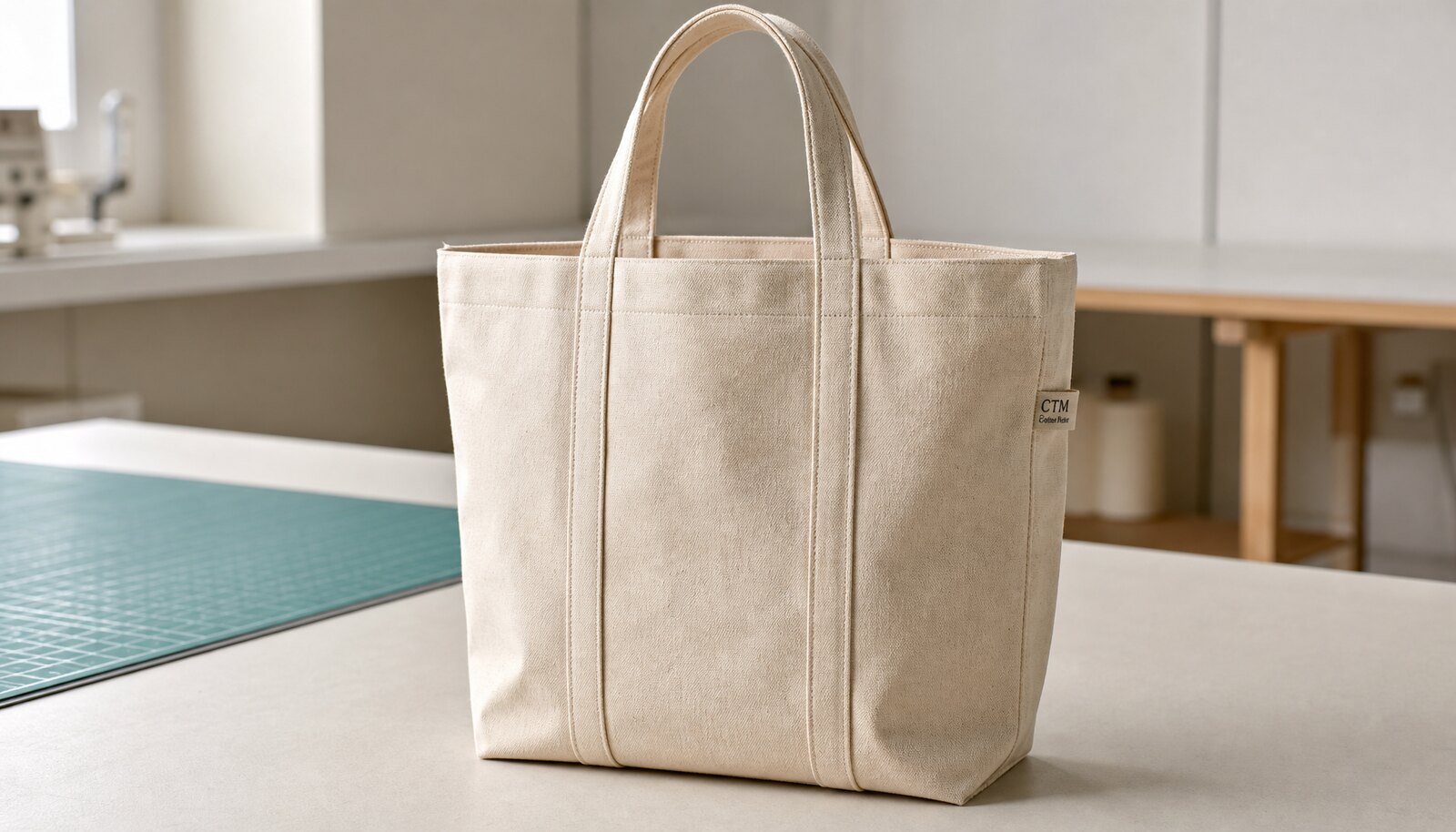
Why trade show tote bags fail in procurement, not at design stage
Most canvas retail merchandise bag problems show up after the order is placed, not when the design is approved. The bag may look fine in a mockup, but the quote can hide a lighter fabric, weaker handle stitching, a different print process, or packing that inflates freight. For trade shows, those gaps become visible fast: the bag needs to feel sturdy in hand, survive repeated folding, and carry printed branding that still looks clean under event lighting.
The buyer mistake is treating the tote like a simple giveaway item. If it is used at a booth, retail table, or brand activation, it is part packaging, part merchandise, and part walking advertisement. That means the QC checklist has to cover more than color and logo placement. It needs to cover fabric weight, seam construction, print tolerance, packing format, and whether the supplier can prove the bag will ship on time in the exact configuration quoted.
- A weak quote often starts with vague language like “good quality canvas” instead of a GSM target.
- Trade show bags are handled, folded, and reused more aggressively than a one-time promo tote.
- Most disputes come from missing details: no handle spec, no packing spec, no sample approval trail.
Start with fabric weight and body feel, not just the artwork
For canvas retail merchandise bags for trade shows, the fabric choice drives both buyer perception and production cost. A 10 oz to 12 oz canvas, or roughly 280 to 340 GSM, is a practical retail range for bags that need to feel substantial without becoming expensive to ship. Below that range, the bag can look soft and thin, especially when empty. Above it, the bag becomes heavier, stiffer, and more costly to carton and freight.
The right choice depends on what the bag is meant to carry. If it will hold brochures and lightweight giveaways, a moderate canvas body is enough. If it needs to carry sample packs, boxed items, or multiple printed inserts, the buyer should ask for reinforced seams and a fabric hand that keeps the bag upright. A good factory quote should name the fabric weight, weave style, and whether the cloth is bleached, natural, or dyed before printing.
- Useful RFQ language: “10 oz canvas, finished bag weight target, natural color, pre-shrunk if available.”
- Ask for the fabric swatch and the actual measured GSM, not just a marketing name.
- Check how the fabric behaves after folding; some low-cost canvas creases heavily and looks cheap at retail handout tables.
Print method should match quantity, artwork, and inspection risk
The print method changes the bag’s look, cost, and defect profile. Screen printing is usually the most efficient choice when the design is a solid logo in one to three colors and the order size is large enough to justify setup. It produces a bold print, but it also requires careful control of registration, ink density, and curing. If the artwork includes fine text, small line work, or gradients, screen print can become harder to hold within tolerance.
For shorter runs, sponsor versions, or event bags with variable artwork, heat transfer or digital transfer may be more practical. Those methods can handle detail, but the buyer has to inspect adhesion, cracking, and edge lifting after folding. The relevant QC question is not only whether the logo looks sharp on the first sample, but whether it still looks acceptable after rub testing, crease testing, and carton compression.
- Use screen print for simple, repeated retail artwork where setup can be amortized.
- Use transfer methods when artwork complexity or short-run versioning matters more than absolute lowest unit cost.
- Require a strike-off or print sample before approving mass production colors.
Compare sourcing routes before comparing unit price
A clean unit price is useful only if the sourcing route is clear. Direct factory sourcing usually gives better visibility into fabric, stitching, packing, and lead time. It is the right route when the buyer needs repeated orders, controlled branding, and stable specs across seasons. Trading companies can help when the order includes several product types or when a buyer needs one consolidation point, but the quote must still show the real factory spec behind the scenes.
For procurement teams, the cheapest quote is not the one with the lowest FOB number. It is the quote with the fewest hidden variances. If one supplier quotes 300 GSM canvas with box stitching and another quotes “standard canvas” with no seam detail, the comparison is meaningless until the buyer forces both into the same spec structure. The table below is the practical way to separate sourcing routes and production decisions.
- Compare fabric weight, stitch detail, and packing format before unit price.
- If two quotes differ in MOQ, find out whether the lower MOQ is tied to a lighter fabric or simpler print method.
- Ask whether the supplier is quoting finished goods or only cut-and-sew labor with buyer-supplied fabric.
Sourcing route comparison for trade show canvas bags
The best sourcing route depends on whether the program is a one-off event, a seasonal retail launch, or a recurring brand supply item. A direct factory can usually give the best control over tolerances and carton planning, while a regional reseller can shorten coordination time but may reduce transparency on what is actually being made. Buyers should select the route based on the risk they are trying to reduce: cost volatility, quality variability, or schedule slippage.
Use the comparison below to decide which route fits the order. It is not a generic supplier list; it is a buying decision grid that shows what each route does well and where the hidden risk usually appears.
MOQ logic, quote structure, and where hidden cost usually sits
MOQ for canvas retail merchandise bags is rarely just a factory minimum; it is usually a function of fabric yield, print setup, cutting efficiency, and packing labor. A one-color logo on a standard size bag can often support a lower MOQ than a multi-color logo with custom gusseting or special inner labeling. Buyers should treat MOQ as a design and production consequence, not as a fixed market rule.
When evaluating quotes, separate the line items that create real cost. Fabric weight, bag size, print colors, handle reinforcement, individual packing, carton count, and special labels all change the quote. A supplier who gives one number without stating inclusions makes it impossible to compare landed cost. The correct buyer response is to ask for the same spec sheet across all suppliers, then compare the total package, not the headline unit price.
- MOQ often rises when artwork changes from one-color to multi-color, or from front-only to front-and-back printing.
- Carton size and inner packing format can move freight cost more than small differences in unit price.
- A low quote with high sample charges or high labeling fees can become the most expensive option after conversion.
Sample approval: what to measure before production release
A physical sample is the only reliable way to approve canvas retail merchandise bags for trade shows when the order matters to branding. The sample should reflect the actual fabric weight, handle length, stitching method, print process, and packed appearance. If the factory sends a sample that is only visually close, the production run can still miss the target when the final cloth is lighter, the print sits differently, or the handle seam is moved to save time.
The sample review should be more than a photo approval. Measure the bag width, height, and gusset; inspect the handle pull area; check print alignment against the seam; and fold the bag as it will be packed in cartons. If the bag wrinkles badly or the print cracks on a simple fold, it is a warning sign before mass production starts. Record the approved sample version in writing so the production team is not guessing later.
- Approve fabric swatch, print strike-off, and finished sample as separate checkpoints when possible.
- Test one loaded bag with realistic contents, not just empty appearance.
- Mark the approved bag with date, artwork version, and buyer sign-off notes.
QC thresholds that matter on the line and at final inspection
Quality control for these bags should focus on measurable defects, not just general appearance. Size tolerance needs to be tight enough that retail packing and carton counts work consistently. Stitch quality matters most at the handle attachment and side seams because those are the first failure points under real trade show use. Print quality should be judged by placement, coverage, and durability after abrasion, not just by whether the color is close on the first glance.
For bulk inspection, define the acceptance criteria before production starts. That includes seam straightness, thread trimming, print registration, fabric shade variation, and carton count accuracy. If the buyer wants to avoid end-customer complaints, the supplier should also be required to show how they handle random inspection failures: rework, replacement, or sorting. A factory with a clear defect handling process is usually safer than one that only promises “good quality.”
- Size tolerance should be stated in centimeters or millimeters, not “close to spec.”
- Handle stitch reinforcement should be visible and consistent across the full order.
- Print rub resistance and fold resistance are especially important for retail display bags.
Packing, carton planning, and retail-readiness tradeoffs
Packing is where many tote bag orders lose money. A bag that is technically correct can still arrive with poor presentation if the folding method is inconsistent or the carton count is off. For trade show use, bulk packing is often the most efficient route because the bags are handed out or inserted into event kits later. For retail resale, however, buyers may need individual polybags, barcode stickers, or branded inserts. Each of those choices changes labor, carton cube, and lead time.
The packing spec should be written with freight in mind. Ask how many bags per carton, what carton dimensions are used, whether the bags are folded flat or stuffed, and whether the carton is reinforced for export. If the bag has a printed surface that can scuff, the factory may need tissue or a separator sheet. Those details are not cosmetic; they affect damage claims, warehouse handling, and how fast the bags can be picked and distributed.
- Bulk pack works well for event logistics and wholesale distribution.
- Individual polybag adds retail value but increases cost and cube.
- Carton marks should match the PO, item code, quantity, and color/version breakdown.
Lead time risk: what a realistic schedule should include
A reliable lead time is built from separate steps: sampling, sample approval, material booking, production, inspection, and packing. Buyers often receive one total number, but that hides where delays actually happen. If the fabric is a special weight or the print requires a new plate or screen, the schedule can slip before cutting even starts. That is why procurement teams should ask for a timeline with milestones, not a single promise date.
For trade show merchandise, the risk is not just late shipment; it is late approval. A factory can make a bag quickly once artwork and sample are locked, but buyers sometimes hold the process during internal review. The practical safeguard is to align internal approvals with the factory timeline and to approve sample versions using the exact final artwork, final bag size, and final packing method. That keeps the production team from building the wrong version on the right calendar.
- Ask for separate timing for blank material sourcing, sampling, mass production, and final inspection.
- Build in time for one sample revision if the artwork is still under review.
- If the order is tied to a show date, create a latest-approved-by date instead of only a ship date.
Specification comparison for buyers
| Spec decision | Recommended option | When it fits | Buyer risk to check |
|---|---|---|---|
| Fabric weight | 10 oz to 12 oz canvas, or 280–340 GSM for retail use | Retail merchandise bags that need a sturdier hand feel and cleaner print surface | Low-GSM fabric can look thin, show print bleed-through, and lose shape at launch tables |
| Print method | Screen print for 1–3 solid colors; heat transfer or digital transfer for short runs and gradients | Trade show bags with a simple logo, event date, or sponsor mark | Fine text may fill in on screen print; transfer prints can crack if wash or fold testing is ignored |
| Handle construction | Reinforced self-fabric handles with box-stitch or cross-stitch at stress points | Bags carrying catalogs, samples, catalogs with inserts, or heavier giveaway items | Weak handle stitch density causes returns after only a few show days |
| Bag size | Around 14 x 16 in to 15 x 18 in with gusset if the bag must hold brochures and product packs | Merchandise bags used at registration, booth sales, or retail checkout | A flat bag may be too narrow for boxed items; oversized bags raise freight and material cost |
| Closure style | Open top for fast handout; zipper or snap only when product security matters | Trade show giveaways where speed matters more than theft prevention | Adding closures increases labor, cost, and QC risk without improving event usability in many cases |
| Supplier route | Direct factory for repeat programs; trading company only when you need multi-category consolidation | Importers and brand teams with defined specs and steady yearly volume | Middlemen may hide fabric origin, stitch specs, or carton counts, making quote comparison difficult |
| Sampling route | Pre-production sample after fabric and print strike-off approval | Any branded order with a fixed launch date or retail distribution plan | Skipping a true pre-production sample often leads to unexpected color, size, or placement issues |
| Packing format | Bulk packed by standard carton count with clear barcode/carton mark; individual polybag only if retail-ready is required | Wholesale shipment to DC, store backstock, or kitted event supply | Retail-ready packing adds cost and cube; loose packing without carton discipline creates count disputes |
| Quality acceptance | AQL-style inspection with measured size tolerance, seam strength, and print placement checks | Orders where the bag will be seen by buyers, press, or retail customers | Visual-only inspection misses stitch failures, shade variation, and misaligned logos |
Buyer checklist before sampling
- Confirm fabric weight in GSM and the woven fabric type before comparing quotes.
- Lock artwork size, print colors, and placement with a measured mockup.
- Define handle length, stitch type, and reinforcement detail in the RFQ.
- Set acceptable size tolerance, print shift tolerance, and shade range.
- Request both pre-production sample photos and a physical sample for approval.
- Specify packing method, carton count, and barcode/carton mark format.
- Ask for production lead time, sampling time, and shipment cutoff timing separately.
- Compare quote inclusions line by line: fabric, print, sampling, packing, and freight terms.
- Set inspection criteria for seam quality, handle pull, and print rub resistance.
Factory quote questions to send
- What exact canvas weight are you quoting, in GSM and finished fabric construction?
- Is the quote based on a standard tote pattern, or does it include custom sizing and gusset changes?
- Which print method is included, and what is the cost difference for one, two, or three colors?
- What is the MOQ by color, print version, and packing configuration?
- What sample stages are included before mass production, and what are the sample charges?
- What are your size tolerances, stitch allowance, and handle reinforcement standards?
- How many bags per carton, and what outer carton dimensions do you use for freight planning?
- What is the production lead time after sample approval, and what factors can extend it?
- Does the quote include carton marks, barcodes, polybags, inserts, or retail labeling if needed?
Quality-control points to confirm
- Fabric weight matches the approved GSM tolerance and is not visibly underweight at the bag body or gusset.
- Bag dimensions stay within the agreed production tolerance for width, height, and gusset depth.
- Handle attachment uses the agreed stitch pattern and shows no loose thread, skipped stitches, or edge fraying.
- Print placement aligns with the approved artwork position and does not distort on seam lines.
- Print surface has no major cracking, smudging, ghosting, or uneven ink coverage under close inspection.
- Top edge, side seam, and bottom seam are straight, secure, and free of seam puckering.
- Carton count matches the packing list, and inner packing keeps bags flat enough to avoid crushing.
- Sample approval records include fabric swatch, artwork proof, and production sign-off notes.