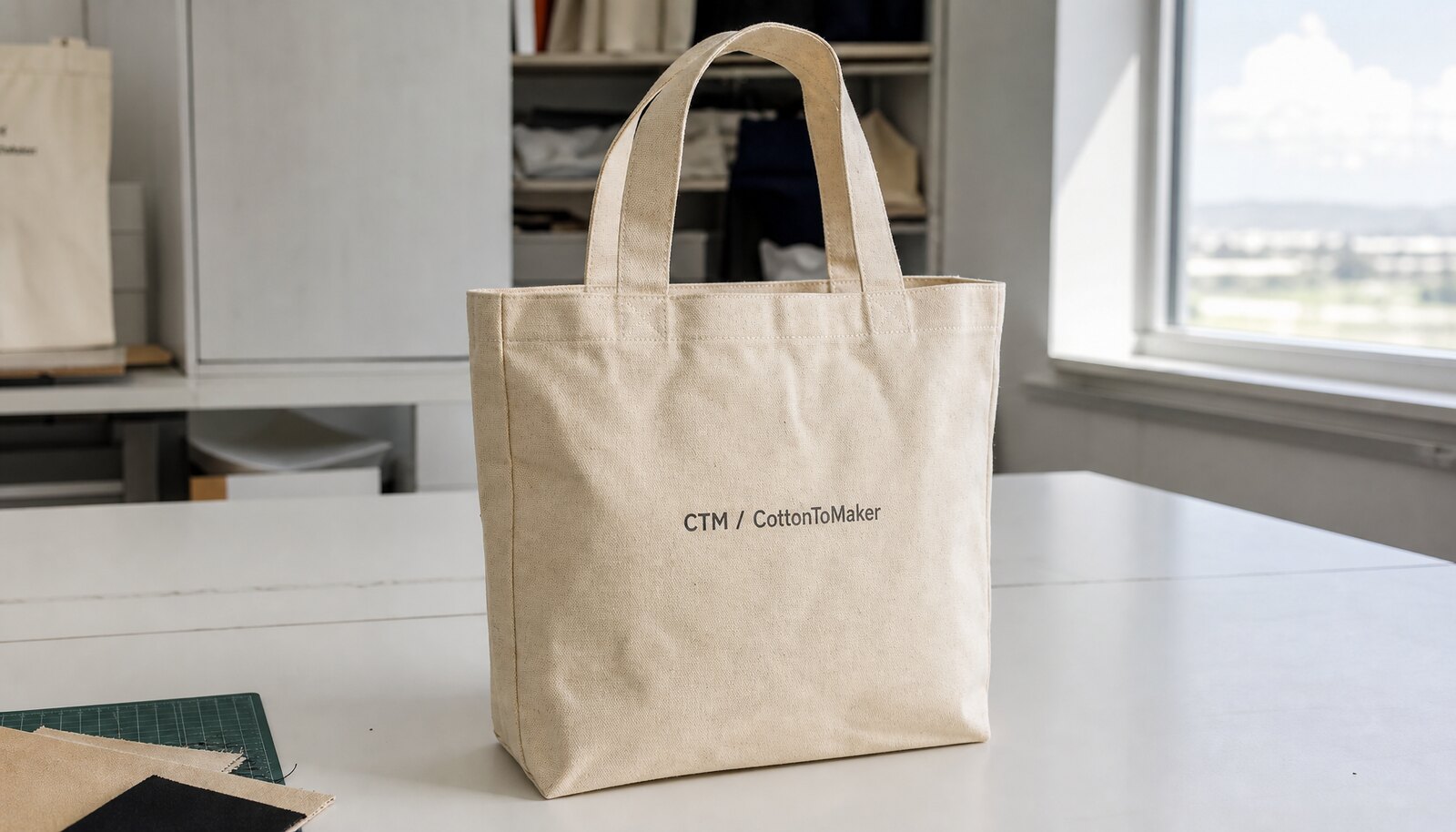
Why the print method matters on winery retail bags
For winery retail merchandise, the bag is not just a carry item. It sits in the tasting room, gets folded and reopened, and often becomes a secondary shopping bag after the first purchase. That means the decoration method affects both shelf impression and how the bag survives handling. A method that looks cheap in the sample room usually looks worse after shipping, folding, and customer use.
The right choice depends on what the art is doing. A one-color winery mark has different needs from a label-style crest, a seasonal event graphic, or a premium souvenir piece. When buyers compare quotes, they should not let the factory bundle blank bag quality and print choice into one vague number. Separate the bag spec from the decoration route, then compare durability, MOQ, and replacement risk on the same basis.
- A simple logo often belongs on screen print because the line work stays clean and the unit cost is easier to control.
- Detailed or late-changing artwork can justify transfer methods, but only if the durability tradeoff is acceptable.
- If the bag is meant to be reused after a tasting-room purchase, the print has to survive folding, scuffing, and shelf display.
Start with fabric weight and bag construction
Canvas weight changes both the feel of the bag and the way decoration behaves. As a practical reference, 8 oz canvas is often around 270-300 GSM, 10 oz around 340-360 GSM, and 12 oz around 400-420 GSM, although mills vary. For winery retail bags, 10 oz or 12 oz is usually the safer range because the bag feels substantial, holds shape better, and accepts print with less show-through than very light canvas.
Construction matters just as much as weight. Handle length, gusset depth, seam allowance, and whether the bag is washed or unwashed all affect how the decoration lands on the finished product. A sewn seam can distort a logo. A gusset can swallow part of a graphic if the art placement is not planned around the fold. If the bag will carry bottles or boxed gifts, reinforcement at the handle and base should be specified before decoration is approved.
- Prefer 10-12 oz canvas for most retail winery orders unless the buyer is chasing a lighter souvenir price point.
- Give the factory finished dimensions, not only cut size, because print placement changes after sewing.
- Avoid placing key logo elements across seams, gussets, or heavy top stitching.
Which decoration route fits which buying problem
For most wineries, screen print is the baseline because it handles simple logos well and keeps unit cost predictable on repeat orders. A one-color or two-color spot design on natural canvas is usually the cleanest commercial solution if the art does not need photo detail. Embroidery or a sewn patch makes sense when the buyer wants a richer gift-shop feel, but it is not the right tool for fine line art or busy graphics. Digital transfer is useful when the order is short, the artwork changes often, or the buyer needs a fast pilot run before committing to a larger program.
The sourcing route matters as much as the method. A direct bag factory with in-house printing usually gives tighter control and fewer handoffs. A trading company can still work if it can prove where the print is done and who inspects it. A split route, where blank bags are imported and decorated locally, can help with speed or compliance, but it adds freight, handling, and duplicate QC. The table in this guide compares those routes so you can see which one matches the commercial problem rather than the supplier's preference.
- Use screen print when the logo is stable, the order will repeat, and you want the lowest risk on a standard canvas tote.
- Use embroidery or a patch when the bag needs a premium retail feel and the logo is simple enough to survive stitch translation.
- Use transfer methods when speed and flexibility matter more than the lowest long-run decoration cost.
What actually drives the quote
A usable quote is built from separate line items: blank bag cost, decoration setup, production run, packaging, cartons, and freight terms. If a supplier sends one blended number, it is harder to compare routes or understand where the cost is hiding. Screen printing usually carries a screen or setup charge, and that charge gets spread across volume. Embroidery often adds digitizing or patch setup. Transfer methods tend to reduce setup but can push up the unit cost or scrap rate on rough canvas.
MOQ logic should follow complexity, not just the factory's default minimum. A one-color logo on a 10 oz bag can often be run at a lower quantity than a full-color or multi-position decoration. That is why buyers should ask for price breaks at several quantities, such as 300, 500, 1,000, and 3,000 units, and ask the factory to separate setup from production. Once setup is visible, you can see whether a slightly higher unit price at a lower MOQ is actually cheaper for the business.
- Ask for the quote to show the blank bag, decoration, packing, carton, and inland freight separately.
- If a supplier refuses to break out setup, the numbers are harder to trust.
- Compare MOQ against the number of colors, print positions, and bag sizes, not just against the headline order volume.
How to compare suppliers without comparing the wrong thing
The fastest way to get useless quotes is to let suppliers guess the spec. A valid comparison needs the same bag dimensions, the same GSM, the same art size, the same print position, and the same packing requirement. If one factory quotes a 240 GSM bag and another quotes a 360 GSM bag, the lower price means nothing. The same problem appears when one supplier includes polybags and cartons while another leaves them out.
Supplier evidence matters because many bag programs move through layered channels. A factory that cuts, sews, and prints in one site usually has fewer handoff failures than a trader that outsources decoration, but the real issue is control. Ask for production photos of the same method, not a polished catalog shot. If the quote is unusually low, look first for omitted packaging, underweight fabric, or print work being pushed to a subcontractor without stated QC ownership.
- Require actual production photos or a sample from the same fabric and method.
- Confirm who owns the print process, the sewing process, and the final packing inspection.
- Treat a very low quote as a signal to check what was left out, not as proof of efficiency.
Sample approval should be based on the sewn bag, not the artwork file
A proper sample for winery retail canvas bags includes more than a PDF proof. It should show the decorated bag on the final fabric, plus a close look at the stitching, print edges, and any label or patch attachment. Canvas absorbs ink differently from paper, and a design that looks centered in a mockup can shift once it is sewn and folded. Approving the print on the actual bag prevents surprises in color gain, line thickness, and placement.
Set your approval criteria in measurable terms. Define logo width, placement tolerance, color reference, and what counts as acceptable edge softness or bleed. If the bag uses embroidery or a sewn patch, inspect the back side and the seam finish because messy thread tails become visible in retail handling. For seasonal winery artwork, lock the file early and freeze revisions before the factory starts screens or digitizing. Late changes almost always cost time and money.
- Approve on final fabric, not on artwork alone.
- Ask for a strike-off or decorated sample plus a photo of the full sewn bag.
- Freeze artwork before tooling starts if you want a predictable schedule.
Quality control points that matter in production
The most common defects on canvas retail bags are not exotic. They are misregistration, faint ink, crooked handles, skipped stitches, dirty fabric marks, and fold damage from tight packing. Some issues are obvious in a flat sample but become much more visible once the bag is stuffed, folded, or opened at the store. A buyer should define the rejection line before bulk production so the factory is not making subjective decisions on the line.
For print quality, the key question is whether the mark reads cleanly at normal viewing distance and holds up after handling. For sewing quality, check handle reinforcement, seam straightness, and the cleanliness of any label or patch attachment. If the bags are intended for retail display rather than just transit, ask for a carton opening check so the fold line does not cut through the logo or leave a permanent crease in the visible face.
- Reject obvious registration drift, uneven ink coverage, and visible logo distortion at normal viewing distance.
- Check handle reinforcement and seam finish on every pre-production sample.
- Inspect a random carton opening before bulk shipment to catch packing marks and crease problems.
Packing choices can make a good bag look cheap
Packing is part of the product, especially for retail merchandise. A wine shop bag that arrives over-compressed can show a hard fold line, while a bag packed too loosely may arrive wrinkled and hard to merchandise. If the bag will be sold folded on a shelf, the fold direction and inner pack count should be designed around the retail display, not just factory efficiency. Polybags, tissue, and hang tags all add cost, so they should be used for a reason rather than by habit.
Carton planning matters for importers because the receiving team needs stable counts and readable marks. Ask for the inner pack count, carton dimensions, gross weight, and whether the bags are nested or flat-packed. If the order will ship to multiple tasting rooms or direct to stores, define replenishment-friendly pack sizes rather than forcing the factory's standard count into your warehouse flow. Small packing decisions can create big labor costs on the receiving dock.
- Use the fold direction and inner pack count to protect the visible logo area.
- Avoid unnecessary overpacking if the bag is going straight into retail merchandising.
- Make carton marks and count labels easy to read at warehouse intake.
Lead time and landed cost need to be compared together
A winery bag program usually has three timing blocks: sample approval, production, and packing or freight. Screen print on a stable reorder can be faster than a patch or embroidery program, but only if artwork is already approved and the supplier has the right fabric in stock. If the order lands near a seasonal release or holiday push, build margin into the schedule for artwork revision, dye lot variation, and line congestion at the factory.
Landed cost is where the method decision becomes real. Compare the sellable unit cost after setup, packing, rework allowance, inland freight, and import duty if applicable. A lower ex-factory quote can disappear once the order is split across too many cartons, packed inefficiently, or rejected for print quality. Buyers should evaluate the cost per acceptable bag, not the cheapest paper quote on the first page of the email.
- Measure total timeline from final art approval to packed goods, not from the first inquiry.
- Compare cost per sellable bag after packing, rejects, and freight are included.
- Watch for schedule risk if the supplier needs to outsource decoration or buy the blank bag from another source.
A practical RFQ structure for repeatable buying
The cleanest RFQ is short but complete. It should name the bag dimensions, fabric GSM, handle length, color, decoration method, logo size, packaging spec, and target order quantity. If you are undecided on the print route, ask the supplier to quote the primary method and one fallback method so the business can compare cost and risk side by side. That approach is more useful than sending a vague request and hoping the factory fills in the blanks correctly.
For wineries and retail buyers, the best order structure is often tied to the commercial use case. A small tasting-room launch can justify a simple screen print or patch. A larger, repeatable retail program usually rewards a direct factory route with in-house decoration. If the goal is to support a holiday release or a late artwork change, a transfer method can be acceptable, but only if you write the durability and packaging requirements clearly. The more precise the RFQ, the less time the buyer spends cleaning up quote noise later.
- State the target use case: tasting room, gift shop, event merch, or retail resale.
- Include one primary print method and one fallback method if you need the supplier to price options.
- Make the supplier quote the same artwork and the same packing spec across all offers.
Specification comparison for buyers
| Spec decision | Recommended option | When it fits | Buyer risk to check |
|---|---|---|---|
| Single-color winery logo on natural canvas | In-house screen print on 10-12 oz canvas | Clean brand marks, reorder business, and retail bags that need a strong but simple finish | Check ink opacity, cure quality, and whether the logo stays sharp after repeated folding |
| Two- to four-color art with clear edges | Separated screen print with proper registration control | Retail graphics, crest-style artwork, and labels that need clean spot colors | Check color match tolerance and whether the factory can hold alignment across all colors |
| Small seasonal run with many SKU changes | DTF or transfer decoration through a decorator that accepts short runs | Pilot programs, event-driven winery launches, and artwork that may change late | Check hand feel, edge lift, and cracking after fold and rub handling |
| Premium souvenir bag with a higher perceived value | Embroidered patch or direct embroidery on a stable panel | Gift shop lines where texture matters more than fine artwork detail | Check stitch density, puckering, and whether the needle holes distort light canvas |
| Minimalist brand mark or subtle retail look | Woven label or sewn patch instead of full print | When the buyer wants low visual noise or a more elevated souvenir feel | Check label placement, sew quality, and whether the brand mark is still visible at shelf distance |
| Imported blank bags with local decoration | Split sourcing route: blank bag factory plus domestic decorator | When artwork is finalized late, local compliance matters, or decoration has to happen near the market | Check duplicate QC risk, extra freight, and whether blank bag dimensions stay consistent across batches |
| Large reorder with stable artwork | Direct factory screen print under a repeat order setup | When the same design will run again and unit economics matter most | Check whether print screens, fabric lots, and ink batches remain consistent across replenishment orders |
| Photo-style graphics or gradients | Digital transfer on a prepared canvas panel | Use only when the art genuinely needs continuous-tone detail | Check adhesion after heat, abrasion, and repeated folding because this route is less forgiving on rough canvas |
Buyer checklist before sampling
- Lock the bag spec first: finished size, fabric GSM, handle length, gusset depth, and whether the canvas is natural, bleached, or dyed.
- State the decoration method you want to compare, and ask the supplier to quote the same artwork in a second fallback method if the first choice is too expensive or too risky.
- Request a decorated sample on the final fabric, not only a paper proof, and approve logo size, placement, and color against a named reference.
- Separate blank bag cost, decoration cost, packing cost, and carton cost so the real unit price is comparable across suppliers.
- Ask for carton count, inner pack count, and folding direction because retail presentation and crease marks can affect sell-through.
- Define the lead time by stage: sample, artwork approval, production, packing, and dispatch.
- Set a defect standard before production starts, including print registration, stitch quality, and allowable shading or fabric variation.
- Compare landed cost per sellable bag, not just ex-factory unit price.
Factory quote questions to send
- What is the exact blank bag spec, including dimensions, GSM, handle length, seam construction, and whether the canvas is washed or unwashed?
- Is the decoration done in-house or outsourced, and who owns the print, stitch, or transfer quality check?
- What is the MOQ by decoration method and by color count, and where do the price breaks start?
- What setup charges apply for screens, digitizing, embroidery, or transfer artwork?
- Can you show a decorated sample or recent production photo from the same fabric and the same print method?
- What is included in the quote: blank bag, decoration, inner pack, polybag, carton, label, and inland freight?
- What is the lead time from final artwork approval to packed goods, and what stage usually causes delay?
- What QC standard do you use for print registration, seam strength, and carton packing, and what happens if defects are found?
Quality-control points to confirm
- Confirm fabric weight, finished size, and handle length against the approved tech pack before bulk cutting starts.
- Check print placement on the actual sewn bag, not just on a flat panel, because seams and gussets change alignment.
- Verify ink coverage, edge sharpness, and color match under daylight and warehouse lighting.
- Run a rub and fold check on the decorated area to see whether the print cracks, smears, or scuffs easily.
- Inspect stitch quality around handles, side seams, gusset corners, and any patch or label attachment points.
- Set a standard for loose threads, skipped stitches, and needle marks, especially on lighter natural canvas.
- Open cartons at random to confirm fold direction, inner pack count, and whether packing pressure is leaving permanent creases.
- Check carton marks, barcode placement, and master carton count so inbound receiving at the warehouse is straightforward.