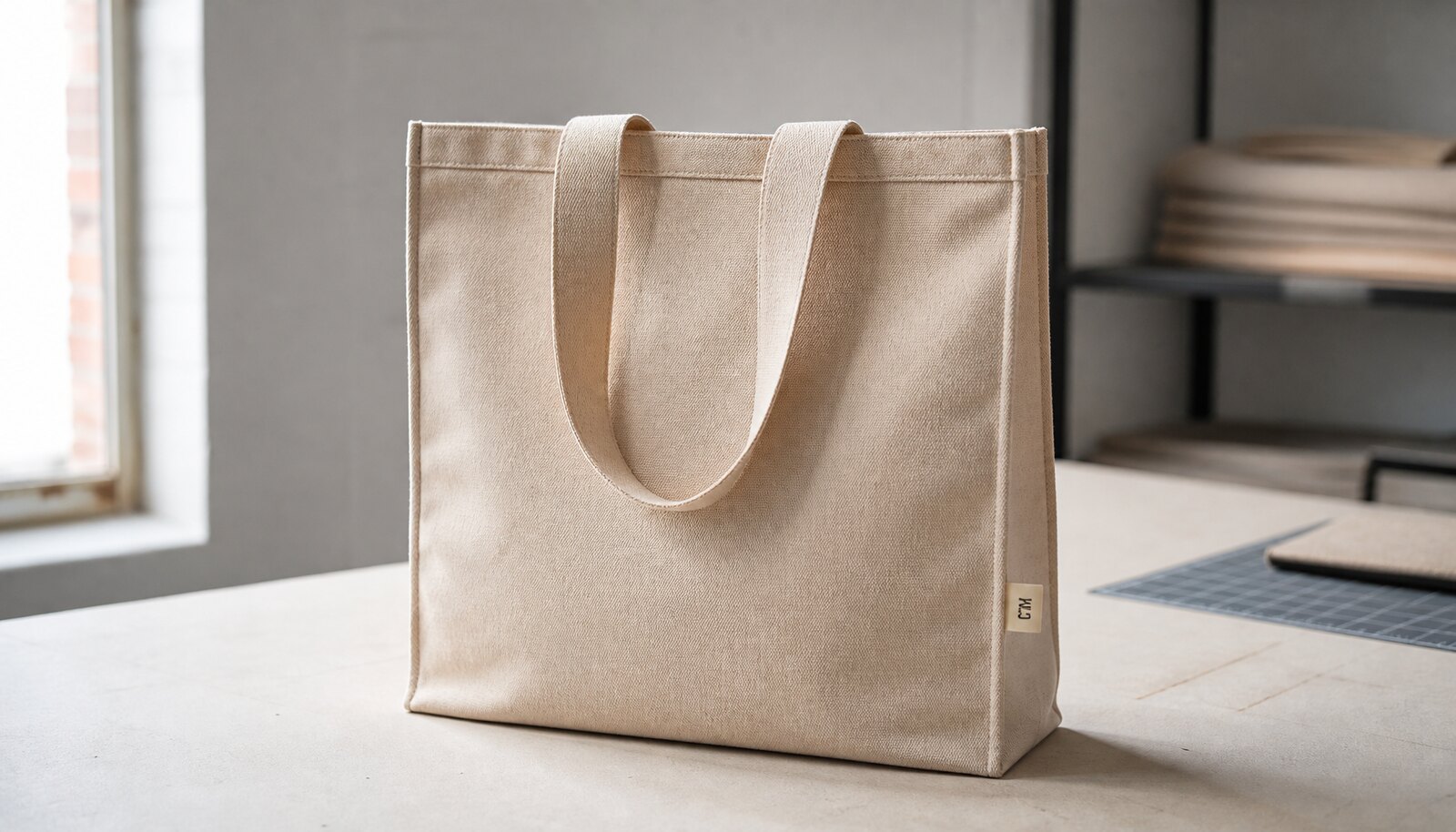
Start With the Bag’s Job
For winery retail merchandise, the bag is not just a carrier. It is part of the sale, part of the brand shelf, and often part of the customer experience after the purchase. That means the material decision has to start with the real use case: a single bottle in a tasting room, a two-bottle gift set, a club shipment add-on, or a general retail tote that customers will reuse. If you start with artwork first, you usually end up with a bag that looks right in a PDF and performs badly when a bottle swings in it.
The practical buyer question is simple: what load, look, and lifespan does the bag need to survive? A thin tote can work for light souvenirs, but if the bag is sold as merchandise or used with glass bottles, it needs enough body to stand up, enough seam strength to handle movement, and enough print quality to look worth keeping. That is why a winery tote should be specified as a retail product, not as a generic cotton bag with a logo. A clear use case gives you a clean quote, a better sample, and fewer arguments later.
- For a single-bottle retail bag, prioritize handle reinforcement and a stable bottom.
- For tasting room display, prioritize shelf shape, print clarity, and fold appearance.
- For gift set use, prioritize load-bearing fabric and a build that keeps the bag upright.
Choose the Canvas Weight
Most quote confusion starts with fabric weight. Some suppliers speak in oz, others in GSM, and the same marketing term can hide different actual fabric structures. As a working range, 10 oz canvas is often suitable for lighter retail merchandise, 12 oz is the standard baseline for a winery tote that needs more body, 14 oz is better for premium presentation or bottle carry, and 16 oz is only worth it when structure matters more than flexibility. Do not compare one supplier’s oz claim with another supplier’s GSM claim unless you know the conversion basis and the weave density behind it.
For wineries, 12 oz is usually the safest starting point because it balances hand feel, print behavior, and retail value. If the bag is sold in a tasting room, it should not collapse when displayed on a hook or counter. If the bag is meant to carry a bottle, the fabric should resist stretching at the handle root and should not show the bottle outline too aggressively. Heavier canvas feels more premium, but it also folds stiffer, costs more to ship, and can make the sewing window tighter. The best choice is the one that matches the sales channel, not the one that sounds strongest on paper.
- 10 oz or around 340 GSM works for light souvenirs and low-risk merch.
- 12 oz or around 400 GSM is the best all-round baseline for winery retail bags.
- 14 oz or around 470 GSM suits premium gift sets and heavier bottle carry.
- Ask for one measurement system across all quotes so the bids stay comparable.
Lock the Build Details
A weak tote is often a construction problem, not a fabric problem. Handle width, handle drop, seam allowance, gusset depth, and the reinforcement at the handle root all affect how the bag behaves once a bottle is inside it. The cheapest quote is often the one that silently trims reinforcement or simplifies the handle stitch. That is where the bag fails in use. If the tote will carry glass, the handle area deserves the most attention in the spec, not the least.
The bag should also match the merchandising job. A flat merchandise tote can be light and simple, but a bottle tote should stand up and open cleanly. A bottom gusset or board insert adds structure, while bar tacks or an X-box stitch improve durability at the load points. If the supplier quotes only finished size and fabric weight, you do not yet have a real production spec. You have a rough idea. Ask for the actual sewing details so one factory cannot hide a lighter build behind a similar-looking sample.
- Specify handle width and handle drop, not only the overall bag size.
- Call out bar tacks, X-box reinforcement, and seam allowance explicitly.
- If the bag must stand up on shelf, include gusset depth or a board insert in the build.
Match Print Method to Fabric
Decoration choice should follow the material and the sales channel. Screen print is still the most reliable option for natural canvas because it gives a clean balance of cost, durability, and visual impact on one- or two-color artwork. Embroidery can work on a premium item, but it raises cost, adds thickness, and is rarely the right answer for a large retail graphic. Heat transfer or direct-to-film can be useful for short runs, but the buyer has to test hand feel, edge lift, and rub resistance on the actual canvas, not on a sample patch.
Wineries should avoid artwork that depends on very fine type or tight halftones unless the factory proves it can hold registration on the chosen fabric. Canvas texture changes how ink settles, and a design that looks sharp on screen can lose definition in bulk if the print screen, ink load, or cure process is weak. For a retail bag, the print needs to survive repeated handling in a store, in a car, and at home. A bold, readable mark almost always performs better than a delicate one that only looks good in a digital mockup.
- Use screen print for most natural canvas retail runs with one or two colors.
- Use embroidery only when the logo is small and premium positioning justifies the extra cost.
- Require a rub test and a real-fabric sample before approving fine text or detailed art.
- Keep labels and print zones clear of fold lines so the branding is visible on shelf.
Pick the Right Sourcing Route
The sourcing route affects both price and control. A direct cut-and-sew factory is usually the best fit once the program needs custom size, reinforcement, repeat replenishment, and packaging control. A trading company can be helpful when your team needs one contact for several SKUs, but it adds a layer between you and the sewing floor. Stock blank bags with local printing can solve a pilot or urgent seasonal need, but you give up a lot of control over fit, fabric weight, and finished presentation.
MOQ is not one fixed number. It moves with fabric source, dyeing, print colors, trim complexity, and whether the factory already has suitable canvas in stock. Natural canvas with a single print color is much easier to run than dyed canvas with lining, label, and board insert. When you compare suppliers, separate the MOQ for fabric procurement, print setup, and final assembly. That shows whether the quote reflects real capacity or just the supplier trying to sell you whatever is easiest for them to make.
- Direct factory works best when you need a stable repeat program and clear build control.
- Trading company works best when communication support matters more than factory transparency.
- Stock blank plus local print works best for pilots, launches, or short-term replenishment.
- Ask whether fabric, print, and assembly have separate MOQ thresholds.
Approve a Sample That Reflects Production
A sample is only useful if it matches the bulk plan. Too many buyers approve a presentation sample made from a different canvas weight or a different trim package, then discover that the production bag feels thinner, hangs differently, or prints less cleanly. The sample should use the same fabric, same decoration method, same handle construction, and same packing method that will run in bulk. If the goal is to avoid surprises, a pretty sample with the wrong material is a bad sample.
Use the sample to settle the dimensions that quotes often blur. Check opening width, handle drop, gusset depth, fold size, print placement, and whether the bag stands upright when loaded with the intended bottle set. If the bag wrinkles badly after folding, shifts under weight, or looks uneven at the top hem, the bulk run will do the same unless the factory changes the construction. That is why sample approval should be tied to a clear acceptance standard, not to whether the bag looks close enough from a distance.
- Test the sample with the actual bottle weight, not an empty bag.
- Check print position, seam symmetry, and handle alignment on the finished sample.
- Approve the fold, carton count, and label placement before bulk starts.
- Reject any sample that uses substitute fabric or a substitute decoration process.
Plan Packing for Retail Use
Packing affects the buyer experience more than most quote sheets admit. A winery merch bag is often opened by store staff, placed on a shelf, or bundled into a gift set before the end customer ever touches it. If the bag arrives dusty, creased, or packed in a way that crushes the print panel, the retail team inherits a problem even when the sewing is fine. Decide early whether the bag should ship flat, folded with tissue, in an individual polybag, or in a bulk carton for quick shelf setup.
The packing format should match how the bag is sold. If it hangs on a hook, the front graphic should be visible immediately after unboxing. If it is displayed in a bin, the carton count and stackability matter more. If it is part of a premium gift program, the bag may need a cleaner fold and a more controlled carton layout to protect the print face. A small change in fold direction or carton dimensions can reduce freight waste and improve shelf presentation at the same time.
- Keep the print face protected by the fold direction and carton layout.
- Use individual polybags only when dust control or ecommerce handling justifies it.
- Specify barcode, carton mark, and pack count so warehouse receiving is simple.
- Make sure the bag size still works after the chosen fold is applied.
Manage Lead Time Around Launch Pressure
Lead time is usually longer than the sewing calendar suggests because the real schedule includes fabric availability, sample approval, print setup, cutting, packing, and shipping. If the fabric needs custom dyeing or the artwork goes through multiple revisions, the calendar can move far more at the front end than at the production stage. Buyers should build the timeline backward from the in-store date or campaign date, not forward from the day the factory says it can start sewing.
This matters most for harvest-season retail, holiday gifting, and wine club drops. Those windows leave little room for art changes or sample corrections. The safest approach is to freeze the spec early, assign one internal decision maker, and define what happens if the sample needs revision. A slightly simpler bag that ships on time is usually better than a more complex build that lands after the campaign is over. On winery retail programs, timing often matters more than one extra decorative detail.
- Build buffer for sample revision, fabric booking, and print setup.
- Freeze art before cutting, not after the factory has started material prep.
- Plan more lead time if the bag uses custom dye, lining, or extra reinforcements.
- Confirm the shipping mode and booking window before approving the bulk run.
Compare Quotes on Landed Cost, Not Unit Price
The cheapest unit price is not always the lowest landed cost. A thin bag can look attractive on a quote sheet, but if it arrives limp, prints poorly, or fails under bottle weight, the real cost rises through returns, reprints, and lost shelf value. Compare suppliers on the same basis: fabric weight, stitch details, print method, packing, freight, and any sample or plate charges. If one supplier hides packaging or inland freight inside a single number, ask for a breakdown before you compare the offer to another factory.
The most practical buying rule is straightforward. Use 10 oz canvas for low-risk giveaways or light retail, 12 oz for standard winery merchandise, 14 oz when the bag needs better structure or a more premium feel, and 16 oz only when stiffness and load support matter more than foldability. If two quotes are close, the better choice is usually the one with the clearer construction detail, the cleaner sample, and the more stable delivery plan. In retail programs, fewer surprises usually matter more than the smallest difference in unit cost.
- Compare the full build, not just the headline unit price.
- Count the cost of rework, reprint, and damaged presentation quality.
- Treat a clearer spec and a better sample as part of value, not as extras.
- Use the same quote basis across all suppliers before deciding.
Write an RFQ That Forces Comparable Bids
A good RFQ for winery canvas bags reads like a production brief. It should state the finished size, canvas weight, print method, color count, handle spec, reinforcement details, label requirements, and packaging format. If possible, include a reference sample or a dimensioned photo. Most quote drift happens when one supplier interprets a vague line one way and another supplier makes a different assumption. The more precise the brief, the less time you spend re-quoting the same bag in three slightly different versions.
The goal is not to over-specify every decorative point. It is to pin down the details that change cost, fit, and retail performance. Leave out decorative noise that does not affect the build, but do not leave out the points that change the sewing, print setup, or packing. A strong RFQ gives you comparable bids, then lets you choose the supplier based on sample quality, communication, and timing discipline rather than on who guessed best at the missing details.
- State finished size, fabric weight, print method, and decoration area clearly.
- Include handle dimensions, gusset depth, and reinforcement requirements.
- Specify packing format, carton count, and whether retail labels are included.
- Attach a reference sample or dimensioned artwork so bids stay aligned.
Specification comparison for buyers
| Spec decision | Recommended option | When it fits | Buyer risk to check |
|---|---|---|---|
| Direct cut-and-sew factory on natural 12 oz canvas with one-color screen print | Best baseline for most winery retail programs | Use when you need a retail-ready tote that carries bottles, looks clean on shelf, and can be reordered without redesigning the build | Confirm the factory is quoting the same GSM, handle spec, print size, and fold pack as your sample |
| Direct factory on 14 oz canvas with reinforced handles and bottom gusset | Best for premium gift sets and heavier bottle carry | Use when the bag is part of a higher-priced wine club offer or needs a firmer shelf shape | Check added stiffness, higher freight weight, and whether the seam construction can handle the thicker fabric cleanly |
| Stock blank canvas bag plus local printing | Best for pilot runs or urgent seasonal replenishment | Use when you need a fast test before committing to a custom bulk program | Watch for blank quality differences, limited size choices, and print placement that does not match a custom cut bag |
| Trading company managing a factory build | Best for teams that want one contact across multiple SKUs | Use when your buying team needs coordination help across colors, labels, and packaging | Make sure responsibility for sample changes, bulk defects, and delivery delays is clearly assigned |
| Domestic decorator printing on imported blanks | Best for very small quantities or last-minute events | Use when transit time matters more than unit cost and the bag specification can stay simple | Expect higher unit cost, less control over blank origin, and fewer options for reinforced construction |
| Custom dyed canvas from a factory | Best for a brand-color retail line | Use when the bag must match a strict winery color story or a seasonal collection | Check dye lot variation, longer lead time, and a higher minimum because dyeing ties up fabric capacity |
| Recycled or organic canvas route from a specialty supplier | Best for sustainability-led assortment planning | Use when the retail story depends on material claims and the buyer can accept more variation in shade and hand feel | Verify consistency between lots and do not assume the same print results as standard cotton canvas |
| Lined bottle tote with board insert and reinforced top hem | Best for premium multi-bottle gifting | Use when the bag must stand upright, protect the bottle, and feel substantial at point of sale | Inspect the extra sewing steps, carton count, and whether the lining changes the print appearance or fold size |
Buyer checklist before sampling
- Define the exact use case: single bottle, two-bottle, tasting room retail, club fulfillment, or gift set packaging.
- Lock the fabric weight in GSM or oz and make every supplier quote the same basis.
- Choose the print method before quoting so the factory does not assume a cheaper decoration process.
- Specify handle drop, handle width, gusset depth, and any reinforcement at the stress points.
- Request an itemized quote that separates fabric, cutting, sewing, print, labels, packing, and freight.
- Approve a pre-production sample in the same fabric, print, and trim package that will be used in bulk.
- Set the packing format early: flat fold, tissue, polybag, carton count, and barcode position.
- Build schedule buffer for sample revision, fabric procurement, printing, and seasonal shipping pressure.
Factory quote questions to send
- What exact canvas weight, weave density, and finishing will you use for the bulk order?
- Is the fabric from ready stock, custom woven, custom dyed, or sourced after PO confirmation?
- What is the MOQ per design, per color, and per print method?
- Which decoration method is included in the quote, and how many colors or screens are priced?
- What are the handle width, handle drop, stitch pattern, and reinforcement details included in the build?
- Do you quote packing as individual polybag, flat fold, inner pack, or bulk carton?
- Will the pre-production sample match the production fabric, print, and packaging exactly?
- What is the production lead time after sample approval, and what overrun tolerance do you plan?
Quality-control points to confirm
- Check actual fabric weight on the production lot, not only the supplier spec sheet.
- Measure finished size, handle drop, and gusset depth against the agreed tolerance band.
- Inspect handle root reinforcement, bar tacks, and seam density at the highest stress point.
- Confirm print registration, ink coverage, and cure quality on the actual canvas surface.
- Rub-test the print and fold the bag repeatedly to see whether cracking or scuffing appears.
- Load-test the bag with the intended bottle weight and verify the shape stays stable.
- Inspect carton pack count, fold direction, and label placement before release to ship.
- Check shade consistency, visible slubs, and any surface contamination across the bulk lot.