Why canvas retail merchandise bags need a procurement plan, not just a price
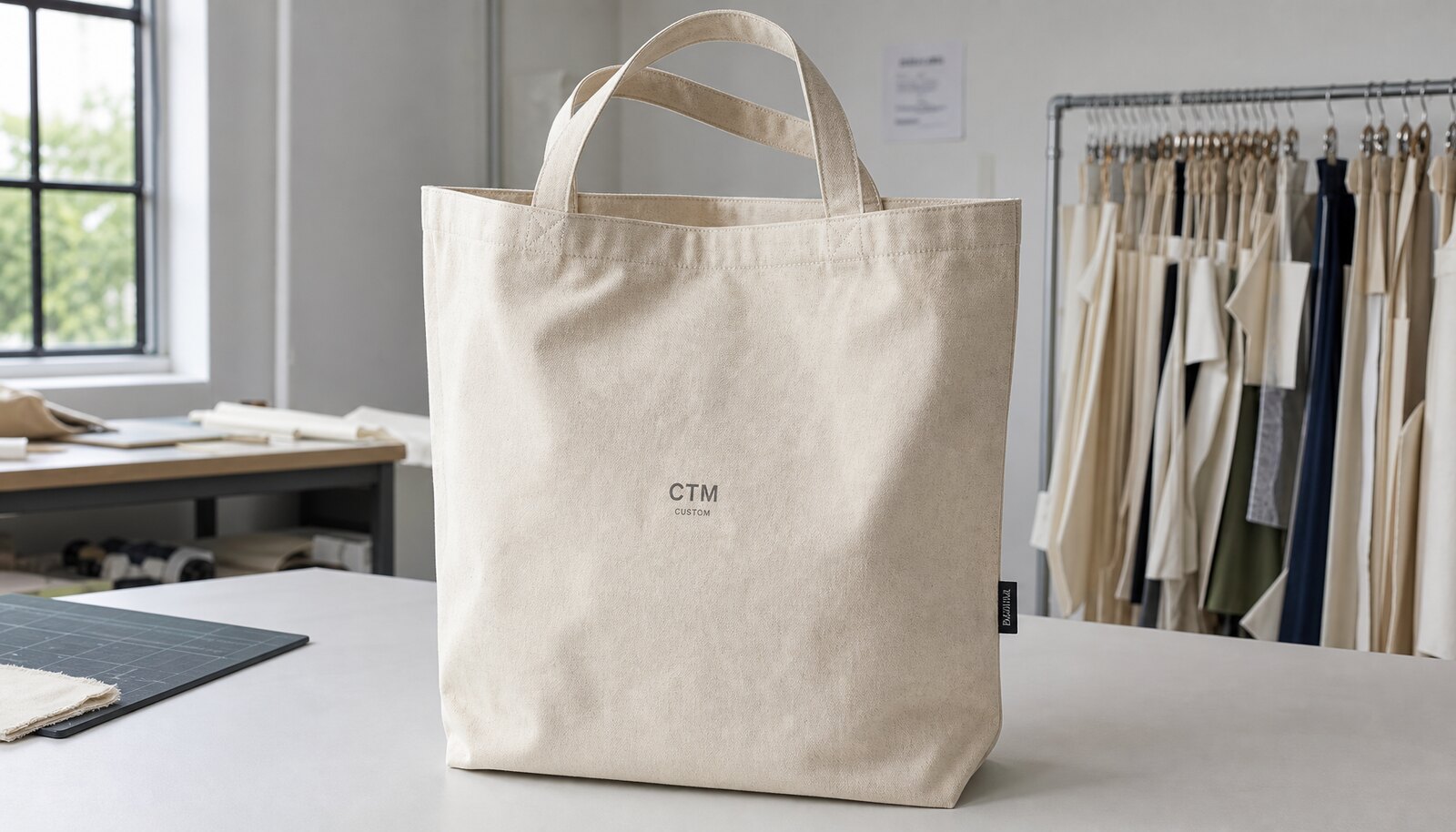
Canvas retail merchandise bags for trade shows sit at the intersection of marketing, merchandising, and logistics. On paper, they look like a simple tote. In practice, they are often the first branded item a prospect, reseller, or retail partner touches, and they may be used to carry catalogs, samples, apparel, or boxed giveaways throughout the event. If the bag feels flimsy, prints inconsistently, or arrives folded badly in a damaged carton, the problem shows up immediately on the show floor.
Private label sourcing raises the stakes. You are not only buying a bag body; you are deciding whether the product needs retail-ready presentation, how the brand appears on the exterior and label, and how repeatable the program must be for reorders. Buyers who write a short spec such as 'canvas tote with logo' usually get quotes that are difficult to compare because the supplier is guessing about fabric weight, construction, print method, packing, and QC scope. The better approach is to build the buying brief like a mini product specification.
The procurement goal is not to make the bag fancy. It is to make the bag fit the use case. A trade-show handout that only carries brochures can be lighter and simpler than a merchandise bag that must survive repeated customer use. A display bag going to a retail channel may need cleaner print, stronger handles, or a hangtag and barcode. Once the intended use is clear, the rest of the sourcing plan becomes much easier to control.
- Define the bag by use case first: event giveaway, merch carrier, sample pack, or retail-resale item.
- Treat logo placement, packing, and label method as part of the product, not optional extras.
- Freeze what matters before you request price: fabric, dimensions, print method, and QC standard.
Translate the end use into the right canvas construction
The best fabric choice depends on how the bag will actually be carried. For most trade-show and retail merchandise programs, 10 oz to 12 oz canvas is a practical baseline because it gives enough structure for print clarity and a more retail-like hand feel without becoming unnecessarily stiff. In GSM terms, that often sits roughly in the 340 to 410 GSM range, though the exact conversion depends on weave and finish. If the bag will hold heavy product inserts or boxed merchandise, a gusseted body and reinforced handle attachment become more important than simply chasing a lower unit price.
A lighter bag can still be acceptable if the program is explicitly promotional and the buyer understands the trade-off. An 8 oz bag may reduce cost, but it may also wrinkle more, show more print distortion, and feel less substantial on a retail table. For a private label program, the important question is not whether the supplier can make the lightest tote. It is whether the bag supports the brand story and holds up to the real contents. If the bag is supposed to be reused after the event, durability matters more than a narrow savings on fabric.
Also consider the fabric finish. Bleached canvas may help color consistency for light prints, while natural or greige canvas can create a warmer, more organic look. Recycled cotton or blended canvas can be useful if the brand has sustainability requirements, but the buyer should verify whether the recycled content is documented and whether the fabric has enough consistency for the chosen print method. Fabric claims should be matched to documents, not sales language.
- Use 10 oz to 12 oz canvas as a starting point unless the load case is unusually light or unusually heavy.
- Ask for the fabric basis in both oz and GSM, plus the acceptable lot-to-lot tolerance.
- Match fabric finish to artwork: natural, bleached, dyed, or recycled-content canvas each changes print behavior.
- If the tote must carry samples or boxed merch, prioritize gusset design and handle reinforcement over cosmetic extras.
Compare sourcing routes by control, not by headline price alone
The most expensive sourcing mistake is often choosing a supplier route that does not fit the order type. A direct sewing factory gives you the cleanest path for construction control, but only if the buyer is ready to manage the spec, approve samples quickly, and review issues at the production level. A trading company or sourcing agent can be useful when the order combines multiple bag variants, labels, and pack formats, but the buyer needs to know who actually controls production and who owns defect decisions. Specialized bag workshops can be excellent for detailed construction, but capacity may be tight during seasonal peaks.
For first-time private label programs, a stock base bag plus custom branding is often the safest launch model. It reduces development time, avoids unnecessary tooling, and keeps the project focused on the variables that matter most: print, label, and packing. Fully custom panel shapes, special washes, or unusual closures should be introduced only when the launch volume justifies the extra coordination. If the order will repeat every quarter or every trade-show season, a slightly higher development effort may be worthwhile because it improves reordering stability.
A practical way to compare routes is to ask: Who can prove the factory exists? Who owns QC? Who can solve a defect without waiting for three middlemen? That question reveals more than a low quote ever will. If the supplier cannot show the production site, the current line capability, or the name of the person approving first articles, the quote should be treated as provisional until those details are verified.
- Use direct factory sourcing when repeatability and spec control matter most.
- Use a trading company when the order is small, complex, or multi-component, but demand clear factory visibility.
- Use stock bag plus custom print or label when the launch needs speed and lower risk.
- Do not award based on unit price alone if the supplier cannot identify the actual production site and QC owner.
How to verify a supplier without relying on sales claims
A serious buyer should verify the supplier in layers. Start with business identity: registered legal name, factory address, and export scope. Then move to production proof: machine photos, workshop layout, tote examples, and evidence that the supplier has made similar bags at the requested size and construction. Finally, verify execution control: who approves samples, who checks first pieces, and who signs off on shipment release. If a supplier cannot show these things, they may still be able to source the bag, but you should assume more risk and price that risk into the commercial decision.
Do not rely on a polished catalog page or a single hero photo. Request close-up images of stitch lines, handle joins, seam reinforcement, and carton packing from a recent order that is similar in size and print style. Ask for date-stamped production photos or a short factory walk-through video that shows real work-in-process, not just a sample room. If the supplier says they are the factory, the request for a production-floor view should not be a problem. If they hesitate, it is a useful warning.
Documentation should match the claim. If the supplier says the canvas is certified, ask for the exact document and verify the scope and expiry date. If they say they passed a social audit, request the report summary or audit letter and check the audit body. If they mention quality inspection records, ask to see a sample of an inspection report with defect categories, lot number, and date. Buyers do not need to perform a full forensic audit, but they do need evidence that the supplier’s claims are more than sales copy.
- Verify legal entity, factory address, and export scope before comparing prices.
- Request recent production photos of similar bags, not only sample-room images.
- Ask who signs off on samples, first articles, and shipment release.
- Match claimed certifications or audits to the actual document scope and expiry date.
Build the RFQ around the variables that actually change cost
A good RFQ makes it easy for suppliers to quote the same thing. For canvas retail merchandise bags, the cost is usually driven by a small number of variables: fabric weight and finish, print method and number of colors, number of logo locations, label type, handle length and reinforcement, and packing format. If the RFQ leaves those elements vague, suppliers will fill in the gaps differently, and the buyer ends up comparing apples to oranges.
Break the quote into line items if possible. Ask for the base bag, printing, sewn label or hangtag, packing, and any sample or setup charges separately. This makes it easier to see whether the supplier is actually cheaper or simply excluding key elements. It also helps you make trade-offs. If the order is over budget, you may be able to simplify the label, reduce one print color, or keep the packing generic rather than changing the whole bag construction.
The art board should also be dimensioned. Do not just send a logo file and say 'centered.' Show the exact print size, distance from the top edge, position relative to the side seam, and any side-panel print if the bag has a gusset. If the bag uses a woven side label, specify stitch placement and label size. Clear artwork instructions reduce sample iterations and avoid disputes over what 'approved' means later.
- Request separate pricing for base bag, print, labels, packing, and setup charges.
- Dimension the print area and label position on a placement sheet.
- Keep one version of the RFQ for all suppliers so quotes are directly comparable.
- If budget is tight, simplify print colors or labels before changing the core bag size.
Use different quote questions for different supplier types and print methods
The same generic RFQ questions do not work equally well for every source. A factory should be asked for production-line details, fabric specs, and QC ownership. A trading company should be asked who actually makes the bag and how decisions move back and forth. A workshop should be asked about stitch density, reinforcement, and capacity. Print method also matters: a screen-print quote needs different questions than a heat-transfer or digital-transfer quote because setup, durability, and artwork restrictions are not the same.
For screen print, ask whether the quoted price includes screens, separations, and curing, and whether they have a limit on ink coverage or print size. For heat transfer, ask about wash resistance, fold-line cracking, and the feel of the printed area after pressing. For digital transfer, ask about color matching and whether gradients or small text will survive the tote fabric texture. If the order is for a retail channel, request a sample showing the actual print method on the exact fabric basis you intend to buy.
Different retail uses also justify different questions. A trade-show giveaway can tolerate a simpler construction and basic internal folding. A bag intended for resale or partner distribution may need cleaner seam finishing, label placement control, and a pack style that looks orderly when the carton is opened. The more the bag is visible as a product, the more it deserves product-style questioning, not only event-style questioning.
- Factory: ask about line capability, production records, and QC ownership.
- Trading company: ask who the real maker is and who controls defect decisions.
- Workshop: ask about stitch density, reinforcement, and peak-season capacity.
- Screen print: ask about screens, setup, color count, and cure method.
- Heat transfer or digital: ask about durability on folds, small text, and color fidelity.
Sample approval should test appearance, fit, and real-load behavior
A sample is not approved when it merely matches the dimensions. It is approved when it proves the bag can be made consistently at the intended look and performance level. Inspect the sample under daylight or balanced white light, compare it against the approved artwork board, and check whether the print placement matches the intended seam-to-seam margins. Small shifts can be acceptable on a soft canvas bag, but only if the buyer has defined that tolerance in advance.
Then test the bag in the way it will actually be used. Put in the same type of catalogs, apparel, bottles, or boxed merchandise the event team expects to distribute. Look for handle twist, bottom bulging, seam strain, and whether the bag still sits neatly after it is filled. If a tote will be carried through a crowded trade-show floor, handle comfort and balance matter more than an empty-table photo. If the bag will be given to VIP buyers or retail partners, folding consistency and visual neatness also matter.
The approval process should be documented. Keep one master sample, photograph the front, back, sides, bottom, and inside, and save notes on any approved deviations. If the supplier later changes fabric lots or adjusts label placement, you will need a clear reference. The approved sample becomes the benchmark for first-piece inspection and any later dispute about whether the bulk order matches what was promised.
- Approve against a dimensioned artwork sheet, not against memory.
- Test the bag with the actual contents or a realistic equivalent load.
- Keep a labeled master sample and photos of all sides before bulk release.
- Document any approved deviation so future reorders do not drift.
Set QC standards with measurements, defect thresholds, and escalation steps
For procurement buyers, quality control should be written as a measurable plan. Start with basic measurement tolerances. As a practical baseline, finished dimensions, gusset depth, and handle drop can often be held within ±0.5 cm on smaller totes and ±1.0 cm on larger or softer constructions, unless the design is intentionally loose. Fabric weight should stay within about ±5% of the agreed GSM or oz basis. If a supplier cannot work to a numeric tolerance, the inspection team will have nothing solid to measure against.
Appearance defects need thresholds too. Define what counts as a critical defect versus a minor issue. A critical defect might include open seams, missing handle reinforcement, severe print misregistration, or a bag that tears under a normal load test. Major defects could include visible stain, weak stitching at the bottom corners, or a print that is noticeably off-color versus the approved sample. Minor defects might include small thread ends or slight fold marks, depending on how the bag will be packed and distributed. If you use an AQL inspection plan, state the sampling level and acceptance criteria in the PO or quality agreement rather than assuming the factory will use your standard.
The escalation path should be written before production begins. If first-piece inspection reveals a problem, the factory should stop, correct, and resubmit before the run continues. If inspection finds critical defects during final inspection, the affected lot should be quarantined, photos should be recorded, and the supplier should provide a corrective-action note with root cause, rework plan, and deadline. Buyers who define the escalation path in advance usually resolve problems faster because no one has to argue about the procedure during a shipment crisis.
- Use numeric tolerances for size and fabric weight.
- Classify defects as critical, major, and minor before inspection starts.
- Ask for AQL-based sampling or an equivalent written inspection standard.
- Require quarantine and corrective action for critical defects before shipment release.
Plan packing, cartonization, and warehouse receiving as part of the buy
Packing can create as much downstream cost as the tote itself. A canvas retail merchandise bag that is loosely folded, mixed across variants, or packed in cartons with unclear marks can slow receiving, confuse store allocation, and create relabeling labor. For a simple trade-show giveaway, a basic fold and bulk pack may be sufficient. For retail distribution or private label kits, the fold direction, inner poly bag, bundle size, and carton marking need to be defined with the same care as the print artwork.
The right pack format depends on how the bag will be handled after arrival. If the event team is opening cartons at one venue, bulk pack is often fine. If the bags are going into a retailer warehouse or being split across regions, carton counts and SKU separation matter a great deal. Ask the supplier whether they can keep color or style variants separated by carton and whether they can print clear outer marks showing style, quantity, PO number, and destination. These small details reduce receiving errors and help the procurement team avoid avoidable chargebacks or repacking.
Carton design also affects freight cost. A tote that folds cleanly and packs tightly can reduce wasted volume, but only if the factory follows the agreed fold method. If the supplier changes the fold or compresses cartons inconsistently, the volume and appearance can vary across the shipment. Include a pack mockup in the quote stage if the bag is visible to end users on arrival; it is cheaper to agree on the fold before production than to rework cartons after packing.
- Specify fold method, inner bag use, bundle count, and carton marks in writing.
- Separate SKU or color variants by carton when warehouse intake needs speed and clarity.
- Confirm carton dimensions and target gross weight before booking freight.
- Use a pack mockup for retail-ready or gift-style presentation.
Cost drivers by region and order type are easier to manage when you know what moves them
Canvas tote pricing is shaped by more than labor rates. Region affects fabric access, print labor, compliance overhead, and export readiness. A factory with a mature export workflow may quote a slightly higher base price but save time by reducing document delays, packing mistakes, or re-inspection. A lower-cost workshop may look attractive at first but require more handholding on carton marks, label placement, or inspection evidence. Buyers should compare landed operational cost, not just unit manufacturing cost.
Order type changes the equation as well. A short-run trade-show tote in a basic color may be economical in one region, while a repeated retail program with labeled packout may justify a more organized factory environment even if the per-piece quote is higher. If the bag must be produced under tighter compliance expectations, documentation quality becomes part of the cost structure. That includes material records, test reports, and traceability logs. Paying for stronger records is often cheaper than discovering late that the shipment cannot be accepted by the customer or retailer.
For procurement planning, it helps to think in scenarios. A domestic show with short transit time might favor a nearby supplier or a supplier with a very dependable expedited route. A regional retail rollout might justify a factory that can handle repeated reorders and variant separation. A one-off launch with uncertain demand should keep the spec simple so the buyer does not overcommit to a custom structure that cannot be reused. The best sourcing plan is the one that fits the commercial life of the bag, not just the first purchase order.
- Compare landed operational cost, not only ex-factory price.
- Consider documentation and packing capability as part of the real cost.
- Use simpler specs for uncertain launches and richer specs for repeat programs.
- Choose suppliers based on the shipment pattern: event, retail roll-out, or reorderable line.
Specification comparison for buyers
| Supplier option | What to verify | Commercial advantage | Buyer risk to control |
|---|---|---|---|
| Direct sewing factory | fabric swatch, approved sample, seam close-ups, logo test photos, packing pilot, and final inspection evidence | Better sample-to-bulk control and faster production feedback | May be weaker on export paperwork or branded packing unless checked early |
| Trading company | Factory name, production photos, trim-source proof, and who owns QC decisions | Can coordinate small mixed orders and extra services | Markup can hide real factory capability and slow defect decisions |
| Specialized bag workshop | bag size, gusset, handle drop, seam allowance, stitch density, reinforcement patch, and loading expectation | More practical for detailed construction, trims, and repeat programs | Capacity may be limited during peak seasons |
| Low-price general supplier | 8-12 oz cotton canvas, 120-220 gsm cotton, recycled cotton, or blended fabric selected by use case and target price | Useful for simple promotional runs with loose specs | Material downgrades, weak packing, and vague inspection scope can erase savings |
| Retail-ready supplier | fold method, inner bundle, carton count, carton mark, moisture protection, SKU separation, and warehouse receiving needs | Can handle labels, SKU separation, carton marks, and receiving rules | Higher unit cost must be compared against reduced warehouse work |
| Compliance-focused supplier | Fabric records, labeling review, test plan, and production traceability | Safer for retail programs and repeat brand orders | Documentation claims need evidence, not only sales language |
| Local sample room plus bulk factory | Signed sample, bulk factory handoff, first-piece photos, and deviation owner | Good for complex branding before large production | Sample room quality may not match bulk line unless handoff is controlled |
Buyer checklist before sampling
- Art files in vector format, with Pantone targets, logo placement map, and a dimensioned print board for front, back, and side label positions.
- Target fabric weight in both oz and GSM, plus acceptable substitution range if the exact fabric is unavailable.
- Finished dimensions, gusset depth, handle width, handle drop, seam allowance, and reinforcement requirements at stress points.
- Print method, number of colors, registration tolerance, cure or wash requirement if relevant, and whether a rub test is needed.
- Packing spec covering fold method, inner poly requirement, bundle count, carton pack, carton labels, and whether barcodes or SKU stickers are required.
- Approved sample definition covering color, hand feel, stitch quality, seam symmetry, logo placement, and load performance with real contents.
- Commercial terms including MOQ by color and print version, sample charge policy, production lead time after approval, transit assumptions, and Incoterm.
- Supplier proof pack including business registration, factory address, machine list or production photos, recent inspection evidence, and the person responsible for QC sign-off.
Factory quote questions to send
- What exact fabric are you quoting, including composition, weave, finished weight in GSM and oz, and allowed tolerance on production lots?
- Is the price based on stock greige, bleached canvas, dyed canvas, or recycled-content canvas, and how does each option affect MOQ and lead time?
- Which print method are you quoting, how many colors are included, and what setup costs or screen fees apply by design version?
- What finished dimensions, gusset depth, handle length, and reinforcement method are included in the quoted price?
- What is included in the packout: fold style, inner bag, bundle count, carton size, carton marks, and any barcode or SKU label application?
- Can you share the exact factory name and address, the line that will make the order, and recent photos of similar tote production?
- Which QC checks are included before shipment, and do you use AQL or a similar acceptance standard for measurement, appearance, and carton count?
- If artwork, label placement, packing style, or fabric color changes later, what cost and lead-time impact should we expect?
- What documents can you provide to prove compliance or traceability, such as test reports, material certificates, or production records?
- If a defect is found in the first production run, what is your corrective-action process and who approves rework or replacement?
Quality-control points to confirm
- Fabric weight tolerance: target fabric should stay within about ±5% of the agreed GSM or oz basis unless you specify a wider band in writing; verify by weighing cut swatches from at least three areas of the lot.
- Fabric appearance: reject visible thin spots, slubs that affect print coverage, broken picks, uneven bleaching, or shade variation that is obvious under daylight or a calibrated light box.
- Measurement tolerance: finished body dimensions, gusset depth, and handle drop should generally be held within ±0.5 cm for small bags and ±1.0 cm for larger tote bodies unless the construction is intentionally soft and unstructured.
- Stitch quality: inspect for skipped stitches, broken thread, puckering, loose back-tacks, uneven stitch density, or reinforcement boxes that do not fully cover the stress zone; require no open seams on AQL critical checks.
- Print quality: check registration, edge sharpness, ink opacity, and color match against the approved sample; accept only minor shift where seam take-up or fabric texture causes unavoidable distortion, and reject ghosting, pinholes, or cracking along fold lines.
- Functional load test: load the bag with the actual intended contents or a defined equivalent weight, then check handle stretch, seam stress, and bottom deformation; bags used for merchandise or catalogs should not show immediate tearing or thread pull-out.
- Packing accuracy: verify piece count, style/color ratio, fold direction, label version, and carton marks against the packing list; mixed variants should be separated only if approved in writing.
- Escalation rule: if you find critical defects, stop the lot, quarantine affected cartons, request root-cause analysis with photos and lot codes, and require a written corrective-action plan before shipment release.
- AQL language: for a serious procurement program, define acceptable appearance and measurement inspection using an AQL-based plan or an equivalent sampling standard, rather than relying on vague phrases such as 'good quality' or 'normal QC.'