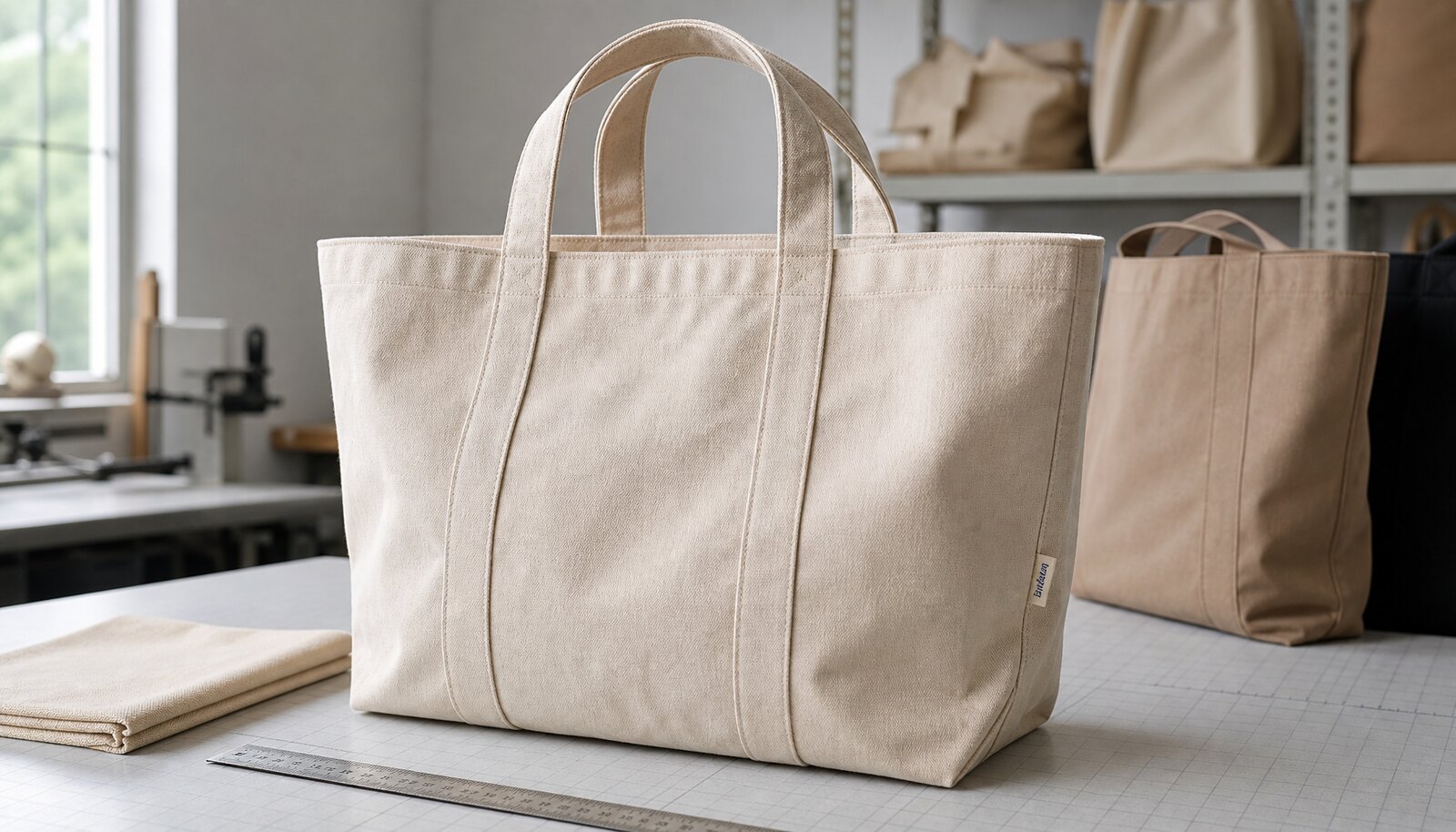
Start With the Box, Not the Bag
Subscription-box buyers make fewer mistakes when they define the bag by what it has to carry, how often it will be reused, and where it sits in the unboxing stack. A canvas retail merchandise bag is not just a tote. In this use case, it may hold inserts, samples, seasonal merch, or a bundled gift set, and that changes the fabric, print, and packing decisions. If the bag is part of the perceived value of the box, the handfeel and print finish matter as much as the cost per piece.
Before you send an RFQ, write down the exact role of the bag in the pack-out process. A bag that carries a lightweight postcard and sample sachet can be built differently from one that holds a hardcover catalog or a full refill kit. If the buyer team does not define this early, the factory will fill in the gaps with its own assumptions, and that is where most cost surprises start.
- Define the payload in grams or approximate item count, not just "light" or "medium".
- State whether the bag must survive one unboxing event or repeated consumer use.
- Clarify whether the bag is seen as packaging, merchandise, or a reusable retail item.
Choose Canvas Weight for Reuse, Not Just Price
For subscription-box merchandise bags, canvas weight is the first real tradeoff. Around 8 oz or 270 to 280 gsm works for short-life promotional use, but it often feels thin once the bag is filled and it shows more seam distortion after sewing. A 10 oz canvas in the 340 to 350 gsm range is usually the best balance for retail programs because it gives structure, print stability, and a more credible hand without moving into an unnecessarily heavy build.
Twelve-ounce canvas, roughly 405 to 420 gsm, makes sense when the bag has to carry more weight, survive repeated use, or support a premium positioning where the consumer expects a sturdier item. The risk is not only cost. Heavy cloth is harder to cut cleanly, it can make corners bulky, and it can reduce sewing speed if the factory is not set up for it. A buyer should ask for the exact gsm, weave density, and any wash treatment, not just a general weight category.
- Use 8 oz only when the bag is a low-cost insert and the reuse expectation is limited.
- Use 10 oz for the broad middle ground: retail appeal, decent body, manageable cost.
- Use 12 oz when load-bearing performance or premium feel is part of the buying brief.
Match Print Method to Artwork and Run Size
The print method should follow the artwork, not the other way around. For most canvas retail merchandise bags, one or two spot-color screen prints are the most dependable choice because they stay legible on textured fabric and hold up better in handling. If the brand mark is simple and the bag is reused, a woven side label or sewn badge can be a smarter long-term option than trying to force a detailed illustration onto coarse canvas.
Digital transfer and similar short-run methods can help on very small quantities, but buyers should treat them as a compromise, not the default. They can be useful for sampling or a limited seasonal drop, yet they often have weaker abrasion performance on canvas. If the artwork has fine lines, gradients, or small text, the RFQ should include a minimum line width, color count, and an approval standard for edge clarity. Otherwise, the factory may deliver a print that looks acceptable in proof but weak in production.
- Choose screen print for simple logos and recurring orders.
- Choose woven labels or sewn patches for premium, durable branding.
- Avoid complex artwork unless the factory can prove it on the approved sample.
Specify Construction That Survives Fulfillment
A subscription-box bag lives a hard life in the fulfillment center before the end consumer ever sees it. That means the seams, top edge, and handle attachment matter more than many buyers expect. For most programs, self-fabric handles or cotton webbing in the 25 to 38 mm range are practical. Wider webbing improves carry comfort, but the factory needs a clean reinforcement pattern at the attachment point so the bag does not deform or twist under load.
Top edge finishing is another place where buyers save money in the wrong direction. A simple folded top with consistent stitching is usually better than an overly complicated closure system that adds labor without improving the user experience. If the contents can spill during transit, use a closure only when it adds real value, such as a button, snap, or zipper. Otherwise, keep the build direct and spend the budget on better cloth, cleaner print, and stronger reinforcement at stress points.
- Require box-x or bartack reinforcement where handles join the body.
- Keep the top edge consistent so the bag stacks and folds predictably in packing.
- Use gussets only when the contents need volume or the bag must stand in retail display.
Compare Sourcing Routes Before You Compare Unit Price
The lowest quoted price is often attached to the least controlled sourcing route. A direct cut-and-sew factory gives the best path for custom dimensions, print control, and repeatability, especially when the buyer plans reorders. A trading company can still work, but it adds another layer between the buyer and the actual production line. That layer can be useful for coordination, but it can also hide fabric substitutions or slow down resolution when the buyer needs a corrective action.
Regional decorators and stock-item suppliers can be competitive for speed, but they usually fit a narrower brief. They are useful when the buyer wants a standard bag with a simple logo and short lead time, not when the spec requires a custom canvas weight, sewn label, or precise carton pack. The decision is not just about geography. It is about how much control the buyer wants over cloth source, sample approval, and production accountability.
- Direct factory: best for repeat programs and tighter spec control.
- Trading company: useful when the buyer needs coordination across multiple product elements.
- Regional stock supplier: useful for faster turn, but usually weaker on custom construction.
Read the Quote Line by Line
A serious quote for canvas retail merchandise bags should separate the cost of fabric, printing, sewing, packing, and any setup charge. If the quote only shows a single unit price, the buyer cannot see where the cost is hiding. Screen setup, woven label setup, polybagging, barcode stickers, carton marking, and freight assumptions can all change the real landed cost. The right comparison is not per-piece price alone. It is the total cost to get the finished bag through the warehouse door in the required format.
MOQ logic also needs to be tied to the production method. A custom canvas weight, more than one print color, or a special closure often pushes the minimum order higher because the factory has to reserve cloth, cut time, and setup labor. Buyers should ask for the price break between 500, 1,000, and 3,000 pieces if that is the likely demand curve. That usually reveals whether the factory is pricing for a true bulk run or padding the low end to win the order.
- Separate unit price from setup charges, packing fees, and freight assumptions.
- Ask for price breaks by quantity so you can see where scale actually starts.
- Normalize every quote to the same fabric weight and packing spec before comparing.
Use the Sample Stage to Lock the Spec
The pre-production sample is where most preventable losses are avoided. Buyers should not just approve the look. They need to measure the sample, inspect the stitch work, compare print placement, and verify that the fabric hand matches the planned use. If the sample is softer, thinner, or heavier than the brief, that difference usually comes back in bulk. A golden sample signed by both sides creates a reference point that is much harder to dispute later.
Sample approval should include the details procurement teams often forget when the project is under schedule pressure. That means seam allowance, top edge fold, handle drop, color consistency, logo size, and packed appearance. If the bag is being inserted into a subscription box, the sample should also be tested in the actual pack-out sequence. A bag that looks good on a table can still fail if it does not fold flat or fit the insert tray the way the fulfillment team expects.
- Measure the sample, do not eyeball it.
- Test the sample in the real pack-out flow, not just in isolation.
- Keep one signed golden sample with the buyer and one with the factory.
Set QC Thresholds Before Bulk Starts
Quality control on canvas bags should be simple enough for the factory to execute and strict enough to prevent ugly surprises. The buyer should define acceptable size tolerance, stitch quality, print registration, and carton count accuracy before the order starts. If those points are not written down, the factory will apply its own internal standard, which may be too loose for a retail subscription program where presentation is visible to the end customer.
A useful QC approach is to focus on visible defects first and dimensional stability second. Broken threads, holes, dirty marks, crooked labels, and loose handles are obvious rejects. After that, verify the less visible items: fabric weight, seam balance, print density, and the consistency of the folded packed bag. For subscription-box work, the packed appearance matters because the first customer touchpoint often happens before the item is fully opened.
- Reject any bag with stains, holes, broken stitching, or visible label misplacement.
- Use the approved sample as the color and print reference for bulk inspection.
- Count cartons and units carefully; a good bag with a wrong count still creates a warehouse problem.
Pack for the Fulfillment Line, Not Just the Ocean Container
Packing should support the buyer's warehouse process first and the shipping container second. If the bag is going into a subscription box program, individual polybags, a consistent fold, and a clear size sticker usually save more labor than they cost. Loose-packed bags may look cheaper on paper, but they create scuffing, dust issues, and count errors when the fulfillment team is handling multiple SKUs under time pressure.
Carton packing should be fixed and repeatable. A carton that is too heavy slows receiving and can damage the outer layers of the bag. A carton that is too loose wastes space and raises freight cost. Buyers should ask for carton dimensions, gross weight, and packing quantity early, then check whether the bag folds flat enough to improve cbm. That one detail can move freight enough to offset a small change in unit price.
- Specify whether each bag is individually polybagged or packed in bulk bundles.
- Use a fixed carton count so warehouse intake is predictable.
- Review carton size against the finished fold size before approving bulk.
Build the Landed-Cost View Before You Place the PO
Landed cost is where procurement decisions become real. For canvas retail merchandise bags, a low ex-factory price can disappear once you add screen setup, labels, inner packing, carton volume, freight, duties, and the labor needed to rework unclear packing. The right comparison is the full cost per sellable or fulfillable unit, not the bag price in isolation. If the buyer only focuses on product cost, a cheap quote can become expensive after the first receiving issue.
The cleanest way to compare suppliers is to lock the same fabric weight, print count, packing method, and Incoterm across every quote. Then compare only the variables that matter: lead time, sample quality, communication speed, and any tolerance risk that could create rework. For a subscription-box program, a slightly higher quote from a factory with better spec discipline is often the better commercial choice because it reduces the chance of delayed launch, customer complaints, and reorder inconsistency.
- Normalize every offer to the same spec before comparing price.
- Ask how the quote changes if the fabric weight, print count, or pack method changes.
- Treat lead time reliability as part of cost, not as a separate issue.
Specification comparison for buyers
| Spec decision | Recommended option | When it fits | Buyer risk to check |
|---|---|---|---|
| Fabric weight | 10 oz / 340 to 350 gsm washed canvas | Most subscription boxes where the bag is meant to be reused beyond the first unboxing | Too light feels promotional; too heavy raises cost and may distort sewn dimensions |
| Weave and finish | Tight plain weave with light enzyme wash or calendered finish | When you need cleaner print edges and a softer hand without losing body | Overwashed fabric can drift in size and create inconsistent seam alignment |
| Print method | 1 to 2 color screen print or woven label for long life | Simple logo work, repeat runs, and brands that want a durable front panel | Small text, gradients, or fine detail may fill in, crack, or lose legibility |
| Handle build | Self-fabric handles or 25 to 38 mm cotton webbing with box-x reinforcement | When the bag carries catalogs, samples, inserts, or refill packs | Weak bartacks and short handle drop cause complaints after fulfillment loading |
| Closure | Open top unless contents can spill, then add button, snap, or zipper only when needed | Retail subscription kits with mixed inserts that may shift in transit | Extra closures add sewing time, hardware cost, and more QC failure points |
| Supplier route | Direct cut-and-sew factory with in-house sampling control | Repeat orders, custom dimensions, and buyers who need tight spec control | Middlemen can hide fabric substitutions or reduce accountability on claims |
| Approval path | Pre-production sample plus retained golden sample | Any new artwork, new fabric, or first production run | Skipping this step creates disputes over shade, size, print placement, and handfeel |
| Packing spec | Individual polybag with size sticker, then master carton by fixed count | E-commerce fulfillment, SKU tracking, and mixed-item subscription programs | Loose packing increases scuffing, contamination risk, and carton count errors |
Buyer checklist before sampling
- State the final use case: outer retail bag, insert bag, reusable merch bag, or shipping companion.
- Lock fabric weight in gsm or oz, plus whether the cloth is washed, bleached, dyed, or raw natural.
- Define print method, number of colors, artwork size, and acceptable registration tolerance.
- Specify finished dimensions, gusset depth, handle length, and whether the bag must stand open or collapse flat.
- Set seam and reinforcement requirements at handle joins, side seams, and top edge.
- Choose packing format: bulk, polybagged, tagged, or pre-packed into cartons by SKU.
- Ask for a pre-production sample and keep one approved golden sample signed off by both sides.
- Request a quote that separates fabric, print, sewing, packing, carton, and freight assumptions.
Factory quote questions to send
- What exact fabric content, weave, and gsm are you quoting, and what is the expected shrinkage after washing?
- Does the unit price include printing, labels, hangtags, folding, polybags, and carton packing, or are those extra?
- Which print method do you recommend for this artwork, and what are the setup or screen charges?
- What finished size tolerance, stitch standard, and handle reinforcement do you commit to in bulk production?
- Can you provide a pre-production sample lead time and the approval deadline before bulk starts?
- What is the MOQ by fabric color, print color count, and carton pack configuration?
- How will you control shade variation between the approved sample, first bulk, and reorders?
- What are the carton dimensions, gross weight, and estimated cbm for the quoted pack plan?
Quality-control points to confirm
- Finished dimensions must stay within the agreed tolerance for width, height, and gusset depth.
- Fabric gsm should match the approved spec within a narrow variance, not just a rough weight class.
- Handle joins must show even box-x or bartack reinforcement with no loose thread tails.
- Print registration, color density, and edge sharpness should match the approved sample on first inspection.
- Seams must be straight and balanced, with no skipped stitches, puckering, or seam grin at stress points.
- No holes, oil marks, broken yarns, hard creases, or visible contamination on the front panel.
- Carton counts and SKU labels must match the packing list exactly to avoid fulfillment shortages.
- One retained golden sample should sit with QC, sales, and the buyer file for reorder comparison.