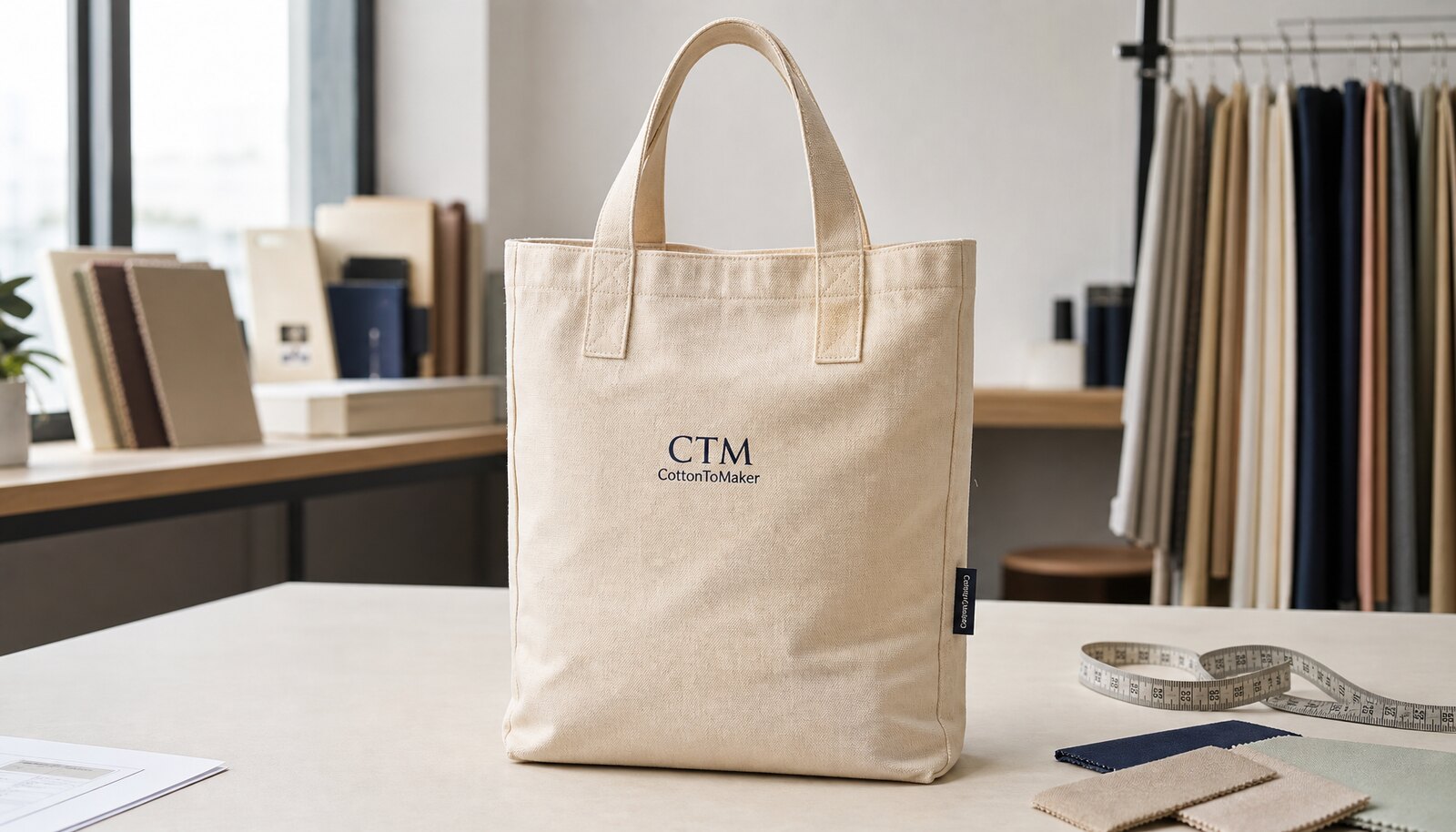
Start With the Store Use Case
Retail chain buyers usually lose money on canvas merchandise bags before they lose money on the bag itself. The real problem is not just the unit price. It is the gap between how the bag looks in a sales sample, how it behaves in a DC or store back room, and how it repeats across a chain that may need the same logo in several waves. If the spec is vague, one store gets a soft bag that folds badly, another gets a stiffer bag with a different print tone, and the buyer ends up paying for inconsistency instead of demand.
Before asking for quotes, define the use case in plain sourcing language. Is the bag handed out at checkout, sold as merchandise, bundled with another item, or used as a seasonal campaign carrier? A checkout giveaway can tolerate a lighter canvas and simpler packing. A retail merchandise bag that customers pay for needs better handfeel, stronger stitching, and a print method that will still look clean after repeated use. Once that use case is clear, the supplier can make the right material and construction choices instead of quoting the cheapest possible bag.
- State the bag role in the store flow: giveaway, paid merchandise, gift-with-purchase, or campaign carrier.
- Set the expected life of the bag. A short promo bag and a reusable retail bag should not share the same build.
- Align the bag spec with the chain's shelf and checkout experience, not only with the factory's standard template.
Choose the Canvas Spec That Survives Retail Traffic
For most retail chains, 12 oz canvas, roughly 400 gsm, is the starting point worth pricing first. It usually balances body, print quality, and cost better than a thin promotional bag. Go lighter only when the bag has a short campaign life or the customer will not load it heavily. Go heavier when the chain wants a premium feel or when the bag will carry boxed merchandise, books, bottles, or mixed purchases. The problem with an underbuilt bag is not just breakage. A soft, weak canvas also makes the logo look uneven and can make the bag collapse on shelf or in a fixture.
The spec should also lock the construction details that drive day-to-day performance. Handle length affects carrying comfort and retail presentation. Gusset depth changes usable volume and determines whether the bag sits squarely on a counter. Stitch reinforcement matters more than decorative extras when the bag is repeatedly loaded and emptied. If you want a clean reorder program, keep the first order simple: one size, one base color, one handle style, and one reinforcement pattern. That creates a stable reference for future replenishment and makes QC easier across stores and suppliers.
- Typical starting spec for a chain merchandise bag: 12 oz canvas, natural color, flat bottom or gusseted body, reinforced handles, one logo panel.
- Use 10 oz canvas for lighter, value-oriented bags where fold bulk and price matter more than premium handfeel.
- Use 14 oz canvas when the bag must feel substantial, hold shape on display, or carry heavier mixed retail items.
Pick the Branding Method Before You Price It
The logo method changes not only the appearance of the bag but also the quote structure. Screen print is usually the most practical choice for simple logos and repeat chain orders because setup cost is manageable and the print is consistent when the factory controls ink, mesh, and curing. If the art is more detailed or includes gradients, a transfer can work, but it needs a careful durability review because some transfers crack, gloss over, or feel too plastic after handling. Embroidery can look premium on a stiff canvas bag, yet it increases labor, adds needle-hole risk, and is often more expensive than buyers first expect.
For procurement, the real issue is not which method sounds best. It is whether the method matches the artwork and reorder pattern. A one-color logo with strong negative space is ideal for screen print and easy to repeat. A retail chain that wants several seasonal versions should ask the factory how they control print registration, screen storage, and color matching between batches. If the logo is near a seam or handle, make the print area smaller or move it. Many print defects are not caused by bad ink. They happen because the art was not designed for the actual sewing layout.
- Use screen print for simple brand marks, retail campaign logos, and repeat orders.
- Use transfers only when the artwork truly needs more detail and the buyer accepts the extra durability testing.
- Use woven labels or side labels when the logo should stay subtle and the fabric face should remain clean.
Build the RFQ Around Supplier Routes, Not Just Unit Price
A useful RFQ should let different supplier types quote the same bag on the same basis. Direct factories are usually the best fit when the buyer wants to control material grade, sewing details, and packaging without extra handoffs. Trading companies can help when the order needs coordination across trims, prints, and multiple factories, but the buyer must expect a layer of markup and less direct visibility into the process. Local decorators or print brokers can be useful for urgent small runs, yet they often source the base bag separately, which can make future reorders harder to normalize.
To compare quotes, normalize them by the same fabric weight, same dimensions, same print method, same carton count, and same shipping assumption. If one supplier quotes a bag packed 50 per carton and another quotes 100 per carton, the numbers are not directly comparable. The cheaper quote may also be using thinner canvas, lower stitch density, or a looser QC plan. In this category, the cheapest factory number is often the least useful number because it hides the cost of rework, freight inefficiency, or store-level complaints.
- Ask each supplier to quote the same finished size, same canvas weight, same logo placement, and same pack count.
- Request a separate line for setup or screen charges so they do not disappear into the unit price.
- Compare the route, not only the price: direct factory, trading company, or local print broker all carry different risks.
Use Samples to Lock the First-Angle Approval
A chain order should not move from artwork to bulk production on a PDF alone. The right sample path is digital proof, then a physical prototype or pre-production sample, then a sealed golden sample that both sides can reference. The physical sample matters because it reveals how the canvas folds, how the handle sits on the shoulder, how the logo reads at real distance, and whether the bag feels more structured or more floppy than expected. If the chain has multiple stakeholders, the sealed sample prevents arguments later because everyone signs off on the same object, not on memory.
The sample review should be functional, not cosmetic only. Measure the usable size, check whether the handles are evenly attached, and confirm that the logo sits where the buyer expected after the bag is filled. If the bag is meant to hang in-store, inspect how it hangs. If it is meant to sit in a basket or on a counter, see whether the gusset opens correctly. A good sample review also tests the first wash or rub exposure if the buyer expects reuse. If the sample feels right only while brand new, the production bag may still fail once it reaches shoppers.
- Approve dimensions, handle length, print placement, color, and handfeel on the physical sample.
- Keep one sealed golden sample with the buyer and one with the factory.
- Do not release bulk until the sample and the approved artwork file match exactly.
Set QC Thresholds That Match Store-Level Risk
Quality control for canvas retail bags should focus on defects shoppers can see immediately. Loose threads, crooked seams, off-center prints, weak handles, and crushed cartons are the common failures that turn a cheap bag into a complaint. A solid factory will already have an internal inspection step, but the buyer still needs a written acceptance standard. Without one, the factory may think a small print shift is acceptable while the retail team sees it as a brand defect. The goal is not perfection. The goal is consistent, repeatable output that looks intentional on shelf and at checkout.
The acceptance standard should be tied to the use case. A value promo bag may allow slightly rougher stitching than a premium chain merchandise bag. But even in a value program, the stress points must be clean, the handles must be secure, and the logo must stay legible. One weak point in the handle join can create failures at store level that cost more than the entire sewing upgrade. Insist on a clear rework rule before production starts so the supplier knows whether minor cosmetic issues can be repaired or must be rejected.
- Check seam quality, handle reinforcement, and print placement on every pre-production reference sample.
- Set a clear rule for loose threads, broken stitches, and visible misalignment so the factory knows what is rejectable.
- Ask the supplier how many bags are inspected per lot and what happens when defects appear in the first inspection batch.
Package for Shelf Delivery, Not Just Factory Exit
Packing is easy to ignore until the store team opens the carton. Canvas bags that are folded too tightly can hold crease lines, while loose folding wastes space and drives up freight. Some retail chains need each bag in an inner polybag to keep it clean in transit; others prefer bulk folding to reduce packaging waste and carton cost. The right answer depends on how the bags are handled at the distribution center and whether they will be re-packed, hung, or displayed before sale. A chain with strict replenishment systems usually cares more about uniform carton counts and clean outer labeling than about decorative packaging.
The carton spec should match the receiving process. State how many bags per inner pack, how many inner packs per master carton, whether the cartons are store-assigned or mixed, and what marks must appear on the outer case. If the buyer needs palletized freight, say so early because carton sizing and pallet pattern affect freight efficiency. A bad carton plan can quietly add more cost than a better logo method. It can also cause damage if cartons are too large, underfilled, or stacked poorly during transit.
- Choose folding and packing based on the receiving flow at the distribution center, not on the factory's convenience.
- Require carton labeling that matches the buyer's SKU, color, and store allocation system.
- If a chain needs barcode or ticketing, specify it in the RFQ because late label additions create rework.
Plan Lead Time Around the Slowest Input
Lead time is usually determined by the slowest input, not by sewing capacity. For canvas merchandise bags, that slowest input is often fabric booking, color matching, print setup, or sample approval. If the buyer waits until artwork is final to start sourcing fabric, the calendar slips before production even begins. That is why a useful schedule should break the job into phases: quote, sample, approval, material booking, bulk production, inspection, packing, and freight booking. Each phase should have a named owner. Without that, every delay becomes the other party's problem and no one protects the launch date.
Retail chains also need to think in waves. A first delivery may support a campaign launch, while later deliveries cover replenishment or regional allocation. That means the buyer should decide early whether all volume must be delivered together or whether partial shipments are acceptable. If the bag is tied to a seasonal launch, a late ship date is often worse than a slightly higher production cost because the retail window can close before the bags arrive. The safest program is usually the one that books fabric and approves samples early, then leaves enough time for one corrective round before mass sewing starts.
- Build the schedule backward from the in-store date, not from the factory start date.
- Reserve time for sample revisions, not just for bulk production.
- If the order is seasonal, lock the artwork and packaging first because those changes are the most common cause of delay.
Compare Landed Cost, Then Fix the Common Mistakes
The quote that matters is the one that lands the same bag into the same warehouse condition. That means fabric, sewing, print, packaging, factory margin, inland transport, export handling, freight, duties, brokerage, and any rework allowance all need to be considered together. If a supplier quote is lower only because it excludes packaging or uses a cheaper freight assumption, it is not a better quote. For retail buyers, landed cost is also tied to operational cost. A slightly more expensive but cleaner carton spec can lower receiving time and reduce damage claims. That is a real savings, even though it does not appear in the ex-factory number.
The most common mistakes are easy to avoid once the RFQ is specific. Buyers often leave out the exact size, accept a vague canvas weight, approve a print proof without a physical sample, or compare quotes that use different pack counts. Another recurring issue is asking for too many SKUs too early, which pushes up MOQ and creates dead stock across store groups. Keep the first order controlled. One bag body, one artwork version, one packing rule, and one approval sample will usually produce a cleaner, more comparable sourcing result than a complicated first launch.
- Normalize every quote to the same fabric weight, size, print method, and carton count before comparing numbers.
- Treat packaging and freight as part of the product spec, not as afterthoughts.
- Keep the first order simple so the reorder file becomes a usable standard for the next cycle.
Specification comparison for buyers
| Spec decision | Recommended option | When it fits | Buyer risk to check |
|---|---|---|---|
| Fabric weight | 12 oz canvas, roughly 400 gsm, as the default retail chain spec | Use for everyday merchandise bags that need enough body to stand upright, take printing well, and survive repeat customer handling | Too light looks cheap and distorts seams; too heavy increases unit cost, folding bulk, and carton weight |
| Fabric finish | Natural or piece-dyed canvas with controlled shrinkage | Best when the same bag must reorder cleanly across stores and seasons | Uncontrolled shrinkage changes final size and can shift print placement after humidity exposure or washing |
| Print method | Single or two-color screen print for core orders | Best for simple logos, repeat programs, and tight cost control | Too many colors raise setup cost; transfers can crack or feel glossy if the art or wash testing is not controlled |
| Supplier route | Direct factory for repeat volume, trading company only when trims or multiple factories must be coordinated | Works when the buyer wants clearer process visibility and lower layered markup | Brokered quotes can hide fabric grade, inspection level, or carton specs |
| Sampling path | Pre-production sample plus sealed golden sample | Use when multiple buyers, regions, or store teams must approve one reference standard | Photo approval alone misses handle length, print feel, actual shade, and carton fit |
| Packing format | Flat-folded, master carton packed by store or distribution center requirement | Best for chain replenishment and warehouse handling | Overpacking raises cost; underpacking risks scuffing, moisture exposure, and miscounts |
| Order structure | One base bag with limited logo variations | Useful when the chain runs regional campaigns or frequent store refreshes | Too many SKUs push up MOQ, complicate label control, and create dead stock |
| Landed-cost route | FOB for import teams that can manage freight, DDP only if duty class and inland delivery are fully defined | Choose based on who controls logistics and customs clearance | DDP quotes can hide duty assumptions, final-mile fees, or weak shipment visibility |
Buyer checklist before sampling
- Lock the usable bag size, not just the outer size, and state whether the measurement must include seams, gusset, and handle drop.
- Specify canvas weight in oz and gsm, plus whether the buyer wants natural, dyed, or washed fabric.
- State the logo count, print colors, print position, and the acceptable color tolerance against the approved artwork.
- Define handle length, stitch reinforcement, and any load expectation so the factory does not choose a lighter build by default.
- Tell suppliers how the bags will be packed at retail: bulk fold, individual polybag, barcode label, store bundle, or master carton split.
- Ask for a pre-production sample, a sealed golden sample, and a final carton packing reference before mass production starts.
- Provide the forecast by size, color, and delivery wave so MOQ and material booking are quoted on a realistic basis.
- Require the quote to separate fabric, printing, packing, and freight assumptions instead of giving one blended number.
Factory quote questions to send
- What fabric weight, weave, and shrinkage range are you quoting, and what tolerance do you hold after cutting and sewing?
- Is the logo printed by screen print, transfer, embroidery, or woven label, and what setup cost or screen charge is included?
- What is the MOQ by color, print version, and packing format, and how does that change if we use natural canvas instead of dyed canvas?
- What are the finished dimensions, handle length, gusset depth, and reinforcement details included in the price?
- Can you quote the same order on FOB and on a landed basis to our destination so we can compare routes fairly?
- What is the sample path before production: digital proof, prototype, pre-production sample, and sealed golden sample?
- How many pieces go into each inner pack and master carton, and what are the carton dimensions and gross weight?
- What inspection standard do you use for stitching, print placement, count accuracy, and carton labeling, and how do you handle defects?
Quality-control points to confirm
- Fabric weight matches the approved range and no panel feels thinner or weaker than the approved sample.
- Finished dimensions stay within the agreed tolerance after sewing, especially bag width, height, gusset, and handle drop.
- Handle attachment is reinforced with clean stitching or bartacks, with no loose ends, skipped stitches, or twisting.
- Print position matches the approved artwork and stays visually centered on the front or back panel as specified.
- Print color is consistent across the lot and does not shift sharply from the golden sample under normal indoor light.
- Seams are straight, needle holes are not opened, and stress points at the base and handle joins do not pucker badly.
- Inner packs and master cartons count the correct quantity and the label information matches the approved packing list.
- Cartons remain intact after handling, with no crushed corners, moisture damage, or mixed SKUs in the same carton unless approved.