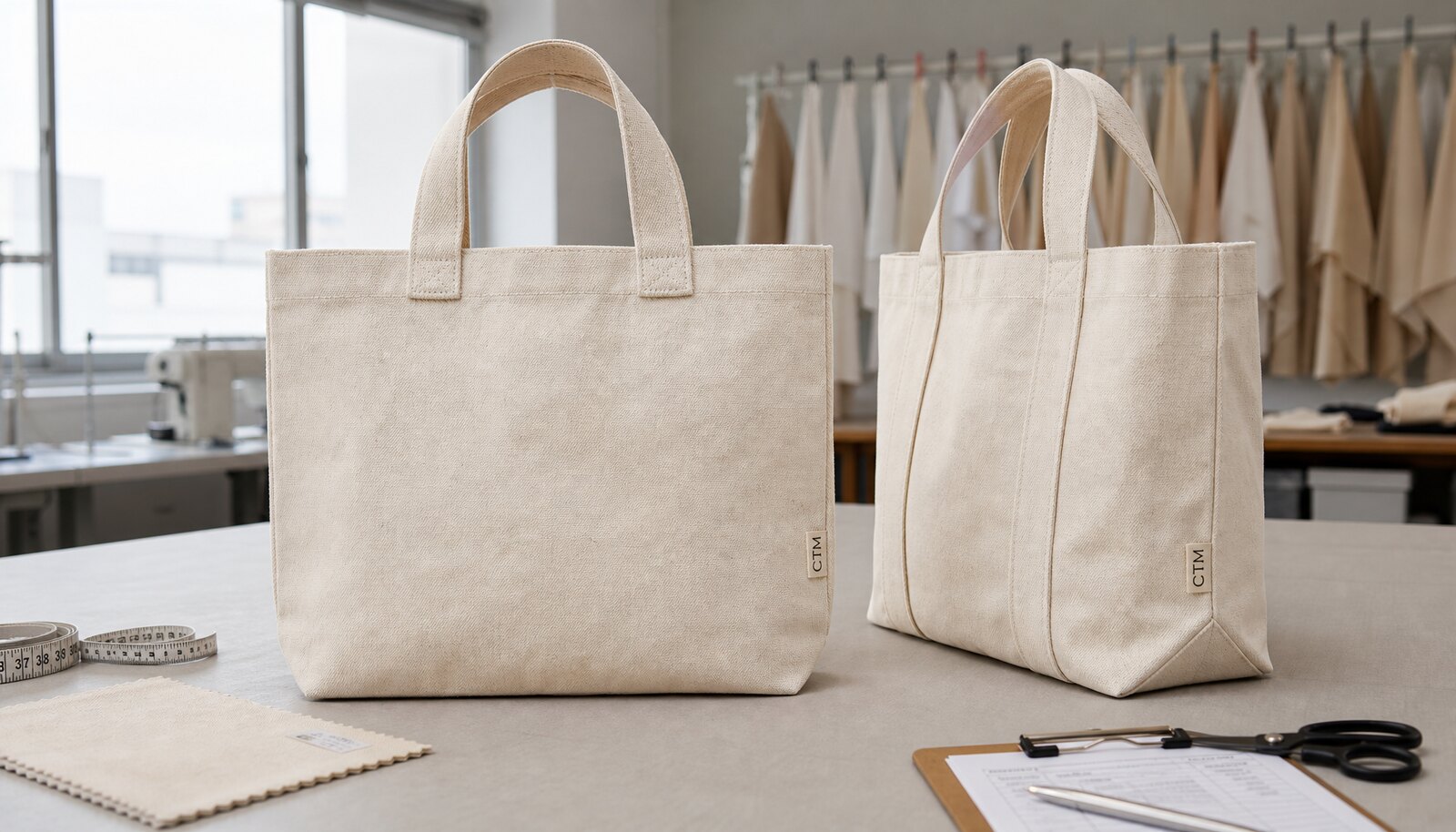
What Sample Approval Should Actually Prove
For museum retail bags, sample approval is not a logo sign-off. It is the point where procurement, merchandising, and the factory decide whether the bag will work as a sellable product, a carry bag, and a repeat order item. A museum shop tote often sits next to books, prints, notebooks, and higher-margin gifts, so the bag has to look deliberate, not promotional. If the sample only proves that the artwork is visible, you still do not know whether the bag will hold weight, pack cleanly, or price into the right retail bracket.
Treat the sample as a control document for production. It should settle the fabric weight, the exact dimensions, the handle length, the print method, the internal finishing, and the packing format in one pass. That approach reduces back-and-forth later because the factory is not guessing what the buyer meant by premium or durable. For a museum program, the sample should answer one practical question: if this bag goes on shelf tomorrow, will a customer pay for it and will the store team be able to sell it without complaints?
- Approve the bag as a retail product, not just a printed blank.
- Use the sample to lock the dimensions, fabric weight, handles, print, and packing together.
- Test the bag with real merchandise, not empty air.
Choose Fabric Weight Around the Retail Job
Canvas weight is the first decision that changes both the feel and the economics of the bag. For most museum retail merchandise bags, 10 oz canvas is the practical middle ground because it has enough body for books and boxed gifts without becoming overbuilt. That is roughly 340 GSM, though factories may measure slightly differently depending on weave density and finishing. A 12 oz canvas, around 406 GSM, gives a more premium handfeel and better structure for a higher retail price point. An 8 oz bag can work for lighter impulse purchases, but it will look softer and may show more wrinkling or print show-through.
Do not choose fabric weight by habit. Choose it against the actual sale item, the expected customer load, and the shelf price. If the shop sells art books, catalogs, and framed prints, a thinner canvas can distort at the bottom seam and lose shape fast. If the bag is mainly a souvenir carrier with a simple logo, too much weight creates cost without improving the buyer's experience. For the RFQ, the weight should be written as both oz and GSM when possible, along with whether the canvas is bleached, natural, or dyed. That avoids one of the most common quote mismatches: two suppliers quoting what sounds like the same fabric but using very different yardage and density assumptions.
- 8 oz canvas works for light retail use but feels softer and less structured.
- 10 oz canvas is usually the best balance for museum merchandise programs.
- 12 oz canvas suits premium bags or heavier carry loads, but freight and unit cost rise.
Lock Construction Details Before You Approve the Look
A museum tote can look clean in a photo and still fail in production because the construction was never tested. The most important build points are the top hem, the side and bottom seams, the handle reinforcement, and the way the bag holds its shape when loaded. If the handles are self-fabric, ask how the edges are turned and whether the stitch line will remain flat after repeated use. If the handles are webbing, confirm the width, color, and attachment method so they do not twist or pull away under weight.
The sample should be checked with actual merchandise inside. Put in a catalog, a hardcover book, and a boxed item if that is the real use case. Then look for seam distortion, handle pull, and whether the bag still closes and folds in a retail-friendly way. A good sample has even stitch density, no loose thread bundles, no puckering around the handle anchors, and a bottom gusset that lays flat instead of curling. The buyer should not accept a bag just because it stands upright on the table; the real test is how it behaves under load and after folding back into a store shelf stack.
- Confirm handle drop and handle width using real products, not just a dimension drawing.
- Check stitch reinforcement at every stress point, especially handle anchors and side seams.
- Require the bag to hold shape after loading and folding, because museum staff will handle both.
Match the Print Method to the Artwork and Wear Pattern
Print selection is where many tote bag programs become expensive later. For a museum logo, an exhibition title, or a simple graphic with one to three solid colors, screen print is usually the most reliable choice because it gives strong coverage on canvas and survives retail handling well when cured correctly. If the artwork contains detailed illustration, gradients, or fine type, the factory may suggest a transfer or digital process, but that should be approved carefully because the feel, wash resistance, and edge sharpness can vary by supplier. On a retail bag, the wrong print method can make the design look weak even when the logo is technically visible.
Color control needs real discipline. A Pantone reference alone is not enough if the shop cares about a particular brand tone on natural canvas. Natural canvas can make colors look warmer and less saturated than on coated paper, so the sample should be reviewed on the actual fabric, not on a paper proof. Ask the factory to produce a strike-off or printed sample before the bulk run, and use the same test for print position. Small shifts matter: a logo that drifts by even a few millimeters can make the bag feel uncontrolled, especially when the design is centered on a retail-facing panel.
- Use screen print for simple museum graphics that need strong coverage and durable wear.
- Use a strike-off on final fabric before approving bulk print.
- Set a written position tolerance so the logo does not drift during production.
Build the Sample Against Real Merchandise, Not a Spec Sheet
A real sample approval meeting should include the items the bag is expected to carry. That is the fastest way to expose bad proportions and weak construction. A tote that looks fine when empty can fail as soon as a hard-edged box pushes against the seam or a book corner catches the print area. For museum buyers, this matters because the bag often leaves the store with mixed purchases, not a single lightweight souvenir. Put real products into the sample and look at the result from the customer's view, the cashier's view, and the store-ops view.
The checklist should separate cosmetic variation from production risk. Canvas naturally has some texture and shade movement, so a little surface variation is not a defect if the buyer agreed to natural fiber character. But crooked labels, misaligned handles, broken stitches, and uneven gussets are not acceptable. Make the approval decision on the issues that change retail value, not on superficial imperfections that do not affect use. If the factory wants approval, it should show that the sample meets all key dimensions, that the logo sits in the approved location, and that the bag remains functional after load testing and refolding.
- Load the sample with the real products the museum shop sells.
- Separate natural canvas texture from actual construction defects.
- Record which flaws are acceptable and which are automatic rejects.
Read Supplier Quotes as Complete Commercial Offers
For this product, the quote is only useful if every factory is pricing the same thing. A direct factory, a trading company, and a local decorator can all give a number for the same-looking tote, but the content behind that number is often different. Direct factories are usually the best fit for repeat museum programs because they can control sewing, decoration, and packing under one production owner. Trading companies can be useful for smaller or more complicated buys, but the buyer should confirm where the actual work happens. A local printer may help when the first run is urgent, but the landed cost can climb quickly once freight, labor, and retail packing are added.
Ask for the quote in a format that separates the blank bag cost, print cost, setup cost, sampling cost, and packing cost. That makes it easier to compare suppliers on the same basis and to spot where one offer hides value loss. The quote should also state the exact material weight, final dimensions, print area, carton count, gross weight, and Incoterms. If one factory quotes FOB and another quotes EXW, the lower price may be the more expensive route once inland freight and export handling are added. Buyer teams lose time when they compare unit price without comparing what the unit actually contains.
- Demand one quote format for all suppliers before comparing prices.
- Separate blank bag, decoration, packing, and setup charges.
- Compare the same trade term, or the numbers will not be usable.
Set QC Thresholds in Writing, Not in Memory
The sample should produce a clear QC sheet, not a loose approval email. Write down the tolerances that matter: dimensions, handle length, logo position, stitch alignment, and canvas shade. For many tote programs, a small size variance is normal, but the buyer should still define the acceptable band, such as a tighter tolerance for the finished width and a slightly looser one for the height or gusset, depending on the construction. If the factory knows the acceptance rules before bulk cutting starts, there is less argument later about whether a deviation is major or minor.
Major defects on a museum retail bag are usually obvious: the wrong logo, a broken seam, open stitching, missing label, or a print defect that changes the brand identity. Minor defects can be limited loose threads or very small shading differences, but only if they do not affect shelf presentation or customer perception. If your organization uses AQL, align the tote bag program to that process. If not, define the reject conditions in plain language and attach the approved sample as the visual benchmark. The point is not to create paperwork; it is to give both sides the same production target.
- Define size, handle, print, and seam tolerances before bulk starts.
- Name the major defects that cause immediate rejection.
- Attach the approved sample or photos to the QC sheet as the reference.
Package the Bag Like a Retail Product, Not a Bulk Commodity
Museum retail bags often need to arrive ready for shelf or drawer handling, which makes packing part of the product spec. A flat bulk pack may be fine if the store team reworks and prices the bags on site, but many buyers now want a cleaner presentation with a defined fold, barcode label, and carton mark system. If the bag is sold as a souvenir item, the packing must protect the print and avoid creasing the logo area. If the bag is bundled with another product, the pack format may need a hangtag, insert card, or barcode sticker that the warehouse can scan without opening every polybag.
Packing also changes freight cost. A slightly cheaper bag price can become a worse landed offer if the fold is inconsistent, the carton count is inefficient, or the inner pack needs extra labor at the store. Put the packing spec in the sample approval sheet and test one fully packed carton for accuracy. Check the count, the fold direction, the carton marks, and whether the print surface rubs against another bag during transit. Good packing is not cosmetic; it reduces damage claims and keeps the retail team from spending time fixing something that should have been packed correctly at the factory.
- Agree the fold, carton count, and barcode placement before approval.
- Protect the print surface from rubbing during transit and storage.
- Test one full carton, not just one loose sample, before sign-off.
Protect Lead Time From Avoidable Rework
Lead time for canvas retail merchandise bags is usually lost in the handoff between sample approval and production release. A factory may quote a reasonable bulk schedule, but if the buyer changes the artwork after strike-off, revises the size after material purchase, or adds retail packing after the sample is signed off, the schedule resets. That is why the approval sheet should freeze every production-critical element: fabric, color, print method, dimensions, trim, label, and packing. Once the factory has bought cloth and screens or set up the sewing line, changes become slower and more expensive.
A realistic schedule usually includes an initial sample stage, a pre-production approval stage, then bulk production and packing. The exact timing depends on print complexity, queue length, and whether the canvas is stock or custom dyed. For planning, buyers should assume that custom artwork and multi-step packing add more risk than the plain bag itself. If the museum has a store opening, exhibition launch, or seasonal reset, build in extra time for sample revisions and freight delay. The best way to protect the calendar is to approve only after the bag has been tested, packed, and quoted on the final build.
- Freeze the spec before the factory buys fabric or makes screens.
- Allow time for one real pre-production sample after revisions.
- Treat retail packing changes as schedule changes, not minor edits.
Compare Landed Cost Before You Accept the Lowest Unit Price
A lower factory price does not always mean a better program. On canvas tote bags, landed cost is affected by fabric weight, print color count, packing labor, carton efficiency, and the amount of rework the sample exposed. A quote that looks lean on paper can turn into a poor offer if the factory later adds setup charges, uses a lighter fabric than the buyer expected, or requires extra packing labor to reach the retail standard. Procurement teams should compare landed cost on the same spec, not just unit price on a vague description.
The cleanest way to compare offers is to model the product from fabric to warehouse receipt. Add the bag price, print setup, packing, cartons, export handling, and freight basis, then divide by the actual sellable units that arrive in the warehouse. If one supplier gives a lower unit number but requires more rejects or store-side rework, the program can easily cost more. For museum buyers, the right decision is usually the supplier who can hold the approved sample consistently across the first run and the reorder, even if that quote is not the cheapest line on the spreadsheet.
- Compare total landed cost, not just factory unit price.
- Include setup, packing, cartons, and freight basis in the model.
- Favor the supplier that can repeat the approved sample on the reorder.
Specification comparison for buyers
| Spec decision | Recommended option | When it fits | Buyer risk to check |
|---|---|---|---|
| Fabric weight and weave | 10 oz to 12 oz natural cotton canvas, plain weave, with stable yarn tension | Museum retail bags that need a premium handfeel and enough body to carry books, catalogs, or boxed gifts | Too light shows through and stretches; too heavy raises freight and makes the bag stiff for everyday retail use |
| Print method | 1 to 3 color screen print with proper curing; use digital or transfer only for complex art | Simple museum identities, exhibition marks, or clean graphics that must stay readable at small scale | Fine lines, halftones, or weak curing can cause edge blur, cracking, or rub-off after packing and handling |
| Handle construction | Self-fabric or web handles with reinforced stitching at the stress point | Bags expected to hold heavier purchases or repeated customer use after the museum visit | If the handle drop, stitch density, or reinforcement is weak, the bag will fail in the most visible wear point |
| Bag size and gusset | Size the bag around the largest common retail set, not the smallest gift item | Gift shops selling books, prints, scarves, stationery, and mixed purchase baskets | Oversizing wastes freight and shelf space; undersizing makes the bag look wrong or unusable at point of sale |
| Supplier route | Direct factory with sewing and printing under one quality owner | Repeat museum programs that need stable reorders and consistent color control | If sewing and decoration are split across vendors, nobody fully owns print position, cure, or final pack quality |
| Sample route | Pre-production sample built from final fabric, final print, and final trim set | Any new artwork, new size, or order that will repeat after approval | A sales sample made from substitute materials can approve the wrong construction and create a production surprise |
| Packing format | Flat bulk pack with defined fold, barcode, and carton marks for retail handling | Retail inventory that must be counted quickly and displayed cleanly by store staff | If the pack format is not agreed, carton cube rises and store labor increases when units arrive |
| MOQ strategy | Lower MOQ only for stock canvas plus local decoration; higher MOQ for custom fabric or multi-color print | Programs testing a new store concept, seasonal exhibition, or pilot retail launch | Small runs often hide setup charges and make unit price look lower than the real landed cost |
Buyer checklist before sampling
- Final bag size, gusset depth, and handle drop are fixed before sample approval.
- Fabric weight is written in GSM or oz, with natural or dyed canvas clearly named.
- Artwork file, Pantone references, print area, and print method are approved on the same sheet.
- Reinforcement points, stitch style, and seam allowance are included in the spec.
- Retail packing format is defined: fold style, polybag yes or no, barcode position, and carton count.
- Acceptable tolerances for size, color, print position, and loose threads are set in writing.
- Sample approval is signed by both merchandising and procurement, not by one person alone.
- Quote basis, MOQ, lead time, and Incoterms are compared on the same spreadsheet.
Factory quote questions to send
- What canvas weight, weave, and shrink allowance are you quoting for the final production bag?
- Is this quote based on direct factory sewing and in-house printing, or are any steps outsourced?
- What is the sample lead time for a pre-production sample made from final materials?
- Which print method is included, how many colors are covered, and what curing standard will you use?
- What packing format is included in the unit price: flat fold, polybag, barcode label, and carton mark?
- What MOQ applies by size, fabric, and decoration method, and what increases the MOQ?
- What tolerances do you guarantee for dimensions, handle length, print placement, and seam alignment?
- What extra charges apply for screens, setup, artwork conversion, or special retail packing?
Quality-control points to confirm
- Bag dimensions match the approved sample within the agreed tolerance.
- Handle length, handle symmetry, and reinforcement stitching are consistent on both sides.
- Print placement matches the artwork proof and stays within position tolerance.
- Ink is fully cured, with no visible tackiness, cracking, or rub-off on handling.
- Seams are closed cleanly, with no skipped stitches, open ends, or loose thread clusters.
- Brand label, side label, or woven tag is centered, secure, and readable.
- Canvas shade is consistent across the lot and close to the approved reference sample.
- Pack count, fold style, carton marks, and barcode placement match the approved packing sheet.