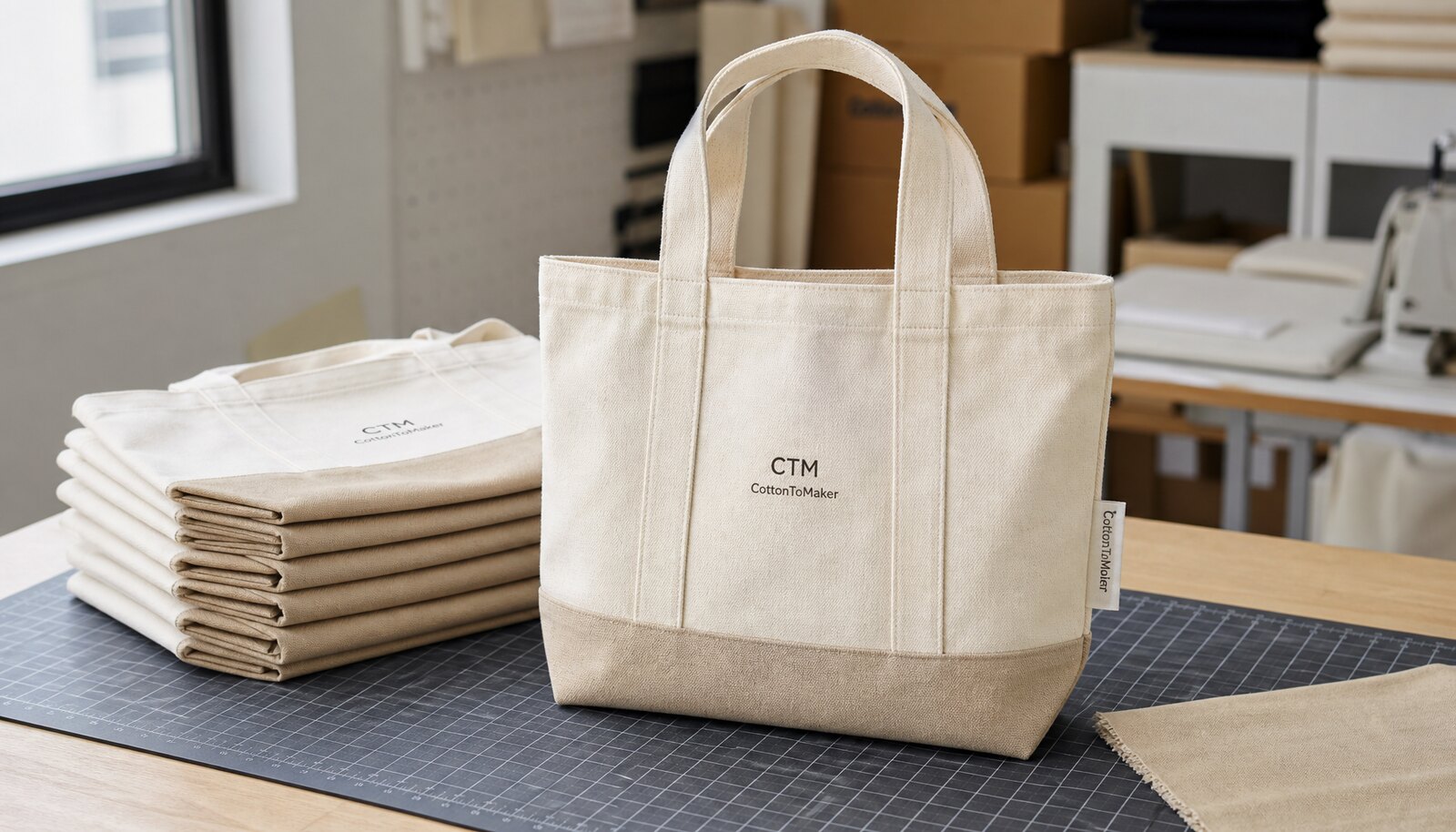
Start with the reorder problem, not the tote itself
A museum tote reorder is a continuity problem. The bag already sold, the shopper already accepted the look and feel, and the business now depends on reproducing that outcome without adding noise. The mistake many buyers make is treating the reorder like a fresh quote exercise. That usually invites the supplier to restate its standard cloth, standard handle, standard print, and standard pack even when those details are not the same as the original approved bag.
For museum retail, the bag is both a carrier and a merchandise item. It has to survive a few books, a catalog, or a boxed gift, but it also needs to look clean enough to sit on a shelf next to other branded goods. The right procurement frame is simple: freeze the features that the shopper can see and feel, and only allow changes when the museum has a reason to change the retail offer.
- Treat the approved sample as the commercial baseline, not just the artwork file.
- Write down which details are frozen before any supplier quotes the order.
- Separate true design changes from normal production variation.
Specify the bag construction in plain procurement language
If the construction is vague, the quote will be vague too. The buyer should describe the bag in terms that a factory can measure: body size, gusset depth, handle length, handle drop, seam allowance, thread count, and reinforcement method. That level of detail does not overcomplicate the RFQ. It prevents the supplier from filling in gaps with its own default tote pattern, which is where most reorder drift starts.
Canvas is not a single material choice. A 10 oz bag and a 12 oz bag may both be called canvas, but they behave differently in the hand, on the shelf, and under load. The buyer should request target GSM, weave type, finish, shrinkage expectation, and whether the cloth is bleached or natural. If the museum wants a firmer bag, ask for that outcome directly instead of assuming weight alone will produce it.
Handle construction deserves the same discipline. A wide handle with weak attachment is a poor retail bag even if the front print looks good. Ask whether the handle is folded, self-fabric, cotton tape, or another build; how the ends are anchored; and whether the stitch pattern is a straight tack, box tack, or another reinforced finish. If the approved sample has a visible reinforcement pattern, that detail should be stated in the RFQ.
- Lock body size, gusset, handle length, and handle drop before comparing prices.
- Ask for fabric GSM, weave, finish, and shrinkage instead of a generic canvas description.
- Require the handle reinforcement method to be named in the quote.
Choose the sourcing route that matches the reorder risk
A direct factory quote and a trading company quote can look similar on paper while carrying very different operational risk. Direct factory sourcing is the stronger choice when the museum needs the same bag again and again, because the buyer can tie the sample to the plant that actually cuts, sews, prints, and packs the order. The downside is that the buyer has to manage the fabric minimum, the print setup, and the lead time as separate moving parts.
Trading companies can be useful when the tote is only one line in a broader merchandise shipment or when the buyer needs a backup source that can flex across several factories. The risk is spec drift. A sample may be produced in one plant and bulk may move elsewhere if capacity changes. If that happens without written control, the unit price may stay the same while the construction, packing, or fabric quality quietly shifts.
Domestic cut-and-sew or local decorator sourcing can make sense for short replenishment runs, urgent exhibit dates, or last-minute store top-ups. The tradeoff is usually price and fabric choice, not just speed. The buyer should not ask whether a local supplier is cheaper in the abstract. Ask whether it can reproduce the approved sample with the same cloth weight, decoration method, and carton discipline on the date the museum needs the goods.
- Tie the sample to the same plant that will run bulk production whenever possible.
- Ask who actually cuts, sews, prints, and packs the order.
- Normalize quote assumptions before comparing a factory price to a trading-company price.
Build order quantity from sell-through and production economics
Museum reorder planning should start with sales behavior, not with supplier minimums. If the tote moves steadily all year, use recent sell-through to estimate forward cover and add a small buffer for delayed receipts or store-level damage. If the tote is tied to an exhibition, a holiday program, or a new exhibition launch, the real target is the in-store date, not the PO date. A bag that arrives after the retail moment has passed is not a successful reorder, no matter how good the unit price looked.
MOQ is usually not one number. It can be driven by fabric lot size, print setup, sewing line efficiency, packing configuration, or all four. A buyer can lower the effective MOQ by reducing variation. One size, one fabric color, and one print placement are easier to source than three colorways and two artwork versions. If the museum needs several variants, ask whether the same body can share fabric and carton components so the plant is not retooling for each version.
The buyer also needs to think in landed units, not factory units. A quote that looks attractive at 1,000 pieces can become expensive if the supplier adds a setup fee, a custom carton charge, a separate screen charge, or extra freight because the bag is heavier than expected. Reorder quantity should be chosen after the buyer sees the total cost to receive and sell a clean, consistent bag.
- Use sell-through and shelf date to set reorder quantity, not only the supplier MOQ.
- Reduce variation first if you need a lower order quantity.
- Compare landed cost per sellable unit, not just the factory unit price.
Treat decoration as a production variable, not a graphic preference
Decoration is where many tote reorders become hard to compare. One-color screen print is usually the most stable repeat option because it is easy to register, easy to inspect, and usually easy to reproduce from one reorder to the next. It is not the only answer, but it is the easiest way to keep the quote clean when the museum wants a strong retail identity and a controlled cost base.
A woven label or side patch can look more premium and keep the body of the bag visually quiet, which is often useful for museum merchandise. The tradeoff is that it adds sewing, placement, and fold interaction. If the label crosses a seam, lands near the top edge, or sits where the bag folds for packing, the buyer needs to spell that out. Otherwise the supplier will place it where production is easiest, not where the shelf presentation is best.
Artwork files matter less than buyers think unless the placement is defined. Canvas texture changes how ink sits on the cloth, so the strike-off should be made on the final fabric and not on a generic blank. Thin reversed text, tiny lines, and graphics that cross a seam are high-risk features on a repeated reorder. If the museum needs them, the supplier should prove the layout on the approved sample before bulk pricing is accepted.
- Choose the decoration method based on repeatability, not only on appearance.
- Approve artwork placement on the final fabric and final bag construction.
- Keep fine lines, tiny text, and seam-crossing graphics out of the spec unless they have already been proven.
Control the sample process and revision history
A sample is only useful if it represents the production order. For a reorder, the buyer should ask for a preproduction sample made from the same fabric, the same decoration method, and the same packing method that will be used in bulk. A photo approval is not enough. It does not prove handle stiffness, seam balance, fold behavior, or whether the bag still looks right after it is packed and unpacked.
The strongest control is a sealed reference sample held by the buyer and a second reference held by the supplier. Every production run should be checked back to that sample, not only to the artwork file. This matters because a tote can look visually close while still drifting in size, handle drop, or reinforcement. Those differences are easy to miss in an email thread and expensive to fix after shipment.
Revision control should be explicit. If a supplier sends a revised sample, the buyer needs to know what changed, why it changed, and whether the change is allowed. A different label thread, a slightly changed carton count, or a new fabric source may sound minor, but each one can affect the next reorder. The order should state which revision number is approved and which changes require fresh approval.
- Approve a preproduction sample, not only a photo.
- Keep a sealed buyer reference and match bulk against it.
- Require revision numbers for any change to fabric, construction, artwork, or packing.
Turn the RFQ into a pricing packet, not a request for guesses
A supplier can only price what the buyer has described. The RFQ packet should therefore contain the approved sample reference, final art file, bag drawing, fabric target, handle spec, decoration method, packing instruction, forecast quantity, and shipping window. If one of those is missing, the supplier will insert a default assumption, and the resulting quote will not be comparable to the next one.
The best RFQ also states the commercial purpose of the order. If the museum wants the lowest acceptable cost, the quote should be built around the simplest acceptable construction, the most efficient packing, and the least complicated artwork. If the museum wants retail presentation first, the packet should say so, because the factory may need to hold a tighter stitch line, a cleaner fold, or a more detailed label placement. The more explicit the buyer is about the commercial goal, the less room there is for hidden spec changes.
This is also where buyers can ask for optional pricing without confusing the base quote. For example, ask for one price on the exact approved sample and a second price for any suggested efficiency change, such as a different carton count or a simplified label. That keeps the comparison clean and prevents a cheaper alternative from being mixed into the base order without review.
- Send one spec sheet, one art file, one packing sheet, and one approved sample reference.
- State what is fixed and what the supplier may propose as an option.
- Ask for base pricing and alternate pricing separately so the comparison stays clean.
Build a QC plan that catches the defects buyers actually see
Quality control on canvas retail bags should focus on the defects that affect shelf presentation and daily use. The first check is dimensional accuracy. Measure the finished bag laid flat after light pressing, because raw cut dimensions do not tell you what the retailer will receive. The second check is stitch quality at the handle ends, side seams, and top hem. Those are the places where a weak bag fails first and where a customer notices trouble quickly.
A practical QC plan should also define acceptable and unacceptable variation before inspection starts. Many buyers use measurement tolerances in the range of plus or minus 0.5 cm on the body and plus or minus 1.0 cm on handle length, but the exact numbers should match the product and the store use case. If the tote is sold as a premium retail item, the buyer may need tighter controls on print position, edge finish, and fold consistency than a back-of-house carrier would require.
Inspection should not stop at visual checks. Ask for a carry-load or pull test tied to the intended use of the bag, and define the pass level in the PO or quality agreement. If the museum expects the tote to carry books, catalogs, or boxed gifts, the sample should be tested against that reality rather than against a generic bag standard. If the supplier says a test exists but cannot describe the method, it should not be treated as a meaningful control.
- Measure the finished bag after light pressing, not on cut parts.
- Set written tolerances for dimensions, print position, and handle length before inspection.
- Define the load or pull test against the actual use of the bag.
Use a simple inspection workflow that is hard to misunderstand
The inspection workflow should be easy enough for both sides to follow without interpretation. Start with incoming lot identification: fabric lot, production date, order number, revision number, and carton count. Then inspect a sample size that matches the chosen AQL or house standard. If the buyer uses AQL, major and minor defects should be listed in writing before shipment so everyone knows what will fail the lot and what will trigger rework or sorting.
A good workflow also includes defect categories that are specific to tote bags. Examples include crooked print, off-center placement, broken or skipped stitching, loose handle tack, visible stain, wrong fabric weight, wrong label, and incorrect packing. The inspection sheet should show which defects are major and which are minor. A loose thread and a missing handle reinforcement are not the same problem, and they should not be handled as if they were.
Recordkeeping matters because reorder programs live longer than a single shipment. Photo evidence of the approved sample, the inspected lot, and any defects found will save time on the next round. When a buyer can point to a dated reference and a written defect rule, the factory has less room to argue that a drifted bag is still acceptable.
- Identify the lot clearly before inspection starts.
- Classify tote-specific defects as major or minor in writing.
- Keep photo records of the approved sample and any accepted or rejected lot.
Pack for receiving, not only for transport
Packing is part of the retail product. If the tote arrives badly folded, crushed, or mixed by SKU, the warehouse or store has to fix it before the item can be sold. That labor is invisible on the supplier quote but visible in the operating budget. The buyer should define fold direction, polybag use, inner count, carton count, and carton marking so the receiving team can move quickly without opening every box to sort inventory.
For museum shops with several locations, packing should help distribution. That may mean carton labels by branch, color, or SKU, or it may mean a master carton format that maps cleanly to the DC receiving process. If the order is going direct to store, a retail-ready fold and label can matter more than the cheapest possible carton fill. The best pack spec is the one that reduces touch time after the shipment lands.
The buyer should also ask for the carton limits the plant will actually respect. If the bag is heavy or bulky, too much carton fill can create crush damage or make the carton hard to handle. That can matter as much as the bag itself. A packing instruction should therefore include not just carton count, but the maximum gross weight and any stacking or pallet rules that apply at the receiving point.
- Define fold direction, polybag use, and carton count before bulk begins.
- Use SKU and branch labeling when the order will be split across locations.
- Set carton weight and stacking rules if the bag is heavy or bulky.
Specification comparison for buyers
| Spec decision | Recommended option | When it fits | Buyer risk to check |
|---|---|---|---|
| Direct factory sourcing | Work with a bag factory that controls fabric, cutting, sewing, printing, and packing in one line | Best for repeat museum reorder programs where the approved sample must be reproduced with minimal variation | Check whether the mill, print shop, or packing line is subcontracted and whether the same plant will run the repeat order |
| Trading company sourcing | Use a trading partner when you need bundled categories, backup capacity, or multi-item consolidation | Useful when the museum shop buys totes with other retail goods in one shipment or needs help managing several factories | Spec drift can happen if the sample comes from one plant and the bulk order moves to another plant without written approval |
| Domestic cut-and-sew or decorator | Use a local printer or sewn-goods shop for short replenishment runs and urgent top-ups | Fits small seasonal gaps, event-driven replenishment, or same-country programs with tight delivery windows | Unit price is usually higher and fabric options are narrower, so confirm whether the quote includes the same cloth weight and reinforcement as the approved sample |
| 10 oz / about 340 gsm canvas | Choose lighter-medium canvas for lower-cost retail bags and moderate carry loads | Fits postcards, catalogs, soft goods, and other light museum merchandise where shelf price matters | The body can feel too soft on a large bag, and the handle attachment may need extra reinforcement if the design is oversized |
| 12 oz / about 400 gsm canvas | Choose heavier canvas for premium presentation and heavier carrying use | Fits books, boxed gifts, and museum bags that should feel substantial at retail | Higher fabric cost, higher sewing resistance, and more weight in freight can change landed cost more than buyers expect |
| One-color screen print | Use a single solid logo or artwork block with fixed placement | Best for repeat orders, clear branding, and predictable inspection against a strike-off | Registration, edge sharpness, and ink density need a strict approval sample because canvas texture changes the printed look |
| Woven side label plus small body mark | Use a sewn label for identity and a smaller printed mark on the face | Fits premium retail bags where the fabric should stay visually clean and the brand cue can be more subtle | Label position, fold line, seam crossing, and stitch tolerance need to be defined before bulk production |
| Retail polybag plus master carton | Pack for warehouse replenishment and store receipt with controlled fold direction and count | Best for multi-location museum programs and export shipments that need clean receiving | Poor pack specs create rework at the store or distribution center, which is a hidden cost that unit price does not show |
Buyer checklist before sampling
- Approved sample reference with date, revision number, and photos of front, back, side seam, handle attachment, and fold state
- Final bag drawing showing body width, body height, gusset depth, handle length, handle drop, seam allowance, and print placement
- Fabric specification with target GSM, weave type, finish, color reference, and accepted shrinkage tolerance
- Decoration specification with method, artwork file version, print size, print location, and any Pantone or buyer color reference
- Handle construction detail including strap width, folded edge or raw edge, reinforcement method, and bar-tack or stitch pattern
- Packing instruction showing fold direction, polybag requirement, inner count, master carton count, carton size, and carton label format
- Quality plan stating inspection level, defect categories, measurement tolerance, and whether a pull test or rub test is required
- Forecast by month or season with the expected reorder trigger, so the supplier can plan fabric and line capacity
- Commercial terms showing incoterm, destination, ship window, payment timing, and whether sample fees are credited to bulk
- Revision control note that says what changed since the last PO and what must remain identical to the approved sample
Factory quote questions to send
- Which mill supplies the canvas, and can you confirm fiber content, weave construction, finish, and whether the cloth is stock or made to order?
- What shrinkage did you measure on the approved fabric, and is that based on wash, steam, or factory finishing only?
- Is the handle a single layer, folded, or reinforced structure, and what is the exact stitch pattern and bar-tack count at each end?
- How are you measuring print placement from the seam, hem, and bag edge, and what tolerance do you hold in bulk?
- What is included in the unit price and what is separate, such as screens, plates, sampling, carton upgrade, special labels, or testing?
- What is the MOQ by fabric color, size, and artwork revision, and can different print versions share the same fabric lot?
- Will the bulk order run on the same factory line as the sample, or is any subcontracting involved for sewing, printing, or packing?
- What revision control do you use for artwork and construction changes, and how do you prevent a newer sample from replacing the approved version?
- What inspection standard do you use, what defect categories are considered major versus minor, and can you share the checklist your team applies before shipment?
- If the requested fabric or carton material is unavailable, what is the approved substitute process and who signs off on it?
Quality-control points to confirm
- Measure body width, body height, gusset depth, handle length, and handle drop on laid-flat finished bags after light pressing, not on cut parts.
- Set buyer tolerances in writing. Common starting points are plus or minus 0.5 cm on bag dimensions and plus or minus 1.0 cm on handle length, but align the final tolerance to your own spec and presentation needs.
- Check stitch quality at the handle attachment, side seams, and top hem for skipped stitches, broken threads, loose tails, needle damage, or puckering.
- Inspect reinforcement at both handle ends. The reinforcement should match the approved sample and should not shift when the bag is loaded or folded.
- Use a pass or fail pull test tied to the actual carry load the museum expects. If your internal standard requires a margin, define it in the PO or inspection sheet before production starts.
- Verify print placement against the approved strike-off on the final fabric, and reject visible drift that crosses seams, gussets, or fold lines unless that layout was explicitly approved.
- Review color under a standard light source or daylight-equivalent viewing condition. If the color is critical, define the acceptable reference sample and any buyer-specific delta standard before bulk.
- If your QA team uses AQL, set the sampling plan before shipment and keep it consistent across reorders. Many buyers start with AQL 2.5 for major defects and 4.0 for minor defects, then adjust by risk and product use.
- Check carton count, SKU labels, PO number, and ship-to marks against the packing list before the goods leave the factory or consolidation point.
- Record lot photos of the approved sample, key measurements, carton labels, and any defect examples so the next reorder has a clear reference trail.