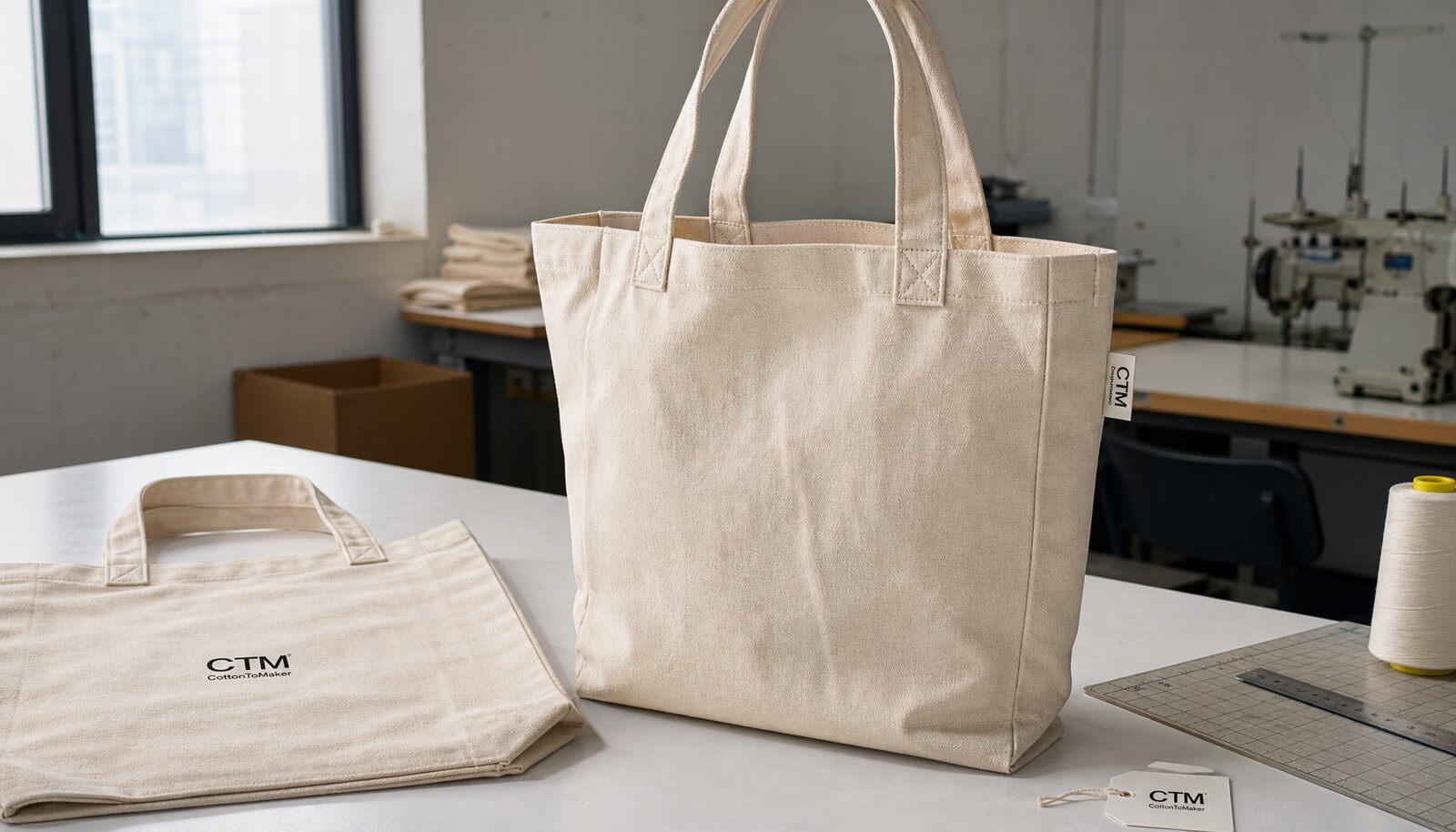
What Hotels Are Really Buying When They Order a Canvas Merchandise Bag
A hotel retail merchandise bag is not a generic tote bought for mass distribution. It sits closer to a retail SKU than a giveaway item, because the buyer is usually balancing presentation, sell-through, repeatability, and guest perception. In a gift shop or resort boutique, the bag may be asked to do several jobs at once: carry purchased goods, display the hotel brand, survive normal handling, and still look polished after sitting on shelf for weeks. That is why procurement has to look beyond the artwork and ask whether the bag will actually perform as a retail item.
Hotel buyers also face a purchasing pattern that is different from a standard consumer brand. A single property may need a small opening order to test demand. A resort group may need a coordinated roll-out across several outlets. A city hotel may want a low-risk launch before the peak season, while a destination property may want a replenishment program that can be repeated quarter after quarter. Those use cases change the acceptable MOQ, the preferred sourcing route, and the amount of schedule buffer required.
The most common mistake is to treat the bag as a one-line quote. In practice, the order includes bag body, decoration, packaging, carton logic, and the timing of delivery to the property or central warehouse. If the supplier does not understand how the bags will be sold and received, the quote may look competitive while still missing the real commercial need. A procurement-friendly brief should therefore define the retail environment, the expected sell-through pace, and whether the first order is a test or a long-term SKU.
- Treat the bag as a retail SKU, not a freebie.
- Define the property context: gift shop, lobby shop, resort boutique, or central warehouse.
- Align the order with the opening date, seasonal window, or replenishment cycle.
- Ask whether the goal is testing demand, building a permanent line, or supporting a fixed event.
Set the Spec Around Shelf Life, Hand Feel, and Brand Positioning
Fabric weight is the first spec lever most buyers discuss, but it should not be chosen in isolation. In hotel retail use, a lighter canvas can work when the bag is an impulse item, a small souvenir carrier, or a short-life seasonal piece. A medium-weight canvas is often better when the hotel wants the bag to feel substantial on shelf and hold up to repeated guest use. Heavier canvas can support premium positioning, but it may also raise sewing time, freight weight, and sometimes the stiffness of the finished bag. Those tradeoffs matter because a bag that feels too rigid may not suit every property aesthetic.
For procurement purposes, it is safer to think in ranges rather than fixed rules. A common buying conversation may start around 10 oz for lighter retail use and move toward 12 oz or heavier when the bag needs more structure. The exact choice should be validated with the supplier because weave density, finishing, and yarn quality can change how a nominal weight feels in hand. In other words, two bags at the same stated weight may not present the same way on shelf. Ask for a swatch, an approved sample, or photos of comparable finished goods before locking the spec.
Decoration should follow the brand story and the launch timeline. Screen print is often the most procurement-friendly option because it balances durability, repeatability, and cost. A woven label can make the bag feel more branded without the labor of full embroidery. Embroidery can work when the hotel wants a premium look, but it increases sew time and can add puckering on lighter canvas. Heat transfer may be useful for short runs or detailed artwork, but buyers should ask about rub resistance and fold performance, especially if the bags will be stacked or folded repeatedly in store.
One practical way to reduce risk is to separate the must-have features from the nice-to-have features. If the hotel needs a quick launch, the first run can use a standard natural canvas body with one-color print and a simple label. If sell-through proves strong, the next run can add a gusset print, premium packaging, or a more elaborate trim package. That keeps the first order commercially workable instead of forcing the factory into a high-MOQ custom spec before demand is proven.
- Use a medium-weight canvas when the bag needs a stronger retail feel and longer shelf life.
- Validate the fabric by swatch or sample, not by stated weight alone.
- Keep the first run simple if the demand signal is still uncertain.
- Choose decoration based on durability, not only appearance.
Why MOQ Moves: Fabric, Color, Setup, and Packing All Matter
MOQ for canvas retail merchandise bags is rarely driven by bag size alone. It is usually the combined result of fabric sourcing, cutting efficiency, print setup, trim sourcing, and the supplier’s willingness to hold unfinished inventory. If the bag uses stock natural canvas, one print color, and standard packing, the MOQ can often stay relatively manageable. Once the buyer adds custom dyeing, multiple print colors, a woven label, a special hangtag, or retail-ready packing, the minimum usually rises because each extra feature creates its own setup cost and its own waste profile.
This is why good procurement work separates true custom requirements from features that merely make the bag look more custom. A logo printed on a standard body may be enough for a hotel launch. A fully custom dyed body with matching trim, branded label, and property-specific carton marks is a different program altogether. The supplier should quote those versions separately so the buyer can see which decisions are actually pushing MOQ upward. That is more useful than accepting one blended MOQ number that hides the real cost drivers.
The same logic applies to colorways. A single natural body may allow a lower entry threshold than several dyed colors, because the factory can cut from one material stream and avoid split production. If the program needs different colors for different properties, ask whether the supplier can quote one base body with variable decoration instead of multiple bag bodies. In many hotel programs, one body plus different labels or print graphics is easier to manage than several fully custom fabric shades.
Packing also affects MOQ more than many buyers expect. Retail-ready packing—polybag, tissue, hangtag, barcode sticker, size label, or shelf-ready carton—adds labor and materials. That can push the factory to ask for a higher minimum, especially if the packing is custom by hotel or property. For a buyer, the key is not to avoid these features altogether, but to understand which elements are making the order less flexible. Once the commercial risk is clear, the team can decide whether to simplify the first run or commit to the higher MOQ in return for a more retail-ready presentation.
- Lower MOQ usually comes from stock fabric, one print color, and standard packing.
- Custom dyeing and multi-color decoration tend to increase minimums.
- Ask the supplier to split MOQ by body, decoration, and packing.
- If launch demand is uncertain, simplify the first version before increasing custom features.
Lead Time Should Be Mapped as Phases, Not a Single Number
Lead time is often quoted too vaguely for hotel procurement. A supplier may say three weeks or six weeks, but that number is only useful if the buyer knows what it covers. For canvas retail merchandise bags, the schedule normally includes artwork confirmation, sample development, material availability, print setup, pre-production approval, cutting, sewing, packing, and then freight or delivery. If any of those steps are missing from the timeline, the buyer may think the order is safer than it really is.
A better planning method is to ask for phase durations. For example: how long until a pre-production sample is ready; how long after sample approval before materials are locked; how many days for cutting and sewing; how many days for packing and carton labeling; and how long until goods are ready to ship. That structure exposes the critical path. It also makes the hotel’s internal decision points visible, which is useful when a procurement team has to coordinate with merchandising, operations, and opening schedules.
The most dangerous assumption is that sewing time equals lead time. In reality, the longest delay may come from material booking or artwork revision, not from production itself. If the canvas is custom dyed, if the label needs approval, or if the artwork is still being adjusted, the clock can start long before the factory cuts the first panel. On a hotel opening program, that difference can decide whether the merchandise lands before opening week or after the first guest surge has already passed.
A practical buyer request is a dated schedule with three checkpoints: sample ready date, bulk start date, and ship-ready date. If the supplier cannot offer those dates in writing, the team should treat the lead time as provisional. It is also worth asking what events can move the date: fabric stockout, screen remake, sample correction, carton artwork change, or packing rework. When those risks are visible up front, procurement can build a contingency plan instead of reacting after the first delay.
- Ask for sample, production, and shipment dates separately.
- Do not treat sewing time as the full lead time.
- Identify the critical path: fabric, artwork, label, or packing.
- Use written milestone dates for hotel opening planning.
A Useful Comparison of Sourcing Routes for Hotel Programs
The right sourcing route depends on whether the priority is speed, control, or lower entry risk. A stock blank bag printed locally is usually the fastest route for a small hotel launch or a seasonal test. The buyer can see the bag quickly, approve the decoration, and avoid waiting for custom fabric production. The tradeoff is reduced control over body details, limited size options, and potentially variable blank inventory. This route is often best when the business wants to test demand before committing to a deeper custom order.
Direct factory cut-and-sew gives the buyer more control over the final product. The hotel can specify fabric weight, handle reinforcement, stitching details, packing format, and label placement more precisely. This usually works better for repeat programs or for properties that want the merchandise bag to match a brand standard across multiple locations. The price per unit may look good at volume, but the MOQ and lead time are often less forgiving because the factory is managing more production steps in-house.
Trading companies and aggregators are useful when the buying team needs flexibility or smaller order consolidation. They can sometimes combine multiple property orders into one production run or offer access to a factory that would otherwise be too large for a single hotel’s demand. The buyer should still verify who is actually making the goods, because a middleman can obscure the real factory, the real lead time, and the real QC process. If the order later needs a reorder, the team should know whether the same factory, screen, and spec sheet will be reused.
Custom-dyed or highly decorated routes are the most brand-specific, but they usually carry the highest commercial friction. The buyer may gain a stronger visual identity, yet pay for it with longer timing, larger minimums, and more approval steps. That does not make the route wrong; it only means it should be selected deliberately. For a hotel procurement team, the comparison should not be “which quote is cheapest?” It should be “which route gives us the right balance of speed, control, repeatability, and shelf presentation for this program?”
- Use stock blank + local print when speed matters more than deep customization.
- Use direct factory cut-and-sew when repeatability and spec control matter most.
- Use aggregation when orders are fragmented across properties.
- Treat custom dyeing and heavy decoration as premium programs, not default choices.
What to Ask for in the Quote So the Numbers Are Comparable
A usable RFQ is one that allows apples-to-apples comparison. For canvas retail merchandise bags for hotels, the request should define the finished size, handle length, handle drop, seam allowance, fabric weight, weave style if relevant, print method, print colors, label type, packing format, carton count, destination, and target in-store date. If any of those items are missing, the supplier has to guess. The problem is that suppliers do not always guess the same way, which makes two quotes look similar while actually describing very different bags.
The quote should also state what is included and what is excluded. Some suppliers quote the sewn bag only and leave packing or labeling to the buyer. Others include retail-ready pack-out but use a smaller handle or lighter canvas than expected. The buyer should insist that each supplier spell out the assumptions, not just the unit price. This is especially important in hotel sourcing because a bag that arrives unsorted, unlabeled, or underpacked can create labor costs at the property or warehouse that never appeared in the factory quote.
To improve quote quality, it helps to ask the supplier for a split price if feasible: one line for the bag body, one line for decoration, and one line for packing. That makes it easier to see whether a second logo color, woven label, or retail hangtag is worth the cost. It also makes later negotiation more constructive because procurement can simplify one element instead of reworking the whole spec. A supplier that can only quote one bundled number may still be capable of producing the bag, but the buyer has less visibility into where the cost and MOQ pressure are really coming from.
- Require clear specs for size, handle, fabric, decoration, and packing.
- Ask for exclusions so the quote does not hide extra charges.
- Request split pricing when possible to expose the cost of labels or retail packing.
- Make destination and delivery format part of the RFQ, not an afterthought.
QC Should Focus on the Defects Hotel Buyers Actually Notice
Quality control for a hotel retail bag should be tied to the visible and functional defects that matter at point of sale and during guest handling. The buyer should begin with a golden sample that has been signed off and retained by both sides. That sample becomes the reference for fabric shade, seam finish, print placement, handle symmetry, and the overall retail presentation. If the bulk run starts to drift from that sample, the procurement team needs a clear basis for correction.
A useful QC plan is more concrete than a generic “good workmanship” note. Finished size should have an agreed tolerance so the bag still sits correctly on shelf and accepts the planned barcode or hangtag. Stitching should be checked for density, skipped stitches, loose thread tails, and clean reinforcement at handle joins. A simple pull-check can confirm whether the handles are attached securely enough for ordinary retail use. The exact threshold should be agreed in advance, because the buyer and factory need the same standard before production starts.
Print quality deserves its own checklist. The logo should be centered according to the approved artwork, with clean edges and sufficient opacity on the canvas weave. For screen print, it is worth checking for rub-off or cracking after folding and handling. For embroidery, inspect for puckering, thread breaks, and exposed back threads. For woven labels or side labels, check angle, attachment strength, and whether the label interferes with the clean look of the bag. Hotel shoppers will notice a crooked label long before they notice a minor spec note.
Carton audits are just as important as bag inspection. The team should verify count per carton, unit presentation, barcode readability, carton marks, and whether the cartons are suitable for the receiving environment at the hotel or warehouse. For multi-property orders, carton labeling should reflect the correct destination split. If the cartons are mixed or mis-marked, the receiving delay can be worse than a sewing defect because it affects the downstream retail team. Procurement should therefore include carton audit checks in the acceptance plan, not just in the shipping paperwork.
- Approve and retain a golden sample.
- Set written tolerances for size, handles, and print placement.
- Check print rub resistance, label alignment, and handle reinforcement.
- Audit cartons for count, marks, barcode readability, and destination accuracy.
Packing and Carton Planning Matter More Than Many Buyers Expect
Packing decisions affect both the customer experience and the hotel’s receiving cost. If the bags are going straight to a gift shop or central warehouse, procurement should define whether each unit needs a polybag, tissue wrap, hangtag, barcode sticker, or shelf-ready fold. Retail-ready packing costs a little more, but it reduces the amount of manual handling the property team has to do when the goods arrive. For many hotel buyers, that labor saving is worth more than the small pack-out premium.
Carton planning should also reflect the destination. A carton that is too large can waste freight space and make the bag look crushed when unpacked. A carton that is too full can deform the canvas and create wrinkles in the print. If one order feeds multiple properties, carton marks and packing sequence need to be standardized before production starts. That way, the warehouse can distribute the goods quickly without opening and re-sorting every box.
Procurement should ask for carton dimensions, gross weight, and pack count, then compare those figures with the receiving rules at the hotel or regional warehouse. If the destination has shelf-ready requirements, ask whether the supplier can pre-sort by property or outlet. If not, factor the sorting labor into the landed cost. This is one of the easiest places for a quote to look attractive on paper while creating extra cost after arrival.
For canvas bags specifically, over-compression is a risk to presentation. A bag that arrives overly folded or tightly packed may take time to recover its shape on shelf. That matters in hospitality retail because the first impression is often visual. The buyer should therefore balance freight efficiency with presentation quality and make sure the supplier understands that a retail-ready appearance is part of the product, not an afterthought.
- Define whether the bag ships as bulk stock or retail-ready unit.
- Match carton size to the destination’s receiving process.
- Use carton marks when a PO feeds multiple hotels or outlets.
- Avoid over-compression that harms shelf presentation.
How to Read Landed Cost and Plan Reorders Without Losing Control
The cheapest factory price is rarely the cheapest outcome. Hotel procurement should compare the full landed cost, including sample time, packing labor, freight volume, destination handling, and the risk of rework. A heavier canvas may increase freight weight, but it can also reduce complaints and improve the bag’s lifetime on shelf. A slightly more expensive unit can be the better commercial choice if it avoids a rush reorder during peak season or prevents a failed launch from needing replacement.
It also helps to separate pilot economics from repeat-run economics. The first order may cost more because the supplier is making samples, screen setups, and initial approvals. A reorder can often be more efficient if the spec is frozen and the supplier retains the same tooling and production notes. This is where many hotel programs lose money: the first run is approved, but the spec is not formally locked, so the second run restarts the learning curve and the bag drifts in shade, size, or print position.
A good reorder strategy is simple: freeze the approved spec, archive the signed golden sample, keep the artwork file in a controlled folder, and require any changes to pass through the same approval route. If the hotel group uses several properties, one master spec should govern all of them unless there is a documented reason to vary. This reduces variation, protects replenishment speed, and makes it easier for procurement to compare future quotes against a stable baseline.
When timing is critical, ask suppliers what parts of the lead time can be protected with pre-booked material or reserved production slots. Some factories can hold fabric or screen setups for a short time if they know a reorder is likely. That may improve lead time predictability, but it should be confirmed in writing. A reorder promise that is not tied to reserved capacity is only a forecast, not a schedule.
- Compare landed cost, not unit price alone.
- Freeze the spec after approval to protect repeatability.
- Keep one master spec for all properties unless variation is intentional.
- Ask whether the supplier can reserve fabric, screens, or production slots for reorders.
Procurement Decision Guide: Which Spec and Route Fit Which Hotel Scenario
For a small pilot in one property, the safest approach is usually a stock blank or stock-body bag with a simple logo print. The objective is to test demand and presentation, not to optimize every aesthetic detail. In that situation, procurement should favor speed, low commitment, and clean sample approval. A lower MOQ matters because it reduces inventory risk if the bag sells slowly or the property changes the retail mix.
For a seasonal resort drop or a branded collection tied to a specific guest season, the buyer may need a more custom look but still cannot afford a long delay. That is where a medium-weight custom bag with one or two decoration elements often makes sense. The team should be careful not to add every possible trim detail just because the design can support it. Each extra feature increases the chance of missing the shelf date.
For a multi-property procurement program, consistency becomes the main objective. This is where direct factory cut-and-sew or a tightly managed sourcing partner often works better, because the program needs one stable spec, one controlled approved sample, and a clean reorder path. It is less about a single purchase order and more about reducing variation across outlets. If the buyer expects the line to repeat, the initial order should be built with the next order in mind.
For premium boutique retail, the bag may need to feel like part of the hotel brand rather than just a carrier. In that case, the buyer may accept a higher MOQ and longer lead time in exchange for a better finish, custom label, and stronger shelf presence. The key procurement question is whether the premium cost is justified by the retail positioning. If it is, the supplier should be asked to quote the premium and the simplified version side by side so the team can see the tradeoff clearly.
- Pilot launch: favor stock body, simple print, low risk.
- Seasonal drop: allow some customization but protect the schedule.
- Multi-property program: prioritize repeatability and spec control.
- Premium retail: compare a simplified version against the premium version before deciding.
Specification comparison for buyers
| Sourcing route | Typical MOQ profile | Typical lead time profile | QC focus | Best fit for hotels |
|---|---|---|---|---|
| Stock blank + local print | Lowest entry MOQ; often suitable for small launches or seasonal tests | Fastest when blanks are in inventory; sample approval still needed | Blank shade match, print adhesion, handle symmetry, carton counts | Single-property pilots, quick-turn resort shops, reorder testing |
| Direct factory cut-and-sew | Moderate to higher MOQ depending on fabric, print, and trims | Longer because material booking, cutting, sewing, and packing all happen in one chain | Fabric GSM, seam strength, label placement, size tolerance, golden sample control | Repeat programs, multi-property standards, better spec control |
| Trading company / aggregator | Can reduce apparent MOQ by pooling orders, but may not reduce true factory minimums | Moderate; often depends on how quickly the underlying factory schedules the job | Factory identity, spec consistency, approval chain clarity | Smaller buyers, grouped orders across properties, uncertain launch volume |
| Custom-dyed fabric route | Higher MOQ because dyeing and fabric setup are added to the job | Usually the longest; fabric prep can become the critical path | Shade consistency, shrinkage, colorfastness, roll-to-roll variance | Premium branded retail bags with strong visual identity |
| Retail-ready packed goods | MOQ may rise slightly because labor and pack materials are added | Longer than bulk-only because each unit needs packing and labeling | Barcode scanability, pack sequence, carton labeling, damage prevention | Hotel gift shops, central warehouse distribution, shelf-ready delivery |
| Embroidery or woven-label heavy spec | MOQ and lead time both increase because trim setup and labor increase | Longer due to decoration setup and slower sewing/finishing | Label placement, stitch clarity, puckering, thread security | Upscale boutique shops, brand-forward resort collections |
| Blank stock for private label | Lower MOQ and shorter lead time if the base bag is already available | Shortest if only labeling or light print is added | Stock lot consistency, labeling accuracy, return handling | Test launches, short seasonal windows, fast replenishment |
| Reorder under frozen spec | Lowest risk of drift if the spec is locked and tooling is retained | Usually faster than first run, assuming no changes to fabric or pack | Repeatability, shade consistency, carton count, print register | Ongoing hotel retail SKUs with predictable replenishment |
Buyer checklist before sampling
- Lock the finished size, handle drop, gusset, seam allowance, and logo placement before asking for quotes.
- Ask the supplier to split MOQ by fabric, print method, trim, and retail packing so hidden assumptions do not get bundled into one number.
- Decide whether the first run is a pilot, a seasonal drop, or a repeat SKU; the MOQ target should change with the buying purpose.
- Confirm whether the quote is based on stock canvas or fresh material booking, because that changes both lead time and failure risk.
- Request a pre-production sample or sealed approved sample when fabric shade, print placement, or label position matters.
- Define retail packing in writing: polybag, tissue, hangtag, barcode sticker, shelf-ready carton, or bulk pack.
- Set acceptance tolerances for finished size, stitch quality, print registration, and carton count before bulk production starts.
- Build the schedule backward from the hotel opening or seasonal shelf date, not from the PO date.
- Ask for carton dimensions, gross weight, and pack sequence if one order ships to multiple properties.
- Clarify overrun/underrun policy, replacement terms for defects, and who owns the approved spec sheet for reorders.
Factory quote questions to send
- What is the MOQ for one size, one color, and one print method, and how does it change if we add a second print color, a woven label, or retail packing?
- Is the quoted lead time based on stock fabric, reserved fabric, or fresh weaving/dyeing? Please separate sample time, production time, and shipment time.
- Please quote the same bag in two fabric weights, such as 10 oz and 12 oz, so we can compare cost, hand feel, and freight impact.
- What exactly is included in the unit price: cutting, sewing, print, label attachment, pack-out, carton marks, and inspection?
- Can you provide a pre-production sample with the final print position, handle length, seam finish, and packing format before we approve bulk?
- What are your acceptable tolerances for finished dimensions, handle length, and print placement?
- What QC checks do you perform for seam strength, print adhesion, thread trimming, and carton count?
- How do you handle shortages, overruns, and rework if the first lot fails first-article inspection?
- Can you share carton dimensions, gross weight, pack count, and palletizing guidance for hotel warehouse delivery?
- Who will hold the master spec after approval so future reorders do not drift in shade, size, or logo placement?
Quality-control points to confirm
- Finished dimensions should stay within the approved tolerance window so the bag still fits shelf display, retail inserts, and barcode placement. A practical procurement target is usually tight enough to be visually consistent but not so tight that normal sewing variation causes false rejects.
- Handle length and handle symmetry should match the approved sample within a small tolerance. Uneven handle drop is a common retail-visible defect because it changes how the bag hangs on pegs or shelves.
- Seams should be straight, secure, and free from skipped stitches, loose thread tails, or twisted joins. For reinforced handle areas, ask for bar tacks or equivalent reinforcement and check that the reinforcement is present on both sides.
- A useful production check is to inspect stitch density and thread security on the first article and again on a random carton sample. If the factory has no written stitch standard, request one before bulk approval.
- For print quality, check registration, edge sharpness, opacity, and rub resistance. If the bag will be folded, stacked, or handled repeatedly in a retail setting, do a basic dry rub test and a light fold test on the approved sample before releasing bulk.
- If a woven label, side label, or embroidery is included, verify exact placement, angle, and attachment strength. Labels that drift even slightly can make a premium bag look off-center on shelf.
- Canvas color should be checked against the approved swatch or retained sample under daylight or neutral warehouse lighting. Natural canvas can vary from lot to lot, so ask the supplier to state what shade range they consider acceptable.
- Carton audits should confirm pack count, unit presentation, barcode readability, carton marks, and carton strength. If one PO ships to multiple hotel properties, carton labeling should be checked against the packing list before cartons leave the factory.
- A first-article inspection should cover the first production output, not only the sample. If the first lot shows a recurring issue, hold the balance of the order until the corrective action is confirmed in writing.
- Retain one signed golden sample, one approved artwork file, and one approved spec sheet in the procurement file. Reorders should be compared against those three references, not against memory or a marketing image.