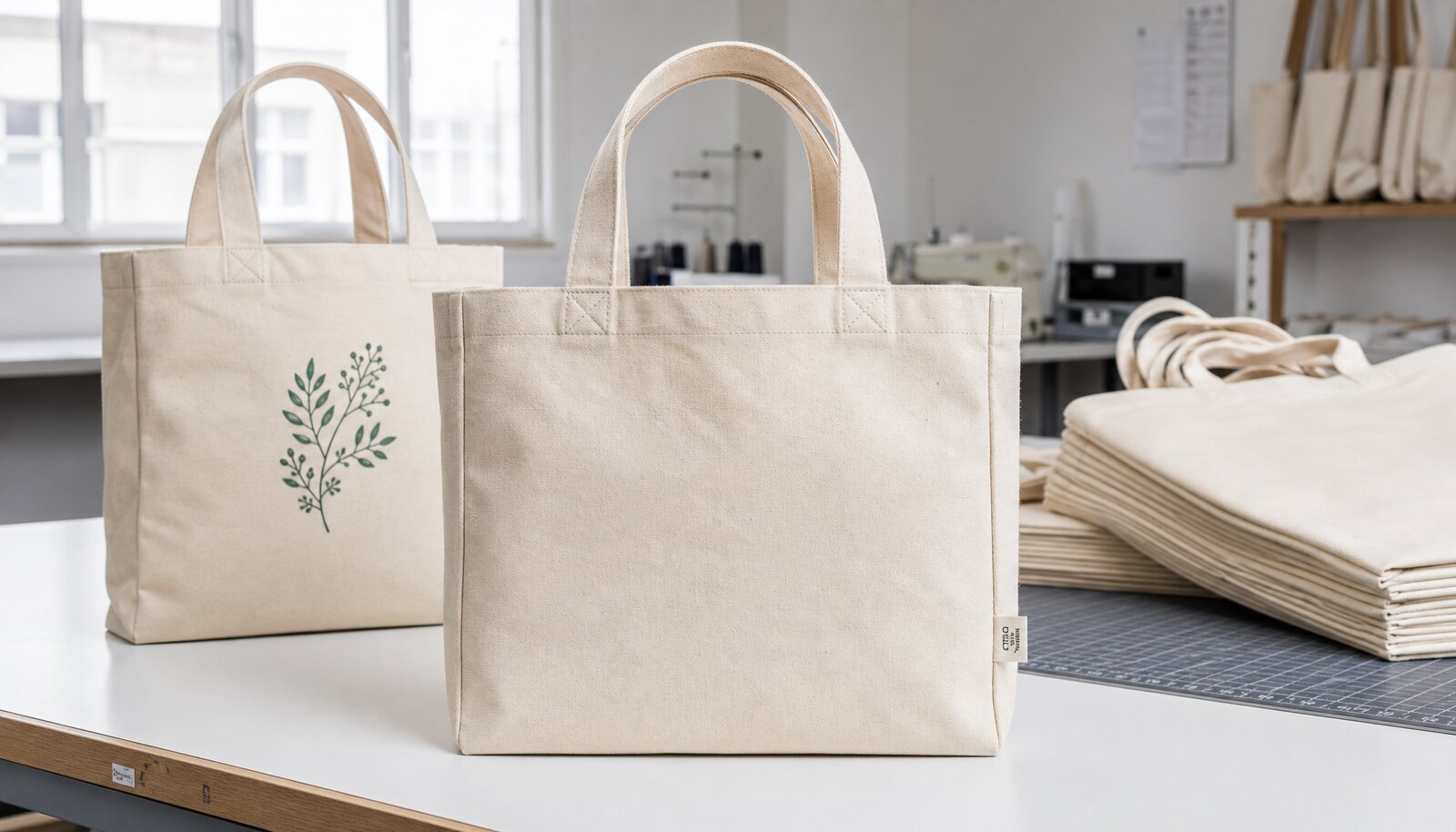
Why this reorder memo matters for boutique buyers
Boutique programs usually fail on the second or third reorder, not on the first launch. The first order gets more attention, more sample rounds, and more manual inspection. The reorder is where buyers assume the last approved spec still exists, while the factory may have changed fabric lot, print plate condition, sewing operator, or packing method. That is how a bag that looked fine in season one starts coming back with softer body, off-center art, and inconsistent fold presentation.
For canvas retail merchandise bags for boutiques, the buying problem is not just unit price. It is continuity: the same bag, same touch, same logo placement, same carton pack, and same arrival date every time the replenishment window opens. A good reorder memo tells procurement what can move and what must stay fixed, so the quote comparison is based on real production constraints rather than sales promises.
- Treat the approved sample as the control document, not the email thread.
- Set a reorder trigger based on sell-through and inbound transit time, not just remaining stock.
- Separate spec changes from replenishment orders so cost drift is visible.
Start with the bag structure, not the artwork
Canvas tote buyers often begin with print ideas and leave the body construction until late. That creates avoidable problems. A 10 oz canvas bag and an 8 oz canvas bag may take the same logo well, but they do not behave the same on shelf or in hand. If the bag is used as a retail merchandise bag inside a boutique, customers expect it to hold shape, carry a small purchase cleanly, and look polished at the counter. For that, a midweight body around 340 GSM is usually more reliable than a soft lightweight cloth that wrinkles and slouches.
The other structural decision is whether the bag needs a gusset and what type of handle reinforcement is acceptable. Flat no-gusset bags are cheaper and easier to pack, but they do not stand as well and can look thin when a customer places a garment box or a candle inside. A bottom gusset and reinforced handle stitching raise material and labor cost slightly, but they reduce store complaints and make the bag more usable after purchase.
- 8 oz / 270 GSM: lower cost, lighter hand, best when presentation is secondary to volume.
- 10 oz / 340 GSM: balanced choice for boutique retail use and repeat replenishment.
- 12 oz+ / 400 GSM and above: premium feel, higher cost, stronger structure, heavier freight.
Choose the print method around reorder stability
For most boutique merchandise bags, one- or two-color screen print is still the cleanest reorder method. It is easy to repeat, easy to inspect, and usually the best cost-to-durability ratio when the artwork is stable. If the logo has solid shapes, a simple wordmark, or a short message, screen print gives the factory a repeatable setup and gives procurement a quote that is easier to compare between suppliers. The key is to approve the actual ink shade and print position once, then keep the artwork locked across reorders.
Heat transfer, digital print, and embroidery each have a place, but they should be chosen for a reason. Heat transfer helps with fast sample cycles and small artwork variations, yet it can show wear sooner if the retail bag is handled a lot. DTG can suit short-run graphic bags, but it is not the first choice for a standard boutique reorder program. Embroidery looks premium on thick canvas, but it raises cost and can distort very fine detail. For a merchandising bag that will be sold, carried, and reused, durable clarity matters more than novelty.
- Use vector artwork and define Pantone targets where possible.
- Approve print position with a physical sample, not only a PDF.
- If a second print side is added later, expect new setup cost and longer sampling time.
Compare sourcing routes before you collect quotes
The same bag can be quoted through a direct factory, a trader, or a brand-focused sourcing agent, and the price structure will not mean the same thing in each route. A direct factory may give the best control on sewing and print consistency, but only if it truly runs the production itself. A trading company may be useful when the program spans several SKU types, yet the buyer must know who owns material sourcing, who approves the sample, and who handles defects. Without that clarity, a low quote can hide a weak execution chain.
For procurement teams, the route decision should be tied to reorder pattern. If the boutique program is stable and the artwork changes rarely, direct factory sourcing is usually cleaner. If the retailer needs mixed collections, gift sets, or fast color variation, a capable trader can simplify coordination, but the quote should be broken down by fabric, printing, sewing, packing, and cartonization so you can compare it against factory-direct pricing.
- Ask whether the quoted price includes cutting loss, printing setup, and inner packing.
- Check if the supplier owns the pattern, plates, and artwork files after approval.
- Request proof of similar bag production, not just a catalog image.
Comparison table: sourcing options for boutique reorder programs
Use this table when comparing supplier quotes for canvas retail merchandise bags for boutiques. The best route is not always the cheapest quote; it is the one that protects repeatability, lead time, and store-ready presentation across the next replenishment cycle.
If two suppliers look close on unit price, compare them on how they manage fabric lot consistency, print setup, and packing control. That is where reorder quality usually breaks.
- Write decisions in measurable language, not only descriptive wording.
- Ask for sample photos plus one physical approval sample for important orders.
- Keep quotation, sample approval, and inspection notes tied to the same spec version.
MOQ logic and cost drivers that change the quote
MOQ is rarely just a factory preference; it reflects cutting efficiency, fabric roll usage, printing setup, and sewing line scheduling. On a custom canvas tote, the unit price often drops once the run reaches a size where the factory can cut efficiently from standard fabric widths and keep the print machine running without constant changeovers. For many boutique reorders, a practical starting point is 500 to 1,000 pieces per color per artwork, but the true break point depends on bag size, number of colors, and whether the base fabric is stock or dyed to order.
When buyers compare quotes, they should separate material cost from conversion cost. Fabric weight, handle length, gusset depth, lining, reinforcements, and print colors all affect conversion time. A simple one-color bag on 10 oz canvas may be price-efficient, while a bag with contrast handles, inside binding, and two print positions can move the quote sharply even if the outer size looks similar. Freight also changes with fabric weight, because a heavier bag increases carton gross weight and can alter the number of cartons per pallet.
- More print colors usually mean higher setup and slower production.
- Special trims, woven labels, and hangtags add both material and assembly time.
- A lower MOQ can be valid, but only if the factory clearly states what setup charges are being absorbed.
Sample approval: what should be frozen before bulk order release
A good sample process for a boutique reorder should end with one approved reference that covers fabric, print, dimensions, stitching, and packing appearance. The mistake many buyers make is approving a sample for artwork only, then later discovering that the bulk run has a different feel or a different fold. The sample should reflect the production method, not a hand-made approximation. If the sample is made from a different canvas weight or a different print method, the approval has limited value.
The pre-production sample should show the exact handle attachment, side seams, top hem, and logo placement. It should also be packed the way the bulk cartons will be packed if the bag is sold at retail or immediately distributed to stores. If the supplier cannot produce the sample in the intended construction, the buyer should treat the quote as provisional until that gap is closed.
- Measure sample width, height, and gusset after finishing.
- Verify print color, logo centering, and top edge alignment.
- Open and re-fold the sample to see whether it creases cleanly for packing.
Packing and carton planning for retail replenishment
Packing is not a minor detail on a retail merchandise bag. If the bag is folded poorly, the store receives wrinkled sides, offset print, and crushed handles. If the polybag is too thick or the carton count is too high, the shipment may look efficient on paper but arrive with handling damage or difficult receiving. For boutique programs, a tidy, repeatable fold is often more valuable than squeezing the maximum number of units into a carton.
Most buyers use bulk packing with an inner polybag and carton label for DC handling, unless the bag is being shipped as shelf-ready retail stock. If the order needs barcode labels, hangtags, or retail inserts, those items must be included in the packing spec before the quote is accepted. Otherwise the factory may quote a plain bulk pack and later charge extra for sorting and final assembly.
- Agree carton pack count before final price comparison.
- Require carton markings that match SKU, color, and quantity exactly.
- If the bag includes a sewn side label, inspect that it stays flat and does not crease the fold.
Lead time risk and reorder calendar planning
A reorder memo should work backward from store demand, not forward from production start. Canvas bags look simple, but the schedule can stretch when fabric stock is short, print screens are unavailable, or the factory is balancing multiple seasonal orders. If a buyer waits until sell-through is already visible in the stores, the replenishment order may arrive after the promotional window is over. The practical answer is to place the reorder before the last third of stock is committed, especially if the bag is tied to a boutique campaign or a seasonal launch.
Typical production timing for a standard custom canvas bag can be around 25 to 40 days after deposit and artwork approval, but only if the fabric and trims are ready. Add time for sample approval, color matching, and carton sourcing if any of those items are not already locked. A factory that promises a very short lead time should be able to explain what is already in stock and what is already approved; otherwise the schedule risk is being hidden, not solved.
- Plan sample approval before inventory hits the reorder threshold.
- Build in transit time by destination, not just factory production days.
- If the order is seasonal, reserve capacity in advance rather than relying on a rush slot.
Use a buyer checklist to keep the reorder quote comparable
A clean quote comparison is only possible when every supplier answers the same scope. The most common mistake is accepting one quote that includes print setup and retail packing and another that excludes them. The second quote looks cheaper until the missing items are added. For canvas retail merchandise bags for boutiques, the RFQ should define the same fabric weight, same bag size, same print locations, same packing count, and same target delivery window so procurement can compare apples to apples.
It also helps to note which items are negotiable and which are not. For example, the buyer may allow a small tolerance in fabric weight but not in handle length or logo placement. That distinction gives the factory room to optimize without risking the retail presentation. When these rules are written into the reorder memo, the supplier quote becomes more honest and the approval loop gets shorter.
- State fixed specs: size, GSM, print position, and pack count.
- State flexible specs: carton art, inner bag style, or accessory insertion if acceptable.
- State acceptance limits: color variation, stitching defects, and fold presentation.
Specification comparison for buyers
| Spec decision | Recommended option | When it fits | Buyer risk to check |
|---|---|---|---|
| Fabric weight | 10 oz / about 340 GSM canvas | Most boutique retail merchandise bags that need structure, better print hold, and a premium handfeel | Too light and the bag collapses; too heavy and unit cost, sewing load, and freight weight rise |
| Fabric weight for budget programs | 8 oz / about 270 GSM canvas | High-volume seasonal programs where price matters more than standing shape | Ink can show through on light colors; handles and stress points need reinforcement to avoid early wear |
| Print method | 1-2 color screen print | Simple boutique logo or store name with repeat reorder volume | Fine type, gradients, and tight registration can drift if artwork is not vector-clean |
| Print method for many SKUs | Heat transfer or DTG only for short runs or variable artwork | Small drops, personalized messages, or fast proofing needs | Higher per-unit cost and a higher risk of rubbing or reduced wash durability if the factory grade is weak |
| Supplier route | Direct factory with in-house cutting, sewing, and printing | Reorders with stable artwork, target cost control, and repeat QC expectations | Need evidence of actual production capability, not a trading quote with hidden outsourcing |
| Supplier route for mixed programs | Trading company with multiple factory options | Buyers needing several bag sizes, trims, or gift sets from one PO | Risk of inconsistent material lots, delayed issue resolution, and unclear responsibility when defects appear |
| MOQ logic | 500-1,000 pcs per color per artwork for custom retail bags | Most branded boutique reorder plans that need pricing efficiency | If MOQ is too low, quote may include setup inflation; if too high, cash ties up in slow-moving stock |
| Packing method | Bulk pack with inner poly and carton label, unless shelf-ready retail packing is required | Warehouses and DCs that re-pack before store delivery | Loose folding causes creases and print scuffing; retail-ready packs increase labor and carton volume |
| Lead time structure | Sample approval plus 25-40 days production after deposit, depending on material availability | Normal reorder cycles with confirmed artwork and standard fabric | Rush plans fail when fabric or print screens are not already approved; add time for carton and trim sourcing |
Buyer checklist before sampling
- Confirm final bag size, gusset, handle drop, and usable loading weight.
- Specify fabric type, GSM/oz weight, color tolerance, and shrinkage expectations.
- Send vector artwork and define logo size, print position, and Pantone references.
- Ask for sample photos plus one physical pre-production sample before bulk approval.
- Agree carton packing, barcode or hangtag needs, and shipment marks before production.
- Record inspection checkpoints for stitching, print adhesion, stains, and quantity count.
Factory quote questions to send
- What exact canvas weight do you quote, in GSM or oz, and is that before or after finishing?
- Is the quoted price based on in-house cutting, sewing, and printing, or will any step be outsourced?
- How many print colors are included, and what is the incremental cost for an extra color or a second print position?
- What is your MOQ per color and per artwork, and what changes if we accept mixed colors within one production run?
- What packing is included in the unit price, and what are the carton dimensions, gross weight, and pack count per carton?
- How long do you need for pre-production sample, material confirmation, and bulk production after artwork approval?
- What defect rate do you accept for stitching, print alignment, size tolerance, and staining before you authorize rework or replacement?
- Can you share a similar production photo set, a recent inspection report example, or a production flow summary for this bag type?
Quality-control points to confirm
- Fabric must match the approved GSM and be free from weak slubs, visible contamination, and uneven weave density in the print area.
- Handle stitching should be straight, reinforced, and symmetrical; any skipped stitches or loose ends near the load point should be rejected.
- Print should match the approved placement and color reference; misalignment, bleeding, or tacky ink transfer are not acceptable for retail merchandise bags.
- Finished dimensions should remain within the approved tolerance band after pressing and folding.
- Cartons should contain the correct SKU, color, quantity, and orientation, with no crushed corners or moisture damage.