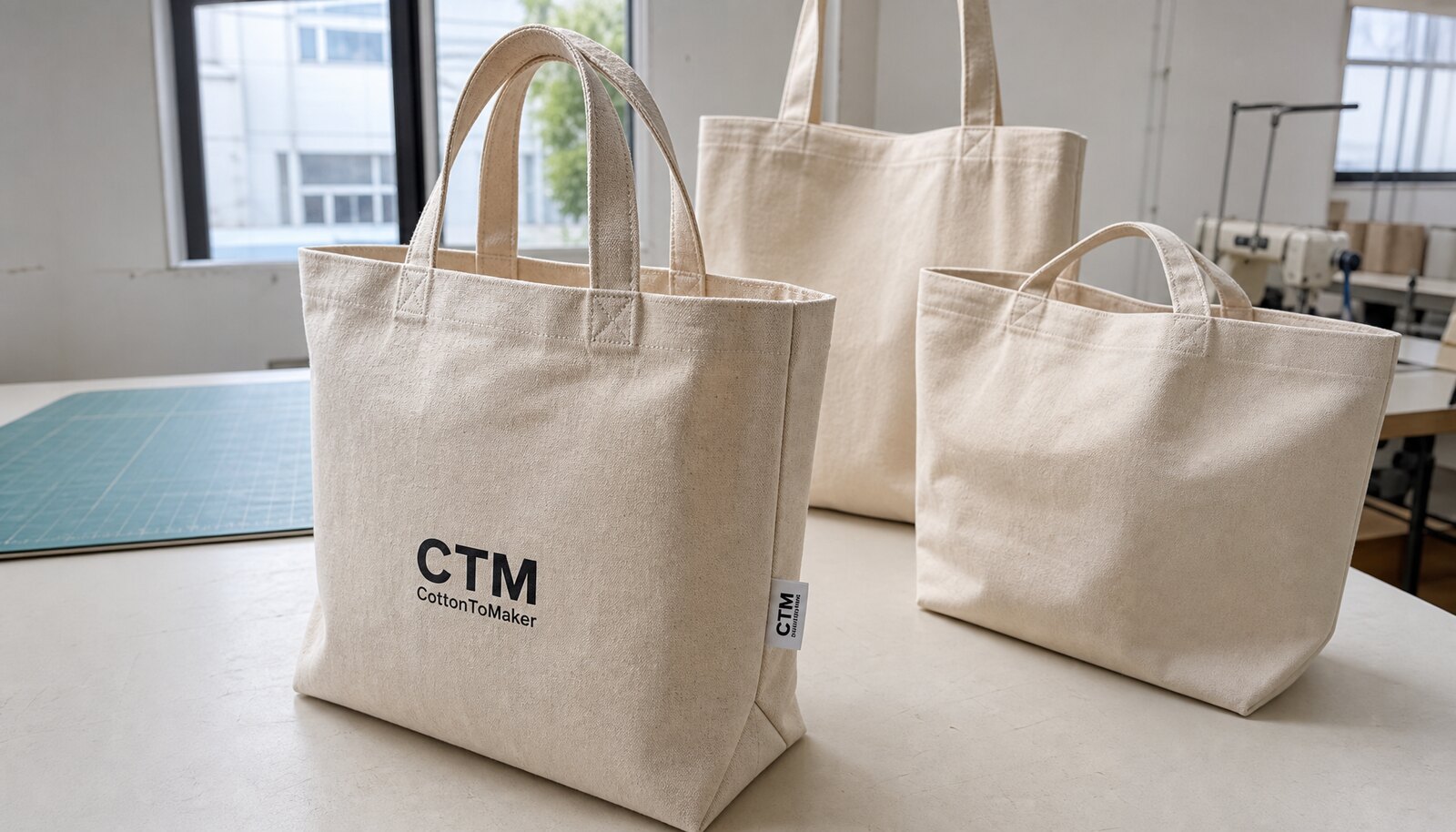
What boutiques usually mean by a good canvas merchandise bag
For boutique retail, the bag is part packaging and part product. It has to look clean on the counter, hold shape well enough to carry a small purchase, and survive several uses without seam failure or print distortion. If you are buying canvas retail merchandise bags for boutiques quality inspection checklist material, do not treat the bag like a simple giveaway. The buyer standard is higher because the customer pays attention to touch, stitch quality, and how the logo sits on the front panel.
The right spec is usually a medium-heavy canvas with enough body to stand upright when folded out. In practice, many buyers land in the 12 oz to 14 oz range, or roughly 280 to 340 GSM, depending on whether they want a softer retail bag or a firmer premium look. Lighter fabrics can save cost, but they often show through, wrinkle more, and make screen print edges look less sharp.
- Target a finished bag that looks structured when empty, not limp.
- Choose fabric weight based on shelf presentation and use, not only on unit price.
- Treat the bag as a branded retail item, not plain packaging.
Spec choices that move price, look, and durability at the same time
The biggest spec mistake is mixing up the quote for the bag body with the quote for the finished retail item. A factory may quote the same size and say the price looks lower, but the gap often comes from fabric weight, handle material, print method, or whether the bag is hemmed and reinforced. If you compare quotes line by line, you will usually find that the cheapest option removes body from the canvas, simplifies the handle, or uses fewer sewing operations.
For boutiques, the decisions that matter most are fabric weight, handle type, print complexity, and whether the bag needs a gusset. A flat tote is cheaper and stacks better. A gusseted bag stands more upright and carries boxed items better. If your merchandise is clothing, fragrance, books, or gift sets, a gusset often adds more retail value than the cost increase would suggest.
- Use 280-340 GSM for a more premium retail feel; go lower only if the bag is intentionally light and foldable.
- Gussets improve usability but increase fabric consumption and sewing time.
- Webbing handles usually outperform self-fabric handles on wear, but they change the visual style and cost structure.
How to compare supplier routes without getting fooled by unit price
Not every supplier quote means the same thing. A direct factory usually gives you more control over fabric selection, print setup, and QC, especially if you need repeat replenishment. A trading company can be helpful when you want multiple bag types or mixed shipments, but the quote may hide actual production constraints, and sample timing can be less predictable. The right sourcing route depends on how much control you need over the finished bag versus how much coordination you want the supplier to manage.
For a boutique program, the sourcing route should be judged on evidence, not sales language. Ask who controls the cutting, sewing, printing, and final inspection. If the supplier cannot state where the canvas is sourced, what stitch standard is used, or how they handle print alignment, the low quote is not a real comparison. The goal is to buy the same finished standard from every offer, then compare cost from that baseline.
- Direct factory fits repeat programs and private label consistency.
- Trading route can help with mixed SKUs or smaller, faster consolidations.
- Compare what is included: fabric, print, label, carton, sampling, and testing.
Comparison table: sourcing routes for boutique canvas retail bags
Use this comparison to judge where the quote comes from, not just what the number says. The lower price route is not always the better procurement route if it creates rework in sampling or receiving. Boutique buyers usually care about brand consistency, packaging accuracy, and the ability to reorder the same article six months later.
When a supplier cannot answer the basic build questions clearly, the risk is usually hidden in production control. That is where a quality inspection checklist becomes useful: it tells you what must be stable before you release the order.
- Write decisions in measurable language, not only descriptive wording.
- Ask for sample photos plus one physical approval sample for important orders.
- Keep quotation, sample approval, and inspection notes tied to the same spec version.
Sample approval: what must match before you release production
A sample is not only for visual approval. It is the control point where you confirm fabric handfeel, panel size, logo scale, handle balance, seam neatness, and packing method. A common mistake is approving a pretty sample that was made with different cloth or more careful handwork than the mass order will receive. If you do that, the first production lot can look noticeably different even if it technically matches the drawing.
The most useful sample sequence is simple: request a pre-production sample or sales sample with the final fabric weight, then inspect the production-ready details before mass approval. Measure the body width, height, and gusset; test the handle pull; check print placement against the specified distance from the top edge; and confirm the fold pattern if the bags must fit a shelf or carton size. A small deviation in one dimension can change both appearance and carton efficiency.
- Approve one master sample and keep it marked as the reference for inspection.
- Verify print placement from fixed points, not by visual guesswork.
- Record the acceptable range for size, stitch appearance, and color tone.
QC thresholds that catch real production failures
Retail bags fail in three predictable ways: weak seams, bad print, and inconsistent packing. A bag may look fine on the line but still fail when a customer loads books, bottles, or boxed goods. For that reason, inspection needs both visual criteria and simple functional tests. You do not need laboratory drama to catch the common defects; you do need clear acceptance thresholds and a consistent sampling method.
At minimum, inspect seam alignment, needle skips, loose threads, handle bar-tacks, logo clarity, and carton counts. If the order is branded, check the print edge and ink density under normal light, not just under the factory lamp. If the canvas is colored or garment-washed, compare shade consistency from carton to carton because retail buyers will notice mismatched dye lots immediately.
- Reject open seams, skipped stitches, crooked handles, and off-center prints beyond agreed tolerance.
- Check 10% to 20% of cartons depending on order size and risk profile.
- Use a simple load test on random bags with the intended merchandise weight.
Printing and decoration choices for boutique branding
Screen print is still the workhorse for canvas retail merchandise bags because it gives strong color, repeatability, and a good cost position on medium to larger orders. If your artwork is simple and you want a clean brand mark, one or two colors will usually deliver the most reliable result. For more complex artwork, a transfer can work on short runs, but the buyer should inspect crack resistance, edge lift, and cure quality before approving mass production.
Embroidery, woven labels, and small stitched patches are often used when the brand wants a more premium look. They also reduce dependence on perfect print registration, which helps on textured canvas. The tradeoff is that any raised decoration can affect fold flatness and cost. For boutiques, the question is not which method is best in theory; it is which method survives normal handling, retail display, and repeated customer use without looking tired after the first season.
- Simple logos: screen print is usually the best cost-to-consistency choice.
- Premium cues: woven labels or stitched patches add value without full-body print risk.
- Complex art with fine details needs a sample proof, not just a digital mock-up.
MOQ logic and how it changes your quote
MOQ should be read as a production economics question, not just a gatekeeping number. Canvas bag factories often set MOQ based on fabric purchase minimums, cutting efficiency, print setup, and carton planning. If you ask for a small run with custom size, special color, and multi-color print, the factory is forced to spread setup cost across fewer pieces. The quote may still be workable, but the unit price rises for a real reason.
For boutique buyers, the smarter route is often to simplify one variable at a time. Keep the body size standard, choose one main fabric color, and limit the print to one color for the first run. That allows the supplier to control waste and gives you cleaner QC data. Once the bag sells through, you can expand into alternate sizes, lining, or premium labels on the next order.
- Standard size + standard fabric + one-color print usually creates the lowest real MOQ.
- Custom dyeing, custom label, and unusual handle construction each raise setup complexity.
- Ask whether MOQ is per design, per color, or per carton configuration.
Packing, carton rules, and warehouse receiving
A good bag can still cause receiving problems if the packing spec is vague. Decide whether each bag should be flat folded, lightly stuffed, or polybagged before the master carton is built. Retail distribution teams usually prefer consistent fold size and clear quantity per carton, while e-commerce teams may want each item individually bagged with barcode stickers. If these details are left open, the factory will choose the easiest method, not necessarily the one your warehouse wants.
Carton labeling matters more than many buyers expect. The box should show style, color, size, quantity, gross weight, net weight, and carton number if you have multiple pack-outs. If bags are branded for boutiques, make sure any inner polybag or sticker material does not smudge the print. Also define maximum carton weight so the bags can be handled safely through receiving and cross-docking without crushed corners or torn boxes.
- Choose one packing standard and put it in the PO, not only in email.
- Align carton count with warehouse receiving and retail replenishment needs.
- Keep the bag folded size compatible with shelf storage or pick-face bins.
Lead time, schedule risk, and landed-cost comparison
Lead time is rarely just the sewing time. It includes fabric procurement, printing, trimming, inspection, packing, and export coordination. A boutique launch can slip because the artwork was approved late, the fabric shade was not locked early enough, or the packaging label changed after the sample stage. In a normal program, a realistic factory lead time often sits around 25 to 35 days after sample approval, but buyers should also budget buffer time for freight and import processing.
When comparing landed cost, do not stop at the ex-works quote. Add sample fees, packaging changes, carton dimensions, inland delivery, freight, and any extra charges for color matching or rush production. A slightly higher quote from a factory that can hold spec, pack correctly, and ship on time often beats a lower quote that creates inspection failures or missed retail windows. The best buyer decision is usually the one that reduces rework, not the one that wins a spreadsheet by a small margin.
- Separate production lead time from shipping time in your planning.
- Count sample revisions as schedule risk, not free iteration.
- Use landed cost, not unit price, when deciding between suppliers.
Specification comparison for buyers
| Spec decision | Recommended option | When it fits | Buyer risk to check |
|---|---|---|---|
| Fabric weight | 12 oz to 14 oz cotton canvas, or 280 to 340 GSM | Boutique retail bags that need a structured handfeel, better print flatness, and repeatable shelf presentation | Light cloth can feel cheap and distort screen print; heavy cloth raises cost and may change folding and carton count |
| Print method | 1-2 color screen print for simple logos; heat transfer only for short-run complex art; embroidery or woven label for premium accent | Simple brand marks, seasonal retail graphics, or small-batch boutique programs | Fine text can fill in on screen print; transfer films can crack if curing is weak; embroidery can pucker thin canvas |
| Bag construction | Single-needle stitched body with reinforced stress points and 2.5 to 3 cm webbing handles | Retail merchandise bags that will be carried by customers after purchase, not just used as in-store packaging | Weak handle bar-tacks and loose seam allowance are the most common early failure points |
| Handle length | 60 to 70 cm total handle length for shoulder carry, or shorter hand-carry handles for gift-style use | Boutiques serving local shoppers, gift stores, and premium apparel brands | Too-short handles reduce usability; too-long handles drag on the floor and look untidy in retail display |
| MOQ route | Stock fabric + standard size + one-color print for lowest MOQ; custom fabric color or custom trim for higher MOQ | Buyers testing a new boutique program or managing seasonal inventory risk | Low MOQ quotes often hide higher setup charges or mixed carton packing that complicates replenishment |
| Supplier type | Direct factory for repeat programs; trading company only when consolidating multiple SKUs or urgent mixed shipments | Stable annual programs, private label, or buyers who need direct control over QA and artwork | Trading quotes can be convenient but may obscure actual production control and inspection responsibility |
| Carton packing | Polybag, size sticker, master carton with clear carton count and gross/net weight limits | Retail distribution, warehouse put-away, and e-commerce fulfillment from one inventory pool | Loose folding or inconsistent carton counts create receiving disputes and count shortages |
| Inspection focus | AQL-style visual and functional inspection plus print and seam checks on random cartons | Any order with retail-facing branding or multiple size/color combinations | If you inspect only appearance and ignore pull strength, the bag may pass and still fail in use |
| Lead time strategy | Use pre-production sample approval, then 25-35 days for production plus transit buffer | In-season launch planning and replenishment orders | Art approval delays, fabric dye matching, and packaging revisions are the usual schedule killers |
Buyer checklist before sampling
- Confirm final bag size, gusset, handle drop, and usable loading weight.
- Specify fabric type, GSM/oz weight, color tolerance, and shrinkage expectations.
- Send vector artwork and define logo size, print position, and Pantone references.
- Ask for sample photos plus one physical pre-production sample before bulk approval.
- Agree carton packing, barcode or hangtag needs, and shipment marks before production.
- Record inspection checkpoints for stitching, print adhesion, stains, and quantity count.
Factory quote questions to send
- What fabric weight are you quoting, in GSM or oz, and is it finished weight after dyeing or raw cloth weight?
- Which print method is included, how many colors, and what is the setup charge per color or per screen?
- What is the MOQ by size, color, and print version, and can you mix artwork variants within one order?
- What is your standard seam allowance, handle width, handle attachment method, and bar-tack specification?
- How will the bags be packed per polybag and per carton, and what carton size and gross weight are you quoting?
- What sample stage do you provide before production approval, and which items can still change after sample approval?
- What is the production lead time after sample approval, and what is the buffer if packaging or labels change late?
Quality-control points to confirm
- Fabric GSM tolerance should be agreed before production, especially when buyers compare quotes from different mills or factories.
- Print registration must stay within a practical tolerance for the chosen art size; small text and fine lines need stricter review.
- Handle attachment and stress points need pull testing or at least repeated manual load checks on random samples.
- Seam straightness, stitch density, and loose thread trimming should be inspected on every sampled carton.
- Carton count, inner packing, and label accuracy must match the PO to avoid warehouse receiving disputes.