1) Why reorder planning matters more than the first PO
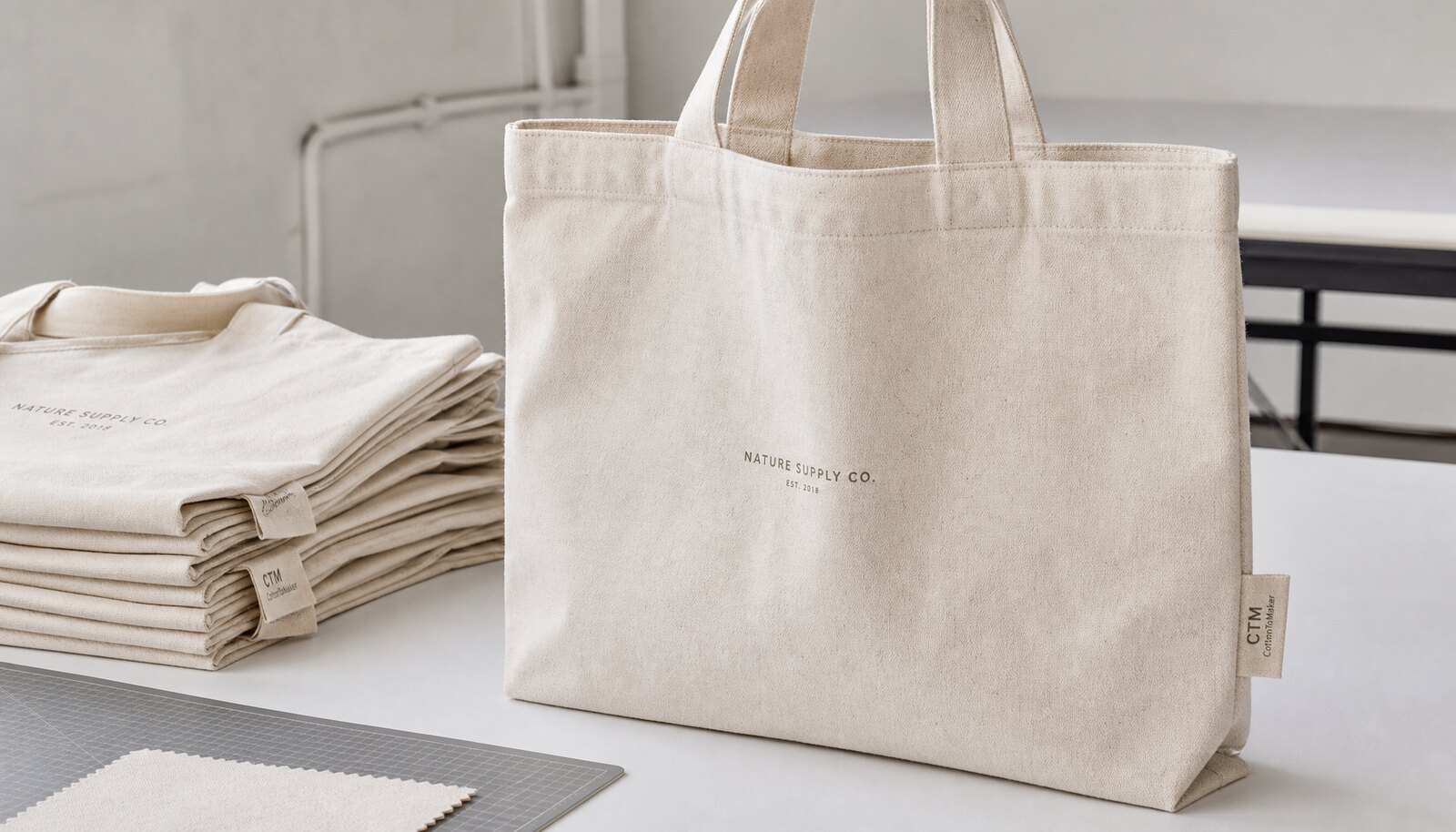
For apparel brands, canvas retail merchandise bags are usually not the hero product, but they do affect checkout presentation, in-store consistency, and the experience of e-commerce fulfillment. The first purchase order often gets approved because the sample looks clean on a desk. The reorder is where weak process control shows up: fabric hand feel shifts, print tone changes, stitching gets less tidy, or carton counts no longer match the pack plan.
Procurement teams should treat the bag as a controlled repeat SKU, not a disposable promo item. Once the bag is part of a store program or recurring retail assortment, the sourcing question changes from whether one sample can be made to whether the exact item can be repeated six months later without rework. That is a documentation, QC, and supplier-management problem as much as a price problem.
A useful reorder memo answers four things up front: what exact version was approved, what can change without reapproval, who owns the retained sample, and what happens if the supplier’s fabric source changes. If those answers are missing, the next order may still ship on time but no longer match the brand standard.
- Treat the bag as a recurring SKU with a fixed spec sheet and named owner.
- Record what changed between the first run and the reorder: fabric lot, thread color, print screen, packing count, carton size, or supplier.
- Do not rely on verbal approval; keep a signed reference sample and a version-controlled spec.
2) Start with the retail use case before choosing the bag spec
A canvas merchandise bag can serve several different jobs. It may be a paid retail add-on at checkout, a gift-with-purchase, an e-commerce packing insert, a store carry bag, or a branded event bag that has to pass through a distribution center before it reaches shoppers. Each use case changes the right answer on fabric weight, handle construction, print finish, packing count, and acceptable cosmetic variation.
If the bag is mainly a fashion accessory or checkout retail item, buyers usually care more about hand feel, print clarity, and shelf presentation. If it needs to carry folded apparel, denim, or a boxed item, procurement should care more about seam strength, gusset stability, and handle reinforcement. A bag that looks fine in photography may still fail the program if it twists under load or arrives with the print crushed in transit.
The common mistake is specifying width and height without specifying the contents. A bag intended to hold folded tees and small accessories can often use a moderate-weight canvas. A bag expected to carry heavier apparel or multiple items needs a reinforced handle seam and a fabric body that keeps its shape after repeated handling. The use case should drive the spec, not the other way around.
- POS retail merchandise: prioritize clean branding, decent body, and customer-facing appearance.
- E-commerce insert: prioritize flat packing, low shipping weight, and fast kitting.
- Gift-with-purchase: prioritize cost control and acceptable presentation without overengineering the bag.
- Heavy apparel loads: prioritize reinforcement and stable shape over ultra-light material savings.
3) Fabric weight, weave, and shrinkage control: the base of reorder stability
Canvas weight is one of the easiest specs to quote and one of the easiest to misread on reorder. A supplier may say “12 oz canvas” without clarifying whether that is pre-wash or post-finish weight, whether the fabric is single-filled or double-filled, or how the finish affects hand feel. Procurement teams should ask for GSM, weave density, finished fabric width, and, where possible, a retained swatch from the approved sample lot.
For many apparel-brand merchandise programs, a working range around 340–410 GSM is often a practical place to start, but it should be treated as a use-case range rather than a universal rule. Lighter fabric can work well for inserts and small retail giveaways. Heavier cloth can be justified for premium presentation or repeated carry use. The point is to tie the material choice to the intended load and retail positioning instead of quoting weight in isolation.
Shrinkage matters because the bag is not a stable flat panel; it is a sewn item with seams, handles, and print zones. If the supplier does not control shrinkage or finishing tolerance, the finished dimensions can drift after pressing or use. Buyers should ask what shrinkage range the fabric has already been tested to, what finishing is applied, and whether the approved sample was made from the same lot as bulk. If a reorder uses a different lot, the spec should state the acceptable tolerance band rather than leaving the supplier to improvise.
- Ask for GSM and fabric width in the quotation, not only ounce weight.
- Use the same fabric lot for the pre-production sample and bulk whenever possible.
- If the bag is dyed, approve a physical shade band or lab dip before bulk release.
- Record acceptable dimensional tolerance after sewing so buyers do not argue over minor process drift later.
- Ask whether the stated fabric weight is pre-finished or finished weight.
4) Stitching and seam construction details buyers should actually ask about
Many procurement briefs stop at fabric weight and logo method, but construction details separate a reliable retail bag from one that frays or skews in use. Ask the supplier to name the seam type, seam allowance, topstitch pattern, handle attachment method, and reinforcement points. These details matter more on reorder because line operators can change if the factory shifts production between teams.
A useful quality target is not just “strong seams,” but a clear description: side seams should be sewn with even seam allowance, stress points should be bar-tacked or reinforced where the handle joins the body, and top edges should be finished so the canvas does not unravel. If the design uses gussets, those corners should be squared and aligned so the bag holds shape when folded garments are placed inside.
Stitch density should be stable enough to support the intended load without looking bulky. Buyers do not need to micromanage every machine setting, but they should require a production sample and a spec note that identifies the construction method used on the approved version. A reorder that uses a looser stitch count or a different seam finish may still pass a casual visual check while failing after repeated customer handling or warehouse compression.
- Ask for the seam type, seam allowance, and reinforcement method in the quote.
- Require even topstitching and no skipped stitches at handle points or gusset corners.
- If handles are attached separately, confirm whether the factory uses double-stitching, box stitching, or bar-tacking at the stress zone.
- Check that the bag body remains square and does not twist when lightly loaded.
- Request an approved seam close-up photo for the spec file.
5) Print method decisions for repeat merchandise programs
For canvas retail merchandise bags, screen print is usually the most practical starting point because it gives a good balance of cost, opacity, and durability for simple artwork. It is especially suitable when the brand logo uses one to three spot colors and the bag will be reused by customers. The key is not simply choosing screen print, but confirming that the factory controls registration, ink curing, and surface preparation well enough to repeat the same result.
Heat transfer can be useful for short runs or artwork that changes often, but it carries more risk on canvas if the buyer wants a soft, retail-ready look. Poorly controlled transfers can lift at the edges, crack with use, or create a glossy effect that looks out of place on natural canvas. Embroidery can look premium, but it often changes the economics and may not be justified for a simple merchandise bag unless tactile brand signaling is the goal.
For some apparel brands, the best answer is a simple front print plus a woven side label or seam label. That approach keeps the main visual clean while giving the bag a more controlled retail identity. If the brand wants seasonal graphics, the body can stay standardized and only the print artwork changes. That is usually easier to manage on reorder than rebuilding the full construction each season.
- Simple logo and stable artwork: screen print is usually the first-line choice.
- Short-run or changing artwork: transfer may work if wear expectations are modest and QC is tight.
- Premium but controlled branding: pair a clean front print with a woven label rather than layering too many decorative elements.
- Always ask for print placement tolerance and a first-off approval image before bulk runs.
- If the logo has fine lines or small text, ask the supplier whether the method can hold detail at production speed.
6) How to compare supplier routes without mixing scopes or hiding costs
A direct factory quote is not comparable to a trading company quote unless the scope is exactly the same. One supplier may include fabric sourcing, sewing, printing, label application, and export cartons in the unit price; another may quote only sewing and print, then add separate charges later. Buyers need a line-item quote structure so the low price is not just a shorter list of exclusions.
For reorder programs, direct factory sourcing usually provides the most stable control if the supplier truly owns the same sewing line or a dedicated production partner. That matters because repeatability depends on more than cost: the factory must be able to find the same fabric, remake the same screen, and pack to the same carton count without reinterpreting the order. A trading company can still work well, but only when they provide traceability, named factory information, and actual production photos that match the approved sample.
The sourcing route should match the brand’s tolerance for risk. If the bag is a basic recurring item with steady demand, direct factory or a controlled OEM partner generally offers the cleanest path. If the program is smaller or the brand needs help coordinating hangtags, inserts, barcode stickers, and multi-SKU packaging, a capable trading office can be useful. The decision is not whether a trading company is good or bad; it is whether the buyer can verify who is making the bag and what changes are allowed without reapproval.
- Compare like-for-like: same fabric GSM, same print count, same packaging, same incoterm.
- Ask who owns the screen, the master sample, and the approved artwork file after order confirmation.
- Request recent production photos, not just sample-room images, before awarding a repeat order.
- Make the quote list every charge that can move landed cost: setup, packing, cartons, testing, and freight assumptions.
- Ask whether the supplier has an internal sample library or retained-spec process you can audit later.
7) Comparison of sourcing options for apparel-brand merchandise bags
A procurement team should compare sourcing options by repeatability, not just by headline unit price. The same bag can look similar across suppliers while the risk profile changes sharply: one source may be cheaper but more prone to fabric substitution, another may cost more but control the sample-to-bulk match better. The table below is meant to support sourcing decisions for reorders, not just first-run sampling.
Use the table to decide what matters most for your program: low cost, low friction, better documentation, or tighter control over repeat supply. For many apparel brands, a slightly higher price is acceptable if it reduces the chance of re-approvals, mispacked cartons, or a reorder arriving with a visibly different canvas tone. In procurement terms, that is not extra polish; it is lower operational risk.
- Choose the route that matches your reorder cycle and approval burden.
- Do not approve a supplier until you can identify the exact production path behind the sample.
- If the brand needs consistent replenishment, favor traceability over the cheapest quote.
- Keep a note in the RFQ file on who can sign off on deviations and who cannot.
8) MOQ logic: how to avoid paying for customization you do not need
MOQ is often driven by setup changes, not just sewing time. If the order includes custom-dyed canvas, a new screen, a separate woven label, a special carton print, or multiple colorways, the factory has to reset more of the line. That raises the minimum quantity and can make the program more expensive than the marketing team expects. The best way to manage MOQ is to standardize the bag body and keep the variation to the smallest practical surface change.
For a recurring retail merchandise bag, a strong procurement choice is usually one body spec, one handle spec, and one or two print versions. If the brand needs seasonal refreshes, the front graphic or a small woven label can change while the core construction stays fixed. That keeps the reorder path simpler, reduces setup waste, and makes it easier to move between stores, e-commerce, and promo use without opening a new development cycle every time.
If a supplier pushes MOQ higher because of custom dye or a highly specialized finish, ask whether a natural canvas body with a controlled print can deliver the same brand effect. In many cases, the cost savings from avoiding custom dyeing outweigh the visual benefit, especially if the bag is sold at a moderate retail price or used as a gift-with-purchase. The buyer’s job is not to accept the most customized option; it is to choose the option that can be reordered without needless dead stock.
- Standardize the body spec and vary only the print or small label when possible.
- Separate one-time setup charges from repeat unit cost so the business case is clear.
- Ask whether MOQ drops if you accept stock thread color, stock fabric, or standard carton marks.
- Do not create a new version each season unless the sales plan justifies it.
- If the supplier ties MOQ to several colorways, ask for a base-cost comparison on one-color vs multi-color production.
9) Sample approval: what to measure before you release bulk
A sample should be treated like a production part, not a showroom prop. Measure the finished width, height, gusset, handle length, and logo placement. Check how the bag sits flat on a table and how it behaves when loaded with the intended retail contents. The visual check matters, but it is not enough. A bag that looks clean under studio lighting may still show seam ripple, handle twist, or print misalignment once the production team starts making it in volume.
The first sample should also answer a practical procurement question: can this exact item be repeated? That means the supplier needs to identify fabric source, print method, thread color, label placement, and packing format clearly enough that the next order can be matched. If the approval process does not create a paper trail and a retained physical reference, the reorder will depend on memory, and memory is not a quality-control system.
For important programs, keep a signed golden sample, a retained fabric swatch, and a short photo record showing the front, back, seams, handle attachment, and carton pack. The goal is not to create more paperwork than necessary; it is to make the next order easy to verify. When a supplier says the bag is the same as last time, the buyer should be able to compare against something concrete rather than accept a verbal promise.
- Measure after sewing and final trim, not from cut panels.
- Check print registration on both the first article and one additional random sample.
- Reject visible oil marks, broken threads, uneven topstitching, or loose handle reinforcement.
- Keep a traceable approval file with sample photos, fabric swatch, and signed sign-off.
- Record any allowed deviation in writing before bulk starts, not after.
10) Packing, carton, and pallet handling for retail distribution
Packing details often get overlooked because they are not visible to the shopper, but they are critical for retail distribution. Canvas bags are flexible, so if they are over-compressed, folded too sharply, or packed with no protection around the print area, they can arrive with deep creases or ink wear. Buyers should define not only how many pieces go into a carton, but also how they are folded, whether they are in individual polybags, and whether any moisture protection is required.
Warehouse and store teams also care about carton size and weight. An effective carton is one that can be lifted safely, stacked neatly, and opened without damaging the inner packs. If the bag is part of a store replenishment or e-commerce insert program, the packing format should support downstream labor. A carton that looks efficient at the factory may be awkward in the DC if the count is too high, the box is too bulky, or the labels do not match the SKU structure.
Pallet planning matters when the bags move in bulk. Ask the supplier for carton dimensions early so freight and warehouse space can be planned with less guesswork. If the brand uses moisture-sensitive printing or ships through humid lanes, a simple desiccant or inner protection layer may be worth the small added cost. The buyer should define the packing standard before production starts, because repacking after the fact almost always costs more than getting it right at the PO stage.
- Specify pieces per inner pack and outer carton before bulk release.
- Request carton dimensions and gross weight in the quote for freight planning.
- Define whether each bag needs a poly sleeve, tissue, desiccant, or only a clean fold.
- Confirm carton marks, SKU labeling, and pallet count rules for DC receipt.
- Ask whether print faces in or out during folding so crease risk is controlled.
Specification comparison for buyers
| Sourcing option | Best-fit use case | Cost / control tradeoff | Main risk to manage |
|---|---|---|---|
| Direct factory, standard fabric | Repeat apparel-brand replenishment with one core bag spec and stable artwork | Usually the best balance of unit cost and production control if the spec is locked and the buyer can reuse the same approval file | Fabric substitution, thread/color drift, or packing changes if the RFQ does not spell out exact requirements |
| Direct factory, custom dyed canvas | Premium or seasonal brand programs that need a specific color story | Higher setup cost and longer lead time, but stronger brand consistency when volume is predictable | Shade variation between dye lots, especially on reorders unless a retained swatch and approved shade band are on file |
| Trading company with factory coordination | Smaller brands, multi-component packaging, or buyers that need help bundling labels, inserts, and cartons | Convenient for coordination, but less transparent on the real production path and line control | Traceability gaps that make claim resolution and reorder matching harder |
| Low-cost marketplace supplier | Short-run promos or one-off campaigns where exact repeatability is not a priority | Lowest headline price, but usually the weakest documentation and most variable QC | High substitution risk on GSM, handle construction, print durability, and carton packing |
| Audited packaging partner / OEM program | Recurring supply programs that need documented samples, controlled packing, and repeatable replenishment | Often the most efficient route when retail packing and reorder consistency matter more than a single low quote | Approval discipline must be strong; otherwise the retained sample system breaks down |
| Material | 8–12 oz cotton canvas, recycled cotton, or blended cloth selected for use case and price point | Pre-quote definition | Different cloth weights, backing, or finish treatments make quotes non-comparable |
| Construction | Bag size, gusset, handle drop, seam allowance, reinforcement, and loading expectation | Before sampling | Weak stress points create rework, returns, or inspection failures |
| Decoration | Screen print, transfer, embroidery, woven label, or hangtag matched to fabric and usage | Before artwork approval | The wrong method can crack, bleed, pucker, or age badly in retail use |
Buyer checklist before sampling
- Lock the exact bag size, canvas GSM, handle length, seam allowance, and print placement before requesting quotes.
- State the intended use clearly: POS retail merchandise, gift-with-purchase, e-commerce insert, or paid retail carry bag. The performance target changes by use case.
- Ask every supplier to quote the same scope: body fabric, handles, print method, label method, packing format, carton marks, and incoterm.
- Provide vector artwork plus a placement drawing with acceptable tolerance for logo centering, print size, and small text.
- Request a pre-production sample using the same fabric lot, ink system, thread color, and label method planned for bulk.
- Define carton pack count, inner poly requirements, moisture protection, and barcode or hangtag needs before approval.
- Retain one signed golden sample, one fabric swatch, and one approved print reference photo in the reorder file.
- Build the reorder calendar backward from the warehouse receipt date, not from the factory sewing start date.
- Add a decision checkpoint for any change in fabric source, dye lot, print method, or carton format before releasing bulk.
- If the bag is used in stores, check whether your receiving team needs pallet limits, carton labels, or shelf-ready packaging details.
Factory quote questions to send
- What exact fabric weight, yarn count, weave density, and shrinkage allowance will you use, and will the reorder match the approved sample lot or an approved equivalent?
- Please confirm the seam construction: seam type, seam allowance, topstitch count, and expected stitch density per inch or per 3 cm.
- Which print method do you recommend for this artwork, and what is your registration tolerance for small text, thin lines, and multi-color alignment?
- What is your MOQ by size, print color, and label type, and how does MOQ change if we add a woven label, side label, or hangtag?
- Please break out unit price by bag body, handles, print, label, packing, carton, and any one-time setup charges such as screens or plates.
- What is the standard production lead time after sample approval, and which steps most commonly add delay: lab dip, strike-off, fabric booking, or carton revision?
- How many pieces per inner pack and per carton, what is the carton size, and what is the estimated carton weight for freight planning?
- What inspection standard do you follow for stitching, measurement tolerance, print placement, odor, stains, loose threads, and carton count accuracy?
- Can you share photos of the exact fabric, seam finish, and finished bulk bags from a recent production run with similar specs?
- If a reorder is placed six months later, how do you ensure the same fabric and print tone are repeated rather than substituted?
Quality-control points to confirm
- Treat the approved sample as a control reference, not a display piece. Keep one signed golden sample, one fabric swatch, one print reference, and one copy of the final PO spec together.
- Fabric GSM should stay within the agreed tolerance; a common starting point is plus or minus 5%, but buyers can specify tighter bands where needed.
- Measure finished dimensions after sewing, trimming, and final pressing, not from cut panels.
- Check seam allowance, stitch density, and reinforcement on the production sample. Focus especially on handle joins, gusset corners, and top-edge finishing.
- Handle attachment should be symmetric and securely reinforced. Use a pull test that matches the intended bag use; do not rely on a generic number without context.
- Require no seam opening, thread breakage, or handle slippage during the agreed pull test and sample handling check.
- Check top edge finishing, gusset alignment, and square shape so the bag sits correctly when filled with apparel.
- If the bag is expected to tolerate washing, damp handling, or repeated customer use, ask for a wash/rub tolerance statement and define acceptable shrinkage or color transfer limits.
- Print placement should remain centered within the agreed offset tolerance. Small logos need tighter control than large graphics.
- Reject visible oil marks, needle holes, frayed threads, odor, lint contamination, or print smudging on natural or light-colored canvas.