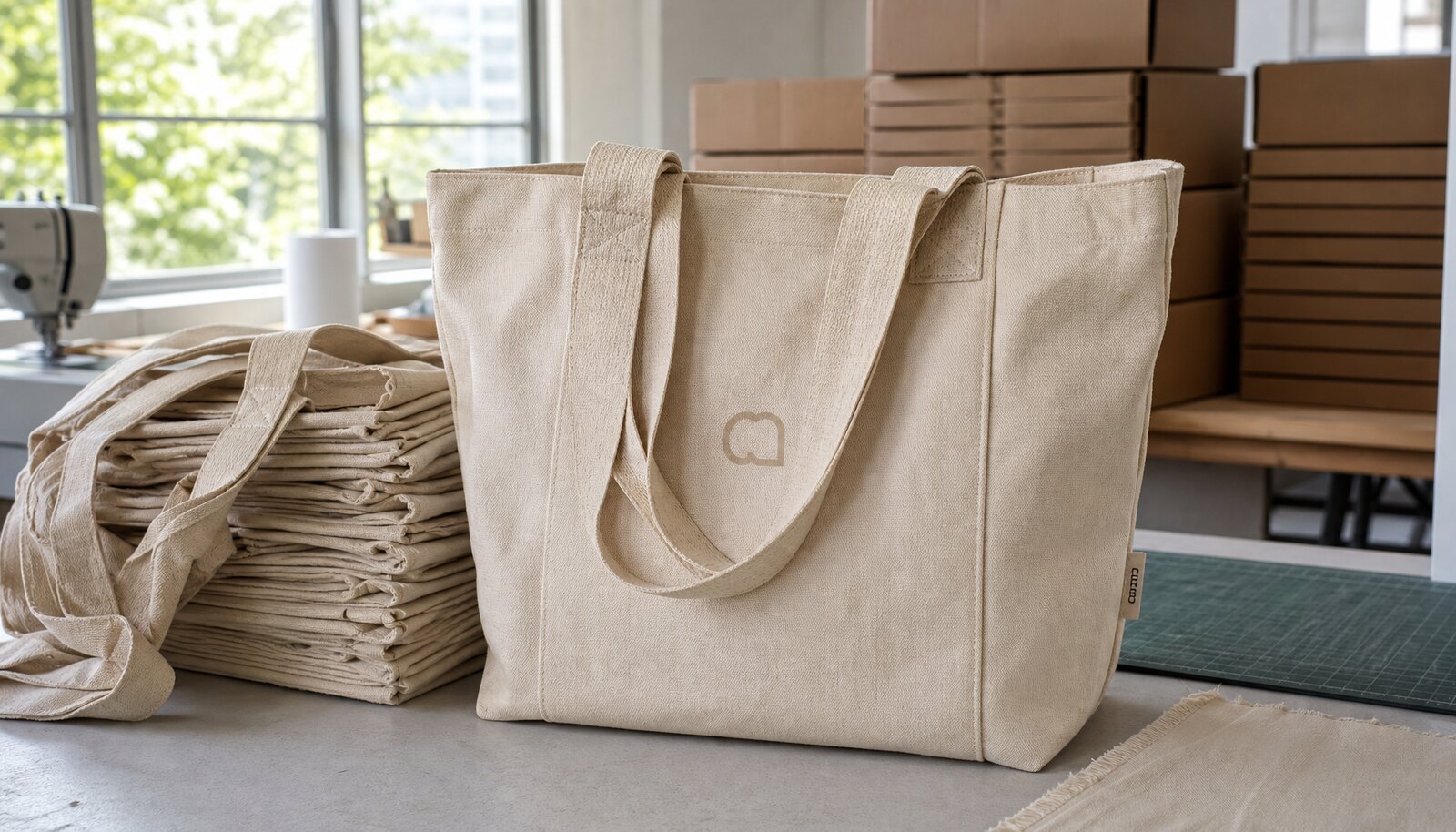
Start With the Event Flow, Not the Tote Spec
The fastest way to overpay for canvas retail merchandise bags is to approve the bag before you define how it will move through the event. A tote that is handed out flat at registration has different carton needs from a tote that is packed into an attendee kit, staged backstage, or shipped directly to several venues. The same bag can be perfect on paper and still be a bad buy if the carton count forces extra handling or if the folded bag does not sit cleanly in the shipping carton.
For corporate events, the bag is often part packaging and part retail item. That means your carton plan has to protect the print, preserve the handle shape, and keep the bag presentable when it is opened by staff. A quote that gives only bag size and unit price leaves out the parts that drive freight, labor, and damage claims. Ask for the pack format first, then compare price.
- Define whether the bags are distributed at a registration desk, inserted into conference kits, or delivered in bulk to a venue team.
- Confirm whether the event team needs easy-open cartons or resealable cartons for staged distribution.
- Record the final recipient, because venue receiving rules can change carton size, carton labels, and pallet build.
Choose Fabric Weight That Matches the Use, Not the Sample Photo
Fabric weight drives both perception and carton efficiency. Lightweight canvas around 200 to 240 GSM can work for simple handouts, catalogs, and light branded inserts. If the bag is supposed to feel like retail merchandise, or if it will carry samples, brochures, or small product packs, a heavier build in the 280 to 340 GSM range is usually more stable. Heavier fabric folds with more bulk, but it also holds its shape better and reduces the chance of a bag looking limp after unpacking.
The build details matter just as much as the fabric weight. A body size with a sensible gusset often packs better than an oversized flat panel that collapses unpredictably in the carton. Reinforced handles, clean seam allowances, and a stable top hem help the bag survive compression during shipping. If the print is near the top edge, folding behavior needs to be tested before you approve the carton count.
- Use 200 to 240 GSM for lighter giveaway programs where freight cost matters more than structure.
- Use 280 to 340 GSM when the bag must feel retail-ready, hold shape, or carry more weight.
- Ask the factory to show the folded sample, not only the open sample, before you lock the carton plan.
Print Method Changes the Carton Math
Screen print is usually the most practical choice for one-color or two-color corporate artwork on canvas. It keeps the print thin, stacks well, and usually holds up better when bags are folded and packed tightly. If the artwork is more detailed or includes multiple color breaks, heat transfer or digital transfer can work, but the print layer may feel thicker and can add friction between bags in the carton. That matters when you are trying to pack a clean retail item rather than a loose giveaway.
Raised decoration changes the packed profile. Embroidery, woven labels, or stitched patches can improve the presentation, but they also create high points that can press into adjacent bags during transit. If your buyer brief calls for a premium look, specify whether decoration sits on one face only, whether tissue is allowed between pieces, and whether the bag should be folded with the logo protected or displayed. That choice affects both carton density and the way the bag opens at the venue.
- Use screen print when you need a stable print layer and a straightforward MOQ structure.
- Use transfer methods when artwork detail matters more than the flattest possible pack profile.
- Require a physical strike-off or pre-production sample under real production settings, not a desktop proof alone.
Build the Carton Plan From Folded Size, Gross Weight, and Handling Limits
Carton planning starts with the folded bag, not with the full open dimension. Measure the exact folded size after handles are turned, seams are flattened, and the print area is positioned as it will be packed. Then define how many pieces fit without forcing the carton to bulge. A carton that looks efficient on a packing sheet can become a problem when the bags rebound, the lid no longer closes cleanly, or the carton becomes too heavy for one person to lift safely.
Ask every supplier to quote carton dimensions, pieces per carton, net weight, gross weight, and carton grade. For a standard canvas tote, the correct answer is not a single magic number. A thicker 320 GSM bag with reinforcement may need a lower count per carton than a lighter 220 GSM bag, even if the bag dimensions are the same. If the shipment goes by ocean, the carton should stack well and survive pressure. If the bags are going straight to an event venue, easy handling and fast opening may be more valuable than absolute carton density.
- Base carton size on the folded sample, not on an idealized spec sheet.
- Keep gross weight at a level that a warehouse team can move without reworking the shipment.
- Balance fill density against damage risk, because the cheapest carton on paper can create the most waste later.
Compare Supplier Routes by What They Can Prove
Different sourcing routes produce different levels of control. A direct factory usually gives the buyer the best chance to lock fabric weight, print method, pack count, and carton labeling in one discussion. A trading company can be useful if you need multi-item sourcing or a faster first response, but the packing details may be weaker unless you push for a written packing instruction. A domestic decorator can be the fastest option for rush events or small reorders, yet the price is often higher and the range of fabrics is narrower.
Do not compare suppliers only on unit price. Compare them on evidence. Can they show a packed sample photo? Can they tell you the carton size without guessing? Do they understand how a one-color screen print behaves when folded flat for shipment? If they cannot answer those questions, the quote may be cheap because the supplier has not actually priced the carton risk. The comparison table in this guide is meant to separate the routes that can control the outcome from the routes that only promise a bag price.
- Direct factory is strongest when you need custom packing control and better visibility into the actual production line.
- Trading companies are better when you need coordination across several products, but you should verify the real factory packing standard.
- Domestic fulfillment routes are best for speed and low complexity, not for deep customization or export-style carton engineering.
What a Real Factory Quote Should Include
A useful quote is a breakdown, not a single number. It should show fabric GSM, body size, handle construction, print method, setup cost, sample cost, packing method, carton size, pieces per carton, and the expected production lead time. If the supplier only sends a total unit price, you cannot tell whether they are quoting a heavier fabric, a thinner print, a lower carton count, or a weaker carton. That is how procurement teams end up comparing quotes that do not actually describe the same product.
Ask for one quote line per option so the factory has to commit to the difference. For example, one line can be for a natural canvas tote with one-color screen print and standard carton packing, while another line can be for the same bag with a woven label and tissue interleave. This makes the hidden cost of decoration and packing visible before you award the order. It also reduces the chance that a supplier reinterprets the order after approval.
- Separate bag cost from print setup, packaging, and carton engineering so the comparison stays honest.
- Require the supplier to show MOQ logic for each print method and each fabric weight.
- Ask for sample and production timing in writing, because a fast quote is not the same as a workable schedule.
Approve the Sample the Way the Shipment Will Be Packed
The sample approval step should test the packed condition, not just the open bag. Fold the sample the same way it will be folded in production, place it in the intended inner pack if there is one, and close the carton exactly as the warehouse team will close it. A tote can look excellent when hanging flat, then crease badly once it is folded into the carton. If the handles are long or the print sits near the top hem, the bag may spring open and eat more carton space than expected.
The best approval process uses the sample to prove the carton plan. Inspect the print, then inspect the way the printed face touches the next bag. Check whether the surface rubs, whether the fold line crushes the design, and whether the carton can be resealed without damage if the event team opens it on arrival. Keep one approved sample as the reference and make sure the factory production team uses the same fold, pack count, and label structure.
- Approving only the open bag is not enough; the packed sample must match the final shipping method.
- Test the fold line, print scuff resistance, carton close, and carton marks before mass production.
- Keep a signed reference sample so disputes about size, print, or packing do not start later.
Packing Rules That Protect the Bag Without Creating Waste
Many buyers overpack canvas bags because they want to protect the print, but extra packaging has a cost. A thin polybag or tissue layer may be enough for a clean cotton canvas tote with a stable print. If the bag has embroidery, woven labels, or a more premium finish, tissue interleaf can help prevent surface marks, but every added layer increases labor and carton volume. The right choice is usually the lightest packaging that still keeps the shipment clean and presentable.
Moisture and odor matter as much as surface protection. Canvas absorbs warehouse conditions quickly, so cartons should be dry, storage time should be realistic, and glue or ink odors should be checked before sealing. If the shipment will be split across multiple event sites, label cartons by event name, style, color, and pack count so the receiving team can locate the right product without opening every case. That saves labor and reduces handling damage at the venue.
- Use only the amount of packaging needed to preserve appearance and cleanliness.
- Specify dry packing conditions if the cartons will travel through humid lanes or sit in storage.
- Mark outer cartons for venue workflow so the event team can stage and distribute bags faster.
Lead Time and Landed Cost Need One Shared View
Event buying fails when procurement and logistics work from different assumptions. A factory may quote a short production lead time, but that number can depend on stock fabric, existing screens, or a simple carton format. If you need a custom weave, a specific GSM, and a printed carton, the actual timeline is longer. Build the schedule backward from the event date and leave room for sample approval, packing confirmation, and transit delays. A late approval can be more expensive than a slightly higher unit price.
Landed cost is bigger than unit price and freight. It includes setup charges, carton engineering, packing labor, inland transport, export paperwork, and the event-side labor needed to receive, open, and sort the shipment. A quote that saves a few cents at the factory can become the expensive option if it ships in weak cartons, arrives with scuffed print, or forces rework at the venue. The buyer should judge the order on total delivery risk, not on the bag line alone.
- Count sample approval and transit time as part of the purchase decision, not as an afterthought.
- Check whether the quoted lead time assumes stock fabric and stock packaging.
- Compare quotes by landed cost and handling cost, not only by bag price.
Award the Order on the Full Specification, Not the Photo
The safest award decision is the one that matches the approved sample, the packing instruction, and the carton plan. A good product photo does not guarantee a good export carton. A low price does not prove that the supplier understands handle reinforcement, fold behavior, or carton compression. Before you release the purchase order, confirm the bag size, fabric GSM, print method, carton count, carton dimensions, gross weight, and carton labels in one written file. That creates one standard for the factory, the freight team, and the receiving warehouse.
If you are buying for a corporate event, the delivery problem is often time and handling, not just manufacturing. The order should be easy to receive, easy to stage, and easy to distribute. When the quote, sample, and carton plan all point to the same outcome, the project becomes predictable. When they do not, the hidden cost usually appears at the warehouse, not at the factory.
- Release the PO only after the packed sample and carton plan are approved.
- Keep one document that ties the artwork, bag spec, pack count, and carton mark together.
- Treat warehouse handling as part of the product design, because that is where event orders often break down.
Specification comparison for buyers
| Spec decision | Recommended option | When it fits | Buyer risk to check |
|---|---|---|---|
| Supplier route | Direct factory with packaging control | Best for custom sizes, print, and carton engineering on 1,000+ pcs | Verify they can quote carton dimensions, gross weight, and pack count, not only unit price |
| Supplier route | Direct factory using stock fabric and custom print | Works when the event date is fixed and the bag size is standard | Check for dye lot variation, limited size options, and whether stock fabric truly matches the sample |
| Supplier route | Trading company with multiple mill sources | Useful for buyers managing several regions or mixed product lines | Confirm where QC happens and whether the carton spec comes from the real factory or a middle layer |
| Supplier route | Domestic decorator or fulfillment partner | Fits rush orders, local kitting, or small repeat drops | Expect higher unit cost and fewer options for GSM, handle build, and export-grade cartons |
| Carton fill strategy | Moderate fill with 25 to 50 pcs per carton | Good for thick canvas, premium print, or retail presentation | Risk of higher carton count and more handling if the carton plan is not optimized |
| Carton fill strategy | Higher fill with 50 to 100 pcs per carton | Better for lightweight bags and freight-sensitive programs | Watch for compression marks, handle creasing, and cartons that become too heavy for manual handling |
| Packing method | Thin polybag plus master carton | Works for clean canvas, simple print, and cost-controlled programs | Check whether the print can scuff during transit or if bags cling together after packing |
| Packing method | Tissue or interleaf plus stronger carton | Fits retail-facing programs or raised decoration like embroidery and woven labels | Measure the added cubic volume and labor before agreeing to the extra packaging |
| Freight mode | Ocean or consolidated freight | Makes sense for larger branded runs with enough calendar buffer | Plan for sample approval and transit delay, or the carton spec will be right but the launch date will slip |
Buyer checklist before sampling
- Confirm how the bags will be used at the event: handed out flat, packed into attendee kits, or delivered to venue staff in cartons.
- Lock the finished bag size, folded size, fabric GSM, handle length, and whether the bag needs a gusset or reinforced seams.
- Approve the print method against the real use case, not just the artwork file, especially for one-color logo work versus multi-color branding.
- Request carton dimensions, pieces per carton, net weight, gross weight, and carton grade before comparing suppliers.
- Ask for a physical pre-production sample packed the same way the mass order will be packed.
- Verify carton marks, barcode placement, lot codes, and destination labels if the bags will be distributed across multiple event locations.
- Check whether the supplier has included setup charges, screens, embroidery digitizing, or packaging add-ons in the quote.
- Build schedule buffer for sample revision, production, consolidation, and transit, especially if the order supports a fixed event date.
Factory quote questions to send
- What is the finished bag size, folded size, fabric GSM, and manufacturing tolerance?
- Which print method will you use, and what setup charges or color charges apply to this artwork?
- How many pieces per inner pack and master carton do you recommend, and what are the carton dimensions and gross weight?
- Can you confirm the handle construction, seam reinforcement, and any bar tack or top-stitch details?
- What is the MOQ for this fabric weight, print method, and carton specification?
- Will the pre-production sample be packed in the same way as the shipment, including polybag, tissue, or inserts?
- What lead time do you need for sample approval, production, and shipment readiness?
- If the approved sample differs from mass production, what is your rework or replacement policy?
Quality-control points to confirm
- Finished bag size and folded size must stay within the agreed tolerance so carton count and freight math remain valid.
- Stitching at handle joins, side seams, and bottom corners must be even, secure, and free from skipped stitches or loose thread tails.
- Print alignment, color density, and edge sharpness must match the approved strike-off or pre-production sample.
- Handles must carry the intended load without stretching visibly or tearing at the attachment point during sample pull tests.
- Carton count, carton dimensions, gross weight, and carton marks must match the packing instruction sheet.
- Packed bags must not show heavy compression marks, print scuffing, odor issues, or moisture exposure after carton closure.
- Labeling must be consistent across outer cartons, pallet marks, and venue receiving instructions if multiple locations are involved.