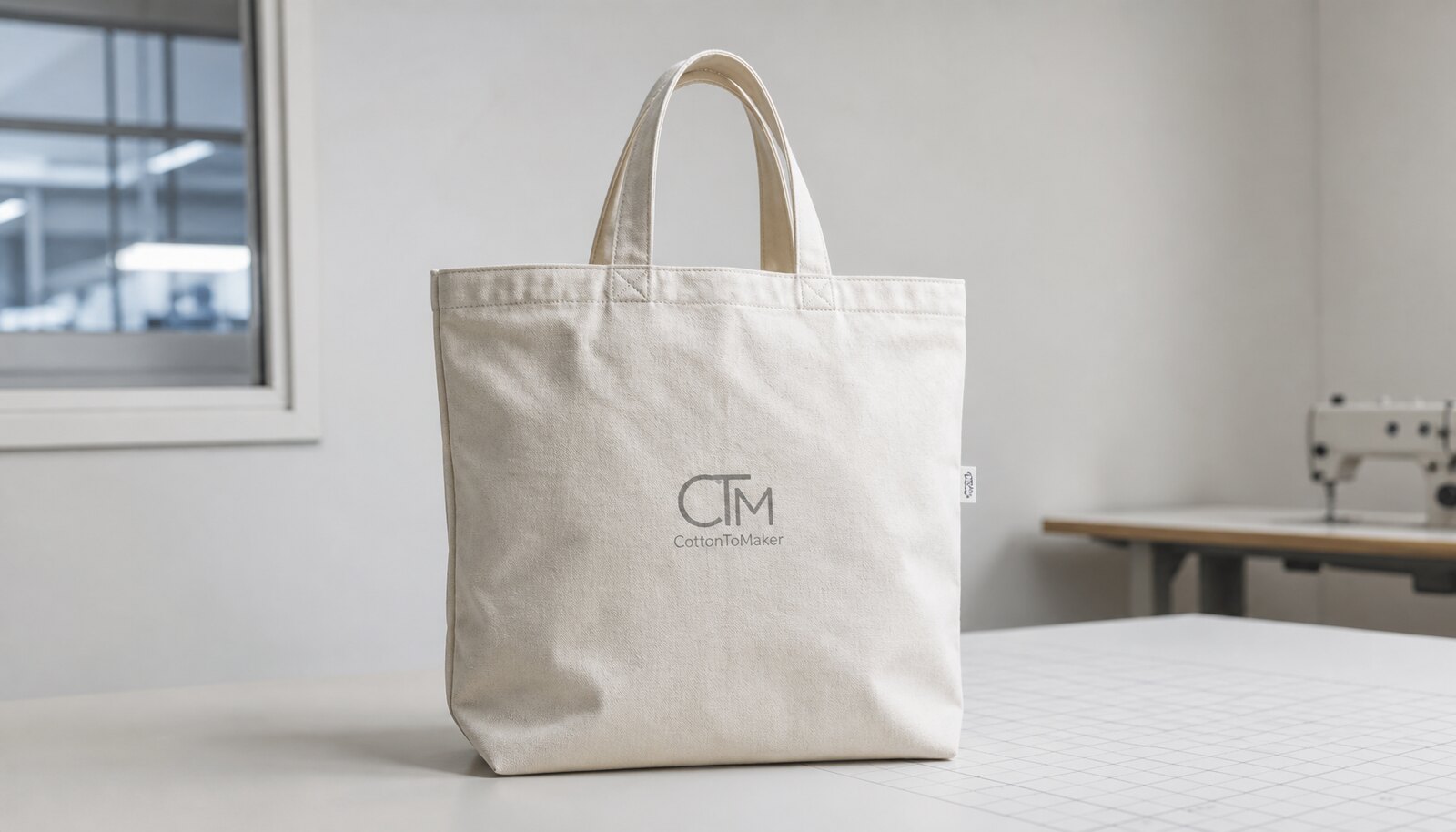
Why sample approval matters for charity campaign bags
A charity campaign bag is not just a tote with a logo. It is a public-facing item that may be sold, handed out at an event, bundled with a donation tier, or carried by volunteers in front of donors and media. That means sample approval has to do more than confirm the artwork. It has to lock the bag as a usable retail-style product: size, feel, print quality, packing, and the cost structure behind all of it. If the sample looks good but the bulk quote assumes a thinner fabric, a cheaper handle tape, or a different print method, the campaign loses margin or the bag arrives with the wrong perception of quality.
For procurement teams, the real job is to prevent late surprises. A charity order often has a hard date tied to an event or fundraising launch, so there is less room to rework seams, reorder cartons, or chase missing labels after production begins. The sample stage is where you decide what is fixed and what is negotiable. Do not approve a bag that feels right in the hand but is vague on construction. Set the approval standard around what the campaign needs in the field, then make the factory prove it can repeat that standard in bulk.
- Lock the use case first: retail counter sale, donor gift, volunteer carry bag, or campaign merchandise.
- Treat the sample as a production contract, not a design preview.
- Approve only after the bag, print, and packing all match the same spec sheet.
Start with the canvas spec, not the artwork
The first mistake buyers make is reviewing the print before the base bag is fixed. Canvas weight drives the whole product. For low-cost charity giveaways, 8-10 oz canvas can work if the bag is light-duty and the campaign accepts a softer hand. For retail merchandise, 10-12 oz is usually the practical floor because it gives the bag some body without pushing the unit price too high. If the bag needs to hold shape, carry books, or sit upright at a checkout counter, 12-14 oz is a safer target. Heavier 16 oz canvas is useful when the product needs a premium feel or repeated use, but it can inflate cost, slow sewing, and make the bag feel too stiff for some campaigns.
Write the RFQ like a production spec, not a mood board. Finished dimensions should be stated with tolerance, such as width, height, gusset, handle drop, and whether the measurement is before or after pressing. If the bag is unlined, say so. If the bottom seam needs bar tacks or a boxed corner, say that too. For charity campaigns, small differences matter because the bag is often compared side by side with other merchandise in the same display or donation package. A bag that is 1 cm off on handle length or too soft in the base can look less credible even when the logo print is clean.
- Use canvas GSM or oz weight plus finished construction details, not just one fabric descriptor.
- State whether the bag needs to stand upright, fold flat, or carry a defined weight class.
- Confirm whether shrinkage or prewashing is part of the spec if the fabric will be washed or tumble handled.
Choose the print method for legibility, not just unit cost
Charity campaign graphics are usually simple, but the bag still needs the right decoration method. One-color screen print remains the most reliable option for large logos, clear text, and repeatable color on canvas. It is usually the best balance of cost and durability when the design is flat and the print area is moderate to large. If the artwork has fine text, gradients, or multiple colors, the factory may propose heat transfer or a more complex print process. That can work for short runs, but it adds risk: the finish can feel artificial, the edges can lift after handling, and the print may look different from sample to bulk if the process is not tightly controlled.
For a campaign bag that will sit in retail or public donation channels, print placement has to be precise. The buyer should approve the logo position measured from the top edge and side seam, the final Pantone target if color match matters, and the acceptable registration tolerance between colors. The sample must be reviewed under daylight or a neutral light source, not only under shop lighting. If the design depends on a subtle ink shade on natural canvas, the base fabric tone will affect the final look. A design that reads well on a white digital proof can disappear on off-white or unbleached cloth.
- Prefer one-color screen print when clarity, repeatability, and price stability are the priority.
- Approve artwork placement with measurement points from seams and top edges.
- Reject samples with fuzzy edges, weak opacity, or colors that disappear into the canvas base.
Compare supplier routes before you compare prices
A quote for canvas retail merchandise bags can come from a direct factory, a trading company, a domestic decorator, or a supplier that sources blanks and prints locally. Those are not equivalent routes. A direct factory usually gives the cleanest control over fabric, stitching, and packing, but only if the plant really owns those steps. A trading company can be useful when the order has several SKUs or when the buyer wants one contact to coordinate multiple subcontractors. A local decorator may be the fastest route for a standard bag when the event date is fixed, but the buyer needs to know what is being imported, what is being printed locally, and where the QC responsibility sits.
This is where quote comparison often goes wrong. If one supplier quotes a blank bag only, another includes print setup, and a third bundles packing but excludes freight, the apparent unit price means very little. Ask every supplier to quote the same decision points: canvas weight, finished size, print method, sample fee, decoration setup, packing format, and the commercial basis of the quote. If the supplier cannot separate those items, the buyer cannot tell whether the lower price comes from a smarter process or from an incomplete scope. For a charity campaign, hidden scope is a margin leak because it usually appears after artwork approval, when the calendar is already tight.
- Compare the supplier route, not only the unit price.
- Normalize every quotation to the same fabric, print, packing, and freight basis.
- Watch for quotes that hide setup, packing, or carton charges inside a low-looking bag price.
Use a sample approval checklist that matches production reality
The sample approval checklist should be short enough to use, but strict enough to stop a bad bulk run. Start with the bag body: overall dimensions, fabric weight, weave tightness, seam finish, and handle construction. Then move to appearance: color tone, logo position, print opacity, and any retail label or side tag required by the campaign. Finish with the packout: how the bag folds, how many go into the inner pack, how the master carton is marked, and whether the carton dimensions fit the receiving warehouse or store shelf. If the sample looks right but does not pack efficiently, the buyer is still exposed to labor cost and damage during fulfillment.
A useful approval process is to mark each item as pass, conditional pass, or fail. A conditional pass is only acceptable if the deviation is cosmetic and the supplier can correct it without changing the approved construction. For example, a slightly stronger print opacity can be a pass, but a handle length error or a shifted logo position should not be treated casually. The person approving the sample should not be forced to interpret the supplier's intent. The sample itself, plus dated photos from front, back, inside, seam close-up, and packed carton, becomes the reference for the bulk order. That record matters when the production team changes and the original email thread is no longer enough.
- Check structure, appearance, and packing in the same approval round.
- Use pass, conditional pass, or fail to avoid vague sign-off language.
- Store dated photos and a physical golden sample before releasing bulk production.
Set measurable QC points before the sample leaves the room
Sample approval should lead directly into measurable quality control points. A canvas bag does not need laboratory-level complexity to fail; weak seams, poor print adhesion, and bad packing are usually enough. Use the sample to define what the factory must hold in bulk. If the bag is supposed to carry event literature, a folded brochure load test can reveal whether the side seams will open or whether the handles will cut into the hand. If the bag is meant for repeated customer use, rub the print across the canvas, flex the handles, and inspect the corners for tearing or thread breakout. The goal is not to over-test; it is to create an obvious physical standard that the production team can repeat.
For charity campaign bags, the most common failure points are predictable. Fabric tone shifts between lots, the print drifts off-center, handles differ in length, and stitching density changes when operators switch stations. If the supplier is serious, it should be able to explain how it controls those points: cutting templates, stitch gauges, first-article checks, print registration boards, and carton inspections. Buyers should ask for those controls in the sample stage rather than after a problem appears on arrival. If the factory is vague about how it will hold the sample standard, the risk is not theoretical. It is usually a sign that the bulk run will depend on manual memory instead of a process.
- Tie the approved sample to load, rub, and seam tests that reflect the campaign use case.
- Require the supplier to explain how it will hold the same standard in bulk.
- Treat lot-to-lot fabric shade variation as a real risk, especially on natural or unbleached canvas.
Approve packing with the same discipline as the bag itself
Packing gets ignored because it looks like a logistics issue, but for canvas bags it affects quality and cost. A flat-fold bag that is packed too tightly can crease the print and leave permanent fold marks. A loosely packed bag can arrive dusty or misshapen, which is a problem if the campaign includes retail display or donor presentation. The sample should show the final packing method, not just the bag as a loose unit. That includes whether bags are individually polybagged, bundled in sets, marked by campaign code, or packed by retail location. If the buyer does not define this early, the factory will choose the cheapest default, which may not suit the receiving operation.
Master carton data should be part of sample approval. Buyers need carton count, carton dimensions, gross weight, net weight, and carton mark content if the bags are going to a warehouse, a charity office, or multiple retail stores. If the order will be split later, ask for inner packs that match the distribution workflow. A good packing spec can save labor on arrival and reduce damage claims. It also helps when comparing supplier quotes because one supplier may include inner packaging and another may not. The cheapest unit price often disappears once repacking labor is added.
- Approve the fold method using the actual print side and handle orientation.
- Lock carton count, carton marks, and inner pack count before bulk release.
- Avoid overpacked cartons that crease printed canvas or distort the bag shape.
Work backward from the campaign date to manage lead time risk
Charity campaigns often fail on calendar compression, not on product design. The lead time on a canvas bag is not just sewing time. It includes artwork cleanup, screen preparation, fabric booking, sample review, bulk cutting, sewing, print curing, inspection, packing, and shipping. If the buyer waits until artwork is perfectly polished before asking for a sample, the schedule can slip by weeks. A better method is to freeze the production-critical items first: bag size, fabric weight, print method, label type, and packing standard. Then let the design team refine only the parts that do not affect production setup.
The buyer should ask the supplier for a realistic schedule with decision gates. The useful question is not only when the order will ship, but what has to happen before each milestone can start. A strong supplier will separate sample lead time from bulk lead time and will explain whether any item, such as special dyeing, nonstandard label, or custom carton print, adds time to the path. If the campaign has a fixed launch date, build a buffer for one sample revision cycle. One revision is usually manageable. Two revisions on a compressed calendar often become a quality compromise because the team starts approving changes it would otherwise reject.
- Separate sample lead time, bulk lead time, and shipping time in the schedule.
- Freeze production-critical specs early so artwork changes do not reset the clock.
- Plan for at least one revision cycle if the campaign launch date is fixed.
Compare landed cost, not just factory price
A good RFQ forces every supplier to quote on the same basis so landed cost can be compared honestly. Ask for the bag price, setup charges, sample charge, packing charge, testing charge if any, and the freight basis. Then normalize the quote by MOQ. A supplier that looks cheap at 1,000 units may be expensive at 5,000 if the screen charge or carton charge does not spread efficiently. Another supplier may look higher on paper but allow a lower minimum, less rework, or better packing that saves fulfillment labor. For charity campaigns, total cost matters because margin often depends on donations, pledge tiers, or retail resale volume rather than pure product markup.
The most reliable comparison is a simple landed-cost sheet with the same columns for every source: unit price, setup, sample, carton, freight, duty if applicable, and expected internal handling cost. If one quote is incomplete, mark it incomplete instead of guessing. This sounds obvious, but incomplete quotes are common when buyers ask for a quick ballpark and then later convert it into a production order. The buyer who controls the comparison format controls the negotiation. If the supplier wants the order, it should be able to tell you how the price behaves at 500, 1,000, 3,000, and 5,000 units, and what changes when the print expands from one color to two.
- Compare quotes at the same MOQ levels and the same freight basis.
- Separate setup, decoration, packing, and shipping so the real landed cost is visible.
- Treat incomplete quotations as incomplete, not as low-priced wins.
Specification comparison for buyers
| Spec decision | Recommended option | When it fits | Buyer risk to check |
|---|---|---|---|
| Supplier route | Direct factory with in-house sampling, cutting, printing, and packing | When you want one accountable quote and can wait for a proper sample cycle | Confirm the sales contact is tied to the actual production line, not only a trading desk |
| Supplier route | Trading company or sourcing office managing multiple factories | When the order needs consolidation across bag types, trims, or regions | Check who approves the sample and which factory owns the bulk lot |
| Supplier route | Local decorator using imported blank bags | When the campaign date is tight and the bag spec is standard | Blank quality, color drift, and repeat-order consistency can vary lot to lot |
| Sample route | Pre-production sample made from bulk fabric and final print method | When color, hand feel, shrinkage, and stitch behavior matter | Sales samples can hide real fabric weight and construction issues |
| Print route | One-color or low-color screen print | When logo clarity and unit cost matter more than special effects | Verify print size, opacity, edge sharpness, and rub resistance |
| Fabric route | 12-14 oz unbleached or lightly bleached canvas | When the bag is retail-facing and must hold shape without looking too heavy | Check actual finished GSM after finishing, not only mill nominal weight |
| Packing route | Flat fold with master cartons labeled by store, event, or distribution code | When bags ship to multiple destinations or are repacked later | A bad fold can crease the print, crush the handles, or slow fulfillment |
| Commercial route | Quote separated into blank bag, decoration, packing, testing, and freight | When comparing multiple suppliers on equal terms | Hidden charges and MOQ traps often sit in the setup, packing, or carton line |
| Order route | One approved golden sample before bulk release | When the campaign cannot absorb rework or return handling | Without a locked reference sample, later lots can drift in size, tone, or print placement |
Buyer checklist before sampling
- Finished size, gusset depth, handle length, and seam allowance are written into the RFQ and match the approved sample.
- Canvas GSM, weave density, and color target are confirmed against a bulk-ready fabric, not a showroom swatch.
- Print method, logo placement, Pantone target, and acceptable registration tolerance are approved in daylight.
- Sample includes the final label, hangtag, barcode area, and any retail or charity campaign messaging required on the bag.
- Packed sample shows the final fold method, inner pack count, and carton mark layout.
- Quote is broken out by blank bag, print setup, packing, sample charges, and freight basis.
- Production lead time starts only after sample approval and material booking, not after artwork email exchange.
- A dated photo set of the approved sample is stored before bulk release.
Factory quote questions to send
- What exact canvas weight, finished size, handle spec, and seam construction are you quoting?
- Is the quoted price for a blank bag only, or does it include print, label, packing, and cartons?
- What is the sample fee, and is it credited back after bulk order confirmation?
- How many colors, print locations, and screen charges are included in the first quotation?
- What MOQ applies at each price tier, and where does the unit cost step down?
- What packing format is included: flat fold, polybag, inner carton, master carton, or pallet?
- What is the production lead time after sample approval, and what is the earliest ex-factory date?
- Which costs are excluded from the quote: testing, artwork cleanup, plate making, inland freight, or special labels?
Quality-control points to confirm
- Finished dimensions are within the agreed tolerance for width, height, and gusset after pressing.
- Fabric weight and hand feel match the approved bulk material, with no obvious thin spots or slubs that weaken the bag.
- Side seams, bottom seams, and handle joins are even, secure, and free from skipped stitches or loose thread tails.
- Print color, placement, and edge sharpness match the approved sample, with no bleed-through or cracking at normal flex.
- Handles are symmetrical, securely bartacked, and long enough for the intended carry method.
- Bag stands, folds, and loads as expected for the charity campaign use case without seam distortion.
- Labels, barcodes, and carton marks are legible and placed where warehouse staff can read them quickly.
- Packed samples match the approved folding pattern, carton count, and protection level for transit.