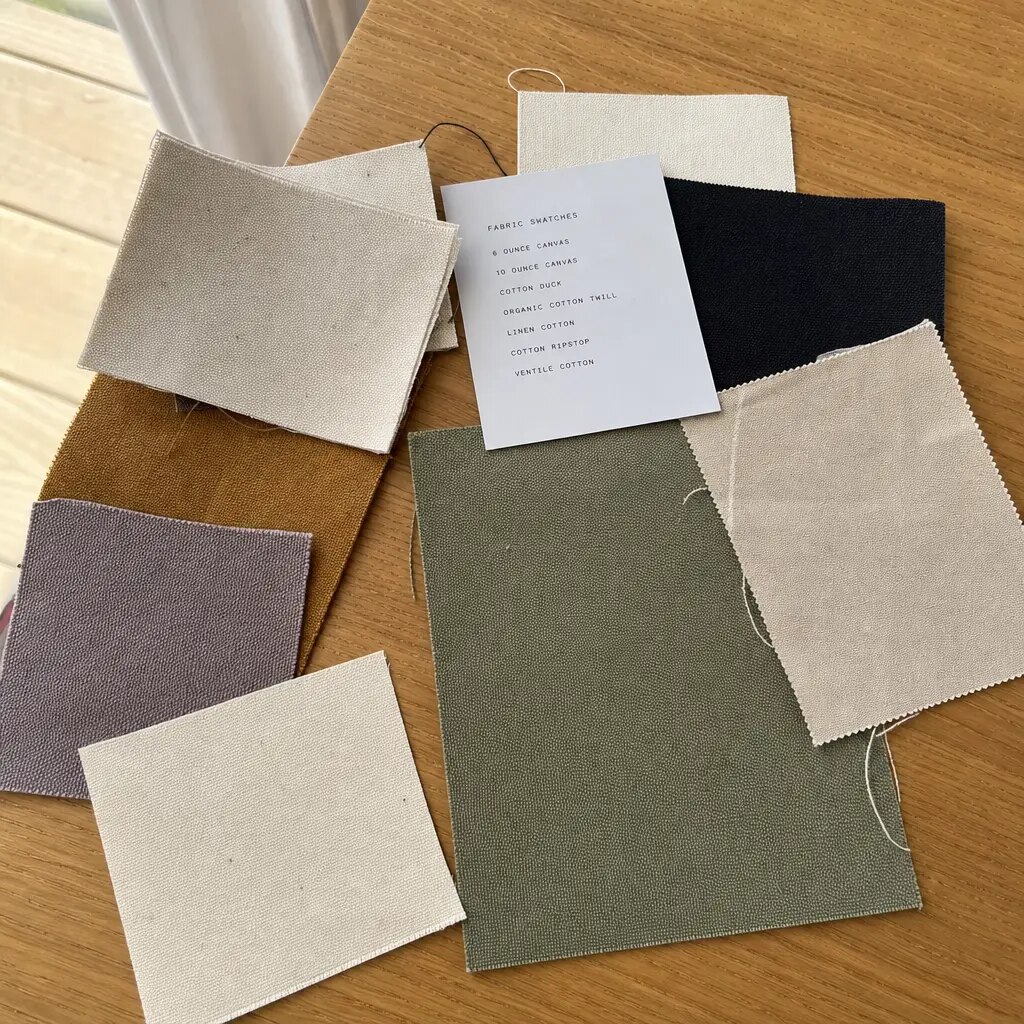
Why coffee roasters need a different messenger bag spec than generic promo bags
Coffee roasters usually buy messenger bags for a narrower set of uses than general lifestyle brands. The bag may support wholesale account visits, subscription gift sets, branded merchandise in cafés, or distributor promotions bundled with coffee packs and brew tools. That means the bag has to look branded and retail-ready, but it also has to carry weight without collapsing. A generic low-GSM promo bag often passes a price comparison sheet but fails once it holds coffee, catalogs, or a tablet.
The buying problem is usually not whether to source a messenger bag at all. It is how to write a specification that prevents quotes from looking comparable when they are not. One supplier may price a 10 oz unlined bag with a simple strap and transfer print, while another prices a 14 oz canvas bag with reinforced base, metal adjusters, and screen print. The unit prices can differ a lot, but the bigger issue is that the lower quote may not fit the intended use. Coffee roaster buyers need a shortlist spec that locks down structure, branding method, and packing before RFQs go out.
- Typical use cases: café retail merchandise, wholesale account gifts, event kits, cupping team carry bags, staff bags, subscription add-ons
- Main failure points in cheap builds: sagging body, weak strap anchors, print cracking, flap misalignment, hardware rubbing during transit
- Most common quote mismatch: same outside dimensions, different GSM, no base reinforcement, and different print method
Start with the load profile before you choose fabric weight and structure
For coffee roaster programs, the bag load matters more than many buyers first expect. Two 500 g coffee bags, a notebook, a brochure pack, and a bottle or small brew accessory can already create a very different strain pattern than a flat document bag. If the messenger bag is also expected to hold a 13-inch laptop or sales materials for account visits, the body panel and strap anchors need more support. This is why 12 oz to 16 oz canvas, roughly 340 to 450 GSM, is the practical mainstream range for many wholesale messenger bag projects in this niche.
Single-layer canvas can work well if the base is reinforced and the seams are clean. Full lining is not always necessary, and it can raise cost and sewing complexity without adding enough value for a café merchandise item. A partial structure approach often works better: heavier outer canvas, bottom reinforcement, and a useful internal pocket. For buyers trying to keep costs controlled, this gives better performance than paying for a full lining on a light outer shell.
- Light retail merchandise use: around 12 oz canvas can work if straps and bottom are reinforced
- Mixed retail and staff use: 14 oz canvas is often a safer middle point
- Heavier daily-carry use: 16 oz canvas gives a firmer feel but adds weight and freight
- Useful RFQ note: include estimated carry load in kg and whether a laptop sleeve is needed
The construction details that change durability more than the fabric alone
Buyers often focus on GSM first, but messenger bag durability is usually decided by seam design and reinforcement. Strap anchors are the most common failure point. A decent wholesale messenger bag should use a strap width of about 3.8 cm to 5 cm with box stitch reinforcement or bartacks at anchor points. If the bag has a gusset, the bottom corner seam should not be left as a weak turning point with minimal stitch density. When the bag is loaded with coffee packs, the lower corners and strap junctions take most of the stress.
Flap construction also affects both appearance and defect rates. An unreinforced large flap can curl or distort after printing, especially if the artwork is heavy or embroidery is used. A cleaner approach is to place the main logo in a stable print zone and keep flap thickness manageable. Hardware should support the look without overcomplicating production. Many coffee roaster buyers prefer magnetic snap closures hidden behind decorative buckles because they look premium enough for retail while remaining practical in daily use.
- Minimum useful reinforcement areas: strap anchors, flap fold line, bottom corners, zipper ends if back pocket is added
- Practical closure choices: magnetic snap, hidden Velcro, zipper under flap, decorative buckle over faster closure
- Hardware tradeoff: metal looks better for retail but increases unit cost, weight, and abrasion risk during shipment
Choose branding methods that fit heavy canvas and repeat orders
Most coffee roaster logos are well suited to screen printing because they use solid marks, line art, or simple one-color and two-color branding. On canvas messenger bags, screen print is usually the safest balance of appearance, durability, and unit cost. It also scales better across repeat wholesale programs. Heat transfer can work for photo-based graphics or small runs with complex artwork, but heavy textured canvas can affect adhesion and edge definition if the transfer film and pressing conditions are not tuned properly.
Embroidery works best for smaller marks or side labels, not large front-flap branding on soft canvas. A dense embroidered logo across a broad flap can pull the fabric and create a wrinkled appearance that some buyers mistake for sewing defects. If you want a more premium brand cue, a woven label, small embroidery panel, or leather-look patch may create a better result than large embroidery. For repeat roaster programs with multiple brand variants, keeping the base bag common and changing only the screen print or woven label often protects MOQ efficiency.
- Screen print fits: simple logos, café branding, event bags, repeatable wholesale runs
- Heat transfer fits: multicolor artwork or photo graphics, but test adhesion on chosen canvas
- Embroidery fits: small chest-size style logos, side tabs, reinforced panels
- Useful approval item: physical print strike-off on actual canvas, not only a paper color proof
How MOQ logic really works on messenger bags for multi-brand coffee programs
MOQ is rarely one simple number. A supplier may quote a low MOQ for the bag body if standard fabric and hardware are used, but the effective MOQ changes when print colors, packaging, labels, or colorways vary. For coffee groups, distributors, or private-label operators handling several roaster brands, the best saving often comes from standardizing the body construction and splitting artwork changes across the same production run. This only works if the factory is willing to separate print setups while keeping fabric and sewing common.
Buyers should also separate sample-stage flexibility from bulk-stage economics. A factory may make one pre-production sample with custom options, but bulk efficiency depends on material utilization and line setup. If one SKU uses antique brass hardware, another uses matte black, and a third uses different lining, those are not small variations in production planning. They create purchasing and sorting complexity. A cleaner MOQ strategy is one body color, one hardware finish, one base structure, then several artworks or sewn-in labels.
- Ask MOQ by bag color, print color count, label variation, and retail packaging variation
- Shared fabric run savings are real only when base material and trims remain the same
- Small order warning: custom dyed canvas and custom hardware finish usually raise effective MOQ sharply
- For pilot orders, reduce variables before trying to reduce price
Use samples to approve risk points, not just the overall look
Many buying mistakes happen because the sample approval stage turns into a simple visual sign-off. For messenger bags, that is not enough. The sample should verify fabric hand feel, strap comfort, flap balance, print behavior, hardware finish, and interior usability. A pre-production sample should be made with actual bulk-intended fabric and print method. A development sample using substitute canvas or generic webbing is useful for shape review, but it should not become the final approval reference for a branded order.
Coffee roaster buyers should also test the sample with real contents. Put in coffee packs, printed materials, or the laptop size the team expects to carry. This reveals whether the gusset depth is too small, whether the flap closes cleanly when full, and whether the strap slides or digs into the shoulder. For retail programs, review the bag both empty and filled. Some styles look neat on the table but collapse in an unattractive way when hanging in-store.
- Sample approval points: actual GSM, actual print method, actual hardware, actual strap width, actual pocket dimensions
- Load test idea: carry the sample with the intended weight for a short walk and inspect seam stress and comfort
- Visual approval points: flap symmetry, logo position, edge straightness, print opacity, hardware finish consistency
- Request sample photos with measurement tape before shipment to reduce revision cycles
Compare quotes by cost drivers, not by unit price alone
A wholesale messenger bag quote is shaped by a few major cost drivers: canvas weight, fabric consumption, sewing time, number of pockets, closure complexity, hardware type, print method, and packing. The difference between a simple flat messenger bag and one with gusset, lining, back zipper pocket, and metal adjusters is not cosmetic. It changes labor minutes and trim count. Buyers comparing quotes need each supplier to break pricing into the same structure, or else the cheapest number will often correspond to the lightest and least durable interpretation.
The most useful quote review method is to group costs into material, printing, trims, labor complexity, and packing. Even if the supplier does not share a full cost sheet, they can still clarify which options move price most. That allows buyers to reduce cost without damaging the selling function of the bag. For example, removing a full lining may save more than reducing the canvas weight, while keeping the retail feel intact. Replacing decorative double hardware with a simpler hidden closure may reduce both assembly time and freight weight.
- Main cost drivers: GSM, bag size, gusset depth, pocket count, hardware, closure style, print colors, custom packaging
- Lower-cost changes with lower brand risk: simplify interior organization, remove unnecessary lining, standardize hardware finish
- Changes that can backfire: reducing strap width too much, dropping reinforcement, shifting from screen print to poor-fit transfer
- Quote format to request: ex-works or FOB basis, sample cost, tooling or setup charges, packaging cost, carton data
Packing and carton planning can change freight cost more than buyers expect
Messenger bags are bulkier than flat totes, especially when they include gussets, hardware, and padded structure. That means carton planning should not wait until production is almost finished. Buyers should approve whether the bags are packed flat, with flap folded in or out, and whether hardware is individually wrapped or separated to avoid rub marks. A visually nice bag can arrive with scratched hardware, transfer marks, or hard creases if the packing method is not defined early.
For coffee roaster retail and distributor programs, inner packing also affects downstream handling. Some buyers need each bag individually polybagged with barcode sticker and insert card. Others prefer no individual bagging for sustainability or faster unpacking. Either choice is valid, but carton efficiency changes. A bag with adjustable strap and buckles may need fewer pieces per carton than a simple soft-body style. Carton counts such as 10 to 20 pieces can be normal depending on dimensions and hardware.
- Packing points to define: individual polybag yes or no, tissue, insert card, desiccant, hardware wrap, fold method
- Request export carton dimensions and gross weight before PO approval
- Avoid overweight cartons that create handling damage or warehouse complaints
- If retail presentation matters, test whether folding creates permanent flap creases on the chosen canvas
Lead time risks usually come from approvals and trim changes, not sewing alone
Messenger bag production lead time is often delayed by the parts buyers change late: hardware finish, label type, print size, or packaging. Sewing a standard canvas body is usually not the slowest step. Waiting for custom webbing, dyed canvas shade approval, or a revised print strike-off can be. Coffee roaster programs are often tied to seasonal launches, events, or holiday gift windows, so the safer workflow is to freeze all visible branding and trim decisions before bulk materials are booked.
A realistic schedule should include development sample if the style is new, then pre-production sample, then bulk after the print and hardware are approved. If the order uses stock canvas colors and standard hardware, lead time can be more manageable. If the order requires custom-dyed canvas to match a roaster brand color, custom woven labels, and special retail inserts, the risk profile changes. Buyers should treat these as separate timing gates and not rely on one overall promised ship date.
- Common delay triggers: custom hardware finish, revised logo scale, custom-dyed canvas, barcode or packaging changes
- Safer sequence: artwork approval, print strike-off, PPS approval, bulk production, final inspection, booking
- If the launch date is fixed, standardize trims instead of customizing every visual detail
- Request milestone dates, not only final shipment date
Set practical QC thresholds before production starts
Quality control works better when the buyer states what will trigger rejection and what counts as normal variation for sewn canvas goods. Soft bags are not injection-molded products, so some tolerance is unavoidable. The key is to define where variation affects saleability or function. For coffee roaster messenger bags, the usual sensitive points are logo placement, flap symmetry, body measurement, hardware function, visible stains, and seam reinforcement. Without these standards, final inspection becomes a subjective argument rather than a controlled release step.
The best QC language is measurable and tied to the approved sample. For example, logo position can be approved with a seam-to-print distance range. Stitching can be assessed by no skipped stitches in visible areas and reinforcement present at all strap anchors. Hardware can be checked for smooth function and finish consistency. If the buyer plans third-party inspection, share the carton count, assortment, and acceptance points with the factory early so repacking and lot segregation do not create last-minute confusion.
- Useful acceptance areas: measurements, logo placement, print quality, seam security, hardware operation, cleanliness, packing accuracy
- Typical soft-goods tolerance approach: specify acceptable variation per dimension instead of demanding perfect uniformity
- Use approved sample as color and structure reference, especially for natural canvas and dark print contrast
- If multiple artworks are packed together, carton marking accuracy becomes a QC point, not just a warehouse matter
Specification comparison for buyers
| Spec decision | Recommended option | When it fits | Buyer risk to check |
|---|---|---|---|
| Canvas weight | 12 oz to 16 oz canvas, about 340 to 450 GSM | Best range for coffee roaster retail bags, staff carry bags, and event merchandise that must feel substantial without becoming too heavy | Below about 10 oz can sag when loaded with coffee packs or catalogs; above 16 oz can raise freight cost and make flap seams bulky |
| Base construction | Single-layer body with reinforced bottom panel or partial lining | Fits buyers who want a cleaner shape and better load support for 250 g to 1 kg coffee packs, notebooks, and small devices | No bottom reinforcement often leads to corner wear and distorted shape after repeated use |
| Print method | Screen print for solid logos; heat transfer only for photo artwork; embroidery only on reinforced panels | Screen print works for most roaster brand marks and keeps unit cost under control at wholesale volumes | Large embroidery on flap can pucker canvas; heat transfer may crack on textured heavy canvas if the film and curing are not matched |
| Closure style | Magnetic snap under decorative buckle or Velcro hidden under flap | Good for daily use and faster access in retail or staff programs while preserving a classic messenger look | Pure buckle closure looks premium but slows packing and user access; exposed Velcro can collect lint and reduce perceived quality |
| Strap specification | 3.8 cm to 5 cm cotton webbing with box stitch reinforcement at anchors | Suitable for shoulder carry with moderate loads such as coffee samples, brochures, and laptops in lighter-use programs | Narrow straps cut into the shoulder; weak anchor stitching is a common failure point in load testing |
| Pocket layout | One internal slip pocket plus one back zip pocket | Useful for B2B gift sets, subscription add-ons, and retail buyers who want function without overcomplicating sewing | Too many pockets add sewing minutes and defect risk; pocket opening size may not fit tablets or documents if not measured clearly |
| MOQ strategy | Use one bag body color with multiple print artworks if factory allows shared material run | Works for distributors or multi-brand coffee groups ordering the same construction across several labels | If artwork changes trigger separate print setups, expected MOQ savings may disappear; confirm MOQ by color, print, and packaging variation |
| Packing plan | Individual polybag optional, 10 to 20 pcs per export carton depending on size and hardware | Balanced option for wholesale shipments where retail presentation matters but carton efficiency still matters | Overpacked cartons can exceed handling weight targets; unbagged metal hardware can rub and mark adjacent bags |
| Lead time route | Pre-production sample approval first, then bulk after print strike-off and hardware confirmation | Best for repeatable branded programs where logo placement, color tone, and construction details drive claims risk | Rushing to bulk with only digital artwork approval often causes avoidable rework on print size, flap symmetry, or strap length |
Buyer checklist before sampling
- Define the use case clearly: retail merchandise, staff issue, trade show giveaway, distributor promo, or coffee subscription add-on
- State the target finished size in centimeters, including flap coverage and gusset depth
- Specify canvas weight in GSM or oz, not just 'thick canvas'
- List whether the body is single layer, fully lined, or reinforced only at the base
- Describe strap material, width, adjustable range, and required reinforcement stitching
- Name the logo method and print size, and indicate artwork colors by Pantone reference if needed
- Set hardware expectations: antique brass, matte black, nickel, plastic buckle, magnetic snap, zipper brand if relevant
- Indicate load expectation, such as carrying 500 g coffee bags plus documents, so weak construction can be screened out early
- Request a pre-production sample with actual fabric, print, and hardware, not a development sample with substitute materials
- Approve a packing method before bulk production, including polybag, tissue, insert card, barcode sticker, and carton count
Factory quote questions to send
- What canvas weight are you quoting in GSM and oz, and is the body single layer or lined?
- What is included in the quoted unit price: printing, adjustable strap, inner pocket, hangtag, barcode label, polybag, export carton, and metal hardware?
- What MOQ applies by color, by artwork, and by packaging variation?
- Can one material run support multiple coffee brand logos with separate print charges but shared bag construction?
- What finished size tolerance do you control for width, height, and gusset depth?
- What print method are you recommending for this artwork, and what are the durability limits on heavy canvas?
- How do you reinforce strap anchor points, flap corners, and bottom seams?
- Will you provide a print strike-off, fabric swatch, and hardware sample before pre-production sample approval?
- What is the sample lead time, bulk lead time, and lead time impact if hardware color is custom?
- How many pieces per carton are planned, and what are the carton dimensions and gross weight?
Quality-control points to confirm
- Fabric weight should match approved range within practical mill tolerance; compare bulk fabric hand feel and thickness against approved sample
- Body measurements should stay within agreed tolerance, commonly around plus or minus 1 cm for soft sewn bags unless otherwise specified
- Flap alignment should look centered to the body, with symmetrical edge drop and straight closure alignment
- Logo position should match approved sample with consistent distance from flap or body seams
- Screen print should have solid fill, clean edges, and no visible pinholes, smearing, or off-registration
- Embroidery, if used, should not pucker the panel or distort flap shape
- Strap length adjuster should move smoothly but hold under load, with no sharp edges on hardware
- Strap anchor stitching should include reinforcement such as box stitch or bartack and show no skipped stitches
- Zippers should run smoothly, with no missing teeth, wave, or twisted tape
- Canvas surface should be free from oil marks, major slubs in logo area, mildew smell, and obvious shade variation within the same carton