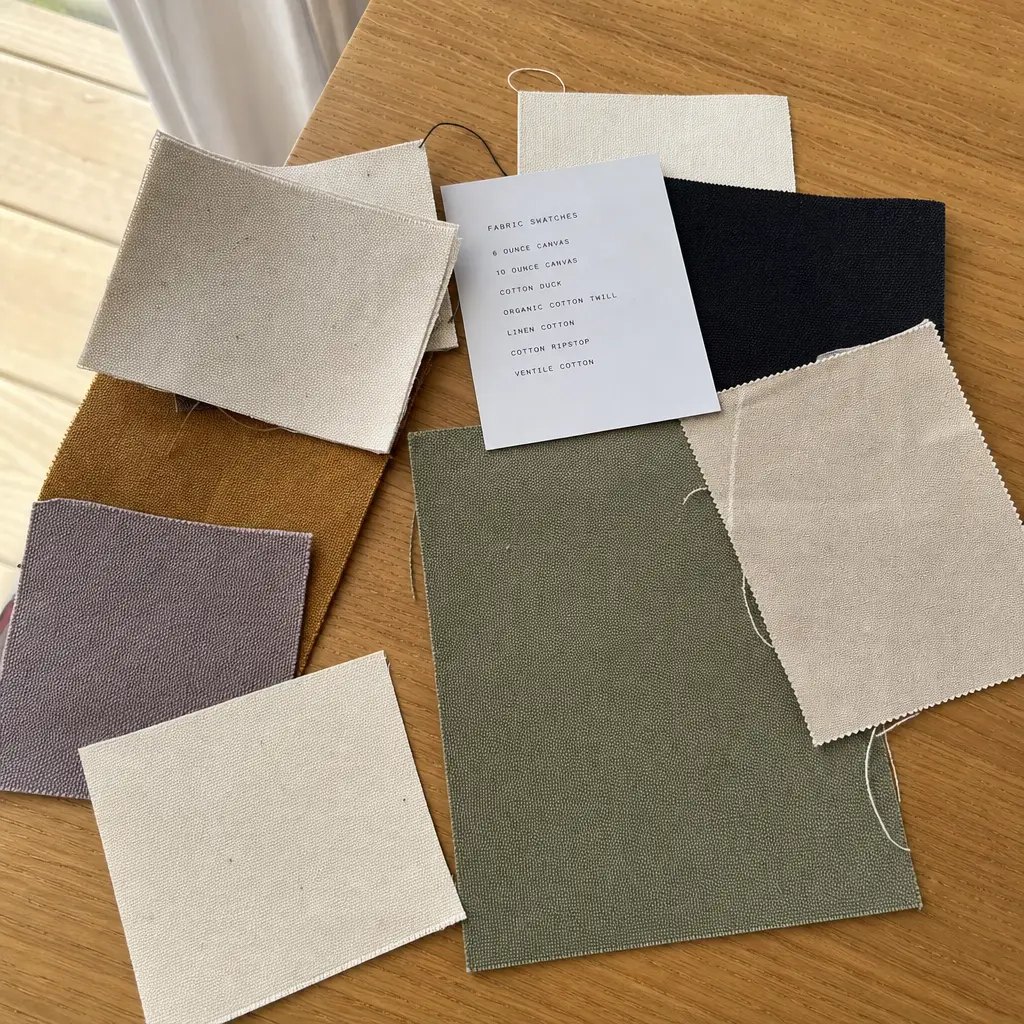
What wellness studios actually need from a canvas messenger bag
A wellness studio bag is not the same as a fashion messenger bag or a generic conference tote. The bag usually carries a folded towel, notebook, water bottle, membership card, retail products, and sometimes a mat strap accessory, so the spec has to balance structure, weight, and daily handling. If the bag is too soft, it collapses under a bottle and looks cheap on the retail shelf. If it is too stiff or heavy, it becomes awkward for class-goers and slows down packing at the counter.
For procurement teams, the commercial question is not only how the bag looks but how it behaves after repetitive use, folding, and shelf display. The best starting point is a practical body size, a gusset deep enough to hold studio essentials, and a canvas grade that keeps its shape without turning bulky. For most wellness programs, the sweet spot is a medium messenger profile with one main compartment, one pocket, and branding placed where it is visible in use.
- Choose a size around the items the studio actually hands out, not an abstract carry volume.
- Reserve enough structure for the retail shelf but avoid overbuilding if the bag is a membership gift.
- Treat branding placement as a visibility decision, not only a decoration decision.
Spec choices that move cost and usability
Fabric weight is one of the first lines that separates a usable quote from a risky one. For canvas messenger bags, 12oz is usually the entry point for a decent body, while 14oz to 16oz gives more shape, better print stability, and fewer complaints about limp corners. If the bag needs to support heavier studio items or be sold through retail, the heavier range is usually worth the cost. For lightweight promo use, 10oz can work, but only if you accept less structure and a softer feel.
Construction choices matter just as much as fabric. A reinforced bottom, a clean top edge finish, and an interior slip pocket usually improve perceived value more than a decorative add-on that adds no function. If the bag uses a zipper, specify the slider type and tape quality rather than writing only “zipper closure.” If it uses a flap or snap, define where the closure sits and whether the flap should cover the print area when closed.
- 12oz to 16oz canvas is the common commercial range for wellness studio use.
- Reinforced bottom seams protect shape during shelf display and daily carry.
- Closure style changes user perception fast, so treat it as a costed spec, not a vague preference.
How to compare supplier quotes without comparing the wrong thing
The main sourcing mistake is comparing only the unit price while ignoring the hidden spec differences. One supplier may quote a lower bag price because the canvas is lighter, the print area is smaller, the strap is thinner, and the packing is bulk-only. Another quote can look higher but include thicker canvas, a wider strap, better reinforcement, individual polybags, and a clearer approval path. Those are not the same product, and they should not be judged as if they are.
A better comparison starts with a quote structure that isolates the bag body, print method, packing, sample cost, and export assumptions. For imported orders, ask whether the price is ex-factory, FOB, or landed to your forwarder. If the supplier bundles freight or hides material substitutions, the cheapest quote can become the most expensive after rework, freight, or complaints from stores.
- Compare the same canvas weight, same print method, and same packing format across all quotes.
- Ask for separate pricing by color and by artwork version when you plan multiple studio locations.
- Treat a vague all-in quote as incomplete until the supplier breaks down the components.
Supplier routes: direct factory, trading company, or mixed sourcing
For this product, a direct factory route is usually the strongest option when the buyer wants stable repeat quality and clear control over materials. A factory can confirm cutting yield, stitch method, and packing sequence more transparently, which matters when you are ordering the same bag for a chain of studios or for retail replenishment. The tradeoff is that you need sharper RFQ discipline, because a factory will often quote exactly what you ask for and nothing more.
A trading company can be useful if your order combines several bag styles, multiple print techniques, or different destination markets. It can reduce coordination time, but the buyer should still insist on factory-level detail in the quote. If you do not know whether the vendor is the actual maker or a broker, ask for production photos, sample-room evidence, and the name of the factory that will cut and sew the goods.
- Direct factory: stronger spec control, better repeatability, lower cost noise.
- Trading company: easier coordination, but watch for margin stacking and spec dilution.
- Mixed sourcing: good for mixed SKUs, but only if one party owns the final QC standard.
MOQ logic for wellness studio orders
MOQ should be tied to real production economics, not used as a generic gatekeeper. For canvas messenger bags, MOQ often changes with canvas color, print complexity, hardware choice, and label format. A natural canvas body with one-color screen print can usually support a lower MOQ than a custom dyed body with embroidery, contrast lining, and metal hardware. If the supplier gives one MOQ for every version, there is a good chance the quote is padded or underexplained.
Buyers serving wellness studios usually need more than one color, but not so many that inventory sits in storage. The practical move is to request a base MOQ per artwork and a smaller incremental MOQ for additional colors if the body spec stays the same. That lets you spread one approved pattern across multiple studio identities without restarting the full sampling process every time.
- Higher MOQ is normal when the order includes dyed canvas, custom lining, or hardware changes.
- Ask for MOQ by color, not only total order quantity.
- If you need several studio locations, push for a shared base spec with small color variants.
Print method choices and what can go wrong
Print method affects both brand appearance and factory yield. Screen print is usually the best balance for simple logos, clean shapes, and controlled unit cost. It handles larger artwork areas well, but it needs proper mesh selection, ink density, and curing so the print does not crack or feel sticky. Embroidery gives a premium look and can fit a wellness brand that wants a softer, more tactile finish, but it adds cost, limits detail, and can pucker if the canvas is too light.
Heat transfer and digital methods can be useful for complex graphics or short runs, but they should not be chosen just because they sound flexible. On canvas messenger bags, the buyer needs to know how the print survives folding, friction, and repeated use. For wellness studio applications, the best acceptance standard is simple: the branding should still look neat after handling, not only at first glance in the sample room.
- Screen print for simple logos and controlled repeat orders.
- Embroidery for premium positioning, but only when the fabric weight supports it.
- Avoid fine detail that will vanish at stitching, seam lines, or fold points.
Sample approval: what a good pre-production sample must prove
A photo approval is not enough for this product. The pre-production sample should prove size, drape, seam strength, print registration, closure alignment, and label placement. Ask the supplier to build the sample from the exact fabric, exact print process, and exact hardware planned for bulk production. If any of those change after approval, the sample is no longer the reference standard and should be revised.
During approval, compare the sample against a measurement sheet, not only personal impression. Measure finished width, height, gusset, strap length, pocket depth, and print position. Then test how the bag holds a bottle, a notebook, and a folded garment or towel, because functional fit often exposes weak strap angles or an undersized gusset faster than visual review does.
- Approve the sample against a written measurement sheet.
- Match the sample fabric, print, closure, and label to the bulk spec.
- Test real contents before signing off on production.
Packing, carton rules, and retail readiness
Packing changes damage risk more than many buyers expect. A canvas messenger bag can look fine in production but arrive with scuffed corners, wrinkled prints, or crushed closures if carton counts are too high or inner packing is loose. If the bag will go straight to retail, specify individual polybag thickness, ventilation holes if needed, barcode placement, and carton labeling. If it is a studio giveaway, bulk packing may be more efficient, but the carton fill must still protect the bag shape.
Ask for the master carton size and weight before production starts, especially if the order will move by air freight or go through a retail distribution center. A bag with a stiff board insert can increase cubic volume quickly. In landed-cost terms, packing is not a minor detail; it changes freight efficiency, warehouse handling, and unpacking time at the destination.
- Set inner packing by sales channel: retail shelf, e-commerce, or internal distribution.
- Keep carton counts realistic to avoid crushing and shape loss.
- Confirm barcode position and carton marks before the first bulk packout.
Lead time planning and schedule risk
Lead time for canvas messenger bags should be planned as a chain, not a single date. The supplier first needs sample confirmation, then fabric reservation, then cutting and printing, then sewing, then packing, and finally inspection or export booking. If the quote only gives one production number without these stages, the risk is that delays will appear later as a “material issue” or “approval delay” even when the order was under-scoped from the start.
For wellness studio launches, the critical risk is missing a class opening or membership campaign window. Build a buffer for artwork correction, color matching, and carton retest. If the order has multiple colors or multiple print locations, add time for strike-offs and re-approval. The safest schedule is the one that gives the supplier room to fix a problem before goods are committed to bulk packing.
- Separate sample time, bulk time, packing time, and export time in the PO schedule.
- Add buffer when the order includes several colors or multiple artwork positions.
- Do not accept a single blanket lead time without milestone dates.
Landed-cost view for procurement teams
Unit price alone does not tell you what the bag costs to place on a studio counter or retail shelf. The landed cost should include sample charges, print setup, inner packing, master cartons, inspection, freight assumptions, and any charge for artwork revisions. A quote that looks cheaper at ex-factory can become more expensive if the supplier adds packaging later or uses a heavier carton to solve a damage issue that should have been built into the first spec.
The cleanest comparison is to normalize every quote into the same landed-cost frame. Use the same quantity, same canvas weight, same print method, same packing method, and the same shipping basis. Then estimate the cost of a failure too: a misprinted logo, a weak strap, or a delayed delivery can erase the apparent savings from the cheapest supplier. For wellness studios, brand presentation matters enough that rework should be treated as a real line item, not an afterthought.
- Normalize every quote to the same spec before comparing price.
- Add sample, packing, freight, and revision costs to the landed-cost view.
- Treat rework risk as part of sourcing cost, not just as quality noise.
Specification comparison for buyers
| Spec decision | Recommended option | When it fits | Buyer risk to check |
|---|---|---|---|
| Fabric weight | 12oz to 16oz canvas with a stable weave | Best for daily studio use, retail resale, and premium giveaways | Too-light canvas can wrinkle, sag, or distort print registration after packing |
| Bag structure | Single-compartment body with reinforced bottom and interior slip pocket | Works for yoga mats, journals, retail kits, and check-in packs | Weak bottom seams or no gusset control can reduce usable capacity |
| Print method | Screen print for simple logos; embroidery or woven label for premium positioning | Use screen print for one- to three-color artwork and clear branding | Fine lines, gradients, or low-contrast logos may blur or wash out |
| Closure | Zipper top or magnetic snap depending on product value | Zipper suits retail and higher-value studio bundles; open top suits promo kits | Weak zipper tape, poor slider quality, or misaligned snap placement can cause returns |
| Supplier route | Direct factory with sample-room approval | Best when you need controlled spec, repeat orders, and lower per-unit cost | Factories may quote low but leave packing, test, or artwork revisions vague |
| Sourcing route | Trading company with consolidated sourcing | Useful if you need mixed SKUs, shorter admin time, or one-stop coordination | Margin stacking can hide the real factory spec and weaken change control |
| MOQ strategy | Tiered MOQ by color and print complexity | Works when you want several wellness studio colorways without overbuying | Low MOQ often means higher unit cost, fewer size options, or limited customization |
| Packing method | Bulk polybag with carton dividers or individual retail polybag with barcode label | Bulk packing for internal distribution; retail packing for e-commerce or store shelves | Wrong packing can cause scuffing, crushed corners, or barcode mismatch at intake |
| Lead time | Sample approval plus production plus export buffer | Appropriate for seasonal launches and studio opening campaigns | Short quoted lead times may exclude fabric reservation, pre-production approval, or packing time |
Buyer checklist before sampling
- Confirm finished size in cm and inches, not only bag capacity, and include gusset depth and strap drop in the RFQ.
- Specify fabric weight, weave density, lining requirement, and whether the canvas must be pre-shrunk or enzyme-washed.
- State print method, print area, Pantone targets, stitch color, and any label requirements on body, lining, or side seam.
- Define closure type, pocket layout, reinforcement points, and acceptable hardware finish before sampling starts.
- Set MOQ by color and by artwork version, and state whether mix-color cartons are allowed.
- Request a real pre-production sample, not only a photo, and approve against an agreed measurement sheet.
- Ask for packing details: polybag thickness, carton size, master carton quantity, and barcode placement.
- Collect lead time in separate stages: sample, bulk fabric booking, production, inspection, and shipping readiness.
- Request quote line items for unit price, sample charge, printing cost, inner packing, carton packing, and export docs if applicable.
- Require QC tolerances for dimensions, stitch density, print alignment, hardware pull strength, and color deviation.
Factory quote questions to send
- What exact fabric weight, weave count, and finish are included in your quoted canvas spec?
- Is the quote based on screen print, embroidery, woven label, or heat transfer, and how many colors are included?
- What is your MOQ per color and per artwork version, and what changes the MOQ?
- Can you separate sample cost, sample freight, bulk unit price, packing cost, and carton details?
- What are your accepted dimensional tolerances for finished width, height, gusset, and strap length?
- What is the full production timeline from sample approval to ex-factory readiness?
- Which parts of the bag are reinforced, and what stitch count or seam allowance do you use at stress points?
- What carton quantity, polybag spec, and barcode labeling method are included in the quote?
- What test reports, fabric certificates, or inspection records can you provide for the quoted material batch?
- How do you handle artwork revision, Pantone matching, and approval of strike-off or pre-production sample?
Quality-control points to confirm
- Finished size within agreed tolerance on width, height, gusset, and strap drop.
- Canvas weight matches the approved spec and is checked before bulk cutting.
- Stitching is even, with no skipped stitches, loose threads, or seam puckering at handle attachment points.
- Print placement is centered, sharp, and within the approved print area with no wash-like bleeding.
- Hardware, zipper, or snap function smoothly and stays aligned after repeated opening and closing.
- Interior and side labels are attached straight, secure, and consistent across the batch.
- Carton count, barcode, and pack ratio match the PO and outer carton mark requirements.
- No visible oil stains, shade bands, or fabric defects in the production lot beyond the agreed AQL threshold.