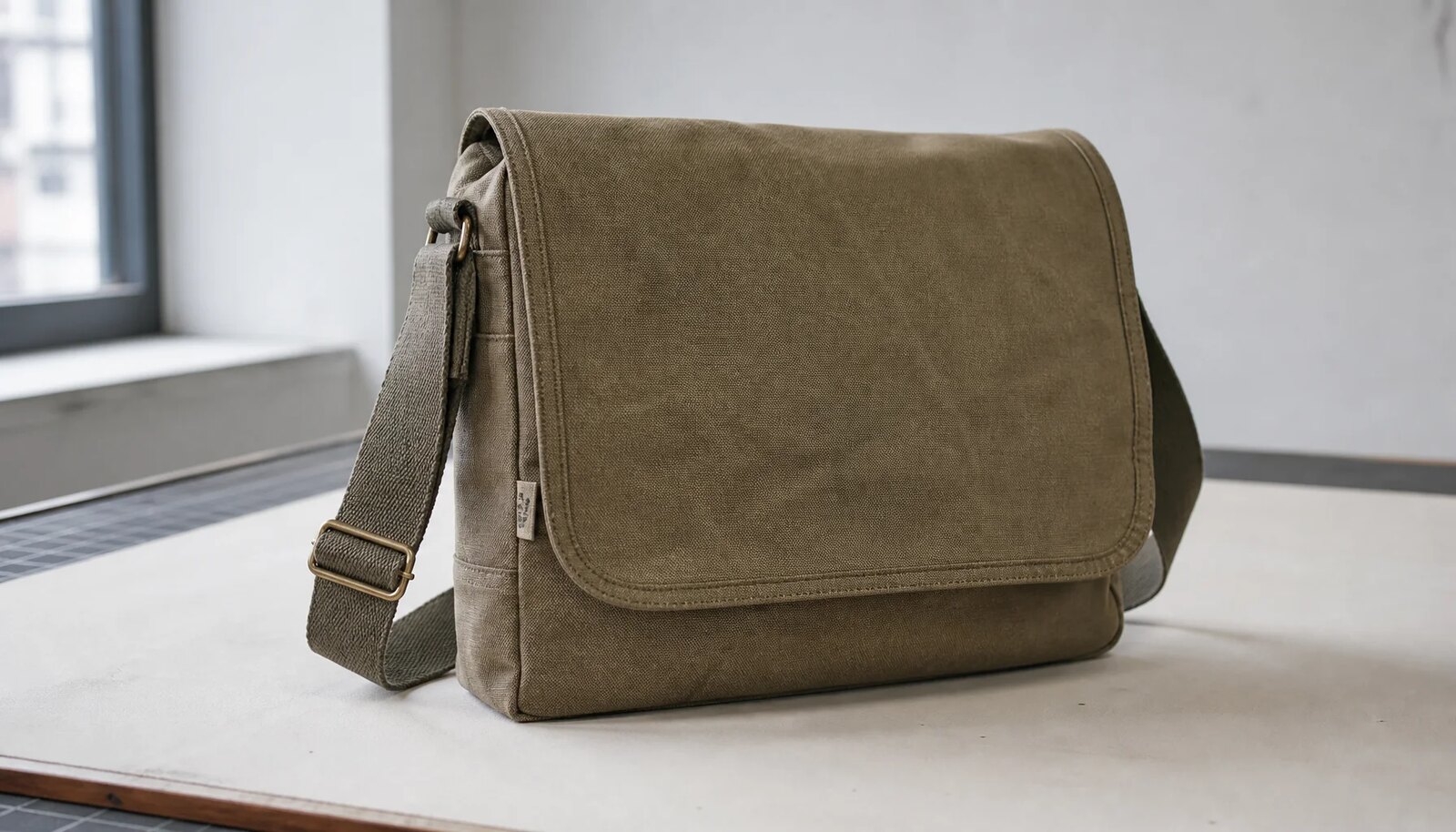
Start With the Vendor Workflow, Not the Catalog Photo
A farmers market vendor uses a messenger bag as working equipment. The bag may carry a phone, card reader, receipt book, cash pouch, keys, pens, folded permits, small tools, water bottle, and sample products while the user moves between a stall, vehicle, storage area, and customer line. That workflow is different from a simple promotional tote and different from a commuter laptop bag. The buying checklist should begin with how the bag will be used, how often it will be worn, and how visible the brand must be during a market day.
For B2B procurement, the first split is commercial purpose. A market association buying staff bags needs comfort, secure closure, and reinforcement. A farm shop ordering resale merchandise needs consistent appearance, cleaner folding, barcode control, and attractive branding. A sponsor-funded giveaway may simplify pockets and trim, but it should still feel useful enough that the brand is not associated with a disposable item. Combining these use cases into one vague RFQ usually produces prices that cannot be compared fairly.
Write the workflow into the RFQ before asking for a quote. A useful request is not simply canvas messenger bag wholesale. It should state that the bag is for farmers market vendors, expected contents, approximate loaded weight, selling channel, logo needs, packing route, and target delivery date. This gives the supplier enough context to recommend a fabric weight, closure, strap width, and reinforcement approach that matches the actual use instead of quoting the cheapest available messenger silhouette.
- Separate staff-use, resale, sponsorship, giveaway, and welcome-kit programs before sourcing.
- List expected contents and target loaded weight before choosing body size or strap width.
- Define whether the priority is comfort, security, retail appearance, fast access, low landed cost, or delivery speed.
- Tell suppliers whether the bag will be used outdoors, folded for retail display, shipped to many locations, or handled by multiple vendor teams.
Convert Contents Into Measurable Dimensions
Messenger bag size should be built around real contents, not a lifestyle image. A compact body may look clean in a product photo but fail when it needs to fit a tablet, receipt pad, phone, card reader, and small cash pouch at the same time. An oversized body creates the opposite problem: more fabric cost, more carton volume, and a bag that becomes uncomfortable when users fill every available space. For many farmers market vendor programs, a medium body around 12 to 15 inches wide and 10 to 12 inches high, with a 2 to 4 inch gusset, is a practical starting range. The final choice should still be tested against the buyer's actual contents.
The opening matters as much as the body size. A bag can technically fit the contents while still being frustrating if the top opening is too narrow or the flap blocks the user's hand during checkout. If the bag uses a zipper, confirm the zipper length allows access into the corners. If it uses a flap, confirm flap overlap is deep enough for coverage but not so deep that vendors fight the closure during repeated transactions.
Pocket dimensions should be specified by function. A phone slip pocket should match the phone size range used by the team. A zip pocket for keys or cash should have a mouth wide enough to be useful after sewing. A card-reader pocket should not be so tight that it slows checkout. Adding five small pockets can look good in a quote sheet, but every pocket adds labor, bulk, and another QC checkpoint.
- Measure the largest expected item and confirm it enters the main compartment without forcing the closure.
- Specify finished width, height, gusset depth, opening width, pocket width, pocket depth, and flap depth if used.
- Use a realistic load test, such as 3 kg to 5 kg for vendor-use samples, before approving comfort and access.
- Avoid oversized builds unless vendors carry catalogs, boxed goods, folded apparel, or larger retail tools.
- Check access while the bag is worn crossbody, not only while it sits flat on a table.
Specify Canvas Weight, Finish, and Shrinkage
Fabric weight is one of the largest cost and performance levers in wholesale canvas messenger bags. For light carry, sponsor giveaways, and cost-sensitive merchandise, 10 oz to 12 oz cotton canvas can be workable. For repeated vendor use, heavier contents, and a more structured retail feel, 12 oz to 14 oz is often a safer range. A 12 oz canvas is roughly 407 gsm because 1 oz per square yard is about 33.9 gsm, but buyers should treat that conversion as a reference and ask how the supplier measures its fabric.
The key sourcing detail is whether the quoted fabric weight is greige weight or finished weight. Greige fabric is measured before dyeing, washing, coating, or other finishing. Finished processes can change hand feel, shrinkage, color, and final dimensions. If one supplier quotes 12 oz greige canvas and another quotes 12 oz finished canvas, the two bags may not feel the same. Ask for both oz and gsm, the measurement point, and the finish process included in the quote.
Finish changes both brand presentation and QC risk. Natural canvas works well for farmers market programs because it has an honest, textured look, but it may include seed flecks, slubs, and shade variation. Dyed canvas supports stronger brand color but requires shade and crocking checks. Washed or enzyme-washed canvas feels softer but can reduce dimensional crispness. Coated or laminated canvas may add moisture resistance, but it changes hand feel, print behavior, and sometimes sewing performance. Procurement should treat finish as a technical specification, not only a style preference.
- Request oz and gsm, and ask whether the weight is greige or finished fabric weight.
- Use 10 oz to 12 oz for lighter carry, giveaways, and budget-sensitive resale.
- Use 12 oz to 14 oz when structure, durability, and retail feel matter more.
- Confirm expected shrinkage after washing or dyeing and whether the sample was made after the same process.
- Approve fabric swatches or lab dips before bulk when color, texture, or hand feel affects sign-off.
Engineer the Stress Points Before Production
Most messenger bag failures occur in predictable locations: strap attachments, gusset corners, zipper ends, pocket openings, flap corners, and seam intersections. These are the areas that absorb load when the bag is swung across the body, placed on the ground, pulled from a carton, or worn for hours. A quote that says reinforced seams is not enough. The RFQ should name the reinforcement points and the factory should show the stitch pattern on the sample.
For farmers market vendors, the strap is a comfort and durability feature. A 1.25 to 1.5 inch adjustable cotton webbing strap is a common practical range for loaded daily use. Narrower straps can reduce cost, but they may dig into the shoulder. A folded self-fabric strap can look integrated, but it needs reinforcement and may twist if poorly built. If the bag must fit over jackets or aprons, confirm the finished strap length range and not just the strap material.
Stitching details should be concrete enough for inspection. Ask for bar-tacks or stitch-box reinforcement at strap attachments, secure backstitching at pocket corners, clean zipper end finishing, and consistent seam allowance. A reasonable starting point for many canvas bags is 7 to 9 stitches per inch on main seams, but the correct value depends on fabric, thread, needle, and construction. The important point is that the factory states its stitch density range and the approved sample reflects it.
- Call out bar-tacks or reinforced stitch boxes at strap attachment points.
- Specify strap width, strap material, strap length range, adjuster type, and hardware finish.
- Confirm reinforcement patch size and placement if the strap connects to the bag body.
- Ask the factory to state stitch density range for main seams and reinforcement areas.
- Check zipper end finishing, flap alignment, pocket corner backstitching, and loose thread trimming on the pre-production sample.
Choose Closure and Organization for Market-Day Access
Closure style should match the way vendors move through crowded outdoor selling environments. A zipper top is usually the most secure option when vendors carry payment devices, cash pouches, or personal items. A flap with snap closure gives a classic messenger appearance and faster access, but the flap must overlap enough to protect the opening. Hook-and-loop can be inexpensive and easy to use, but it catches lint, can be noisy, and may feel less retail-ready. An open-top bag should be reserved for low-cost controlled programs where security is not a priority.
Zipper specification should not be left as a generic trim line. Ask for zipper size, tape width, slider type, puller type, and whether the zipper is nylon coil or another construction. For cotton canvas bags, a nylon coil zipper is common, but the grade still matters. The sample should be tested while the bag is partially loaded because zipper problems often appear when the body is under tension.
Organization is most valuable when it reduces friction during checkout. One slip pocket and one internal zip pocket may serve most farmers market vendors better than a complex organizer wall. A clean main compartment helps with irregular items such as seed packets, sample jars, folded signs, or small packaged goods. Procurement should match pocket placement to actual hand movement: can the user reach a phone while wearing the bag, can keys be secured, and can the card reader be found quickly during a transaction.
- Use zipper closure when security, movement, and dust protection matter most.
- Use flap plus snap when fast access and a traditional messenger look are the priority.
- Avoid hook-and-loop unless the buyer accepts noise, lint pickup, and a more casual finish.
- Limit pockets to real workflow needs: phone, keys, cash pouch, receipt book, or card reader.
- Test closure function with the bag loaded, worn crossbody, and opened repeatedly.
Control Branding With Production Tolerances
Branding can be the difference between a simple wholesale order and a complicated custom project. A one-color screen print on natural canvas is usually the most efficient option for clear brand visibility. Two-color screen printing can work well when registration is not too tight. Woven labels and sewn patches create a more durable retail detail, but they add material sourcing, sewing time, placement variation, and often their own MOQ. Embroidery can look premium on some canvas builds, yet it should be tested because dense stitching can pucker lighter canvas.
Procurement should separate what the brand requires from what is merely decorative. If the logo needs to be seen from a booth aisle, prioritize contrast, size, and placement. If the bag is sold in a farm shop, a smaller patch or side label may feel more retail-friendly than a large promotional print. If different farms, regions, or sponsors need separate logos, keep the base bag construction the same and vary only the decoration. That keeps costing, production planning, and QC more controlled.
Artwork approval should include measurable rules. Provide vector artwork when possible, specify Pantone or an approved color reference, define logo dimensions, state the distance from seams or edges, and set placement tolerance. For many simple bag prints, plus or minus 5 mm placement tolerance is a practical starting point, though the factory may need a wider tolerance on washed or irregular fabric. Fine lines, small text, and distressed artwork should be tested on actual canvas because texture can break edges or fill in details.
- Use one-color screen print for the lowest-complexity wholesale branding path.
- Use two-color screen print only after confirming registration expectations and setup charges.
- Use woven labels or sewn patches when durability and retail presentation outweigh lowest unit cost.
- Test embroidery for puckering, backing visibility, thread color, and stitch density before bulk approval.
- Set logo size, placement from seams, color reference, artwork file format, and acceptable placement tolerance in writing.
Make Every Supplier Quote the Same Bag
A low unit price is meaningful only when every supplier is quoting the same specification. Without a clear RFQ, one supplier may quote 10 oz natural canvas with no lining, another may quote 12 oz finished canvas with a zipper, and another may exclude retail packing or use a cheaper strap. The quotes will look comparable in a spreadsheet, but the products and risks are different. The buying checklist should turn the desired bag into a controlled specification before price comparison begins.
The RFQ should include fabric weight and finish, finished dimensions, strap build, closure, pockets, branding method, artwork assumptions, sample stages, packaging, Incoterms, lead time, and inspection expectations. It should also state whether the buyer wants a direct factory, trading company, or stock program. A direct factory can offer strong control for repeat custom orders when the buyer has a clear spec. A trading company may help consolidate multiple items or manage smaller suppliers. A stock program can be fastest when exact construction is less important.
Ask who owns each production step. Fabric may come from a mill, printing may be outsourced, sewing may happen in a workshop, and packing may be handled separately. That structure can be normal, but accountability needs to be clear. If logo color drifts, who approves a correction? If the zipper trim changes, who alerts the buyer before production? If cartons need destination labels, who checks them before shipment? These ownership questions prevent late-stage surprises.
- Send one written RFQ and tech pack to every supplier being compared.
- Compare fabric, trim, print, packing, Incoterms, setup fees, sample costs, and inspection support alongside unit price.
- Ask whether sewing, printing, and packing are in-house or subcontracted.
- Use stock programs when speed matters more than exact dimensions, trims, or branding placement.
- Keep one base construction when different vendors only need different logos.
Read MOQ as a Map of Setup Costs
MOQ is not just one number. It reflects fabric purchase minimums, dye lots, cutting efficiency, print setup, sewing line planning, hardware sourcing, label production, carton labels, and packing method. A supplier may offer a low total MOQ but require separate minimums or setup fees for each color, logo, hardware finish, label, or retail packing version. This matters for farmers market programs because regional artwork, sponsor marks, or farm-specific branding can multiply complexity quickly.
Ask for MOQ by decision point. The quote should state minimum quantity per style, fabric color, logo design, label, trim color, hardware finish, and packing method. If the supplier allows mixed artworks in one production run, ask how printed panels will be separated and how carton labels will be controlled. Mixed runs can work, but only when production control is strong enough to prevent wrong logos, uneven quantities, or barcode mix-ups.
A good way to keep MOQ efficient is to lock the base bag. Use one fabric color, one strap, one closure, one pocket layout, and one packing format, then vary only the screen print or sewn label. Keep artwork size and placement consistent across versions. If there are many small regional buyers, consider fewer artwork batches or a shared market association logo. The procurement goal is not to eliminate variation, but to make every variation visible in the quote.
- Ask for MOQ per style, color, logo, label, trim, hardware finish, and packing method.
- Separate unit price from screen setup, label setup, sample fees, artwork charges, barcode charges, and special packing fees.
- Confirm whether mixed logos can share one bulk material purchase and one sewing run.
- Require carton marks that identify artwork, SKU, quantity, destination, and purchase order.
- Avoid many small SKU splits unless resale or distribution value justifies the added handling cost.
Use Samples as Production Evidence
Sampling is the buyer's best evidence that the supplier can make the bag being ordered. A stock sample can show general workmanship, fabric hand feel, or silhouette, but it should not be the final approval standard for a custom wholesale canvas messenger bag. The pre-production sample should use the same canvas weight, same finish, same strap, same closure, same hardware, same thread, same branding method, and same packing approach as bulk whenever possible.
A strong sample path often includes several stages. A fabric swatch confirms texture and color. A lab dip may be needed for custom dyed fabric. A print strike-off confirms ink color, print scale, edge quality, and readability on the actual canvas surface. A construction sample checks dimensions and usability. A corrected pre-production sample becomes the approval reference. For larger custom runs, a top-of-production sample or early production photos can confirm that bulk output matches the approved sample before the full order is packed.
Sample review should be measured rather than handled by impression. Record body width, height, gusset, opening width, flap depth, strap length, pocket dimensions, logo placement, zipper performance, snap strength, and loaded comfort. Photograph the approved sample and note accepted deviations. If approval is conditional, the supplier should confirm each correction in writing before production starts. A vague approval such as looks good creates room for disagreement when bulk goods arrive.
- Use stock samples for reference only, not final custom approval.
- Request swatches, lab dips, or strike-offs when fabric color, print color, or texture matters.
- Approve a pre-production sample made from actual bulk materials and trims.
- Measure the sample against the tech pack and keep written approval notes with photos.
- For larger or higher-risk orders, request top-of-production review before the full lot is packed.
Set QC Standards Inspectors Can Apply
Quality control should be specific enough that a factory QC team or third-party inspector can apply it consistently. Good stitching and clean logo are not inspection standards. The buyer should define measurement tolerances, defect categories, sampling method, photo requirements, and shipment-release rules before production. For wholesale canvas messenger bags, inspection should cover dimensions, fabric appearance, seam strength, strap reinforcement, closure function, branding accuracy, odor, cleanliness, and packing.
Soft goods need realistic tolerances. A starting point for many canvas messenger bag programs is plus or minus 10 mm for body width, height, and gusset, plus or minus 5 mm for logo placement and pocket details, and a confirmed strap length tolerance based on the construction. These numbers are not universal; the factory must confirm what it can hold with the chosen fabric and finish. Washed canvas, thick seams, and hand-applied decoration may require wider tolerances than a flat digital mockup suggests.
Classify defects before inspection. Major defects may include broken zipper, missing or wrong logo, open seam, loose strap attachment, wrong size outside tolerance, severe stain, mold odor, wrong barcode, or wrong carton mark. Minor defects may include small thread ends, minor natural canvas flecks, or slight appearance variation outside the main logo area if the buyer has approved that standard. Channel matters too. Retail resale requires stricter attention to fold marks, hangtags, shade consistency, and logo appearance, while staff-use programs should prioritize strap strength, closure reliability, and load-bearing seams.
- Define measurement tolerances for body, gusset, opening, strap, pockets, flap, and logo placement.
- Classify broken closures, open seams, loose straps, wrong logo, severe stains, and wrong packing labels as major defects.
- Inspect units from multiple cartons and multiple parts of the production lot, not only top cartons.
- Check zipper movement, snap strength, strap pull, seam reinforcement, odor, print appearance, and carton labeling.
- Require inspection photos or a written report before shipment release for custom or high-value orders.
Specification comparison for buyers
| Spec decision | Recommended option | When it fits | Buyer risk to check |
|---|---|---|---|
| Sourcing route | Direct factory for repeat custom programs; trading company for mixed-item consolidation; stock program when delivery speed is more important than exact construction | Best for farm co-ops, market associations, regional vendor programs, and resale channels that need repeatable quality across seasons | Confirm who controls fabric purchase, cutting, printing, sewing, packing, and final inspection. Ask whether logo work is in-house or subcontracted, because print defects and late rework often depend on that ownership. |
| Fabric weight | 10 oz to 12 oz cotton canvas for light vendor carry and giveaways; 12 oz to 14 oz for daily-use staff bags, heavier contents, and higher perceived retail value | Useful for vendor kits, farm shop merchandise, sponsor programs, market staff bags, and branded sales tools | Ask whether the quoted weight is greige or finished fabric weight. Request oz and gsm. A practical conversion is 1 oz per square yard equals about 33.9 gsm, so 12 oz is about 407 gsm before considering finishing variance. |
| Fabric finish | Natural raw canvas for cost control and farm-market appearance; dyed canvas for brand color; washed canvas for softer hand feel; laminated or coated only when there is a real moisture-resistance requirement | Fits programs where texture, color, print readability, or shelf presentation affects approval | Confirm shrinkage after washing or dyeing, shade tolerance, crocking risk, odor, and whether the approved sample used the same finish as bulk. Natural cotton slubs are normal; panel-to-panel shade mismatch is not. |
| Bag size | Medium body, commonly around 12 to 15 in wide and 10 to 12 in high, with a 2 to 4 in gusset depending on expected contents | Good for tablet, phone, card reader, receipt book, pens, keys, cash pouch, folded signage, and small product samples | Do not quote only flat dimensions. Confirm finished size tolerance, gusset depth, opening width, flap coverage, and whether the bag remains easy to access when loaded. |
| Closure style | Zipper top for active vendor use; flap with snap for quick access and a classic messenger look; open top only for low-cost controlled programs | Best for crowded markets, outdoor loading, movement between booth and storage, and situations where payment tools are carried | Check zipper size, tape width, slider quality, snap strength, flap overlap, and function when the bag is partially loaded. Weak closures are easier to miss on an empty sample. |
| Branding method | One-color screen print for cost control; two-color screen print when registration is simple; woven label or sewn patch for durable retail detail; embroidery only after puckering test | Works when market associations, sponsor groups, or farm shops need readable branding at wholesale scale | Define artwork size, Pantone or approved color reference, placement from seams, and placement tolerance, typically plus or minus 5 mm for simple print placement unless the factory agrees to tighter control. |
| Strap build | Adjustable 1.25 to 1.5 in cotton webbing strap, or reinforced folded self-fabric strap with bar-tacks or stitch-box reinforcement | Useful for vendors carrying payment devices, notebooks, bottled water, samples, and personal items for several hours | Confirm strap length range, adjuster material, attachment stitching, reinforcement patch size, and slippage under load. Narrow straps can reduce unit cost but increase discomfort and complaints. |
| Internal organization | One slip pocket plus one zip pocket, or one secure pocket with a clean open main compartment | Enough for most farmers market workflows without adding unnecessary labor, bulk, and inspection risk | Specify pocket mouth width and depth against real items such as phone, card reader, receipt book, and keys. Decorative pockets that do not fit real tools add cost without utility. |
| Packaging route | Bulk master-carton packing for wholesale distribution; individual polybag, barcode, hangtag, or carton segregation only when downstream handling requires it | Choose bulk for co-op or association distribution; choose retail-ready packing for farm shops, store delivery, e-commerce prep, or inventory scanning | Check fold method, carton weight, carton dimensions, carton label format, moisture protection, and whether folds cross the printed logo. Packing changes can alter both unit cost and freight volume. |
Buyer checklist before sampling
- Define the exact program: daily vendor staff bag, branded equipment kit, farm shop resale item, event merchandise, sponsor giveaway, welcome pack, or subscription-box insert.
- List actual contents before approving size: tablet, phone, card reader, receipt book, keys, cash pouch, pens, water bottle, folded market signs, small tools, and sample products.
- Set a target loaded weight range for sample testing. For many vendor bags, testing at 3 kg to 5 kg is more useful than judging an empty sample.
- Specify finished bag dimensions in inches or centimeters, including width, height, gusset depth, flap depth if used, opening width, pocket dimensions, strap width, and strap length range.
- Lock canvas weight in both oz per square yard and gsm, and state whether the figure is greige fabric weight or finished fabric weight after dyeing, washing, or coating.
- Define fabric composition and finish: 100% cotton, cotton blend, natural, piece-dyed, washed, enzyme-washed, lined, laminated, or unlined.
- Choose closure based on use: zipper for movement and security, flap plus snap for faster access, hook-and-loop only when noise and lint pickup are acceptable, open top only for controlled low-cost programs.
- Confirm strap construction, reinforcement patch, bar-tack or stitch-box pattern, adjuster type, and attachment position before comparing quotes.
- Set logo method, artwork size, color count, Pantone or approved reference, placement from seams, print hand-feel requirement, and placement tolerance before sample production.
- Request fabric swatches, lab dips, or print strike-offs when fabric color, logo color, or canvas texture affects approval.
Factory quote questions to send
- What is the exact canvas weight in oz per square yard and gsm, and is that weight measured before finishing or on finished fabric?
- What is the fabric composition, yarn type if known, weave density range if available, shrinkage expectation, and finish treatment included in the quote?
- Is the canvas natural, piece-dyed, yarn-dyed, washed, enzyme-washed, coated, laminated, lined, or unlined, and are any of those processes subcontracted?
- What are the finished bag dimensions, gusset depth, opening width, flap depth if any, pocket dimensions, seam allowances, and finished strap length range?
- What dimensional tolerance can you hold in bulk for body width, body height, gusset, pocket size, strap length, and logo placement?
- Which strap material is included, what is the strap width, what adjuster and hardware material are used, and what reinforcement or bar-tack pattern is used at the attachment points?
- What closure is included by default: zipper size and tape width, slider and puller type, snap type, hook-and-loop grade, magnetic closure specification, or other hardware detail?
- Which thread type and thread thickness are used, and what stitch density range do you normally apply for main seams and reinforcement points?
- Which print or branding method is included, how many colors are covered, what artwork format do you need, and what setup charges apply for extra colors or artwork changes?
- What is the logo placement tolerance in millimeters, and can you provide a print strike-off on the actual bulk canvas before the full pre-production sample?
Quality-control points to confirm
- Measure finished width, height, gusset depth, opening width, flap depth if relevant, strap width, strap length range, and pocket dimensions against the approved tech pack. Typical soft-goods tolerances may be plus or minus 10 mm for body dimensions and plus or minus 5 mm for smaller pocket or logo placement details, but the supplier must confirm what it can hold consistently.
- Check fabric weight, hand feel, shade, weave appearance, and panel-to-panel consistency against the approved swatch or pre-production sample. Natural cotton flecks and slubs can be acceptable if approved; obvious shade bands, oil marks, mildew, or fabric holes should not pass.
- Inspect seam construction at stress points: strap attachments, gusset corners, zipper ends, flap corners, pocket openings, labels, and reinforcement patches should show secure stitching with no open seams or skipped stitch clusters.
- Check stitch density, thread color, backstitching, broken stitches, seam waviness, raw edge exposure, and seam allowance consistency on units pulled from different cartons, not only the top sample.
- Review logo placement against the approved sample or placement diagram. Logo shift, tilted artwork, color drift, poor registration, ink bleeding, ink cracking after folding, and poor coverage on textured canvas should be flagged before shipment release.
- Run zippers repeatedly on sampled units while each bag is partially packed. The slider should move smoothly without catching fabric, separating teeth, exposing sharp edges, or creating puckers at the zipper ends.
- Pull the strap and attachment area under a realistic load, such as 3 kg to 5 kg for vendor-use sampling unless the buyer specifies another load. Look for stitch opening, bar-tack distortion, adjuster slipping, edge curling, or fabric tearing around reinforcement patches.
- Inspect hardware for plating scratches, sharp edges, rust marks, weak snaps, loose rivets, unstable adjusters, magnetic closure misalignment, or color mismatch between different metal parts.
- Assess odor, dust, loose lint, oil marks, mildew risk, dye transfer, and storage stains straight out of the carton because these issues often appear only after bulk packing and long transit.
- Confirm pocket function with real items or size dummies: phone, card reader, keys, receipt book, and pens. Pockets should be reachable, correctly oriented, and free from seam obstruction.