Start with the real campus use, not the catalog photo
A canvas messenger bag for a university bookstore has a different job from a conference giveaway tote or a simple cotton shopper. It may sit on a retail shelf beside sweatshirts, textbooks, drinkware, laptop sleeves, alumni gifts, and licensed accessories. Buyers expect it to look like campus merchandise, but students and alumni will judge it by daily function: whether it holds a laptop, notebook, hoodie, charger, water bottle, and a few books without sagging or making the shoulder strap uncomfortable. Material selection should begin with that use case, not with the cheapest available sample or the best-looking catalog photo.
For bookstore procurement teams, the most common buying mistake is specifying only size and logo while leaving fabric weight, reinforcement, lining, strap construction, closure type, and packing open to supplier interpretation. Two factories can both quote 'canvas messenger bag' and deliver very different products. One may use light 10 oz canvas with a narrow strap and minimal reinforcement. Another may use 14 oz canvas, a 50 mm strap, reinforced anchors, a lined interior, and retail-ready packing. The lower quote may look attractive until the bag feels flat in-store, fails under textbook load, or creates repacking work at the distribution center.
A better RFQ starts by naming the retail role of the bag. Is it a value-priced bookstore essential for students, a premium alumni item, a laptop-oriented shoulder bag, a department-branded merchandise piece, or an orientation kit component? Each role changes the acceptable material choices. A budget orientation bag can be simpler if expectations are clear. A bag sold as a daily campus carry needs better canvas, wider webbing, stronger stress-point reinforcement, and more careful closure testing. A premium alumni bag may justify lining, metal hardware, a woven patch, and more precise finishing.
Procurement buyers should also consider the retail environment. Bookstore merchandise is handled repeatedly before purchase. Customers open flaps, adjust straps, compare color, and inspect the logo. If the bag looks limp, smells strongly of dye or finishing chemicals, shows loose threads, or has crooked flap alignment, the problem appears before the first use. Material decisions therefore affect both sell-through presentation and after-sale durability.
- For light merchandise, welcome kits, or event resale, an unlined 10-12 oz canvas may be acceptable if the retail price and load expectation are low.
- For everyday student use, 12-16 oz canvas is a safer range because it gives structure without making the bag too heavy or expensive to ship.
- For laptop positioning, do not rely on canvas weight alone; specify padding, lining, pocket dimensions, closure security, and strap comfort.
- For premium alumni or lifestyle collections, heavier canvas, twill construction, lining, metal hardware, and branded trims can support a more finished retail impression.
- For multi-campus or department programs, keep the base bag stable and vary the decoration to protect MOQ, lead time, and quality consistency.
Select canvas weight with handfeel, sewing, and freight in mind
Canvas weight is usually discussed in ounces per square yard, while many mills and factories also use GSM. For quote comparison, include both units when possible. A 12 oz canvas is roughly 407 GSM, 14 oz is roughly 475 GSM, and 16 oz is roughly 542 GSM. These conversions are useful, but weight alone does not fully define quality. Yarn thickness, weave density, finishing, dyeing, calendaring, washing, and moisture content all change how the fabric feels and behaves in sewing.
For university bookstore messenger bags, 12-16 oz is often the practical specification window. At 12 oz, the bag can still feel substantial if the dimensions are moderate and stress points are reinforced. At 14 oz, the bag typically has better body and a stronger retail handfeel without becoming too stiff. At 16 oz, the structure improves further, especially for unlined designs or larger silhouettes, but carton weight and sewing difficulty increase. Above 18 oz, the bag may look rugged, but the flap can resist bending, seams become bulky, needle breakage risk rises, and freight cost may make the landed price harder to justify.
Light canvas below 10 oz should be treated carefully for messenger silhouettes. It may work for foldable promotional merchandise, but it can collapse when displayed empty and may not support a premium bookstore price. If a supplier proposes 8 oz or 10 oz canvas, ask whether the sample includes lining, interfacing, or starch-like finishing that improves temporary handfeel. A stiff sample can soften after handling, washing, or long storage. Buyers should approve the fabric based on actual bulk-quality swatches, not only on a showroom sample.
Freight and packing are part of the material decision. A heavier canvas bag may require fewer units per carton, larger carton dimensions, or lower carton gross weight to keep warehouse handling practical. If the bookstore or distributor has carton weight limits, include them before the supplier builds the packing plan. A 16 oz bag with metal buckles, lining, and padding can be materially different in freight cube from a 12 oz unlined version, even when the product photos look similar.
- 12 oz canvas: suitable for value retail styles, moderate loads, larger quantity programs, and bags with lining or good reinforcement.
- 14 oz canvas: strong middle option for bookstore retail because it gives better body without excessive carton weight.
- 16 oz canvas: suitable for premium styles, larger bags, or unlined designs that need more structure.
- 18 oz and above: use only when the retail concept needs a rugged workwear look and the buyer accepts higher freight, sewing, and retail-price impact.
- Below 10 oz: avoid for daily-use messenger bags unless the program is clearly positioned as budget, event, or lightweight merchandise.
Choose weave, finish, and color strategy before approving artwork
The same canvas weight can perform differently depending on weave and finish. Plain weave canvas is the standard choice for many bookstore programs because it is stable, familiar, and usually works well with screen printing. Twill canvas has a softer drape and a more premium handfeel, but it may show diagonal texture, skew more during cutting, and make precise logo placement more difficult if spreading is not controlled. For a clean university wordmark on the front flap, plain weave is often the safer starting point.
Fabric finish changes both appearance and risk. Natural canvas gives a heritage, practical look and often pairs well with black, navy, maroon, forest green, or school-color print. Dyed canvas supports stronger campus color stories, but shade matching becomes a procurement issue. Washed or enzyme-washed canvas can create a softer lifestyle product, but it may increase shade variation, shrinkage, seam puckering, and lot-to-lot differences. If the campus color is controlled by licensing guidelines, buyers should request lab dips, bulk fabric cuttings, and print strike-offs before production.
Color strategy also affects MOQ. Natural canvas and common stock colors are easier to source at lower quantities. Custom dyed canvas may trigger a mill MOQ that is separate from the sewing factory's MOQ. Custom webbing color can create another minimum, and matching body fabric, webbing, lining, print ink, and zipper tape can become time-consuming. If the bookstore needs several departments or athletics designs, it may be more efficient to use one neutral body color and change the printed logo, woven label, or patch.
Buyers should define acceptable fabric character. Cotton canvas can contain slubs, tiny neps, and natural shade variation. For some heritage styles this is acceptable and even desirable. For a clean modern bookstore accessory, too much slub or uneven dyeing may look defective. The RFQ should state whether natural fabric irregularity is acceptable and whether obvious stains, dark yarn contamination, oil marks, or heavy weaving defects are not allowed. This prevents arguments during inspection.
- Plain weave canvas: best for stable cutting, familiar bookstore styling, and clearer screen print edges.
- Twill canvas: useful for softer premium bags, but check skew, shade variation, and logo alignment carefully.
- Natural canvas: easier for stock programs and neutral campus merchandise, but inspect for slubs, stains, and lot shade.
- Dyed canvas: good for school-color programs, but requires lab dip approval and shade tolerance.
- Washed canvas: attractive for lifestyle collections, but requires shrinkage control and approval of final handfeel after washing.
Decide whether the bag should be lined before comparing prices
Lining changes the user experience, production method, inspection workload, and unit cost. An unlined canvas messenger bag shows internal seams and keeps the product simple, natural, and economical. This can work well for value bookstore bags where the main selling point is cotton canvas and campus branding. However, unlined does not mean unfinished. Interior seams still need to be overlocked, bound, folded, or otherwise controlled so loose threads and raw seam allowances do not make the product look cheap when the customer opens the flap.
A lined messenger bag feels more like a finished retail accessory. 210D polyester lining is common because it is light, smooth, and cost-effective. It helps notebooks slide in and out, hides seam construction, and supports internal pockets. Cotton lining gives a more natural story, but it can wrinkle, shrink, and show dirt more easily. Heavier lining can improve perceived quality but may add bulk and weight. If the bag has a laptop sleeve, padded pocket, zipper pocket, or organizer panel, lining becomes more important because device corners and notebook spirals can rub against interior seams.
Do not compare an unlined quote with a fully lined quote as if they are the same product. Ask the supplier to identify lining material, denier or fabric weight, color, seam finishing, pocket construction, padding, zipper grade, and whether the lining is attached at all key seams or only loosely inserted. Loose lining can twist, sag, or catch on books. A lined sample should be opened, filled, shaken lightly, and checked again to see whether the lining stays smooth.
Laptop-oriented bags need extra definition. Buyers should state the target device size, sleeve opening width, sleeve height, padding thickness, closure method, and whether the laptop compartment is suspended above the bottom seam. A thin internal divider may be described as a laptop pocket, but it does not protect a device from impact. If protection is a selling point, specify padding and test with a realistic laptop dummy or equivalent weight during sample review.
- Unlined construction requires clean binding, overlocking, or folded seam finishing in visible interior areas.
- Polyester lining improves smoothness, hides internal construction, and supports organizer pockets at moderate cost.
- Cotton lining supports a natural-material story but can shrink, wrinkle, stain, and increase cost.
- Laptop sleeves need device size, padding thickness, opening dimension, seam position, and closure method defined in the RFQ.
- Do not approve a lined sample unless the lining sits flat, does not twist, and does not interfere with zippers, snaps, or notebook insertion.
Reinforcement is where bookstore bags succeed or fail
Messenger bags fail at predictable stress points: strap anchors, side seams, flap corners, closure areas, bottom corners, pocket openings, and the upper edge of the back panel. A thick canvas body will not save the product if the strap is sewn into a weak seam without reinforcement. For bags expected to carry textbooks, laptops, or dense merchandise, specify extra reinforcement patches, backing fabric, additional canvas layers, or binding where load transfers into the body. Bar tacks should be placed according to stress direction, not only where they look symmetrical.
The strap anchor is the most important area to review. A 38-50 mm strap spreads load better than a narrow strap, but only if the anchor construction is strong. Look for box stitching, X stitching, dense bar tacks, or reinforced tabs sewn into a strong side seam. If the design uses metal D-rings, check the fabric loop that holds the ring, not just the ring itself. The loop should not twist, fray, or pull away when the bag is filled and hung. If rivets are used, they should support the construction, not replace proper stitching unless the material and backing have been engineered for it.
Closure reinforcement is also important. Magnetic snaps concentrate force in a small area. Without backing, the snap can pull through the flap or front panel after repeated opening. Buckles and strap closures create tension at stitch points and need reinforced backing. Velcro can be economical, but it pulls on fabric each time the flap opens and can collect lint from sweatshirts and scarves. A zipper under the flap improves security, but zipper ends and pullers must be positioned so they do not scrape laptops or catch lining.
Buyers should evaluate the filled shape, not just the flat sample. Put a realistic load inside: a laptop dummy, two textbooks, a notebook, and a small accessory pouch. Close the flap, hang it by the strap, and inspect after several minutes. Does the flap still align? Do magnetic snaps stay closed? Does the gusset buckle? Does the strap anchor distort the side panel? This simple test often reveals construction weaknesses before bulk cutting begins.
- Use reinforcement patches behind magnetic snaps to prevent tearing around the closure.
- Add bar tacks at strap loops, pocket openings, zipper ends, and areas where pulling occurs.
- Specify bottom panel reinforcement if the bag will carry books, laptops, or boxed bookstore merchandise.
- Review seam allowance at side gussets; narrow seam allowance increases the risk of seam slippage under load.
- Avoid relying on decorative rivets unless the stitched construction and backing are already strong.
- Test the bag when filled because flap alignment, closure strength, and strap balance change under real load.
Match logo method to canvas texture and campus artwork
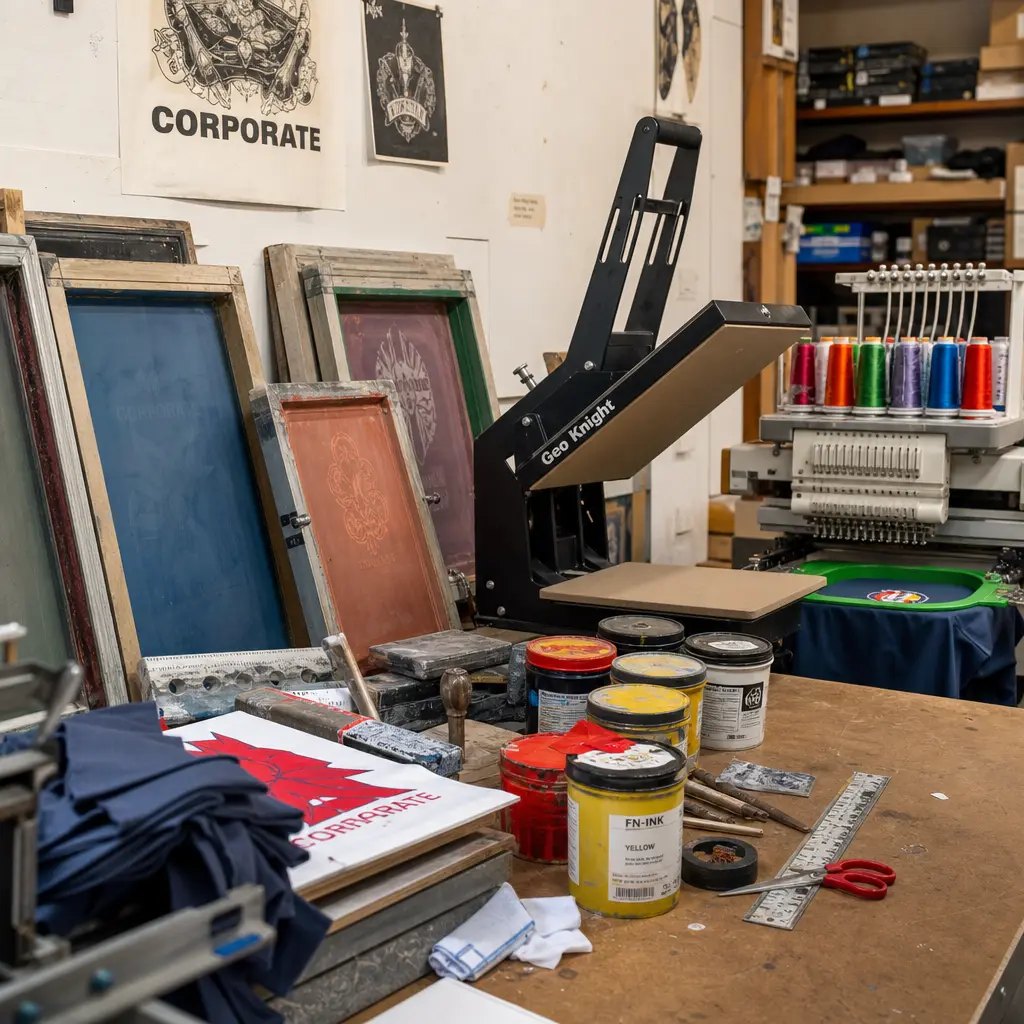
University artwork often includes strict identity rules, small lettering, seals, mascots, department names, and licensed color requirements. Canvas texture can reduce edge sharpness, especially on open-weave, heavily slubbed, or washed fabric. Screen printing remains the practical choice for many bulk bookstore messenger bags because it handles bold wordmarks and mascot graphics at efficient cost. For one- to three-color artwork on natural, black, navy, maroon, or dyed canvas, screen print is usually the first method to test.
Screen print quality depends on the actual canvas, ink system, mesh selection, curing, and artwork size. Heavy ink on coarse canvas can crack when the flap folds if curing or ink thickness is not controlled. Fine text may fill in or look rough on textured fabric. Buyers should request a print strike-off on the final fabric, not only a digital mockup. After curing, the print should be checked for dry rub transfer, edge clarity, registration, and moderate folding over the flap area.
Embroidery, woven patches, and sewn labels can create a more premium merchandise feel. Embroidery works best for smaller marks and simple logos, but dense stitch counts can pucker the flap, especially on thinner canvas. A woven patch is often better for detailed seals or small lettering because the detail is created in the patch rather than forced into the canvas. Patches also allow decoration to be produced separately, but they add placement tolerance, sewing labor, and another approval step. Rubber patches or leather-look patches can work for a lifestyle line, but they should match the retail price and campus brand rules.
Heat transfers and digital prints can reproduce complex artwork, gradients, or photographic effects, but textured canvas may make them look less integrated than screen print or patch decoration. If transfers are considered, test adhesion, peel resistance, edge lifting, and appearance after bending. For licensed bookstore goods, always coordinate artwork approvals early. A perfect production bag can still miss the shipping window if licensing comments arrive after printing screens, embroidery files, or patches have been produced.
- Screen print: best for bold university names, block logos, mascot silhouettes, and larger flap decoration.
- Embroidery: good for small premium marks, but test puckering, backing visibility, and stitch density.
- Woven patch: useful for detailed seals, small lettering, alumni capsules, or department marks requiring crisp detail.
- Sewn woven label: good for subtle branding, side seams, interior labels, and lower-risk decoration changes.
- Rubber or leather-look patch: consider for premium lifestyle styling only when cost and licensing requirements support it.
- Heat transfer: test adhesion, bending, peel resistance, and visual integration on the actual canvas finish before bulk approval.
Specify straps, closures, and hardware as functional materials
Straps and hardware are material decisions, not minor trim details. A messenger bag may have excellent canvas but still feel uncomfortable if the strap is too narrow or slips during use. For bookstore bags that may carry books and laptops, 38-50 mm webbing is usually more comfortable than a thin 25 mm strap. Cotton webbing matches a natural canvas story but can absorb moisture and show dirt. Polyester or polyester-cotton webbing can improve strength, color consistency, and abrasion resistance. If the strap is detachable, swivel hooks and D-rings must be strong enough for the intended load.
The adjuster must match the webbing width and thickness. A slider that is too loose allows the strap to lengthen during use. A slider that is too tight makes adjustment difficult and can abrade the webbing edge. Metal sliders support a premium look but should be checked for rust risk, plating quality, burrs, and smooth edges. Plastic hardware reduces weight and corrosion risk, but it may not support the desired retail appearance for alumni or premium merchandise. Buyers should define hardware finish, such as nickel, antique brass, matte black, or gunmetal, and ask whether it is stock or custom.
Closure choice affects both customer experience and production cost. Magnetic snaps look clean and are quiet, but they must be strong enough to stay closed when the bag is filled. Traditional buckles create an outdoor or heritage look, but they slow opening and closing. Decorative buckle straps combined with hidden magnetic snaps can provide the look without the inconvenience, but this adds cost and inspection points. Velcro is economical but noisy and collects lint. A zipper under the flap improves security for laptops and wallets but adds zipper grade, puller, and lining considerations.
Shoulder pads are worth considering for heavier bookstore bags. A simple sliding canvas or padded shoulder pad can improve comfort, especially for 14-16 oz bags positioned for daily student use. If included, the pad should not slide excessively, twist, or create a bulky carton shape. Strap ends should be folded and bar-tacked, not left with weak heat cuts or rough edges. Inspectors should check strap length range because a messenger bag must fit different body sizes and be wearable over coats during colder campus seasons.
- Specify strap width, material, color, length range, adjuster type, and whether a shoulder pad is included.
- Check strap slippage by loading the bag and hanging it for a practical period before approval.
- Use rust-resistant metal hardware or strong plastic hardware appropriate to the retail positioning.
- Define closure type clearly: magnetic snap, buckle, zipper under flap, Velcro, or combined decorative and functional closure.
- Inspect hardware for burrs, sharp edges, plating defects, loose rivets, and poor fit with selected webbing.
- Confirm strap comfort with a realistic load, not only by looking at the empty sample.
Understand the MOQ logic behind the quote
MOQ is not only a factory preference. It is often driven by fabric dye lots, webbing color, hardware finish, lining color, print setup, label production, patch production, and cutting efficiency. A natural canvas messenger bag with stock black webbing and a one-color screen print can usually run at a lower MOQ than a custom-dyed canvas bag with matching webbing, antique brass hardware, printed lining, woven patch, and individual barcoded retail packaging. Buyers get better quotes when the RFQ separates must-have specifications from optional upgrades.
For university bookstore programs, color assortment can create hidden MOQ problems. Ordering 300 pieces each in four body colors may be more difficult and expensive than ordering 1,200 pieces in one neutral body color with four different logos or patches. If the bookstore serves multiple departments, athletics, alumni, and general campus retail, consider standardizing the base construction and changing the decoration. This protects cutting efficiency, reduces material leftovers, and lowers the chance of shade variation across small dye lots.
MOQs also affect sample reliability. A supplier may make a prototype from available fabric because the custom-dyed bulk fabric has not been ordered yet. That is acceptable for shape development, but it does not prove final color, handfeel, shrinkage, or print behavior. If the final order quantity is close to the minimum dye lot, ask what happens if there is fabric waste, cutting loss, or shade rejection. A small production plan with no allowance for defects can put the shipment at risk.
Procurement teams should request a quote breakdown that identifies which elements drive minimums. If the MOQ problem is only a custom webbing color, switching to black or natural webbing may solve it without weakening the product. If the issue is a woven patch minimum, using the same patch across multiple bag colors or programs may help. If the issue is screen setup, grouping artwork versions by print color can reduce complexity. The goal is not simply to force a lower MOQ; it is to understand which specification choices create cost and lead-time consequences.
- Lower MOQ is easier with stock canvas colors, stock webbing, standard hardware, and simple screen print.
- Custom body color may require a fabric mill MOQ or surcharge even if the sewing factory accepts a small bag quantity.
- Custom webbing color, lining color, zipper tape, and hardware finish can each create separate minimums.
- Multiple artwork versions increase setup, proofing, licensing review, and production tracking time.
- A small trial order may be practical if the buyer accepts stock materials and fewer trim customizations.
- Ask whether excess material, shade rejects, or inspection defects can affect the final ship quantity.
Build a sample approval path that prevents bulk surprises
One sample is rarely enough for a new bookstore messenger bag. A strong development path starts with material direction: canvas weight, weave, finish, body color, lining, webbing, hardware, and decoration method. A swatch set is faster and cheaper than making a full bag from the wrong material. Once the material direction is approved, the prototype can confirm body size, gusset depth, flap length, pocket layout, strap angle, closure position, and overall handling. Only after those details are stable should the buyer approve a pre-production sample made from actual booked bulk materials.
A common problem is approving a beautiful showroom sample that uses available fabric and substitute trims. That sample is useful for concept discussion, but it should not become the bulk standard unless every component matches the quote and production plan. The pre-production sample should represent the final product: actual canvas, actual lining, final webbing, final hardware, final print or patch, final labels, and intended packing. If any component is substituted, the approval record should state what is different and when the final component will be approved.
The approval record matters as much as the sample. Procurement buyers should keep a measurement sheet, material card, artwork proof, color references, packing instruction, and written comments. If the bookstore has licensing requirements, build them into the timeline. Campus licensing may require artwork size, color, placement, hangtag language, or supplier compliance review. These approvals should happen before bulk decoration, not after finished bags are packed.
Sampling should also include practical use checks. Fill the sample, wear it crossbody and on one shoulder, open and close it repeatedly, adjust the strap, test pocket access, scan the barcode if retail labels are used, and place it on a shelf or peg as it will appear in-store. A sample that passes on a conference table may still fail as retail merchandise if the strap hangs awkwardly, the flap hides the logo when displayed, or the polybag label is placed where the bookstore cannot scan it.
- Swatch approval: fabric weight, weave, color, handfeel, lining, webbing, zipper, and hardware finish.
- Prototype approval: structure, dimensions, gusset depth, pocket layout, closure function, strap comfort, and display appearance.
- Print proof approval: artwork size, placement, color, curing, edge sharpness, registration, and rub resistance.
- Pre-production sample approval: actual bulk materials, final decoration, final labels, final packing, and final carton method.
- Keep one approved sample at the buyer side and one sealed sample at the factory for production reference.
- Document every approved change so the final inspection team knows which version is correct.
Set quote data so supplier comparisons are fair
A useful quote for canvas messenger bags should show more than unit price. It should identify the canvas weight, fabric finish, lining material, webbing width, hardware type, reinforcement method, decoration method, packing style, sample cost, MOQ, lead time, carton details, and payment terms. Without these details, procurement teams may compare a low-spec offer against a retail-quality offer and assume the price gap is supplier margin. The difference often appears later at sample stage, when schedules are tight and changing suppliers becomes difficult.
A quote should also clarify what is included. Screen charges, embroidery programming, patch setup, woven labels, hangtags, UPC stickers, inner polybags, desiccants, testing, and inspection support may be included by one supplier and excluded by another. If the bookstore distributor requires specific carton labels, assortment packing, or retail-ready barcode placement, include that in the RFQ. Otherwise a factory may quote standard export packing, and the importer or bookstore absorbs repacking cost later.
Landed cost matters for canvas messenger bags because material weight and carton cube can vary significantly. A heavier lined bag with buckles may have a better retail feel but ship fewer pieces per carton. A flat-packed bag may look better on arrival but occupy more space than a folded bag. If the buyer evaluates only FOB unit price, they may miss freight, warehouse handling, repacking, and defect replacement costs. For procurement comparison, request estimated carton dimensions, pieces per carton, net weight, gross weight, and packing photos at sample stage.
Fair comparison also requires a stable spec. If one supplier is quoting 12 oz unlined canvas with a 38 mm strap and another is quoting 16 oz lined canvas with a padded sleeve and metal hardware, they are not quoting the same product. Create a quote sheet with required and optional lines. Ask suppliers to price the base specification and then separately price upgrades, such as lining, laptop sleeve, woven patch, shoulder pad, or individual polybag. This gives the buyer room to adjust cost without losing visibility.
- Request estimated carton dimensions, pieces per carton, net weight, gross weight, and maximum carton weight.
- Separate product unit cost from screen, embroidery, patch, label, sample, testing, inspection, and special packing charges.
- Clarify whether the quote includes export carton, inner polybag, hangtag, barcode label, desiccant, and carton marks.
- State the incoterm clearly, such as EXW, FOB, CIF, or DDP if available from the supplier.
- Compare cost per usable retail unit, not only FOB unit price.
- Ask suppliers to price optional upgrades separately so cost decisions are visible and controlled.
Specification comparison for buyers
| Spec decision | Recommended option | When it fits | Buyer risk to check |
|---|---|---|---|
| Main canvas weight | 12 oz to 16 oz cotton canvas, about 407-542 GSM | University bookstore retail bags expected to carry books, tablets, apparel, and everyday campus items while still packing efficiently | Under 10 oz may collapse and feel promotional; over 18 oz increases sewing difficulty, freight cube, carton weight, and retail price pressure |
| Fabric construction | Plain weave canvas for standard retail programs; twill canvas for softer premium handfeel | Plain weave suits bookstore basics and clean logo edges; twill works for higher-priced campus lifestyle collections | Twill can skew during cutting, show shade variation more clearly, and need stronger spreading control |
| Fabric finish | Natural, dyed, washed, or enzyme-washed canvas depending on style target | Natural canvas suits heritage bookstore items; dyed canvas supports school colors; washed canvas creates a softer lifestyle look | Washed or enzyme-washed canvas can shrink, fade, and vary by lot unless tolerances are defined before sampling |
| Lining choice | Unlined for value styles; 210D polyester, cotton lining, or padded lining for laptop-oriented retail styles | Unlined works for simple book bags; lined versions protect seams, improve perceived quality, and support internal pockets | Lining adds labor and inspection points; loose lining can twist, catch notebooks, or interfere with zippers and closures |
| Reinforcement areas | Extra fabric patch, backing, or binding at strap anchors, flap corners, bottom stress points, pocket openings, and closure points | Needed when the bag is marketed for daily campus use rather than one-time event use | Decorative stitching without reinforcement gives a false sense of strength and can fail after repeated textbook loads |
| Closure method | Magnetic snaps for clean retail appearance; buckles for outdoor styling; zipper under flap for security; Velcro only for budget programs | Magnetic snaps suit many bookstores because they are quiet and easy; buckles suit rugged alumni or outdoor collections | Weak magnets pop open under load; Velcro collects lint and sounds cheap; zipper tape must not rub the lining or printed flap |
| Shoulder strap | 38-50 mm cotton or polyester-cotton webbing with adjustable slider and bar-tacked ends | Best balance for books and laptops without cutting into the shoulder during campus walking | Thin straps reduce cost but create comfort complaints; metal sliders must be rust-resistant and sized correctly to the webbing |
| Hardware grade | Nickel-free or rust-resistant metal hardware, or strong plastic hardware for budget/lighter styles | Metal hardware supports a premium retail look; plastic reduces weight and corrosion risk for lower-cost programs | Cheap plating can tarnish or rust; mismatched slider width causes strap slipping or twisting |
| Print method | Screen print for solid university marks; embroidery, woven patch, or sewn label for premium small logos | Screen print is efficient for bulk bookstore programs with one to three colors; patches preserve detail on seals | Heavy ink on coarse canvas can crack if curing is poor; embroidery on thin canvas can pucker; patches add placement tolerance |
Buyer checklist before sampling
- Define the selling use first: book carrier, laptop shoulder bag, campus gift, alumni retail item, event merchandise, orientation bundle, or department-specific retail item.
- Specify canvas weight in both oz and GSM, not only as 'heavy canvas', 'premium canvas', or 'thick cotton'.
- Confirm the fabric construction and finish: plain weave or twill, natural or dyed, unwashed or washed, and whether shrinkage has already been stabilized.
- State whether the bag is unlined, half-lined, fully lined, or padded, and whether internal seam binding is required on exposed seams.
- Provide finished dimensions with tolerances, including body height, width, gusset depth, flap size, strap length range, pocket measurements, and laptop sleeve size if applicable.
- Set reinforcement requirements at strap anchors, side seams, bottom corners, flap corners, closure points, and pocket openings.
- Choose closure type based on use: magnetic snap, buckle, zipper under flap, Velcro, or combined closure for laptop security.
- Define strap material, webbing width, adjustment hardware, shoulder pad requirement, bar-tack locations, and acceptable strap slippage.
- Choose print method based on artwork size, color count, fabric color, campus licensing rules, retail durability expectations, and actual canvas texture.
- Require a fabric swatch approval before the sales sample if campus color matching, handfeel, or natural canvas shade is important.
Factory quote questions to send
- What exact canvas weight will you quote in oz and GSM, and is it greige, natural, dyed, washed, enzyme-washed, or otherwise finished canvas?
- Is the quoted fabric stock fabric or custom dyed fabric, and what is the minimum dye lot for the body fabric and contrast panels?
- What shade tolerance do you propose for dyed canvas, webbing, lining, and printed logo colors, and how will lab dips or strike-offs be approved?
- What shrinkage allowance is expected after dyeing, washing, or finishing, and how will finished size be controlled in cutting and sewing?
- Which parts are reinforced: strap anchors, flap corners, bottom panel, pocket openings, closure backing, side gusset, and laptop sleeve seams?
- What webbing width, webbing material, strap length range, slider type, and hardware grade are included in the price?
- Is the bag unlined or lined, and if lined, what lining denier or fabric type, color, seam finish, and pocket construction are included?
- If there is a laptop sleeve, what device size is it designed for, is padding included, and what padding thickness and material are quoted?
- Which logo method is quoted, how many colors or stitches are included, what artwork size is assumed, and where is the decoration placed?
- Are screen charges, embroidery programming, patch molds, woven label setup, or color proofing included or quoted separately?
Quality-control points to confirm
- Measure fabric weight from actual bulk fabric using GSM testing instead of relying only on supplier description or catalog wording.
- Check fabric shade, weave consistency, slubs, stains, odor, and finishing handfeel against the approved swatch before cutting.
- Check finished bag dimensions with practical tolerances, usually plus or minus 0.5 cm for small pockets and plus or minus 1 cm for main body dimensions unless the buyer specifies otherwise.
- Perform strap pull testing at anchor points; bar tacks must be dense, centered, and sewn through reinforcement layers where specified.
- Inspect flap alignment and closure position with the bag filled lightly, not only when empty and flat on the table.
- Check closure strength by loading the bag to a realistic campus weight and confirming that magnets, buckles, or zippers stay functional without fabric tearing.
- Rub test printed logos after curing; ink should not transfer under normal dry rubbing and should not crack during moderate folding of the flap.
- Review embroidery or patch placement for centering, puckering, backing visibility, skipped stitches, and loose thread tails.
- Review stitching density, skipped stitches, loose threads, needle holes, seam puckering, seam allowance, and backstitch security on every visible panel.
- Check lining attachment, pocket shape, zipper movement, binding neatness, and whether notebooks or laptop corners catch on interior seams.