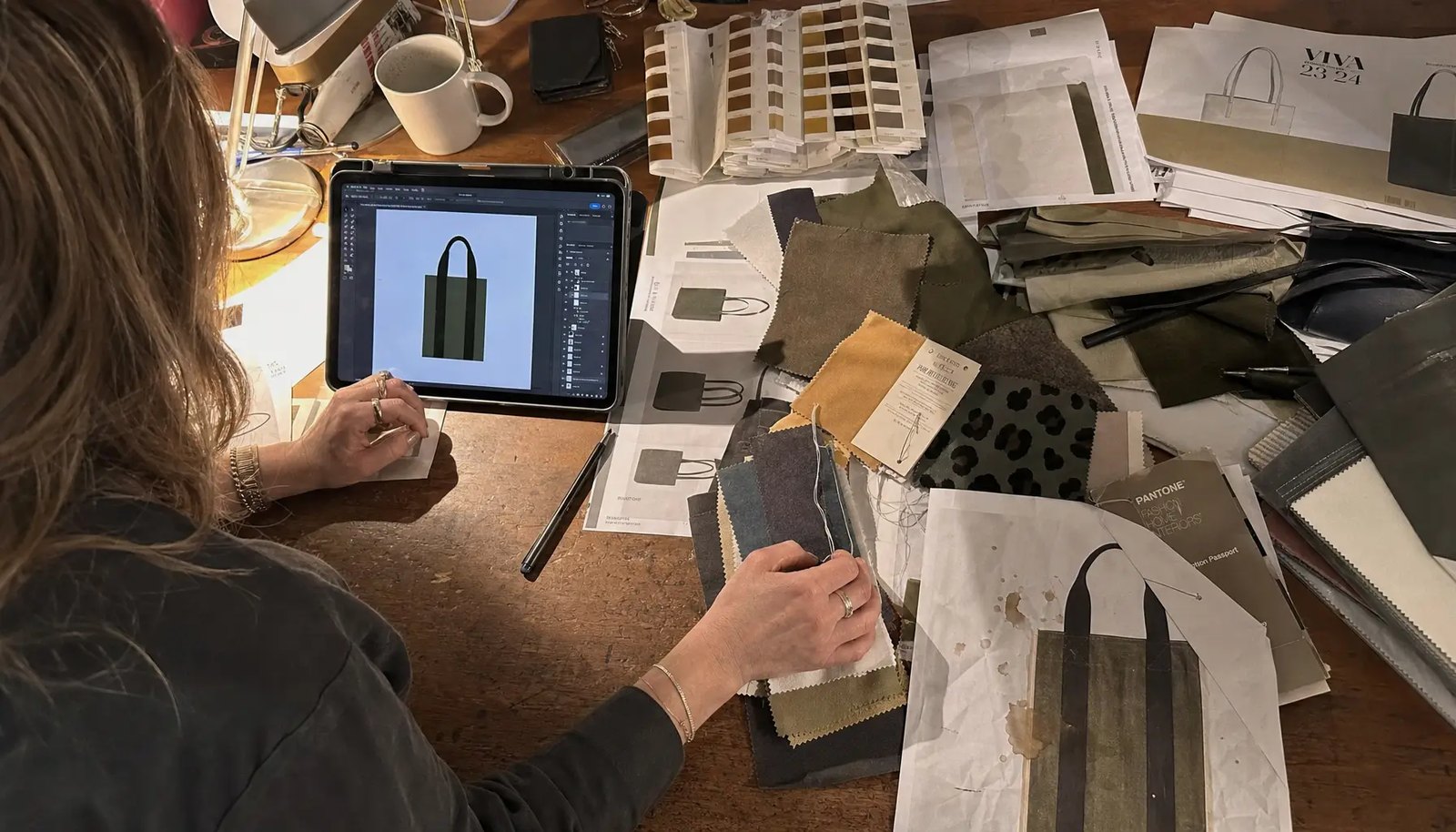
Begin With the Way the Bag Will Be Sold
For canvas messenger bags for university bookstores, logo placement is not just a graphic design choice. It is a retail, construction, and inspection decision. The mark has to look right when the bag is hanging on a peg, sitting on a lower shelf, photographed for an ecommerce listing, or worn crossbody by a student walking across campus. A flat mockup can hide all of that. A real messenger bag has a flap curve, seam bulk, snap pressure, strap tension, and soft cotton panels that move.
The buyer risk usually starts early. A sourcing team approves a clean digital image, then the pre-production sample arrives with the logo bending over the flap fold, sitting too close to edge stitching, or riding over a raised magnetic plate. Those problems are not only decoration problems. They happen when the artwork file is separated from the bag pattern, closure placement, pocket layout, and QC method.
Paid bookstore merchandise also needs a different visual balance from free promotional giveaways. A logo that is too large can make the bag feel like an event handout. A logo that is too small can disappear in store display. Many university bookstore programs land in the middle: a medium front-flap logo for school, bookstore, alumni, or department identity, supported by a woven side label, inside label, hangtag, or barcode label for additional information.
The strongest starting document is a closed-bag artwork sheet. It should show the real flap outline, visible panel, fold line, snap position, edge stitching, and measured safe decoration box. That sheet becomes useful across the whole order: quote comparison, sample approval, production setup, final inspection, and reorder control.
- Approve logo placement on a closed-bag view, not only on a flat open panel.
- State the logo owner: university, campus bookstore, alumni office, department, event, sponsor, or private-label line.
- Ask the supplier to mark the maximum decoration area before sample production.
- Judge placement with the bag hanging, shelf-standing, and lightly loaded with a notebook or tablet.
- Keep the primary retail look separate from hangtag, barcode, care label, and compliance information.
Size the Flap Before You Size the Logo
The front flap is usually the best primary logo location because it is visible in the most selling situations. It shows on racks, product thumbnails, shelf displays, and everyday wear. Still, the visible flap is not the same as the printable area. A 38 cm wide messenger bag does not give the buyer a 38 cm print zone. The safe zone depends on flap width, flap drop, corner radius, stitch line, closure position, and any pocket or reinforcement panel underneath.
For a standard bookstore messenger bag around 38 x 30 x 10 cm, the safe decoration box may be much smaller than the flap looks in a flat drawing. A practical logo area might be around 220-280 mm wide and 90-140 mm high, depending on construction. Smaller budget bags around 34 x 26 x 8 cm tighten the space quickly, especially with rounded flap corners. Premium styles around 40 x 32 x 12 cm may offer more face area, but padding, heavier canvas, and firmer closures can make the flap less forgiving.
Ask for a flap dieline, or at minimum a marked photo of the first sample. The drawing should identify the visible flap outline, edge stitch line, bottom flap edge, vertical center line, snap center, and safe logo box in millimeters. The logo should sit inside that box with enough clear space for normal sewing variation. Cotton panels can shift during cutting, printing, folding, and stitching, so art placed tight to a seam is difficult to repeat cleanly in bulk.
Readability deserves its own check. University artwork often includes crests, founding years, department names, sponsor marks, and bookstore descriptors. Fine detail that looks sharp in a PDF can fill in on woven cotton canvas. If the art contains small serif text, reversed lines, or thin outlines, request a strike-off or decoration sample at the intended logo size before approving the full pre-production sample.
- Budget style: about 34 x 26 x 8 cm, simpler flap, smaller safe decoration area, and lower retail price point.
- Standard bookstore style: about 38 x 30 x 10 cm, full flap, adjustable strap, inner pocket or divider, and medium front logo.
- Premium style: about 40 x 32 x 12 cm, heavier canvas, stronger hardware, possible padded compartment, and more structured flap.
- Keep logos at least 10-15 mm away from edge stitching unless the sample proves a closer placement is stable.
- Record logo width, height, X distance, and Y distance in millimeters on the approved artwork sheet.
Pick Canvas Weight for the Whole Program
Canvas weight affects more than perceived durability. It changes print surface, sewing efficiency, seam bulk, carton weight, freight volume, and the way the flap hangs. In university bookstore sourcing, heavier is sometimes treated as automatically better. It is not. The right fabric is the one that supports the intended retail price, expected student use, decoration method, and delivery budget without creating problems in sewing or packing.
A 10 oz cotton canvas, roughly 339 GSM, can work for event programs, orientation merchandise, or department orders where price and light shipping matter. It is easier to sew and pack, but it has less structure. A 12 oz canvas, roughly 407 GSM, is often the practical default for standard bookstore messenger bags because it balances strength, printability, handfeel, and carton efficiency. A 14 oz canvas, roughly 475 GSM, gives a firmer premium feel. A 16 oz canvas, roughly 542 GSM, should be used only when the buyer accepts heavier seams, higher freight volume, and a stiffer flap.
Finish matters as much as weight. Natural canvas may show cottonseed specks and shade variation. Many bookstore buyers like that material character, but it should be visible in the approved sample. Dyed canvas requires shade control across body panels, straps, pockets, and gussets. Washed or enzyme-washed canvas can create a softer campus look, but washing can change dimensions and reduce placement precision. Coated or laminated canvas may improve water resistance, yet it can affect ink adhesion, needle marks, and handfeel.
Ask suppliers to quote both oz and GSM, and ask what tolerance applies. Fabric mills work within practical ranges, and a shipment that is lighter or stiffer than the approved sample can change the finished bag. For a paid retail item, approve swatches and a sewn sample. A fabric description alone is too thin a basis for a purchase order.
- 10 oz canvas: useful for budget, event, and short-cycle programs where low cost and light shipping matter.
- 12 oz canvas: strong default for standard university bookstore messenger bags with screen print logos.
- 14 oz canvas: suitable for premium retail when a firmer body and heavier handfeel are part of the offer.
- 16 oz canvas: reserve for structured premium styles with confirmed sewing capability and freight allowance.
- Ask whether weight is quoted before or after washing, coating, or finishing.
- Compare flap behavior after folding and carton packing, not only handfeel on a flat swatch.
Match Decoration to the Actual Artwork
Spot-color screen printing is the workhorse for canvas messenger bags with university bookstore logos. It is efficient at bulk quantities, performs well on cotton canvas, and suits bold wordmarks, department names, event graphics, bookstore marks, and one- or two-color school color systems. A one-color navy, black, maroon, forest green, or white print often gives the cleanest mix of brand recognition, readability, and cost.
Screen printing still has limits on woven fabric. Thin lines can break. Small reversed text can fill in. Multi-color registration can shift slightly. As an RFQ starting point, ask the factory to confirm minimum line thickness and smallest readable text height for the exact canvas and ink system. Many simple canvas prints need lines around 0.5-0.7 mm or thicker and text around 5-6 mm high or larger, but the factory's physical test should set the final approval standard.
Embroidery can look elevated on compact marks, initials, or small crests, but it is not a universal upgrade. Dense embroidery on a flap can pucker the canvas, pull the panel, and change how the flap hangs. Very small lettering can lose clarity in thread. Woven labels and woven patches are useful when one bag body will serve several campuses or departments because they can carry detailed marks more consistently than direct print. Heat transfer can support full-color artwork, but it needs testing for adhesion, gloss, edge lifting, flexibility, and long-term appearance on the selected finish.
Avoid forcing the front flap to carry every brand requirement. A university seal might work best as a woven patch. A bookstore name may work better as a simple screen print. Sponsor marks, barcode information, price labels, and legal text often belong on hangtags or inside labels. Let each marking method do the job it handles best.
- Use screen print for bold bookstore logos, department marks, event artwork, and simple spot-color graphics.
- Use embroidery for compact marks where texture matters and small text is not critical.
- Use woven patches for detailed crests, premium badge styling, or repeatable licensed marks.
- Use woven side labels for private-label identity, collection naming, or subtle secondary branding.
- Use heat transfer only after testing adhesion, flexibility, edge finish, and gloss on the exact fabric.
- Avoid gradients, shadows, metallic effects, and tiny trademark text unless the factory proves them on a physical sample.
Write Placement Rules Inspectors Can Measure
Logo placement must be measurable. Words like centered, lower right, and front flap are helpful for conversation, but they are not enough for production or third-party inspection. A messenger flap may not be a perfect rectangle. Corners may be rounded. The flap may pull slightly after sewing. The buyer should define the visual intent and the measurement method in the same document.
For centered placement, define the vertical center line of the closed flap and the distance from the bottom flap edge or fold line to the logo center. For lower-right placement, define the distance from the right visible flap edge and the bottom flap edge to the logo bounding box or logo center. If the corner is rounded, use a stable straight reference such as the center line and bottom edge rather than the curve. If the snap is the design anchor, record the distance from snap center to logo center, and confirm that the snap does not create a bump through the artwork.
A practical placement tolerance for many sewn canvas messenger bags is +/-5 mm from the approved reference point. Some factories may hold tighter tolerances on simple constructions. Washed canvas, curved flaps, post-print sewing, or multi-color decoration may need more room. Registration tolerance is separate from placement tolerance. A one-color print avoids inter-color registration issues; a two- or three-color mark needs a signed standard for acceptable shift.
Define the measuring condition as well. For flap logos, measure with the bag closed and naturally smoothed, not stretched flat. That is how the customer will see it. If the bag is packed folded, confirm that the fold does not run through the logo and that the print is not pressed against metal hardware during transit.
- Centered flap logo: specify logo center on the closed flap vertical center line and Y distance from bottom edge or fold line.
- Lower-right logo: specify X distance from right visible flap edge and Y distance from bottom flap edge.
- Lower-center logo: useful when the upper flap bends or when shelf visibility matters more than formal symmetry.
- Side label: specify seam insertion point, label size, fold type, and distance from bottom or side seam.
- Inside label: specify material, text, origin information, care symbols, and position inside the main compartment.
- Hangtag: specify attachment point, string or plastic fastener, barcode orientation, and retail price sticker area.
Plan Versioning Before You Ask for MOQ
MOQ is rarely one number. A factory may have separate minimums for fabric purchasing, dyeing, cutting, logo decoration, woven labels, patches, hardware colors, zipper colors, and packing SKUs. An order of 1,000 pieces can be efficient when every bag uses the same body, strap, hardware, logo, and packing. The same 1,000 pieces can become costly when split across five campus logos, four fabric colors, two metal finishes, and separate barcode cartons.
University bookstore buyers often need versions for campuses, departments, alumni programs, or events. The efficient route is usually one shared bag body with controlled variation through screen print, woven label, patch, hangtag, or barcode sticker. That keeps cutting and sewing stable while allowing visible identity changes. If each group also wants its own canvas color, lining color, strap color, and hardware finish, expect more samples, higher costs, longer lead time, and more sorting risk.
Before presenting choices to internal stakeholders, ask the supplier to break MOQ down by finished style, fabric color, logo version, decoration color count, woven label version, patch version, hardware color, and packing SKU. This prevents late surprises, such as a small department logo requiring a separate screen charge or a custom woven patch having a higher minimum than the bag itself.
Reorders deserve early attention. Ask whether screens, embroidery files, woven label tooling, or patch molds are retained, and for how long. Ask whether leftover labels or patches can be stored for future orders, who owns them, and whether storage fees apply. Small details like these can make seasonal reorders smooth or unexpectedly expensive.
- Lowest complexity: one bag color, one hardware color, one logo, one packing method, and one carton label.
- Moderate complexity: one shared bag body with several screen print logo versions and separate barcode labels.
- Higher complexity: several fabric colors with different logo colors, hangtags, and SKU sorting.
- Highest risk: small quantities per campus with different canvas, trim, hardware, labels, patches, and packing.
- Ask for setup costs separately from unit price so small logo versions can be judged fairly.
- Confirm whether reorder artwork, screens, digitizing files, and label tooling are stored or remade.
Build a Quote Sheet That Prevents Guesswork
A fair quote comparison needs a controlled specification. Two suppliers can both quote a natural canvas messenger bag with a university logo and still be quoting very different products. One may include 10 oz canvas, a short flap, a non-adjustable strap, bulk packing, and a small one-color print. Another may include 12 oz canvas, inner divider, zipper pocket, reinforced strap anchors, retail hangtag, barcode sticker, and individual polybag. The lower unit price may simply be the lighter product.
The quote sheet should include finished dimensions, measurement tolerance, canvas weight in oz and GSM, fabric finish, body color, strap material and width, hardware material and finish, zipper size if used, pocket construction, closure type, flap size, decoration method, number of print colors, logo size, logo placement, label requirements, packing method, carton quantity, carton dimensions, net weight, gross weight, estimated CBM, sample cost, sample lead time, production lead time, payment term, and trade term.
Retail packing and labeling should be specified before the price is treated as final. Individual polybags, paper bands, hangtags, barcode stickers, price labels, carton labels, and SKU sorting all add cost, but they can reduce receiving labor for bookstore teams. If the order will ship to multiple stores or distribution centers, include destination labels and carton numbering requirements before production starts.
Ask for price tiers that match likely demand, such as 500, 1,000, 2,500, and 5,000 pieces. If the supplier suggests cost reductions, require each one line by line. Useful alternatives might include changing from 14 oz to 12 oz canvas, reducing print colors from two to one, using a standard hardware finish, or replacing embroidery with a woven label. An offer of cheaper fabric is not specific enough for procurement approval.
- Require exact fabric weight, finish, and color standard in every quote.
- Separate screen charges, digitizing fees, label tooling, patch tooling, sample fees, and freight from unit price.
- Ask for carton dimensions, pieces per carton, gross weight, net weight, and CBM before approving the order.
- State trade terms clearly, such as EXW, FOB, CIF, DDP, or the buyer's required sourcing term.
- Ask whether inspection, testing, barcode application, or special packing is included.
- Require all cost-saving alternatives to identify the specification change and the price impact.
Approve Samples as Store Inventory
Digital mockups are useful for early alignment, but they should not be the final approval for cotton canvas messenger bags. A pre-production sample should use final or production-equivalent canvas, strap, hardware, closure, thread, decoration method, label, and packing method. If the supplier substitutes any component for sampling, that substitution should be written down with a clear plan for final approval.
Review the sample the way bookstore staff and students will handle it. Put a notebook or tablet inside. Close the flap. Adjust the strap. Hang it on a peg. Set it on a shelf. View it from normal customer distance. Look for whether the logo stays level, whether the flap pulls to one side, whether a snap creates a visible bump, and whether the print remains readable when the bag is not perfectly flat.
Measurements should be recorded, not estimated by eye. Measure finished width, height, gusset, flap drop, strap width, strap adjustable length, pocket position, logo width, logo height, and logo placement. Compare the numbers with the spec sheet and write any approved change into the sample approval record. If the final logo is approved at 130 mm wide and 50 mm above the bottom flap edge, that measurement should appear on the artwork sheet and QC checklist.
Packing should also be tested at sample stage. Fold the strap as production will fold it. Place the hangtag where it will sit. Pack the bag in the intended polybag or paper band. Check whether the strap slider presses into the printed flap, whether dark ink touches light canvas, and whether a carton fold line runs through the logo. Many decoration problems begin as packing pressure problems.
- Approve the physical sample under consistent indoor light and, if possible, near normal store lighting.
- Check logo readability from about 1-2 meters, not only close up.
- Use a ruler to confirm logo placement from the approved reference point.
- Perform a basic dry rub check after print curing to catch obvious ink transfer.
- Review inside seams, pocket edges, zipper tape, snap backs, and strap anchors for roughness or stress.
- Photograph the signed sample from front, back, inside, side, logo close-up, and packed condition.
Set QC Standards Before Production Starts
Quality control should protect saleability, brand accuracy, and product function. For university bookstore orders, the highest-risk defects include wrong logo, wrong school name, unapproved color, missing required label, unsafe hardware, broken strap anchor, severe staining, and decoration defects visible at retail distance. These deserve a different response from trimable thread ends or small internal fabric slubs.
Classify defects before production as critical, major, or minor. Critical defects normally include wrong artwork, wrong licensed mark, missing country-of-origin label where required, unsafe sharp hardware, broken strap anchor, or a closure that makes the bag unusable. Major defects may include logo outside tolerance, poor print registration, visible ink smear, embroidery puckering, crooked flap, nonworking zipper, weak snap, obvious shade mismatch, or a severe packing crease through the logo. Minor defects may include short loose threads away from stress points, small internal slubs, or light wrinkles that do not affect retail appearance.
The approved pre-production sample is the inspection standard. Inspectors should pull units from different cartons and different positions in the shipment, not just the top layer. Logo placement should be measured on a closed bag from the reference points in the artwork sheet. Print color should be compared with the approved physical sample or agreed Pantone target under consistent lighting. If the buyer requires AQL inspection, the RFQ should state the inspection level and acceptable quality limits.
Functional checks belong in the same inspection. Open and close snaps, zippers, buckles, sliders, and closures. Pull strap anchors with reasonable hand force and inspect bar tacks or reinforcement stitches. Check that hardware has no sharp edges, corrosion, loose rivets, or finish mismatch. Review stitch consistency, skipped stitches, seam allowance, flap symmetry, and pocket corner reinforcement. A clean logo cannot rescue a bag that fails in daily campus use.
- Critical defects: wrong logo, wrong school name, missing required origin label, unsafe hardware, broken strap anchor, severe stain, or unusable closure.
- Major defects: logo outside tolerance, poor registration, visible print damage, crooked flap, nonworking zipper, weak snap, heavy puckering, or obvious shade mismatch.
- Minor defects: trimable thread ends, small internal fabric slubs, slight packing wrinkles, or minor loose threads away from stress points.
- Measure logo placement with the bag closed and naturally smoothed, not stretched flat.
- Inspect units across cartons, sizes, colors, logo versions, and packing positions.
- Use defect photos with a ruler or placement guide so rework decisions are based on evidence.
Protect the Logo Through Packing and Receiving
Packing is part of the logo placement guide because a correct print can still arrive damaged. Messenger bags are bulkier than totes, and the mix of flap, strap slider, buckle, snap, zipper pull, hangtag, and folded canvas creates pressure points. If cartons are over-compressed, a metal adjuster can dent the front flap or dark ink can transfer onto light canvas. These are preventable problems when folding and carton loading are specified before production.
For standard bookstore retail, individual polybags help keep products clean and easier to count. Some buyers prefer paper bands or reduced-plastic packing. Either approach can work if the logo is protected, the barcode remains scannable, and the receiving team can identify each SKU quickly. If the bag has a dark screen print on natural canvas, consider tissue or a protective sheet between the printed flap and any pressure surface. If the bag uses embroidery or a patch, avoid folding directly through the raised area.
Carton quantity should balance freight efficiency with product condition. A simple 10 oz messenger bag may pack more units per carton than a 14 oz padded style with metal hardware. A practical range is often 15-35 pieces per export carton depending on size, fabric weight, padding, and folding method, but the supplier should confirm actual carton dimensions, net weight, gross weight, and CBM from the approved sample. Overfilled cartons can look efficient on paper and still create markdown risk if flaps arrive creased or marked.
Store receiving details should be locked before mass production. Cartons should show PO number, SKU, color, logo version, quantity, carton number, and destination if required. Hangtags and barcode labels should be positioned consistently so bookstore staff do not need to open and rework every unit. For multi-campus programs, carton separation by logo version is essential. Mixed cartons create inventory trouble even when the bags themselves are made correctly.
- Fold straps consistently so sliders and buckles do not press into the front logo.
- Keep the printed flap away from metal hardware, sharp tag fasteners, and dark transfer surfaces.
- Use tissue or protective sheets when dark print may contact light canvas during compression.
- Do not run carton fold pressure directly through embroidery, patches, or thick ink areas.
- Confirm barcode scannability after packing, especially on hangtags or polybag stickers.
- Mark cartons by PO, SKU, logo version, color, quantity, carton number, and destination when applicable.
Specification comparison for buyers
| Spec decision | Recommended option | When it fits | Buyer risk to check |
|---|---|---|---|
| Primary logo location | Front flap, centered or lower-right; many retail messenger bag logos sit around 90-180 mm wide, but the approved safe area must come from the actual closed-bag sample | Best for university bookstores because the mark stays visible on pegs, shelves, product photos, and crossbody wear | Flap curve, snap location, rounded corners, edge stitching, and under-flap pocket seams can reduce the usable decoration area |
| Placement reference point | Define measurement from the closed flap vertical center line, bottom flap edge, side seam, or snap center; record X/Y distance in mm on the artwork sheet | Useful when sourcing teams, factories, decorators, and inspectors need one shared standard | Vague terms such as front center or lower right create disputes when the flap is curved, asymmetrical, or manually sewn |
| Placement tolerance | Use a practical placement tolerance such as +/-5 mm for most screen-printed sewn canvas bags; tighter tolerance should be confirmed by the factory before approval | Appropriate for cotton canvas panels that are cut, printed, folded, and sewn with normal production variation | Zero-tolerance language is not realistic for bulk sewn goods and can turn saleable inventory into a rejection argument |
| Canvas weight | 12 oz cotton canvas, approximately 407 GSM, for standard bookstore retail; 10 oz for budget/event programs; 14-16 oz for premium structured styles | Balances durability, print surface, sewing efficiency, carton weight, and campus retail price expectations | Heavier canvas increases seam bulk, freight volume, needle wear, and the chance that the flap does not lie flat under the logo |
| Decoration method | Spot-color screen print for most bookstore logos; woven label, woven patch, embroidery, or heat transfer only when the artwork and retail positioning justify it | Screen print suits bold university marks, department names, event logos, and one- or two-color designs | Fine serifs, gradients, tiny crest details, metallic inks, and coated Pantone expectations need physical sample approval on the exact fabric |
| Artwork limits | Specify vector art, Pantone references, logo width/height, minimum line thickness, minimum text height, clear space, and approved decoration box | Prevents the supplier from guessing how much detail can print cleanly on woven cotton canvas | Small reversed text, thin outlines below about 0.5-0.7 mm, and text under about 5-6 mm height may lose readability depending on ink and weave |
| Construction level | Full flap, reinforced strap anchors, adjustable strap, inner divider, zipper pocket, and secure closure when the target retail price supports them | Fits students carrying notebooks, tablets, chargers, course materials, and bookstore purchases | Magnetic snaps, zipper seams, reinforcement patches, and pocket mouths can sit behind or through the logo zone if not drawn early |
| MOQ structure | Hold one body fabric color and one hardware color where possible; vary only print, label, hangtag, or barcode for campus versions | Efficient for multi-campus bookstore groups, licensing distributors, alumni shops, and department merchandise programs | Splitting one order across many fabric colors, logo versions, trims, and packing SKUs creates small production lots and sorting risk |
| Retail packing | Individual polybag, paper band, or retail-ready hangtag; typically 15-35 pieces per export carton depending on size, canvas weight, padding, and hardware | Supports clean receiving, barcode control, SKU separation, and predictable shelf handling | Over-compression can crease the flap, mark the print, bend hangtags, deform padded sections, or press metal hardware into the logo |
Buyer checklist before sampling
- Identify the logo owner and approval path: university, bookstore, alumni association, department, sponsor, event, or private-label merchandise line.
- Confirm licensing rules before sampling, including clear space, minimum logo size, official colors, lockups, trademark notices, and prohibited modifications.
- Specify finished bag width, height, gusset, flap width, flap drop, strap width, strap length range, pocket layout, closure type, and hardware finish instead of quoting only one overall size.
- Request a closed-bag artwork sheet showing visible flap shape, edge stitching, snap center, flap fold line, seam allowances, pocket seams, and the maximum safe decoration box.
- Choose canvas weight by retail positioning: about 10 oz for budget/event programs, 12 oz for standard bookstore retail, 14 oz for premium, and 16 oz only when structure and freight budget support it.
- Ask for both oz and GSM on the quote; 12 oz cotton canvas is commonly around 407 GSM, but mill tolerance and finish can affect handfeel.
- Send vector artwork with Pantone references, logo dimensions, minimum line thickness, smallest text height, decoration method preference, and allowed placement tolerance.
- Define placement by X/Y measurements from agreed reference points such as flap bottom edge, vertical center line, side seam, or snap center.
- Approve the physical pre-production sample with the bag closed, lightly loaded, hanging, shelf-standing, and photographed from normal retail distance.
- Check that magnetic snaps, reinforcement patches, pocket seams, zipper tape, rivet backs, and flap folds do not sit behind or through the logo area.
Factory quote questions to send
- What finished dimensions do you recommend for university bookstore retail, and what is the actual closed-flap safe decoration area after stitching, snaps, fold line, and pocket seams?
- Can you provide a flap dieline or marked photo showing visible flap outline, safe print box, snap center, magnetic plate position, edge stitching, seam allowance, and measurement reference points?
- What canvas weight in oz and GSM is included in the quote, and what mill tolerance applies to fabric weight, shade, shrinkage, and width?
- Will the canvas be natural, bleached, dyed, washed, enzyme-washed, laminated, coated, pre-shrunk, or unwashed, and how does that finish affect logo adhesion and dimensions?
- Which decoration method do you recommend for our artwork: spot-color screen print, discharge print, heat transfer, embroidery, woven label, woven patch, leather patch, or a combination?
- For the recommended decoration method, what minimum line thickness, smallest readable text height, registration tolerance, color tolerance, and maximum logo size do you advise on this fabric?
- What MOQ applies per finished bag style, fabric color, canvas weight, logo design, print color count, woven label version, patch version, hardware color, and packing SKU?
- What unit price applies at 500, 1,000, 2,500, and 5,000 pieces, and what setup charges, digitizing fees, screen charges, label tooling, or sample fees are separate?
- What specification changes would reduce unit cost without changing the retail look, and can you list each change separately with the cost impact?
- Can you make a pre-production sample using final canvas, final strap, final hardware, final closure, final logo placement, final labels, and final packing method?
Quality-control points to confirm
- Logo size and X/Y placement match the approved artwork sheet, measured on a closed bag from the agreed reference points and within the signed tolerance, commonly +/-5 mm unless otherwise approved.
- Print does not cross flap seams, snap backs, reinforcement patches, pocket stitch lines, zipper tape, rivet backs, or sharp fold lines unless the signed sample specifically allows it.
- Screen print has clean edges, even ink deposit, no visible smearing, no unintended ink spots, no heavy pinholes at normal retail viewing distance, and acceptable handfeel.
- Printed logo passes a basic dry rub check after curing with no obvious transfer to a clean white cloth; any wet rub, wash, or abrasion requirement must be defined before quote.
- Print color is checked against the approved physical sample or Pantone target under consistent light, with realistic allowance for cotton canvas absorption and natural fabric shade.
- Embroidery has stable backing, no puckering around the mark, trimmed thread ends, no loose loops, consistent stitch density, and readable text at approved size.
- Woven labels and patches are straight, securely stitched, correctly oriented, and free of frayed edges, lifting corners, or wrong placement.
- Canvas weight, weave, shade, finish, and shrinkage behavior match the approved sample within the agreed mill tolerance across flap, body, strap, pocket, and gusset panels.
- Finished width, height, gusset depth, flap drop, pocket position, strap width, and strap adjustable length fall within approved measurement tolerance.
- Flap closes naturally when the bag is lightly loaded, and the logo remains visible, level, not sharply tilted, and not distorted by snap pull or seam tension.