Start With the Retail Math
A university bookstore should source canvas messenger bags from the shelf price backward. The bag may be a low-cost orientation item, a core student retail product, a department-branded collection, or a higher-margin alumni piece. Each job calls for different fabric weight, logo treatment, pocket structure, strap comfort, packing, and delivery timing. When the RFQ only says "canvas messenger bag with school logo," suppliers make quiet assumptions, and the lowest price often reflects the thinnest specification rather than the best buy.
Start with three numbers: intended retail price, target gross margin, and maximum landed cost. Landed cost should include the factory price, setup allocation, packaging, inspection, freight, duty or tax estimate, domestic delivery, and any relabeling or receiving cost. A bag that looks cheap on FOB terms may be expensive after air freight, oversized cartons, or rework. A bag with a slightly higher unit price may protect margin if it arrives retail-ready and avoids receiving problems.
Merchandising, licensing, procurement, finance, and receiving teams should agree on the buying target before supplier quotes are requested. Licensing may require exact logo color and placement. Receiving may require barcodes and carton marks. Finance may need setup costs separated from repeatable costs. The buyer's job is to make those requirements visible before the first quote, not after the sample has already been made.
- Define the selling channel and buyer: students, alumni, staff, event attendees, or department purchasers.
- Set target shelf price, gross margin, and maximum landed cost before selecting premium features.
- Separate factory unit cost from setup, freight, inspection, duty, and receiving cost.
- Ask every supplier to quote the same specification and quantity tiers.
- Use the pricing ladder to decide whether to pilot, replenish, or commit to an annual buy.
Choose Canvas by Use
Canvas weight is one of the biggest cost and quality decisions. A 10 oz canvas, roughly 320-350 GSM, may suit orientation packs, temporary promotions, and budget bins when the bag is compact and reinforced. A 12 oz canvas, around 390-420 GSM, is often the practical bookstore retail tier because it has better body, prints cleanly, and keeps freight weight manageable. A 14-16 oz canvas, about 450-540 GSM, can support a premium position, but it adds fabric cost, sewing time, carton weight, and sometimes higher defect risk at folded seams.
The RFQ should state both oz and GSM because suppliers use different measurement habits. It should also state when the weight is measured. Greige fabric, dyed fabric, washed fabric, and finished fabric can all differ. If one supplier quotes pre-wash canvas and another quotes finished goods, the comparison is not clean. Ask for a swatch and a finished sample from the actual quoted construction before approving the fabric tier.
Natural canvas is common because it is versatile and usually easier to source. It also shows cotton flecks, shade variation, and slubs more than dark dyed fabric. Dyed canvas can match campus colors, but lab dips, dye lots, and color tolerance must be controlled. Washed canvas feels softer and more retail-ready, yet it can make dimensions less exact. Organic or recycled cotton claims should be supported by certification if those claims appear on hangtags or product pages.
- Use 10 oz canvas for budget or short-term programs with controlled load expectations.
- Use 12 oz canvas for most bookstore retail messenger bags.
- Use 14-16 oz canvas for premium bags where shelf price supports the added cost.
- Clarify whether weight is measured before or after dyeing, washing, and finishing.
- Approve acceptable slubs, flecks, shade range, and hand feel during sample review.
Make the Pricing Ladder Useful
A bulk pricing plan should show how the same bag behaves at different quantities. Ask for 300, 500, 1000, and 3000 pieces per color, artwork, and specification. At 300 pieces, setup fees and sample costs matter more. At 1000 pieces, cutting, sewing, and trim buying should become more efficient. At 3000 pieces, freight planning, shade consistency, production control, and carton discipline become more important than squeezing a few cents from the sewing price.
The quote should separate repeatable costs from one-time charges. Screen charges, label setup, sample fees, trim tooling, and special packing setup should be visible. If the same logo is reordered, some setup costs may not repeat. If a woven label MOQ creates leftover labels, those labels may support a later reorder. If custom dyed fabric has a fabric MOQ, a small pilot may carry a higher allocation than a full semester buy.
For multi-campus systems or departments, ask whether blank bag production can be combined while decoration is separated. This may allow one fabric purchase and one sewing run with different logos applied afterward. The supplier should still separate artwork charges, strike-offs, carton marks, barcodes, and packing lists. That structure helps procurement compare the benefit of one combined purchase against the complexity of multiple SKUs.
- Quote 300 pieces for pilots, event runs, and first sell-through tests.
- Quote 500-1000 pieces for planned semester retail programs.
- Quote 3000 pieces for annual contracts, distributor orders, or multi-campus buys.
- Separate screens, labels, samples, packing, inspection, and freight assumptions.
- Ask which charges disappear or reduce on an exact reorder.
Specify Construction Clearly
Two messenger bags can look similar online but differ sharply in cost. Body width, height, gusset, flap depth, lining, binding, zipper pockets, laptop sleeve, internal organizer, rivets, closure type, strap adjuster, shoulder pad, and handle option all affect material usage and sewing time. A bag meant for notebooks and a sweatshirt does not need the same build as one marketed for textbooks, a laptop, charger, and bottle.
Finished measurements should be written as finished product dimensions, not pattern measurements. Width and height define the visible front panel and print area. Gusset controls capacity and carton volume. Flap depth affects whether the bag closes when loaded. Strap width and length range determine comfort for different users. If the product page or hangtag says laptop-friendly, define the intended laptop size and whether the protection is padded, lined, or only a general compartment.
Reinforcement deserves its own line in the specification. Students may load the bag heavily and carry it across campus daily. Strap anchors should use bartacks, box stitching, reinforced panels, rivets, binding, or another approved method. A quote with reinforced load points is not equivalent to a quote where the strap is simply caught in a side seam. Put the reinforcement method in the RFQ so the cheaper quote cannot hide a weaker build.
- State body width, body height, gusset width, flap depth, and finished tolerance.
- Define strap width, adjustable length range, webbing material, slider material, and shoulder pad.
- List every pocket: front slip, zipper pocket, internal pocket, laptop sleeve, pen slot, or bottle pocket.
- Choose closure type: magnetic snap, metal snap, buckle, zipper under flap, or hook-and-loop.
- Require reinforcement at strap anchors and other load-bearing points.
Match Decoration to Artwork
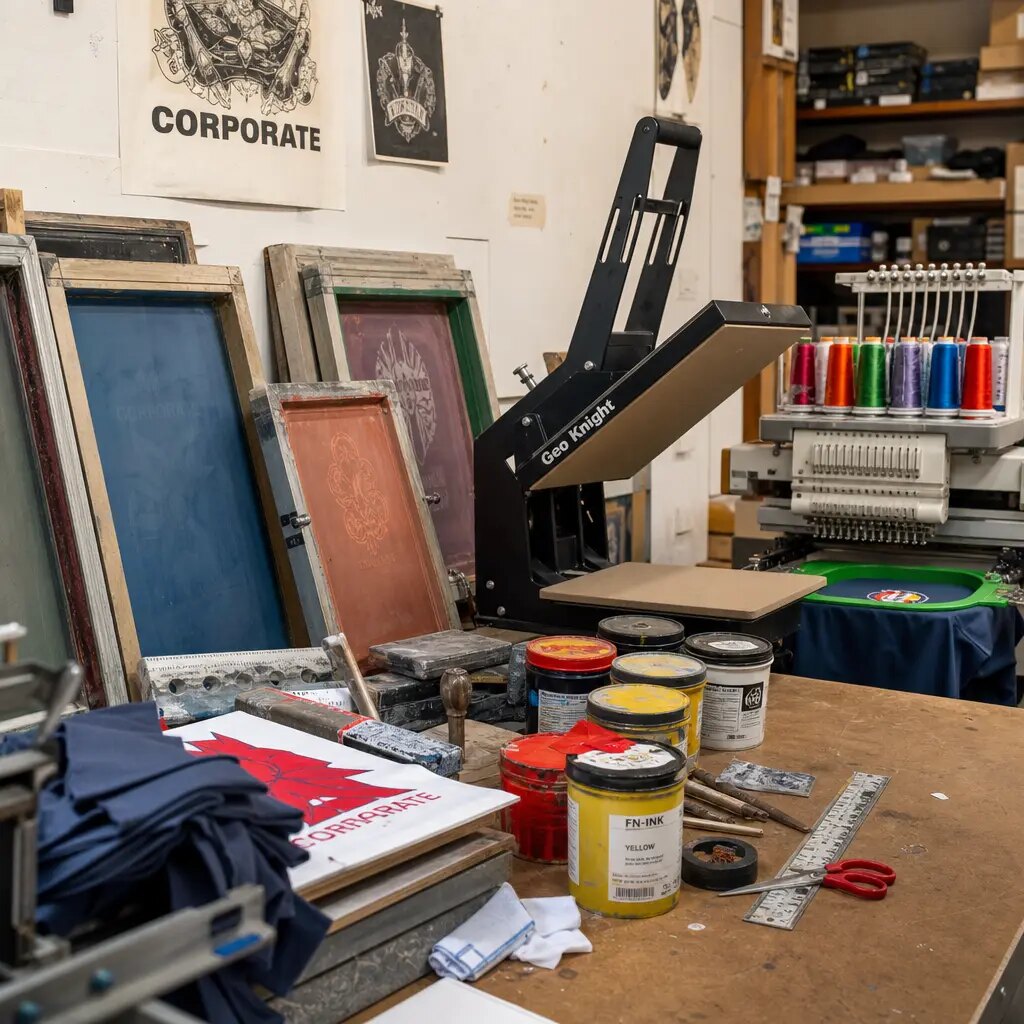
Decoration is often the main reason a bookstore bag sells, so it should not be treated as a final cosmetic step. Screen printing is usually efficient for campus names, simple logos, department marks, and one- to three-color artwork. Water-based ink can give a softer hand on cotton canvas, while other systems may improve opacity on darker fabric. The supplier should review the actual vector artwork before confirming price because small text, mascot detail, distressed effects, and gradients can change the print method and defect risk.
Print size and placement should be measurable. A large flap print has strong shelf impact but makes registration, opacity, and packing protection more important. A small corner mark is easier to execute but may not justify a higher retail price. Define print width, print height, distance from edges, color reference, and placement tolerance. Approve a strike-off on the actual canvas texture at final size before bulk printing.
Embroidery, woven labels, patches, and leather-look trims can support a premium collection, but each has separate cost logic. Embroidery cost depends on stitch count and can pucker lighter canvas. Woven labels require label artwork, MOQ, and attachment review. Patches require edge finish and colorfastness checks. University licensing may require clear space, trademark marks, exact color, and approval records, so the RFQ should identify who signs off before production.
- Use screen print for clean campus names, bookstore marks, and simple logos.
- Use embroidery only when fabric weight, backing, and stitch count support a clean result.
- Use woven labels or patches for subtle premium branding and repeat collections.
- Provide vector files, Pantone references, logo dimensions, and placement measurements.
- Require a physical strike-off for licensed or high-visibility artwork.
Request Supplier Evidence
Supplier comparison should be evidence-based, not price-only. A direct factory may provide stronger control over fabric purchase, sewing, sampling, printing coordination, and repeat production. A trading company may be useful when the buyer is consolidating many campus merchandise categories. Either route can work if the supplier proves control over this specific product. The question is not whether the quote sounds confident; it is whether the supplier can show how the bag will be made, checked, packed, and repeated.
Ask for real photos of similar messenger bags, including front flap, strap anchors, hardware, lining, pockets, print close-ups, labels, and packed cartons. Ask whether printing, washing, embroidery, inspection, and packing are in-house or subcontracted. If outside partners are used, ask who approves strike-offs and who pays for rework when registration, opacity, color, or placement fails.
Evidence also includes documents. Depending on the order and buyer requirements, request the business license, audit scope or audit summary, material compliance documents, restricted substance declarations where relevant, colorfastness reports for dyed or printed goods, and examples of inspection reports. For references, ask for past PO references only where the supplier is allowed to share them. A mature supplier can usually provide useful proof without exposing another buyer's confidential artwork or pricing.
- Request real production photos instead of relying only on mockups.
- Ask for close-ups of strap anchors, seams, pockets, hardware, labels, and print quality.
- Confirm which processes are in-house and which are outsourced.
- Review audit scope, compliance documents, and inspection report examples where applicable.
- Ask how the supplier records approved specs for reorders.
Control Samples Before Bulk
Use samples to remove ambiguity, not simply to admire the product. A development sample can confirm silhouette, size direction, pocket layout, strap comfort, and material choice. It may use available trims if the buyer is still deciding the product. A pre-production sample is different. It should use the final fabric, final color, final logo method, final hardware, final label, final dimensions, final sewing method, and intended packing.
Sample review should be measured, photographed, and written. Check body width, height, gusset, flap depth, strap width, strap length range, pocket openings, print size, print position, closure function, and packed appearance. Load the bag with realistic contents before approval. If the bag is expected to carry books and a laptop, test whether the strap slips, the flap closes, the anchors distort, or the body collapses awkwardly.
Corrections should be specific. Replace vague comments with measurable instructions such as "move logo 2 cm higher," "increase strap width to 3.8 cm," "add bartack at both strap anchors," or "change to stronger magnetic snap." Once approved, keep one reference sample with the supplier and one with the buyer or importer. Final inspection should compare bulk goods against that approved sample.
- Use development samples for design decisions and pre-production samples for final approval.
- Measure samples after sewing, pressing, and packing simulation.
- Test logo clarity and opacity on the actual canvas texture.
- Load the bag with realistic contents before approving strap and closure strength.
- Record corrections with photos, measurements, and version dates.
- Do not allow bulk cutting until sample, artwork, fabric, trim, and packing are frozen.
Set AQL and Defect Rules
Quality control should be written before production begins. For bookstore retail, the order is not acceptable merely because the quantity is correct. Goods must be saleable, clean, correctly branded, functional, scannable, and easy for receiving teams to process. A practical inspection plan defines sampling level, AQL limits, defect categories, measurement tolerance, and the action required if inspection fails.
A common starting point is ANSI/ASQ Z1.4 or ISO 2859-1, General Inspection Level II, with Critical 0, Major 2.5, and Minor 4.0. Buyers can adjust those levels based on brand risk, order size, and licensed artwork requirements. Critical defects should include wrong logo, unsafe hardware, mildew odor, broken load-bearing strap anchor, unapproved material substitution, missing legally required warning, and mixed licensed artwork. Major defects should include visible stains, severe shade mismatch, wrong dimensions outside tolerance, unreadable barcode, weak closure, print cracking, and incorrect carton marks.
Pass/fail rules need to be clear. If one critical defect is found, the lot fails. If major or minor defects exceed the AQL acceptance number for the sample size, the lot fails or requires sorting and reinspection. The purchase order should state who pays for reinspection, repair, replacement, or discount when defects are confirmed. That language gives the supplier a commercial reason to control quality before the inspector arrives.
- Use approved pre-production sample as the construction and appearance standard.
- Set Critical 0 for safety, wrong artwork, unapproved substitution, and severe functional failures.
- Classify barcode, SKU, carton mark, and licensed logo errors as major or critical depending on impact.
- Check dimensions after sewing and pressing using agreed tolerances.
- Require corrective action, sorting, replacement, or reinspection terms in the PO.
Plan Packing and Receiving
Packing is part of the product specification. Natural and light canvas can pick up dust, humidity marks, strap pressure lines, and print transfer during long-distance shipping. Individual polybags offer strong protection, but some university buyers prefer reduced-plastic options such as paper belly bands. The right decision depends on sustainability goals, transit route, fabric color, print method, warehouse handling, and whether bags will go straight to shelves or sit in storage.
If polybags are used, confirm bag thickness, warning text where required, ventilation holes if needed, barcode placement, and whether the bag is folded in a way that avoids permanent creases. If belly bands are used, test whether the exposed canvas stays clean and whether the band keeps the bag presentable after carton handling. Ask for a packed sample or packing photos before bulk goods are sealed.
Carton data affects both freight and receiving labor. The quote should include pieces per carton, carton dimensions, gross weight, net weight, and total CBM for each order tier. Cartons should be liftable, strong enough for export handling, and not so compressed that flaps, straps, or prints are damaged. Carton marks should show PO number, SKU, color, artwork name, quantity, carton number, gross weight, net weight, and destination when required.
- Use individual protection for natural, white, light dyed, or large printed bags.
- Approve folding method to avoid flap, strap, and print creases.
- Confirm barcode scan quality and placement before production packing.
- Avoid mixed-SKU cartons unless receiving has approved the plan.
- Require clear carton marks for PO, SKU, color, artwork, quantity, and destination.
- Use carton CBM and weight to compare freight options accurately.
Work Backward From Campus Dates
University bookstore demand is tied to fixed dates: orientation, semester start, homecoming, graduation, admitted-student events, alumni weekends, and department launches. Build the schedule backward from the required receiving date. A stock natural canvas bag with one print can move faster than a dyed, washed, lined, multi-pocket bag with custom labels and metal hardware. The RFQ should separate sample lead time, approval time, material lead time, production time, inspection, export handling, transit, customs, and domestic delivery.
The common mistake is counting only sewing days. A realistic calendar includes artwork review, licensing approval, swatch review, development sample, sample shipping, buyer comments, correction sample if needed, pre-production approval, material purchase, cutting, decoration, sewing, trimming, packing, final inspection, corrective action, freight booking, and receiving. Each approval needs an owner and a deadline. If the university takes a week to approve artwork, that week belongs in the schedule.
Reorders should be planned while the pilot is being sold. If a bookstore buys 300 pieces first and may reorder 1000, the team should know the latest reorder date that still hits the next retail window. Ask whether fabric, labels, screens, or trims can be held, and for how long. For dyed canvas, discuss shade control early because a later reorder may not match the first lot unless material planning is deliberate.
- Separate development sample, pre-production sample, bulk production, inspection, and freight lead times.
- Add approval buffer for licensing, merchandising, finance, and barcode setup.
- Confirm whether fabric is stock, dyed-to-order, washed-to-order, or reserved for reorder.
- Book inspection early enough to allow repair, replacement, or sorting.
- Set reorder decision dates before the pilot sells out.
- Keep approved samples, artwork files, and spec sheets ready for repeat orders.
Specification comparison for buyers
| Pricing plan line | 300 pcs pilot | 1000 pcs semester buy | Buyer note |
|---|---|---|---|
| FOB unit price example | Higher unit cost because setup, cutting, printing, and admin are spread over fewer bags | Lower unit cost if the same fabric, logo, hardware, and packing are held constant | Compare the same specification only; a cheaper quote may remove pockets, reinforcement, or packing |
| One-time setup charges | Screen charge, label setup, sample cost, and trim setup can materially affect cost per unit | Some setup charges may not repeat if artwork, screens, and labels are reused | Ask suppliers to separate one-time and repeatable costs so reorders are not overpriced |
| Estimated freight and duty basis | Courier or air may be tempting for urgent campus dates but can erase margin | Sea or consolidated freight may work when receiving dates are planned early | Use carton CBM, gross weight, and destination terms before approving the buy |
| Illustrative landed cost worksheet | FOB unit + allocated setup + freight per unit + duty/tax estimate + domestic delivery + inspection allocation | FOB unit + lower setup allocation + planned freight + receiving/labeling allowance | Finance should model landed cost, not only factory unit price |
| Retail margin check | Useful for sell-through testing, department gifts, and limited runs, but margin may be tighter | Better for core bookstore retail where shelf price and reorder timing are known | Set target landed cost from the intended shelf price before adding premium trims |
| Artwork versions | One campus logo keeps the pilot simple; multiple departments can multiply screens and packing work | Combined blank production may reduce sewing cost while separate decoration stays visible | Ask whether different logos can share the same base bag production run |
| Supplier evidence required | Finished sample, real production photos, fabric swatch, carton estimate, and clear quote breakdown | Same evidence plus inspection history, reorder control process, and material reservation plan | Do not treat a spreadsheet price as complete supplier qualification |
| QC plan | Final random inspection with extra checks for logo, straps, closures, barcodes, and carton marks | AQL inspection plus production photos, inline checks, and SKU/carton verification | Tie shipment release to inspection result and corrective action terms |
| Best use | First bookstore test, orientation bundle, small department program, or alumni event | Semester stock, multi-campus purchasing, online store replenishment, or annual program | The right tier depends on sell-through confidence, cash flow, storage, and delivery window |
Buyer checklist before sampling
- Define the retail job: bookstore shelf item, online store product, orientation pack, department merchandise, alumni gift, or staff issue.
- Set target shelf price, target gross margin, and maximum landed cost before negotiating trims or logo method.
- Choose a canvas tier by use: 10 oz for budget programs, 12 oz for core retail, 14-16 oz for premium daily-carry bags.
- Write finished dimensions for body, gusset, flap, strap width, strap length range, pocket openings, and laptop sleeve if included.
- State decoration method, logo size, Pantone references, placement tolerance, licensing approval process, and whether a strike-off is required.
- Ask for 300, 500, 1000, and 3000 piece pricing at the same specification, with setup charges separated from repeatable unit costs.
- Require supplier evidence: real production photos, material swatches, trim photos, sample history, audit scope, compliance documents, and inspection report examples.
- Request carton quantity, carton dimensions, gross weight, net weight, total CBM, barcode placement, carton marks, and mixed-SKU rules.
- Approve a pre-production sample using final fabric, hardware, logo, label, packing, and construction before bulk cutting.
- Set AQL level, defect definitions, measurement tolerances, pass/fail rules, and corrective action terms before paying the deposit.
Factory quote questions to send
- What canvas weight are you quoting in both oz and GSM, and is it measured before dyeing, after dyeing, after washing, or on finished goods?
- Can you quote 300, 500, 1000, and 3000 pieces using the exact same construction, fabric, logo size, packing, and carton plan?
- Which costs are one-time charges, and which repeat on reorder: screens, label setup, sample fees, artwork handling, packing setup, and trim tooling?
- What is the finished body size, gusset width, flap depth, strap width, strap length range, pocket layout, lining, closure, and reinforcement method?
- Can you provide photos of similar messenger bags you produced, including strap anchors, interior pockets, hardware, print close-ups, labels, and packed cartons?
- Do you print, embroider, wash, inspect, and pack in-house, or are those processes outsourced? Who owns rework if a subcontracted process fails?
- What documents can you provide: business license, audit summary or scope, material compliance documents, colorfastness reports, inspection report examples, and past PO references where permitted?
- What is the sample cost and lead time for a pre-production sample made with final fabric, final trim, final logo method, and final packing?
- What AQL standard do you propose for final inspection, and how will critical, major, and minor defects be classified?
- What are the carton dimensions, pieces per carton, gross weight, net weight, and CBM for each quantity tier and packing method?
Quality-control points to confirm
- Use an agreed AQL plan, commonly General Inspection Level II, with acceptance limits such as Critical 0, Major 2.5, and Minor 4.0 unless the buyer sets stricter rules.
- Critical defects should fail the inspection immediately: wrong university logo, unsafe sharp hardware, mildew odor, unapproved material substitution, broken strap anchor, illegal or missing required label, or mixed licensed artwork.
- Major defects should include visible stains on front panels, wrong dimensions outside tolerance, weak closures, loose rivets, unreadable barcode, print cracking, severe shade mismatch, skipped stitching at stress points, or incorrect carton marks.
- Minor defects may include light thread ends, small approved-range slubs, slight removable dust, or small internal sewing imperfections that do not affect saleability or function.
- Finished fabric weight should stay within the agreed tolerance, commonly plus or minus 5 percent, checked from production goods rather than only from supplier swatches.
- Finished measurements should be checked after sewing and pressing, with typical tolerance of plus or minus 0.5 cm for small details and plus or minus 1 cm for main body dimensions.
- Print position should match the approved sample, with tilt, off-center placement, bleeding, poor opacity, registration error, contamination, or transfer treated according to defect severity.
- Strap anchors should pass the agreed construction check, such as bartack, box stitch, rivet, reinforced panel, or equivalent method shown on the approved sample.
- Hardware should open, close, slide, and hold tension without sharp edges, rust marks, plating scratches, weak magnets, loose snaps, cracked plastic, or slipping adjusters.
- Packing inspection should confirm SKU separation, carton quantity, barcode scan, carton marks, moisture protection, folding method, and absence of print transfer or strap dents.