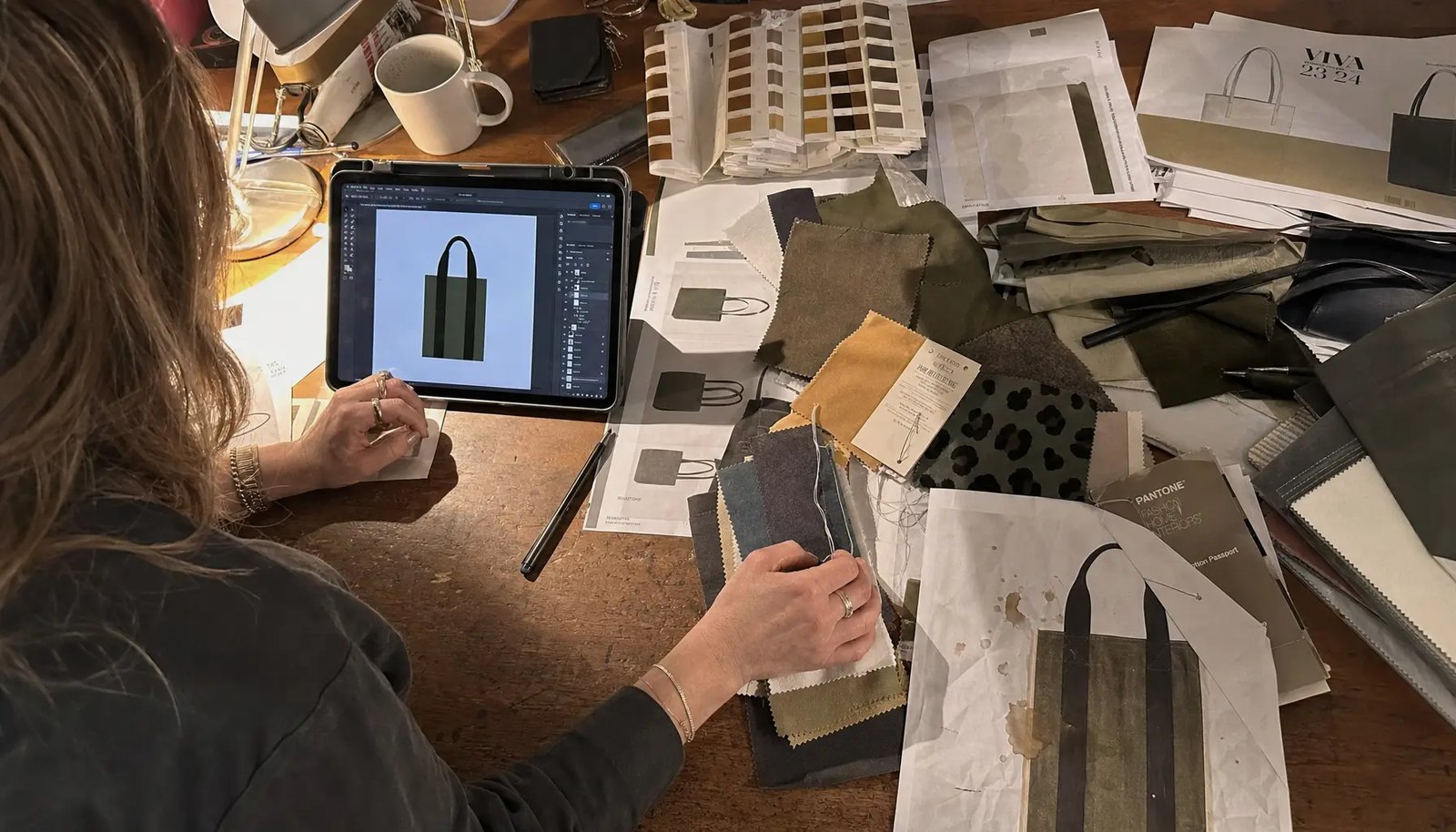
Why print proofing matters more than the artwork file
For trade show exhibitors, a canvas messenger bag is not just a giveaway. It is a walking brand board that gets photographed, stuffed with literature, and carried through crowded aisles. That means the real failure point is often not the logo file itself, but how the logo lands on the fabric once the bag is sewn, folded, and packed.
Most disputes happen after the buyer assumed the supplier would place the print by eye. A production-ready proof should translate the artwork into a physical placement decision: exact distance from seam, exact print size, and exact color reference on the chosen canvas weight. If those details are vague, the supplier quote cannot be compared fairly and the final bag can still look wrong even when the logo file is technically correct.
- Treat the proof as a manufacturing instruction, not a design preview.
- Lock down placement relative to seams, pockets, zippers, and top edge.
- Use one approved reference sample so sales, production, and QC read the same standard.
Choose the canvas weight based on how the bag will be used
Canvas messenger bags for trade show exhibitors usually sit in a narrow range: light enough to distribute in volume, but sturdy enough to survive a day of samples and brochures. In practical sourcing terms, 10 oz can work for a simple handout bag, 12 oz is the most common balanced choice, and 14 oz gives a more premium hand-feel and better structure for heavier inserts.
The wrong weight creates visible problems in print proofing. Thin fabric shows seam distortion and can make the logo look wavy after sewing. Heavy fabric costs more in material, may need stronger needles and different stitch settings, and can increase carton weight. Buyers should compare quoted GSM or ounce weight on the same basis, because one supplier’s 12 oz may not behave like another supplier’s 12 oz if yarn density and finishing differ.
- 10 oz: budget-friendly, lighter shipment, best for light literature.
- 12 oz: balanced option for most exhibitors and repeat-use bags.
- 14 oz: better body, stronger hand-feel, often used for premium campaigns or heavier contents.
- Ask whether the fabric is single-ply or double-layer at stress points.
Print method drives both proof quality and quote structure
For canvas messenger bags, screen print remains the default choice when the logo is bold, one to three colors, and must read clearly from a distance. It keeps unit cost controlled at volume and usually gives the cleanest branding for trade show use. Heat transfer is useful when the artwork has more colors or the order is small, but the surface feel and long-term durability should be tested before approval.
Embroidery can work on small marks or premium collections, but it is not always the best answer for large logos on canvas messenger bags. Stitch density can pull the fabric, and thin line art may disappear. Buyers should separate decoration cost from sewing cost in the quote, because some suppliers bundle the logo method while others quote it separately by color, size, and set-up.
- Screen print: best for flat, visible logos and stable pricing at volume.
- Heat transfer: useful for multicolor graphics, but verify wash rub and crack resistance.
- Embroidery: premium look, but only practical for compact logo areas and thicker canvas.
- Always approve one physical proof under the same fabric weight that the bulk order will use.
What a usable proof should show before you approve production
A real print proof should show more than a centered logo on a white rectangle. It should show the actual bag panel, the chosen fabric color, the exact logo size, and the relation to functional features such as pocket seams and top opening. If the supplier only sends a flat artwork image, you still do not know how the print will sit on a sewn panel or whether the seam will cut into the mark.
For buyer approval, insist on one of three proof levels: a digital layout with measurements, a printed strike-off on the same canvas, or a sewn pre-production sample. The more sensitive the artwork is to placement, the more valuable the sewn sample becomes. This matters most when the trade show order includes brand-sensitive colors, small text, or a logo that must sit in a photo-friendly position on the front panel.
- Proof should identify panel location, print width, and height in millimeters or inches.
- Color reference should be tied to an approved Pantone or a physical master sample.
- If the supplier proposes a substitute ink or transfer film, require a new proof.
Supplier options and sourcing routes are not interchangeable
The same canvas messenger bags quote can look cheaper or more expensive depending on the sourcing route behind it. A direct factory usually gives better control over fabric, sewing, and print alignment, while a trading company may offer more speed if they already have a stock base bag. For procurement teams, the key question is not who is easiest to email, but who can control the production variables that affect proof quality.
When comparing supplier options, make sure the quote tells you whether the bag is made from a standard stock pattern, a modified stock pattern, or a fully custom build. Those routes have different MOQ logic, lead times, and defect risks. A stock bag with a custom print can be fast, but the logo area may be constrained. A fully custom bag gives more control, but setup and sample iterations add time.
- Direct factory: stronger on spec control, sample accuracy, and repeat orders.
- Trading route: may be faster for simple stock bags, but check hidden spec changes.
- Hybrid sourcing: base bag stocked, print done separately, useful for urgent events but requires close QC.
Comparison table: choosing the right sourcing route for trade show bags
Use the route comparison below to read quotes correctly. The cheapest line item is not always the best landed cost once you include sample cycles, print rework, freight weight, and replacement risk. For trade show deadlines, the safest source is the one that can prove fabric, print, and packing consistency before mass production starts.
Define the measurable checks around strap pull, buckle function, flap alignment, pocket zipper cycle, lining seam check, hardware corrosion, and carton rub review. Add tolerance ranges only where the buyer truly cares, and ask for photos that show the measurement point, not just a finished product overview.
- Write decisions in measurable language, not only descriptive wording.
- Ask for sample photos plus one physical approval sample for important orders.
- Keep quotation, sample approval, and inspection notes tied to the same spec version.
MOQ logic, setup cost, and what makes one quote look cheaper
Canvas messenger bags usually become economical at modest volume because sewing, print setup, and packing are the real cost drivers. If the order has one simple one-color logo, the factory can spread screen setup across more pieces. If the artwork uses multiple colors, small text, or special placement, the setup cost rises and the MOQ tends to increase because the factory needs enough quantity to justify the print preparation.
When you compare quotes, separate the quote into base bag cost, decoration cost, sample cost, packing cost, and freight-ready carton spec. A supplier with a low unit price may be excluding handle reinforcement, side labeling, or a more durable print method. For trade show use, that hidden gap can be more expensive than paying a slightly higher unit price upfront.
- Simple screen print on a standard stock bag can often support lower MOQ.
- Custom fabric color, zipper changes, or lining usually push MOQ higher.
- Ask whether sample fees are refundable or credited only after bulk order placement.
Sample approval should test the bag like a trade show attendee will use it
The most useful sample check is not visual only. Fill the bag with realistic inserts: brochures, notebook, sample product, and a small bottle or catalog if relevant. Then check whether the logo is still visible when the bag is loaded, whether handles sit comfortably on the shoulder, and whether the print is distorted by seam tension. A bag that looks perfect empty can still fail after 30 minutes of use on a show floor.
Pre-production samples should be judged against the same acceptance criteria used for mass inspection. That includes dimensions, print placement, handle length, seam strength, and carton packing method if the sample is intended to represent export packing. If the supplier wants approval from a loose prototype but plans bulk production on a different fabric lot or print method, the sample is not a valid control point.
- Load test the sample with realistic content weight.
- View print under indoor show lighting, not only daylight.
- Take photos of the approved sample from front, side, and top so both sides reference the same standard.
Packing and lead time can break a trade show schedule
For event buyers, schedule risk is often larger than decoration risk. Canvas messenger bags are bulky, and poor carton planning increases freight cost and can compress the print before the product reaches the venue. Flat stacking is usually the most efficient route for freight, but it needs disciplined folding so the logo area does not crease too sharply. If the bag has a front pocket or flap, the fold line should avoid the printed zone whenever possible.
Lead time should be measured from sample approval, not from the first email. A typical order may require fabric booking, print screen creation, sewing, finishing, inspection, and packing. If the supplier is still waiting on artwork clarification after the quote stage, the production clock has not really started. Buyers should leave time for one revision round because small adjustments to print placement are common after the physical sample arrives.
- State carton quantity, carton size target, and whether master cartons need barcodes or item labels.
- Request pack photos before shipment if the order is event-critical.
- Hold buffer time for one approved sample revision if the logo position is sensitive.
Inspection thresholds that prevent expensive post-shipment surprises
A good QC standard for canvas messenger bags should reflect visible trade show use, not luxury handbag inspection. Focus on what attendees will actually notice: print alignment, readability, bag shape, seam finish, and whether the bag can carry event literature without stressing the seams. It is better to reject a batch for obvious logo shift than to accept a technically sewn bag that looks inconsistent across the booth.
Set acceptance thresholds before production begins. For example, define an allowed placement tolerance from the seam or edge, define the acceptable visual print variation under normal viewing distance, and define what counts as a severe defect versus a minor sewing imperfection. This keeps factory and buyer aligned when the first shipment is inspected.
- Check front-panel logo placement against a ruler or template, not by eye alone.
- Pull random units to confirm handle stitching and bottom reinforcement.
- Verify carton marks match PO details, destination, and colorway before dispatch.
Specification comparison for buyers
| Spec decision | Recommended option | When it fits | Buyer risk to check |
|---|---|---|---|
| Fabric weight | 12 oz canvas for standard giveaway use; 14 oz if the bag carries catalogs, samples, or daily reuse | Trade show exhibitors who want a bag that feels substantial without becoming too heavy in shipment | Light canvas can wrinkle, distort under print, and look cheap under booth lighting |
| Print method | Screen print for bold logos, heat transfer for short runs with more colors, embroidery only for small premium marks | When the artwork is simple and the brand wants clear visibility at event distance | Fine lines, gradients, and small text can fill in or lose registration |
| Bag structure | Unlined body with reinforced bottom and stress points; add lining only if inside appearance matters | For budget-controlled orders where durability matters more than a polished interior | No reinforcement at handles or seams leads to tearing after event use |
| Closure style | Open top for fast handout or zip closure if the bag will hold valuables and booth materials | Open top suits fast distribution; zipper suits higher perceived value and repeat use | A zipper adds cost, lead time, and more inspection points for alignment |
| Handle length | Shoulder-friendly 22–26 in total drop depending on bag height and body width | When attendees will carry brochures across the venue or commute afterward | Too short handles create complaints; too long handles can twist and rub against print |
| Supplier route | Direct factory with in-house sample room and print control | When the order needs proof approval, repeatability, and better quote transparency | Trading layers can hide fabric origin, print method, and packing changes |
| MOQ logic | 500–1,000 pcs for simple screen print; 1,000+ for custom color fabric or complex construction | For buyers balancing setup cost with event deadlines | Low MOQs often mean higher unit cost, limited color choice, or outsourced printing |
| Packing format | Bulk polybag with carton divider or flat stack packing if volume is high | When importers need efficient carton loading and lower freight cost | Loose packing can crease prints; over-packed cartons crush corners and handles |
| Approval standard | Signed pre-production sample matched to approved artwork and placement ruler | For any trade show order where logo position and color are brand-sensitive | Verbal approvals create disputes when print shifts by a few millimeters |
Buyer checklist before sampling
- Approved artwork file with vector logo, Pantone or approved color reference, and minimum line thickness
- Specified fabric weight, weave type, and whether the bag is bleached, natural, or dyed
- Confirmed print area, logo size, and exact placement from seam, edge, or pocket opening
- Sample approval signed against a physical pre-production sample or clearly documented sealed sample
- Packing method, carton count, carton markings, and whether bags are folded or stuffed during shipment
- Target lead time, ship window, and acceptable substitute materials if the planned fabric is unavailable
Factory quote questions to send
- What fabric weight is included in the quote, and is the canvas dyed, bleached, or natural?
- Which print method is priced, how many colors are included, and what is the setup fee per color?
- Where exactly is the logo placed, and what tolerance do you allow for placement shift?
- What does the pre-production sample include, and will the sample cost be deducted from the bulk order?
- How are the bags packed for export, and how many pieces per carton are standard?
- What is the production lead time after sample approval, and what risks could extend it?
- Are handles, seams, zipper tape, or reinforcement materials included in the same quote version?
- What is the MOQ for the quoted spec, and what changes if we reduce quantity or alter the print size?
Quality-control points to confirm
- Fabric weight matches the approved spec within a practical manufacturing tolerance and is consistent across panels
- Logo placement is centered and aligned to the approved reference, not just visually close
- Print edge is clean with no obvious pinholes, smear, cracking, or banding under normal viewing distance
- Stitching at handle joins, side seams, and bottom corners is even and reinforced where the bag bears load
- Bag dimensions stay within agreed tolerance after sewing and finishing, especially body width and handle drop
- Carton packing prevents crushing, surface scuffing, and moisture exposure during transit