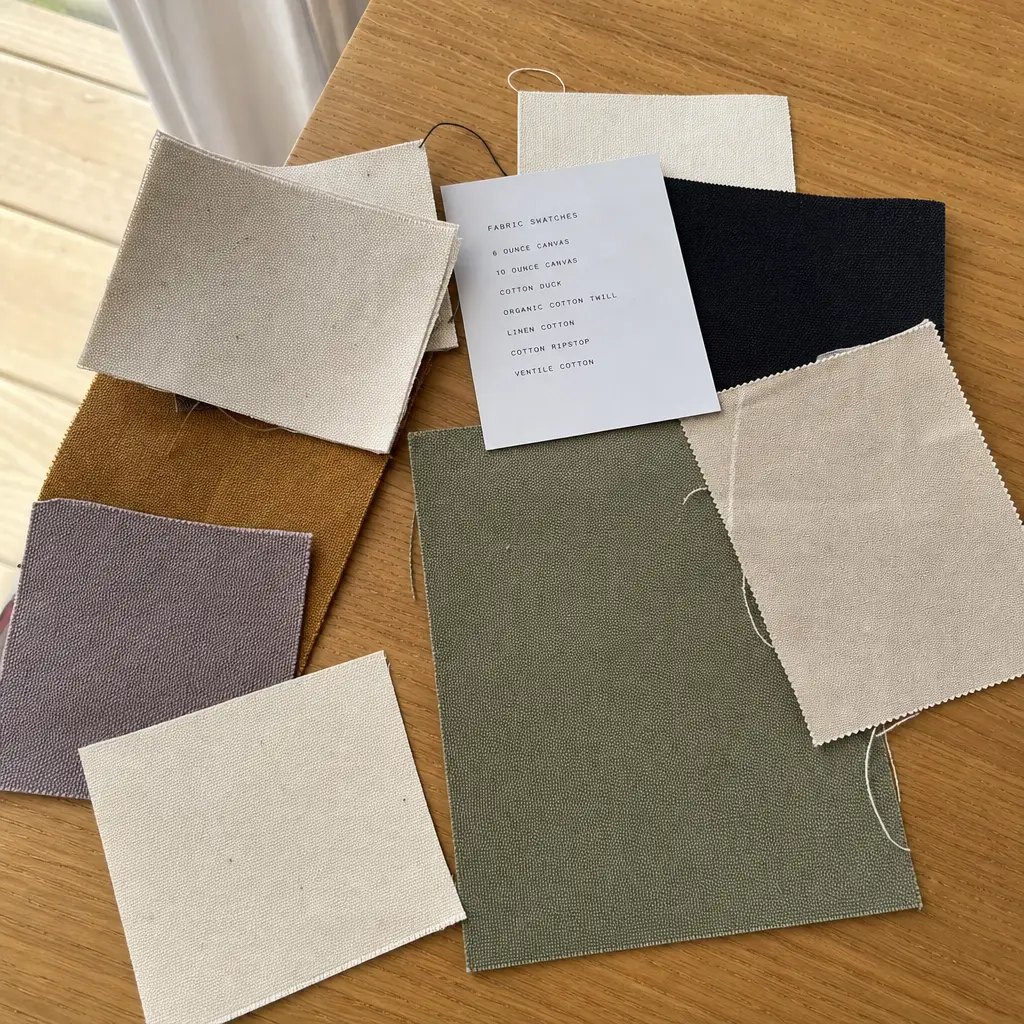
Why fabric weight is the main buying decision for startup messenger bags
For procurement teams sourcing canvas messenger bags for tech startups, fabric weight is usually the decision that determines whether the order feels economical or becomes expensive in hidden ways later. Canvas weight affects how the bag hangs when empty, how much it sags under a laptop load, how clean the logo looks on the flap, how much the carton weighs, and how comfortable the strap feels during daily commuting. Startup buyers sometimes focus first on a reference photo and a unit-price target, but the commercial result depends far more on whether the chosen canvas matches actual user behavior.
The most common sourcing mistake is treating all canvas messenger bags as roughly interchangeable if they look similar online. A light promotional bag and a daily-use laptop messenger can share the same silhouette but perform very differently once users add a 14-inch laptop, charger brick, notebook, water bottle, badge holder, and cables. A lighter body fabric may reduce the first quote, yet returns, negative user feedback, and a weak brand impression can cost more than the original savings. Conversely, specifying unnecessarily heavy canvas can push up material cost, sewing time, and freight without adding practical value for your team.
This is why a useful RFQ for canvas messenger bags should start with usage, not style language alone. The procurement question is not simply whether the bag looks premium. It is whether the bag needs to carry tech gear every day, hold shape in onboarding photos, survive courier shipment to multiple offices, and still feel acceptable on the shoulder. Once usage is clear, factories can quote more consistently. Without that clarity, one supplier may quote a soft 10 oz body while another quotes a structured 14 oz build, and the buyer ends up comparing numbers that are not commercially equivalent.
For startup programs, the right fabric-weight decision also improves internal alignment. Marketing may want a cleaner silhouette, people operations may care about employee experience, finance may care about landed cost, and operations may care about how flat the bags ship. Fabric weight is the point where those priorities intersect. Getting it right early makes every later decision easier, from logo method to packing plan.
- Light promo use usually points to about 280-320 GSM
- Daily laptop carry usually points to about 340-410 GSM
- Retail-grade structure often starts around 400 GSM and up
- Higher GSM alone does not solve poor strap reinforcement or weak hardware
Best GSM ranges by bag use, not by trend
A practical starting point for most canvas messenger bags for tech startups is 12 oz canvas, roughly 340-410 GSM depending on weave, dyeing, and finishing. This range is often the best balance for onboarding kits and internal merch because it supports daily essentials without making the bag feel overly stiff. A well-made 12 oz messenger can carry a laptop, charger, notebook, and documents with acceptable structure while still packing reasonably flat for export. If your team wants one specification to benchmark against, this is often the most useful first quotation tier.
For more price-sensitive or lighter-duty projects, 10 oz canvas around 280-320 GSM can work well when the real use case is limited. This includes conference handouts, welcome packs, tablets, paper documents, or occasional commuting rather than all-day daily carry. It can also fit startup events where visual branding matters more than long service life. The risk comes when buyers stretch a promo specification into a functional laptop bag. Under a heavier load, lighter canvas tends to lose its shape faster, corners soften, the base may sag, and the flap can look less crisp after repeated handling.
At the higher end, 14 oz canvas around 400-475 GSM is often chosen when the product has to feel more substantial, hold a boxier profile, or support a premium merch or resale program. Heavier canvas can improve shape retention and perceived quality, especially if the bag includes a laptop sleeve, pockets, and stronger hardware. But the tradeoffs are real. Heavier seams are slower to sew, folded areas become bulkier, the bag may feel less flexible in use, and shipping costs can climb because the total packed weight rises. If users carry the bag on one shoulder for long commutes, very heavy builds can actually reduce comfort.
Procurement teams should therefore tie GSM to actual user scenarios rather than market trends or assumptions about what looks premium. Ask what employees will carry, how often the bag will be used, whether crossbody comfort matters, and whether the bag must photograph well when partly empty. These practical answers are more valuable than general statements such as 'we want a good quality canvas.'
It is also useful to request comparative quoting for the same pattern in more than one fabric weight. Seeing a 10 oz, 12 oz, and 14 oz option based on the same design reveals how much of the cost difference comes from fabric and how much comes from everything else. That makes budget decisions clearer and reduces debate later in sampling.
- 280-320 GSM: event bag, tablet use, low-cost promo programs
- 340-410 GSM: balanced daily carry, most startup onboarding applications
- 400-475 GSM: premium retail look, stronger shape retention, higher cost
- Above this range, bag comfort and seam bulk should be reviewed carefully
Fabric weight is only one part of structure: weave, finish, and lining matter too
Buyers often compare GSM as if it were the complete durability story, but canvas behavior is shaped by more than weight alone. Two fabrics can share a similar GSM and still perform differently because of yarn count, weave density, finishing, and post-treatment. A looser weave can feel softer and more relaxed but may fuzz earlier or show more movement on printed areas. A denser weave can produce cleaner print edges, a neater bag face, and better shape retention. That is why the best sourcing conversations go beyond 'How many GSM is it?' and ask what kind of canvas construction is actually being supplied.
Finished weight is another detail that matters in practice. Some suppliers speak in greige or loom terms, while others quote the finished cloth after dyeing, washing, or surface treatment. Those are not always equivalent. If your RFQ only says 12 oz without clarifying finish, one factory may offer a firmer cloth while another may supply a softer washed version. Both could claim to meet the brief. For laptop-focused messenger bags, procurement teams should request the finished GSM and ask for swatches or sample offcuts from production-like material rather than relying only on paper specifications.
Natural, dyed, washed, and coated canvas also feel different in the hand and can age differently in use. Natural cotton canvas may align well with a clean startup aesthetic and can print nicely, but it will show dirt more easily. Dyed canvas can look more brand-specific and polished, yet dark shades may slightly stiffen handfeel or affect print opacity. Washed finishes can create a softer premium look, but they may also change dimensional stability or reduce the crispness of a structured flap. The right choice depends on whether you value brand color impact, softness, rigidity, or easier maintenance.
Lining is the next structural decision that buyers often overuse. An unlined 12 oz canvas messenger can be fully acceptable for simple swag programs, especially if the bag is mainly one large compartment with a flap and front pocket. The moment you add a laptop sleeve, internal zipper pocket, cable holders, or organizer sections, lining becomes more functional. A common value choice is 210D polyester because it slides easily, supports pocket construction, and limits cost. Cotton lining can suit brands that want a more natural material story, but it usually costs more and may add bulk.
Foam padding and interfacing are separate from lining and should be requested only when they serve a defined purpose. Laptop compartments often need some padding, but full-body foam can add volume, trap fold lines in shipping, and reduce packing efficiency. Interfacing can help the flap stay flatter or the front panel look cleaner, yet too much stiffener can make the bag feel rigid and less comfortable in use. Rather than asking for 'premium structure' in general terms, buyers should specify exactly which panels need support and why.
- Request finished GSM and weave description together
- Review natural canvas versus dyed canvas separately; handfeel changes
- Use lining only when internal organization or finish quality needs it
- Foam laptop padding adds cost, thickness, and carton volume
How laptop size, load profile, and strap design should shape the specification
Many messenger bag orders go wrong because the bag size is approved from a visual mockup instead of from the actual devices employees carry. For tech startups, the intended laptop size is one of the most important functional inputs. A bag built around a slim 13-inch laptop and charger can be materially different from a bag expected to fit a 15-inch device, notebook, accessories pouch, and daily documents. Once size increases, the panel span becomes wider, the flap drop changes, the gusset often grows, and weak fabric or strap choices show up faster.
Procurement teams should define the likely carry profile before asking for quotes. Is this a commuter bag for engineering hires, a welcome bag for all departments, an event bag for conference attendees, or an executive kit? Those use cases sound similar internally, but they create different stress patterns. Engineering hires may carry heavier chargers and accessories. Event recipients may use the bag less often but judge it immediately on appearance. Hybrid office users may care most about whether the bag stays comfortable from train station to workplace. The specification should reflect that reality.
Strap design is especially important because messenger bags fail in use more often at the carry points than in the center body panel. A suitable range for many startup messenger bags is 38 mm to 50 mm cotton webbing, depending on bag size and weight. Narrow straps can look sleek but feel less comfortable when a laptop and charger are inside. Wider straps distribute weight better, especially for crossbody use, but they also affect look and cost. Ask whether the strap is fixed or adjustable, whether it includes a pad, and whether reinforcement at attachment points is box-X, bartack, or multiple rows of stitching.
The attachment area should be reviewed as a system, not as a decorative detail. Heavy canvas with weak webbing or poor reinforcement is not a durable specification. If the bag body is upgraded from 10 oz to 12 oz or 14 oz, the strap and hardware should usually be reviewed at the same time. Procurement teams should ask the factory what load the attachment method is designed to support and should examine both the exterior and interior sewing on the sample. Load-bearing seams need to look deliberate, not merely neat.
Comfort should also be tested with realistic use. A bag that feels acceptable when empty can become awkward when fully loaded. During sample review, have someone wear the bag over a shirt and over a light jacket. Check whether the strap slips, twists, or digs into the shoulder. For startup onboarding kits, the bag does not need to become an outdoor gear item, but it should handle normal commuting without feeling like a promotional tote with a flap.
- Define intended laptop size before approving bag dimensions
- Larger bag width increases stress on fabric, gusset, and strap points
- 38-50 mm webbing is common for practical laptop messenger use
- Review strap reinforcement together with canvas weight and hardware choice
How logo method should influence your canvas choice
Branding on messenger bags is usually placed where users notice it first: the flap, the front body, or a side position that shows while carrying. Because of that, the logo method should not be selected in isolation from the canvas specification. The same artwork can behave differently on lighter versus heavier cloth, on natural versus dyed canvas, and on flat versus folded areas. For most startup logos with one or two solid colors, screen printing remains the most practical option because it balances cost, durability, and appearance at scale.
On medium-weight canvas, screen print tends to provide a dependable result for flap and front-panel graphics. It works especially well when the artwork is bold, relatively simple, and sized sensibly for the bag. The key issue buyers should review is not just color but flexibility. A very large solid print across a flap fold can create stiffness or show stress marks over time, particularly if the flap is repeatedly opened, packed tightly, or stored under pressure. This does not mean the method is wrong; it means the artwork size, ink deposit, and curing need review in the sample stage.
DTF, heat transfer, or other digital transfer methods can be useful when quantities are smaller or artwork is more detailed. These methods may reproduce gradients and fine elements better than standard screen print, but procurement teams should ask harder questions about handfeel and fold performance. A transfer that looks sharp on a flat sample may respond differently once the flap bends daily. If the brand insists on multi-color detail, request a real-use fold test and packed-storage test before approval rather than trusting appearance alone.
Embroidery can create a more premium or understated effect, particularly for a small logo near the front corner, side panel, or internal patch. However, embroidery adds needle perforations and can pucker lighter canvas if the backing and tension are not handled well. It is generally better for smaller branding than for large central marks on a flap. Woven labels, edge labels, and inner brand patches are useful alternatives when the startup wants a cleaner product-led look rather than an obvious promotional item.
A practical buyer habit is to ask the supplier to quote at least two logo approaches if the order is substantial enough: for example, a one-color screen print and a woven label plus smaller print. This can show whether a simpler, more retail-looking branding option delivers better value than a large central logo. It also helps marketing and procurement discuss brand impact using real cost differences rather than assumptions.
- Screen print: best value for simple logos and higher quantities
- DTF or heat transfer: useful for detailed art and small runs, but test fold areas
- Embroidery: good for small logos, watch puckering on lighter GSM fabric
- Woven label: low-coverage branding with retail-friendly finish
Cost drivers that change more than buyers expect
Fabric weight certainly affects price, but in messenger bags it is rarely the only or even the biggest cost variable. Moving from 10 oz to 12 oz canvas often increases material cost moderately. The larger quote changes usually appear when buyers also add foam padding, extra pockets, zipper compartments, lining, upgraded hardware, thicker webbing, or more complex print areas. In other words, the project gets more expensive not only because the cloth is heavier, but because a heavier-duty bag usually invites a heavier-duty construction package.
Sewing complexity deserves close attention. A plain unlined messenger body with one flap and one front pocket is relatively efficient to make. Add a padded laptop sleeve, internal organizer, zipper pocket, webbing details, magnetic closures, and multiple topstitch lines, and labor cost rises quickly. This is why two factories can both say they are quoting a 12 oz canvas messenger bag but still land far apart on price. The real comparison has to include the pattern complexity and construction steps, not just the main fabric description.
Hardware choice often creates a larger cost gap than buyers expect. Plastic adjusters, standard zippers, and simple snaps can be perfectly suitable for many internal merch programs. Metal buckles, custom logo pulls, hidden magnets, or branded plates may improve perceived value, but each step adds direct cost and may lengthen lead time. The same is true of custom dyeing. A stock black or natural canvas may be commercially efficient, while dyed-to-match brand shades can trigger higher MOQs, added sampling, and stricter shade-control work.
Packing and freight are equally important cost drivers because messenger bags are relatively bulky compared with many flat textile products. Heavier fabric raises gross weight, but structure and padding also reduce how many pieces fit into each carton. If a startup distributes bags across multiple offices or ships them onward through parcel carriers, a bulky construction can affect logistics more than the original purchase price suggests. Buyers should therefore compare not only ex-works price but also pieces per carton, carton dimensions, gross weight, and likely downstream handling costs.
Retail-ready requirements can create another layer of hidden spend. Individual polybags, barcode stickers, hangtags, warning labels, insert cards, and shelf-ready presentation may sound minor, but they add labor and materials. For some internal employee programs these details are unnecessary. For e-commerce or resale they may be essential. The right cost decision is not to minimize every line item, but to spend where the business model actually benefits.
- Main cost drivers: GSM, lining, foam, webbing, hardware, pocket count, print method
- Hidden cost drivers: custom dye, low MOQ setup, retail hangtags, barcode stickers
- Freight driver: packed volume per piece, not just fabric weight
- Heavy trim can erase any savings from choosing simpler fabric
MOQ logic: what startups can customize at 200 pieces versus 500 pieces and above
Messenger bag sourcing often becomes frustrating when buyers ask for a fully customized result at a test-run volume. In practice, many factories can support stock-fabric canvas messenger bags at around 200-300 pieces per color or style if the construction is straightforward and the logo method is simple. This can work well for startup onboarding, accelerator cohorts, conference merchandise, or pilot internal programs. At that volume, the smartest use of budget is usually to keep materials close to stock and put money into functionally important details such as better webbing or cleaner reinforcement.
Once the project requires dyed-to-match body fabric, custom woven labels, special hardware finish, multiple interior features, or retail-ready packaging, realistic MOQ usually moves upward. Around 500 pieces and above, more suppliers can hold color consistency, justify label and trim setup, and offer better unit pricing without relying on leftover stock materials. This does not mean lower quantities are impossible. It means lower quantities may involve compromises, such as fewer color choices, higher sample charges, simplified branding, or less favorable price breaks.
Buyers should also distinguish between true production MOQ and commercially efficient MOQ. A supplier may say yes to 200 pieces, but if the price is high and the project relies on substitute trims or limited stock availability, the order may not be stable. For startups, the better question is often: at what quantity does this specification become repeatable and cost-sensible? If the program may scale with hiring or resale, it is worth understanding the price curve now rather than renegotiating every element later.
A practical RFQ approach is to ask for tiered pricing at 200, 500, and 1000 pieces while keeping the specification fixed. That lets procurement compare not only the starting order but also the likely next run. It also helps internal teams decide whether investing in a stronger first sample is worth it if repeat orders are probable. If the factory only quotes one volume, you lose useful leverage for planning.
MOQs should also be discussed per customization element, not only per bag style. The body color may require one minimum, the woven label another, and the retail barcode process another. Separating these elements helps buyers see where they can stay flexible. Often the best commercial compromise is stock canvas, custom logo branding, and standard hardware rather than full custom trim on the first run.
- 200-300 pcs: better fit for stock canvas and simple logo applications
- 500+ pcs: more practical for custom dye, woven labels, and complex trim
- Very low MOQ often means fewer color options or higher print/setup charges
- Request price breaks at 200, 500, and 1000 pcs for realistic planning
Sample approval should test carry reality, not only appearance
A messenger bag sample should be evaluated like a tool that carries equipment, not just like a branded marketing item. Many startup teams approve samples based on color, logo position, and whether the bag looks tidy on a table. That is necessary but not sufficient. The bag needs to be loaded with a realistic carry set that reflects the intended user. If employees will carry a laptop, charger, notebook, cable pouch, and ID accessories, the sample should be tested with that weight and shape inside. This is the fastest way to see whether the body collapses, the base sags, the flap sits unevenly, or the strap feels too narrow.
The sample should also be judged in motion, not only when placed flat. Wear it crossbody and on one shoulder. Open and close the flap repeatedly. Insert and remove a laptop from the sleeve if one is included. Check whether magnets align naturally or whether they pull the bag front off center. Observe whether the webbing twists under load or whether the bag rotates awkwardly against the body. These are practical signals that often matter more to end users than a small difference in visual style.
For logo evaluation, the pre-production sample should be folded and packed the way bulk goods will actually ship. Leave it packed for a period, reopen it, and inspect for print offset, flap crease memory, surface cracking, and lining distortion. Large flap graphics can look excellent when fresh but behave differently after compression. If the factory suggests a packing method, ask to see the result. Packed appearance is part of product quality because recipients usually see the bag after it has traveled through cartons, warehouses, and internal distribution.
A formal sample approval record helps prevent avoidable disputes. Instead of writing 'approved' or 'please make stronger,' note measurable checkpoints such as finished body dimensions, accepted fabric weight, strap width, attachment method, print size, print tolerance, hardware finish, and packing format. If any issue is still conditional, mark it clearly. This turns the sample into a manufacturing reference rather than just a visual benchmark.
For higher-value or more complex orders, it is also sensible to request at least one pre-production sample made with production-intent materials, not just a prototype. Prototype samples can verify design, but production-intent samples are where real issues with fabric handfeel, stitch bulk, logo finish, and packing usually appear.
- Load test with realistic weight, not only visual review
- Review flap alignment when the bag is actually filled
- Test print after fold and reopen to identify cracking or offset
- Record dimensions, GSM, and strap attachment construction on sample sign-off
QC thresholds that matter most on canvas messenger bags
On canvas messenger bags, the most damaging quality problems are often not catastrophic failures but repeated small inconsistencies that weaken the overall program. Crooked logos, twisted straps, uneven flap hang, mixed fabric shades, and rough seam finishing make the bags look cheap even if they remain technically usable. Because startup merch often functions as a brand touchpoint for employees, candidates, or customers, those visual inconsistencies matter. Quality control should therefore prioritize the defects most visible at first glance as well as those most likely to cause complaints during normal use.
Fabric consistency should be checked first. Confirm that the finished weight is within the agreed tolerance and that there is no obvious mixed-lot variation across the shipment. Shade variation should be assessed under consistent lighting, especially for dark dyed canvas where lot differences can become visible. If natural canvas is used, buyers should still define what level of variation is acceptable, because natural materials may show slight tone movement. The approved sample should serve as the practical reference, but tolerance expectations should be stated beforehand.
Cutting and sewing accuracy have a direct effect on how the bag hangs. If body panels are cut off grain, the flap may torque, side seams may lean, and the front silhouette may look unbalanced after packing. Stitch quality should be checked at all high-stress points, particularly where straps join the body and where gussets meet the base. Look for skipped stitches, loose thread chains, seam grin, bunching, or obvious rework marks. For lined bags, turn pieces inside out during inspection where possible. A neat exterior can hide weak or untidy internal construction.
Logo quality should be controlled with specific, measurable expectations. Print placement is often best defined in millimeters from fixed reference points such as flap edge or panel centerline. Coverage should be even, with no pinholes, smears, ghosting, or major color drift from the approved standard. If digital transfer methods are used, inspect edges and film adhesion carefully. If embroidery is used, inspect puckering and backing appearance. Buyers should not accept vague statements like 'logo centered enough' when a simple placement tolerance can avoid dispute.
Functional checkpoints matter just as much. Zippers should run smoothly, magnets or buckles should align cleanly, and laptop sleeve openings should fit the intended device without catching. Packed bags should be inspected both immediately from carton and after a short recovery period because some defects appear only once the product relaxes from compression. For larger orders, random carton checks should include pieces from top, middle, and bottom layers, not only the easiest-to-reach units.
Even if the buyer cannot run a full third-party inspection, having a focused QC priority list improves outcomes. On messenger bags, the fastest priorities are usually shade, print placement, strap reinforcement, flap alignment, closure function, and packed appearance. If those are controlled well, the lot is far less likely to disappoint end users.
- Print placement tolerance should be agreed in millimeters
- Shade variation should be reviewed under consistent light conditions
- Strap reinforcement should withstand repeated lift without distortion
- Packed bags should be checked for permanent crease damage or print transfer
Packing specs that protect the bag without inflating freight
Packing is not just an afterthought for messenger bags because the flap surface, front panel, and strap hardware can all be affected by compression. A packing plan that looks efficient on paper can still create visible marks, transfer printing, or distorted shape if the bags are stacked carelessly. For most startup orders, flat packing is commercially sensible, but the exact folding method should be reviewed during sampling. If the bag includes a large printed flap, separators or tissue between face-to-face surfaces may be necessary to prevent offset or abrasion.
The need for protection depends on construction. A simple unlined bag in 10 oz or 12 oz canvas may recover well after unpacking if straps are tucked carefully and carton pressure is reasonable. A padded or more structured messenger with foam panels, magnetic hardware, or shape-retaining elements may require looser packing, lower carton counts, or internal support to avoid permanent fold memory. The cheapest carton density is not always the lowest landed-cost choice if the result creates rework, steaming, or unacceptable first impressions when employees open the bag.
Procurement teams should ask for complete packing data early: pieces per carton, carton dimensions, gross weight, net weight, and estimated CBM. Without that information, comparing suppliers on freight impact is difficult. This is especially important when the goods will be shipped onward by parcel to multiple branches, remote hires, or regional warehouses. A slightly more expensive bag that packs flatter can outperform a nominally cheaper one once transport and handling are included.
Retail or channel requirements should also be specified before production. Individual polybags, warning labels, barcode stickers, hangtags, insert cards, carton marks, and carton assortment details all affect labor and timing. If the bags are for direct internal distribution, some of these elements may be unnecessary. If the bags will enter a retail or e-commerce workflow, they may be essential. Repacking after import is usually more expensive and more error-prone than getting the export packing right at source.
A practical packaging review includes opening a packed sample and asking basic questions: Does the flap recover well? Is there transfer on the logo? Are straps creasing the body? Is the bag easy for warehouse staff to handle? These observations often reveal more than any generic statement such as 'standard export packing included.'
- Use interleaving on printed flaps when stacking face-to-face
- Avoid excessive carton compression on padded or structured versions
- Request CBM and gross weight for each packing option
- State retail packing needs upfront to avoid repacking after import
Specification comparison for buyers
| Spec decision | Recommended option | When it fits | Buyer risk to check |
|---|---|---|---|
| Main body fabric weight | 12 oz canvas, about 340-410 GSM | Daily use bags carrying laptop, charger, notebook, and documents without becoming too heavy | Below about 300 GSM can collapse and show corner wear early; above about 450 GSM can feel bulky and raise freight |
| Light-duty promo version | 10 oz canvas, about 280-320 GSM | Event giveaways, onboarding kits, or lighter tablet carry where low unit cost matters more than long-term structure | May wrinkle more, sag under laptop load, and print show-through can be higher on dark colors |
| Heavy-duty premium version | 14 oz canvas, about 400-475 GSM | Retail programs or executive kits where a boxy shape and durability justify higher cost | Weight increase affects courier shipping, shoulder comfort, and sewing consistency at folded seams |
| Lining requirement | 210D polyester or 6-8 oz cotton lining only when interior organization is needed | Laptop sleeves, zip pockets, cable compartments, or when a cleaner inside finish is required | Unnecessary lining adds hidden cost and can hide poor seam finishing if sample is not turned inside out for review |
| Print method for startup branding | Screen print for bold 1-2 color logos; heat transfer or DTF only for small multi-color runs | Most startup logo applications on flap or front panel where cost control and washfastness matter | Large dark prints can feel stiff; digital methods may crack sooner on folded flap if ink and curing are wrong |
| Strap construction | 38 mm to 50 mm cotton webbing with reinforced box-X stitch at load points | Laptop carry and daily commuting where strap strength matters more than decorative look | Soft decorative straps can twist; no bartack or box-X reinforcement often fails before body fabric does |
| MOQ structure | 200-300 pcs per color for stock canvas; 500+ pcs for dyed-to-match fabric or complex trim | Small startup merch runs versus full brand color development | Low quoted MOQ may exclude custom PMS dye, woven labels, or individual polybag/barcode packing |
| Packing method | Flat packed with tissue between prints, 20-40 pcs per export carton depending on size and hardware | Bulk import where carton efficiency is important and bags can be reshaped after unpacking | Over-compressed cartons can crease flaps, distort foam laptop sleeves, and damage print surfaces |
| Lead time planning | 7-10 days pre-production sample, 25-40 days bulk after approval for standard construction | Normal startup launch or onboarding schedule with one revision round built in | Custom dye, metal logo plates, or holiday shipping windows can add 1-3 weeks if not quoted separately |
Buyer checklist before sampling
- Define actual carry load: 13-inch laptop, 15-inch laptop, tablet only, or document carry. Fabric weight should follow use, not just visual preference.
- Specify canvas in both oz and GSM if possible, for example 12 oz approximately 380 GSM, to reduce conversion confusion across supplier quotes.
- State whether the bag must stand with some structure or can be soft and collapsible; this changes GSM, interfacing, and lining cost.
- List finished size, laptop sleeve opening size, gusset depth, and bottom width so suppliers do not quote different bag volumes under the same style name.
- List print size, logo colors, and placement on flap, front body, side label, or inner patch so suppliers can quote the right print method.
- Note if the startup brand color must match PMS closely or if stock black, natural, or navy is acceptable; dyed fabric changes MOQ and lead time.
- Describe strap width, adjustable range, and whether a shoulder pad is required for laptop loads.
- Confirm hardware expectations: plastic versus metal adjusters, magnetic snap versus buckle, zipper requirement, and preferred finish color.
- Set a sample approval standard that includes weight tolerance, seam reinforcement, print adhesion, packed appearance after carton compression, and closure alignment when loaded.
- Request carton dimensions, pieces per carton, gross weight, and estimated CBM to compare landed freight, not only ex-works unit price.
Factory quote questions to send
- What is the exact fabric composition and finished weight in GSM after washing or finishing, not just greige fabric weight?
- Is the quoted canvas stock color or custom dyed? If custom dyed, what is the MOQ per color and shade tolerance?
- Which print method is included in the quote, what print area is covered, and how will ink feel and crack resistance differ on the flap fold?
- Does the quoted bag include lining, foam padding, internal pockets, key loop, zipper pocket, or only a plain unlined body?
- What reinforcement is used at strap attachment points: bartack, box-X stitch, rivet, or multiple rows of stitching?
- What webbing material, width, and thickness are included, and is the strap length adjustable enough for crossbody use over jackets?
- What hardware is included in the quote: metal buckle, plastic adjuster, magnetic snap, zipper brand or grade, and finish color?
- What are the sample charges, sample lead time, and whether bulk order placement credits sample cost back?
- What is the MOQ for stock fabric versus custom PMS body color, custom woven label, and retail barcode packing?
- Can you provide quoted options for 10 oz, 12 oz, and 14 oz canvas using the same bag pattern so cost differences are comparable?
Quality-control points to confirm
- Finished fabric weight should stay within the agreed tolerance, commonly around plus or minus 5 percent from approved sample, with no obvious mixed-lot variation.
- Body panels should be cut on consistent grain direction so the flap hangs evenly and side seams do not torque after packing.
- Bag dimensions should stay within agreed tolerance, especially width, gusset depth, flap drop, and laptop sleeve opening.
- Print placement should stay within agreed tolerance, commonly around plus or minus 5 mm for centered front logos and tighter if the logo aligns to flap edges.
- Print surface should show even coverage with no pinholes, ghosting, smudging, or premature cracking after normal flap folding.
- No skipped stitches, loose thread chains, broken topstitching, or seam grin at side panels and strap attachments under light load test.
- Strap attachment points should show reinforcement stitching on both sides with no puckering or distorted fabric around high-stress areas.
- Webbing shade and width should match approved sample, with clean sealed ends and no twisting after adjustment.
- Zippers should run smoothly end to end without wave, bite, or tape exposure; zipper pull finish should match approved trim color.
- Magnetic snaps or buckles must align cleanly so flap closes without twisting the front body panel.