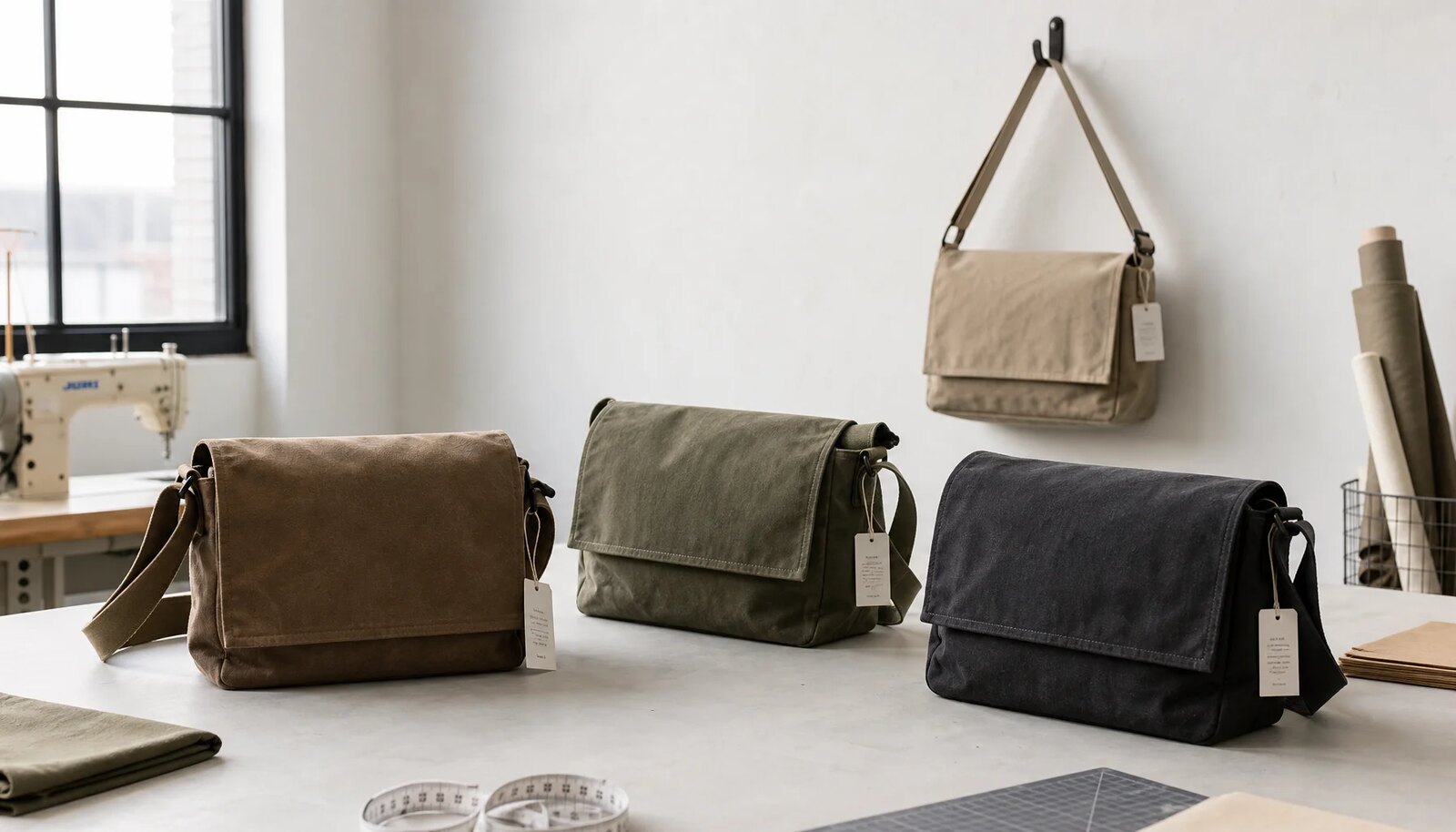
Start with event risk, not a catalog photo
A canvas messenger bag order looks simple until the event date becomes immovable. The bags must match sponsor artwork, carry attendee materials, arrive at the right venue or warehouse, and pass brand, purchasing, or receiving rules. Supplier compliance is the process of proving those requirements before fabric is cut, logos are printed, and cartons are sealed.
For event planners, a useful compliance checklist is not a generic certificate folder. It connects the product spec, supplier identity, artwork control, inspection standard, packaging plan, and shipment documents to one order. That keeps procurement, marketing, logistics, and the supplier working from the same evidence.
Scale the controls to the order. A small internal giveaway may only need a clear spec, approved sample, and final packed-goods check. A sponsor-funded conference, retail resale item, university order, public-sector purchase, or multi-city campaign usually needs stronger labeling, version control, carton marks, and document review.
- Treat compliance as product proof, factory proof, packing proof, and shipment proof.
- Put pass/fail standards in writing before deposit, sample approval, or bulk production.
- Use the PO, spec sheet, and signed sample as the controlling documents.
Write a spec suppliers can quote accurately
The fastest way to receive incomparable quotes is to send only a photo and a logo. Canvas messenger bags can look similar while differing in fabric weight, lining, strap strength, zipper quality, print method, folding, and packing. Those differences affect unit cost, MOQ, freight volume, and failure risk.
Start with the physical bag. Define finished width, height, gusset depth, flap length, pocket layout, closure type, strap width, adjustable strap range, lining, zipper gauge, and reinforcement points. If the bag must hold a laptop sleeve, event program, catalog, charger, bottle, or sponsor inserts, state that use case. The supplier cannot quote reinforcement honestly without knowing the expected contents.
Canvas weight should be treated as a controlled variable. A practical event range is often around 12 oz to 16 oz, but this should be framed as a buyer norm, not a universal rule. Lighter fabric can reduce cost and freight but may collapse or wrinkle. Heavier canvas can feel more premium but may raise MOQ, sewing difficulty, and carton volume.
Finish is equally important. Raw, bleached, dyed, washed, brushed, laminated, recycled-content, lined, and backed canvas can behave differently in shade consistency, shrinkage, hand-feel, and print adhesion. When suppliers quote different finishes, procurement should treat them as different products.
- State canvas weight in oz and GSM where possible, then approve a swatch.
- Require a trim card for zipper, webbing, buckle, D-ring, thread, label, and hardware finish.
- List intended carry contents so reinforcement and strap strength are quoted correctly.
Compare supplier types with commercial evidence
Supplier route changes both cost and control. A direct sewing factory may be best for clear, repeatable orders because technical feedback comes from the production line. A trading company may be useful when the event order has many versions, destinations, or bundled products. A specialized bag workshop may cost more but can be stronger for gussets, lining, zipper pockets, and strap construction.
The comparison should not stop at unit price. Ask what MOQ applies per body color, artwork, label, and packing version. Ask what production steps are outsourced. Ask who decides whether a defect must be reworked. A cheap quote with unclear QC authority is not a reliable event plan.
For suppliers claiming retail readiness or compliance strength, request proof tied to your order. Barcode placement, hangtag layout, country-of-origin labels, carton marks, packing lists, and factory identity are more useful than broad sales language. If a supplier cannot show examples or describe the workflow, build extra review time into the schedule.
- Use direct factories for stable specs and larger single-version runs.
- Use trading companies for coordination, but require factory identity and QC ownership.
- Use specialized workshops when construction risk matters more than the lowest unit price.
- Compare freight, packing labor, inspection scope, and document readiness alongside unit cost.
Control MOQ and version splits early
MOQ is rarely one clean number. It may be driven by fabric color, canvas availability, print setup, hardware finish, label version, packaging format, and carton marking. A supplier may advertise 500 pieces, but that may mean 500 pieces in one body color, one logo, one location, and one packing method.
Event orders often become complicated through version splits. A 1,200-piece natural canvas order with one logo may be straightforward. The same total quantity divided across black canvas, natural canvas, two sponsor logos, a staff version, retail hangtags, and hotel-specific carton labels can create several production and packing versions.
Quote each version separately. The supplier should state which costs are shared and which apply per version: fabric dye lot, print screen, embroidery setup, label, hangtag, barcode, carton mark, inner pack, and destination label. If the supplier proposes stock materials to lower MOQ, approve the actual stock swatch before accepting the substitution.
Set a version-freeze date. After cutting, printing, or label production starts, changing sponsor quantities can create shortages, overages, or mismatched cartons. The freeze date should be visible in the production timeline and accepted by marketing or the event owner.
- Request MOQ per body color, artwork, print location, label, packing method, and destination.
- Confirm setup charges per screen, embroidery file, label, hangtag, and carton mark.
- Freeze artwork and quantities before cutting or printing starts.
- Do not allow material or trim substitutions without written buyer approval.
Use samples as approval gates
A sample only protects the buyer when it matches the decisions used for bulk production. A polished sales sample may show style and workmanship, but it may not use the final canvas, lining, strap, hardware, logo method, or packing. Treat early samples as development tools, not production approval.
A clean sample path usually has three gates. First, review a blank or existing shape sample for size, pocket layout, flap, comfort, and carry function. Second, approve the logo on the actual canvas surface. Third, approve a pre-production sample with final material, trim, labels, stitching, artwork, and packing approach. For retail-ready or high-visibility orders, add a packed sample or carton photo.
Measure the pre-production sample and record the numbers. Include width, height, gusset, flap length, strap range, pocket size, print size, and print placement. If the sample differs from the written spec but is acceptable, update the spec or state clearly that the signed sample controls that point.
Test the sample like an attendee will use it. Put the expected contents inside, carry it by the strap, open and close pockets, adjust the strap, fold it for packing, and check whether the logo creases or distorts. This is simple work, but it catches problems that flat photos miss.
- Do not approve bulk from a generic sales sample.
- Approve decoration on the actual fabric finish, not a substitute surface.
- Keep dated photos and measurements of the approved sample.
- Ask who owns rework cost if bulk production deviates from the signed sample.
Give logo decoration its own checklist
Decoration defects are visible immediately. A crooked sponsor logo, wrong color, blurred text, cracking transfer, or print mark can make otherwise functional bags unusable. Digital mockups are useful for placement discussions, but they are not enough for final approval.
Screen printing is common for bold one- or two-color artwork on canvas. Confirm screen count, ink color reference, print size, placement, setup cost, curing method, and whether printing happens before or after sewing. Printing near seams, pocket edges, or folds needs tighter review because the panel may not sit flat.
Heat transfer and digital transfer can suit smaller runs or complex artwork, but ask about edge lift, cracking, hand-feel, rubbing, and folding performance. Embroidery can look premium, but dense stitching can pucker canvas or make small text hard to read. The best method depends on artwork, fabric finish, budget, and intended use.
Set a placement tolerance. For example, a centered flap logo may need an agreed left-right and top-bottom tolerance, while a front-pocket logo may need a fixed distance from the pocket seam. Without a numeric or visual standard, both sides can disagree after production.
- Approve final artwork file, color reference, method, print size, and placement tolerance.
- Ask whether decoration is in-house or outsourced and who inspects the print run.
- Check dry rub, wet rub where relevant, folding, cracking, registration, and opacity.
- Compare early, middle, and late production units against the approved sample.
Request documents that matter to the order
Compliance documents should be practical evidence, not decorative paperwork. Useful documents identify the product, material, factory, shipment, label, or packing requirement. Generic claims are weak if they cannot be tied to the PO.
Start with supplier identity. Record the legal factory or production site, export entity if different, and the location responsible for bulk production. For higher-risk orders, ask for business registration evidence or factory profile details. If a sample room develops the product and another factory makes the bulk order, require a handoff record.
For materials, request the approved fabric swatch, canvas weight reference, finish description, trim card, and any claim support. If the bag is marketed as organic cotton, recycled cotton, rPET canvas, low-impact dyed, or compliant with a restricted-substance policy, the evidence should specifically support that claim. Do not put sustainability claims into event materials unless your team has documentation suitable for the market.
Labeling and import details should be reviewed before production. Depending on destination and use, the bag may need country-of-origin marking, fiber content, care label, brand label, warning label, barcode, event SKU, sponsor hangtag, or retailer receiving label. Requirements vary, so confirm with the importer, retailer, venue, or compliance advisor as needed.
Shipment documents should align with receiving. Ask for HS code guidance, commercial invoice details, packing list format, carton count, carton dimensions, gross weight, consignee information, carton marks, and pallet rules. Supplier HS guidance helps quoting and planning, but classification responsibility usually remains with the importer.
- Tie fabric, label, and packaging documents to the PO or approved sample.
- Confirm country-of-origin marking and carton marks before labels are produced.
- Share venue, warehouse, retailer, or event receiving rules before packing.
- Reject unsupported compliance or sustainability claims in buyer-facing materials.
Define QC before production starts
QC disputes often happen because the buyer and supplier never agreed on what counts as a defect. A written inspection plan turns subjective reactions into pass/fail criteria. It should cover sampling standard, AQL limits, defect categories, measurement tolerance, print tolerance, carton count, and rework process.
Many soft goods buyers reference ANSI/ASQ Z1.4 or ISO 2859-1 sampling with General Inspection Level II, then set AQL limits based on risk. Treat this as a common buyer practice, not a fixed rule for every program. Critical defects should normally have no tolerance. Major and minor limits should reflect whether the bags are simple giveaways, sponsor-facing items, or retail-ready goods.
Messenger bags need both cosmetic and functional checks. Inspect canvas shade, hand-feel, stitching, strap anchors, side seams, flap corners, zipper ends, pocket openings, label attachment, and logo placement. Check hardware for sharp edges, loose snaps, slipping buckles, weak D-rings, and zipper drag.
Inspection timing should be staged when risk is high. A first-piece check catches wrong fabric, trim, stitch, or print position before mass production. Inline review can reduce deadline risk. Final inspection should confirm finished product and packed cartons, including count, labels, mixed versions, carton marks, and visible packing damage.
- Set AQL, critical/major/minor defects, and tolerance before sample approval.
- Classify wrong logo, unsafe hardware, strap failure, and illegal label omission as critical or high-severity issues.
- Measure size, strap length, flap, pocket, and logo placement against the approved standard.
- Inspect packed cartons, not only loose product samples.
Packing must match the receiving plan
Packing affects presentation, freight, warehouse labor, and event readiness. A fold that saves carton space may crease the logo. Bulk packing may reduce cost but increase sorting time. Individual wrap may protect light canvas but add material cost and possible packaging compliance questions.
Choose packing based on the final handoff. Bags going straight to attendee registration may need easy-open cartons and clear version separation. Bags going to a third-party warehouse may need barcodes, carton labels, SKU logic, pallet rules, and packing lists. Bags for resale may need hangtags, inner cartons, and scannable labels.
Approve the fold method before mass packing. Ask for a photo showing how the flap, strap, and logo sit in the carton. If bags are individually polybagged, confirm warning text, ventilation holes, recycled-content claims, or plastic restrictions where relevant. If the event avoids plastic, specify paper wrap, belly band, tissue, or bulk carton liner early.
Carton details should be treated as inspection items. Confirm pack count, carton dimensions, net weight, gross weight, carton marks, destination labels, mixed-version rules, and pallet or master-carton requirements. A wrong carton label can delay receiving as seriously as a product defect.
- Approve fold method, pack count, and protective wrap before mass packing.
- Separate sponsor, staff, VIP, retail, and destination versions clearly.
- Check carton marks, barcodes, destination labels, gross weight, and carton dimensions.
- Ask for packed-carton photos or a packed sample carton for complex receiving rules.
Manage lead time by milestone
A single quoted lead time hides too much. Canvas messenger bag production can include fabric sourcing, dyeing or washing, trim purchase, sample making, artwork approval, print setup, cutting, sewing, finishing, inspection, packing, document preparation, shipment booking, customs review, and local delivery.
Ask the supplier to break the timeline into milestones: deposit, fabric confirmation, trim approval, sample dispatch, sample approval, artwork freeze, first-piece approval, bulk sewing, decoration, final inspection, packing completion, document release, vessel or flight booking, and delivery. This makes schedule risk visible before the event date is threatened.
Material availability is often the first constraint. Stock natural canvas may be quick, while dyed canvas, heavier weights, recycled-content fabric, custom webbing, special hardware, or brand labels may add time. Print and embroidery queues can also create bottlenecks, especially before large event seasons.
Build buffer for buyer approvals, sample corrections, inspection failure, relabeling, customs questions, and local receiving. A quote that lands exactly on the event need date should be treated as high risk unless material, capacity, inspection, packing, and freight space are already proven.
- Require milestone dates instead of one production estimate.
- Freeze artwork, quantities, label files, and packing rules before cutting or printing.
- Hold time for inspection, rework, document correction, and destination receiving.
- Award short-lead orders only when material and production capacity are confirmed.
Specification comparison for buyers
| Supplier option | What to verify | Commercial advantage | Buyer risk to control |
|---|---|---|---|
| Direct sewing factory | hardware trim card, strap-load photo, lining close-up, approved flap sample, and first-piece production photos | Better sample-to-bulk control and faster production feedback | May be weaker on export paperwork or branded packing unless checked early |
| Trading company | Factory name, production photos, trim-source proof, and who owns QC decisions | Can coordinate small mixed orders and extra services | Markup can hide real factory capability and slow defect decisions |
| Specialized bag workshop | flap shape, strap webbing, buckle, D-ring, inner pocket, zipper pocket, seam allowance, and load path | More practical for detailed construction, trims, and repeat programs | Capacity may be limited during peak seasons |
| Low-price general supplier | 10-16 oz canvas, washed canvas, rPET canvas, lining fabric, interfacing, and hardware finish | Useful for simple promotional runs with loose specs | Material downgrades, weak packing, and vague inspection scope can erase savings |
| Retail-ready supplier | shape support, strap folding, hardware protection, individual bag, carton drop expectation, and retailer hangtag placement | Can handle labels, SKU separation, carton marks, and receiving rules | Higher unit cost must be compared against reduced warehouse work |
| Compliance-focused supplier | Fabric records, labeling review, test plan, and production traceability | Safer for retail programs and repeat brand orders | Documentation claims need evidence, not only sales language |
| Local sample room plus bulk factory | Signed sample, bulk factory handoff, first-piece photos, and deviation owner | Good for complex branding before large production | Sample room quality may not match bulk line unless handoff is controlled |
Buyer checklist before sampling
- Define finished size, gusset depth, flap length, strap length, strap width, pocket layout, closure type, zipper gauge, lining requirement, reinforcement points, and intended carry load before requesting price.
- State canvas weight in oz and GSM where possible, and identify whether the material is raw, bleached, dyed, washed, brushed, recycled-content, laminated, lined, or backed.
- Ask each supplier to quote MOQ by body color, artwork version, print location, label version, packaging version, and shipping destination, not only total order quantity.
- Require one controlled artwork file for each logo version, with Pantone or agreed color reference, print size, placement tolerance, decoration method, and approval date stated on the PO or spec sheet.
- Use staged samples: shape sample, decoration sample on actual canvas, pre-production sample with final trim, and packed sample or carton photo when presentation or receiving rules matter.
- Freeze body color, artwork, quantity split, packing method, and destination labels before cutting or printing starts; record who can approve any later deviation.
- Define defect limits before production, including AQL level, critical/major/minor defects, measurement tolerance, logo placement tolerance, stitch quality, carton short-pack rules, and acceptable rework process.
- Confirm whether inspection will occur at first-piece, inline, final packed-goods stage, or a combination; final inspection should be scheduled when goods are substantially complete and mostly packed.
- Request order-specific compliance evidence: factory identity, fabric record or approved swatch, label artwork, country-of-origin support, HS code guidance, packing list format, carton marks, and any venue, retailer, or importer requirements.
- Approve carton pack count, fold method, protective wrap, barcode or event label placement, gross weight, carton dimensions, destination marks, pallet rules, and mixed-version separation before mass packing.
Factory quote questions to send
- What canvas weight are you quoting in oz and GSM, and can you provide a swatch or fabric record tied to this order?
- Is the canvas raw, bleached, dyed, washed, brushed, laminated, recycled-content, lined, or backed, and how does that finish affect shrinkage, shade variation, and print adhesion?
- What is the finished bag weight after lining, trim, zipper, strap, hardware, labels, and packing are included?
- What is your MOQ per body color, artwork version, print location, label version, packing version, and destination, and what price change applies if we split the order?
- Which steps are in-house and which are outsourced, including printing, embroidery, washing, cutting, sewing, labeling, inspection, and packing?
- What is the legal factory name, production address, and export entity, and will bulk production be made at the same site as the approved pre-production sample?
- Which logo method are you quoting, and how do you check rubbing, cracking, color consistency, registration, and placement on canvas?
- What sample path is included: existing sample, blank custom sample, logo sample, pre-production sample, packed sample, or sample carton?
- How many sample revisions are included, what triggers a new sample fee, and what approval deadline protects the production schedule?
- What AQL level and inspection standard do you recommend, and which canvas messenger bag defects do you classify as critical, major, and minor?
Quality-control points to confirm
- Use a written inspection standard such as ANSI/ASQ Z1.4 or ISO 2859-1 with agreed AQL limits before production; many buyers use General Inspection Level II as a starting point, then adjust by program risk.
- Define inspection timing: first-piece approval for construction and print placement, inline review for high-risk or tight-deadline orders, and final random inspection when goods are finished and substantially packed.
- Critical defects should include sharp exposed hardware, broken needle or metal contamination, unsafe strap failure, incorrect brand, wrong destination label, prohibited material substitution, or missing legally required label.
- Major defects should include wrong canvas weight, incorrect size beyond tolerance, crooked flap, zipper failure, loose strap anchor, missing reinforcement, severe print smudge, incorrect artwork, mixed versions, wrong packing count, or carton label errors that affect receiving.
- Minor defects can include small loose threads, slight shade variation within the approved range, light removable lint, or minor cosmetic marks that do not affect function or brand presentation.
- Set practical tolerances before approval; buyer norms often include finished width and height around plus or minus 1 cm, strap length around plus or minus 2 cm, and logo placement around plus or minus 3 mm to 5 mm when the design requires tight alignment.
- Check canvas weight, hand-feel, and shade against the approved swatch across first, middle, and last cartons rather than only the top unit shown by the supplier.
- Review stitching at strap anchors, side seams, flap corners, pocket edges, zipper ends, stress points, and label attachment; look for skipped stitches, broken thread, weak backtacking, uneven stitch density, and exposed raw edges.
- Use a practical strap pull or load check based on intended contents; the supplier should define load, duration, and pass/fail criteria, and heavier attendee kits should trigger reinforced anchors or stronger webbing.
- Run zipper, snap, Velcro, buckle, and slider checks repeatedly; reject zipper drag, lining caught in teeth, broken sliders, misaligned closures, loose snaps, or strap buckles that slip under light tension.